Fun Play Time…

We’ve had some days and nights with temps in the 20’s.

We don’t do freezing temps very well here in Charleston, SC, let alone temps in the 20s.

I had a frozen pipe at the OUTSIDE water heater, as did both sons on Isle of Palms, but all are fixed now. A neighbor here rescued me and put on new and better insulation outside. We have all been dripping hot water at night. The hot shower I took last night was beyond delightful. And this morning I have clean sheets and am washing the dirty clothes in warm water!

So….of course I spent this very cold time, after dealing with hot water and cooking, SEWING.

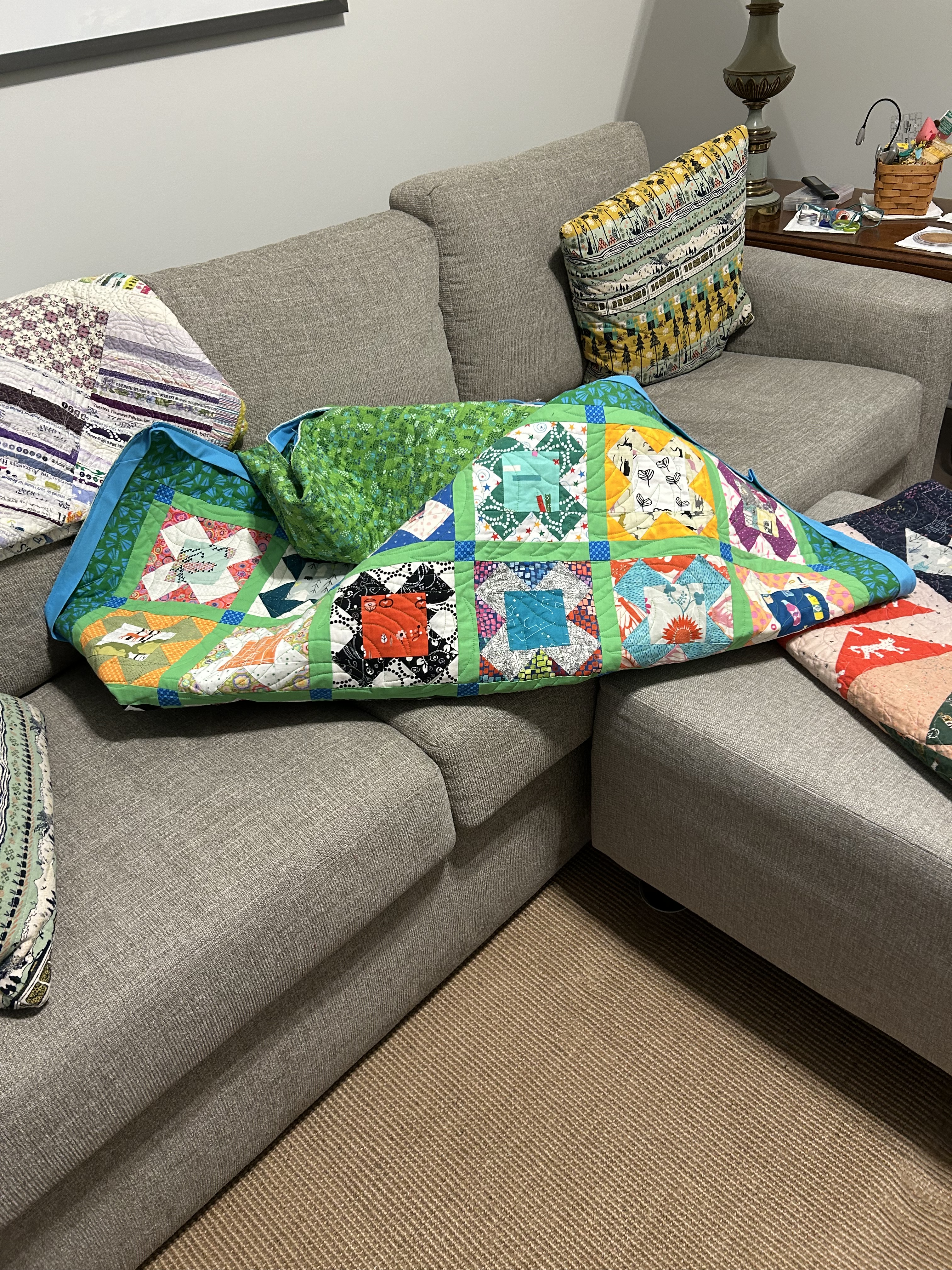
My longarm needed a spring replaced, and that job was above my pay grade, but it is all fixed now and “Pistachio” is off the longarm, trimmed, bound, and is getting its binding sewn down at night.

It is so darn cute!

All that intense green…glows.

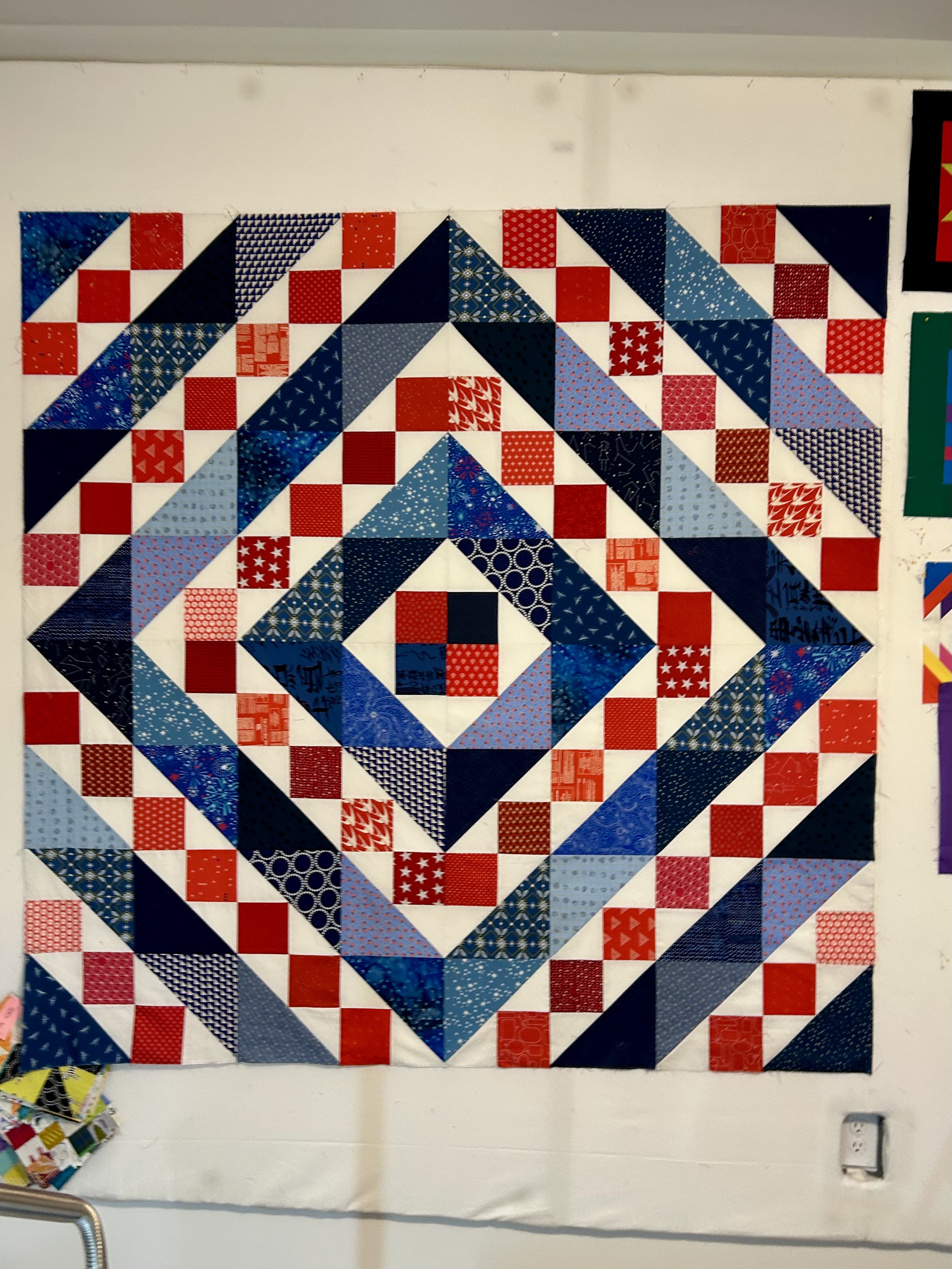
My Quilt of Valor donation quilt is ready to go on the longarm, and I’ve got a beautiful backing for it. The blocks are made with an 8-inch Cat’s Cradle ruler.

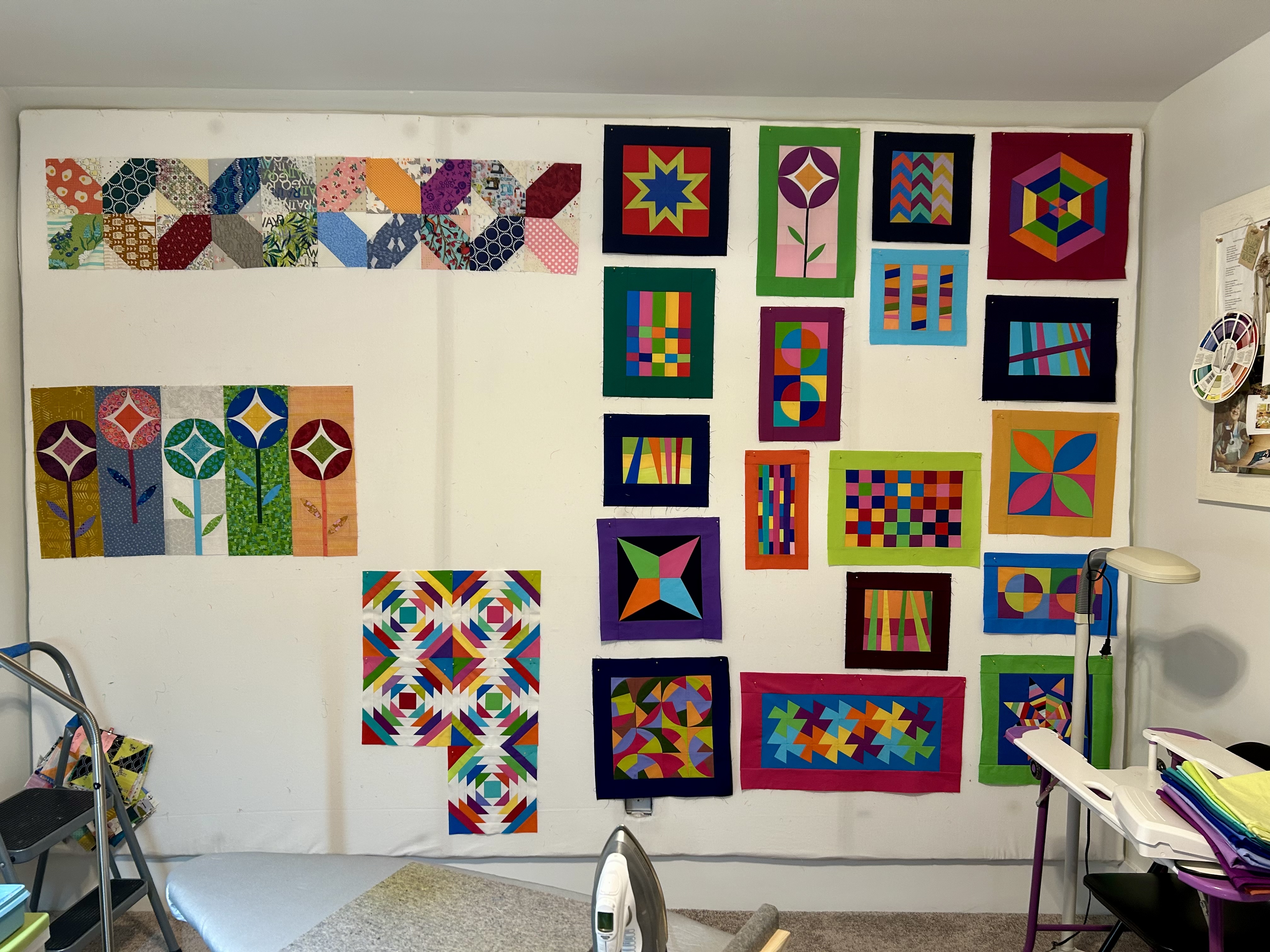
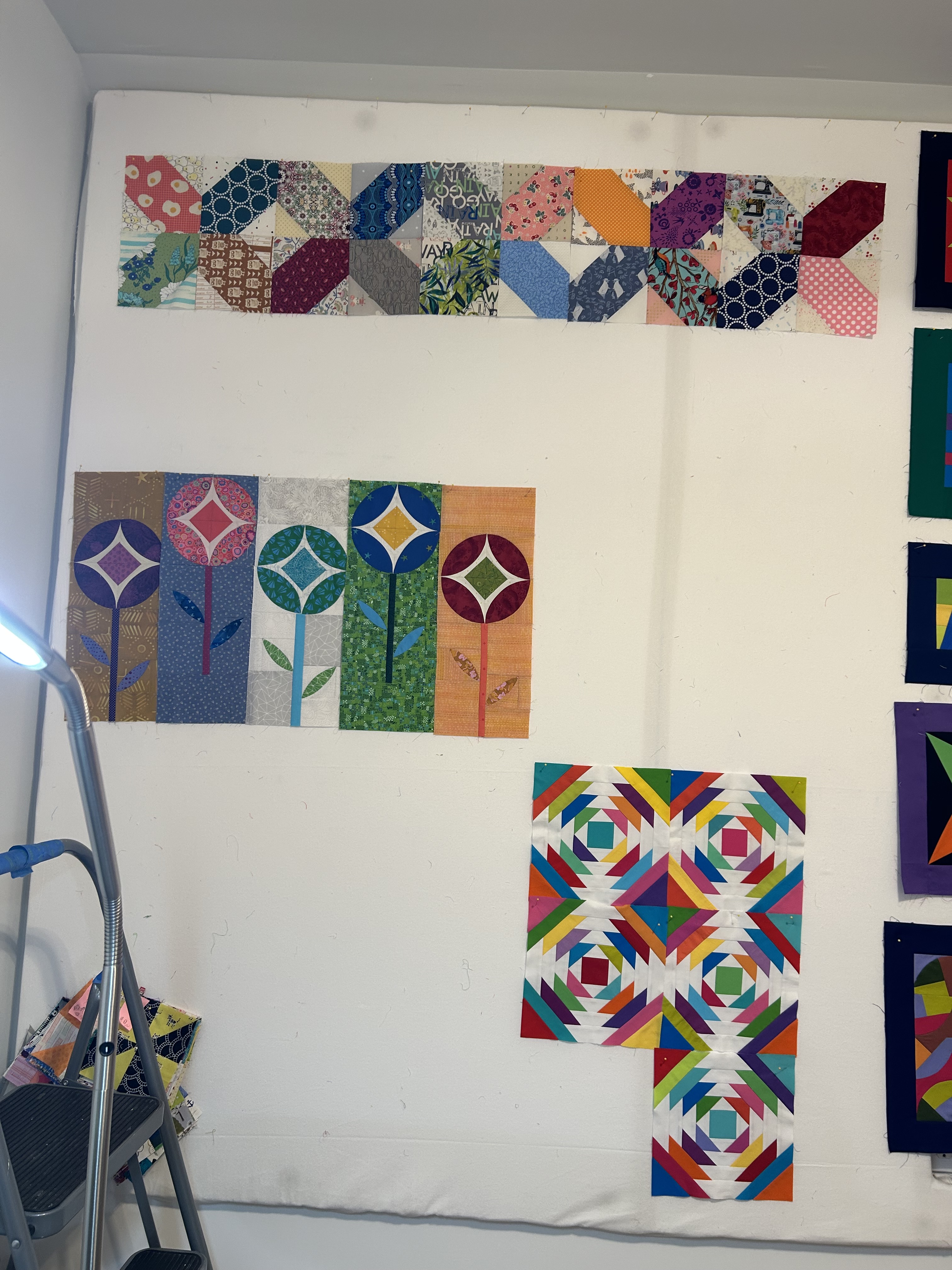
Here’s the design wall right now. The improv quilt needs two more blocks before I start sewing it together. It’s time. I need that space free again. I’m working on one of the needed blocks.

LOL, I didn’t see that the “X” block actually makes an “X/O” pattern when joined. That’s because I didn’t get any conceptual genes in my makeup, and it’s why I really need my design wall to “see” what’s going on. (Those blocks will move around as I go along, for sure.)

Isn’t that “Flower Pop” flower adorable! It’s fiddly though, and there was a very big learning curve for me, but these blocks are going faster now. (The pattern and the needed ruler come from Sew Kind of Wonderful.)

The pineapple blocks are from a ruler–and they are so cheerful. The goal is to use up a lot of solids and to have fun making these very fun and very graphic blocks.

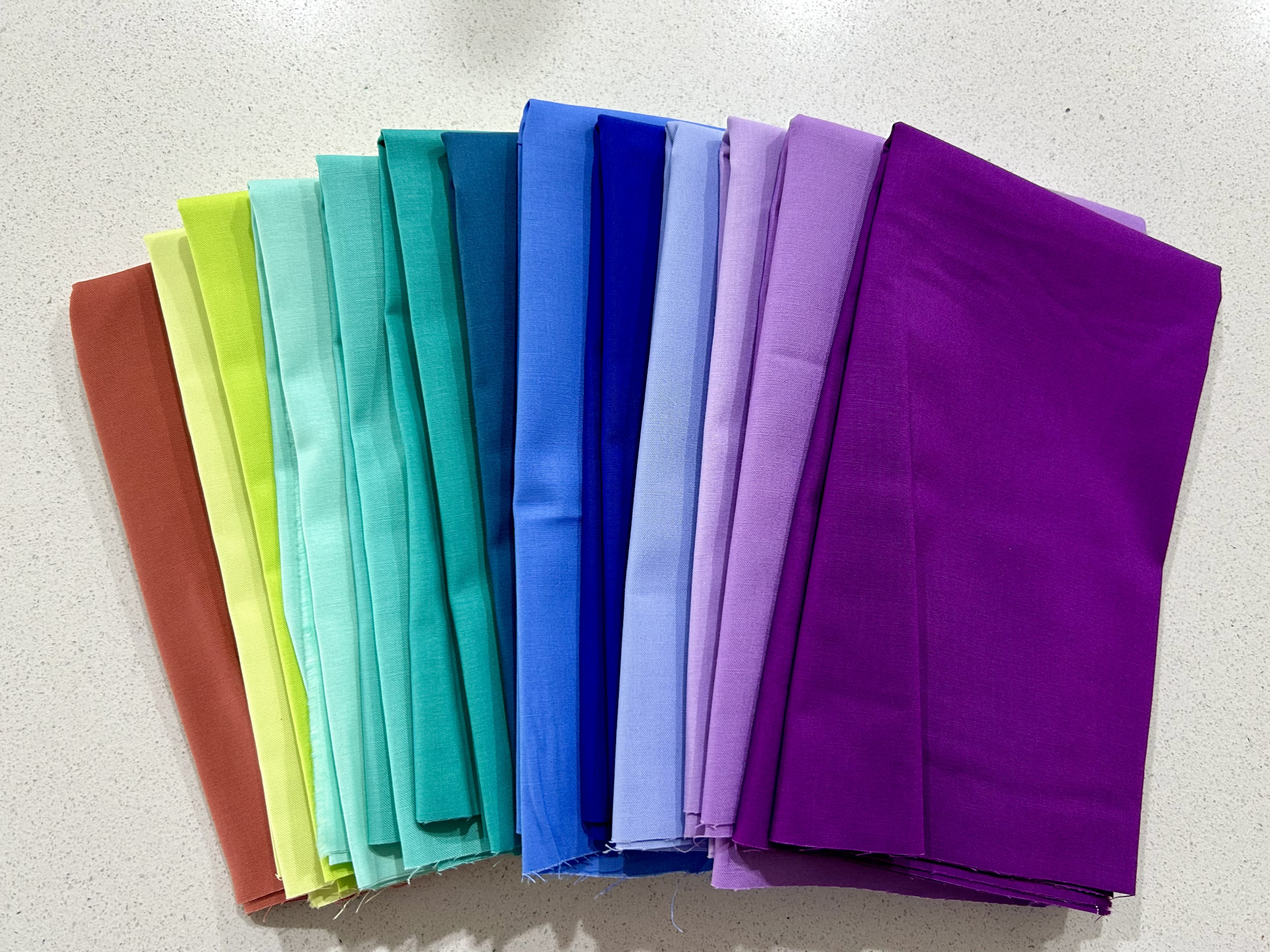
The new palette for Tara Faughnan’s “Blocks3” came and is washed and ready to go. The month 5 block came in yesterday as it was February 1st.

I’m not sure I understand that rusty color in this palette, but I’m reserving judgment.

Have a great week everyone!

Another “What Is This Bird?” Post

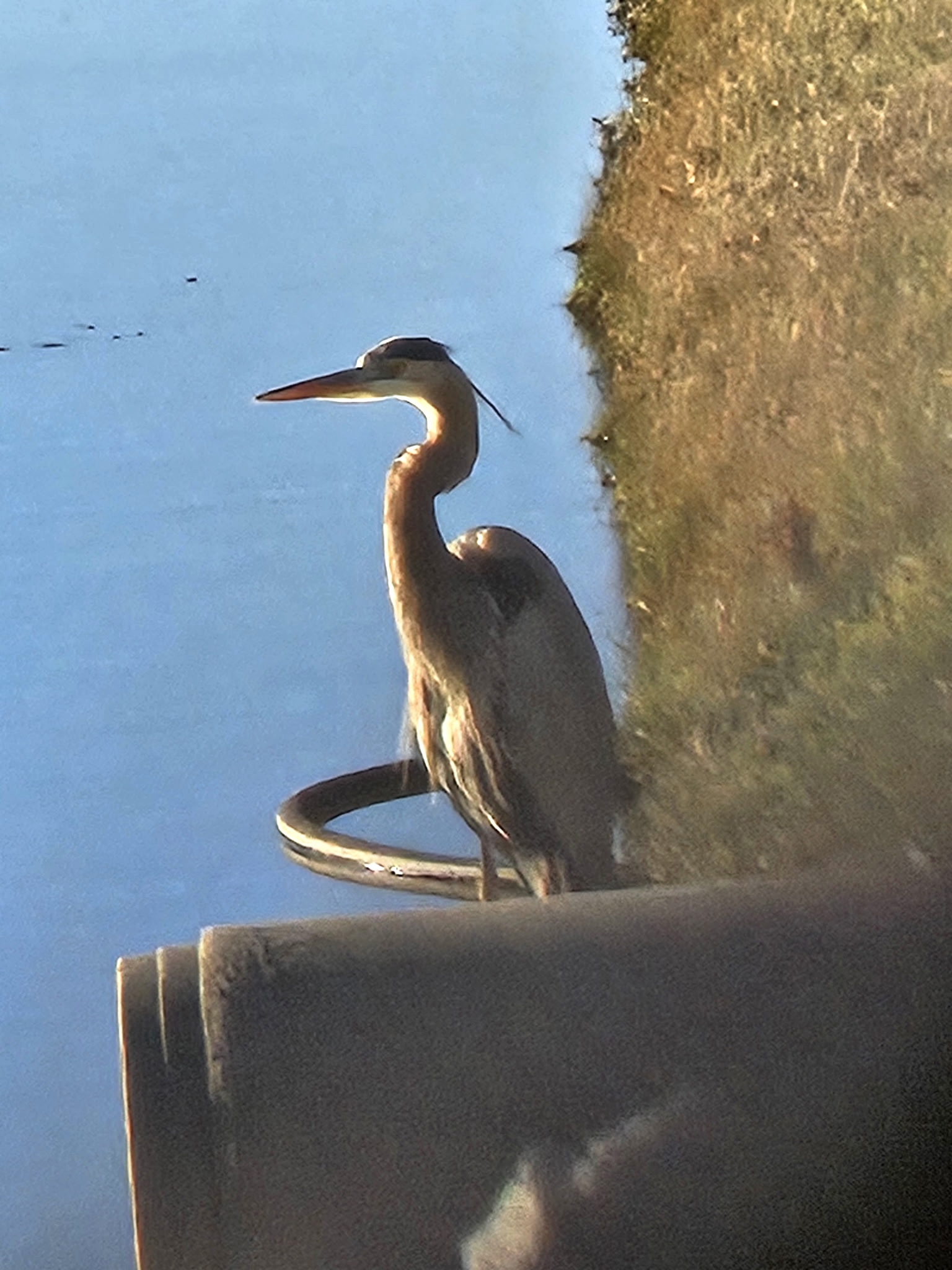
Beloved neighbor and I saw another big wading bird when walking the other day.

What is it?

Note the black on the head and on the belly area (folded wings?), the chestnut area on the neck, the yellow bill, the pale legs.

And in this picture, the long neck is folded down:

It’s a Great Blue Heron.

There are some beautiful pictures on the Kiawah Conservancy web site:

Great Blue Herons

And below is information from the online AI search site that appears when you search Great Blue Heron:

The Great Blue Heron (Ardea herodias) is a large, grayish-blue wading bird common in South Carolina’s wetlands, marshes, and coastal areas like Hilton Head and the Sea Islands, known for its patient hunting of fish and frogs in shallow waters, often seen near lagoons and tidal flats, and building large stick nests from December to March. These graceful birds, standing up to four feet tall with a six-foot wingspan, are a beloved part of the Lowcountry’s ecosystem, easily spotted due to their distinct blue-gray plumage, long legs, and S-shaped neck. 

Key Characteristics in SC:

  • Appearance: Large, grayish-blue body, white head with a black stripe, long legs, and a dagger-like bill.
  • Habitat: Found year-round in various watery environments, including marshes, rivers, mangroves, and coastal areas.
  • Behavior: Solitary hunters that stand still or wade slowly, using their long toes to attract prey before striking quickly.
  • Diet: Primarily fish, but also frogs, reptiles, small mammals, and insects.

• • Nesting: Build large stick nests in trees, with mating and nesting occurring from December to March in the Lowcountry. 

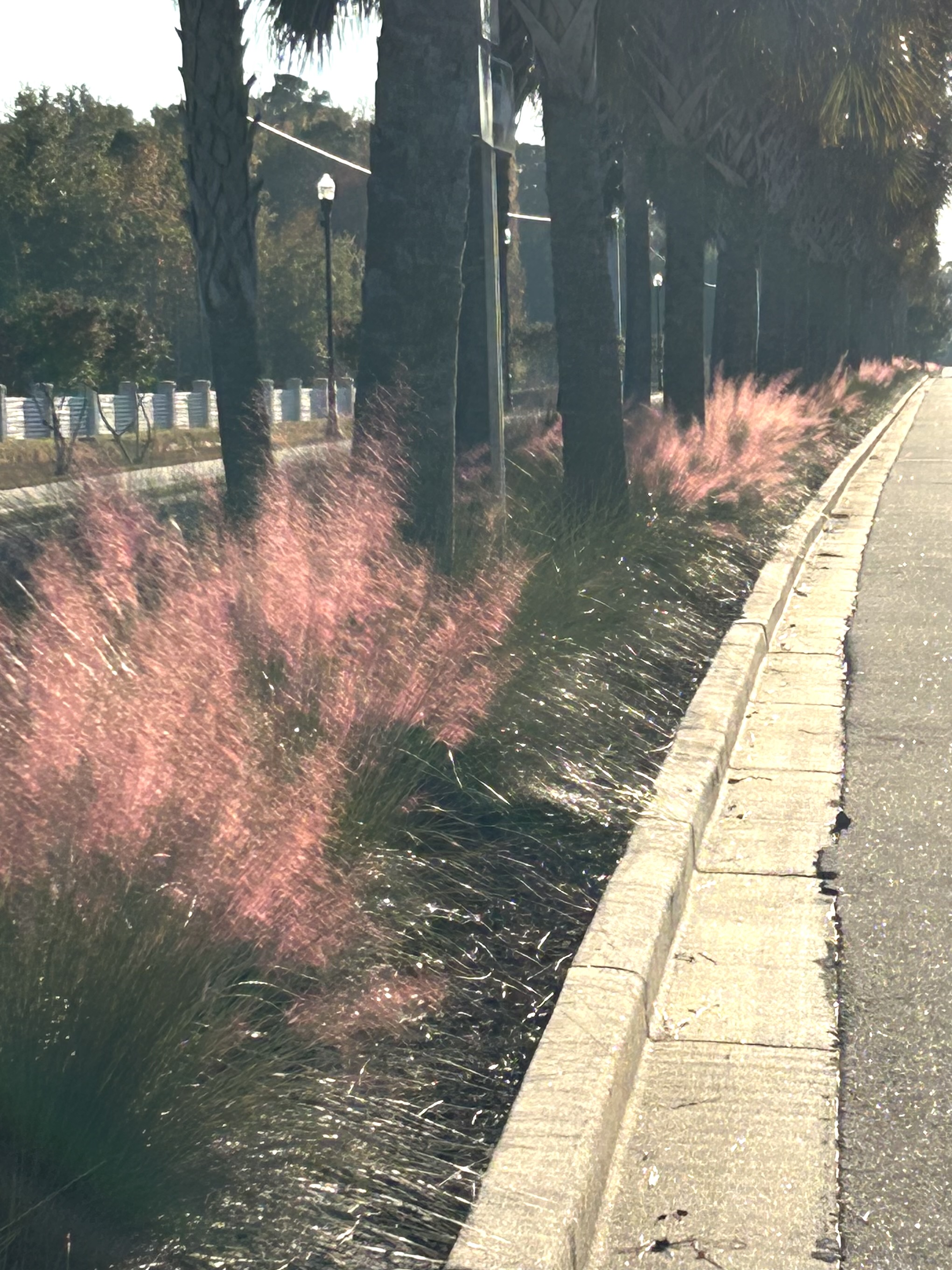
Muhly Grass

The Muhly Grass here has been blooming for about 2 months. I love it when the rising or setting sun lights it up.

The sun makes it glow.

I took these pics yesterday when I walk late afternoon.

The strands from this grass are used by the sweetgrass basket makers, so in some public places, the plants are seriously trimmed to supply fodder for the baskets. Stealthily, of course.

Yesterday I put protectors on the two camellia bushes as we were expecting temps in the 20s last night. Here in SC, our water heaters are OUTSIDE, attached to a house wall, and houses are either on the ground or on high supports. Either way, pipes are…exposed or on the ground. And they will freeze easily.

When I woke this morning, it was 28 degrees on my porch. It’s a good thing I dripped water upstairs and in two faucets downstairs.

I brought in the Kalancho plant, which is going to bloom again. And the geranium which is on its second year and going strong. The hibiscus on the porch took a hit. Time will tell.

It will be very cold again tonight. Cold for SC, that is.

What Is This Bird?

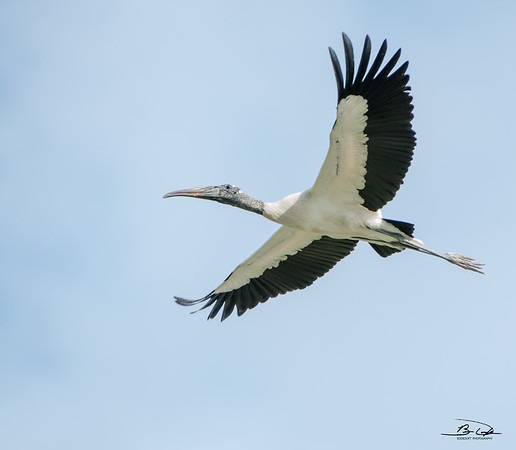
Beloved neighbor and I saw this very interesting, very big bird while walking the other day. Neither one of us had a clue as to its identity. It was not alarmed by our presence, unlike the usually wary wading birds.

It continued to stroll slowly along the ditch, which is part of the elaborate system of flood management in the “Low Country.” Water in ditches like this one is channeled out to the coastal marshes. This bird’s strolling involved standing momentarily on its left leg while using its right foot to wiggle and scratch the botton of the ditch.

And:

Neither of us surfaced the word “stork” to identify this bird. We were more focused on heron, crane, ibis, egret, and so on. Note the bald dark head, the sturdy dark beak that turns a kind of tan at the end, the black legs, the black feathers at the tail and along the bottom of the folded wings.

It took me a little time, but I finally identified this fascinating bird. And I learned that the black on the wings is much more prominent that one might expect when they are folded.

Here’s some more info on “Wood Storks” from the Cornell Lab of Ornithology:

“Large, white Wood Storks wade through southeastern swamps and wetlands. Although this stork doesn’t bring babies, it is a good flier, soaring on thermals with neck and legs outstretched. This bald-headed wading bird stands just over 3 feet tall, towering above almost all other wetland birds. It slowly walks through wetlands with its long, hefty bill down in the water feeling for fish and crustaceans. This ungainly looking stork roosts and nests in colonies in trees above standing water.”

And for Cornell labs:

“Wood Storks occur only in a few areas in the United States, so to get a look at one, head to a wetland preserve or wildlife area along the coast in Florida, South Carolina, or Georgia. Wood Storks tend to be busily foraging with their head down and body held horizontally, but their large size should help them stand out amongst the other pale herons, ibises, and egrets in wetlands even if you can’t see their hefty bill. If they aren’t foraging in areas with standing water, check nearby trees for groups of roosting Wood Storks, or look up in the sky for soaring birds with black-and-white wings. They are mostly silent, but during the breeding season, sounds of begging chicks might help you find a colony.”

This Wood Stork was our gift of the day from…nature.

A Find: The “Quilty Love” Blog and Patterns

A recent Aurifil post showing the work of its current quilt “makers” included a quilt that Maude MacDonald made with a pattern from quilter Emily Dennis.

I went to Emily Dennis’ web site and blog and fell in love with her quilts. I signed up to follow the blog and got a free pattern of crosses that I will use as a leader/ender project with my solid scraps. (And there will be more solid scraps as Tara Faughnan’s Blocks3 has now started. Our first block is “Crosswalk.”)

Screenshot

I loved Emily’s quilts immediately. They are modern and clever. They drew me right in. There are lots of hearts and stars in her quilts–two images that make my heart sing.

I bought her “Patchwork Hearts II” pattern and will anticipate making at least a baby quilt from it. She made her pattern with a light heart, but I liked the version Maude MacDonald made with a dark orangy solid red heart and lots of fun print fabrics–the Juicy Collection from Ruby Star Society.

Here’s a link to Emily Dennis’s web site and blog: quiltylove.com

Enjoy!!

Sharks’ Teeth: A Beach Find

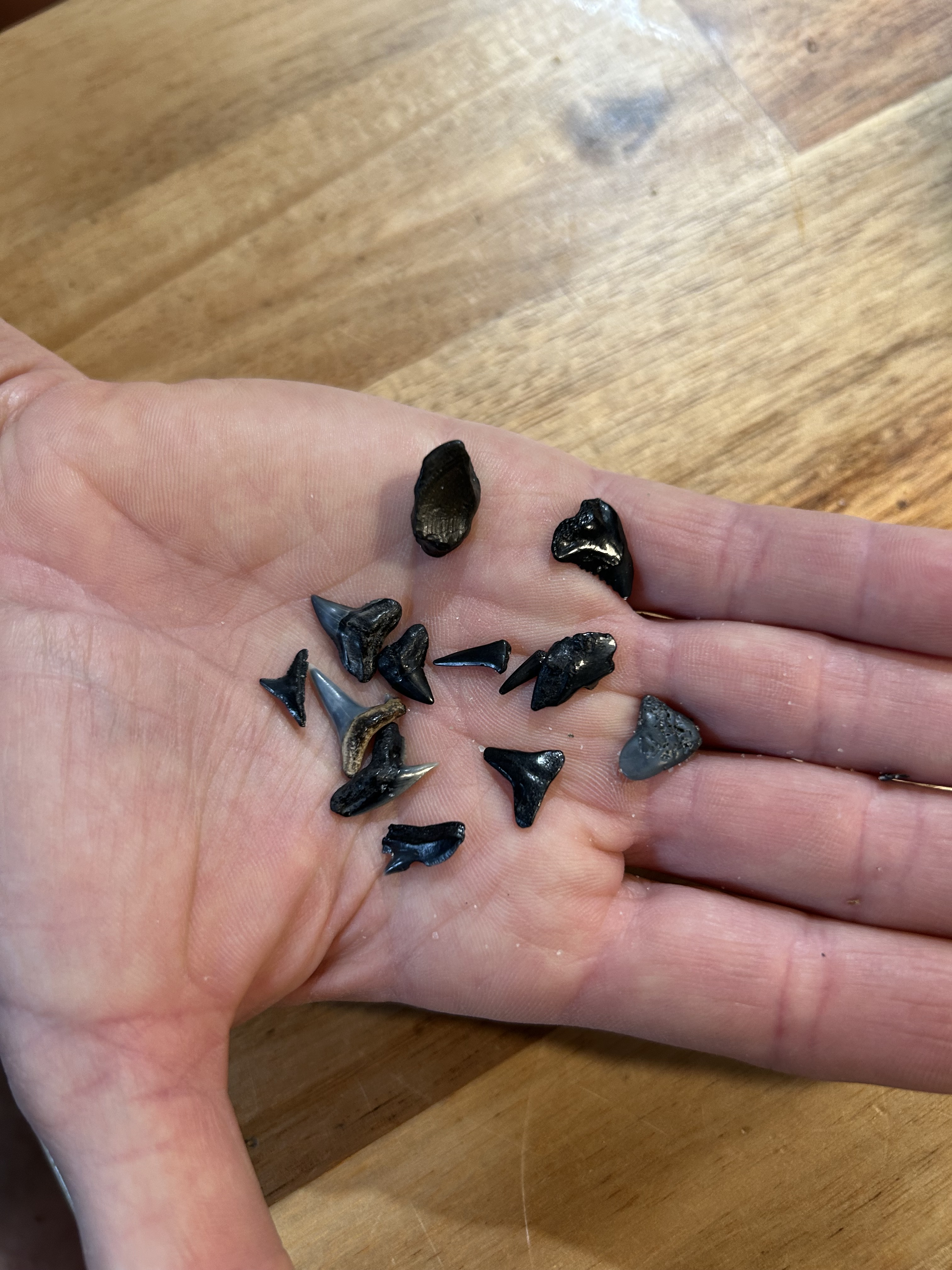
My younger son’s family LOVES to hunt for beach treasures after a storm. Sharks’ teeth are a coveted find. After hurricane Erin’s winds crashed on our shores, they went out to hunt.

Here are their finds: small shark teeth…

And TWO really big ones, which are a rare find.

They showed me with faces still lit up with excitement and joy.

What a Great Board Game!

Looking for a new game that is good for all ages?

Go no further than Mexican Train–a dominoes type game that is so fun. Indeed, quilter Bonnie Hunter revealed a bit ago in her long-time daily blog that she and her husband and friends spent an evening playing “a cutthroat game of Mexican train.”

My two families here love games: board games and card games of all sorts. And it doesn’t have to be a rainy day for any of this crew to enjoy some time playing a game.

My younger son’s family recently introduced me to Mexican Train, and it is my new favorite board game–mostly because it can be played by younger children who know their numbers and have the attention span to play and by adults who who would play at a more complex level.

My son Bryan Enright is slowly developing a web site called “Shore Things” that is all about the Low Country. (He does work full time so adds to this site when he has time.) He has included a section on “Rainy Day Games” that lists lots of games they like, with links to where to buy them–so you can see what each game costs.

On this “Shore Things” site there are lots of pictures of our beaches, for instance. And, some of this area’s rich history. And, some advice on practical issues that arise here, like handling the humidity.

Know that this effort is a work in progress, but just google “Shore Things.” Or use this link:

shorethings-chs.com