Late October 2023

The Holly Berries along the roadside where I often walk are so beautiful now. I hope mine in the front of my home turn this very pretty red.

Some days are cool enough now that dinner on the porch is best when sitting in a sunny spot and wearing a sweater. But not all days; the past two days have seen me finding a pair of shorts and a short-sleeve t-shirt–at least in the middle of the day.

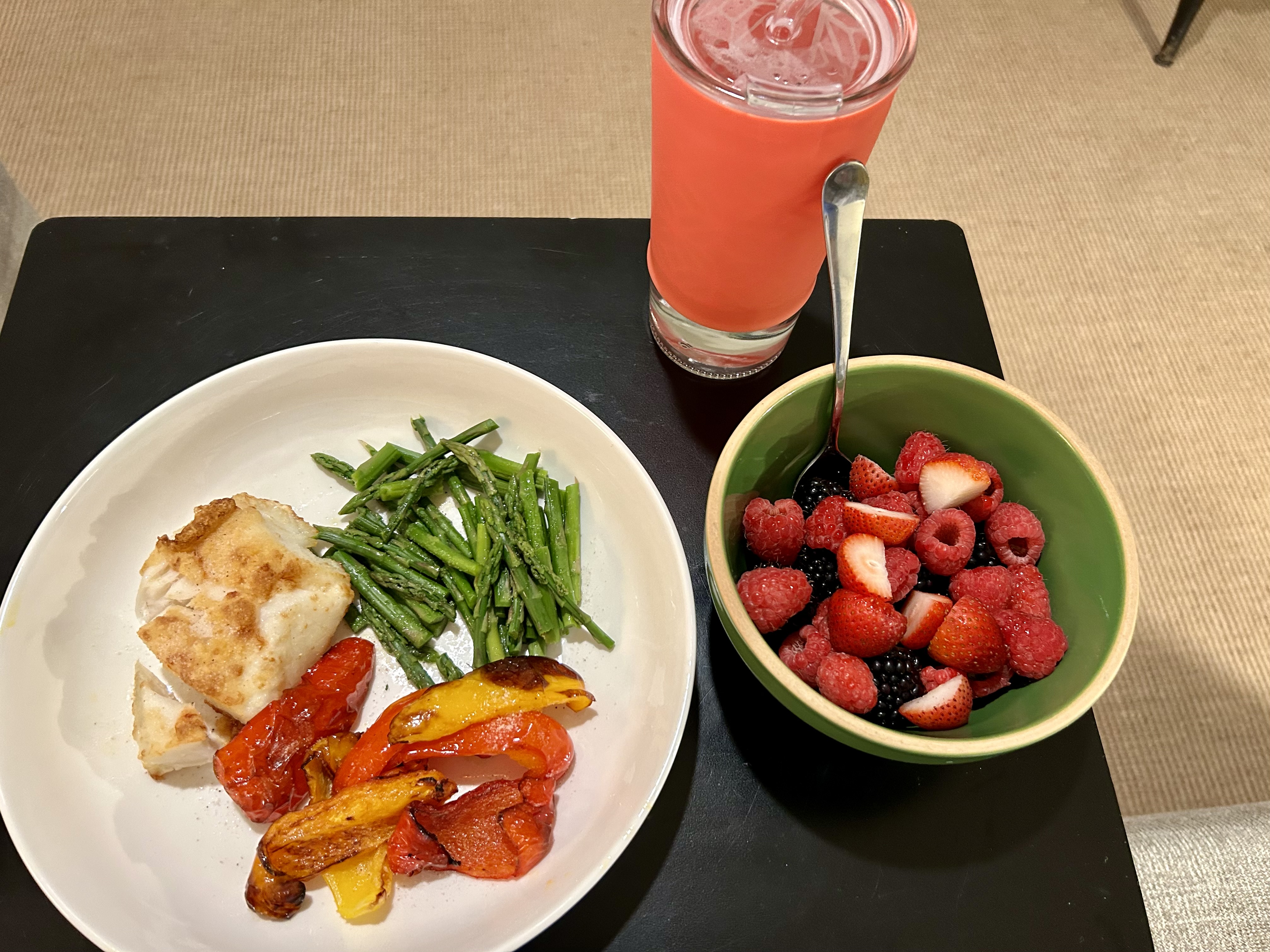
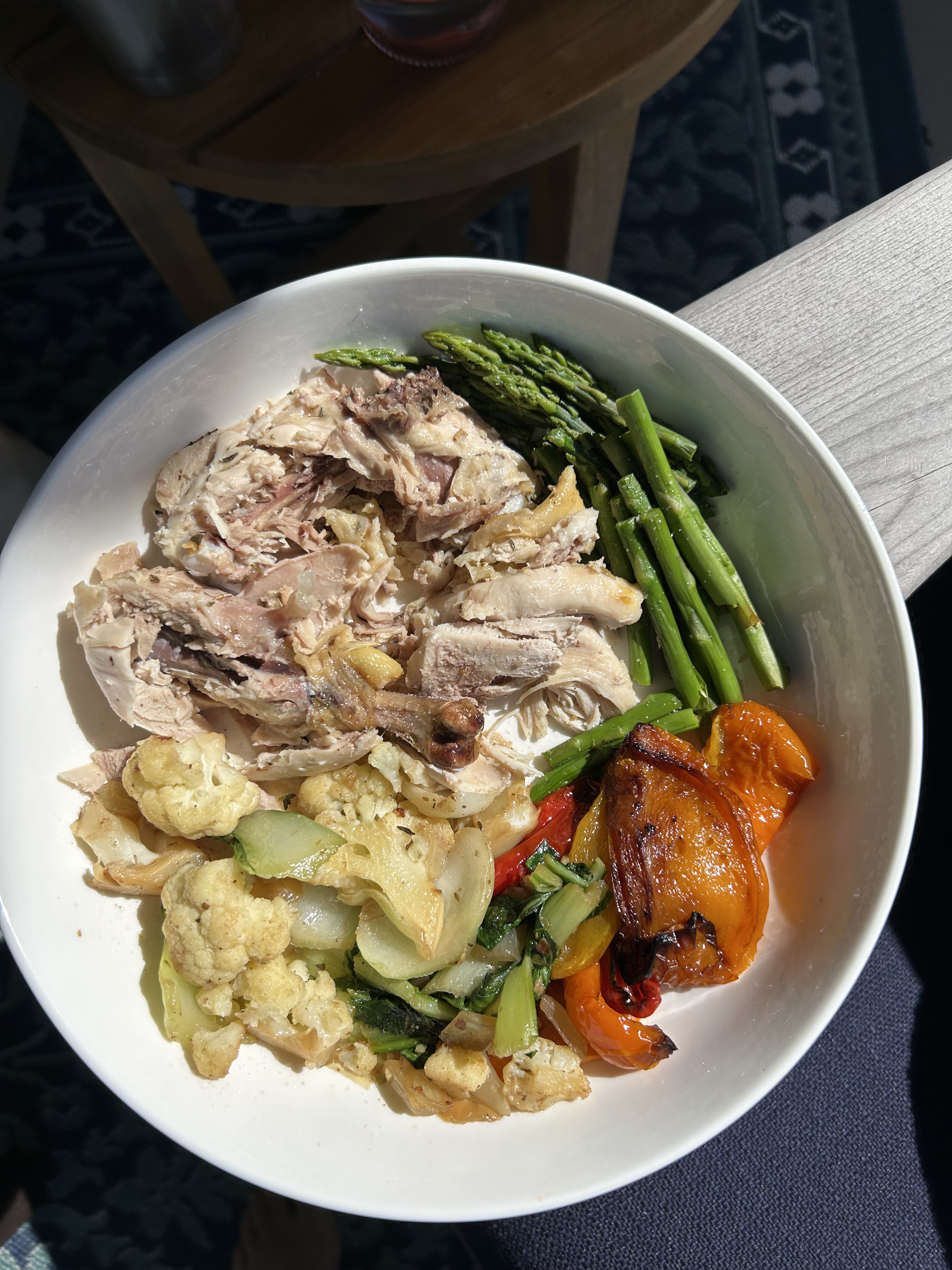
The air fryer does a great job with fish filet coated lightly with a gluten-free panko and sweet peppers. The asparagus got cooked in the microwave. The berries are a treat.
Last week a host of repair men were in and out of the house–at the 11-month occupation “clean up” of things needing fixing. I roasted a chicken last Monday, so had some meat for a few days. The cauliflower and baby bok choy was pan sautéed in a little duck fat–with herbs and garlic, of course.
I decided to go back and add a middle line of quilting to the solid bar strips in Traverse–and I’m so glad I did. They just needed…more. I am nearing the end of this hand-quilting project, but have some wide bars to do before I can say “done.” My stitches, front and back, are so much more steady and reliable now.

Yesterday I had dinner with Bryan, Corinne, and the girls–and Corinne’s mother (Cheryl) who is here for a few days. I have not seen her in over 10 years, so it is delightful to see her again. Cheryl is a very special person.

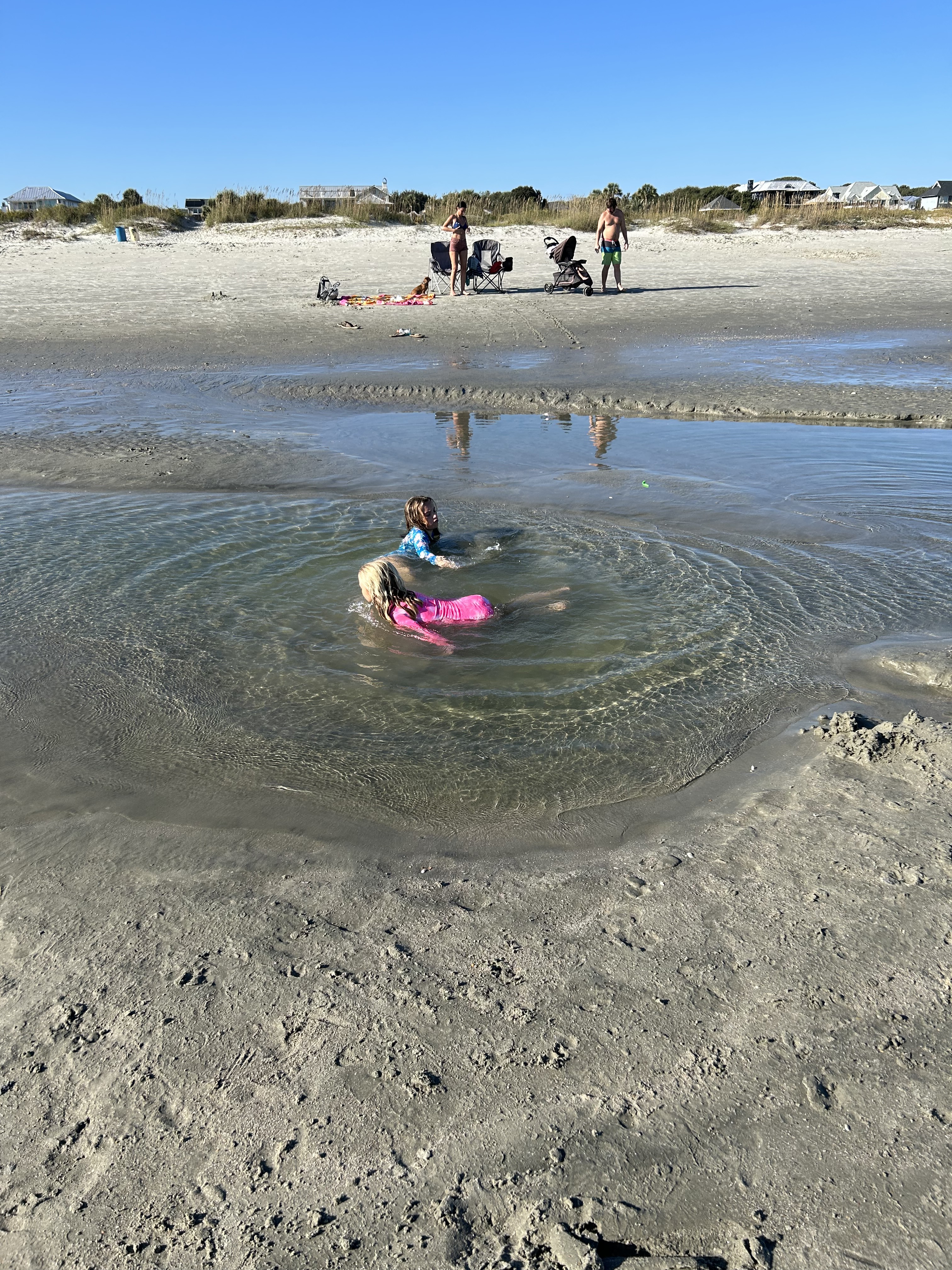
Two granddaughters went with me for a quick walk on the beach late yesterday afternoon–and they went swimming–though the water is colder now. You can just see their heads out among the waves. They warmed up in the tidal pools left up on the beach.

We used to call these pools “buffalo holes,” and I have idea why–it came from my Georgia mother way back in the day.
I’ve almost finished a quilt top made with 1 1/2-inch squares I cut from the Cotton+Steel/Ruby Star Society fabrics. When I had leftover scraps I cut them into useable pieces–based on quilter Bonnie Hunter’s scrap system. I should have a picture to share in a few days.

I Saw a Monarch Butterfly

And it was the second one I’ve seen in my flowering plants in the past week.

I was surprised as I would have thought the Monarchs would have headed west before they get to the South Carolina coast.

But as it turns out that there is a very, very interesting thing going on with the Monarchs in South Carolina: some here on the coast stay here all year, which is a conclusion made after years of study. Here is a quote from the article linked below from the South Carolina Division of Natural Resources:

“The recently published research indicates that monarch butterflies live year-round in South Carolina, relying on swamps in spring, summer and fall and sea islands in the winter. While these monarchs rely heavily on aquatic milkweed (Asclepias perennis) as a host plant for their eggs and caterpillars, they were also found to use swallow-wort (Pattalias palustre) – a viney relative of milkweed that grows near salt marshes and was previously unrecognized as an important host plant for monarchs.

“This research adds another layer of nuance to the fascinating story of the monarch butterfly,” said SCDNR associate marine scientist and first author Dr. Michael Kendrick.”

https://www.dnr.sc.gov/news/2023/Jul/jul11-butterflies.php

The monarchs upstate (to the north and west) in South Carolina are migrating likely to Mexico. Here’s an article from Clemson University:

And, here’s a link to information about Monarch migration in the United States:

https://monarchwatch.org/migration/

Who knew?

But, life happens…

Which is one of the marvels of Mother Earth.

Beggars’ Lice

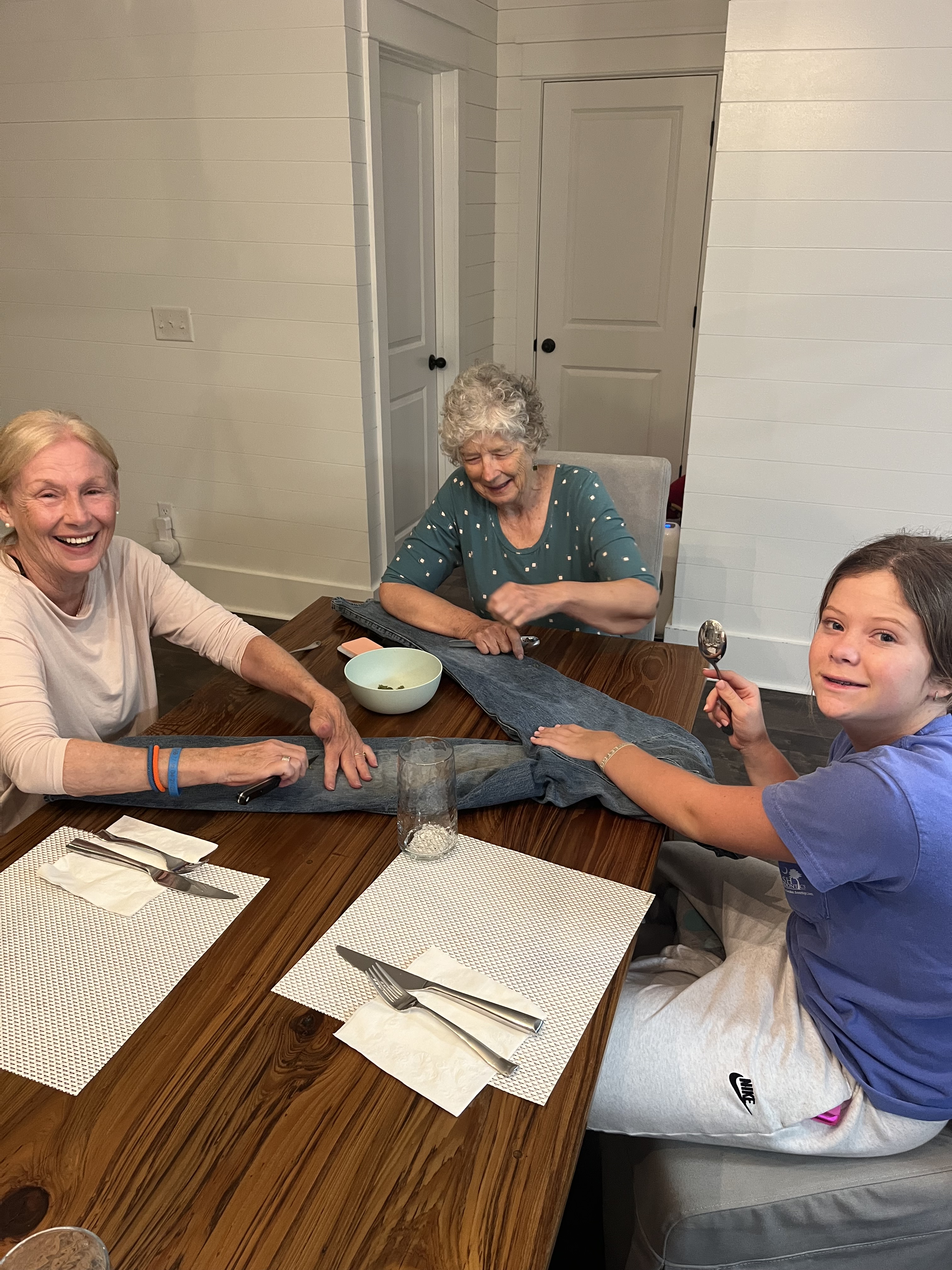
Last Sunday we gathered at Mike and Tami’s to celebrate Debbie’s birthday (Tami’s mother). Mike and Tami had been hard at work with various garden projects, which resulted in this kind of “beggar’s lice” sticking to their pants. And, to the dogs, which took some days to rectify once the seeds got wound up with the dogs’ hair.

“Beggar’s Lice” are seeds that a “weed” plant produces. The seeds have POWERFUL gripping power if one brushes up next to the host plant. I grew up with the name “Beggar’s Lice,” but there are other regional names for this seed. And, several plant species that produce this kind of seed.

If you google “beggar’s lice,” a page will appear with lots of pictures and links to information about his seed, like this one: https://en.wikipedia.org/wiki/Hackelia_virginiana

While Michael was organizing our dinner, we women gathered to try to get the “lice” off of the various clothing items. Tami had already spent about three hours the night before trying to get the lice off a pair of her pants. (Debbie is on the left and granddaughter Mina, on the right.). We tried the flat edge of knives, spoons, and a carrot peeler to scrape off the seeds. It was easier to get them off the jeans than the knit-type fabric in the above picture.

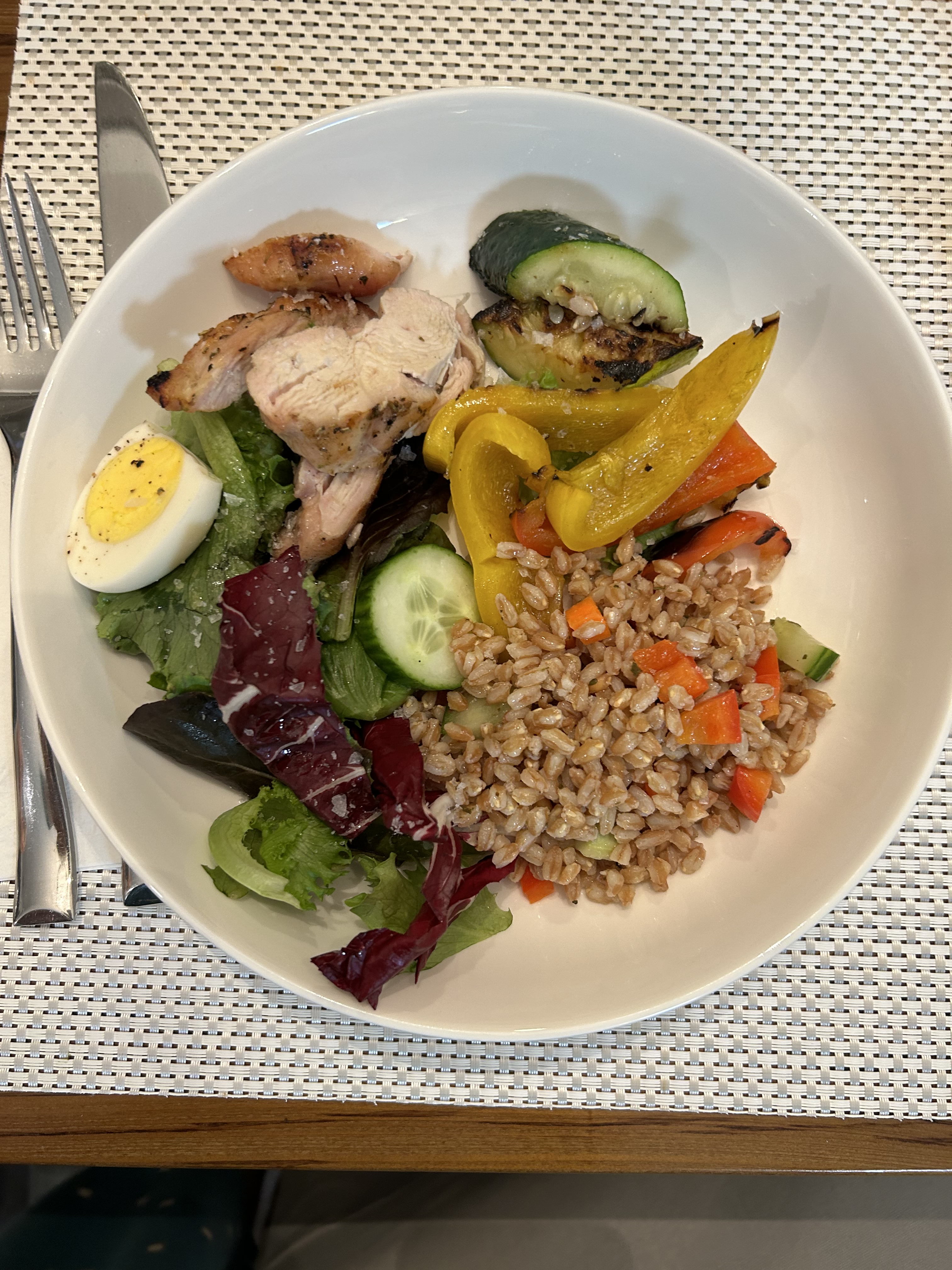
While we “persevered,” Mike made us a beautiful dinner. Here’s my bowl–which is missing the beautiful sliced heritage tomatoes dressed with minced herbs, avocados, and fresh mozzarella balls. Mike grilled the chicken breasts, zucchini, and sweet peppers. The grain salad is barley and contains more diced veggies. It was dressed with olive oil. (You could add an acid, like lemon juice or vinegar.) Mike’s salads are always fun: this one had radicchio included, which I love. And the hard boiled eggs are a colorful and nice inclusion.

I can say that we were “eating the rainbow” with this meal.

That Grass is Blooming PINK

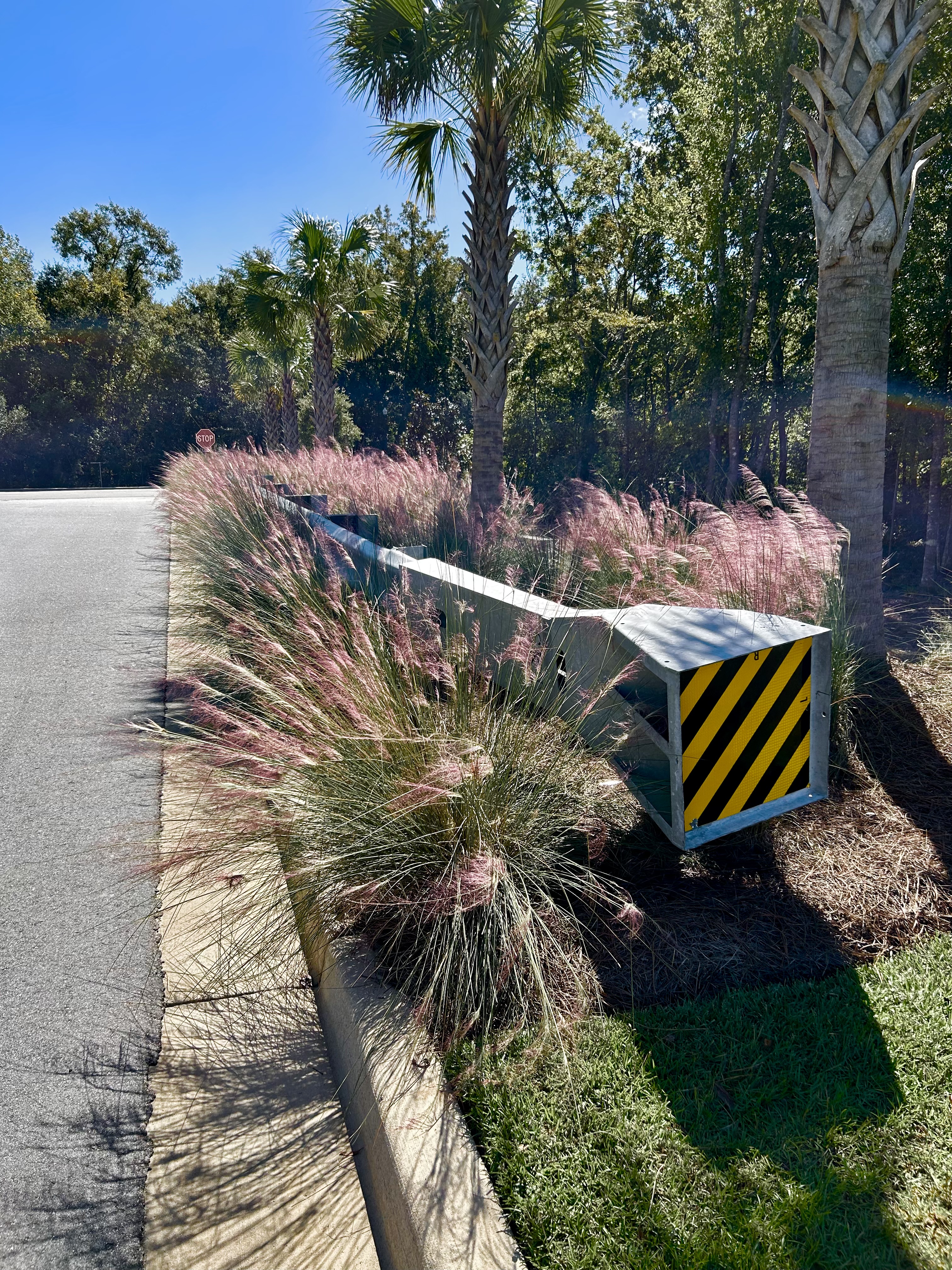
It is Muhly Grass, and I see it planted everywhere. It’s around homes, and it’s in islands in the middle of roads, and it’s in shopping area parking lots. It’s everywhere in this region. And it is a “sweetgrass” plant.

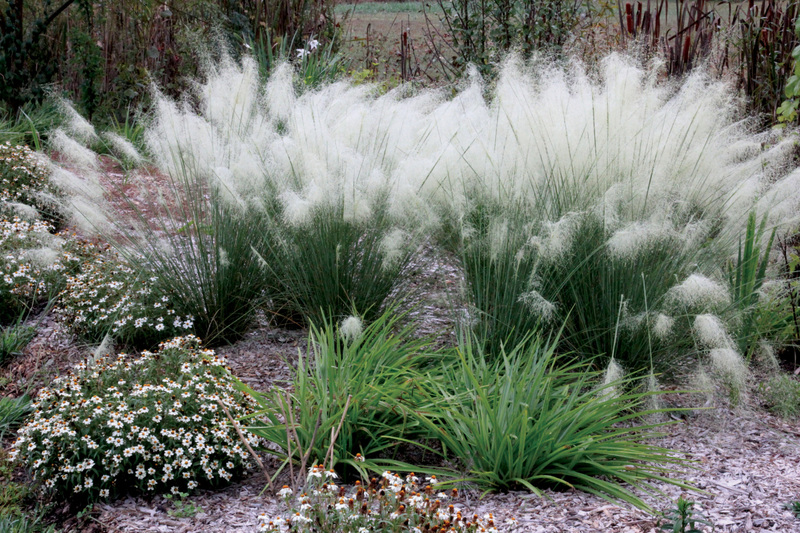
It also comes in a white version that I saw just the other day. Here is the pink variety along the entrance to my development.

When the sun catches the blooms, they glow. The white ones literally look like spot lights swaying in the wind.

All of these blooming grasses have delighted me over the years, and I had other blooming grasses, not the Muhly, in my Virginia and Maine gardens. Muhly “sweetgrass” is new to me.

The road outside of my development has palms and Muhly grass planted. But this Muhly grass won’t be blooming this year, and that’s because it’s being “harvested” by local people in the dark of the night for “sweetgrass basket” making, which is a big market here. The harvesters pick stems from the middle of a Muhly grass, leaving the outside stems intact.

Here is a link to more Muhly grass information from Clemson University, which has a big horticultural division.

https://www.clemson.edu/cafls/demo/plant_profiles/muhlenbergia-capillaris-pink-muhly-grass.html

Ragdoll Cats

First, DIL Tami reminded me after seeing the post on coyotes that they have found three carcasses, mostly bones and tails, in their front yard in recent weeks: a raccoon and, I think, two opossums. The raccoon tail was really big. And the opossum tail wasn’t small either.

This family has two medium-sized dogs, so family members are going outside with the dogs when they go out now. A 6-foot fence surrounds the back yard, but… None of us put it beyond coyotes to surmount a fence. Better safe than sorry.

Our weather has been delightfully cooler. I’m sitting here now wearing a long-sleeved t-shirt and thinking about long pants. But it will get warmer later today. Walking has been delightful recently.

We did not get one drop of rain out of Ophelia. I was hoping for an outlier rain band as it whirled around, so I put out all the fall fertilizer. I did have to get the hoses out and water deeply.

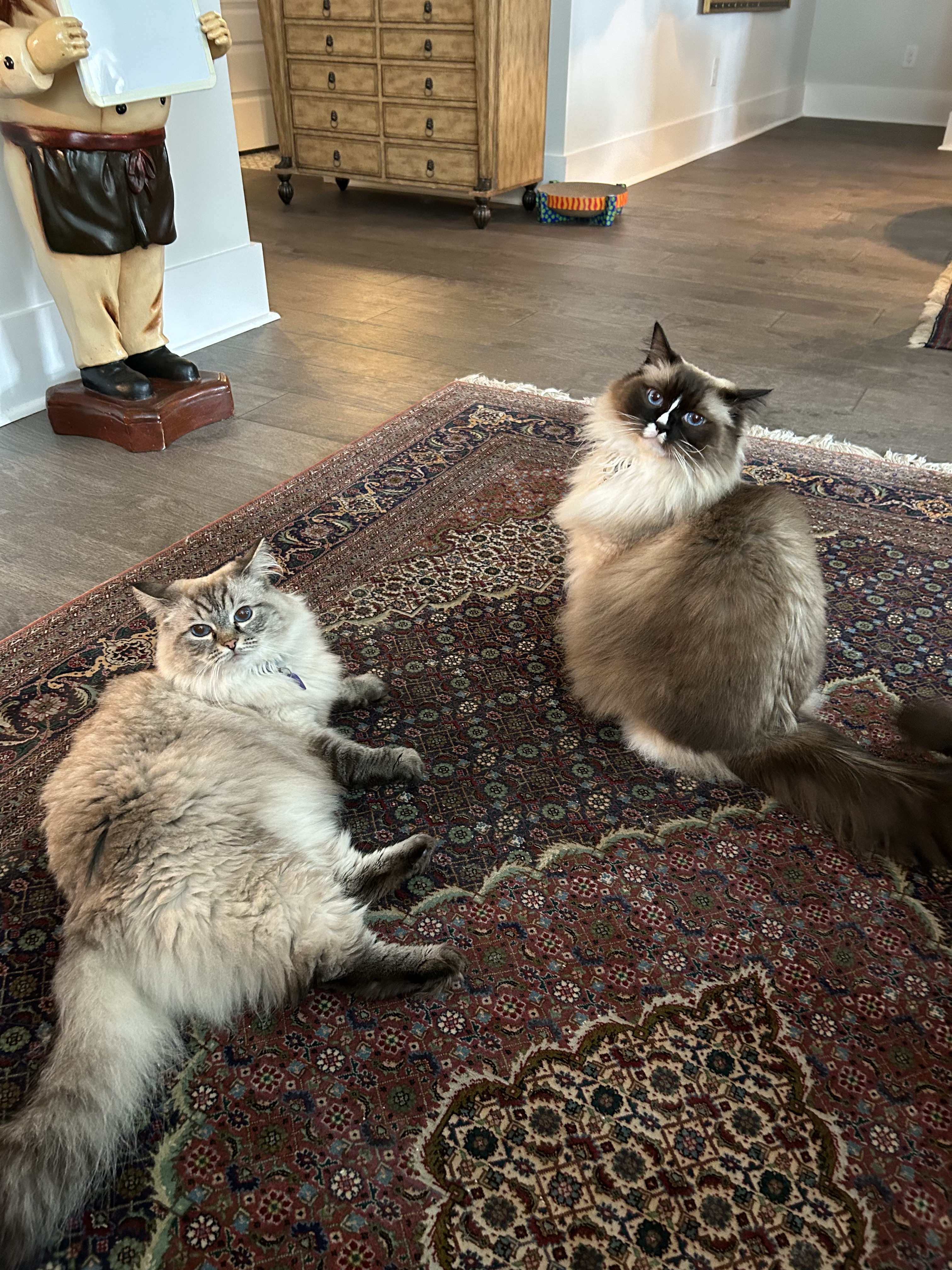
My back-door neighbor has been away, and I checked on her two beautiful cats while she was gone. They clearly missed her so I went over and loved on them. By Friday, the male was waiting for me when I opened the front door, and the female came running right away. She is usually more cautious.

Reba is on the left, and Toby is on the right. They are Ragdoll cats, which is totally new to me. They are called “rag dolls” because they go limp when one picks them up, which I did not test out.

The breed was developed in California back in the 1960s. These cats are known for gentleness and are affectionate. Both showed me their bellies by Friday, and Toby gave me some toe licks.

https://en.wikipedia.org/wiki/Ragdoll

I’m obsessed with hand-quilting Traverse. I think because I’m almost to one end, having started in the middle. The quilting is slow, but going well. And “Summer Camp” is partially loaded on the longarm and is waiting for me.

The family is gathering to celebrate a granddaughter’s 16th birthday today. How did that happen? I’m looking forward to seeing my family all together (except for the young men away at their colleges) tonight.

Coyotes?

Oh, yes. They live here among us in coastal South Carolina.

A few months back, my back door neighbor had one sleep next to her front door on her porch–leaving evidence of hair and mud.

And last week, she saw one next to a small pond near where she was walking out along the road where many of us walk. I wish I’d seen that coyote, but will start looking more now.

Out on the barrier islands near me (Isle of Palms and Sullivan’s), coyotes have been seen frequently cavorting on the beach in the early morning. Of course they are a risk to the dogs being walked out there early morning. And to dogs left outside in fenced yards.

In 2022, there were 59 sightings on Isle of Palms according to Ryan Warren, an animal control officer on the island.  Of course these sightings may involve some of the same coyotes who live on the island now.

I’m thinking that late summer/early fall is when this years coyote pups are getting pretty big and need more food. Female coyotes give birth in April or May, and need about six months to be able to hunt on their own. They leave mom at about one year. Mating pairs are monogamous. And, yes, coyotes can and do mate with wolves and other (probably wild) dogs if they can’t find a coyote mate.

BUT, also, human urbanization has forced many animals to figure out how to live in more urban environments. Foxes have. Some bears have, especially in Alaska–info which is the result of watching a LOT of tv programs on wild life. It is interesting to me that programs on the “dog” family have NOT included coyotes. Foxes, wolves, African wild dogs, yes. But nothing I’ve seen on coyotes. (But I have not looked either.)

One coyote in this region followed a doctor into his work space, scaring both of them. The doctor went out another door, and the coyote left that way too. There are lots of videos of coyotes walking down sidewalks in this region.

Coyotes are a mixed bag. They can and will eat dogs and cats. But they also eat rats, mice, rabbits, Canadian geese, and so on.

Here’s an interesting site filled with pictures and information about “urban” coyotes:

And here’s a local article:

https://www.postandcourier.com/moultrie-news/news/coyote-found-in-shem-creek/article_697f4e0c-4e4b-5d51-a4e0-0739d31fa186.html

One thing is for sure: coyotes are here to stay.

Stick Insect

One of my neighbors has figured out I am interested in insects. She sent me this picture the other day. This insect is new to me.

It is a stick insect–a walking stick version.

They can range from 1 to 12 inches and live mostly in temperate or tropical environments. They are masters of camouflage. They are herbivores. They are parthenogenetically organized, so females can produce unfertilized eggs that grow into new stick insects. These insects reach maturity between three months and one year, and usually live up to two years. More than 3,000 species of stick insect exist, many of which are susceptible to habitat destruction, pesticide use, and collection for the pet trade.

Who knew? Stick insect pets?

Here’s a nice to information used above and more:

https://www.nwf.org/Educational-Resources/Wildlife-Guide/Invertebrates/Walking-Sticks

A Butterfly

So, today I am, like others here along the South Carolina coast, waiting to see if Hurricane Lee does indeed make the predicted turn to the north.

While that turn north would make me happy, it would also mean that it likely would head to the Gulf of Maine coast, where so many of my friends live. They have had the wettest spring/summer on record, so the ground is soft and already wet. It is still raining every day or every few days in coastal Maine, say my friends. High wind would likely topple trees–so my Maine friends are worried.

I’ve seen quite a few of these beautiful butterflies soaring around my flowering beds in recent weeks.

What interesting patterns on the wing undersides:

It’s a Variegated Fritillary:

Variegated Fritillary. Identifying Characteristics: Variegated Fritillary butterflies have a wingspan of 1.75 to 2.25 inches. The coloring of this species is tawny brown to burnt orange with black dots and lines.

38 Common Butterflies found in South Carolina! (2023)

Beach Finds: Shark Teeth

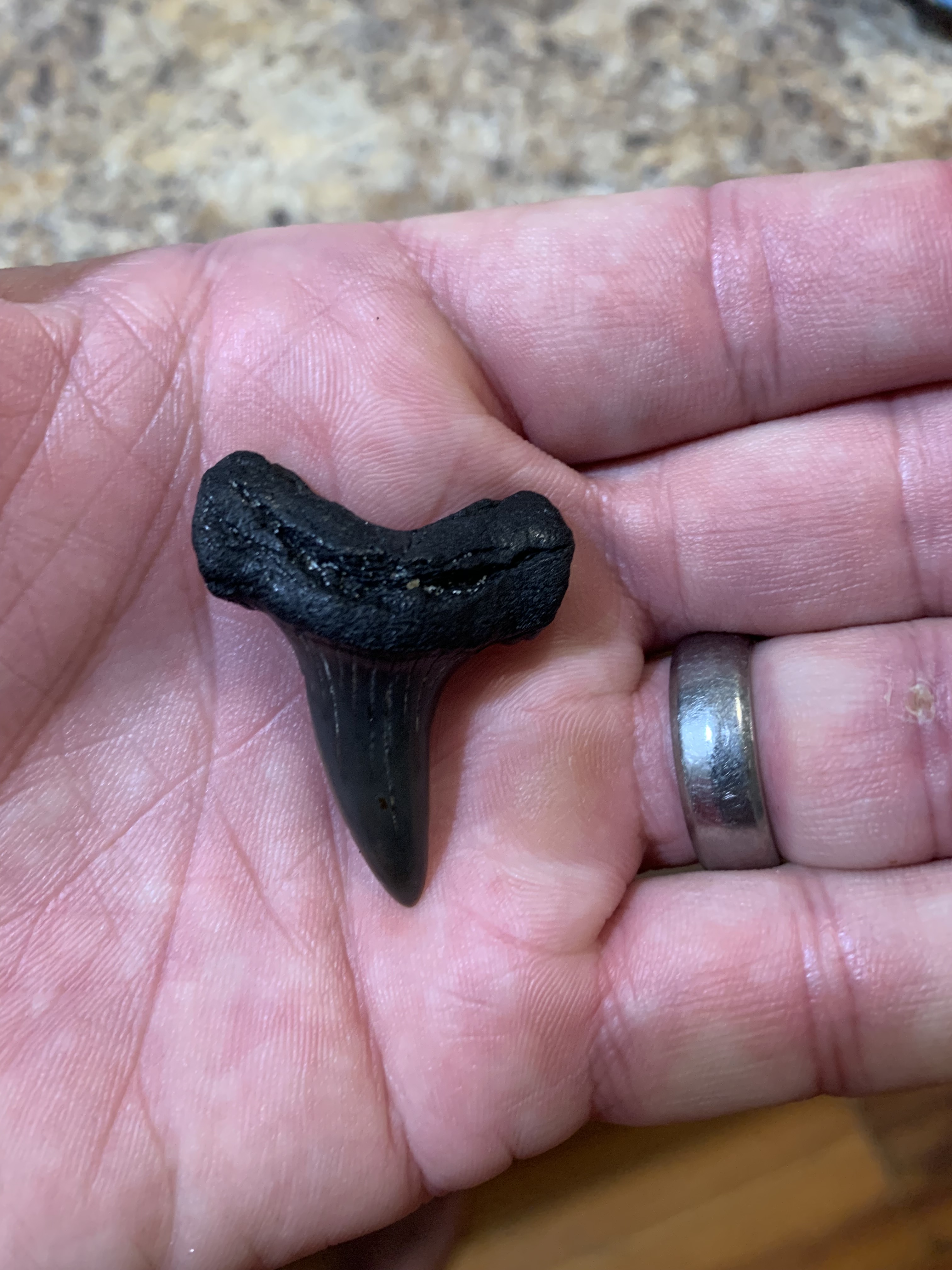
Son Bryan, DIL Corinne, and their three girls scour the beach when they arrive there, looking for prehistoric shark teeth.

This one, found recently, is a rare find–as it is SO BIG and not broken. It is from a GRANDPARENT to the famous Megalodon shark, an apex predator back in its time. (There are folks here who can identify these shark teeth.)

Megalodons were HUGE sharks, kin maybe to today’s Great White Sharks. Here’s info from Britannica about the size of this shark:

“This data suggests that mature adult megalodons had a mean length of 10.2 metres (about 33.5 feet), the largest specimens measuring 17.9 metres (58.7 feet) long. Some scientists, however, contend that the largest forms may have measured up to 25 metres (82 feet) long. Studies estimate that adult body mass ranged from roughly 30 metric tons (1 metric ton = 1,000 kg; about 66,000 pounds) to more than 65 metric tons (about 143,000 pounds), adult females being larger (in both length and mass) than adult males” (https://www.britannica.com/animal/megalodon).

Here is another recent find that is smaller but in good condition:

The idea of the great Megalodon sharks has sparked a novel that, in turn, has sparked several movies called THE MEG. Wikipedia explains:

Meg: A Novel of Deep Terror is a 1997 science fictionhorror novel by American author Steve Alten, and the first novel in the MEGseries. The novel follows the underwater adventures of a Navy deep-sea diver named Jonas Taylor.”

I will confessed I watched the movie–I stumbled into it one night. And it was interesting to view how the movie portrayed the bigness of the Megalodon shark.

Here’s a link to more info on the Megalodon from wiki:

https://en.wikipedia.org/wiki/Megalodon

“Happy” Quilt is Basted

But first, here is more info on “the turtle”–learned from my family who live nearby. The turtle is likely VERY old. Three generations of the family who own her have taken care of this turtle: the grandmother passed the turtle to her daughter, who passed the turtle eventually to her daughter, the current owner. The turtle IS… VERY BIG. And, obviously, long-lived.

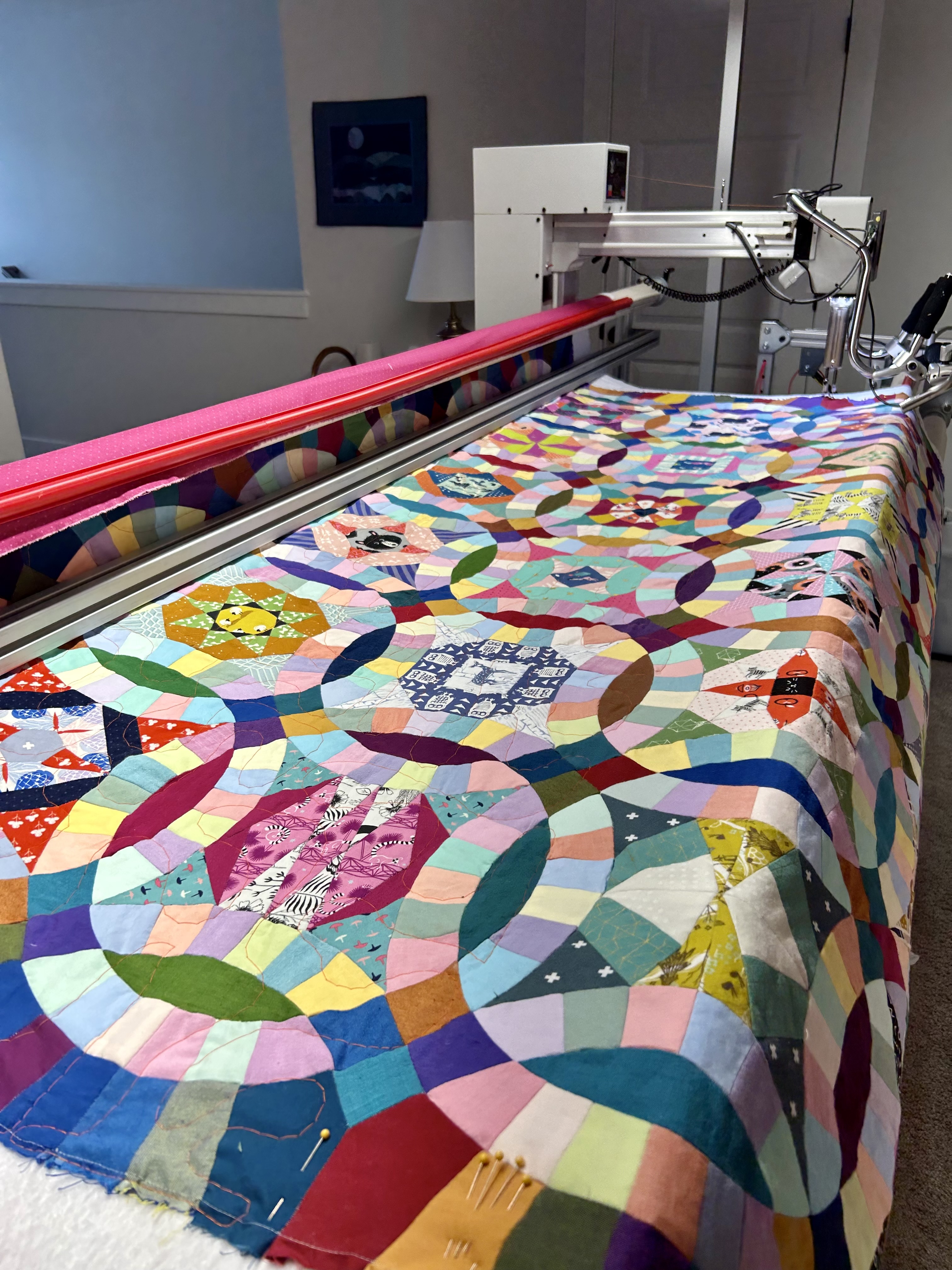
“Happy” is now basted and ready for hand quilting. Here she is on the longarm.

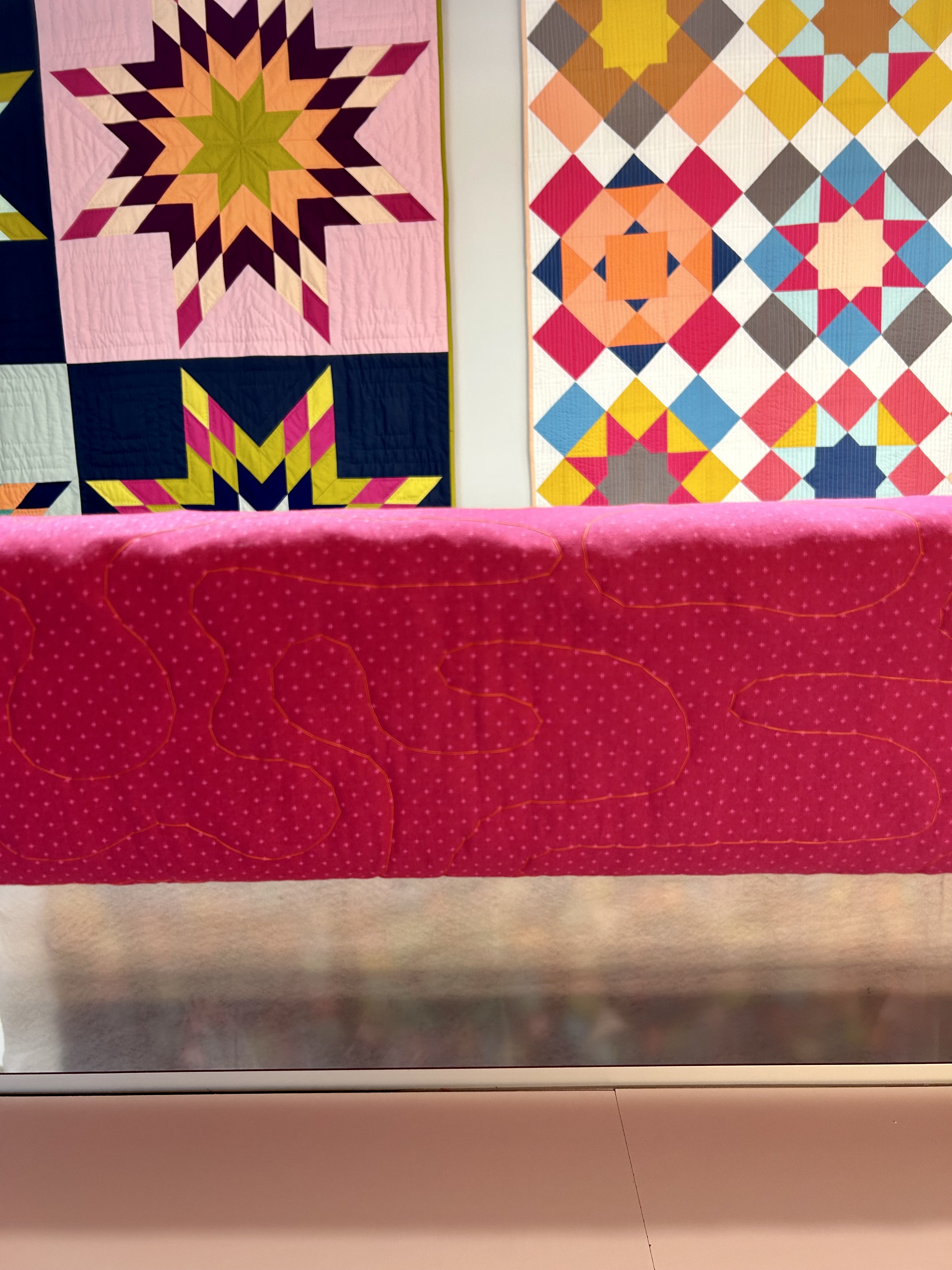
Below you can see the big basting stitches I can do on the longarm. And, this time I covered the quilt more densely than I did on Traverse. It is very easy to clip these threads when I need to do that.

The backing is this lovely Ruby Star Society fabric–which is in keeping with the Cotton+Steel/Ruby Star Society fabrics I used in the centers of the blocks on the front.

And here she is all done.

It is really hard to get enough light on a quilt in this room. But my longarm light bar gives me plenty of light.

I’m thinking I’ll need a dark solid for binding. I had wondered about the backing fabric for binding, but… I don’t think so. But I’m not sure about that yet.

Now I’ll put Big Red on the longarm. Meanwhile, I think I’ve stopped moving around blocks on the “Summer Camp” mystery quilt from the Modern. Quilt Studio. Maybe it needs to be called “Summer Camp.”