Turkey Tracks: “Corinne’s Beach Braid,” A Quilt

Turkey Tracks:  July 24, 2011

“Corinne’s Beach Braid,” A Quilt

Last February during my annual trip to Williamsburg, VA, to quilt with my Virginia quilt friends and to attend the Mid-Atlantic Quilt Show, I started a special quilt for my daughter-in-law–and new mother–Corinne–whose birthday is the day after mine.  Pisces!  ( And yes, we both love water.)

I used a French Braid pattern from FRENCH BRAID QUILTS, by Jane Hardy Miller and Arlene Netten, which I have long admired.

http://www.amazon.com/French-Braid-Quilts-Dramatic-Results/dp/1571203265/ref=sr_1_1?s=books&ie=UTF8&qid=1311529589&sr=1-1.

Since Corinne lives on Isle of Palms, SC, 2 blocks from the beach, I wanted to use blues, greens, and sandy colors, from light to dark–with a contrasting inner diamond of red/orange–all batiks.

To execute the pattern I picked from the book, one was supposed to pick about 10 fabrics for a run, with 2 for starting and ending triangles.  (These quilts can be directional, with a run of fabrics that moves from light to dark, or vice versa.)  I came home with more like 14 in total.  So, the two runs together, made for a LONG narrow quilt, which I realized when I saw the first few runs actually completed.  I knew I had to add two more runs at a minimum and that I would be bumping up against my long-arm machine width limit of about 83 inches.

I had used all of the orange-ish batik fabric I was using for the inner diamonds, and I was lucky enough to find it THE LAST DAY of the big quilt show in Williamsburg.

Finally, I discovered Anne Bright pantographs for the quilting and found two that had beach motifs–I ordered the one with sea horses, stars, big conch shells, and so forth for the body of the quilt, and the one with flip-flops and shells for the border–which would mean I would have to repin the quilt sides after quilting the top and bottom borders and the body of the quilt to get at the side borders.   You can see Anne Bright’s web site at http://www.annebright.com/shop/category/store/paper-pantographs/.

So, here’s the finished quilt across the end of the bed:

And, here it is from out upper front porch–in bright sun which has distorted the colors.  John and valient Talula (tiny hands on the left) are holding it.  You can just about make out the flip-flop pattern on the bottom border.
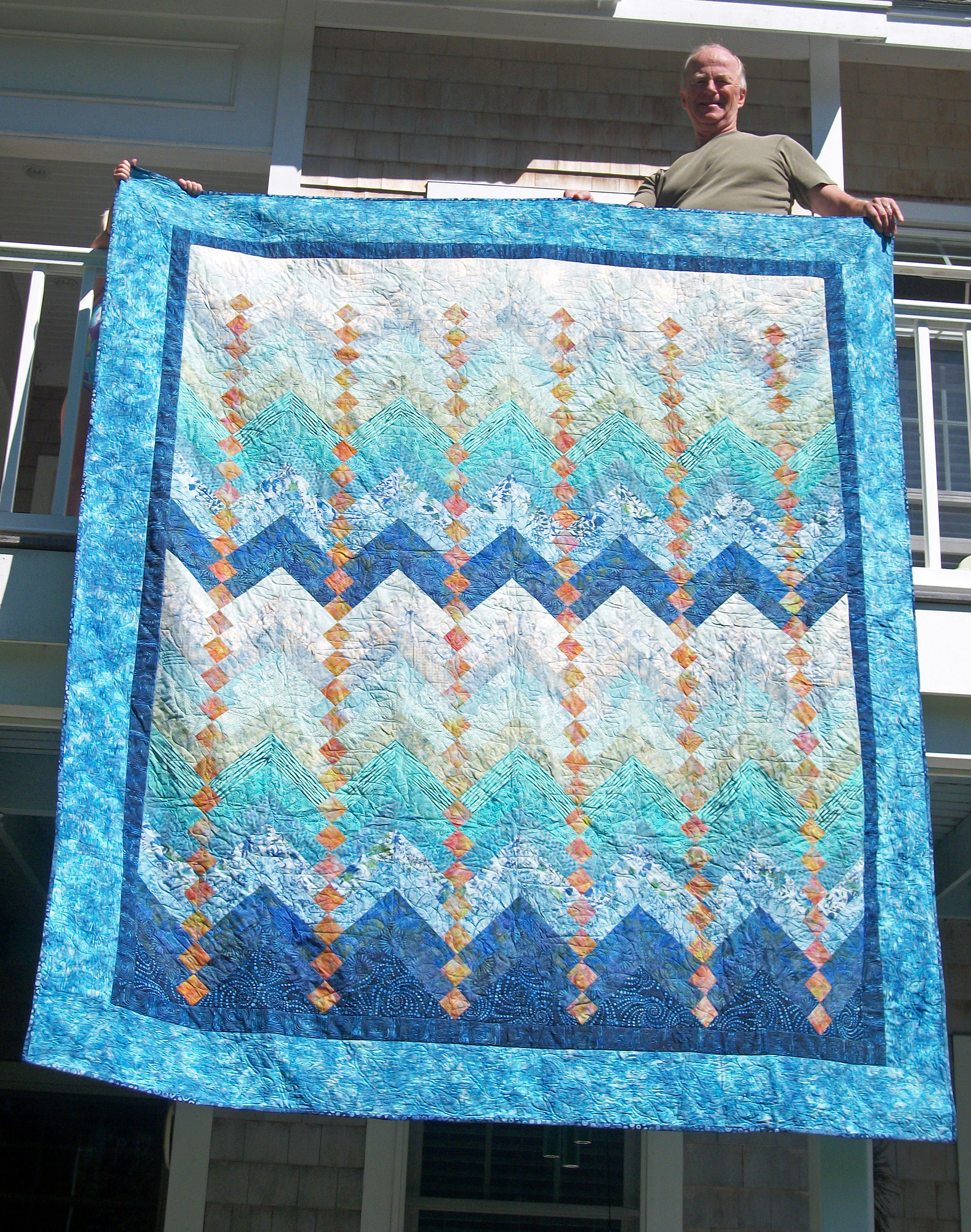
Several long-arm quilters strongly suggested that I use a poly thread–So Fine–for the bobbin thread.  As it is fine, a bobbin goes a long way.  And, So Fine seems to make the top,  cotton thread stand up.  But, the downside, I discovered, is that the elaborate patterns I used on the body of the quilt and on the borders and the stitch-in-the-ditch I did so well do not show on the back of the quilt at all.  See:

Here are some close-ups of some of the braids:

I really love this quilt, and I’d love to make more with the French Braid pattern.  It’s a fun pattern to do and would lend itself to all kinds of interesting color schemes and fabrics.  From now on though, I’m remaining an all-cotton girl!

Turkey Tracks: Prudy’s Quilt

Turkey Tracks:  June 15, 2011

Prudy’s Quilt

My friend Prudy Netzorg is incredibly generous!

She gave me two quilt tops last fall:  a smaller child’s quilt featuring dogs and a lap quilt of bright, lively colors.  (Prudy has a wonderful eye for color.)

I loved both, but knew that she, too, loved one of them especially, but had just lost energy around finishing it.

I had gotten the long-arm just before Prudy’s generosity, and there is a HUGE learning curve for long-arms.  So, Prudy and I agreed that we would go together to buy backs for her tops, and I would pay for those in return for using the quilts as learning tools.  Prudy would bind them and give the little one to a local fund-raising charity for auction and would keep the other.

I tried a pantograph pattern on the smaller one–and learned a lot–to include that I didn’t especially care for narrow patterns.  They repeat too quickly.  I did think the pattern looked like a dog’s footprint and a group of balloons rising–both motifs in the print.

I just finished the larger, bright one.  I think it mostly came out looking pretty good, but it is not perfect, and I like perfect.  I did, however, learn a lot, especially about using templates.

Here’s the quilt finished without the binding, which Prudy will do.  I remember a hot pink binding…


Here’s a detail of the border.  I special ordered a hot pink thread, which I think came out nicely.

Here’s another detail:

Another thing I learned is that it is necessary to take a picture of the whole quilt or draw a quilting pattern–especially with a pieced quilt like this one.  Once the quilt is rolled up on the back roller–which happens as you quilt the length of it–you can’t see what you did at the other end.  I got confused on which way I quilted the pieced blocks, for instance.  I put the loops on the pinwheel blocks in two different places.  And, at one end, I forgot what I did at the other with two blocks.

I did walk away with a new comfort level with templates, and the quilt is lively and fun.

Thanks Prudy!!

Turkey Tracks: Millie Young’s Quilt

Turkey Tracks:  May 29, 2011

Millie Young’s Quilt

Coastal Quilters have an annual auction in the fall.  Two years ago, Millie Young generously donated a beautiful quilt top and over 5 yards of backing and at least 2 yards of fabric that would be lovely for the binding.  I bid on the quilt, but not vigorously since I knew it would take me a long time to quilt it.  I loved the colors!

The quilt showed up again at the fall 2010 auction!  And this time, I had a long arm.  I can’t remember what I paid for the quilt, but it was, truly, a gift.

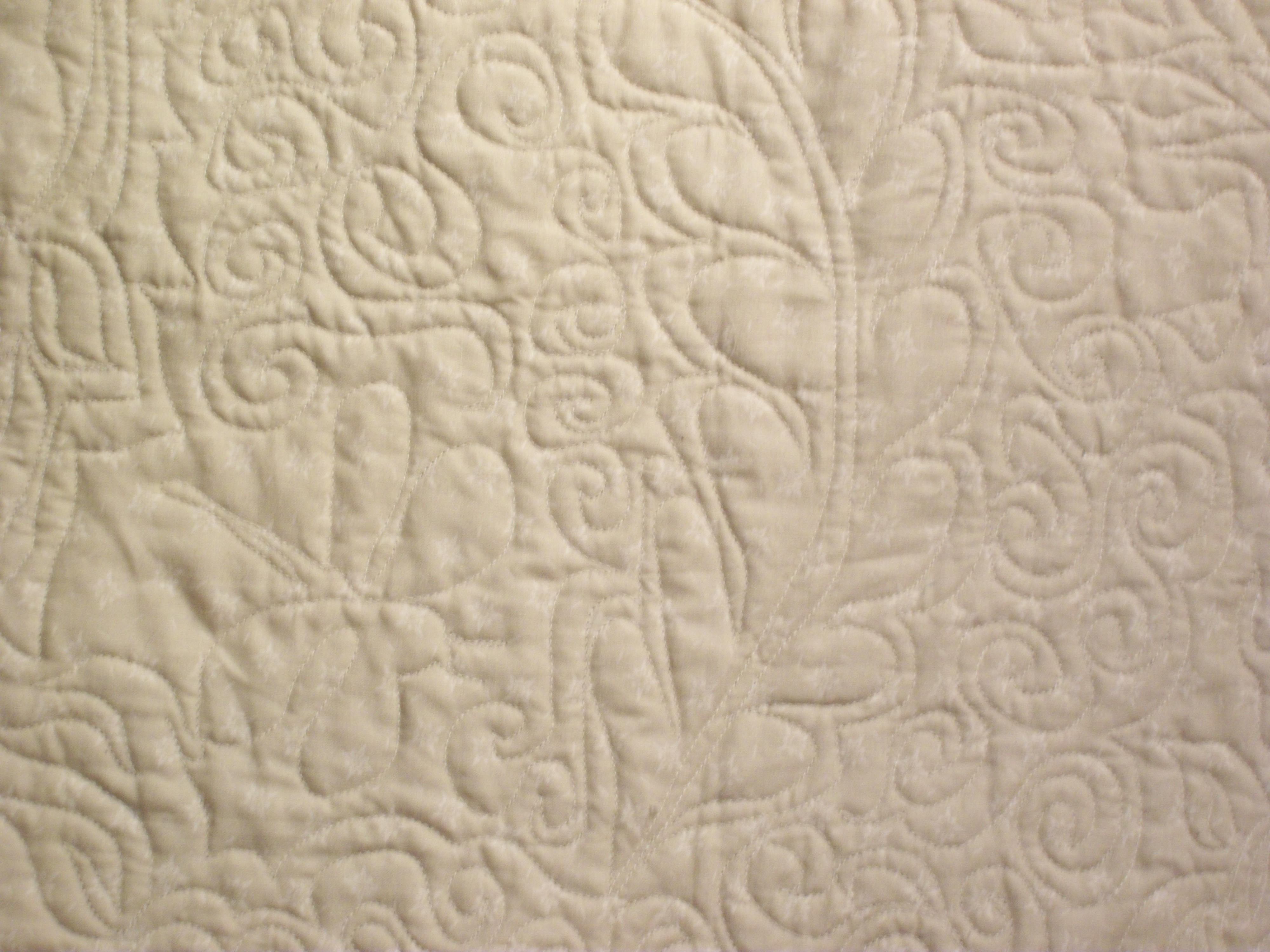
 I used a pantograph on a smaller quilt–generously donated by quilter Prudy Netzorg, so I could learn how.  Learning all the tricks of a long-arm machine is a huge learning curve actually.  So, Millie Young’s quilt became my second pantograph experience.  I chose a big pattern–hyacinths–and it came out so pretty.  When the light catches the quilt, the pattern forms raised areas and creates all kinds of lovely shadowing.

I just finished binding the quilt last night.  Here it is flung across a bed:

And, here’s a close-up which shows the quilting:

I did a great job with the pantograph–but learned to think about how the first and last sweeps of the pattern will play out on the quilt.  I looked at a quilt I have done by a professional and can see that the quilter organized the sweeps so that they are even on both sides.  But, that’s the kind of detail few would see, too.

I chose a peach-colored thread, which came out lovely.

I’m throwing ZEN (you can have the work but not the fruit of the work) out the window on this one.  It’s staying here!  I believe, given the history, that I was meant to have it!

Turkey Tracks: Coastal Quilters’ 2011 Challenge Quilt

Turkey Tracks:  May 23, 2011

Coastal Quilters’ 2011 Challenge Quilt

This year’s Coastal Quilters’ Challenge asked quilters to create a quilt that evoked a packaged product in the grocery store.  Called “The Grocery Store Challenge,” we had to use the colors in a label–all of them if less than four and at least four if more than four.  We could add black or white if we wanted.  And, we had to use some motif from the label in the quilt in some way.  The size was to be bigger as well:  20 1/2 ” square.

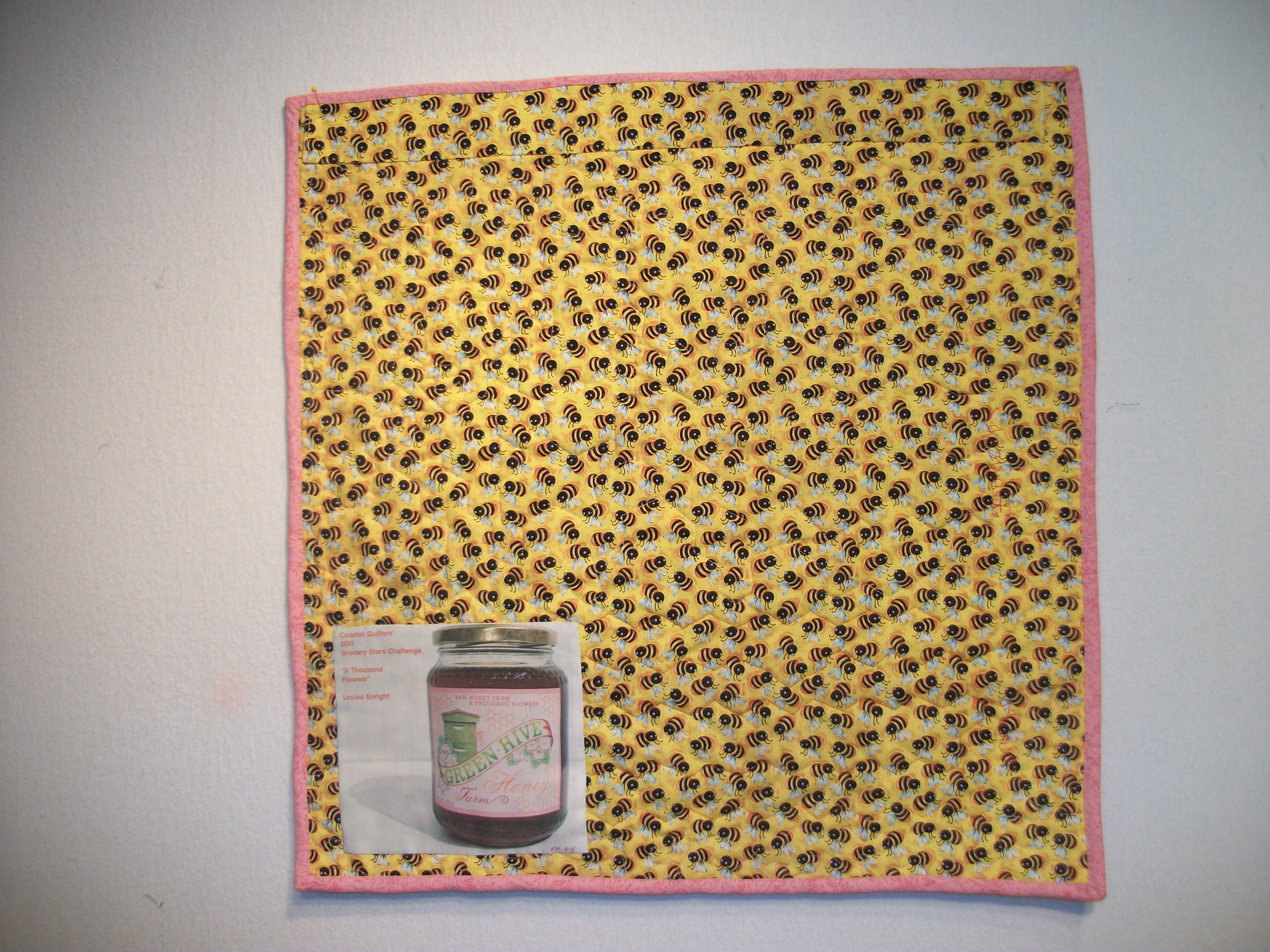
I do not buy many packaged products, if at all, so it took me some time to settle on using one of our local honeys as my product.  We buy it by the case.  I posted a picture of Green Hive Honey Farm earlier on the blog, but I printed my first ever fabric label from that picture for the quilt back.  Here it is on the back of the quilt:

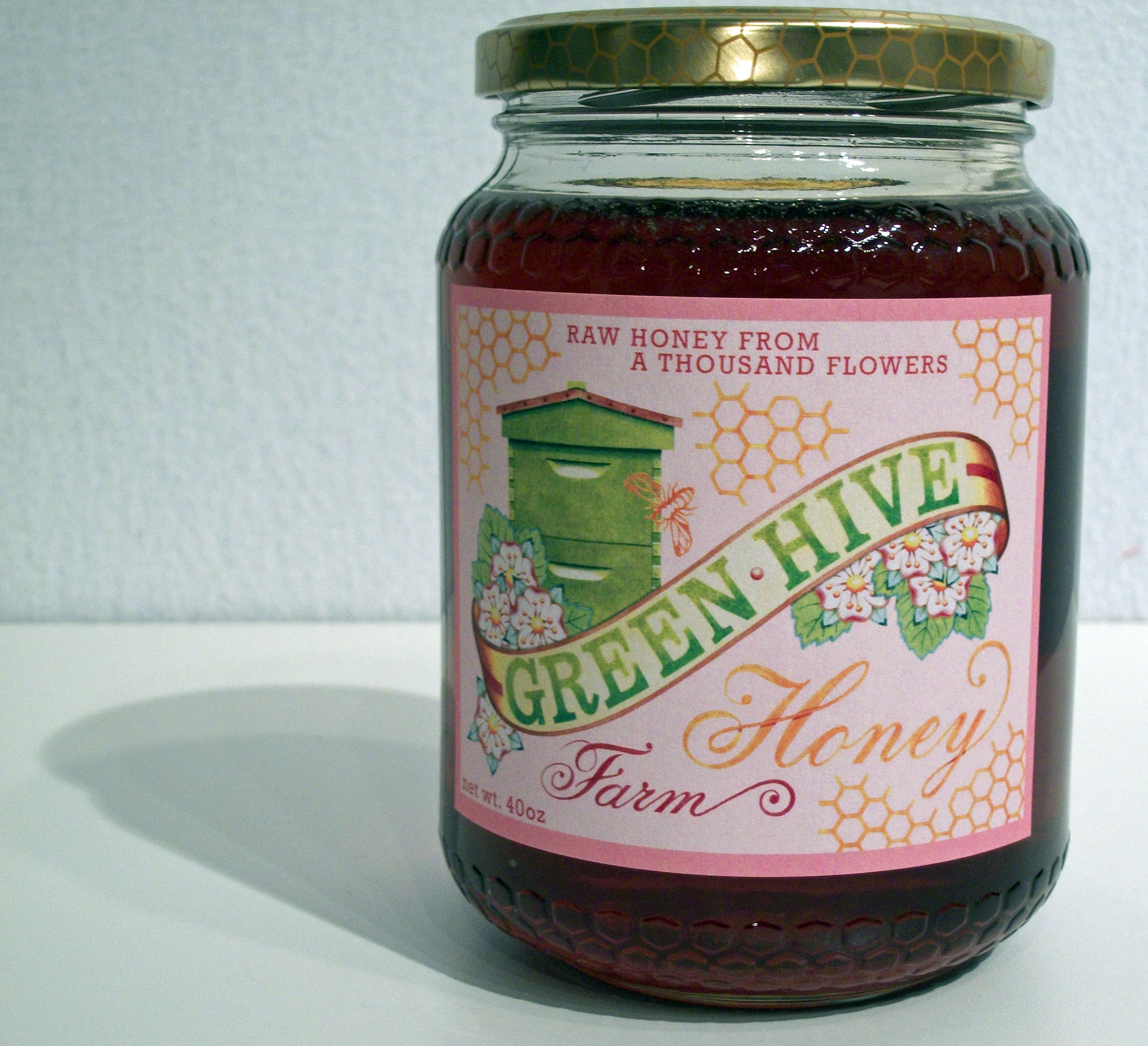
Here’s the jar–which continues to entrance me–close up.  See the hexagon shapes embedded in the glass andn on the lid?

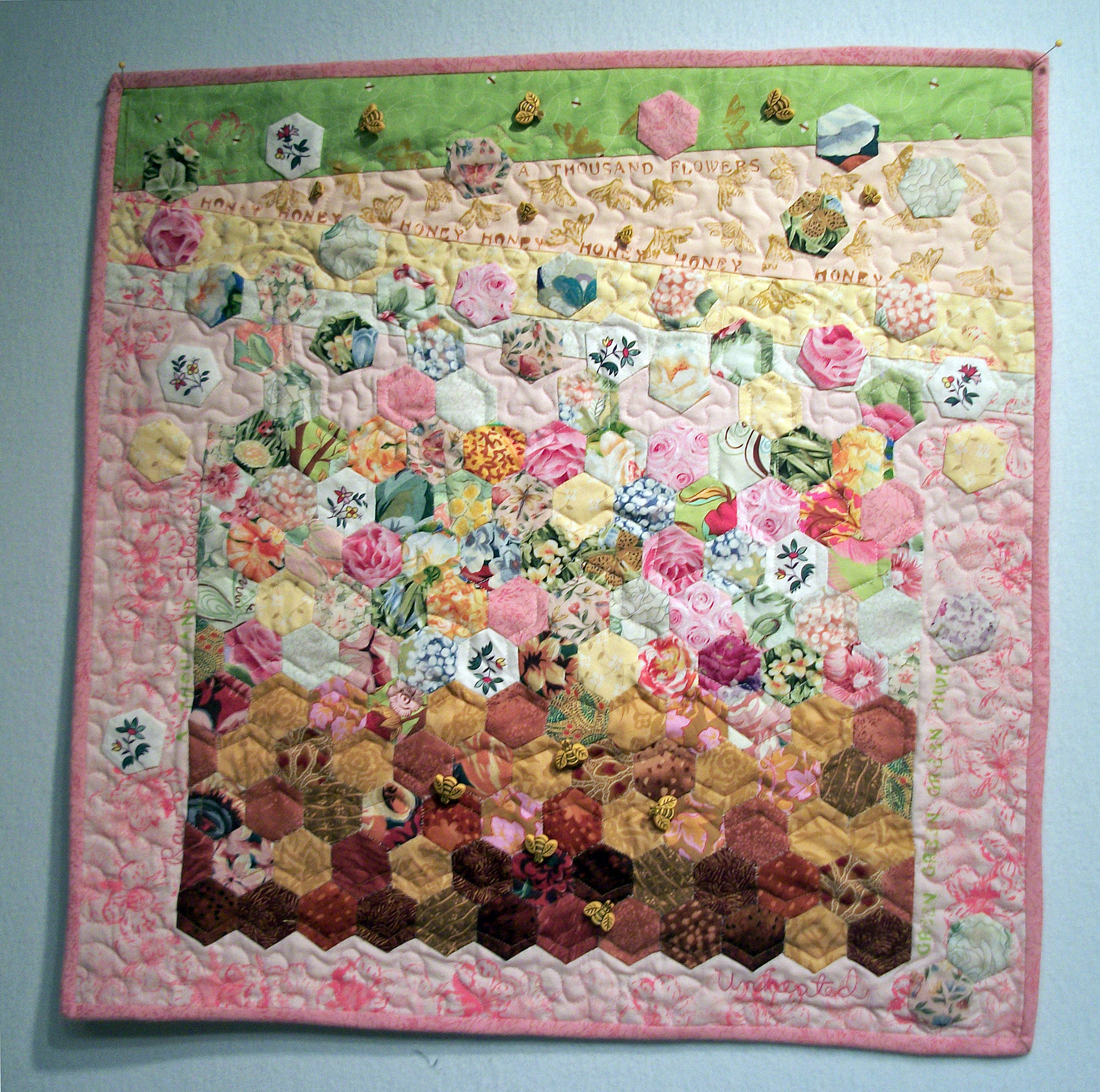
And, here’s the front of  “A Thousand Flowers”:

I wanted the flowers to literally be exploding from the honey jar.  The hexagon block is, of course, taken from the same motif on the jar, the label, and from a honey comb.  The green at the top of the quilt (see the tiny bees in the print) symbolizes the top of the “green” hive–and a green hive literally sits in the yard of the Green Hive Honey Farm folks.  The darker blocks at the bottom symbolize thousands of flowers being turned into honey, contained by a jar shape.  I stamped the bees at the top, the flowers in the pink borders, and some of the words.  I sewed in some of the words on the quilt, like “unheated” and “raw.”  I machine quilted long lines in the honey jar and curving lines around the jar.   Like the label, the binding is a darker pink.

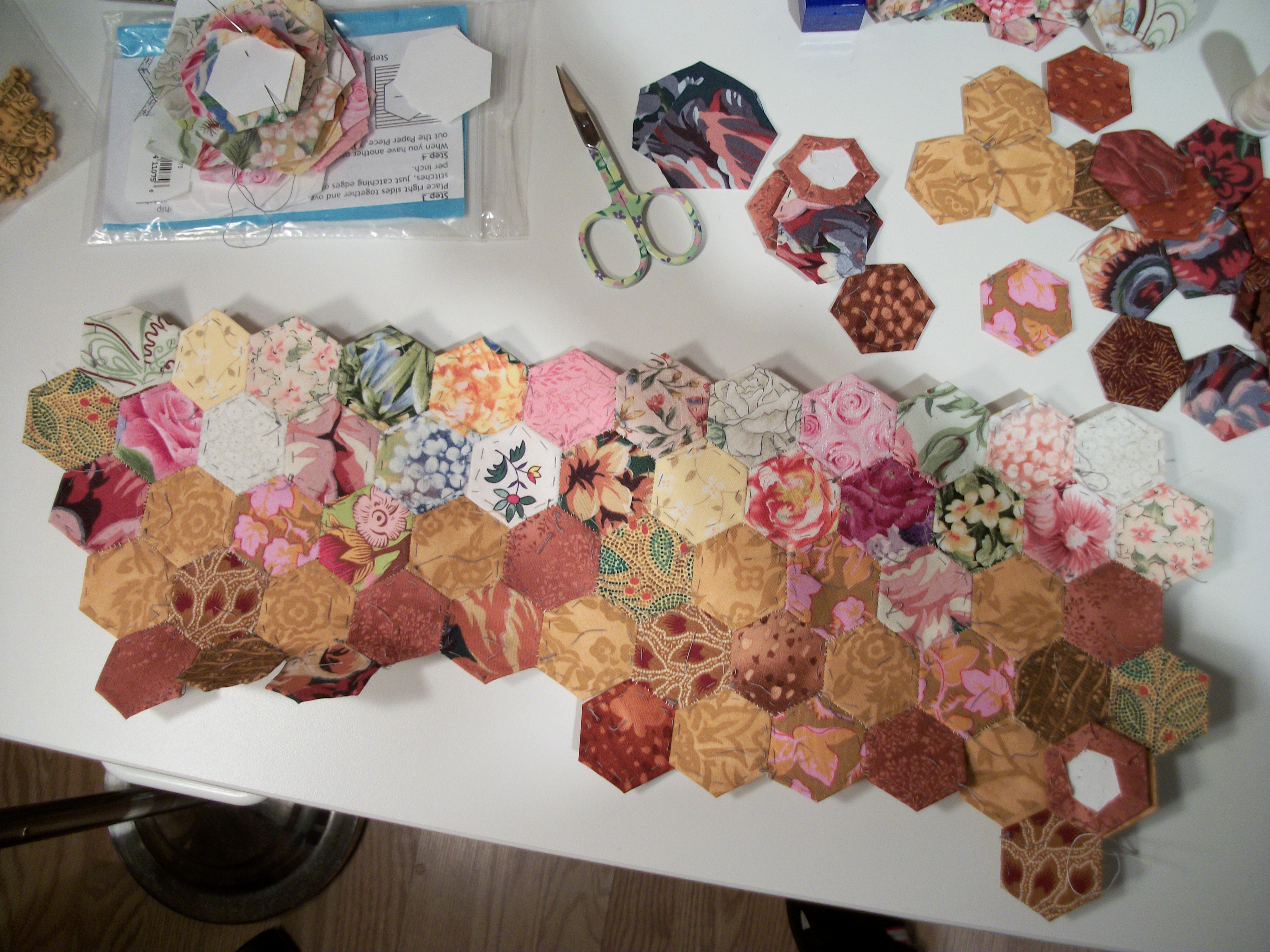
The hexagons are made with the English Paper Piecing method.  One buys or makes paper templates, wraps the fabric around each one and bastes it down, then whip stitiches the blocks together.  Here’s what that process looks like:

Here’s a detail of the stamping (with acrylic paint), of the loose blocks appliqued to the quilt, and of some of the bee buttons, large and small, sewn to the quilt:

I had forgotten how the whip stitching of the blocks pulls, so that one sees those threads.  On the dark honey blocks, the lighter threads were disconcerting, so I painted them with fabric paints that came in pens.  It looks much better now.

I love this quilt.  This little thing took me FOREVER to make.  Many, many hours.  So, now it is done and will hang, with the other CQ Grocery Store Challenge Quilts in the Pine Tree Quilting Guild show in Augusta, Maine, in late July.  After it comes home, it will hang on the wall outside my quilt room.

Turkey Tracks: Essence Quilt

Turkey Tracks:  March 27, 2011

Essence Quilt

 Here is “Essence.” 

You might remember that I made this quilt out of the little triangles cut from the blocks used in the quilt “Spinner”–posted here a few weeks ago. 

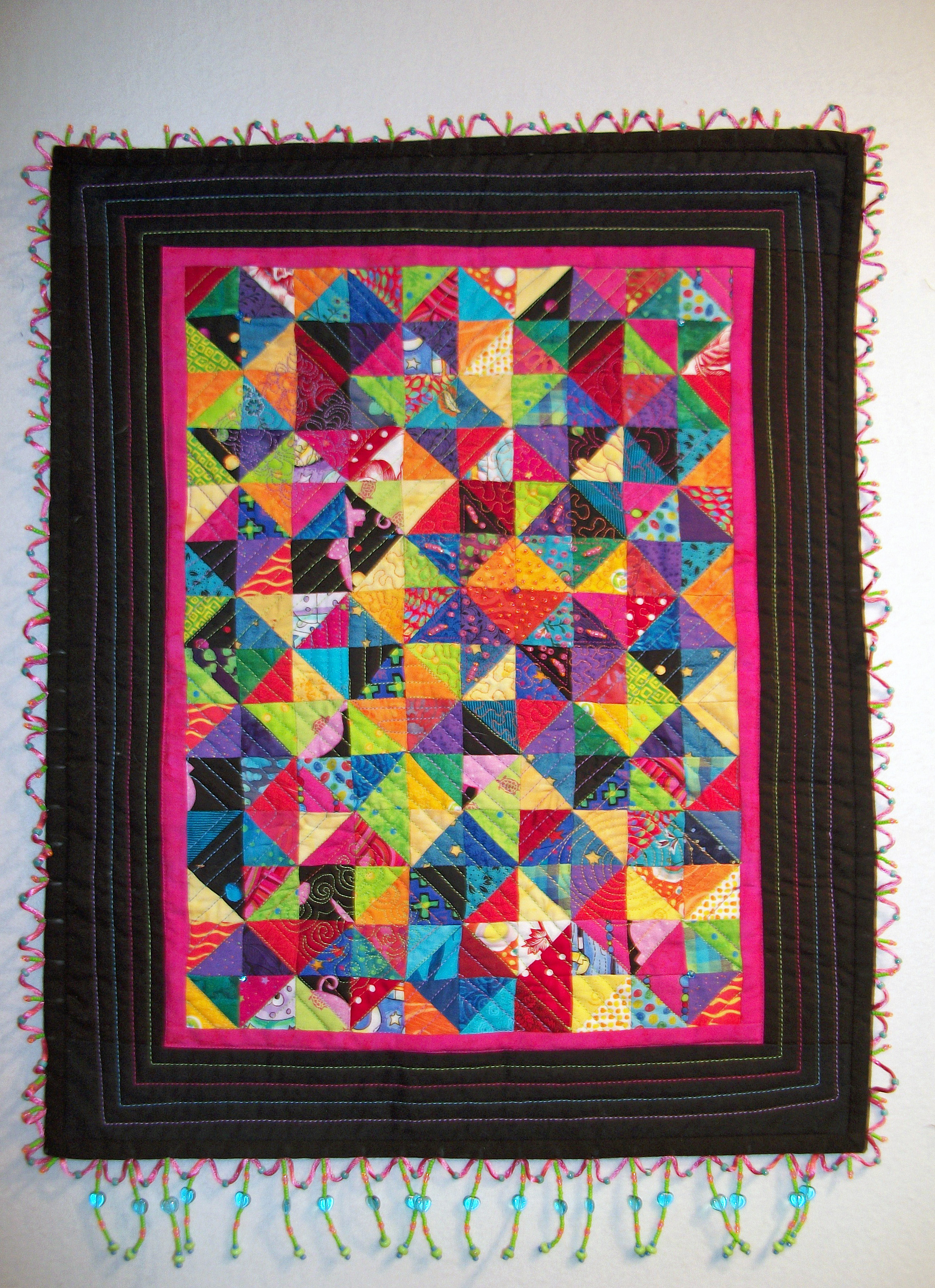
I wanted to try this beaded border–it came from “Quilters Newsletter” magazine, April/May 2010, “Bead-Dazzled Bindings,” by Laura West King, pp. 46-47. 

I like the funky nature of it.  I need to measure it, but it’s about 20 inches by 14 or 15 inches.


 I do think this kind of edging would be spectacular on a smaller quilt–and King’s instructions are terrific.  It works here, but only just…

The white marks on the left side of the binding are just chalk marks which I didn’t notice when I took the picture.

I had fun figuring which of the geometric shapes to highlight with the quilting and the beads.

Turkey Tracks: Leslie Muir-Volpe’s Miniature Quilts

Turkey Tracks:  March 25, 2011

Leslie Muir-Volpe’s Miniature Quilts

Leslie Muir-Volpe makes REALLY TINY quilts.  I tried to take some pictures, but it’s hard to see HOW tiny they are unless you catch them in the background.  Or, go to her web site:   http://www.mainecraftsmen.org/flying-fox-studio.aspx.

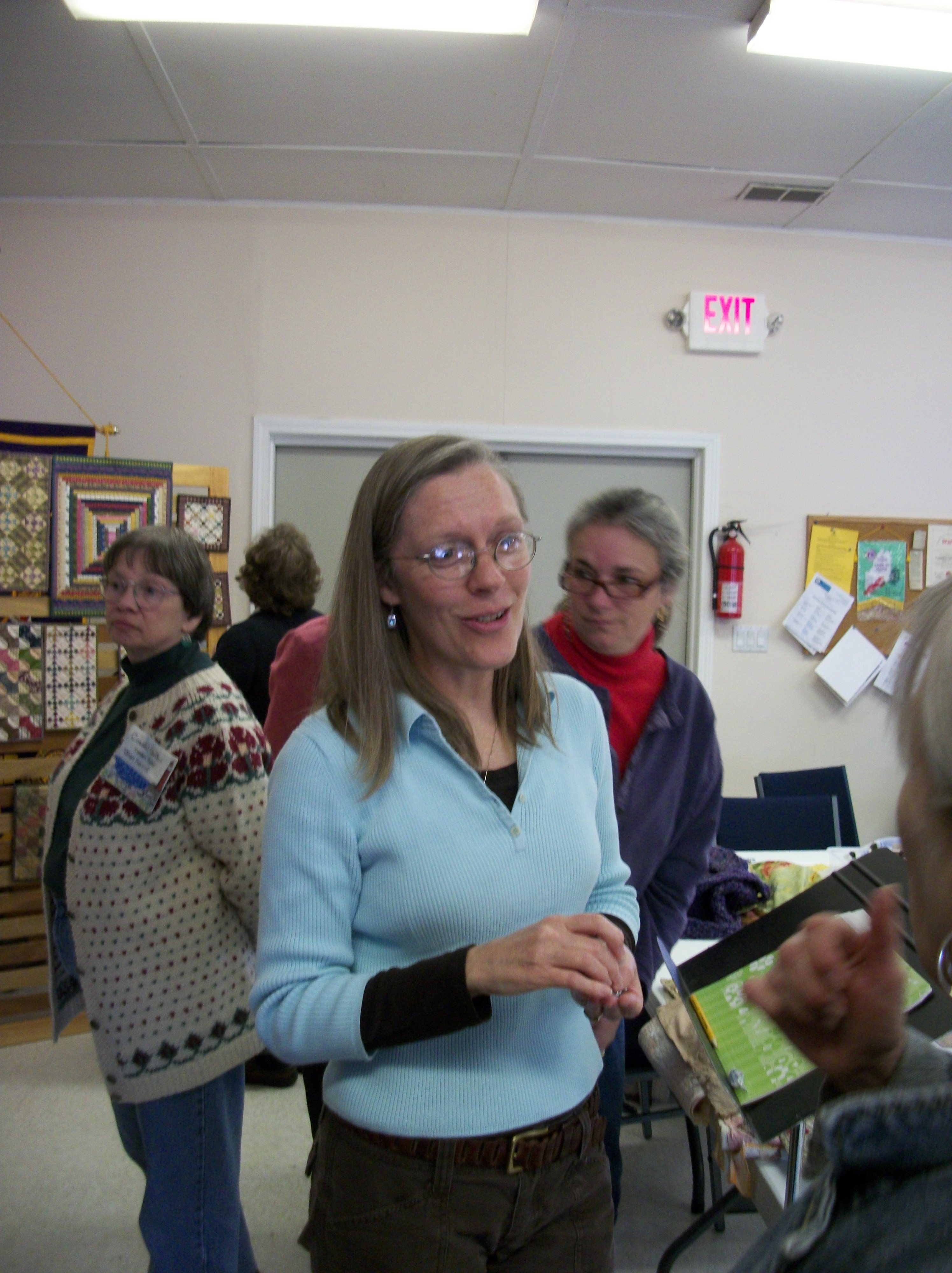
She gave a terrific talk and trunk show to Coastal Quilters March 12th, and she will be teaching at Pine Tree Quilters’ Guild annual meeting next July.  She’s an engaging speaker and a talented quilter.   Here’s a picture of her:  note the TINY hanging quilts in the background.


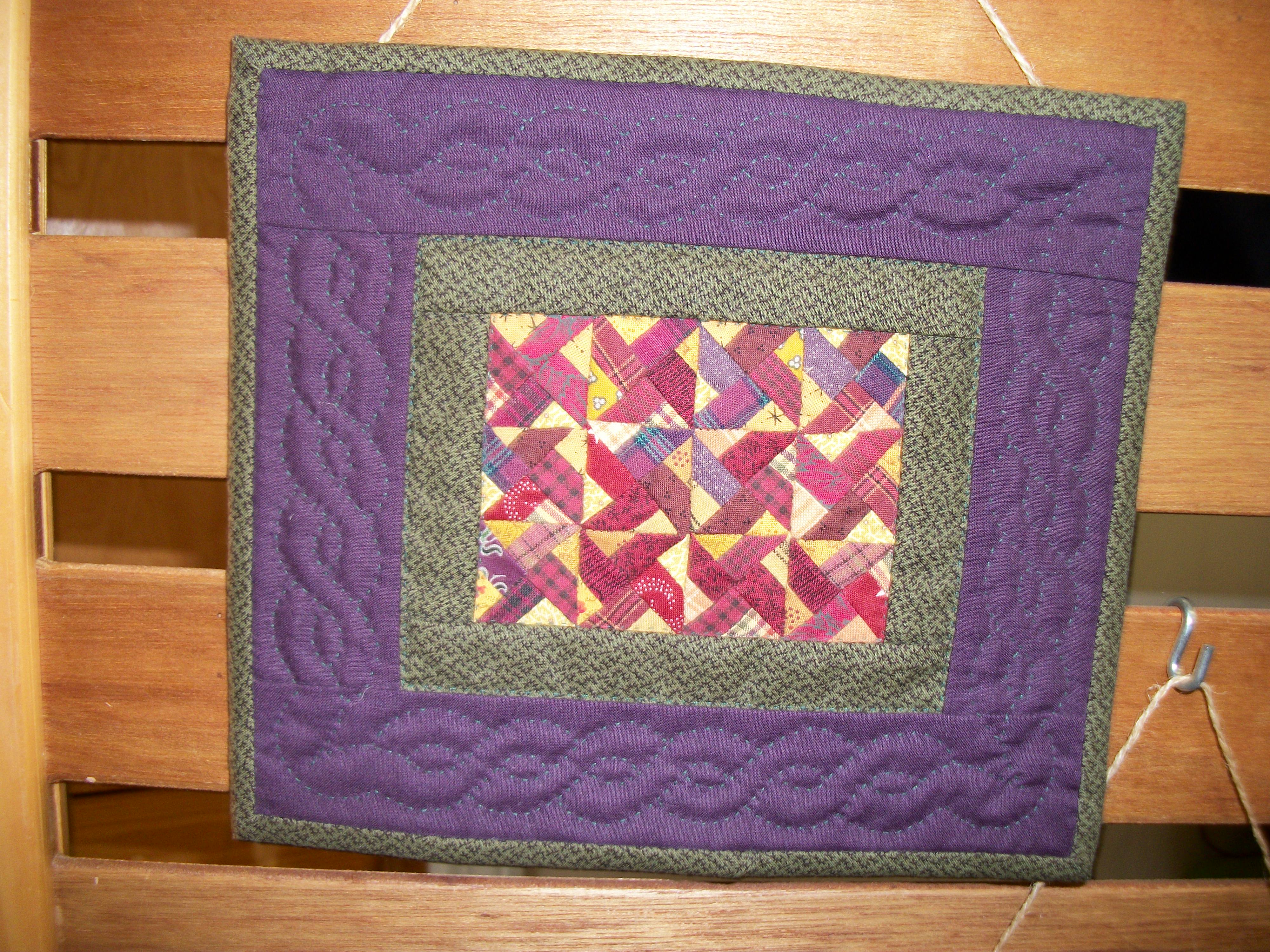
Here’s one of my favorites, but there were many, many favorites where the picture I took just didn’t do the quilt justice.

The “flying geese” in this quilt can’t be bigger than 1/2 inch!  Leslie does machine quilt these tiny blocks, but she hand quilts the quilt itself.  This quilt is about, as I remember 5 by 6 inches or so.

If you’re looking for a very special gift for someone, consider Leslie’s tiny quilts.  She also frames them so you don’t have to.

Turkey Tracks: Williamsburg 2011

Turkey Tracks:  March 13, 2011

Williamsburg 2011

Every year for at least the past 10 years, this group of quilters has gathered in Williamsburg, Virginia, to spend a week with each other quilting, visiting, eating together, visiting local quilt shops, and attending the Mid-Atlantic Regional quilt show in, now, Norfolk.  (It started in Williamsburg in multiple hotels.)  Other quilters who live in the area also come to visit, to “show and tell,”  and to, perhaps, sew with us for a day or two.

This group started in the now-defunct Falls Church chapter of the Northern Virginia guild.  We were all members of the same “bee,” which was a way to break down the larger Falls Church chapter into smaller, more personal groups that could work together.  One member moved to Roanake, met a quilter there, and the two often come to join us.  But, not this year.      

Rosy Pilkerton, center, pink shirt, organizes us all.  She is a wizard with the time shares she owns, and this year, she had saved points for almost 10 years to have us stay in this HUGE, amazing apartment with FOUR huge bedrooms.  Thank you Rosy!  Your gift to us was so appreciated!  From the left:  Louisa, from Maine; Libia, from Mexico; Rosy, Carrie, and Denise from Northern Virginia.  This year we were missing one quilter, Caroline, whose uncaring boss called a weekend meeting, to which he did not ultimately show, which prevented her from coming.  (He insisted she be at work for this “important” meeting the next week.)  She was terribly missed, and if we could see him, we’d give him a piece of our minds!   

Each of us is uniquely different, and each of us is uniquely special.   We quilt in all different kinds of ways, and, over the years, I’ve learned much of what I know about quilting from these women.   It’s also interesting to see how one of our quilting styles or interests rubs off on others.  My love of clever children’s fabrics stems from watching Rosy make so many charming children’s quilts over the years.   

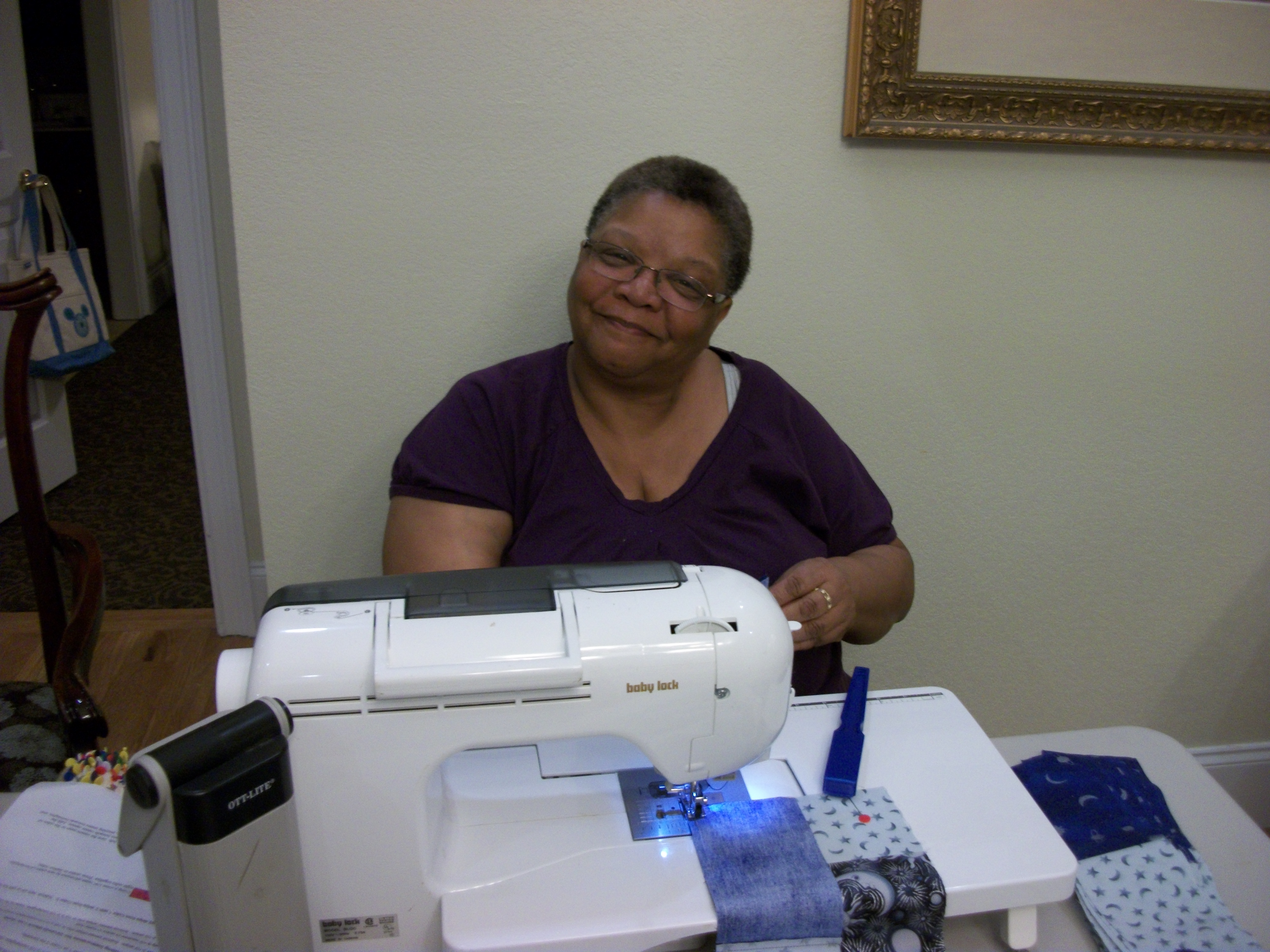
Since I fly into Norfolk from Maine and since Libia comes from Mexico City, Rosy, Carrie, and Denise organize and bring all our equipment.  Who brings what is now down to a science for them, and everything we need is there:  a cutting table, ironing boards and irons (two),  a portable design wall, rulers, rotary cutters, sewing tables, a box of food staples (salt, pepper, sugar, tea), and so forth.  Carrie always brings me a sewing machine, and Rosy brings me and Libia Ott lights.  This year Libia brought her featherweight from  Mexico.  I had only to bring my project fabrics and small items like scissors, pins, needles, threads, and so forth, which is getting harder with shrinking airline bag sizes and extra charges.  We all come with small gifts for each other as well, and that’s always a fun time.  You’ll walk away from your machine, and when you return, there will be something special there for you. 

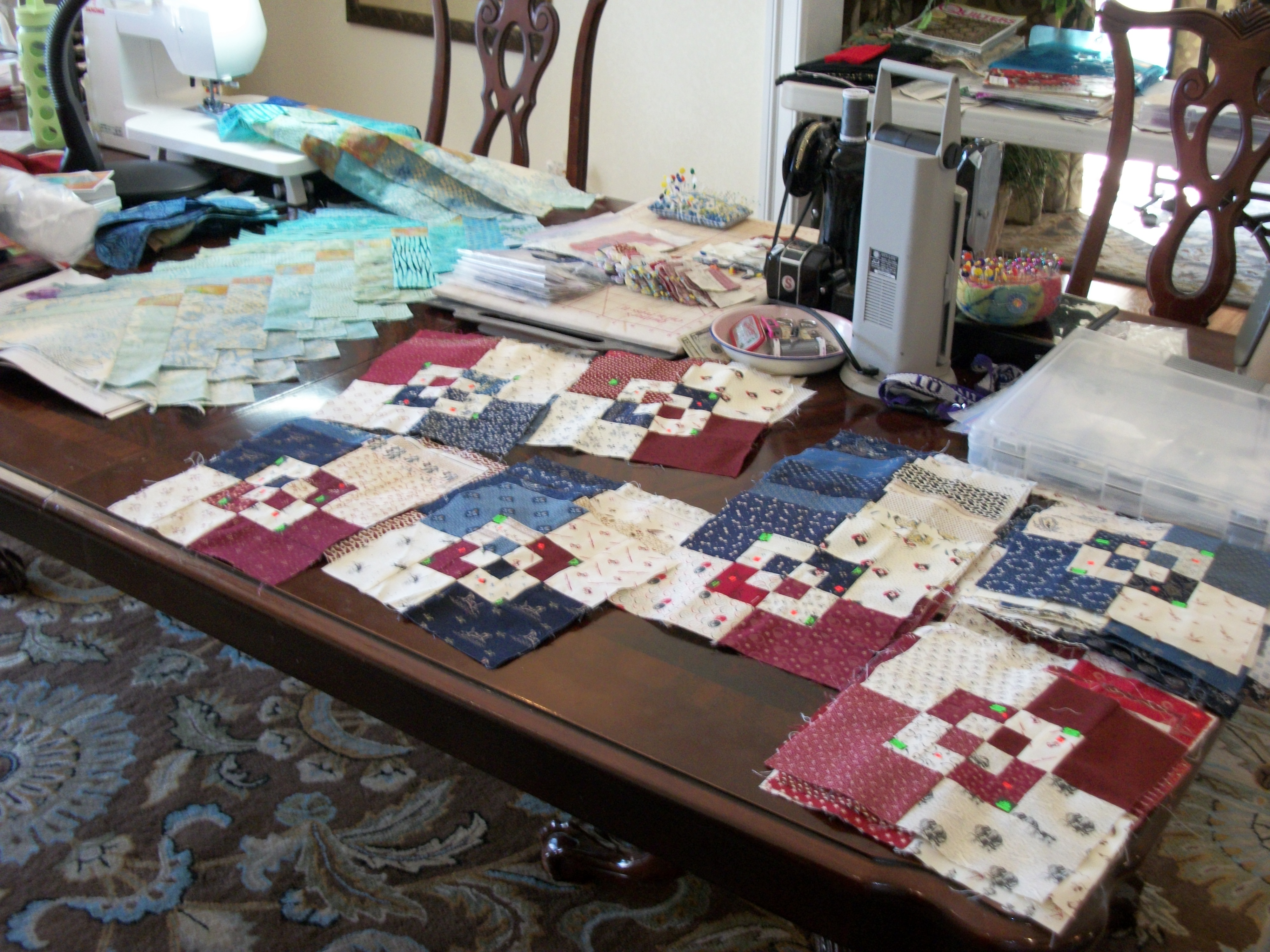
The first thing that happens is that we move around furniture so that we are all together in one room.  The dining room table is good for at least 2 sewing stations.  In this palatial palace, it was big enough for three.  Carrie and Denise set up in the tables next to the wall.  Denise brought fabrics for a large quilt that would be strip pieced.  She had to cut and sew a ton of strips, cut them, and sew more.   

 The cutting table is behind Libia–in front of sliding doors to a patio that overlooked a little pond.  It was warm enough on a few days to sit outside in the sun.  The living room and TV were in this room.   

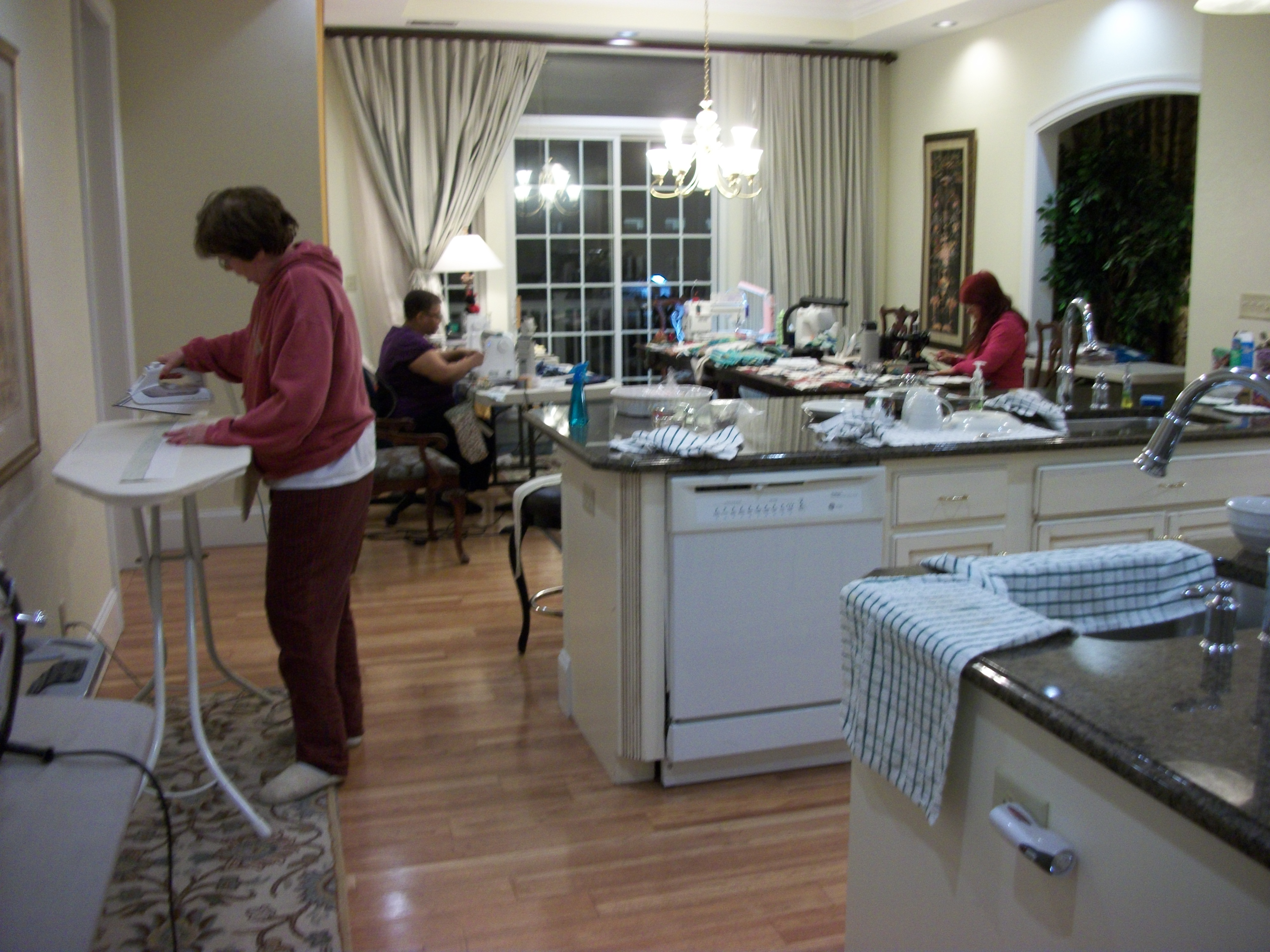
And the ironing boards are along a wall in the kitchen. 

Here are some “works in progress”:

 Libia made TWO  twin-sized quilts from these tiny squares.  Here’s one of the tops finished:

And here’s one of the quilt tops Carrie finished almost right away!  She made another BIG one and a new purse.  Carrie has a new long-arm too, and we watched a set of instructional videos together during the week. 

And, here’s a picture of a Christmas quilt with very unusual fabric that Rose was putting the binding on.  The back is a warm, red fabric. 

 Here’s my most favorite picture I took all week:

I miss them all already.   What a lovely week we had.

Turkey Tracks: Warm and Wonderful

Turkey Tracks:  March 13, 2011

Warm and Wonderful

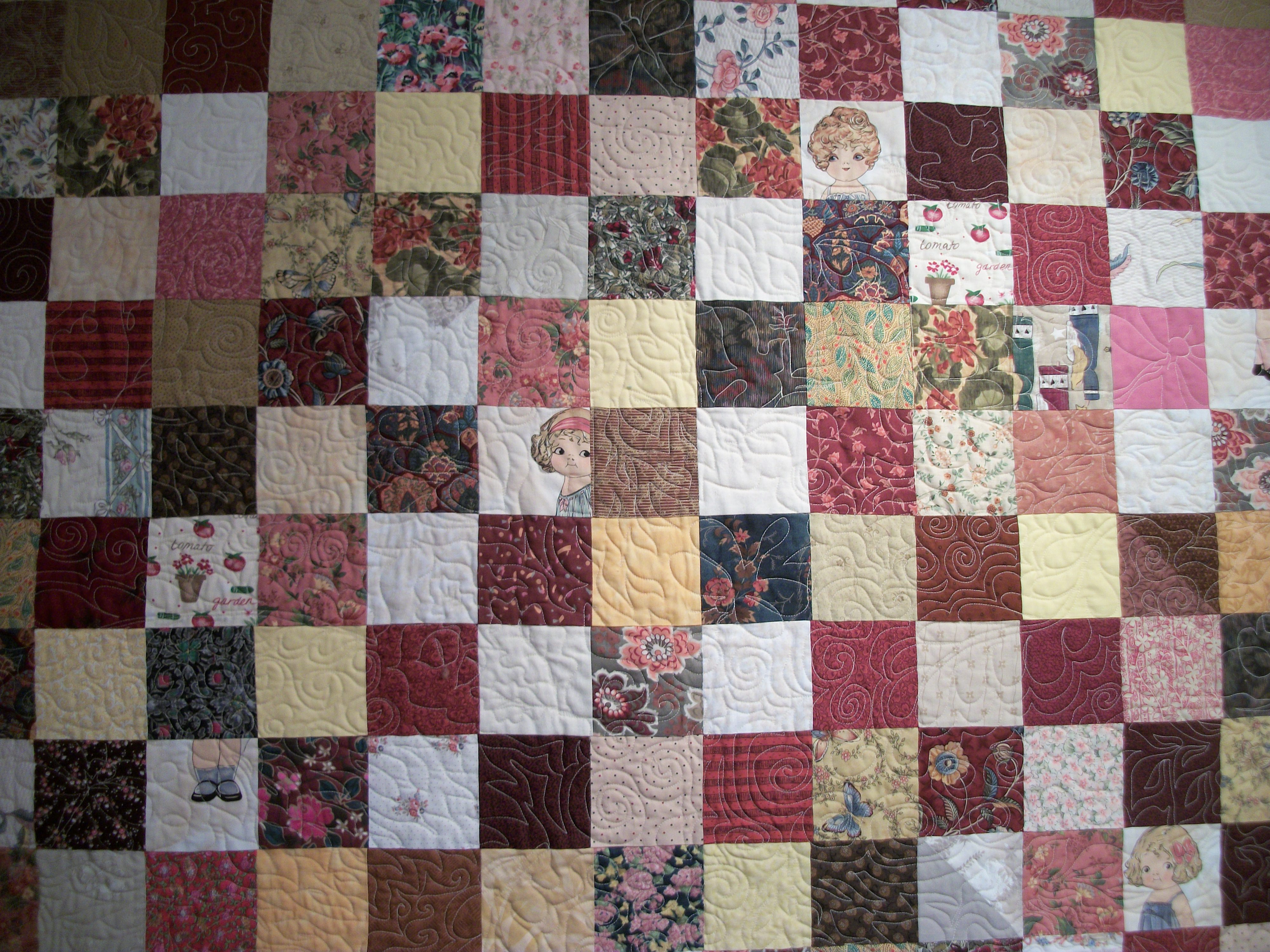
Here’s another scrappy quilt made wholly from my stash.  This one uses the 4-inch blocks, and can I tell you, I have at least enough bright ones left to make a whole other quilt! 

What I had fun with here is the placement of the paper doll blocks.  The first one was an accident; I was just using warm colored 4-inch squares roughly alternated with neutrals.  Linda McKinney passed through the quilt room one day and expressed delight with the faces and feet now scattered about the quilt.   So, I deliberately did more and placed them advantageously. 


Here’s a close-up, so you can see some of the quilting.  I’ve learned to use stencils and pounce powder (or erasable chalk pencils) to trace in stencil lines and then to quilt them.  You can see a bird and a dragonfly, at least, in this picture.  And, I densely quilted.  This quilt is a lap size, about 56 x 72, and it took FOUR industrial-sized bobbins.  I used a commercial big-cone thread and had no problems with thread breakage.  Indeed, this is the first quilt I’ve done on Lucy with which I felt really at-ease.  

The backing is a warm beige that, it turned out, I had enough of to make the batting.   


Warm and Wonderful was made especially for someone special. 

Turkey Tracks: Spinner

Turkey Tracks:  March 13, 2011

Spinner

I’ve been on a mission to use up more of my stash fabrics.  After all, I loved them when I bought them.  And, it’s true that I still love most of them now.

Whenever I finish a quilt, I cut small leftover pieces of fabric into the largest useable square I can, beginning with 6 inches and going down to 2 inches and 1 1/2 inch strips for log cabins.  Lately, though, especially after making this quilt, I’ve been cutting pieces into useable strips and not cutting further since this quilt needed a rectangle, not a square, so I had to cut those extra. 

The 8-inch “Spinner” block was designed by Bonnie Hunter and appeared in the March April 2010 (#132) issue of QUILTMAKER magazine.  Her idea is as you cut and sew other projects, you make a few of these blocks here and there, and soon, you’ll have enough for a quilt.  I found myself putting aside other projects and making all of these blocks uninterrupted.  They’re fairly addictive.     

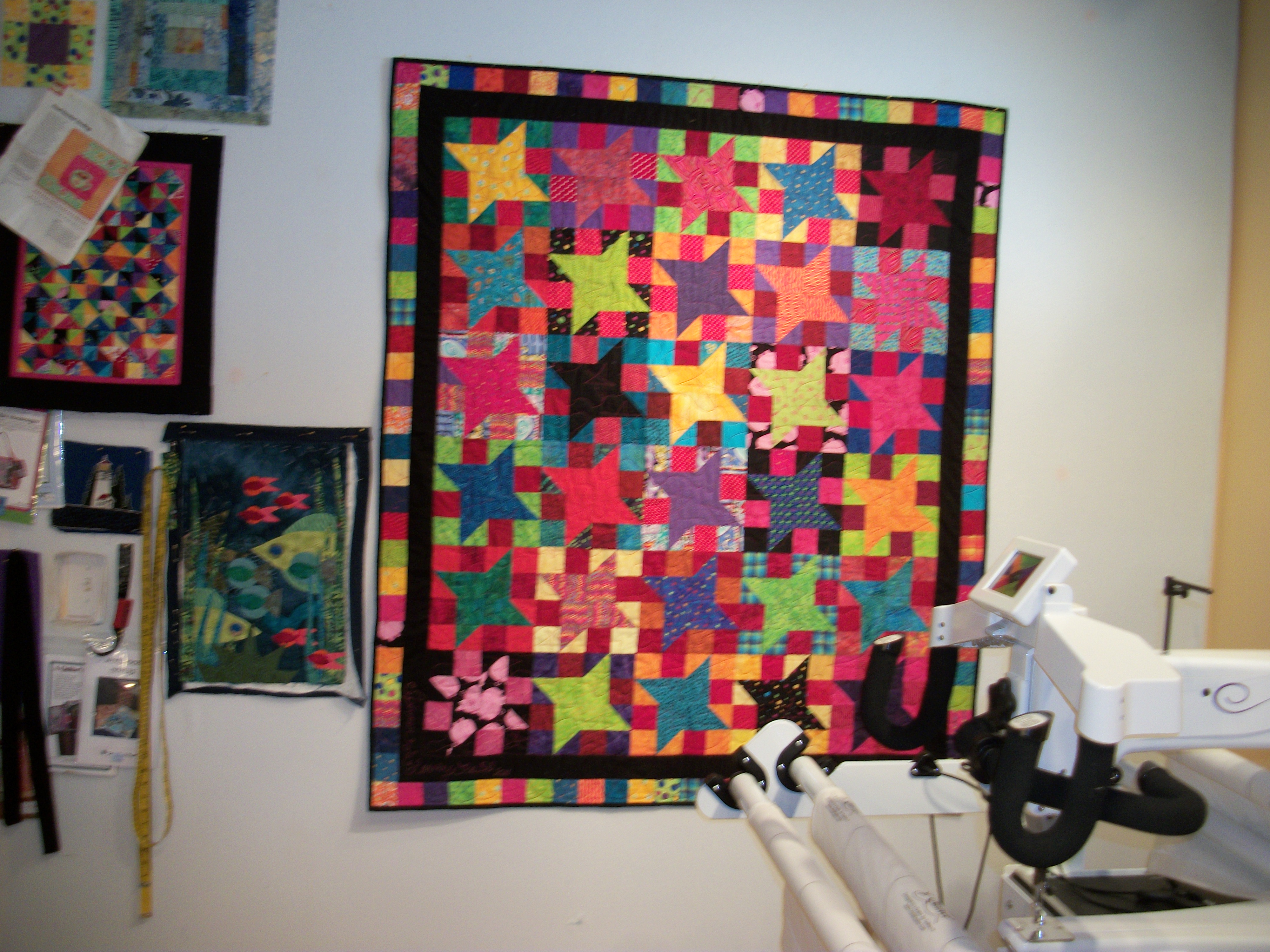
What is helping control the quilt is the repeating red square within each block and across the quilt–a tactic Hunter recommends.  Here is a rather fuzzy picture since somehow very often I can’t seem to hold the camera still reliably.  But, note, also, the little quilt to the left, which was made from the small triangles that are cut off of Spinner’s large rectangle’s flip and sew method.  That small quilt is called “Essence,” since a friend who saw it on the design board said that it was the essence of the large quilt.  Essence is almost finished now, so will appear here soon no doubt.   


I quilted Spinner on Lucy the Long Arm, and I think it came out rather well.  I learned to use a round template on the outside borders.  I think I had old thread, however, and struggled with thread breaking a lot.  I got an additional thread spike that sits close to the take-up arm on the machine, so maybe that will help with the Mettler cottons I use for machine quilting on the domestic machine.   

 The pink pig backing, seen below, came when I realized Marge of Mainely Sewing in Nobleboro had some of this fabric left.  Remember that Karen Johnson,  The Community School student who learned to make a quilt with me last year, used it to back her quilt?  In fact, this quilt is very like Karen’s quilt, which probably shows how much I liked what she did.   You can see Karen’s quilt in the May 17, 2010, post called “Two Quilts.”  


Don’t know who it’s going to yet.

Turkey Tracks: Red Fish Quilt

Turkey Tracks:  March 13, 2011

Red Fish Quilt

 I finished the Red Fish quilt.  I started it the summer of 2010 in a class with Jo Diggs at the Pine Tree Quilters’ Guild show. 

 Here it is:

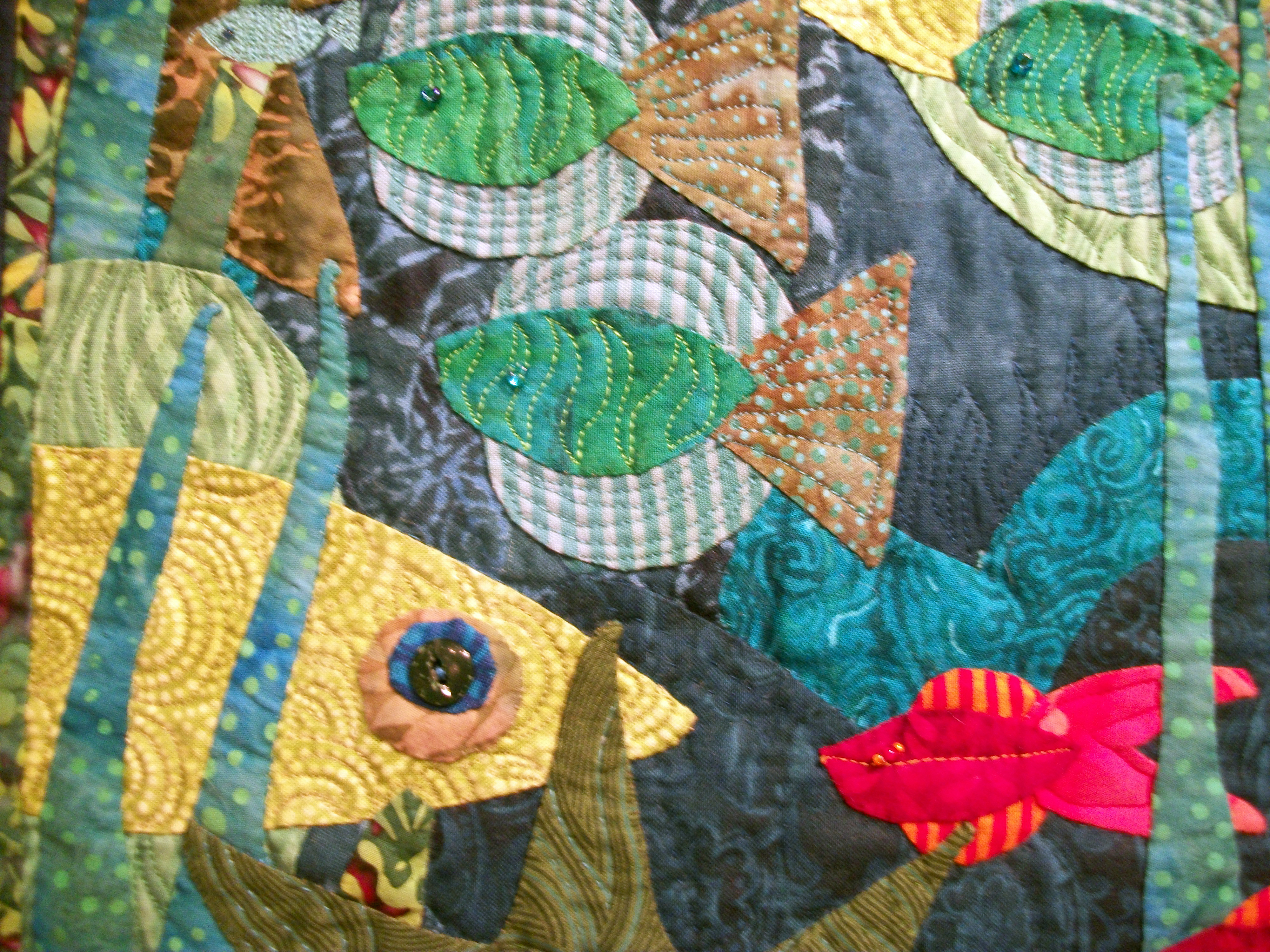
 Each piece was hand appliqued onto the hand-dyed background fabric.  I hand quilted around each appliqued piece to make them stand out from the fabric.   I hand quilted the green fauna in the foreground bottom and the dark hillock at the bottom.  But, the hand quilting on applique shapes didn’t show up, and there were too many layers to do it easily.  So, as I machine piece well, I used that skill to get the final effects I wanted and to make the three thread painted little blue fish.   In retrospect, leaving the small fish’s fins and tails alone might have been a better choice…  I don’t think the quilt needs more beading than it has. 

There are more hours in this little quilt than I want to think about, and I’m glad it’s finished.  I have even more respect for Jo Diggs who makes BIG quilts using this method.  Take a moment and look at her gallery, and you’ll see what I mean:  http://www.jodiggs.com/jodiggs/Gallery.html.    

Here’s a very close-up view of a piece of the quilt.