Turkey Tracks: Nan’s Gift

Turkey Tracks:  May 24, 2011

Nan’s Hand-Crafted Bookmarks

My niece and namesake, Louisa Nancy Howser Gardner, aka as Nan, makes hand-crafted bookmarks.  This endeavor is in addition to making a beautiful baby six months ago:  Judah.  And, in addition to being an artist.

Anyway, she recently sent me one of the bookmarks, and I treasure it.  Every time I use it, which is daily, I think of her and how she made all those tiny, tiny braidings.  And, I think of how smart and how wise and how sweet she is.  Though she is drop-dead beautiful, she doesn’t seem to know it.

To send someone something you’ve taken the time to make is a very special endeavor.  They are not only telling you that you’re special, that you are worthy of their time, they are sending all the positive energy that surrounds the piece–energy the piece accrues while they are making it.

Here’s a picture of my bookmark from Nan–in use:

You can see more of  Nan’s work on her blog:  http://gardnerinthemaking.wordpress.com.

Tami Enright lent me FARM CITY.  She loved it.  And FIBER MENACE is up next in my read pile–a list I’ll be posting on this blog eventually.

Turkey Tracks: Copper Black Maran and Wheaten Americauna Chicks

Turkey Tracks:  May 24, 2011

Copper Black Marans and Wheaten Americaunas

In addition to the Freedom Ranger chicks, Rose and I had two other baby chick endeavors happening.  Because our CBMs have a white feather gene, we didn’t want to reproduce too many of them–although their egg color is a beautiful dark brown.  Also, we felt like we needed other breeding stock.  So, in order to keep the CBMs going–so we get enough for Rose to have more hens and so I could replace ageing hens whose laying has slowed down considerably (but who are as sweet as can be)–I ordered 15 CBM chicks for us from Tom Culpepper in Grantville, Georgia.  Tom’s chickens derive from a famous line–the Wade Jeane line of CBMs.   To recap, CBMs are NOT rare in Europe, but because of the fowl importation laws and avian flu, America has to get along with its own, rare CBM lines.  So, CBMs are rare in America.  Here’s Tom’s web site if you want to see some pictures:    http://www.mydarkeggs.com/home.

CBMs are spectacular.  They are both meat and laying birds, are BIG, and the rooster is gorgeous and a great protector.   The hens are docile and very social and great foragers.  The only problem with CBMs in Maine is that their generous combs can and do get frostbite, so a good owner lubes them up with vaseline a lot during the winter.

In addition to the CBMs, Rose and I wanted to get chicks from her Wheaten Americaunas.  These birds are also spectacular.  The hens are good layers of beautiful blue eggs, they’re lighter and can fly quite well, they’re funny and friendly and emotional, and are great foragers.  So, Rose isolated her Wheatens, collected eggs, borrowed my incubator, bought two more, and started incubating eggs.  She also included “backyarder” eggs, but as William was the father, they could likely be “Easter Eggers” who would lay a blue, olive, or blue-green egg.

Here are eggs starting to hatch:

Here are some newly hatched Wheatens  that are still wet and weak:

 Here’s a picture of the chicks at about 2 1/2 weeks, just after we got back from Charleston.

Now you can understand how fast the Freedom Rangers are growing!  (See below)  They’re only a little over two weeks older than these chicks.  The CBMs are the black shaggy chicks.  See their feathered feet?  They’ll lose the white fluff when they feather out.  The blond on the brick is a Wheaten Americauna.  She’s backed by a backyarder.  The light chicks in the front may be Wheatens as well.  It’s too soon to tell.  the little grey/lavender chick comes from Baby, the Blue Cochin mix (lays a blue egg) that Rose raised by hand.  Rose is keeping her!

Rose and I feel there should be more healthy baby chicks for sale locally, so that’s what Rose is trying to do.  Her backyarders are half Wheaten Americauna, so will have a good shot at laying blue range eggs.  She does have a Barbanter rooster as well, and there are two Barbanters in this batch of chicks.  They are beautiful, tall, rangy, spotted chickens who lay a white egg.  So, Rose’s egg collection is going to be so colorful!

Turkey Tracks: Freedom Ranger Update

Turkey Tracks:  May 24, 2011

Freedom Ranger Update

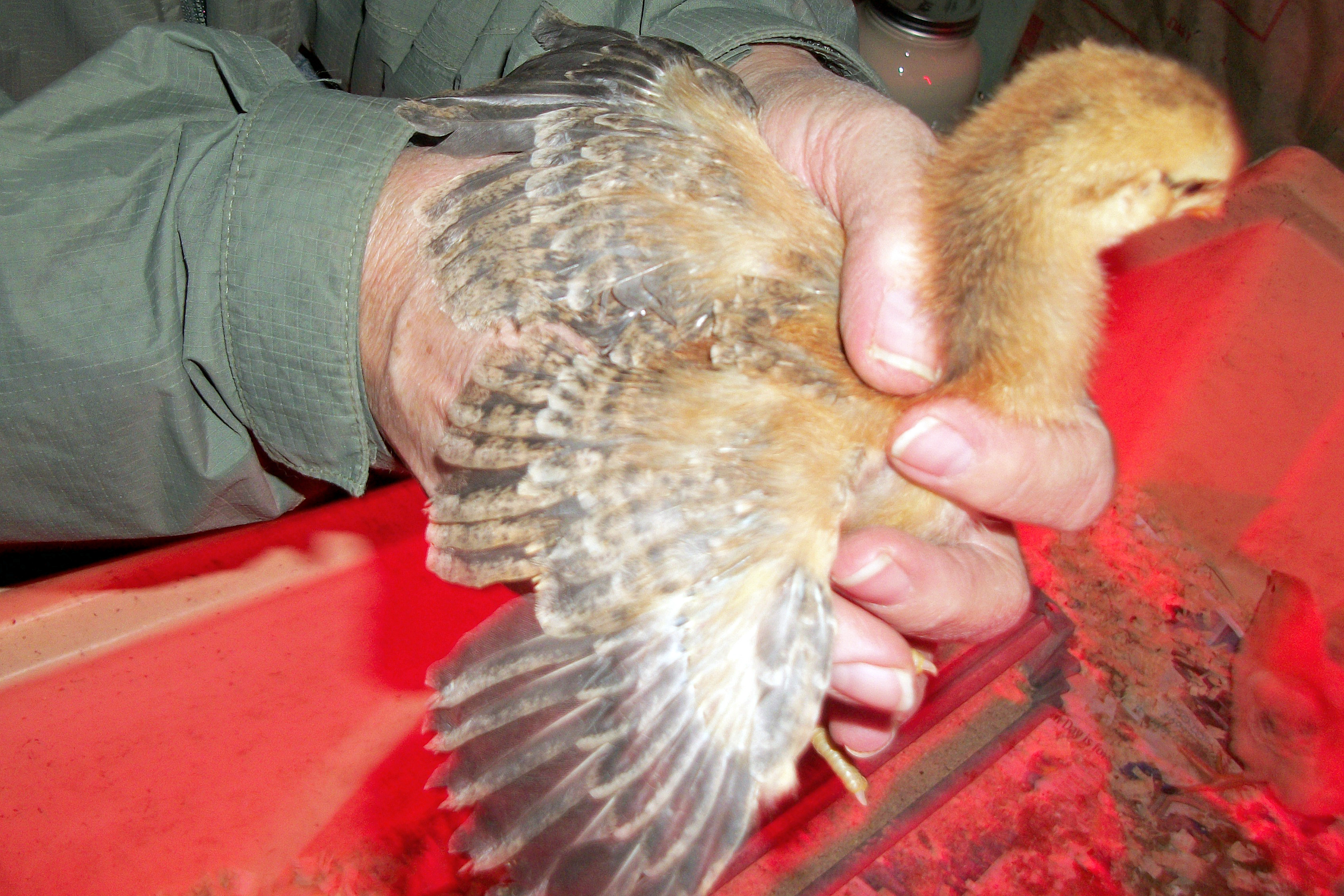
 The Freedom Ranger meat/layer chickens are growing like weeds.  You might remember that they arrived in the mail about a week before we left for our Charleston trip.  Here’s a picture of one that’s about a week old.  Rose and I were admiring the wing colors.  Freedom Rangers are hybrids, with four distinct grandparents.  So, it’s impossible to reproduce a Freedom Ranger by breeding them to each other.  There is only one company that markets the eggs–and only a handful of companies worldwide that market all hatching eggs commercially.  Freedom Rangers are the famous “Red Label” chicken sold in France.  They are both meat chickens and layers, and they arrive with varying color combinations.  They are good foragers, food sturdy birds.

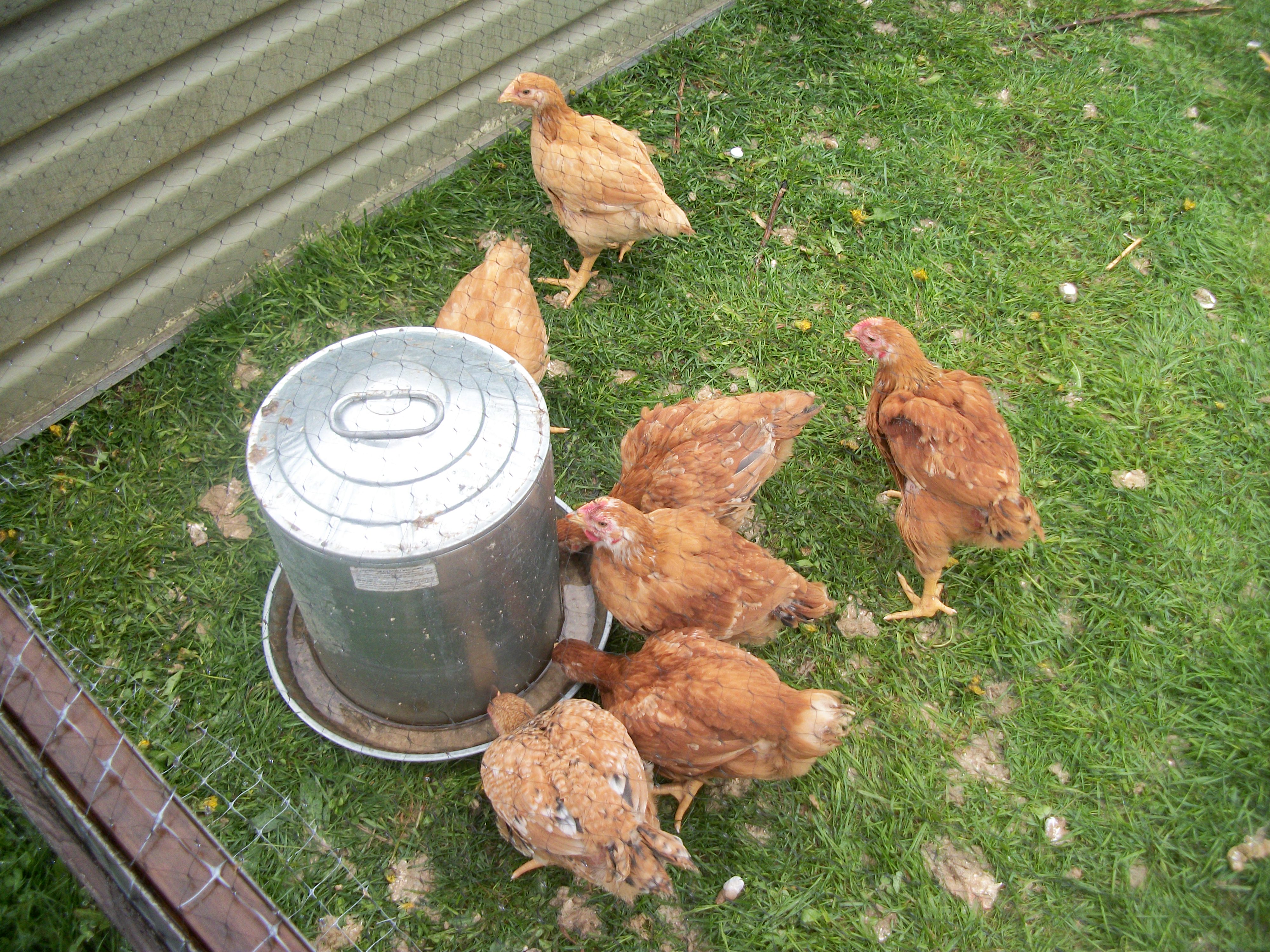
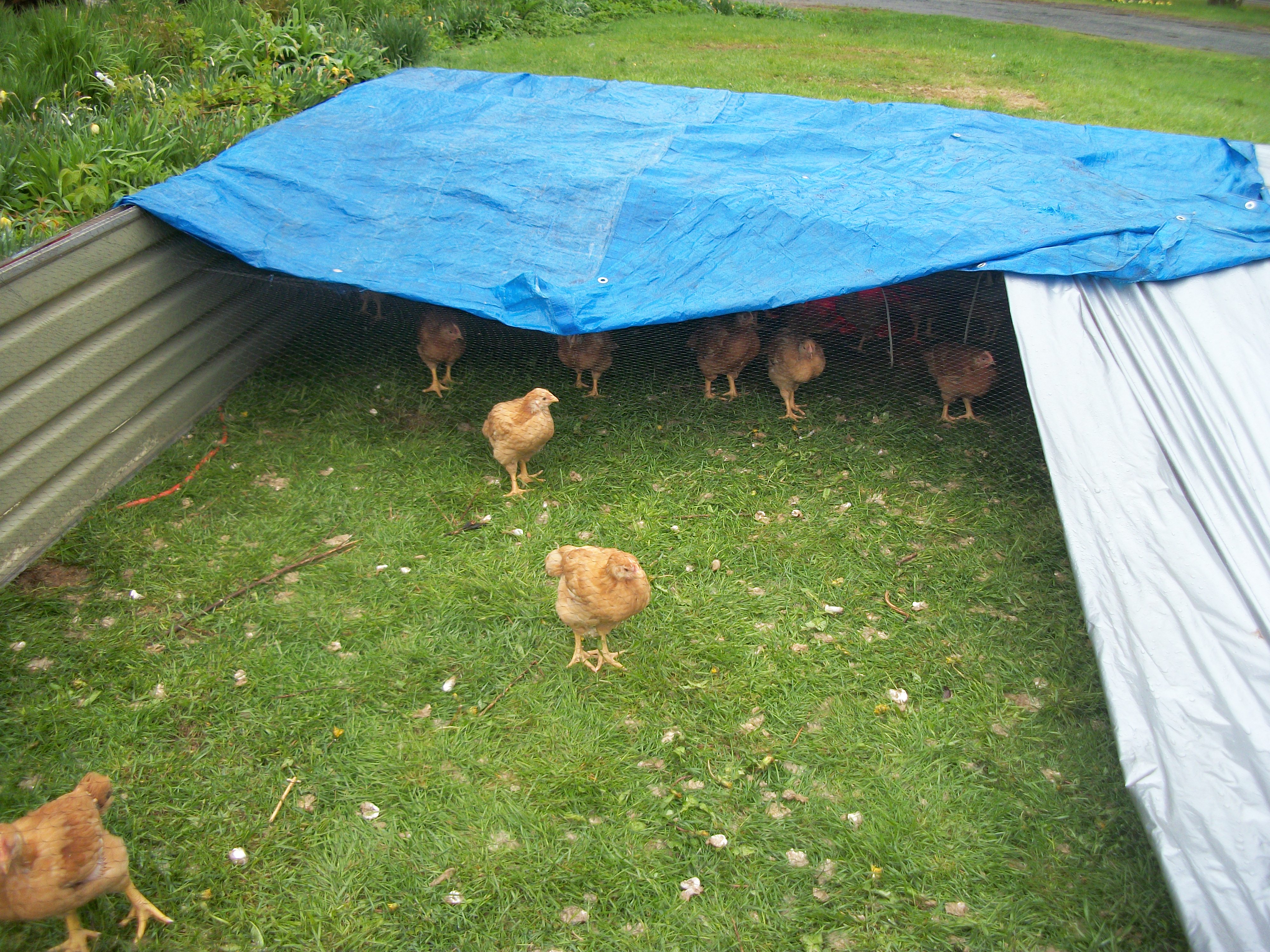
Here’s what they looked like last week when we arrived home.  Now they are about three weeks old.  They’re growing so fast that they have bare patches under wings and the like, so they look quite scruffy.  But, their feathers will catch up with their bodies soon.

Look at the size of the feet!  We think the real “big foots” may be roosters.

As soon as we can tell hens from roosters, I’m bringing home one of the hens as a layer.  It will be hard to pick one out as they are all so beautiful.

Turkey Tracks: Yogurt and Lovey’s Gorp

Turkey Tracks:  May 23, 2011

Yogurt and Lovey’s Gorp

 Well, here’s something delicious!

It’s one of our favorite breakfasts…

I make homemade yogurt about every 10 days–a half gallon at a time.   The recipe for how to make yogurt is on this blog.  Click on recipes on the right-side of the screen, and you’ll find it.  I make it in the early evening, so it “makes” overnight.   This batch was made from yogurt that sat in the regrigerator while we went to Charleston, SC, for, all said and done with delayed flights home, 15 days or so.  The starter was pungent, but it made the densest custard I’ve ever seen.  And the flavor was superb.

There are few things in this world as delicious as raw-milk yogurt while it is still at room temperature.  We scoop out a bowl full–making sure to get some of the cream.  Cut up some fresh fruit–bananna this time.  add a handful of my gorp–I keep a batch in a pottery lidded jar on the counter for snacking–and drizzle with, this time, Green Hive Honey Farm UNHEATED honey.

We didn’t get hungry again until mid-afternoon.

Lovey’s Gorp

(That’s me!)

There are no proportions–you just mix up what you like from your “assets”–ingredients you keep on hand.

Here are some ideas:

Dried organic coconut shavings;

 Selections of nuts and seeds you’ve soaked in salted water and dried in an oven or a dehydrator–you soak nuts and seeds to remove their phytates, which can seriously interfere with how your body accesses and processes the nutrients you eat–how to do it is elsewhere on the blog–and above I used pecans, hazelnuts, pumpkin seeds–I don’t use walnuts since they need to be refrigerated;

Selections of organic dried fruits–above are cranberries and blueberries;

Perhaps some chocolate chips…if you’re feeling decadent and are needing a chocolate jolt.

Turkey Tracks: Coastal Quilters’ 2011 Challenge Quilt

Turkey Tracks:  May 23, 2011

Coastal Quilters’ 2011 Challenge Quilt

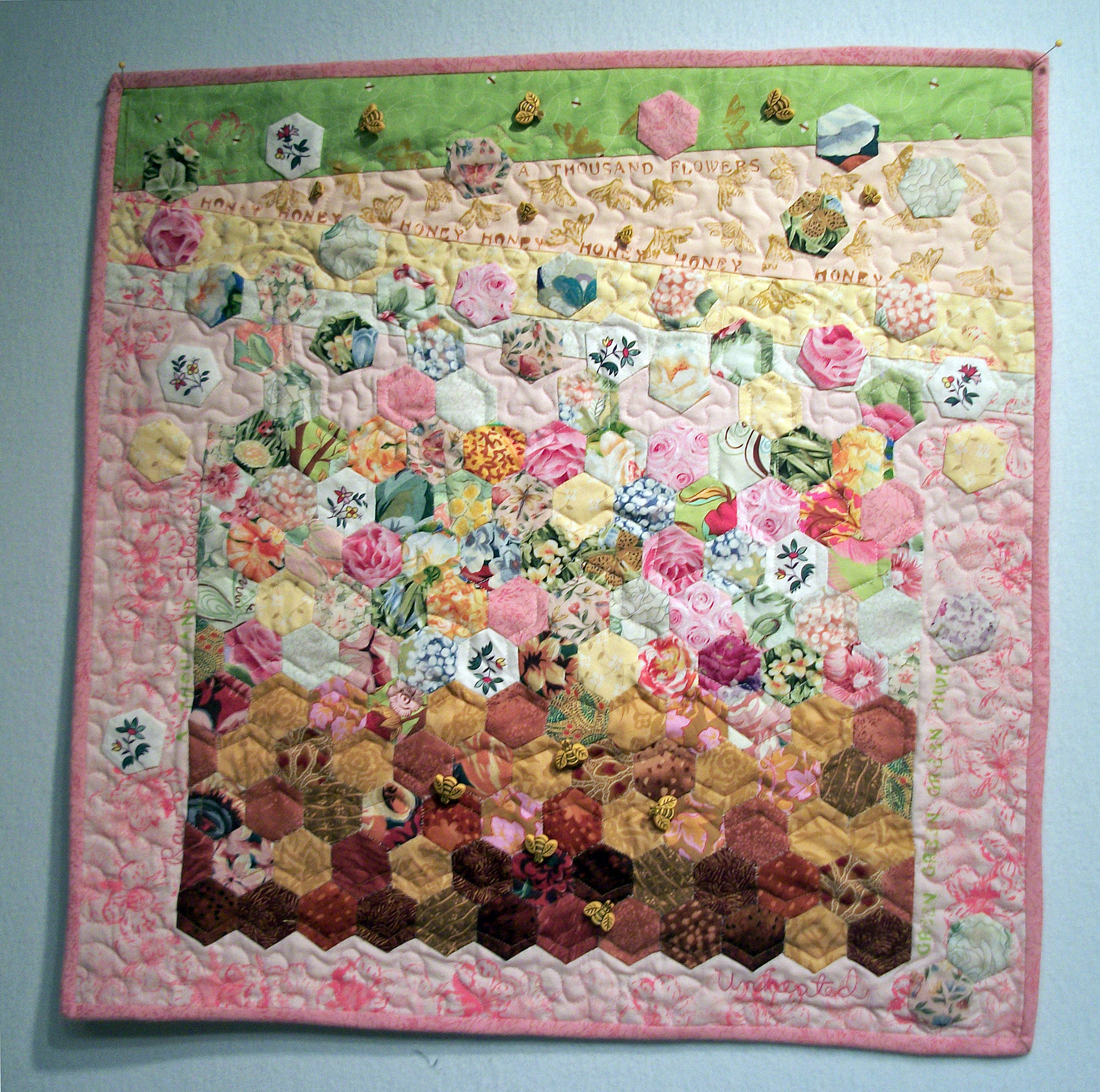
This year’s Coastal Quilters’ Challenge asked quilters to create a quilt that evoked a packaged product in the grocery store.  Called “The Grocery Store Challenge,” we had to use the colors in a label–all of them if less than four and at least four if more than four.  We could add black or white if we wanted.  And, we had to use some motif from the label in the quilt in some way.  The size was to be bigger as well:  20 1/2 ” square.

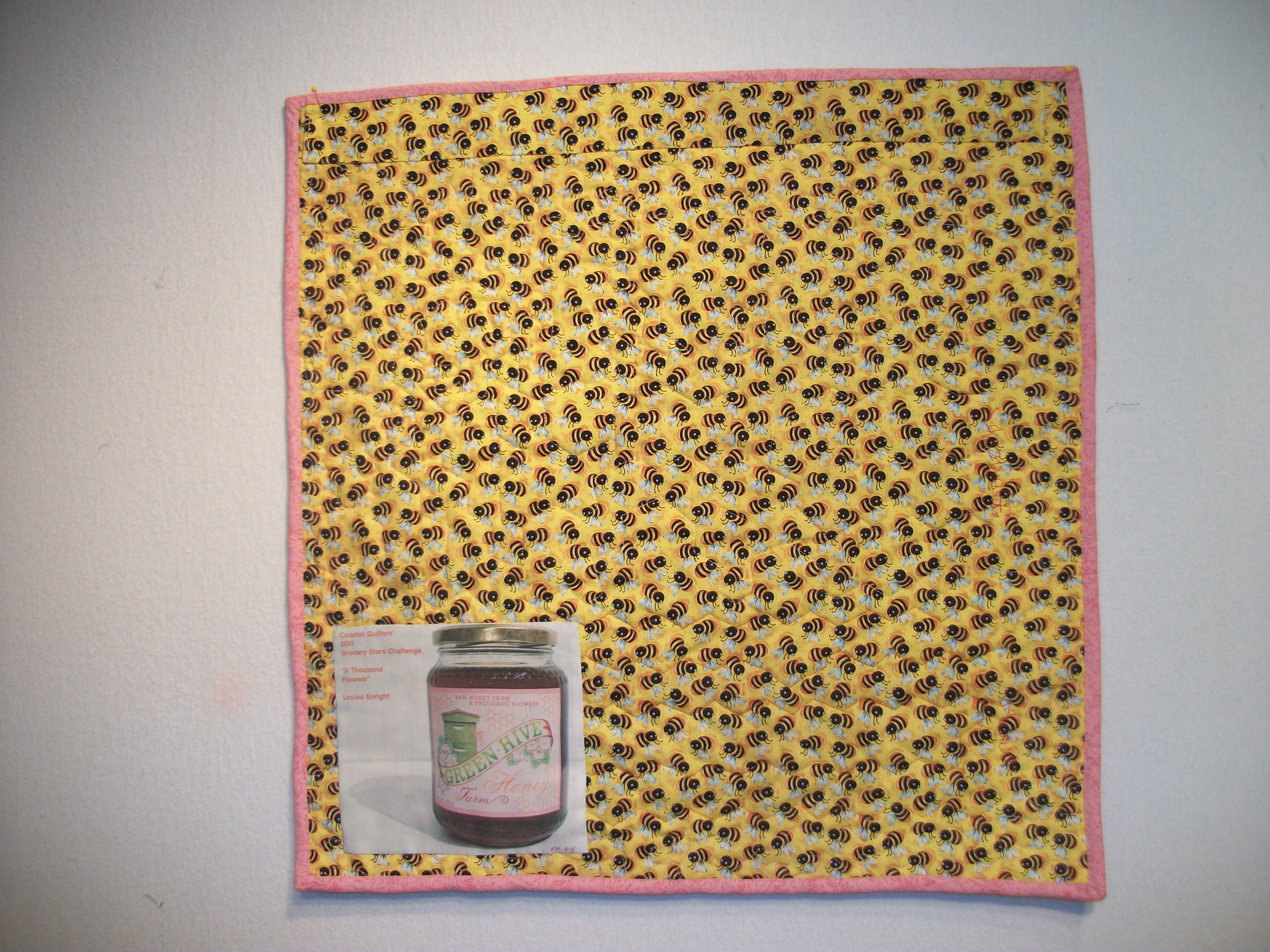
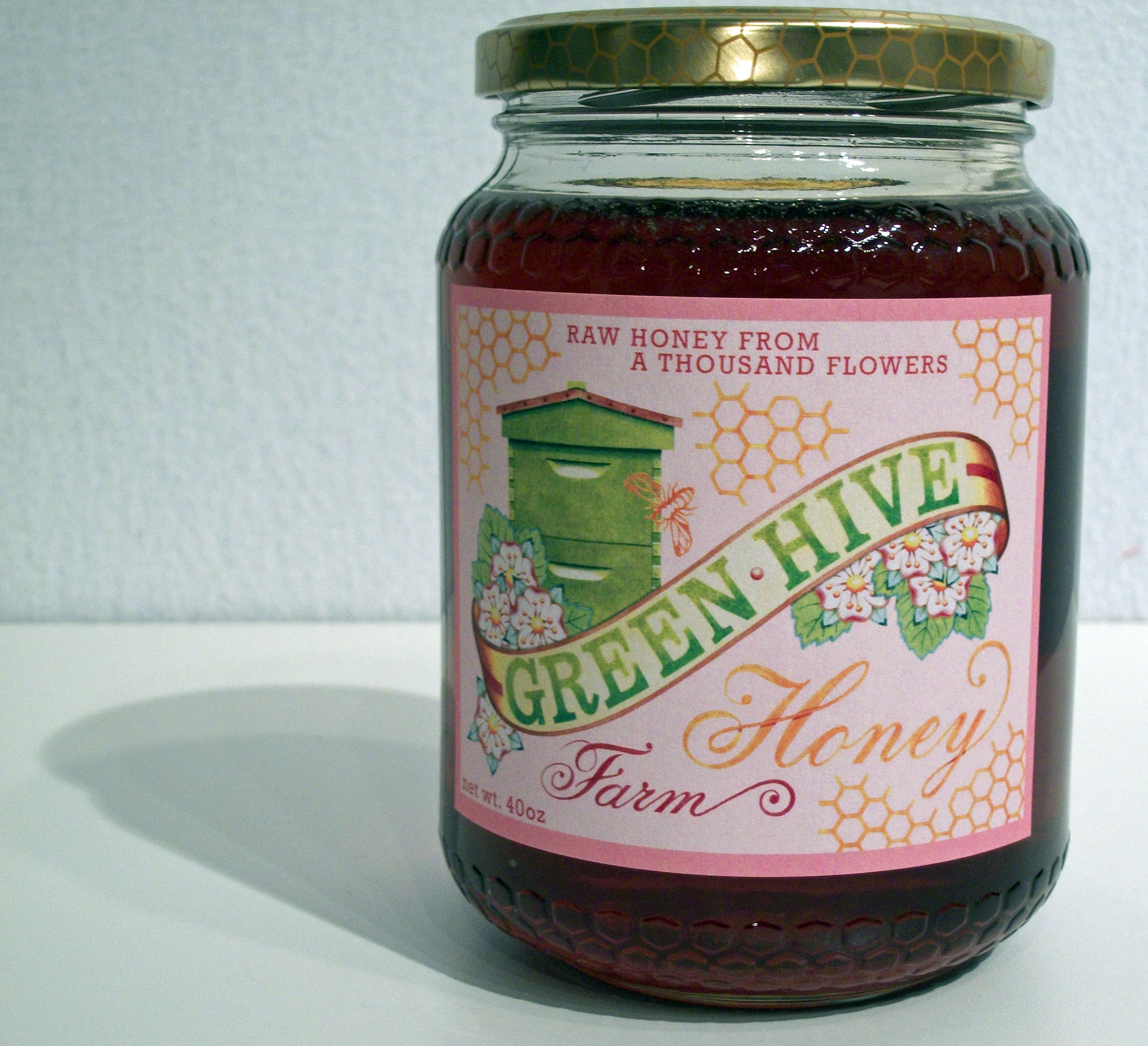
I do not buy many packaged products, if at all, so it took me some time to settle on using one of our local honeys as my product.  We buy it by the case.  I posted a picture of Green Hive Honey Farm earlier on the blog, but I printed my first ever fabric label from that picture for the quilt back.  Here it is on the back of the quilt:

Here’s the jar–which continues to entrance me–close up.  See the hexagon shapes embedded in the glass andn on the lid?

And, here’s the front of  “A Thousand Flowers”:

I wanted the flowers to literally be exploding from the honey jar.  The hexagon block is, of course, taken from the same motif on the jar, the label, and from a honey comb.  The green at the top of the quilt (see the tiny bees in the print) symbolizes the top of the “green” hive–and a green hive literally sits in the yard of the Green Hive Honey Farm folks.  The darker blocks at the bottom symbolize thousands of flowers being turned into honey, contained by a jar shape.  I stamped the bees at the top, the flowers in the pink borders, and some of the words.  I sewed in some of the words on the quilt, like “unheated” and “raw.”  I machine quilted long lines in the honey jar and curving lines around the jar.   Like the label, the binding is a darker pink.

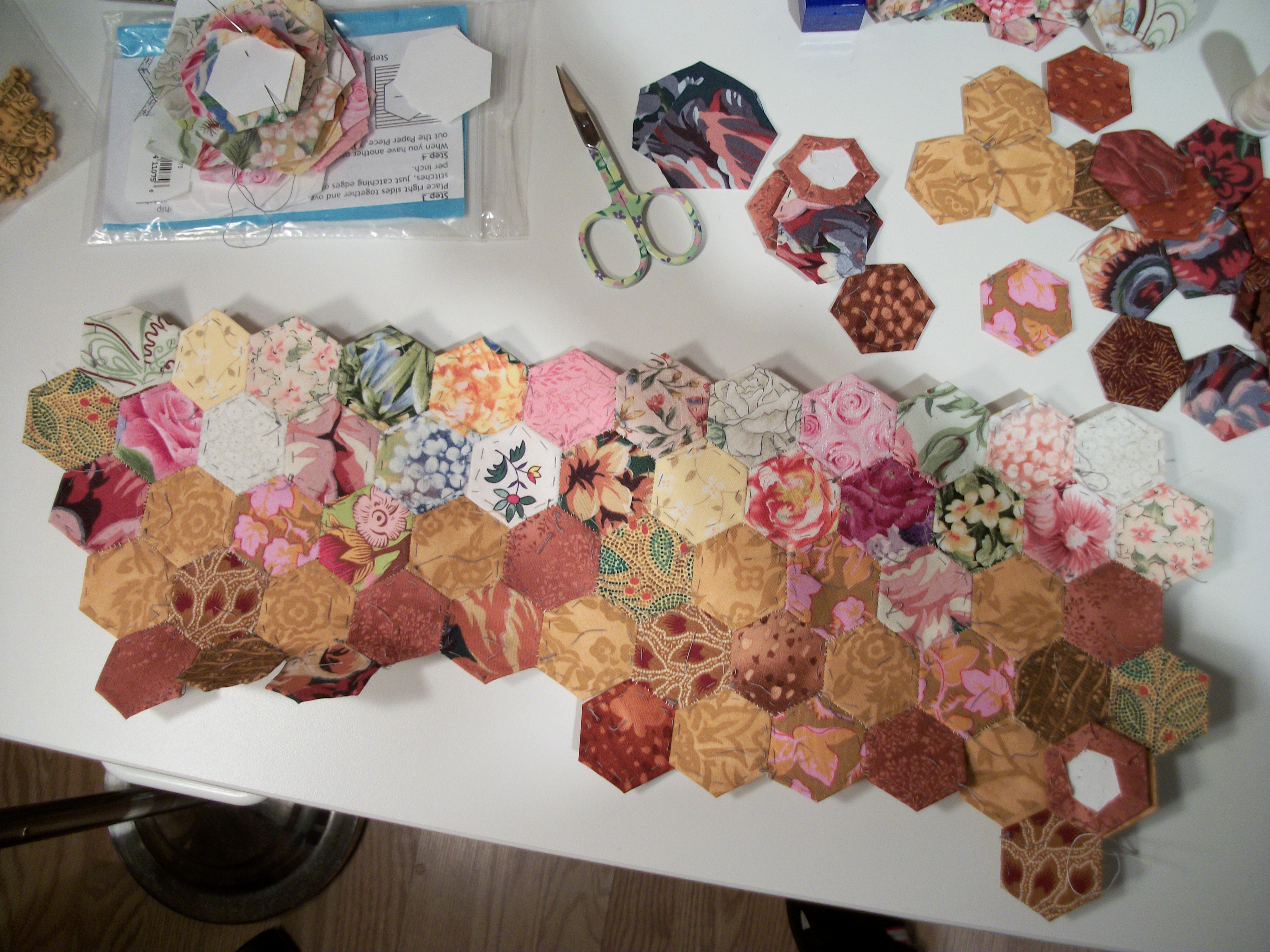
The hexagons are made with the English Paper Piecing method.  One buys or makes paper templates, wraps the fabric around each one and bastes it down, then whip stitiches the blocks together.  Here’s what that process looks like:

Here’s a detail of the stamping (with acrylic paint), of the loose blocks appliqued to the quilt, and of some of the bee buttons, large and small, sewn to the quilt:

I had forgotten how the whip stitching of the blocks pulls, so that one sees those threads.  On the dark honey blocks, the lighter threads were disconcerting, so I painted them with fabric paints that came in pens.  It looks much better now.

I love this quilt.  This little thing took me FOREVER to make.  Many, many hours.  So, now it is done and will hang, with the other CQ Grocery Store Challenge Quilts in the Pine Tree Quilting Guild show in Augusta, Maine, in late July.  After it comes home, it will hang on the wall outside my quilt room.

Mainely Tipping Points 31: I Feel It In My Gut

Mainely Tipping Points 31

I FEEL IT IN MY GUT

 Some of you might remember that I got into researching and writing about food issues because suddenly I developed food allergies that caused me to pass out with little or no warning.  I suffered dozens of unpleasant food-related allergic episodes; experienced several rescues from our local emergency crew; underwent one trip to the hospital; endured a growing list of problem foods; and still negotiate with friends and family who are scared to feed me.

So, rejoice with me when I tell you that I’ve had a breakthrough—one that could impact also your health.  I discovered that the root cause of my food allergy problems was a malfunctioning gut—something that likely affects many Americans.  It isn’t that I am allergic to specific foods, but that foods I was eating were not being contained properly within my digestive system.  Because my gut had been perforated by out-of-control opportunistic microbes that live in my gut, undigested food particles were leaking through the gut walls and were being attacked as foreign invaders by my body—which explained the growing list of “problem” foods.

My breakthrough began with an article by British physician Dr. Natasha Campbell-McBride: “Food Allergies:  A Holistic Approach,” in the journal WISE TRADITIONS, summer 2010, 26-34, which is available at www.westonaprice.org.  In addition, Campbell-Mcbride has published the very comprehensive GUT AND PSYCHOLOGY SYNDROME, which she revised and expanded in November 2010.  And, there is an excellent web site with information on the well-credentialed Campbell-McBride; the Gut and Psychology Syndrome, or GAPS, diet; and resources:  http://gaps.me.  Here’s a site listing the recommended/forbidden foods:  http://www.gutandpsychologysyndrome.com/wp-content/uploads/2009/11/GAPS-Diet-Foods.pdf.  But, it’s a good idea to read about how to manage the diet on the main GAPS web site. 

Campbell-McBride got into the GAPS arena because she has an autistic son, so the web site is targeted to people with serious neurological issues.  However, the GAPS information is really important for anyone with either allergies (all types) or any gastrointestinal issues.  For instance, Campbell-McBride explains that food allergies/intolerances are symptoms of underlying digestive problems and that other symptoms most commonly include pain, diarrhea, constipation, bloating, indigestion, and urgency.  But, symptoms can also include “migraines, fatigue, PMS, painful joints and itchy skin” as well as “depression, hyperactivity, hallucinations, obsessions and other psychiatric and neurological manifestations” (27). 

In GUT AND PSYCHOLOGY SYNDROME, Campbell-McBride explains that if opportunistic gut microbes become too prevalent and too powerful in a struggling gut, in addition to harming the lining of the gut, they begin to produce toxic wastes of their own.  These toxins affect the brain; they create behavioral problems and can cause or intensify neurological disorders like autism, schizophrenia, ADD, ADHD, dyslexia, dyspraxia, and depression (41-48). (Additionally, I’ve read that some cancer researchers are looking at the relationship of these opportunistic microbes, like the yeast candida albicans, and cancer.)   

Gut dysfunction is caused by ongoing poor nutrition and by not having normal gut flora.  Gut dysfunction causes malabsorption, which, in turn, causes malnutrition and other disturbances in the incredibly delicate chemical balance of a healthy body.  Poor nutrition includes highly processed foods like white flour, sugar, and high fructose corn syrup, and complex carbohydrates from grains and starchy vegetables—all common components of the Standard American Diet (SAD).   

Dr. Thomas Cowan, an MD homeopath, revealed in a recent newsletter that Current TV, Al Gore’s television network, is planning to produce a documentary about the GAPS diet which will suggest that it could be a factor in healing many of our country’s chronic health problems (http://fourfoldhealing.com/2011/03/18/march-17-2011/).  And articles about the importance of having a healthy gut microbial community are appearing in mainstream magazines on a regular basis.  For instance, a January/February 2011 article in “Discover” magazine noted that Jeffrey Gordon of Washington University in St. Louis, who is studying the importance of gut microbes, called the gut microbes a community that is “`an organ within an organ.’ “  The article notes that “the mix of microbes inside you affects how you metabolize food and probably has substantial impact on your health” (51). 

In “Food Allergies,” Campbell-McBride explains that flora and fauna imbalances can begin at birth since a new baby has a sterile gut and picks up the mother’s microbes during her/his passage down the birth canal.  If the mother has microbe imbalances, the baby will be born with them.  If the baby does not pass through the birth canal, as in a Caesarean birth, the baby struggles with the abnormal development of not only gut flora, but other microbe populations within the body, which leads to malnutrition and illness.  And, to behavioral and neurological issues. 

Bottle-fed babies, continues Campbell-McBride, “develop completely different gut flora than breast-fed babies,” which predisposes them to “asthma, eczema, other allergies and other health problems.”  Many modern practices harm our gut flora and fauna.  Antibiotics damage the “beneficial species of bacteria in the gut, leaving it open to invasion by pathogens that are increasingly resistant to antibiotics.”  Contraceptives, too, “have a serious damaging effect on the composition of gut flora” (28-29).  I suspect the array of drugs many of us take daily damage gut microbes.     

Campbell-McBride’s GAPS diet is predated by the Specific Carbohydrate Diet (SCD) developed by pediatrician Dr. Sidney Valentine Haas and his son, Dr. Merrill P. Haas, both of whom followed in the footsteps of colleagues working with celiac disease and other digestive disorders.  Campbell-McBride notes that Haas et al discovered that “patients with digestive disorders could tolerate dietary proteins and fats fairly well.”  But, complex carbohydrates from grains and starchy vegetables—often craved by patients–made the problem worse,” as did sucrose, lactose, and other double sugars.  Some fruits and vegetables were “not only well tolerated…but improved…physical status.”  Haas cured over 600 patients with his SCD diet.     

Campbell-McBride describes the “something terrible” that happened next—celiac disease was “defined as a gluten intolerance and a gluten free diet was adopted,” but the new diagnosis “excluded a great number of various other gut problems….”  Haas’s SCD diet was forgotten and “all those other gut diseases, which didn’t fit into the category of true celiac disease, were forgotten as well” (32).  Meanwhile, the food market has  heavily invested in gluten-free products.     

Elaine Gottschall was a mother who, when all else failed, took her very sick child to Haas in the early 1950s.  When Haas cured Gottschall’s daughter in two years,  Gottschall became a biochemist and dedicated her life to helping children like her daughter by promoting Haas’s SCD diet.  Her book BREAKING THE VICIOUS CYCLE is both interesting and useful as it contains recipes, though some use artificial sweeteners. 

Here’s what Gottschall wrote about this bizarre turn of medical history after one report was published in 1952 in the British medical journal “Lancet” :  “A group of six faculty members of the Departments of Pharmacology and of Pediatrics and Child Health of the University of Birmingham, after testing only ten children, decided that it was not the starch (carbohydrate) in the grains that so many had reported as being deleterious, but it was the protein, gluten, in wheat and rye flours that was causing celiac symptoms” (36).  Six physicians and 10 children were all it took to create a new “scientific” understanding.  

Both Campbell-McBride and Gotschall agree that the gluten-free diet does not work permanently and that Haas’s SCD diet does.  Campbell-McBride updated the SCD diet and called it the GAPS diet as her clinical practice continues to prove the connections between food, the gut, and the brain.  (There are American physicians working also in this arena.) 

Much of what we’ve learned is healthy lives in the GAPS diet:  bone broths; nutrient-dense whole foods like good fats, good meats, eggs, cheeses, and cultured dairy like yogurt and kefir; appropriate vegetables and fruits; probiotics; and fermented foods.  It is interesting that the GAPS work is a fit with Gary Taubes’ critique of the role of starchy and sweet carbohydrates in WHY WE GET FAT.  And Campbell-McBride’s work is supported and encouraged by the Weston A. Price Foundation. 

So, if you feel you have digestive or food allergy issues, follow your gut! 

Turkey Tracks: Sunny Saturday

Turkey Tracks:  May 23, 2011

Sunny Saturday

 For a brief shining few hours, we had some actual sunshine last Saturday.  John and I dropped everything else we had planned and worked in the yard.  He mowed, and the chickens loved that.  Four of them decided to take sun baths in the newly mown grass.

That’s the fenced garden in the background.  Soon enough now we have to fence the chickens instead.

I planted more peas, radish, and, for the first time, CUT SOME ASPARAGRAS spears.  This year is the third for the asparagras bed, and we’ve had three meals so far.  Asparagras cut fresh bears no relationship to what I’ve ever bought in a store.  It’s dead sweet and so tender.

We dragged down all the seedlings from the upstairs porch.  They’re more than a little leggy–still not enough light for them on the porch.  I’m hoping a few days in full daylight will green them up.  It’s probably wishful thinking for the tomatoes, at least.  The cabbage, broccoli, and Brussel sprouts may fare better.

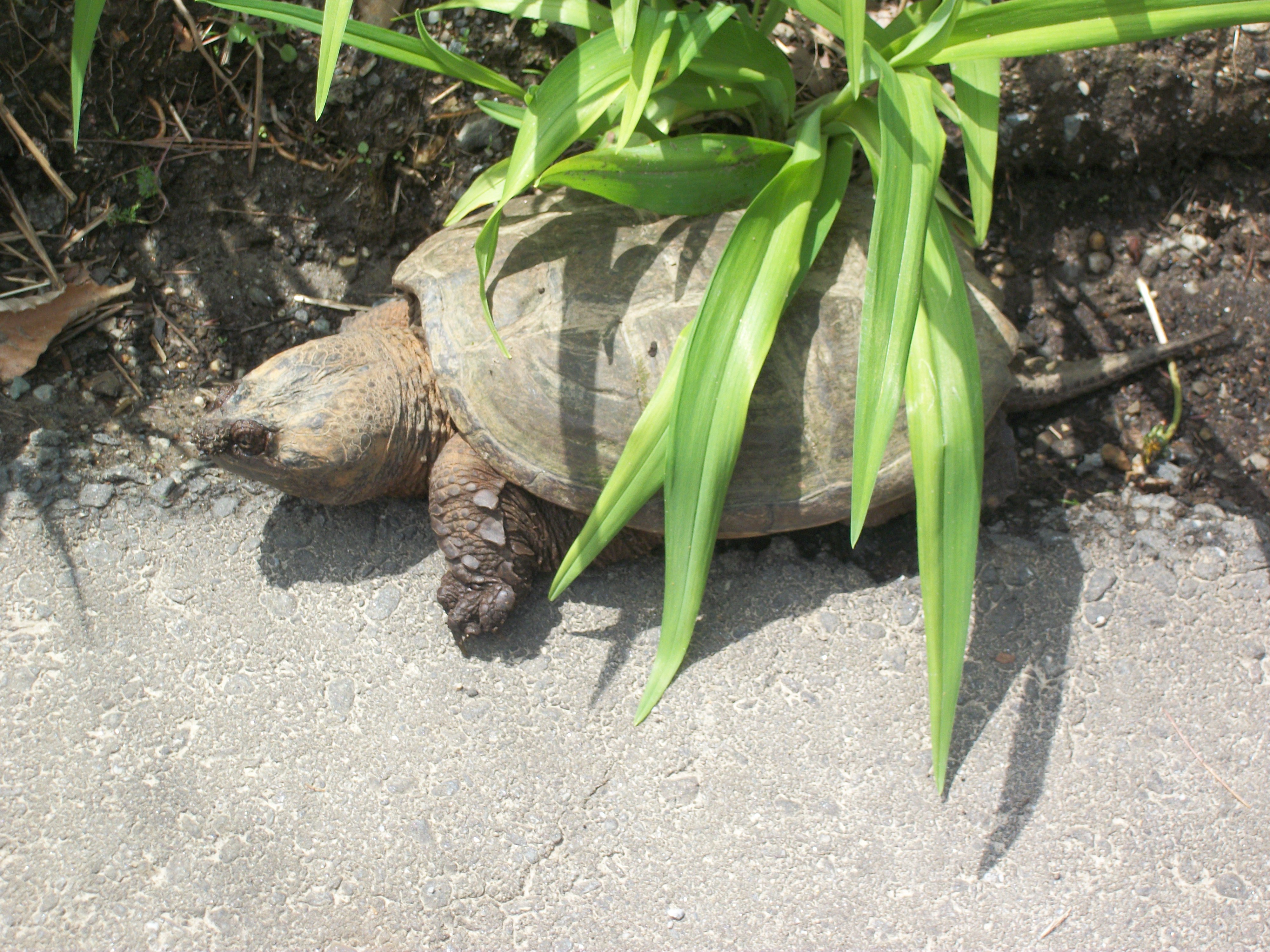
Penny started barking madly on the driveway.  I thought she had cornered a garter snake.  But, here’s what she had:

A snapping turtle is not a thing with which to trifle.  When we called Penny off, the turtle moved out with astonishing speed.

You can’t see the claws on the front feet, but they’re pretty long.  Clearly s/he had followed what s/he thought was a waterway only to land up in our driveway.  When left alone, s/he redirected and headed for flowing water downstream from our hill.

Turkey Tracks: Running River and Returning Birds

Turkey Tracks:  May 23, 2011

Running River and Returning Birds

We’ve had a lot of rain this spring.  Last year this time I was planting beans, so the soil was already 65degrees.   This year is cool and wet.  So far.

Here’s a pic of the Megunticook River down by the Megunticook market.  Look at the white water!  And the many shades of green and orange/red.


The hummers have been back for several weeks and are delighting us with their crazy antics.  The Baltimore Orioles and the Rose-Breasted Grosbeaks, often called the Northern Cardinal, showed up this week.  Here’s a site where you can see what they look like if you don’t know:

http://www.northrup.org/photos/rose-breasted-grosbeak/

They’re pretty spectacular.  As are the Baltimore Orioles:

http://www.northrup.org/photos/oriole/

I’d put in pics, but I updated the browser, and how I do things (like pressing pictures) is momentarily part of a new learning curve!

Turkey Tracks: Charleston, SC, in May

Turkey Tracks:  May 22, 2011

Charleston, SC, in May

 We spent late April and early May in Charleston, SC, with our family performing grandparent tasks.  This trip we kept our four oldest grandchildren while their parents (Mike and Tami) had a little vacation–their first for longer than two nights in almost eight years.   These four children range from 7 1/2 to 3 1/2 years, and this is the first time we felt we could safely keep them all by ourselves, especially as they are all in school now and can, mostly, dress themselves.  Of course, we had to get them to two schools every morning for four days–thank heavens for Tami’s GPS system and the schools’ lunch programs.  And, pick them up mid-afternoon.

We immediately complicated this endeavor by keeping each one of them at home for a “special day”–which proved to be immensely enjoyable for everyone concerned–especially as we featured a trip to Hominey Grill as a part of each’s child’s day.  Talula holds the record for eating ALL of her pancakes, which she smothered with butter, honey, syrup, and jam!  I LOVE the fact that Talula is so adventuresome with food.

We were going to be backed up by our younger son and his wife, Bryan and Corinne, who also have a new baby, their first, Ailey, born last Thanksgiving.  The notion that B&C were nearby provided more than a little comfort as we had nightmares about broken bones, emergency medical issues, and the like.  We also had four chickens, a new bee hive, and an African water frog to keep well and alive.  (Fortunately no one got poisoned by the water frog, which I’ve read since carry pathogens that are causing the CDC to issue dire warnings about NOT handling these frogs.)

The children were fabulous, and just about the time we were all getting into a groove and Talulah stopped crying for her mother at, especially, bedtime, their parents came home.  Here is the only decent picture I took of the four of them.  And I can’t even remember when I took it as by the time they all went to bed, with clothes for the morning laid out, I went to bed too!

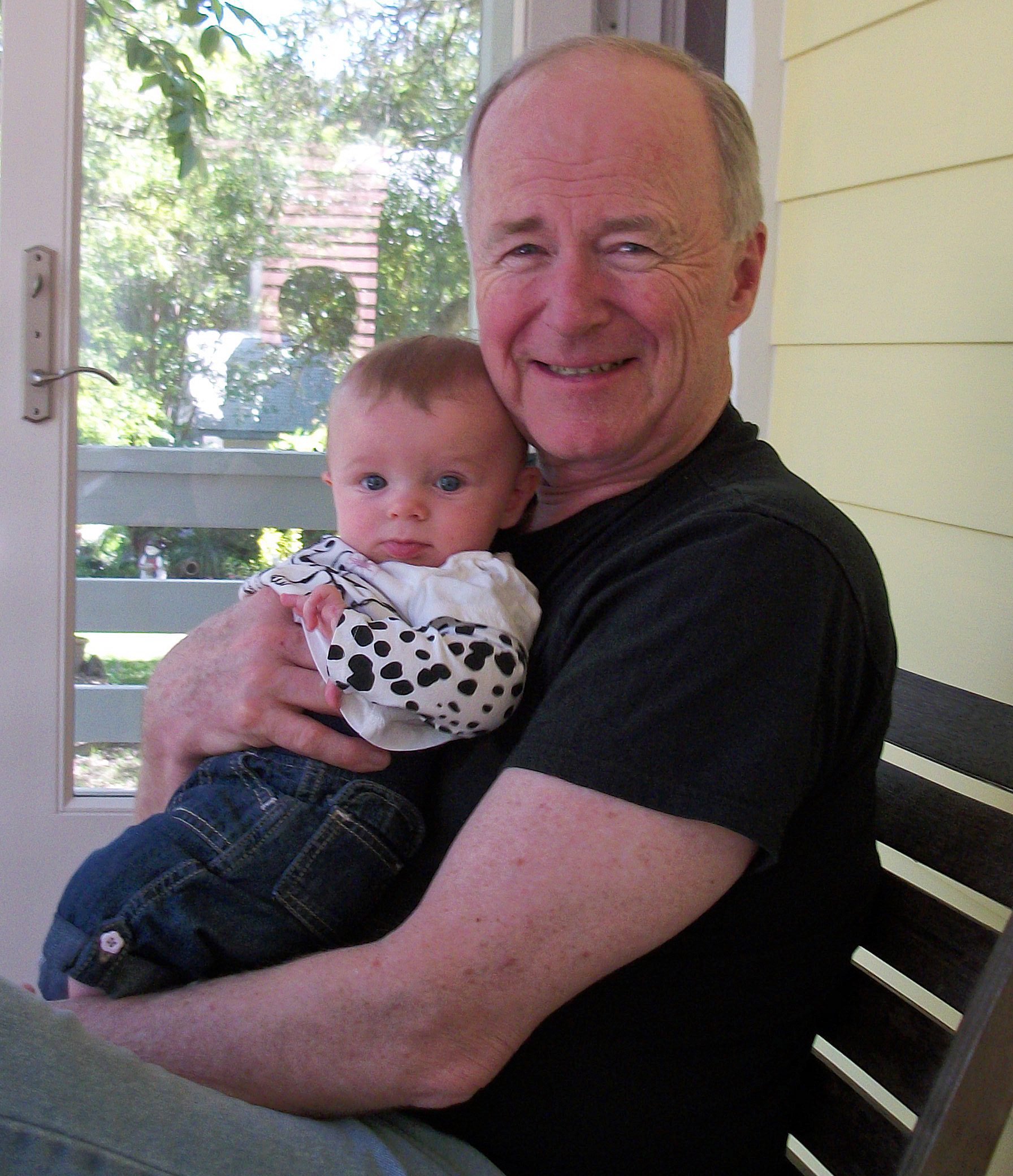
 Before I go any further, I want to put in a picture of Ailey, seen here with her grandfather, whom she is, at the moment, looking very like:

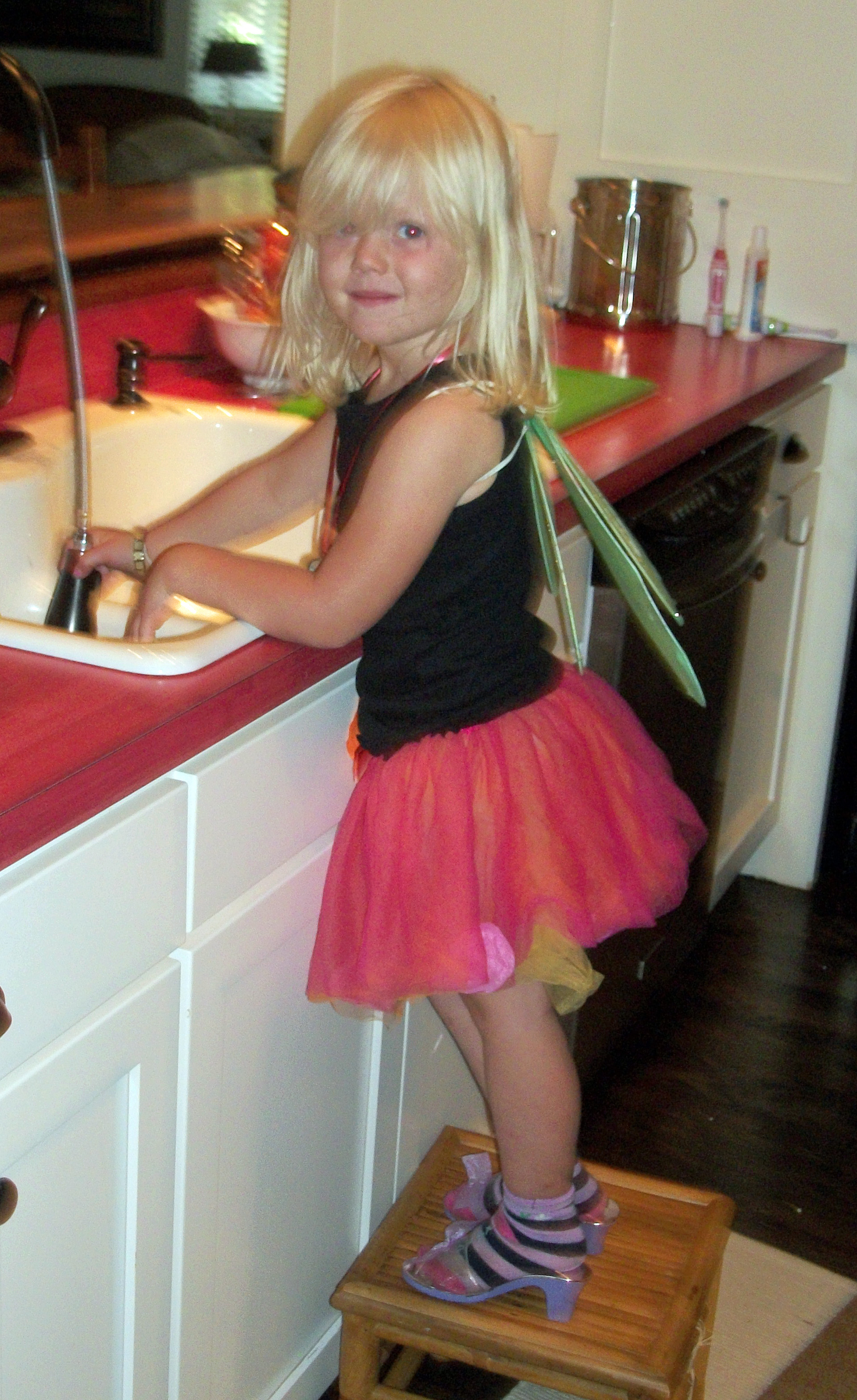
Here’s one of my favorite pictures of Talula.  I raised two boys, and let me tell you, girls are different than boys!  And this girl already has a sense of style that is unique.

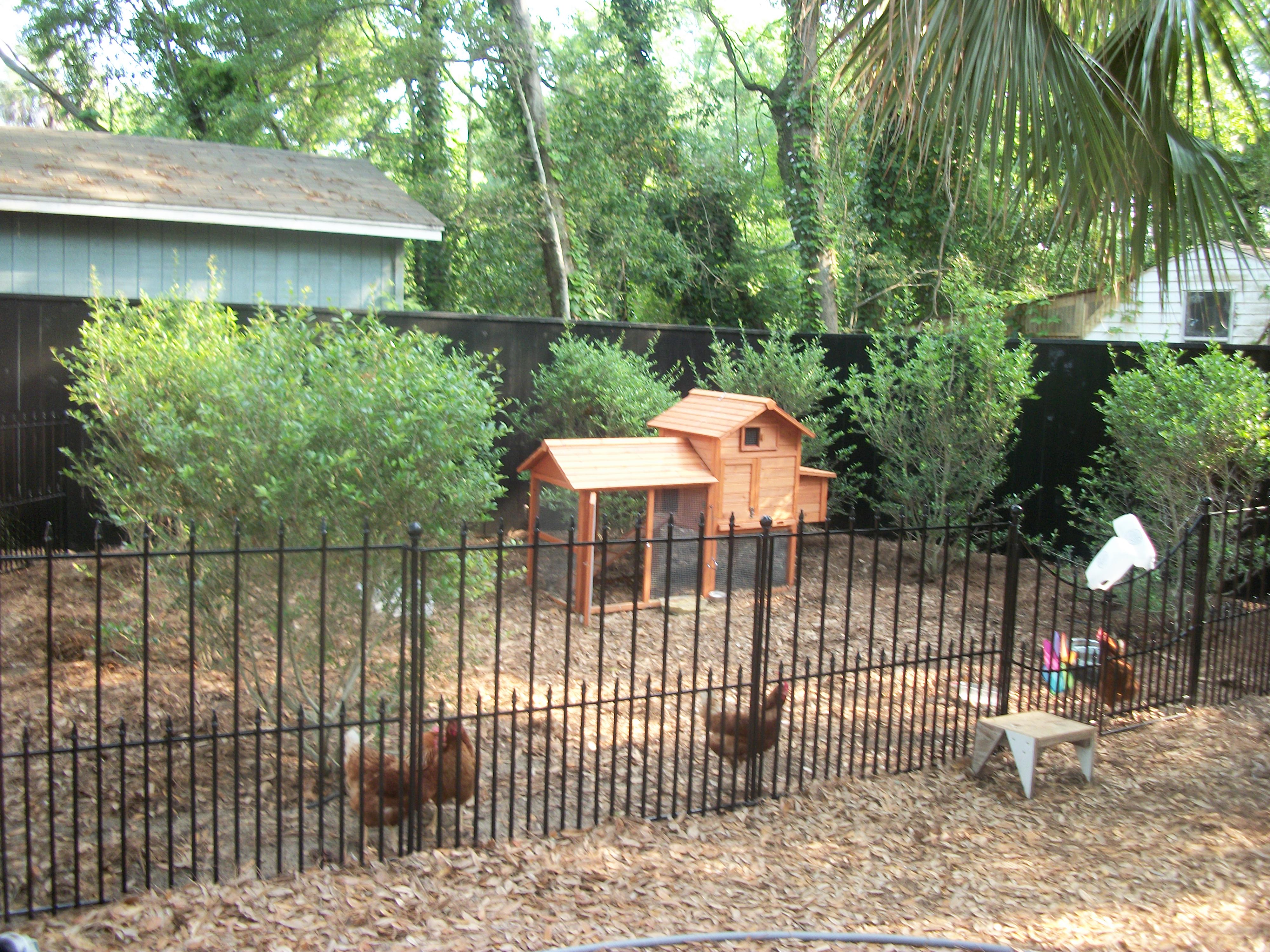
 Here’s a pic of the four new chickens and their coop and yard.  The coop is MUCH smaller than Tami and I thought when looking online, but it’s quite nice and perfect for four chickens.  The milk bottles on the gate were an emergency measure to keep the chickens from flying out of the fenced area.  These chickens are red stars, or red sex links, and they are legendary for being gentle and sweet.  And, for being escape artists.  When Tami returned, we had to clip their wings, but they can STILL get out, I think, by jumping onto the fence bar at the top.

Here’s a pic of Tami and her friend, Kay, checking out the bees in the new hive:

Look at Kay in shorts!  Yet, it’s Tami who got stung.  My hat’s off to Tami, who while still a little nervous about the bees, has taken on bees as a project.  I’m not sure I could, and I am fascinated with bugs of all kinds.

And, to close out pics from this trip, here’s one of Ailey on her snuggly monkey and holding her own bottle!  Here she looks a bit like me.

I forgot to say that the jasmine was blooming and that it was warm enough to swim!

Tipping Points 30: The Very Bad Breakfast

Mainely Tipping Points 30 

THE VERY BAD BREAKFAST


Cold cereal with milk and, maybe, some orange juice on the side–we think this breakfast is nourishing, right? 

Well, let’s take a look at the individual ingredients.  Sally Fallon Morell provides such analysis in “Dirty Secrets of the Food Processing Industry,” recently updated and reprinted in Well Being Journal, March/April 2011, 11-19.  The original text, given in a speech, is at www.westonapricefoundation.org.  Both texts cover much more than packaged cereal, milk, and orange juice.   

All ready-to-eat cereal grains are so highly processed that whatever good the whole grains once contained is killed.  Grains are made into a slurry, are put into a machine called an extruder, and are “forced out of a tiny hole at high temperature and pressure, which shapes then into little o’s and flakes, or shreds them or puffs them.”  The shapes are then sprayed with oil and sugar to seal the grains from “the ravages of milk” and to give them crunchiness.  This process destroys the fatty acids, the synthetic vitamins added at the end, and the “crucial nutrient” amino acid lysine. 

This extrusion process “turns the proteins in grains into neurotoxins.”  Biochemist Paul Stitt describes the now-famous, but still unpublished, 1942 rat study which fed four groups of rats differing diets.  The rats fed vitamins, water, and all the puffed wheat they wanted died within two weeks—even before the rats who received no food.  Rats fed plain whole wheat, water, and synthetic vitamins and minerals lived for one year.  Somehow, writes Morell, the extrusion process produces chemical changes in the grains that make them toxic.

In 1960, researchers at the University of Michigan divided rats into three groups.  One group received cornflakes and water, one the cardboard box the cornflakes came in and water, and the control group received rat chow and water.  The rats receiving the cornflakes died before the rats eating the cardboard boxes.  And, before dying, the rats eating cornflakes “developed aberrant behavior, threw fits, bit each other and finally went into convulsions.  Autopsy revealed dysfunction of the pancreas, liver and kidneys and degeneration of the nerves of the spine, all signs of insulin shock.  This experiment, designed as a joke and still unpublished, undoubtedly shocked its designers. 

The extrusion process alters the structure of grain proteins, so cereals in health food stores made of whole grains rather than refined grains may be more dangerous because they have a higher protein content.  Once disrupted, it’s likely that these altered protein bodies “can interact with each other and other components of the system, forming new compounds that are completely foreign to the human body.”  As these proteins become toxic, they can “adversely affect the nervous system, as indicated by the cornflake experiment.”   

Additionally, Morell notes that many of these cereals are “at least 50 percent sugar.”  Given that grains are carbohydrates that break down into sugars in the body, there is a double sugar load involved when sweeteners are added.  Further, Lierre Keith, in THE VEGETARIAN MYTH, notes that grains contain powerful opioids that make them addictive for humans (33-34).  No wonder we like them so much!

I wrote three Tipping Points on commercial milk (6, 7, 8), so I apologize for repeating some of that information in order to do Morell’s article justice.  Morell notes that most industrial milk is highly processed and, in my terms, a fake food.  This milk comes largely from cows fed foods cows do not eat, to include waste products from other industries.  These cows produce “huge amounts of watery milk with only half the amount of fat” normal cows should produce.  Milk from all these cows is combined and shipped to factories where it is separated into “fat, protein and various other solids and liquids.”  The ingredients are then reconstituted according to “specific levels set for whole, low-fat and no-fat milks”—levels which allow fat to be skimmed off of even whole milk for other products, like butter, cheese, and ice cream.  Reduced fat milks are boosted with powdered milk concentrate to give them body. 

Powdered milk is made by forcing milk “through a tiny hole at high pressure” and then blowing the particles out into the air.  This process causes “a lot of nitrates to form” and, worse, it oxidizes the cholesterol in the milk.  Oxidized cholesterol is dangerous for humans.  It’s used “in animal research to cause atherosclerosis,” or heart disease.  (Cholesterol in your body is not the same thing as oxidized cholesterol.)

Once reconstituted and homogenized, milk is pasteurized, or, more likely today, ultrapasteurized, which cooks it until it is (supposedly) sterile.  It does not need refrigeration.  It will last for many weeks as it’s thoroughly dead. 

I have followed with much pleasure the progress of Maine’s own organic Moo Milk.  This milk comes from local family farms, is processed in Maine, and is not ultrapasteurized.  Moo Milk takes a healthy direction for both the farmers and for Maine consumers.  Hopefully, in time, Moo Milk will pasture Moo cows except in winter, will not homogenize milk, and will offer a line of raw milk for those who are committed to consuming whole foods.   

Morell shows that commercial orange juice is a toxic soup.  Conventional oranges are “sprayed heavily with pesticides called cholinesterase inhibitors [among which are organophosphates and carbamates], which are very toxic to the nervous system.”  Whole oranges are thrown into huge squeezing vats and enzymes and acids are added that help extract as much of the juice as is possible.  The dried orange peels, still loaded with organophosphates, are fed to cattle, which the work of Mark Purdey shows causes a “degeneration of the brain and nervous system in the cow.”  So, what’s it doing to you?

The juice is then pasteurized, but “researchers have found fungus that is resistant to pressure and heat in processed juices.”  And, they’ve found E. coli strains in the orange juice that was, obviously, “pressure resistant and had survived pasteurization.”  Further, like the extrusion of grains, “the heating process produced intermediate products which, under test conditions, gave rise to mutagenicity [changes genes] and cytotoxicity” [causes cancer]. 

In addition, eating cold cereal with low-fat milk and drinking a side of orange juice is eating exactly the kind of easily digestible sugar-rich carbohydrates that are being identified as causing obesity, metabolic syndrome, diabetes, and other chronic diseases.  And, there is very little fat.  Morell reminds us that the demonization of saturated fats and oils has no scientific basis and is “nothing but industry propaganda.”  With so much sugar and so little fat, one will be hungry shortly. 

If you want to eat a grain for breakfast, “soak grains overnight to get rid of the anti-nutrients that are normally neutralized in the sprouting process.  Soaking will neutralize the tannins, enzyme inhibitors and phytic acid and gently break down complex proteins.”  Soak grains in “warm water and one tablespoon of something acidic, like whey, yoghurt, lemon juice or vinegar.”  In the morning, your grains will cook in just a few minutes.  And, it’s best to eat them with “butter or cream, coconut and chopped nuts like our grandparents did.  The nutrients in the fats are needed in order for you to absorb the nutrients in the grains.  Without the fats—especially the animal fats, which are the only sources of true vitamin A complex and vitamin D3–you cannot absorb the minerals in your food.”

For me, grains and fruit are a rare and much appreciated treat.  For breakfast, I eat from the following:  eggs, often scrambled with leftover green vegetables and cheese; fermented meats like salami or prosciutto; bacon; cheeses; homemade yogurt with nuts, seeds, bits of fresh or dried fruit, and dried coconut; leftover soup; and tea with honey and whole heavy raw cream.  I do not get hungry again until about 2 p.m.