Mainely Tipping Points 36: Stopping Fluoride

Mainely Tipping Points 36

PART 3:  STOPPING FLUORIDATION


An October 13, 2011, article in “The New York Times” by Lizette Alvarez reported that about 200 jurisdictions in the United States have chosen to end fluoridation in the last four years.  The most recent is Pinellas County, on Florida’s west coast.  Eleven small cities or towns opted out this past year, including Fairbanks, Alaska. 

In Maine, municipal voters must vote directly to begin or discontinue fluoridation.  It’s difficult to patch together a list, but it seems as if the following Maine jurisdictions have voted to end fluoridation:  Mt. Desert, Jackman, Moose River, Lincoln, Seal Harbor, and Norridgewock.  In November, Damariscotta and Newcastle will vote on ending fluoridation.

In THE CASE AGAINST FLUORIDE:  HOW HAZARDOUS WASTE ENDED UP IN OUR DRINKING WATER AND THE BAD SCIENCE AND POWERFUL POLITICS THAT KEEP IT THERE (2010), Paul Connett, PhD, James Beck, MD, PhD, and H.S. Micklem, DPhil, note that since no one federal organization is in charge of the fluoridation program, stopping it at the federal level will be very difficult.  The best way, write Connett et al, is through local, democratic efforts.  After reading this book, which is an exhaustive study of the history and safety of fluoridation, I hope Camden and Rockland citizens—and other citizens of other towns–will join together to opt out of fluoridation in the near future.

When Mt. Desert voted in 2007 to end fluoridation—by a ratio of four to one—over thirty health officials met in Augusta for a press conference where they condemned the decision (Craig Idlebrook, “Mount Desert Fluoride Vote Sparks Debate,” “Working Waterfront,” 1 May 2007).  Yet, the 2006 EPA-commissioned report by a twelve-member panel of the National Research Council (NRC) had very clearly raised warning flags about fluoridation’s negative effect on the human body and had flatly stated that the Maximum Contaminant Level (MCL) of 4 ppm was not protective of human health. 

To clarify, the NRC is part of the National Academies.  And, the 2006 NRC report is the most recent report from the National Academy of Sciences on fluoridation.  The twelve panel members were told to review toxicologic, epidemiologic, and clinical data on fluoride and exposure data on orally ingested fluoride from drinking water and other sources.  The panel was not charged to investigate risk-benefit assessment.  Nevertheless, as Connett et al document repeatedly and as panel member Kathleen Thiessen notes, the NRC panel implicated fluoride, even at low levels, as causing damage to human bones and teeth.  The report also implicated fluoride as adversely interfering with many systems of the body (142-147). (Parts 1 and 2, Tipping Points 34 and 35, highlight some of that information.)

 In January 2011—a full five years after the 2006 NRC report—the EPA got around to lowering their current recommended range of 0.7 to 1.2 ppm to 0.7 ppm.  (But the 4 ppm MCL remains in place.)  And, in January 2011, the EPA announced it will move toward banning fluoride pesticides used on food because children are currently over-exposed to fluoride (Dan Shapley, “EPA Will Ban Fluoride Pesticide Used on Food,” 11 January 2011, www.thedailygreen.com). 

Already, our well-meaning health officials are writing letters to local papers endorsing fluoride.  These are likely good people who want what’s best for their communities.  The mistake they are making is that they are relying on endorsements from major health organizations who have not done their own, or any, analysis or who have a vested interest in maintaining the status quo—maybe because any backsliding could result in major law suits. 

So, if you see vague, uncited endorsements like “studies show,” or “the scientific evidence is clear,” seek more information because the 2006 NRC report does not support that position.  Nor do the very reputable authors of THE CASE AGAINST FLUORIDE.  Go online and poke about the NRC report yourself.  It’s on the National Academy of Sciences web page:  FLUORIDE IN DRINKING WATER:  A SCIENTIFIC REVIEW OF EPA’S STANDARDS, http://www.nap.edu/catalog.php?record_id=11571.  Even reading the Summary is instructive. 

Remember, endorsements are not scientific inquiry.  And, the history of fluoridation is made of up endorsements piled up like a house of cards.  What has already fallen out of this face-saving mess is your health.     

As for fluoridation’s success in preventing dental caries, that case hasn’t been made.  Fluoride itself has never been subjected to rigorous, randomized clinical trials, explain Connett et al (270).  Further, communities opting out of fluoridation worldwide have not experienced increased cavities.  Indeed, Connett et al argue that benefits have been “wildly exaggerated” in the absence of good studies.  Further still, in 1999, the Center for Disease Control admitted that if fluoride works at all to strengthen teeth, it works topically, not through ingestion (13). 

So, tell me again, why are we putting it in our water, especially since it is so toxic for so many?

Also, I do think that we have to put our health officials on notice that continuing to “drink the Kool-Aid” about fluoride and not doing due diligence themselves is not ok.  We rely on our health officials for solid information, so if they are going to take a public position, I would urge them to read Connett et al and the 2006 NRC report first.  You can’t read either without rethinking fluoride drastically. 

One argument—made by James Donovan, CEO and President of the Lincoln County healthcare system, which is the Miles Memorial Hospital in Damariscotta, in THE FREE PRESS, October 24th—is that all you have to do is drink the fluoridated water to cheaply protect your teeth.  Oddly, a civil engineer from Louisiana made the following comment on this blog:

 “I know that people drink only 1/2% (one-half percent) of the water they use. The remaining 99 ½ % of the water with toxic fluoride chemical is dumped directly into the environment through the sewer system.  For example, for every $1000 of fluoride chemical added to water, $995 would be directly wasted down the drain in toilets, showers, dishwashers, etc., $5 would be consumed in water by the people, and less than $0.50 (fifty cents) would be consumed by children, the target group for this outdated practice.  That would be comparable to buying one gallon of milk, using six-and-one-half drops of it, and pouring the rest of the gallon in the sink.”

And, of course, the more fluoridated water you ingest, the bigger your dose of fluoride and the larger your risk of harm.  Just drinking the water is “not the “holistic benefit to our overall health” that Donovan claims.

The ethical and moral components of this debate are deeply troubling.  Drugging a whole community, as Connett et al note, not only puts subsets of the population (like babies, diabetics, the elderly, the ill, the allergic) at real risk, this practice violates each person’s right to give informed consent, which is both “an ethical obligation and a legal requirement…in all fifty states of the United States” (3-4). Note too that in 2006, the American Dental Association advised against giving babies fluoridated water (“10 Facts about Fluoride,” Fluoride Action Network web site).  Poor families are faced with buying distilled water for formula—water that likely comes in a plastic bottle which brings into play a whole new set of contaminants.         

Why is our medical community, which must abide by legal requirements about informed consent in their work place, so willing to ignore them with regard to fluoride?  Especially since, as Connett et al note, tooth decay “is neither life threatening nor contagious at the community level” (269). 

So, I’m looking to young parents, especially, to work together to organize a vote to end fluoridation in Camden and Rockland.  Protect your children, yes.  But prevent, also, the skeletal fluorosis that is likely masquerading as arthritis when you become a senior citizen.   
 

Turkey Tracks: Indian Summer in Maine

Turkey Tracks:  October 12, 2011

Indian Summer in Maine

Summer is officially over in Maine.

But, we have been blessed with some gorgeous fall weather, and now our leaves are coloring up fast.

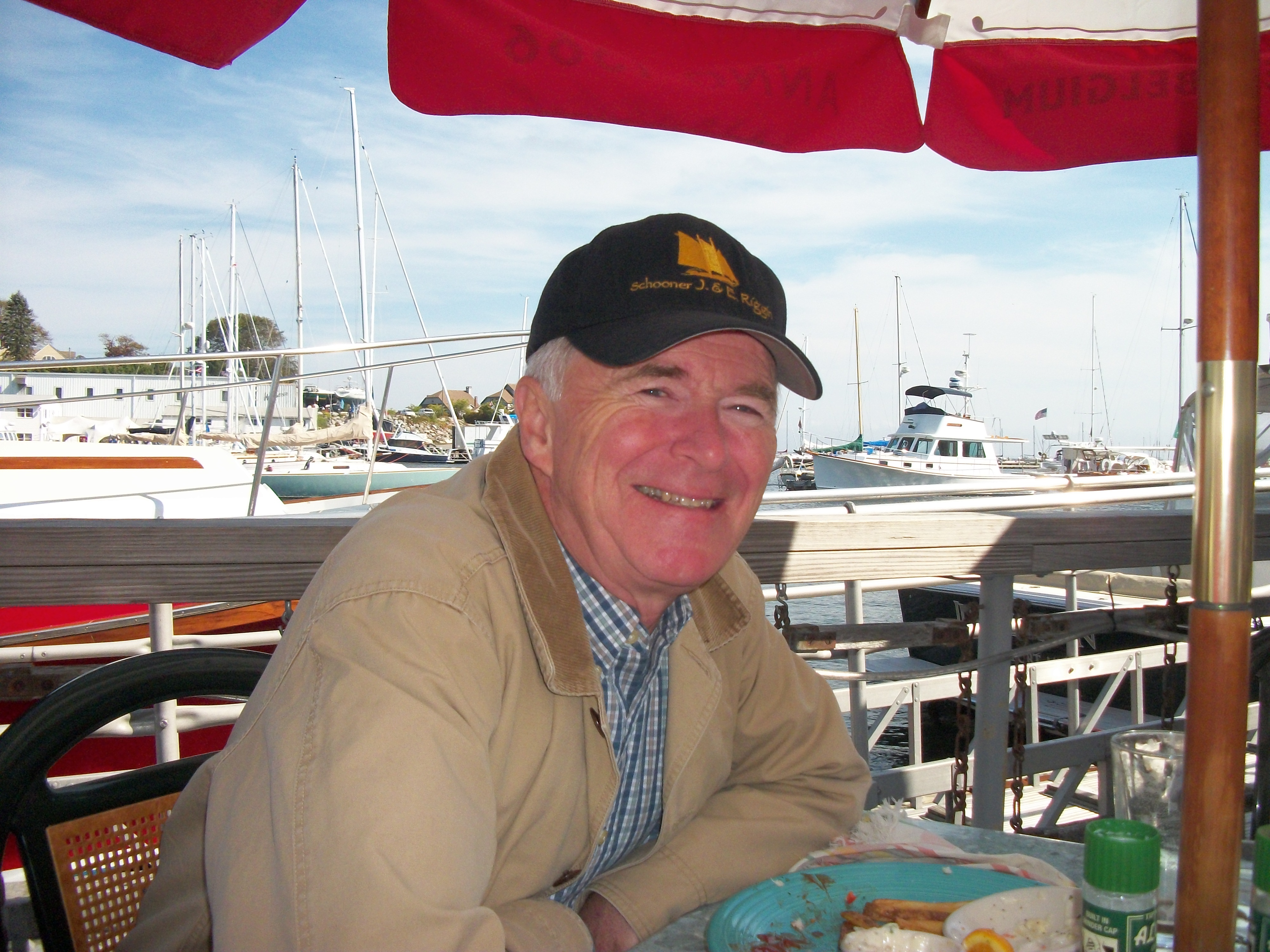
We try to get as much outdoor sweater/light coat weather as we can these days.  Here’s John on the deck of The Waterfront restaurant in Camden, Maine, enjoying a fine, sunny lunch:

 —

We had a wonderful time at MOFGA’s–Maine Organic Farmers’ and Growers’ Association–Common Ground Fair this year as well.  I can’t imagine how we both left cameras at home, but we did.  And, as usual, there were many wonderful pictures to be had.  I would especially have liked some of the many, fabulous hand-knit sweaters made with local yarns we saw.  Or, of the conga dancers–we finally saw what that was–and it was wonderful–not like square dancing at all, but done in long lines with couples who do repeating patterns that ensure that they move up and down the line–all to the sound of fiddle music.  (A violin sings but a fiddle dances, we learned.)

Here’s a picture of the bird house that John bought and hung on a tree where we can see it all winter long.  People hang lots of bird houses in their woods around their houses in Maine–they provide shelter for the birds that winter off in a storm.  John wants to make some with the grandchildren next summer.  We can’t wait for them to see it.

We celebrated Bryan’s birthday here, as I wrote in an earlier entry.  Here’s a picture of the outside of his birthday card.  I used pictures from their time in Maine to create the card–along with other bits of flotsam and jetsam collected along the way.  The buttons come from South Carolina.  The blue ribbon is off a box of chocolates we got from our new chocolate store here in town, Chocolatier Blue.  You wouldn’t believe these chocolates.

We ate the last of our lamb from last fall:  lamb shanks.  John thought the plate so pretty, he took this picture.  Everything on that plate but the lamb came from our garden.  See the little white pearl onions in the background.  The spaghetti squash came from  Hope’s Edge.  The green is Gundru, for fermented kale.  The white sauce on the tomatoes is homemade mayonnaise.  It was all delicious!  A great fall dinner.

Turkey Tracks: Our Winter Turkeys

Turkey Tracks:  September 19, 2011

Our Winter Turkeys

Susan McBride Richmond and Chris Richmond live just up the hill from us, at Golden Brook Farm.  They have three children and are a source of ongoing inspiration.  Together they have put up three hoop houses, two of them large; have a large flock of chickens and sell eggs; and are presently raising some turkeys for winter eating.  We will get two of the turkeys around Thanksgiving.  Since we’ll be in Charleston, SC, for the holiday, we’ll have our turkeys for winter eating.

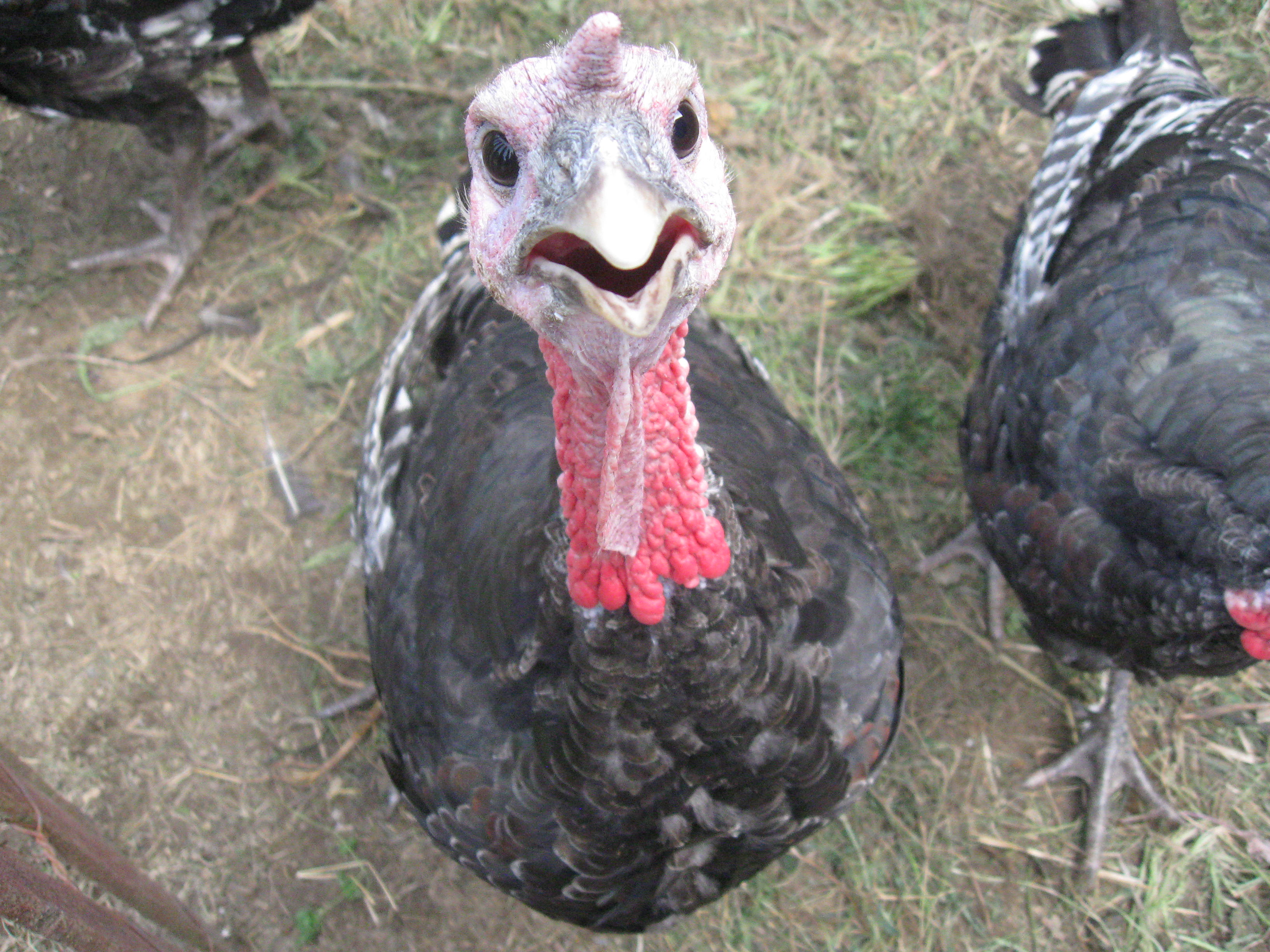
They are bronze-breasted heritage turkeys, and here’s what they look like now:

Turkeys are very social and will talk to you as long as you stand by a fence and speak to them:

This time will be the third that Susan and Chris have raised turkeys for us.  They have all been delicious!

And, last spring we got a lot of fresh wonderful greens from Susan’s second hoop house.   The third hoop house which is up and beginning to be planted will be icing on the cake for us since Susan will have greens this winter as well.  How cool is that!!

I wrote about Golden Brook Farm last fall when Susan and Chris hosted a potluck lunch and cider pressing.  This year they have purchased a cider press, and the event will be the weekend of Oct. 1st.  This year I’m bringing my camera!

Turkey Tracks: Garden Bounty

Turkey Tracks:  July 31, 2011

Garden Bounty

Mike, Tami, and the kiddos left Thursday morning for the two-day drive home to Charleston.  We miss them already.

 Miss Reynolds Georgia is so thrown off that she has pooped in the house for three days running.  Here’s the kind of attention she misses from all four children:

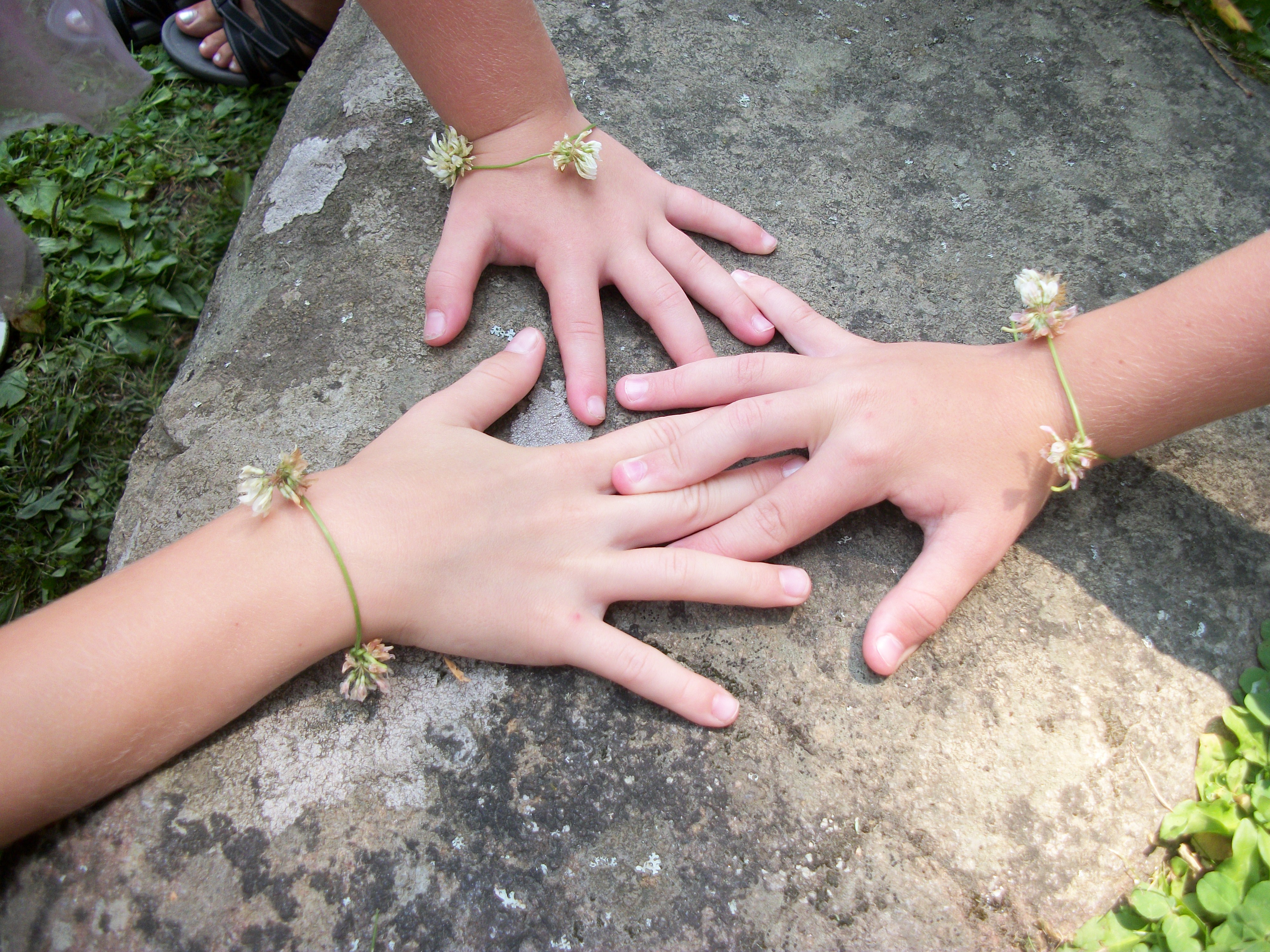
Here’s a picture I particularly loved–taken at the Camden Amphitheater during a music concert.  Wilhelmina’s hand is missing.  The children were new to making clover chains and insisted I make crowns, necklaces, and ankle/wrist bracelets:

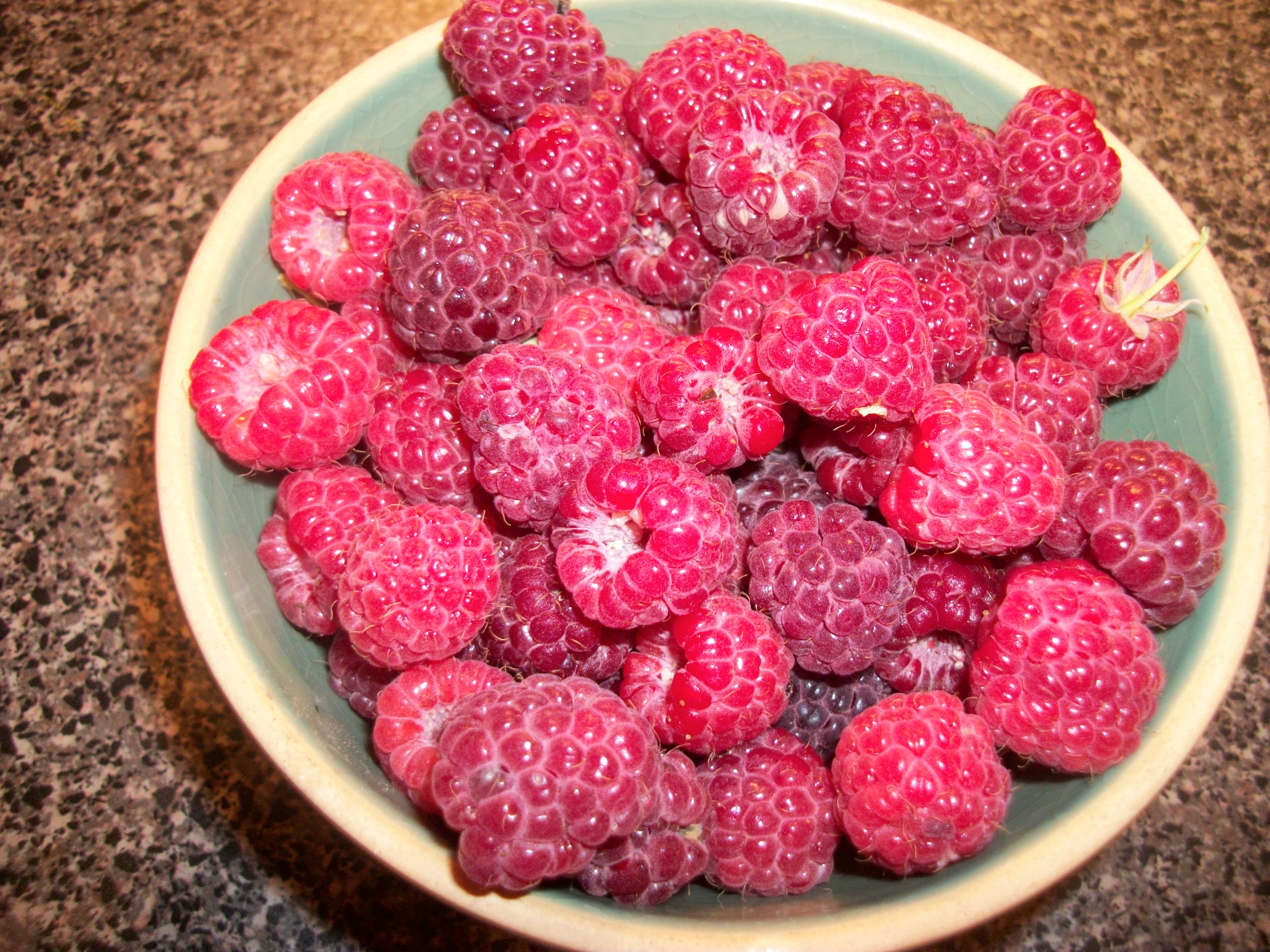
Garden Bounty pours forth.  Here’s a picture of fresh-picked raspberries.  The bushes are thriving on the chicken-coop bedding dressings in spring and fall.

Here’s a picture of what we picked yesterday evening–except for a large bowl of raspberries that went home with Barb Melchiskey.  We got two kinds of onions–spring and bulb; the first zuke; beans–HARICOT VERTES we can’t wait to eat and Dragon’s Tongue (Heritage seed); and what is probably the last of the sweet peas you can eat right off the vine or blanche quickly–we love them on salads:

Turkey Tracks: Camden Inner Harbor, Summer

Turkey Tracks:  July 8, 2011

Camden Inner Harbor, Summer

Sometime last winter, I posted a picture of the Camden Inner Harbor with schooners all wrapped up for winter–taken from this same place.

Here is that same shot in the summer.

 I’m pretty sure the windjammer/schooner in the foreground is the Mary Day.   She would be provisioning to go out again for probably a week.  The equipment next to the water is getting a stage ready for our July 3rd (Sunday night) fireworks and music.  Sunday turned out to be overcast, so the splendid fireworks took place on Tuesday night.  I suspect the music went on as planned, though we wound up doing different things on Sunday.

It’s mid-afternoon, so many of the boats that “sleep” in our harbor are out for the day.  At night, the harbor is jam-packed with boats of all kinds.

The river comes into the harbor on the far right, and there is a lot of activity on that side of the harbor, which is out of this picture’s frame.

On this side, the harbor is surrounded by beautiful green lawns, with the library sitting above them.

Turkey Tracks: Around and About–June 2011

Turkey Tracks:  June 15, 2011

Around and About–June 2011

Chive is in full bloom everywhere now.  Here’s one in Margaret and Ronald’s garden.  I have three or four now as well.  They reseed themselves all over the place.  The leaves are wonderful snipped with scissors over a salad, over cheese (goat, feta, yogurt), or soup.  But, I didn’t know until coming to Maine that the flowers are also delicious.  I kept asking people at potlucks, “what are these lavender things in the salad?”   The chive is one of the earliest herbs to come back in Maine spring (and yes it is still spring here; we don’t get summer until July 4th or so), and it lasts all summer and up to a killing frost.

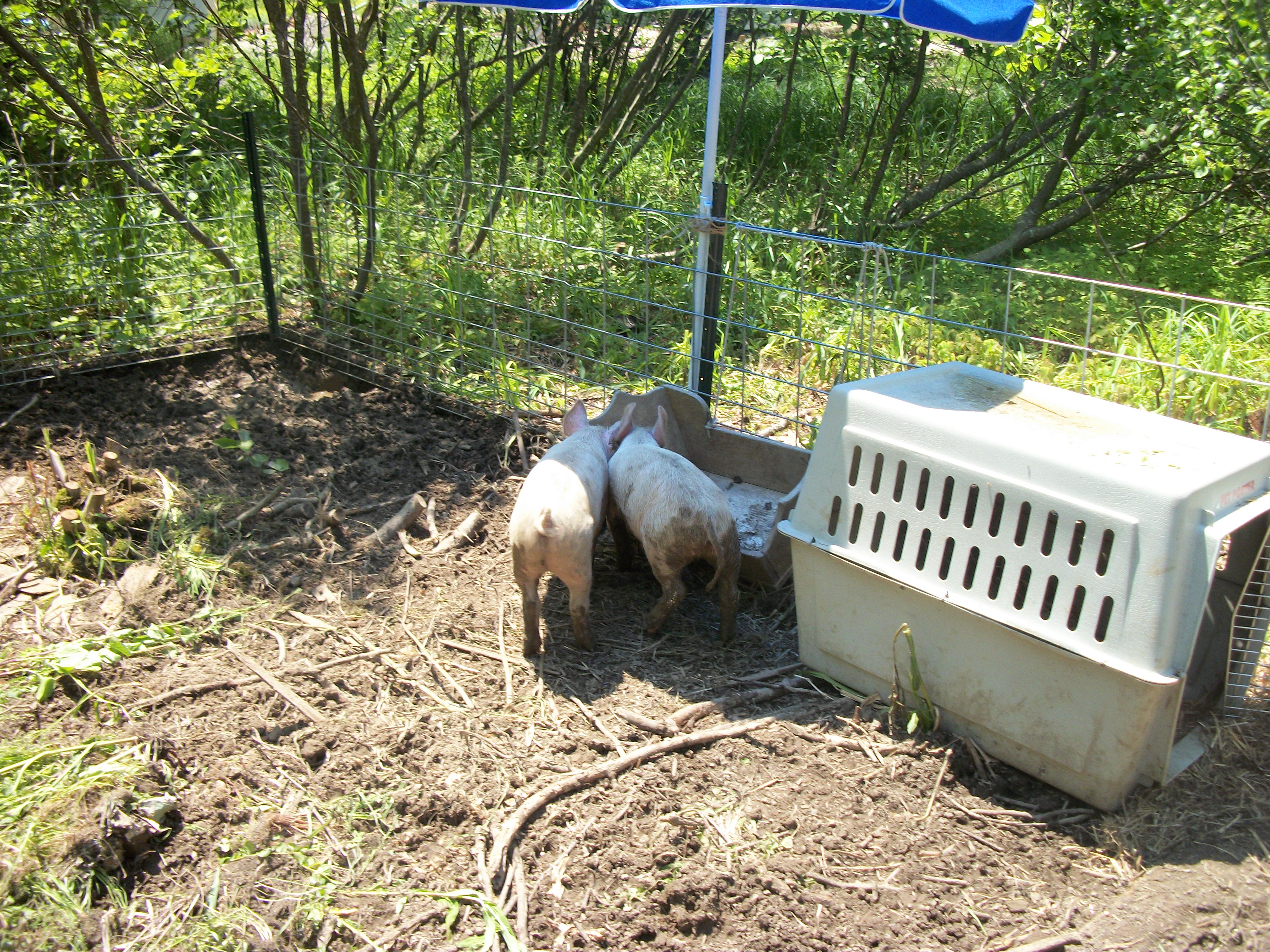
Margaret got  two pigs about 10 days ago.  They’re pink, so will sunburn; thus, the umbrella.  Margaret has always wanted to see what pigs would do on their land.   She’s talked about it as long as I’ve known her.  Now she’ll find out.  She’s moved them once already, and they had completely tilled their former pen at least a foot deep overnight.   They’re now in an area filled with alders–an area M&R would like to clear out for more gardens.  So, they just cut down the alders, put the pigs in, and voila!

I’m still awestruck at how big pigs will get and how quickly they do it and how much they eat–all info gleaned from FARM CITY, by Novella Carpenter, which is a terrific read!

M&R are also raising Freedom Ranger chicks.  Here’s one–a beauty–with her tail cocked and ready to fly!

The lupines are blooming everywhere–all along the side of the roads.  It’s a glorious sight.  Maine lupine come in a variety of colors:  the most common is blue/purple, but there are also pink and lavender shades and white.   Here’s some up at our neighbor’s home, Sarah Rheault:

Here’s some on the side of a road leading west out of Camden.  Lupines line both sides of the road:

Rose and Pete have finished their bread oven, and Rose is learning how to use it and developing recipes.  Here’s a pic of some bread in progress:

Our River Birches are something to behold.  I couldn’t resist taking this picture of the shedding bark:

We went out for lunch today and came back via Barrett’s Cove–one of our swimming holes and a beautiful view.  Here it is:

This little tour does not begin to cover everything exciting that is happening these days.  But, that’s Maine for you!

Turkey Tracks: Coastal Quilters’ 2011 Challenge Quilt

Turkey Tracks:  May 23, 2011

Coastal Quilters’ 2011 Challenge Quilt

This year’s Coastal Quilters’ Challenge asked quilters to create a quilt that evoked a packaged product in the grocery store.  Called “The Grocery Store Challenge,” we had to use the colors in a label–all of them if less than four and at least four if more than four.  We could add black or white if we wanted.  And, we had to use some motif from the label in the quilt in some way.  The size was to be bigger as well:  20 1/2 ” square.

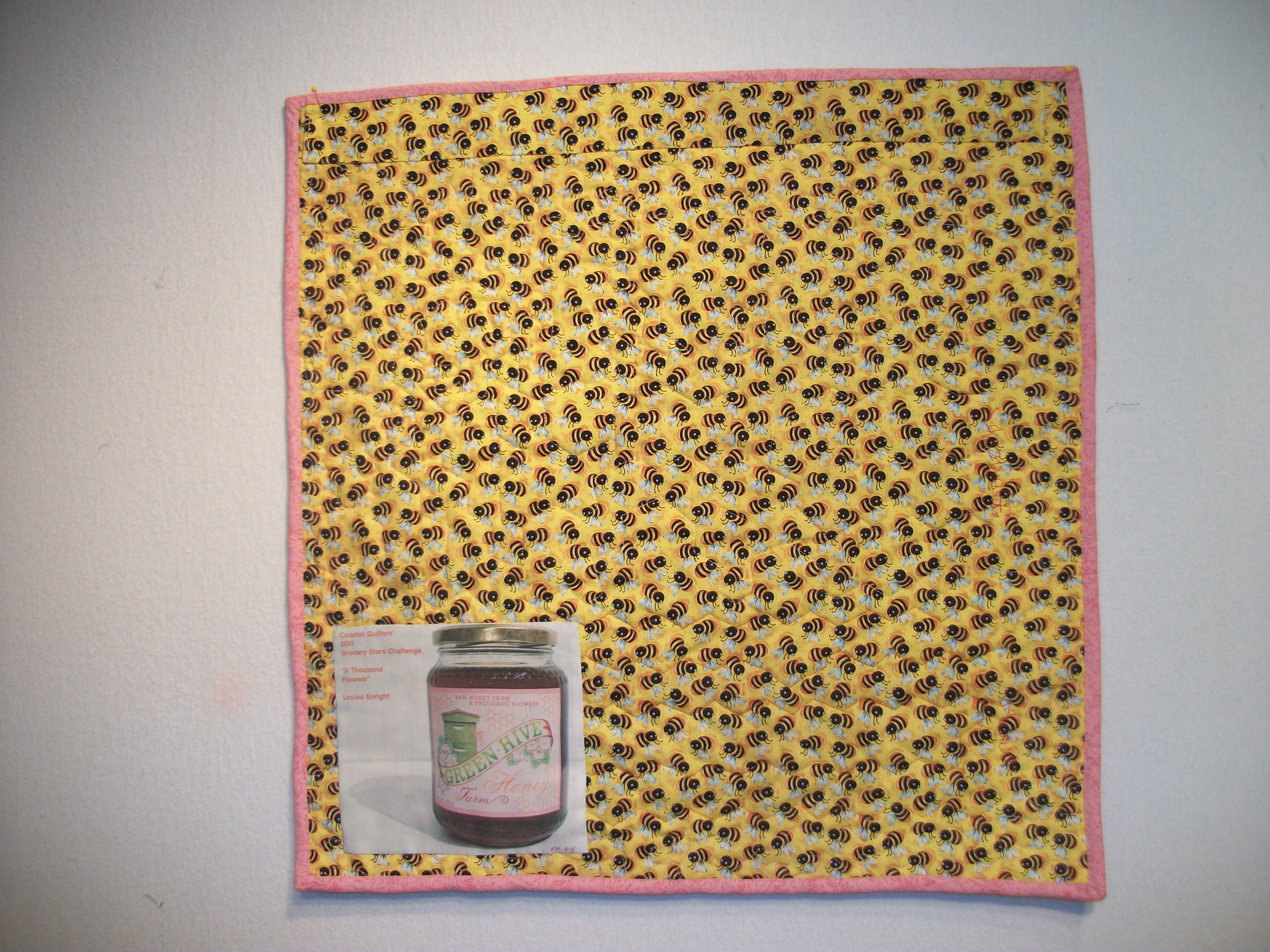
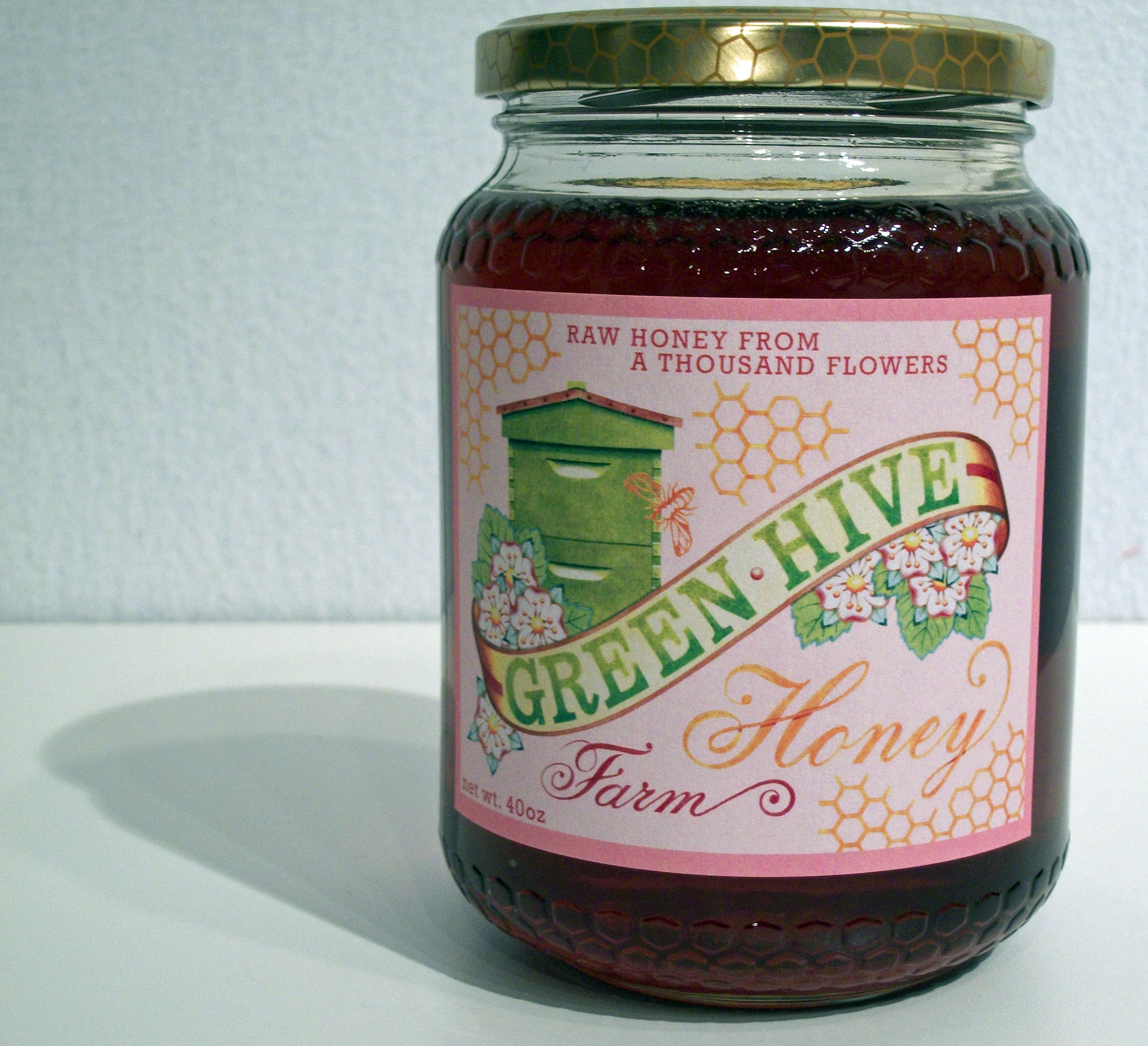
I do not buy many packaged products, if at all, so it took me some time to settle on using one of our local honeys as my product.  We buy it by the case.  I posted a picture of Green Hive Honey Farm earlier on the blog, but I printed my first ever fabric label from that picture for the quilt back.  Here it is on the back of the quilt:

Here’s the jar–which continues to entrance me–close up.  See the hexagon shapes embedded in the glass andn on the lid?

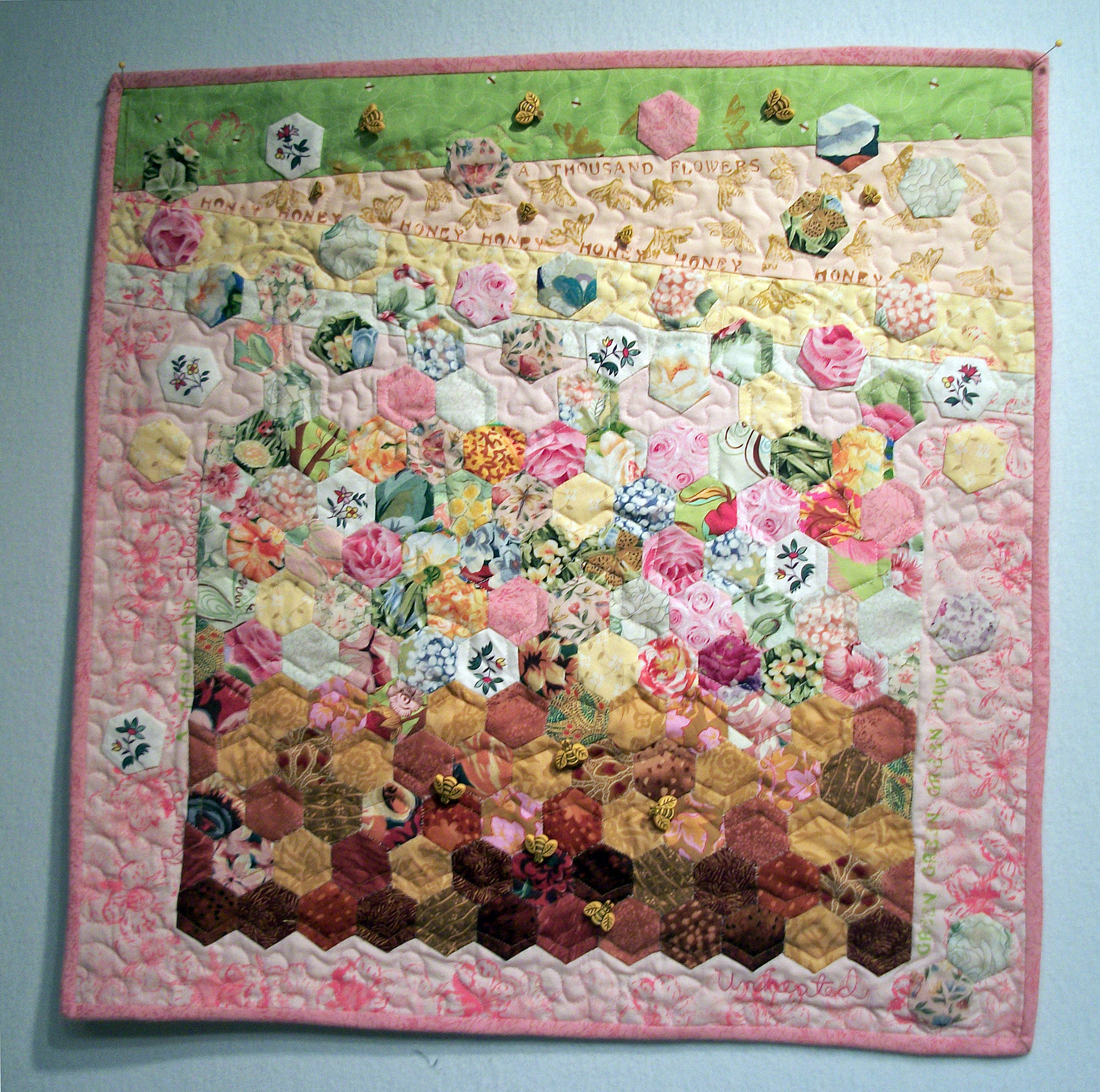
And, here’s the front of  “A Thousand Flowers”:

I wanted the flowers to literally be exploding from the honey jar.  The hexagon block is, of course, taken from the same motif on the jar, the label, and from a honey comb.  The green at the top of the quilt (see the tiny bees in the print) symbolizes the top of the “green” hive–and a green hive literally sits in the yard of the Green Hive Honey Farm folks.  The darker blocks at the bottom symbolize thousands of flowers being turned into honey, contained by a jar shape.  I stamped the bees at the top, the flowers in the pink borders, and some of the words.  I sewed in some of the words on the quilt, like “unheated” and “raw.”  I machine quilted long lines in the honey jar and curving lines around the jar.   Like the label, the binding is a darker pink.

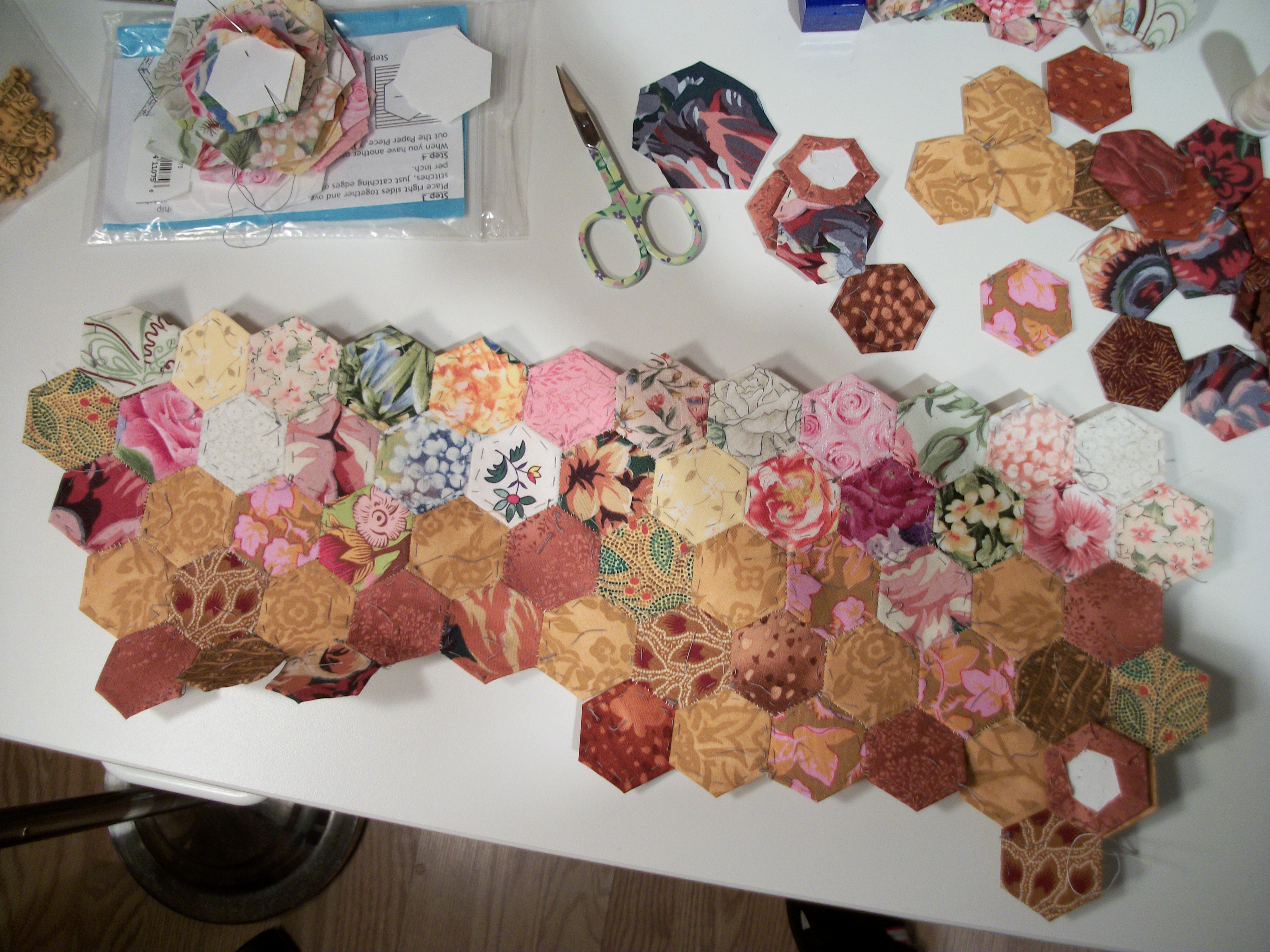
The hexagons are made with the English Paper Piecing method.  One buys or makes paper templates, wraps the fabric around each one and bastes it down, then whip stitiches the blocks together.  Here’s what that process looks like:

Here’s a detail of the stamping (with acrylic paint), of the loose blocks appliqued to the quilt, and of some of the bee buttons, large and small, sewn to the quilt:

I had forgotten how the whip stitching of the blocks pulls, so that one sees those threads.  On the dark honey blocks, the lighter threads were disconcerting, so I painted them with fabric paints that came in pens.  It looks much better now.

I love this quilt.  This little thing took me FOREVER to make.  Many, many hours.  So, now it is done and will hang, with the other CQ Grocery Store Challenge Quilts in the Pine Tree Quilting Guild show in Augusta, Maine, in late July.  After it comes home, it will hang on the wall outside my quilt room.

Turkey Tracks: Running River and Returning Birds

Turkey Tracks:  May 23, 2011

Running River and Returning Birds

We’ve had a lot of rain this spring.  Last year this time I was planting beans, so the soil was already 65degrees.   This year is cool and wet.  So far.

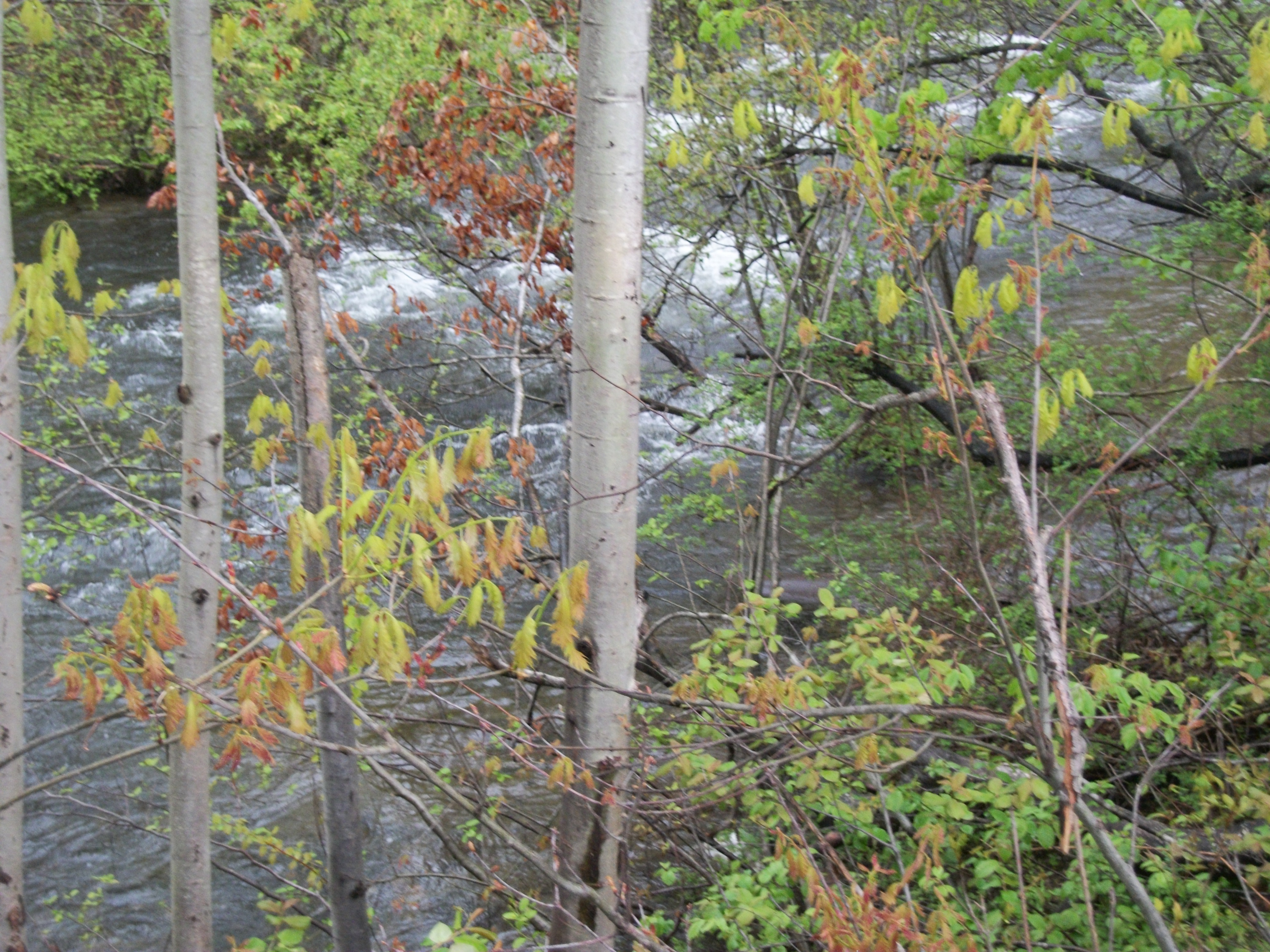
Here’s a pic of the Megunticook River down by the Megunticook market.  Look at the white water!  And the many shades of green and orange/red.


The hummers have been back for several weeks and are delighting us with their crazy antics.  The Baltimore Orioles and the Rose-Breasted Grosbeaks, often called the Northern Cardinal, showed up this week.  Here’s a site where you can see what they look like if you don’t know:

http://www.northrup.org/photos/rose-breasted-grosbeak/

They’re pretty spectacular.  As are the Baltimore Orioles:

http://www.northrup.org/photos/oriole/

I’d put in pics, but I updated the browser, and how I do things (like pressing pictures) is momentarily part of a new learning curve!

Turkey Tracks: Alewives Visits Camden Quilters

Turkey Tracks:  February 17, 2011

Alewives Visits Camden Quilters

Rhea Butler and her mother, Barbara Neeson, came from Alewives quilt shop in Damariscotta Mills, (http://www.alewivesfabrics.com) for our February 12th meeting.  Barbara owns Alewives, and Rhea is the resident quilt artist and designer. 


 Rhea’s on the left, Barbara is in the middle, and CQ member Barb Melchiskey is on the right. 

 Rhea taught us how to make her copyrighted “La La Log Cabin” block and quilt, which derives from a long history of improvisational quilting—which, for Rhea, includes such quilting as that of the Gee Bend quilters and Denise Schmidt of Bridgeport, CT.  This pattern is meant to be made from your stash fabrics, though you could certainly buy new fabrics as well.  Above, you see a soft blue/green version.

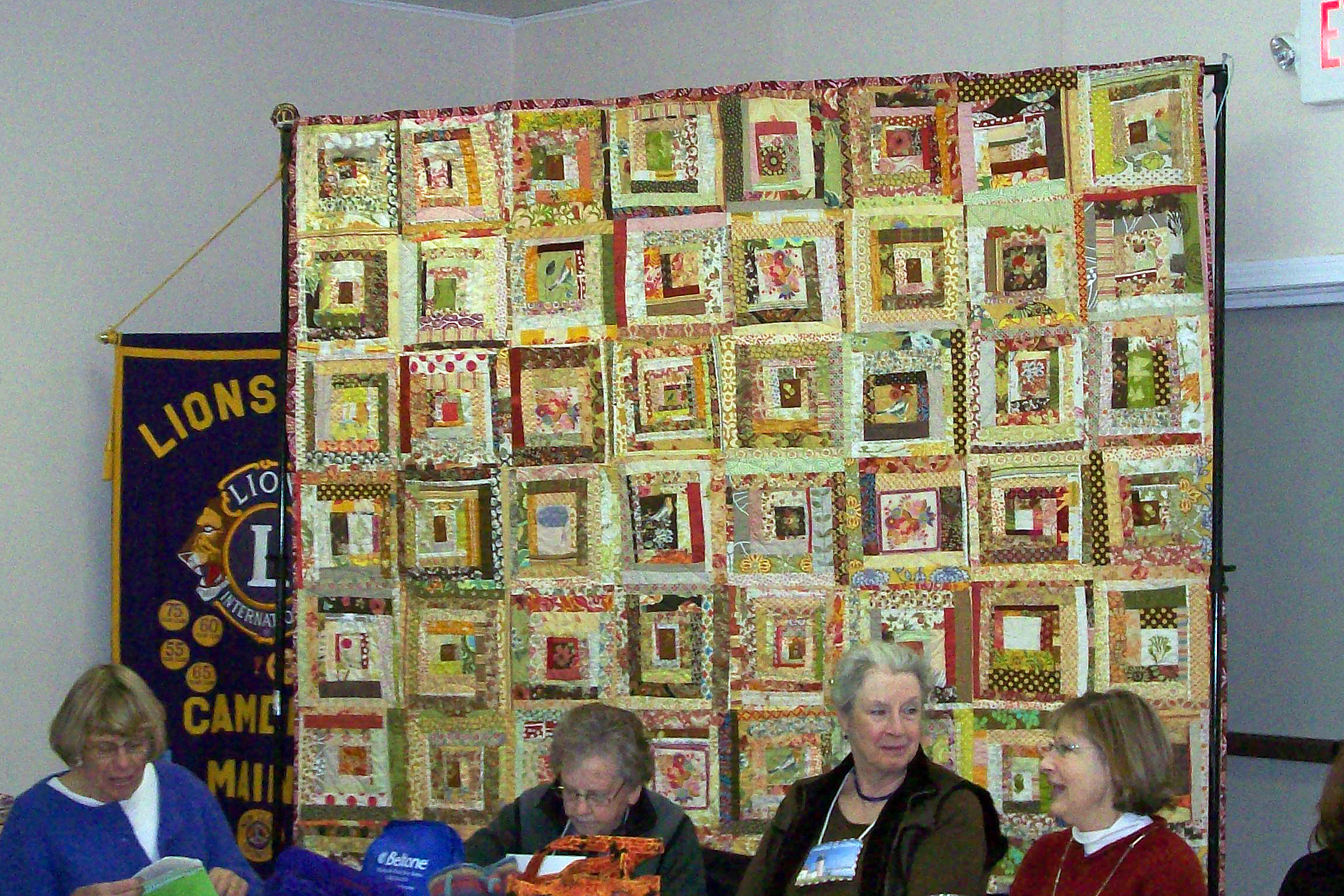
 Rhea loves color and starts her blocks with an overall sense of how she wants the finished quilt to look.  She wanted the big quilt she brought to demonstrate her La La Block to “glow,” and it did.  See?


Barb Melchiskey, Sylvia Lundevall, Eleanor Greenwood, and Patty Courtney.

Rhea used neutrals and added bits of red and green.  She tries to put interesting, clever, or meaningful fabrics into the center of her blocks.  She also loves to mix textures and to employ whimsical bits of cloth, such as the little colored dots on the edges of fabric selvages.  And she tears fabric into strips and roughly cuts centers with just sissors, which helps to give her blocks an interesting “off-center,” funky look.  Rhea used three harmonious fabrics in shades of yellow/gold for the backing, layered in from side to side in big swaths.  

 Rhea provided us with a free pattern for her block/quilt, which is typical of her and Barbara’s generosity.  We had a wonderful meeting with her, and I suspect many of our members will produce  La La Cabin quilts.  I know I will as I’m on a mission to use up more of my stash and will definitely make one.

 Rhea also keeps a lively, interesting blog:  http://alewivesgirl.blogspot.com.

Turkey Tracks: Camden Harbor, Winter Schooners

Turkey Tracks:  February 8, 2011

Camden Harbor, Winter Schooners


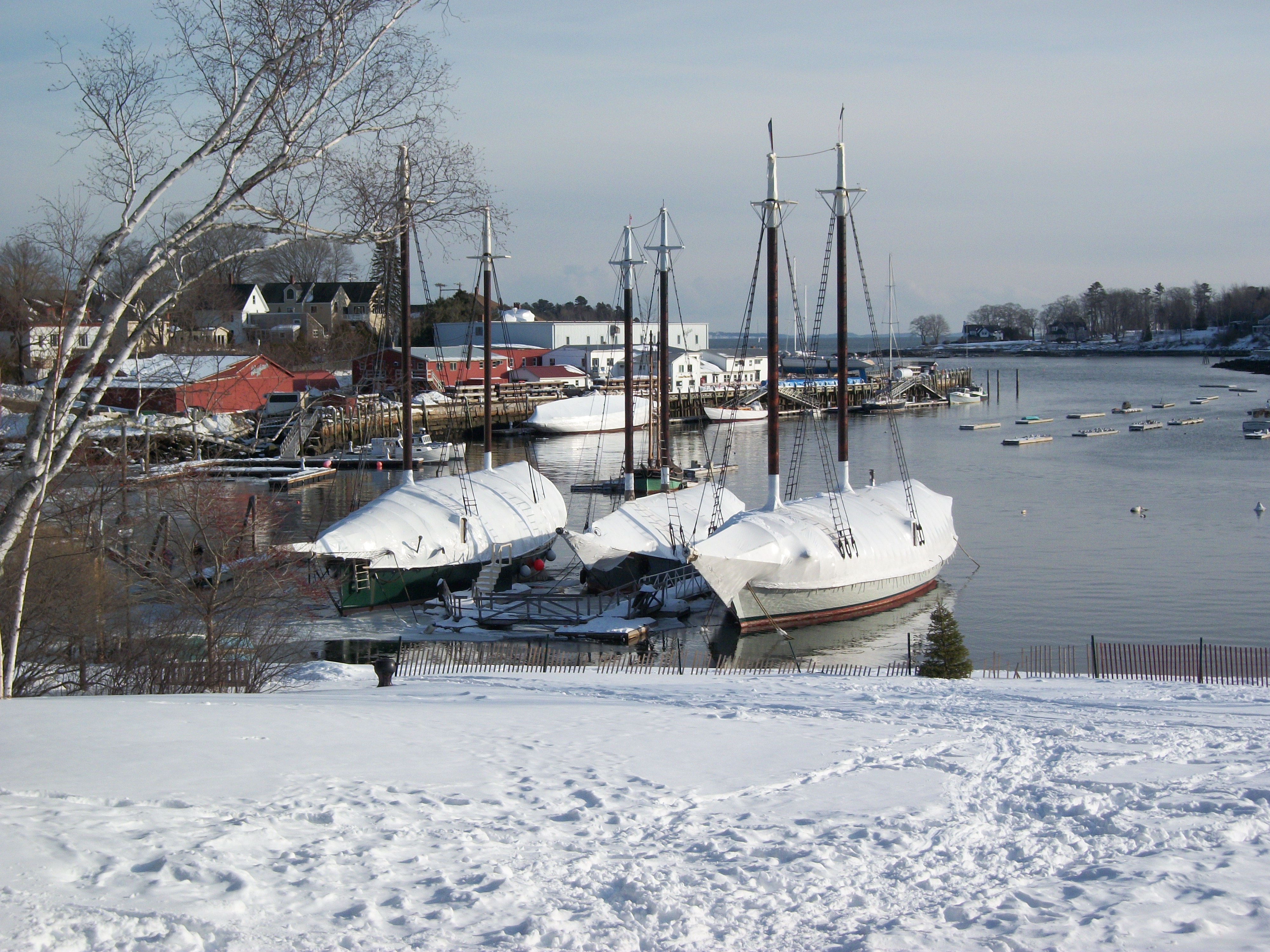
This view of the northeast side of Camden’s inner harbor lies directly below the library.  To the right, the harbor is more bustling, especially in the summer.  The three winter-wrapped windjammers, or schooners, or just “jammers,” are, from right to left, the Mary Day, the Lewis R. French, and the ketch, Angelique.  (Thanks Lewis McGregor for getting the names right–see comment.)

I took this picture a few weeks ago while John ran into the library to return a  book.