Turkey Tracks: Pulling the Garlic

Turkey Tracks:  August 15, 2011

Pulling the Garlic

Garlic gets planted in the fall.  It’s a miracle to me that over the winter and the summer, one tiny clove grows into a whole bulb AND gives us a garlic scape just when the stored garlic is running out or has molded sometime in June.

I pulled our garlic Saturday.  It was a beautiful, sunshiny day, and I sat on the grass to trim off the bulbs and put the into a box.  They’re now in a single layer in three boxes in the garage attic, curing.  Soon the garage will smell like garlic.

Garlic is always listed as an immune system booster, so we eat LOTS of garlic.  It’s no accident that it can ward off a vampire since it is so powerful a protector of human health.

Here’s what a year’s supply of garlic for two people who have lots of guests looks like:

Here’s a close-up.  You can see that the stalks are quite spent now.  And you can see the flush of red under the coating of mud on the Russian Red bulbs.

Here’s a box full of fall and winter riches!

Garlic is super easy to grow and doesn’t take much space.  I amend my garden soil with chicken bedding, my kitchen compost, and worm castings in the fall.  In the spring I add whatever kitchen compost I’ve accumulated over the winter.  I cover my garden beds with straw, which breaks down over the winter, which adds more compost.  And, I add ground seaweed meal and azomite.  Garlic really likes azomite, and I do think it helps the garlic not to mold as winter stretches into early spring.

Here’s a picture of the size of the garlic bed this year.  It’s not large, as you can see.  It’s just that bare rectangle bounded by the kale and rock at the top, the La Ratte potatoes on the left, and the celery and lettuce below.

And, here’s a picture of the black, rich soil the worms make for us.  This batch is two years worth since we somehow didn’t empty the bin last fall.  I recover a batch of the worms to start again; the rest stay in the soil.  Or, go into the chickens, who have been working the garden since I turned them loose the other day.  The egg shells will get crushed up, and they add calcium back into the soil.

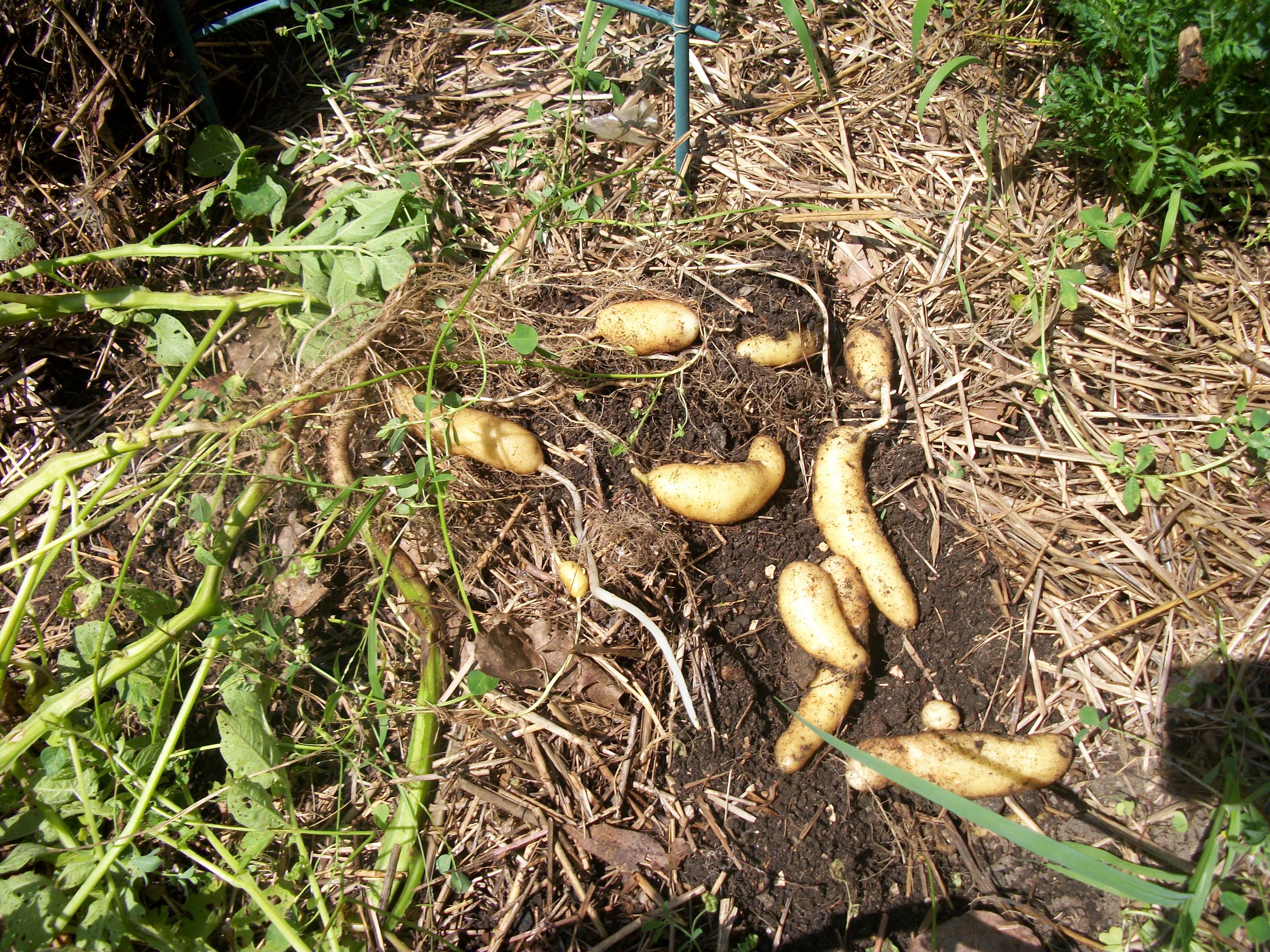
Speaking of La Ratte fingerling potatoes, I grabbled some for Saturday night dinner.  “Grabbled” is just a fancy word for digging some new potatoes before the green tops start showing yellow and falling over.  Here’s what they look like:

The one vine had about a dozen potatoes under it.  I boiled them in salted water, and they were heavenly:  nutty, buttery, and altogether wonderful.   We had them with grilled New  York strip steaks, Haricot Verte green beans from the garden, and a big, fresh salad with our lettuce, our green onions, and the first of the cukes and tomatoes we’re now getting–thanks to our CSA, Hope’s Edge.

Turkey Tracks: Ten Year Journals

Turkey Tracks:  August 15, 2011

Ten-Year  Journals

I’m on my second 10-year journal.

The first was a marvelous gift from my Falls Church, VA, neighbor Yoshi Hazen.

You’d be amazed at how useful these journals are for tracking down information you don’t want to forget.

And, for seeing what the weather was like in past years; or who visited when; or when it’s someone’s birthday (I put those on top of the page and highlight them with a marker); or when a repairman came last; or when someone married, had a baby, or…whatever.   You get the picture.

The first year we had chickens, I kept track of the number of eggs we got.  There were well over 900, and that’s with no laying in the short days/long nights part of the year.

It’s fun to see things like, yes, I guess the garlic is ready to be pulled since I pulled it on this day a year ago…

I keep it open on my desk and just jot down the key events first thing in the morning usually.  Or, sometime during the day.  Anyone could help keep it–like a child who is learning to write well, etc.  It could be a very fun family project.

I just ordered mine online and had no trouble finding a reasonably priced one.

Mainely Tipping Points 32: Fiber Menace

Tipping Points 32:  Fiber Menace

FIBER MENACE

One of the most striking things I’ve discovered while researching food and health issues over the past few years is how often strong personalities (usually males with a fervent belief system and either money or political power) drastically change what we think is healthy to eat.  Science refuting belief is ignored, obfuscated, or denied.  And, when industry becomes involved, the changes are permanently cemented into cultural truth.  Such is the case with our current practice of overeating fiber.   

Konstantin Monastyrsky, in FIBER MENACE:  THE TRUTH ABOUT FIBER’S ROLE IN DIET FAILURE, CONSTIPATION, HEMORRHOIDS, IRRITABLE BOWEL SYNDROME, ULCERATIVE COLITIS, CHROHN’S DISEASE, AND COLON CANCER (2008), identifyies Sylvester Graham (1794-1851) and John Harvey Kellogg (1852-1943) as agents of dietary change.  Graham, a Presbyterian minister who undoubtedly held the anti-body dictates of Calvinism, “prescribed a high-fiber vegetarian diet” to control lust” (1).  Graham believed men should not have sex until after they were 30 and then only once a month.  He believed white bread caused constipation and recommended “Graham” flour made from coarsely ground wheat.  Graham died alone, and Monastyrsky notes that Graham’s “abrasive, irritable personality” was likely a “manifestation of acute protein deficiency and unstable blood sugar” (1-2).

Kellogg, writes Monastyrsky, was a prominent physician, a celebrated surgeon, a successful entrepreneur, an author, a charitable man, and a health reformer.  Kellogg had a profound impact on the American diet since “he had the resources, the forum, the charisma, the conviction, and the authority to deliver his message over a long, long period of time and to lots and lots of people” (2).  Kellogg, like Graham, was obsessed with chastity and constipation.  He “never made love to his wife.”  To remedy masturbation, he “advocated circumcision without anesthetic for boys and mutilation of the clitoris with carbolic acid for girls.”  He believed constipation caused sexual desire as impacted stools stimulated the prostate gland or the vagina.  He proscribed a coarse vegetarian diet and bran and paraffin oil with every meal—which caused constant anal leakage along with the “decline of libido, functional impotence, and infertility” due to protein deficiencies.  Since he lived to be 91, Kellogg was likely “a typical hypocrite, who didn’t practice what he preached, sex or no sex” (2).

Kellogg’s namesake company is “still minting a fortune by peddling…sugared breakfast cereals fortified with fiber.”  In 2004 alone, the Kellogg Company spent over $3.5 billion just on ` promotional expenditures,’ “ so “no wonder fiber is still on everyone’s mind and in everyone’s stools….” (3).  And so, writes Monastyrsky, “if you believe that the introduction of fiber into the American diet came about as a result of thorough academic research, methodical clinical investigation, and penetrating peer reviews…it didn’t.  It’s actually based on profane sacrilege, fanatical misogynism, medieval prudishness, common quackery, crass commercialism, incomprehensible medical incompetence, and by the legal standards of today, negligence and malpractice” (3). 

There is, writes Monastyrsky, no scientific proof that high-fiber diets are healthy or aid constipation (13).  And a major text for gastroenterologists (ROME II) notes that “`there is little or no relationship between dietary fiber intake and whole gut transit time’ “ (114-115).

Indeed, there are reams of studies demonstrating that anything but “minor quantities of fiber from natural, unprocessed food” upsets the whole digestive chain in ways that leads to the problems listed in FIBER MENACE’s title (13).  Worse, many reputable studies show that high-fiber diets do not provide protection from the second largest cancer killer in the U.S.–colon cancer–and are probably a cause of it–information which has been largely ignored (180-187).  And, studies show that “carbohydrate intake…[is] positively associated with breast cancer risk.”  Yet, health authorities continue to insist that we eat more fiber, avoid meat and animal fat, eat more fruits and vegetables, and drink a lot of water (185).     

But, let’s back up for a moment.  Monastyrsky received medical training and a  pharmacology degree (1977) in Russia (Ukraine) before emigrating to the U.S. in 1978, where he embarked on a very successful career in technology, primarily on Wall Street.  Then, after years of eating a high-fiber vegetarian diet, he became very ill with diabetes, irritable bowel syndrome, constipation, hemorrhoidal disease, and anal fissures.  He returned to his medical training and research skills to heal himself and  learned that his life-threatening condition often takes decades to develop. 

According to Monastyrsky’s web site (www.gutsense.org), he is a certified nutritional consultant and an expert in forensic nutrition, a new field of science that investigates the connection between supposedly healthy foods and nutrition-related disorders, such as diabetes and obesity.  Treatment is through nutritional intervention.  He’s written two best-selling books in Russian and FIBER MENACE and GUT SENSE in English.  His work is highly respected by the Weston A. Price Foundation and is a fit with other work denouncing the overeating of carbs, the loss or lack of gut flora and fauna (disbacteriosis), and the need to eat nutrient-dense foods for health—such as Dr. Natasha Campbell-McBride’s GUT AND PSYCHOLOGY SYNDROME and Gary Taubes’ WHY WE GET FAT.

Monastyrsky explains the “evolutionary functions of each digestive organ” and notes that each organ specializes in a specific food group.  The mouth macerates and masticates flesh for we are “canine-wielding predators”; the stomach ferments and digests proteins; the duodenum (the first section of the small intestine) mixes chyme (a thick liquid without any solids that arrives from the stomach) with enzymes and absorbs water; the gallbladder uses bile to break down and assimilate fats; the jejunum and ileum (the last two sections of the small intestine) complete digestion of proteins, fats, and carbohydrates and absorb “their basic components (amino acids, fattly; acids, monosaccharides); and the large intestine recovers remaining water, nutrients and electrolytes, converts “liquid chyme to semi-solid stools,” and expels them (8-9). 

If this process is disturbed by an overabundance of indigestible fiber, the system struggles.  Malabsorption, where needed nutrients are not absorbed, occurs, which leads to malnutrition and disease.  Constipation and/or diarrhea occur, as does bloating and gas.  The stretched digestive system—a condition worsened by drinking water that makes fiber swell–begins to need more and more fiber to function.  The delicate tissues of the normally narrow anal canal are torn and scarred by too-large stools.  The lack of appropriate fats further compounds these disease conditions by causing stool impaction.  Intestines “bloated from inflammatory diseases caused by indigestible fiber” create hernias (28).       

Monastyrsky warns that a lot of fiber is hidden in fake processed foods under obscure names, like “cellulose, B-glucans, pectin, guar gum, cellulose gum, carrageen, agar-agar, hemicellulose, inulin, lignin, oligofructose, fructooligosaccharides, polydextrose, polylos, psyllium, resistant dextrin, resistant starch, and others.”  These factory made ingredients are derived from wood pulp, cotton, seaweed, husks, skins, seeds, tubers, and selected high-yield plants that aren’t suitable for human  consumption without extra processing” (18). 

So, what constitutes constipation?  Monastyrsky notes that mainstream medicine does not recognize constipation as the very serious condition that it is until it is too late and more extreme digestive conditions have developed.  If you’re not experiencing twice-daily easy and complete stools–Monastyrsky describes in detail what a healthy stool should look like using the UK’s Bristol Stool Form Scale—you might want to read FIBER MENACE. 

WARNING:  Monastyrsky warns that one must wean off fiber very gently or one will set off unintended consequences, like increased constipation.  To heal a damaged digestive tract, the GAPS diet, from GUT AND PSYCHOLOGY SYNDROME, is excellent—www.gapsdiet.com. 


Interesting Information: Pantry Intervention

Interesting Information:  Sarah Pope’s Pantry Intervention Video

Sarah Pope’s videos are available on the video tab of the Weston A. Price Foundation’s web site (www.westonapricefoundation.org)  AND on her own web site at http://thehealthyhomeeconomist.com.  But, here’s a quick link to her video on what should and should NOT be in your pantry:

http://www.westonaprice.org/beginner-videos/pantry-intervention-video-by-sarah-pope.

Sarah Pope’s videos are interesting both for beginners and for those of us who have been learning how to think about and cook nutrient dense foods for ourselves and for our families.  I’ve watched two of them now (the pantry intervention and on appropriate cookware), and I’m looking forward to viewing the rest and to spending some time on her web site, which looks excellent.

So, take a peek and let me know what you think.

Interesting Information: Real Milk: What is Safe? What is Legal?

Interesting Information:  August 11, 2011

Real Milk:  What is Safe?  What is Legal?

On his July 27, 2011, radio show, Kojo Nnamdi explores what is safe and what is legal when it comes to our consumption of milk.

Recent raids by the FDA have some communities up in arms about whether raw milk is safe to consume. But supporters of unpasteurized milk are rallying a movement that would make it easier to obtain. Kojo explores where food safety, the law and milk collide.

Guests:

Sally Fallon Morell, President, Weston A. Price Foundation, author ” Nourishing Traditions: The Cookbook that Challenges Politically Correct Nutrition and the Diet Dictocrats”

Bill Marler, Attorney, Marler Clark (Seattle, Wash.)

http://thekojonnamdishow.org/shows/2011-07-27/raw-milk-wars

Turkey Tracks: Garden Bounty

Turkey Tracks:  July 31, 2011

Garden Bounty

Mike, Tami, and the kiddos left Thursday morning for the two-day drive home to Charleston.  We miss them already.

 Miss Reynolds Georgia is so thrown off that she has pooped in the house for three days running.  Here’s the kind of attention she misses from all four children:

Here’s a picture I particularly loved–taken at the Camden Amphitheater during a music concert.  Wilhelmina’s hand is missing.  The children were new to making clover chains and insisted I make crowns, necklaces, and ankle/wrist bracelets:

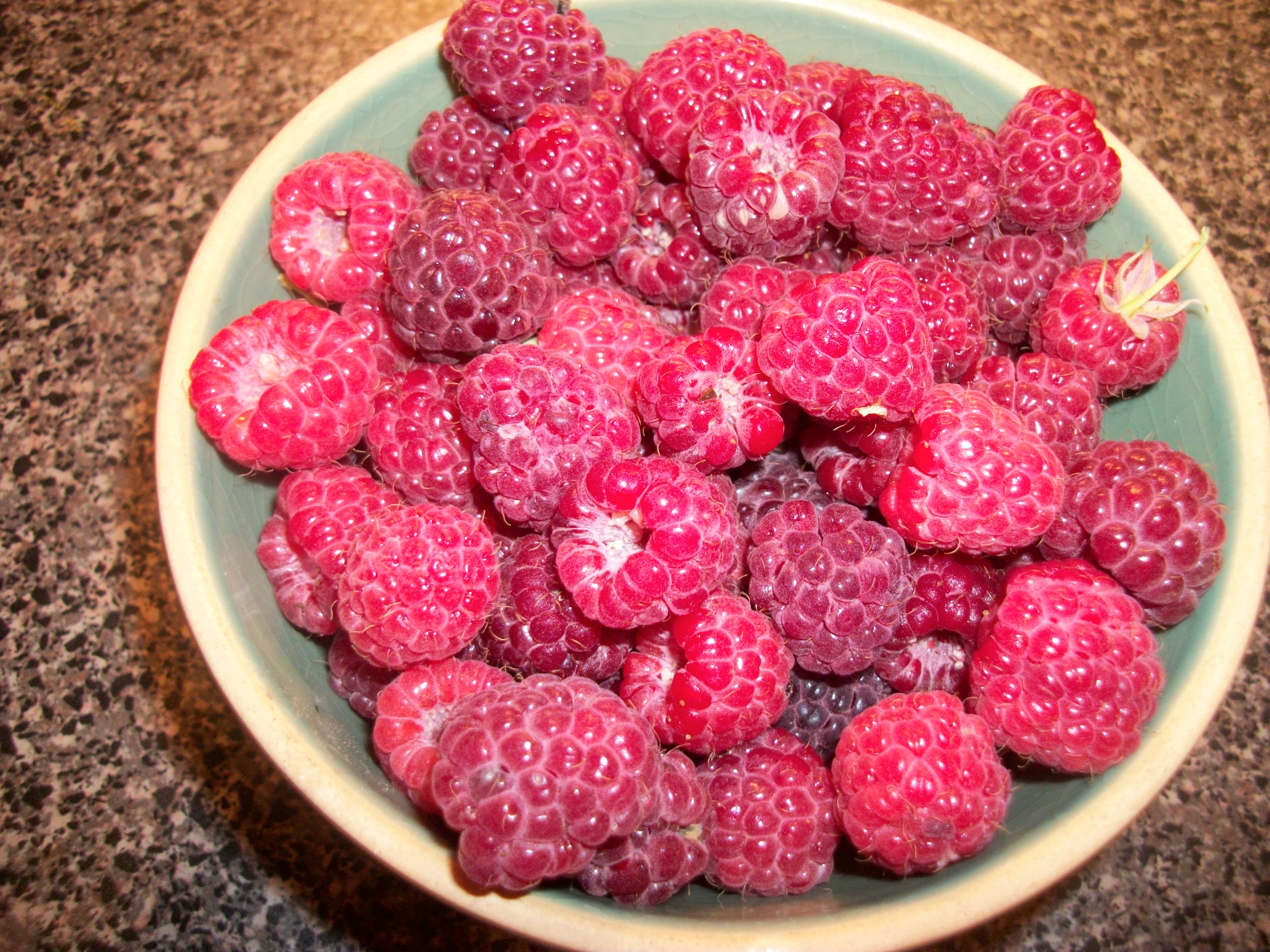
Garden Bounty pours forth.  Here’s a picture of fresh-picked raspberries.  The bushes are thriving on the chicken-coop bedding dressings in spring and fall.

Here’s a picture of what we picked yesterday evening–except for a large bowl of raspberries that went home with Barb Melchiskey.  We got two kinds of onions–spring and bulb; the first zuke; beans–HARICOT VERTES we can’t wait to eat and Dragon’s Tongue (Heritage seed); and what is probably the last of the sweet peas you can eat right off the vine or blanche quickly–we love them on salads:

Interesting Information: An Unlikely Crusader For Food Safety

Robyn O’Brien, a former Wall Street analyst, watched in horror while her youngest child (of 4 children) experienced a food allergy attack one morning- -while eating a breakfast of waffles, eggs, and tube yogurt.  The experience set O’Brien off on a journey to understand why and what she could do about it in order to protect her family.

The video is 18 FAST minutes (because it’s so interesting and informative)–and ends with the suggestion that we can all begin to make small, incremental steps toward insuring that our food supply is once again made safe.

http://www.karmatube.org/videos.php?id=2343

O’Brien also has a web site that seeks to help and to inform:  http://allergykidsfoundation.org.

PS:  O’Brien surfaces the information that the United States has higher cancer rates than anywhere else on the planet–due mostly to our use of untested chemicals in and on our foods.

Turkey Tracks: Blueberry Buckle

Turkey Tracks:  July 24, 2011

Blueberry Buckle

We’re still making desserts this summer from recipes in RUSTIC FRUIT DESSERTS, Julie Richardson and Cory Schreiber:  http://www.amazon.com/Rustic-Fruit-Desserts-Crumbles-Pandowdies/dp/1580089763.   (A book suggested by Tara Derr.)  We freeze about 20 pounds of ORGANIC wild Maine blueberries every August, which our wonderful CSA, Hope’s Edge, makes available to us.  I don’t know if you’ve ever had wild Maine blueberries.  They are much smaller than the big round ones most people can get in supermarkets.  And, they’re chock full of flavor.  Once you’ve had these little guys, the big blueberries seem utterly tasteless.  So, be warned!

Now, the “wild” Maine blueberries are anything but wild.  Yes, there are some wild blueberries at the edges of our woods.  But, commercial wild blueberries are a wild myth!  They’re heavily cultivated, actually.  And in the harvest year, which is every other year, the commercial (as in NOT organic) are heavily sprayed with all sorts of heinous and poisonous pesticides and herbicides that get into the watershed (atrazine compounds)–in Maine we have a LOT of watershed–just take a look at a map of  Maine–and that stay in the ground for up to 175 days, like the organophosphates often used as pesticides.  Organophosphates attack an insect’s nervous system.  And it remains a mystery to me why people think a compound that attacks nervous systems is NOT going to affect THEIR nervous systems–especially when it hangs around for 175 days on the ground, gets tracked into homes on shoes and clothes, and when it, often, gets INTO the plants and berries themselves and CANNOT be washed out.

Many of these chemicals kill bees and any other insect that gets in the spray, which, in turn, affects the bird population.  But, since commercial bees (poor things) are trucked in from across the country to pollinate the crop BEFORE it is sprayed, it’s our LOCAL bees and hives that are at risk.  (How dumb is that?)    And, many of these chemicals affect a human’s endocrine system (read reproductive ability), cause birth defects, cancer, and so on.  (How doubly dumb is that?)  The EPA is going to render a new verdict on atrazine in the near future, and it’s already been banned in Europe.

So, if you want to try a “wild” Maine blueberry–for heaven’s sake–buy organic ones.  Or come up here and pick some yourself!

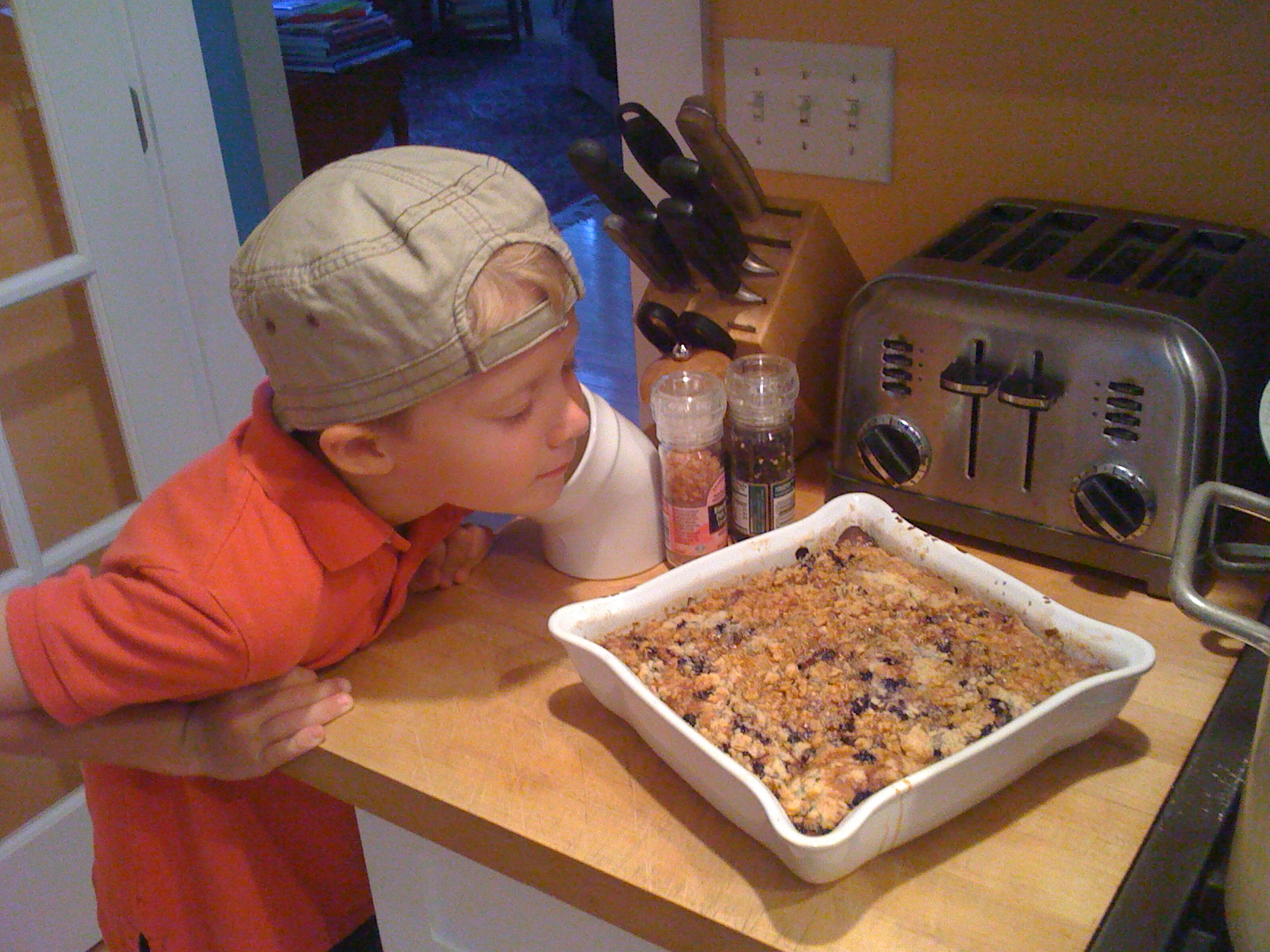
Anyway, since I usually make blueberry cobblers, making a blueberry buckle was an experiment.  So, far, it’s been voted the favorite dessert and has been repeated once more.  (It’s GREAT for breakfast too.)  It’s a rich cake, studded with blueberries and lemon, topped with a crunchy crumb topping, and drizzled with an intense lemon glaze when it’s still warm.  Here’s a picture:

Here’s a better one!

Turkey Tracks: “Corinne’s Beach Braid,” A Quilt

Turkey Tracks:  July 24, 2011

“Corinne’s Beach Braid,” A Quilt

Last February during my annual trip to Williamsburg, VA, to quilt with my Virginia quilt friends and to attend the Mid-Atlantic Quilt Show, I started a special quilt for my daughter-in-law–and new mother–Corinne–whose birthday is the day after mine.  Pisces!  ( And yes, we both love water.)

I used a French Braid pattern from FRENCH BRAID QUILTS, by Jane Hardy Miller and Arlene Netten, which I have long admired.

http://www.amazon.com/French-Braid-Quilts-Dramatic-Results/dp/1571203265/ref=sr_1_1?s=books&ie=UTF8&qid=1311529589&sr=1-1.

Since Corinne lives on Isle of Palms, SC, 2 blocks from the beach, I wanted to use blues, greens, and sandy colors, from light to dark–with a contrasting inner diamond of red/orange–all batiks.

To execute the pattern I picked from the book, one was supposed to pick about 10 fabrics for a run, with 2 for starting and ending triangles.  (These quilts can be directional, with a run of fabrics that moves from light to dark, or vice versa.)  I came home with more like 14 in total.  So, the two runs together, made for a LONG narrow quilt, which I realized when I saw the first few runs actually completed.  I knew I had to add two more runs at a minimum and that I would be bumping up against my long-arm machine width limit of about 83 inches.

I had used all of the orange-ish batik fabric I was using for the inner diamonds, and I was lucky enough to find it THE LAST DAY of the big quilt show in Williamsburg.

Finally, I discovered Anne Bright pantographs for the quilting and found two that had beach motifs–I ordered the one with sea horses, stars, big conch shells, and so forth for the body of the quilt, and the one with flip-flops and shells for the border–which would mean I would have to repin the quilt sides after quilting the top and bottom borders and the body of the quilt to get at the side borders.   You can see Anne Bright’s web site at http://www.annebright.com/shop/category/store/paper-pantographs/.

So, here’s the finished quilt across the end of the bed:

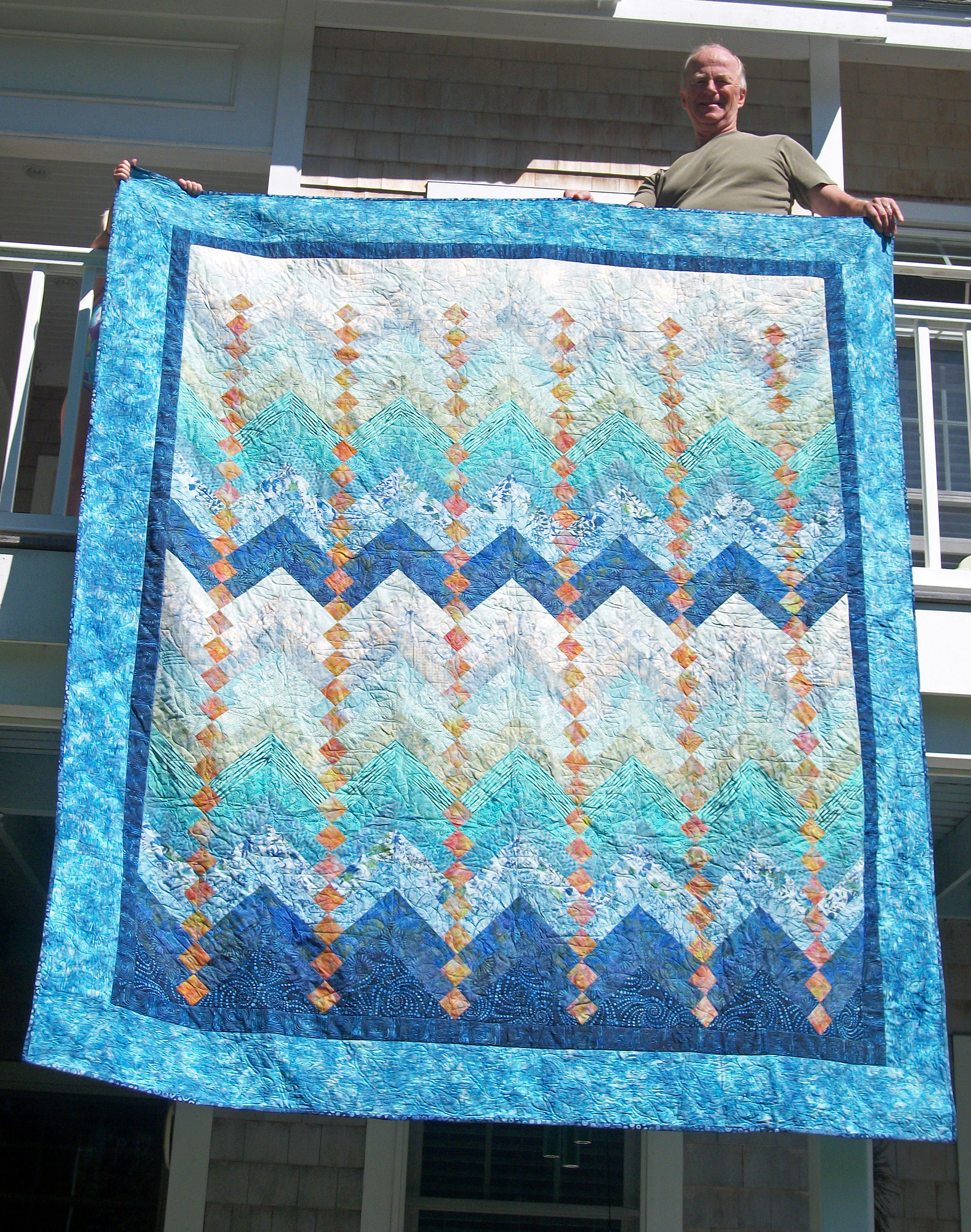
And, here it is from out upper front porch–in bright sun which has distorted the colors.  John and valient Talula (tiny hands on the left) are holding it.  You can just about make out the flip-flop pattern on the bottom border.

Several long-arm quilters strongly suggested that I use a poly thread–So Fine–for the bobbin thread.  As it is fine, a bobbin goes a long way.  And, So Fine seems to make the top,  cotton thread stand up.  But, the downside, I discovered, is that the elaborate patterns I used on the body of the quilt and on the borders and the stitch-in-the-ditch I did so well do not show on the back of the quilt at all.  See:

Here are some close-ups of some of the braids:

I really love this quilt, and I’d love to make more with the French Braid pattern.  It’s a fun pattern to do and would lend itself to all kinds of interesting color schemes and fabrics.  From now on though, I’m remaining an all-cotton girl!

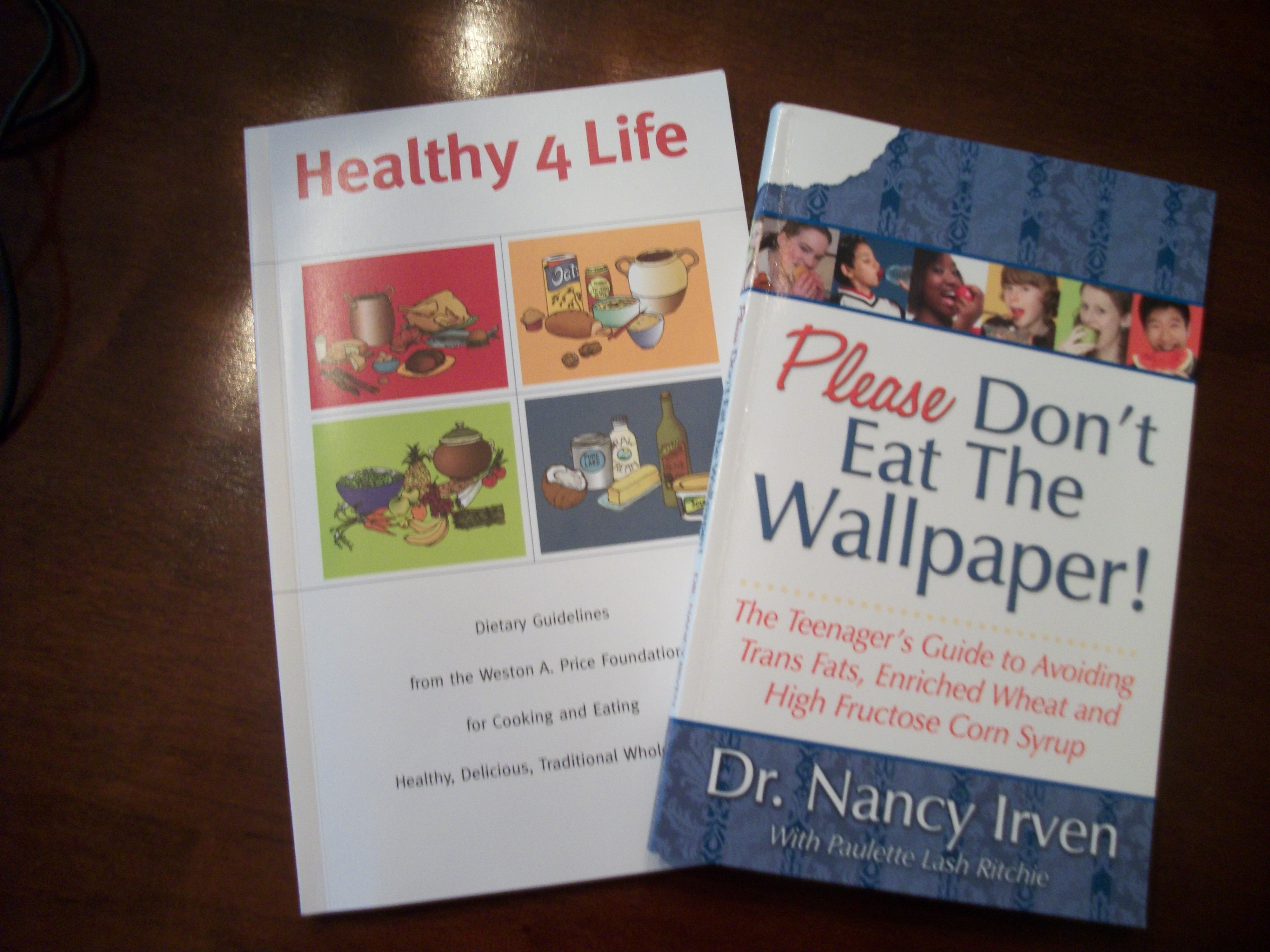
Interesting Information: Healthy 4 Life and Please Don’t Eat the Wallpaper.

When someone asks me how to start changing their food consumption habits, I usually recommend NOURISHING TRADITIONS, Sally Fallon Morrell and Dr. Mary Enig, both of the Weston A. Price Foundation–which also has a really good web site.

But, this past year, the WAPF came out with a very short little book–their answer to the travesty of the USDA’S food guide, whose formation is driven by the market–not science–and which is guaranteed to make you sick.  I really like this little book.  It’s an excellent and easy guide to changing your life.  NOURISHING TRADITIONS is an amazing book and is chock full of information, so that would be the next place to go in your journey.

WAPF will send you HEALTHY 4 LIFE for about $12.   They also have a great shopping guide and lots of informative pamphlets on soy (really bad), raw milk, and so forth.

In addition, Dr. Nancy Irven, after working with high school students, published PLEASE DON’T EAT THE WALLPAPER, available at amazon.com at least for about $14 as I recall.  Irven’s goal is to get students to own their own health and diet by first understanding why high fructose corn syrup, white flour, and trans fats are really bad sugar, glue, and plastic.  Get those three out of the diet, she explains, and the other bad additives, etc., drop out with them.  Irven has a light touch and funny sense of humor, and the high school program she’s been working with on diet has been highly successful.

In short, there’s so much really bad information out there that teenagers, who are often adrift on their own in terms of food anyway, don’t know what to eat.  Since this same condition is true for many Americans, Irven’s little book is useful for all ages.