Turkey Tracks: Marathons and Roasted Squash

Turkey Tracks:  October 31, 2011

Marathons and Roasted Squash

Tamara Enright ran the Marine Marathon yesterday–October 30, 2011.

For the second time.

Tami  said she was finished now.

I told her she’s run it again

She ran the marathon with Tara Derr Webb, and they had a nice girl visit in DC beforehand, which was especially nice as Tara has now moved to the Hudson Valley area of New York–to land where she can have more animals, more goats, and can grow things.  I believe chickens are also on the horizon.

Michael kept the children over the weekend:

Clearly they had fun.

Mike was aghast at the for-sale Halloween costumes and didn’t buy any.  He said they were over-the-top scary.  I heard words like blood, gore, and axes.

We never bought costumes when Mike and Bryan were little.  We made our own up.  More than once they went out in strips of sheets with splashes of ketchup tied around heads.  Or, sheets tied over their heads with eyes cut out.  Half the fun is making up your own costume.

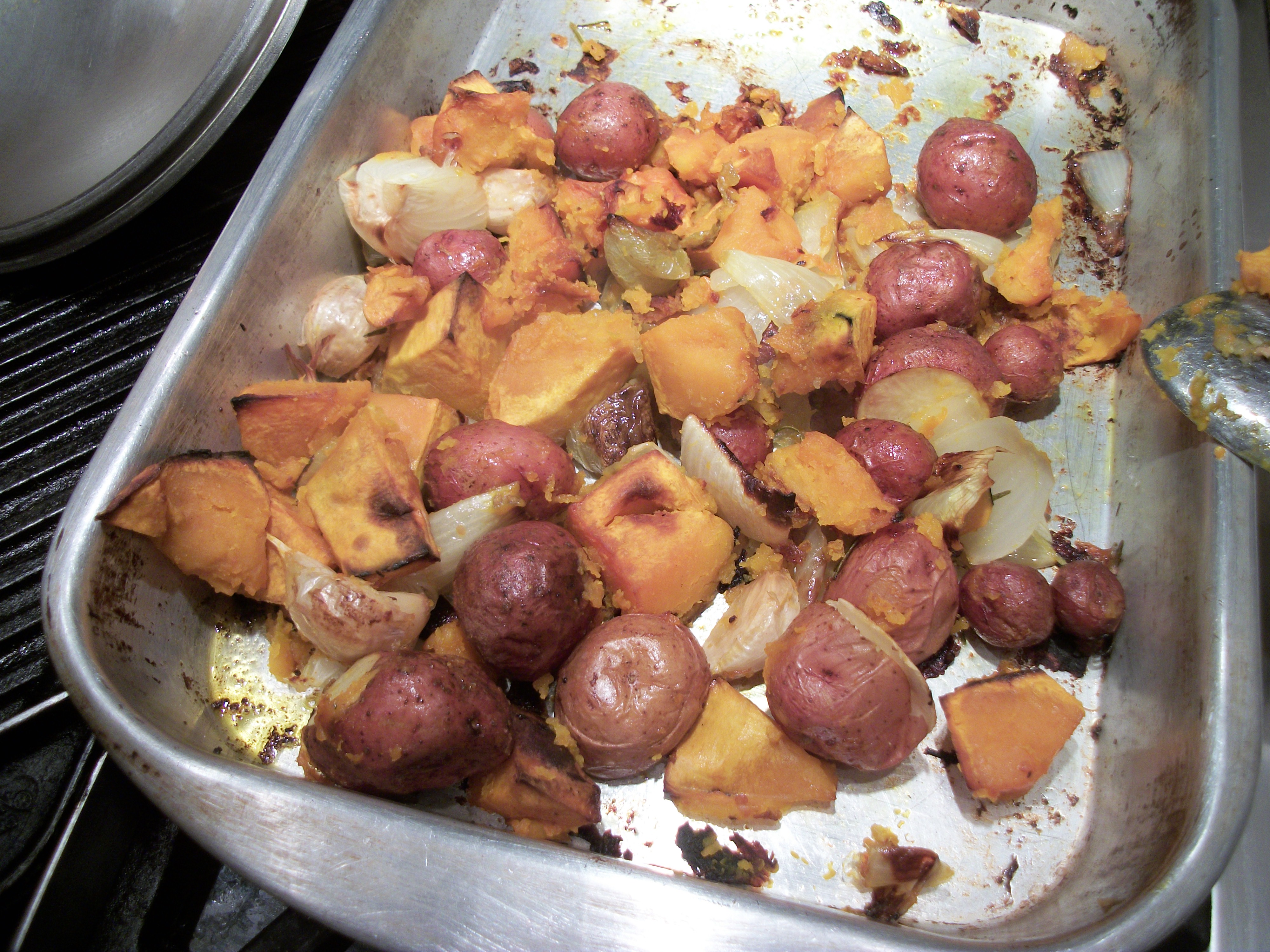
As it was snowing here, I was cooking warm food:  roasted chicken and a seasonal favorite:  roasted squash, potatoes, green tomatoes, and onions with olive oil, LOTS of unpeeled garlic, and rosemary.  There is something wonderful about putting one of the dense, sweet squashes together with the last of the tart green tomatoes.  I only had three little ones left–so more would have been nice.  Here’s what the pan looked like on its way into the oven:

The squash is from a plant that volunteered itself in the bean row.  The potatoes are ours–grown in the blue buckets.  The rosemary is ours–I just moved the plants to a deeper part of the garden where the snowplow won’t get it and covered it with a bucket and lots of straw–we’ll see if it will winter over that way.  The onions and green tomatoes came from Hope’s Edge.

Basically, you just cut everything into the same size pieces–about 1 1/2 inches–drizzle with olive oil, sprinkle on an herb–we like rosemary on this one–salt and pepper–and bake at 375 about an hour–turning maybe once.  When the bits are starting to show brown spots, it’s done.  You can do it ahead and reheat it too.  The squash will cook faster than the potatoes, so make sure the potatoes are in small enough pieces.

I”m wondering if I can get the same tart/sweet flavor by using sweet potatoes or a sweet squash and some of my salted Meyer lemons…  I’ll get back to you on that one.

Here’s what it looks like done–I almost forgot to take a picture and did so after we had served our plates:
I love Blue Hubbard squash.  I tried to grow it this year, but it wasn’t a great year for squashes this year in Maine.  Too cool in August, which is usually really hot for us.

Blue Hubbard’s are HUGE. Back in the day, folks would cut into them and cut off what they wanted to cook that day.  The rest would hold in a cool room.  But I think I’ll cut it in half–friend Ronald suggested a saw, and I think he’s right–and just roast it all at once and freeze portions.  excuse the dishes drying in the background.  I put it next to a pineapple so you can see the relative nature of its size.  I’ll keep you posted on how the cooking goes…

Turkey Tracks: More on Juicing

Turkey Tracks:  October 31, 2011

More on Juicing

Well, I did it!

I bought a juicer.

I began to think more about how to access all of the nutrients in leafy greens in big quantities without adding stress to the body by overloading it with gobs of cellulose, which our bodies cannot process and which overload our whole digestive tracks.  We don’t have the right enzymes or the kind of fermenting stomachs that, say, cows have.  (You can read about overloading with fiber in my Mainely Tipping Points essays and more on juicing in the Turkey Tracks archive–where there are suggested combinations.)

I did a lot of research because I wanted a juicer that could handle leafy greens–kale, chard, spinach, collards, lettuce, parsley and other herbs.  The big, fast fruit juicers don’t handle greens well, if at all.  And, the more I research the more I note that too much fruit and fructose is really not good for us.  We are only adding enough fruit to sweeten the green juices–and it does not take much at all.  We’re easily only using a 1/4 to 1/3 fruit to vegetable ratio.

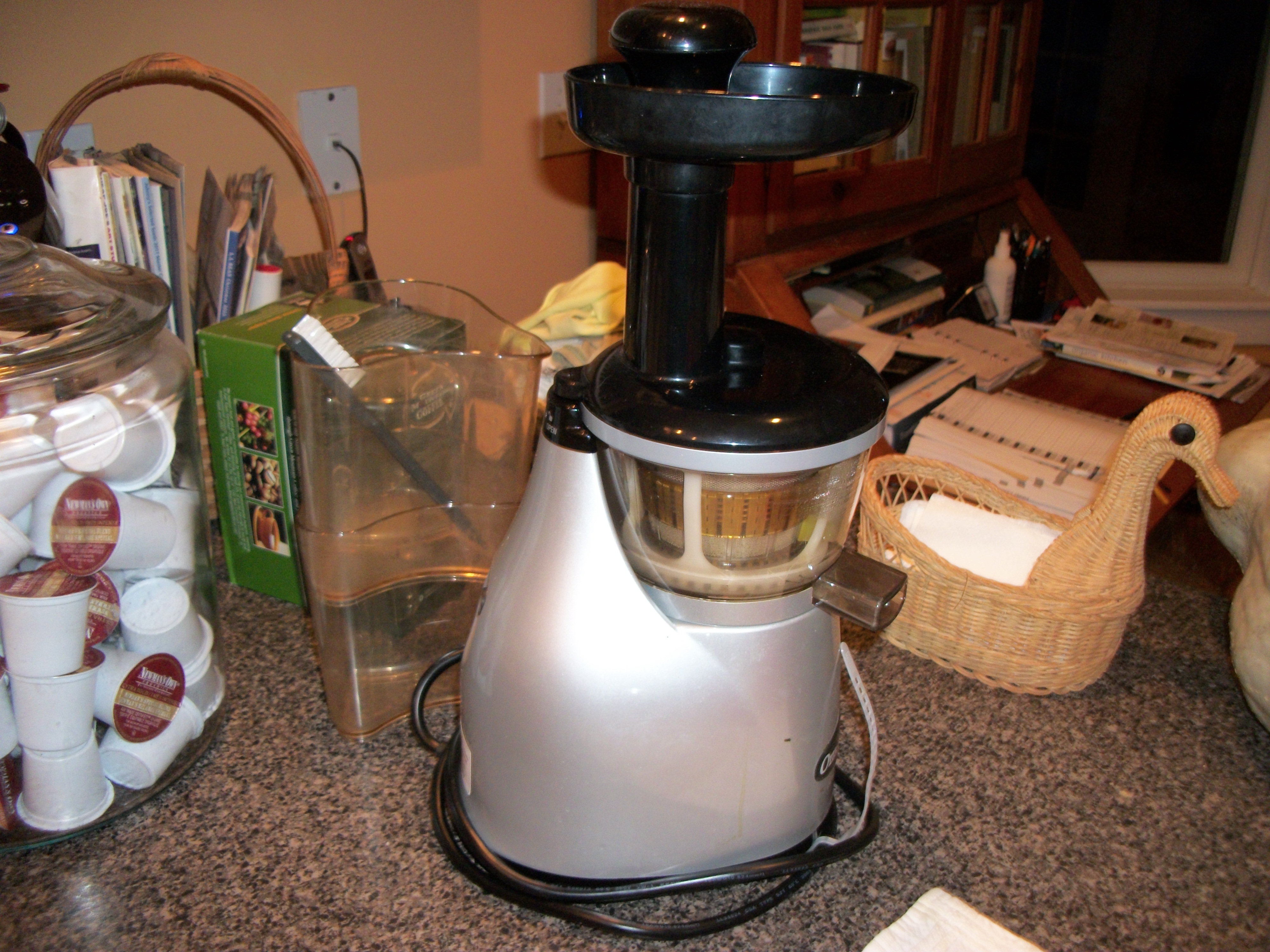
I got an Omega VRT 350 HD.  The HD stands for heavy duty.  There are TONS of videos on youtube showing how many juicers work and comparing juicers, and showing how the Omega in particular works.  Look for, especially, videos by John of Discount Juicers.  Here’s an example:   http://discountjuicers.com/omegavrt350.html.   It’s important to learn how to feed the machine (slowly and mix greens with harder items like cukes and carrots) and what you can put in with peels on (lemons, limes, cantaloupes, grapes), and what you need to peel (big citrus).

The Omega DOES handle greens really well.  It has an internal auger that gets all the juice out.  Because it’s slower, it gets out more nutrients.  The waste material is very dry.  (My compost the worm bin are very happy with the juicing debris.)  The Omega 350 is quiet, and it cleans up easily.

We’re now moving to using it twice a day:  in the morning for something like pineapple, carrot, and a little beet juice to stimulate digestive juices.  (Raw beet is very powerful, so start with small amounts.)  In the afternoon, we have a big green drink instead of afternoon tea.  One of our favorite mixtures is kale, cucumber, and a bit of apple or pear.  Throwing in a handful of fresh cranberries and/or a quarter lemon is nice too, especially as cranberries are in season now.  The lemon adds a clear sparkly taste and it chelates heavy metals.

We’re hooked.  The juice feels like silk going down.  You can feel the enzymes and nutrients.  I’m finding that I have little desire for other sweets these days.  And my body is showing that there is some amount of significant detoxing going on as well…

The Omega’s footprint is small.  Here’s a picture of it on my kitchen counter–I’ve put it next to other items so you can see size relationships.

I have not participated in giving Christmas gifts in years now as I think that whole exercise is a consumer nightmare.  But, after getting our juicer and seeing how it works, I gave one to each of my son’s families.  They are thrilled and are making good use of their juicers.  Bryan juiced collards the other day, which I had been afraid of trying, and he and Corinne said the juice was actually quite sweet.  So, on to collards.

Anyway, instead of spending a lot of money on yet more toys, clothes, games, etc., why not combine your gift giving into one, special gift that keeps on giving, keeps on giving good health–providing organic vegetables are used.

Give a juicer!

Turkey Tracks: Road Trip to Fiddlehead Artisan Supply, Belfast, Maine

Turkey Tracks:  October 29, 2011

Road Trip to Fiddlehead Artisan Supply

Belfast, Maine

A few weeks back, a quilting friend and I decided to go see the new quilting/artisan supply store in Belfast, Maine.  It was the perfect day–pouring rain.  We looked forward to seeing the store, having a warm and cozy lunch at Chase’s Daily, and shopping in the Belfast Coop.  As predicted, we had a wonderful time.

Fiddlehead Artisan Supply is a terrific addition to our local quilting scene.  How many people have access,within 45 minutes, to so many good quilting stores:  Fiddlehead in Belfast, Nancy’s just outside Belfast, Quilt Divas in Rockland, Mainely Sewing in Nobleboro, and Alewives in Damariscotta  Mills.  Each of these stores is very different from each other.  We have nearly as many really fabulous yarn stores as well.  Truly, I live in an area rich with fiber arts materials.

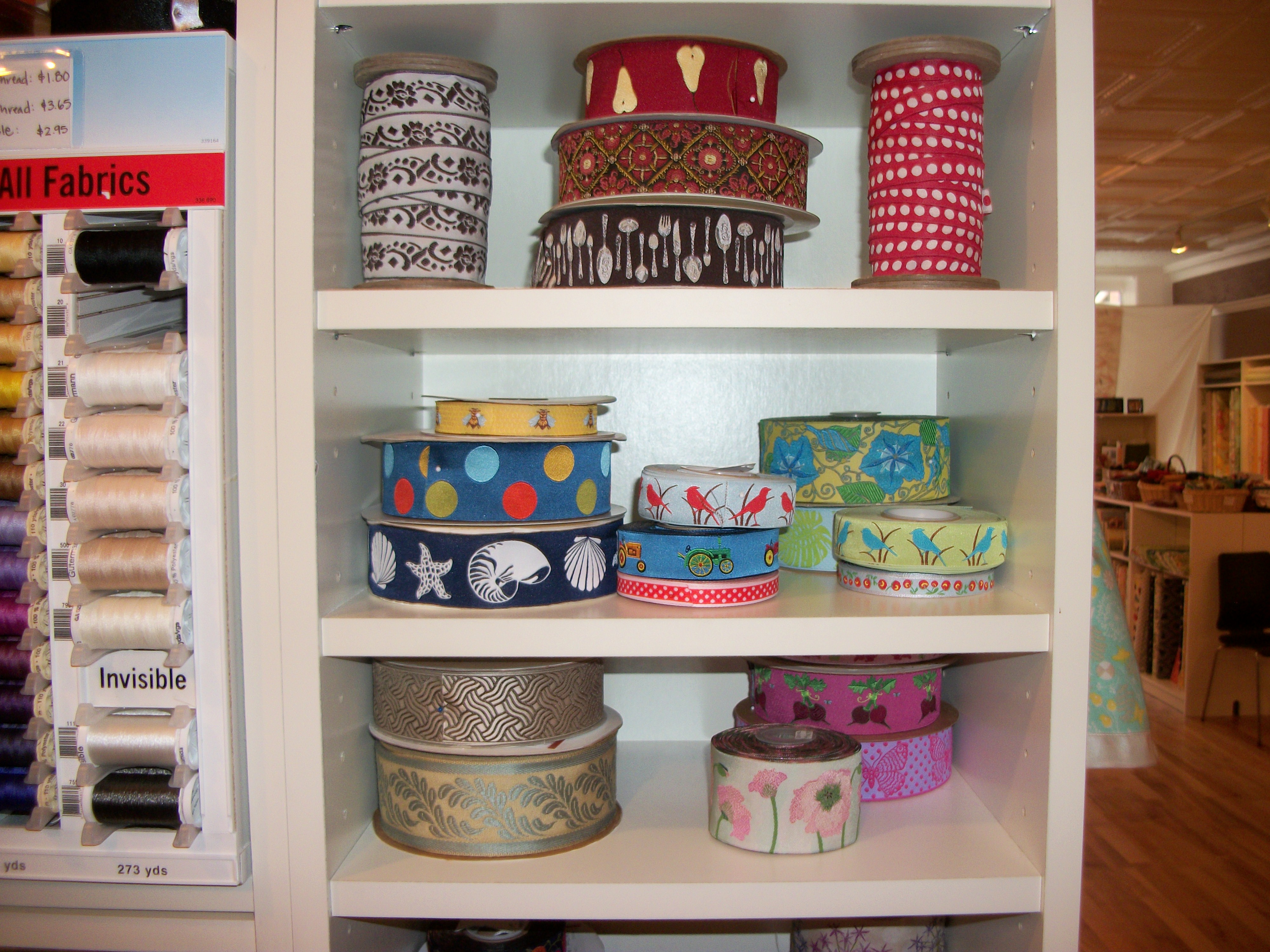
Fiddlehead carries a unique variety of items.  Yes, there’s fabric–both quilting and decorator–but also other, electic goods, like fabric paints and unique ribbons.  There’s a nice book and pattern section as well.  And, they are selling consigned quilts.

When my sister visited this past summer, she thought our little towns were very European in nature.  I agree with her, and I think that’s part of why I like New England so much.  Here’s what the street scene looks like where Fiddlehead is located:

Here’s what you see when you go inside the door:

Here are some of the unique ribbons:

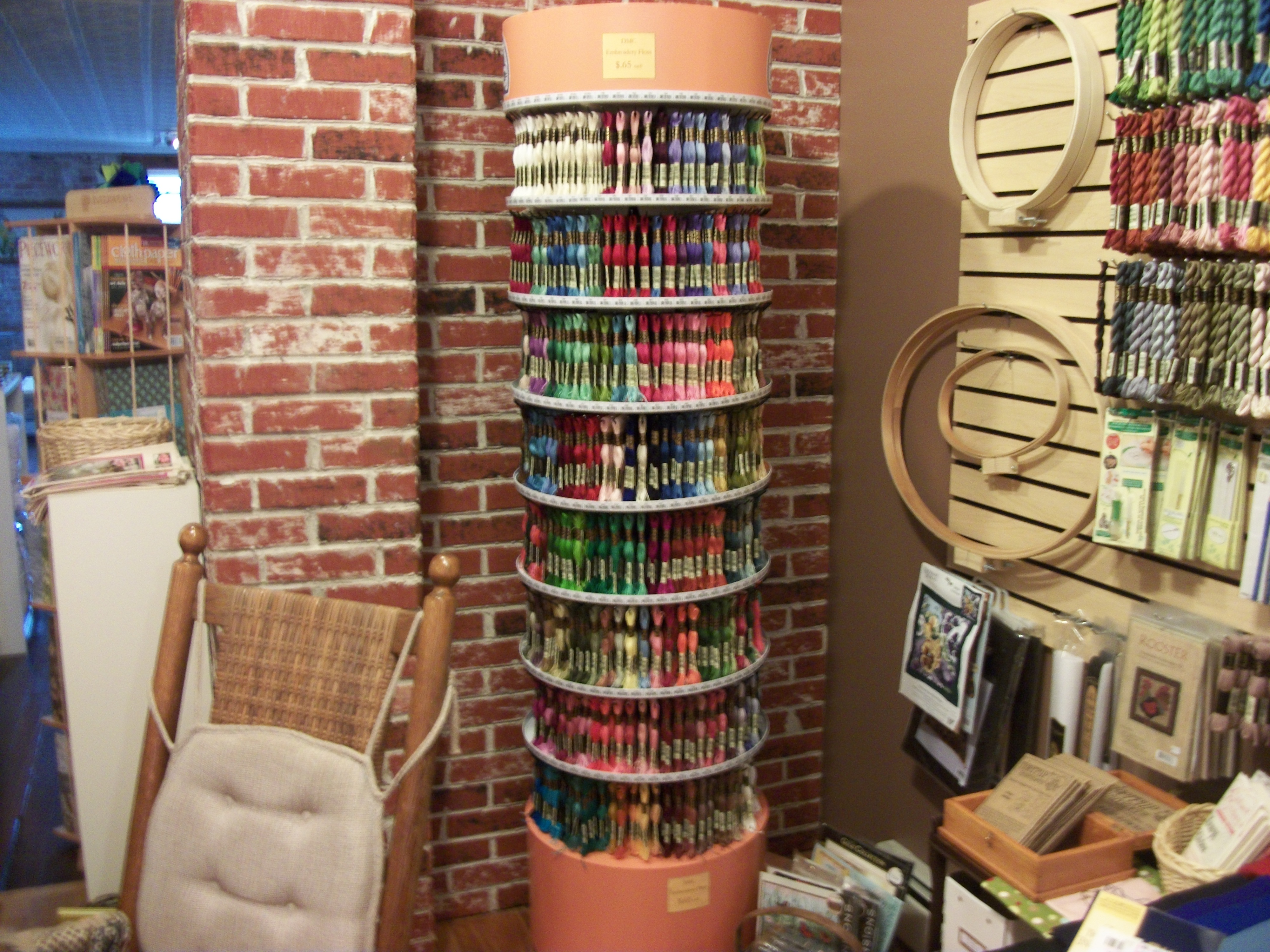
And, Fiddlehead has ALL 500 embroidery colors:

Makes you want to start a new project, doesn’t it?

Turkey Tracks: Finished Debbie Bliss Sweater

Turkey Tracks:  October 29, 2011

Finished Debbie Bliss Sweater

One day last spring, I think, several of us took a road trip down to Halcyon Yarn in Bath.  I saw a sweater made up  there that I really liked.  I found the pattern in a Debbie Bliss book and bought it.  The sweater called for wool, but I wanted a nice heavy cotton sweater for spring/summer.

Here’s the book:

And here’s what the sweater looks like in the book–sorry about the flash on the page:

Helen at Heavenly Socks in Belfast helped me find a cotton/wool blended yarn she thought would be a good substitute for the wool in the pattern.  I had a hard time with tension, however.  But, the finished sweater is also kind of funky, and I do like it.  And, it fits, though the sleeves are perhaps a tad too long–I’m getting more confidence with measuring and deviating from the pattern as I go along making things.  Helen told me later that sometimes with cotton, knitters say to unknit your last row when you pick up your knitting after stopping.  That doesn’t sound like fun.  And, the tension issues happened all through the knitting anyway.  I think it’s more about this particular yarn…since I don’t usually have tension problems.

Giovanna McCarthy showed me how to sew the pieces together properly and oh! what a difference!

And, there is a mistake in the pattern, but when you get to it, you’ve done enough of the pattern to figure it out.

Anyway, here’s the finished sweater–with me with wet hair!

Turkey Tracks: October Update

Turkey Tracks:  October 27, 2011

October Update

We’ve had the loveliest Indian Summer here on Mid-Coast Maine.  But, as we move into November, the weather is suddenly colder and our thoughts are turning toward getting out warmer clothes.  We’ve nearly finished winterizing and final harvesting.  It’s actually a lot to do.  But all the pots, except one by the garage door that  John can’t part with yet, have been emptied, cleaned, and stored.  And, all the porch furniture has been stored in the garage.  The hot tub has been emptied, cleaned, and been filled with fresh water.  The chicken coop has been moved and all the bedding cleaned.  I’ve put straw around it for the winter.  I’ve planted next year’s garlic and mulched the strawberries.

We’ve put up the boardwalk, and John has cleaned it.  The wood grows mold over the summer, as it’s in the shade on the north side of the garage.  That mold is incredibly slippery and dangerous.

You can see, too, that the garden has been bedded down with straw.   THat’s a roll of 2-foot chicken wire we’ll put around the low side to keep the chickens from scratching the straw out into the grass.  I like them to scratch in the garden; it breaks up the straw and blends it into the topsoil.

The cold frame is full of a last crop of lettuce and radish plants.  See…

The leeks I planted did very well this year.  I left some of the smaller ones in the garden and covered them with straw to overwinter.  The cabbages were small.  We had a really rainy, cool August, so I think they didn’t get enough sunshine.  They’re tasty though!  And we’ve been enjoying leek and potato soup infused with carrots and cabbage, cooked until veggies are tender, and made smooth with a hand-held blender.  Often I throw in some of the last of the parsley chopped fine.  Serve with a big chunk of butter or a swirl of heavy cream.  It’s the classic French recipe, actually.

We’ve strawed the front bed, fenced it, and trimmed back all the raspberries, bayberry bushes, and rugosa roses.  So, the chicken briar patch is gone.  The chickens miss it, too, especially as our driveway hawk has been stalking them lately.

Nancy and Sally are molting big time, and they are sad to behold.  Nancy is the most extreme at the moment.  She has big feather quills coming in all around her neck though.  Chicken feathers are almost all protein, so it takes a lot of energy for a chicken to molt.  They don’t lay while molting, and since Pearl has not started laying (???), we have no blue eggs.  Nancy misses her tail feathers I think.

My Roo, aka as Pretty Pierre, is really coming into his own.  Not a leaf drops in the yard that he isn’t right there to see what it is.

My friend Carole Whelan of Birds and Bees Farm sent me a picture of her new rooster, a Splash Maran.  Isn’t he a pretty fellow?

Friday nights bring the added joy of picking up a pizza made in Rose’s wood-burning oven.  (Rose and Peter Thomas, The Vegetable Shed, Lincolnville, Maine.)  Rich smoky flavors play over the vegetables from her farm–over meat and cheese and sauce she’d added or made.  What a treat!

This picture is overexposed with the camera’s flash, but you get the point.  Are we spoiled or what?

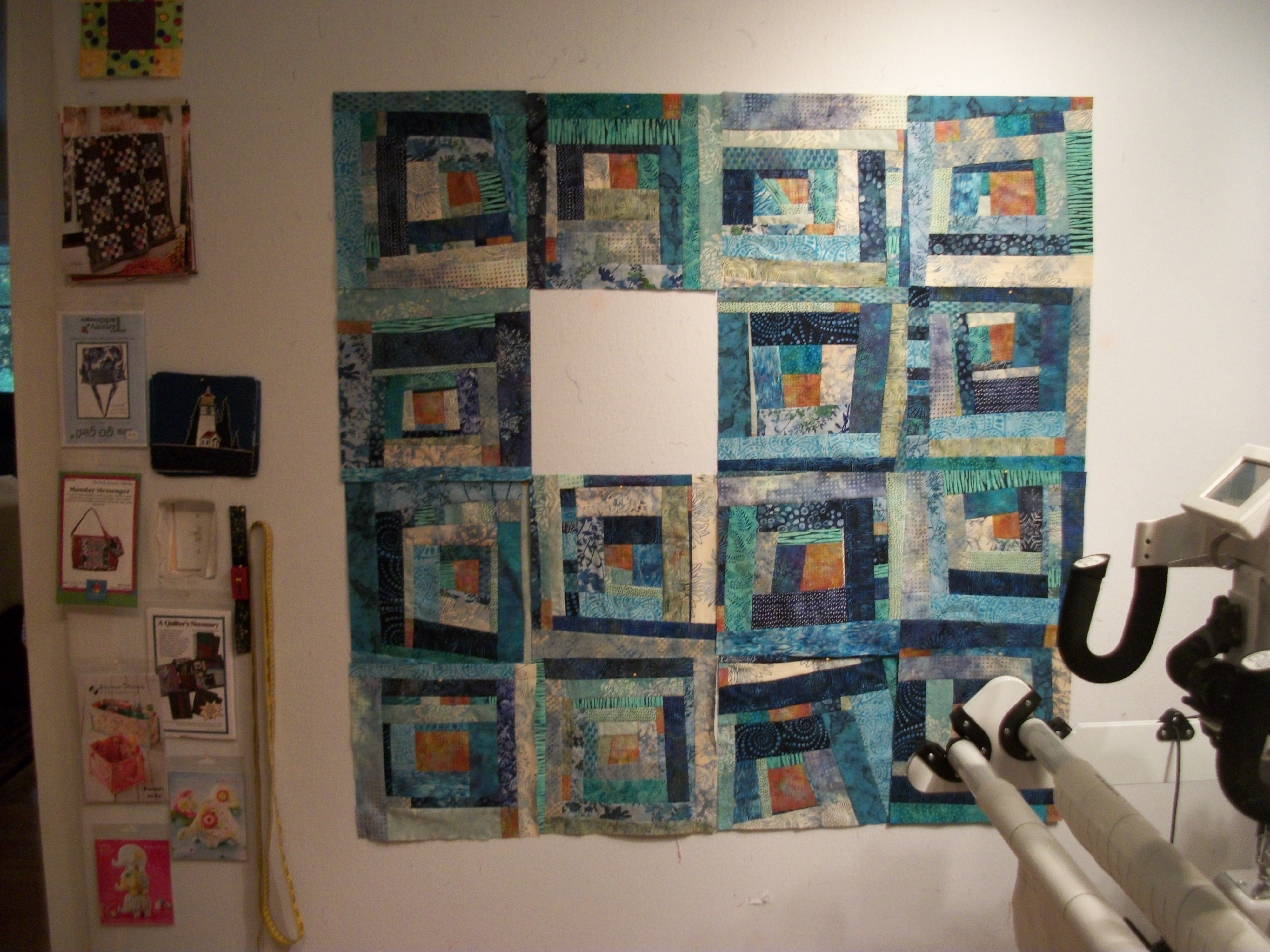
Finally, I’m working on a new quilt–based on Rhea Butler’s method, called La La Log Cabin.  Rhea is from Alewives quilting in Damariscotta Mills.  Here’s a picture of the quilt taking shape on the design wall.  It’s all being made from batiks in my stash:

Turkey Tracks: Gundru

Turkey Tracks:  October 13, 2011

Gundru

Gundru, also known as kyurtse, is a traditional fermenting method from Tibet for greens.  The result is a strong, sharp, clean-tasting pickle that can be used on kale, radish greens, mustard green, collards, or any type of hardy green in the Brassica family–not on lettuce.  I first used it for kale, and I really love it.  Like sauerkraut, Gundru will be something I’ll be keeping in my kitchen most of the time and especially during the fall/winter/early spring seasons.

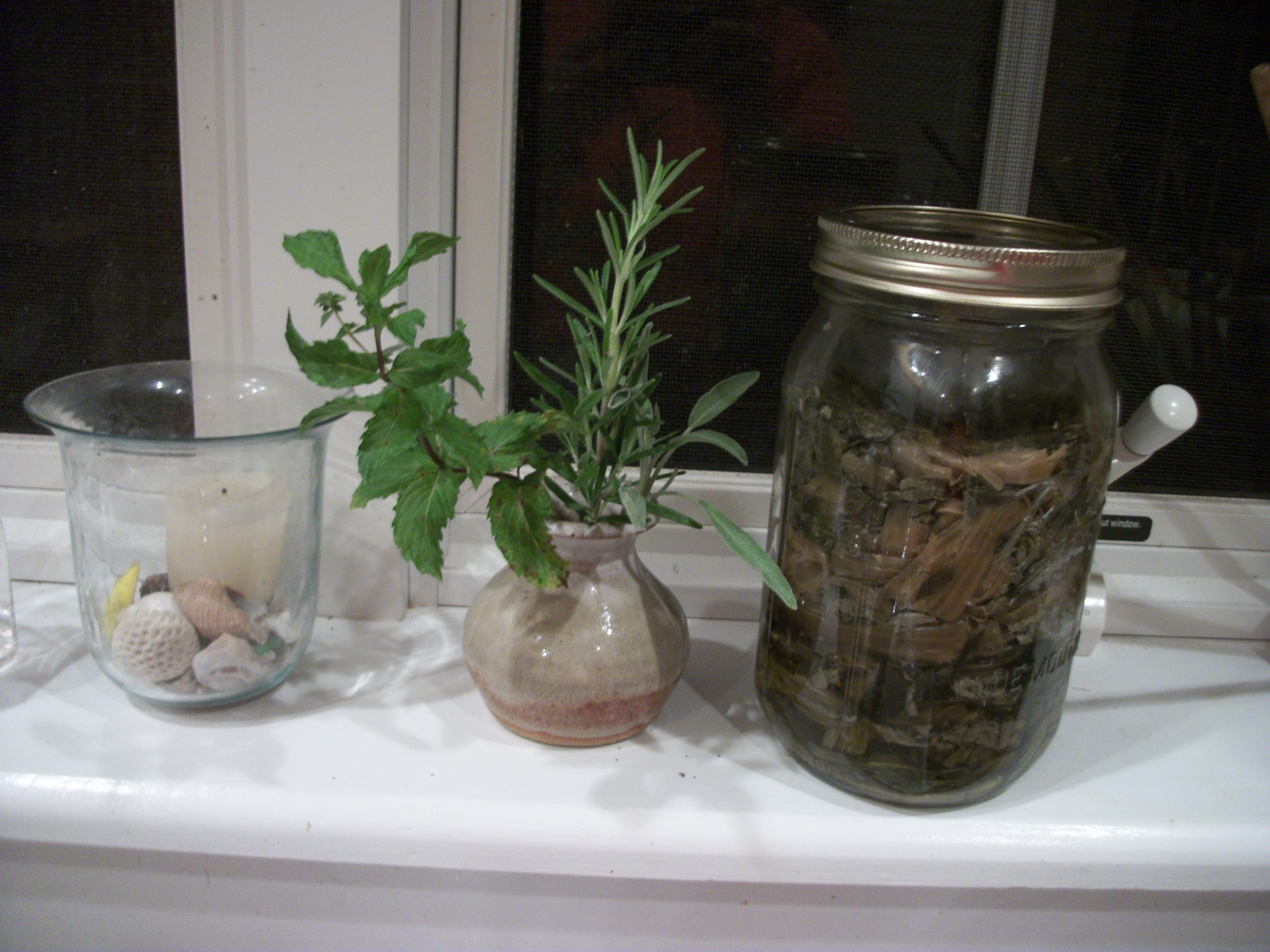
Here’s Gundru in a jar that I’ve fermented, opened, and eaten some of the contents.  After this step, I put the jar into the refrigerator as I don’t have enough liquid covering the kale.

Here’s a picture of Gundru cut up and ready to be put on a plate as a condiment:

Gundru is dead easy to make.

It takes A LOT of greens to stuff a quart Mason jar–Katz says the greens from about 8 plants, and I think that’s true.

Maybe let the greens wilt in the sun a little.  Wash them off.  For kale or collards, I’m going to try stemming them next time–my first attempt was with kale, and I do think the stem is very fibrous…   But, it also has a lot of juice.

Pound the wilted greens on a cutting board with a rolling pin or a mallet to crush them and release the juices.  (Something heavy to crush, but not, I would think, anything metal like a hammar.)  Stuff them into the quart jar–using pressure to force more and more greens into the jar.  Make sure you have liquid covering the leaves.  Put on the lid, put the jar in a plate, and let it ferment for 2-3 weeks.  You can leave it longer if you like.  The jar may overflow in the first fermenting action–thus the plate.  Next time I’m pouring my overflow back into the jar.

You can also dry Gundru after it’s ready.  I think I’d use my dehydrator.  But, you can dry the leaves outside too.  They must be really dry or they’ll mold.  Crumble them into soups/stews.

Turkey Tracks: Sweet Pea Quilt

Turkey Tracks:  October 13, 2011

Sweet Pea Quilt

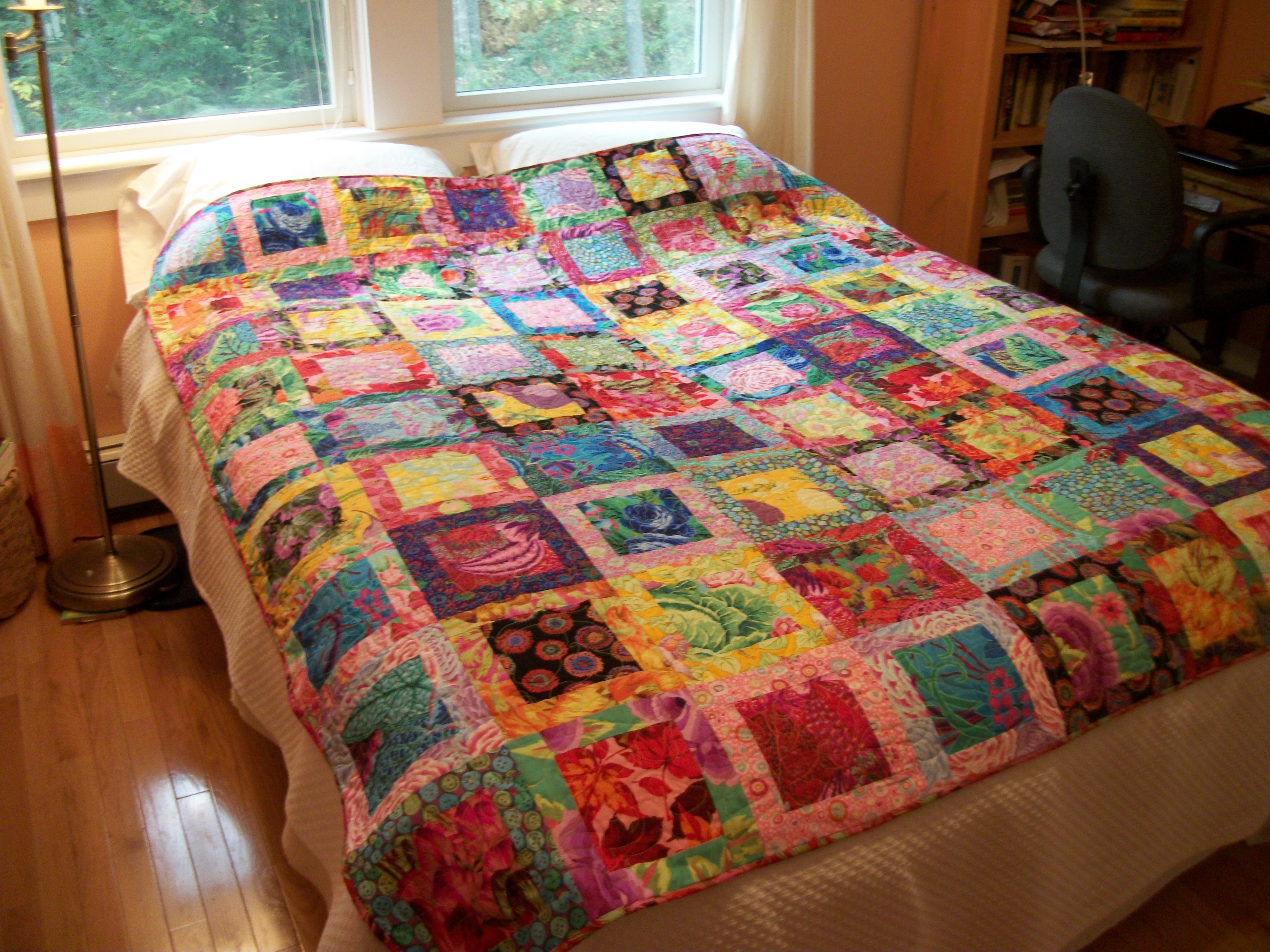
I’ve just finished one of the happiest quilts I’ve ever done.  I adore this quilt.

I find I’m increasingly drawn to bright contemporary fabrics these days.  They are so full of life and energy.

This quilt was a kit from Mainely Sewing in Nobleboro, Maine.  The kit was called “Layer Cake,” I think, and it’s made from Kaffe Fasset prints.   Marge has a strong internet business, so you can get this quilt or any of her other quilts online:  www.mainelysewing.com .  You buy the different “layers” until you make the size quilt you want.  One package makes a small quilt, and so on.

The pattern starts with 10″ squares.  One cuts off two long strips and two short ones–what remains is the inner square.  Then, you just start mixing and matching strips to inner squares.  I think this method would be a really fun way to diminish a large stash and I’ll try that soon.  Probably the way to control mixed fabrics from a stash would be to choose one color–or only a few colors.

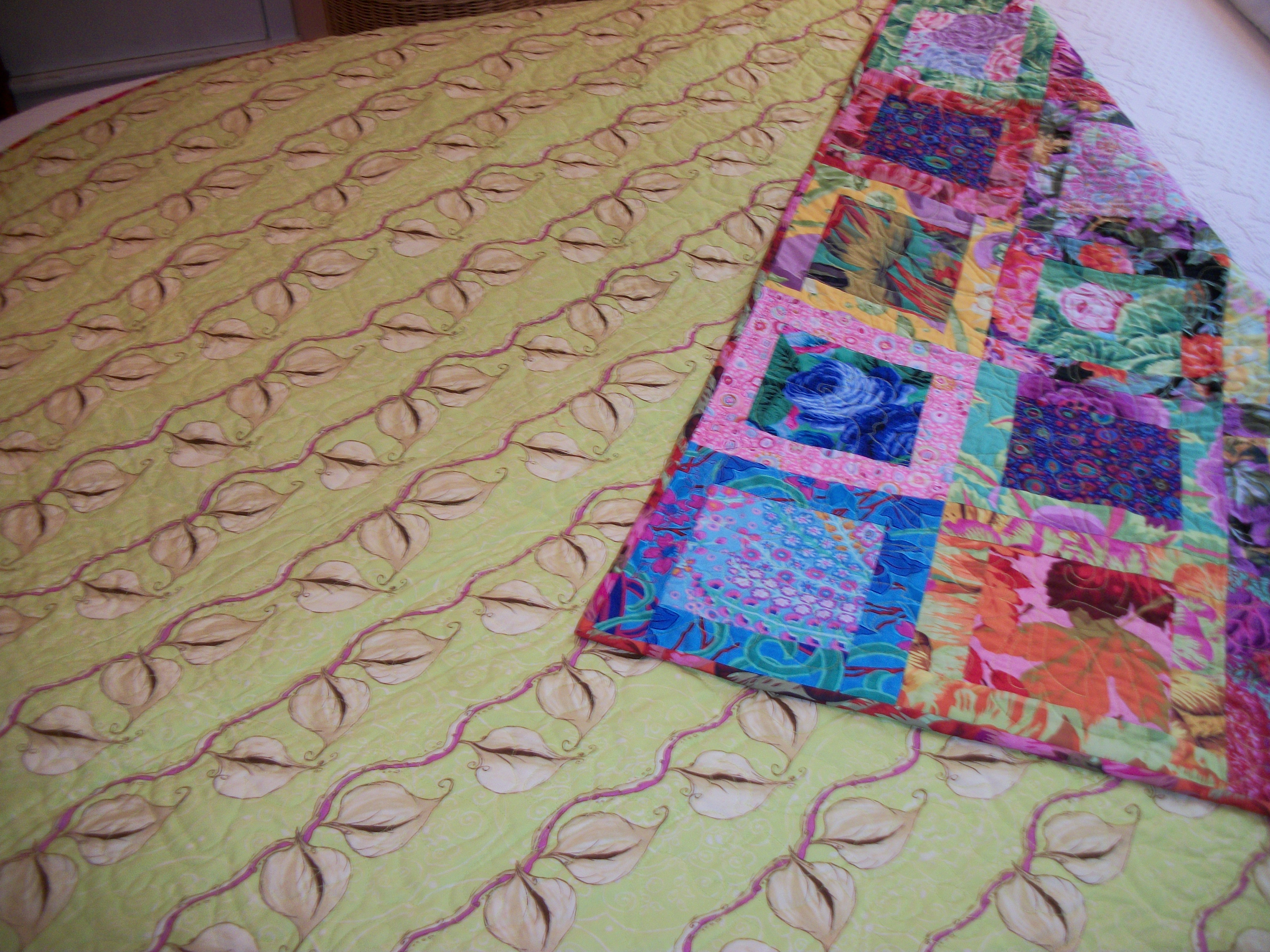
Here’s the back–I got this fabric on sale at Quilt Divas in Rockland, Maine.  The fabric is a rich lime color, and it’s perfect for this quilt.  The “stem” of the leaves is a strong pink:

Here’s a close-up of the front.  I quilted it with lime green thread–on the long-arm–with a pantograph called “Sweet Pea Scramble”–  Iahttp://www.lovetoquilt.com/quilting-pantographs-and-roll-patterns/golden-threads/roll-patterns-8-inch.htm.  I’m really loving learning to use the long-arm, and I really like using a pantograph for a quilt like this one where there are no borders and one doesn’t want the quilting to get in the way of the fabrics.  I’m getting much better with the tension on the long-arm–it’s just so different from a domestic machine.

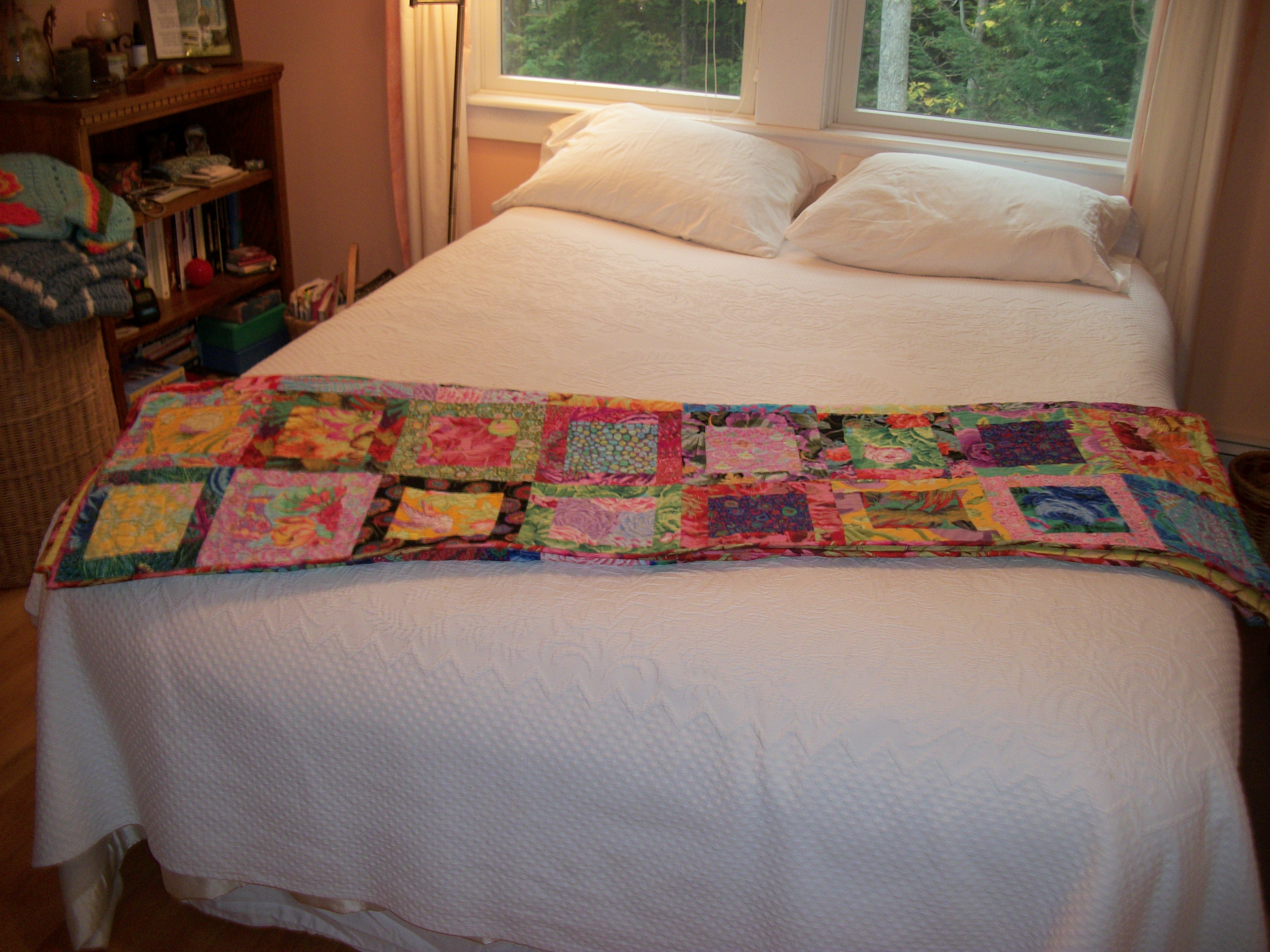
Here you can see how a lively, colorful quilt like this one can perk up a bedroom, even when just folded across the end of a bed:

Here’s one more view of some of the fabrics in the quilt:

Turkey Tracks: Kaffe Fasset Designer Sock Yarns

Turkey Tracks:  October 13, 2011

Kaffe Fasset Designer Sock Yarns

I’ve been knitting like a mad woman all fall.

All summer I’m so busy outside that I have little time for indoor fiber arts.  So, my fingers start to itch to get back into sewing and knitting.

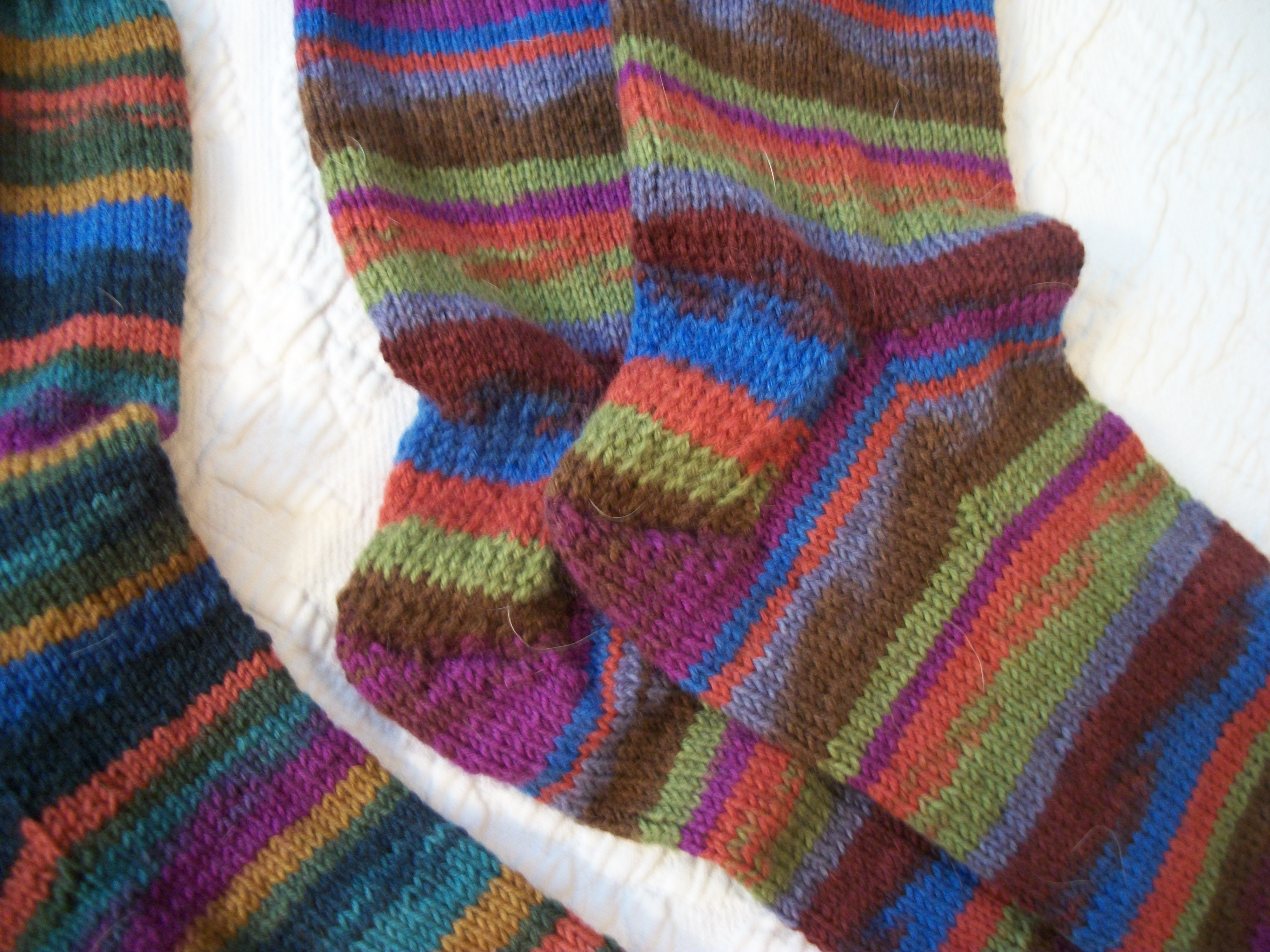
I’ve finished these two sock pairs–I posted one of them earlier.  But here are two of Kaffe Fasset Designer Socks in different colorways.  The pic is overexposed a bit–these colors are much darker, richer.  But you can see how the yarn makes little patterns of its own within the sock :

I love the way the heels work out on these socks:

Oh lord!  See the white dog hairs!

I will keep one pair and am gifting with the other.

I have a new pair started–navy and white that I need for myself.

Turkey Tracks: Indian Summer in Maine

Turkey Tracks:  October 12, 2011

Indian Summer in Maine

Summer is officially over in Maine.

But, we have been blessed with some gorgeous fall weather, and now our leaves are coloring up fast.

We try to get as much outdoor sweater/light coat weather as we can these days.  Here’s John on the deck of The Waterfront restaurant in Camden, Maine, enjoying a fine, sunny lunch:

 —

We had a wonderful time at MOFGA’s–Maine Organic Farmers’ and Growers’ Association–Common Ground Fair this year as well.  I can’t imagine how we both left cameras at home, but we did.  And, as usual, there were many wonderful pictures to be had.  I would especially have liked some of the many, fabulous hand-knit sweaters made with local yarns we saw.  Or, of the conga dancers–we finally saw what that was–and it was wonderful–not like square dancing at all, but done in long lines with couples who do repeating patterns that ensure that they move up and down the line–all to the sound of fiddle music.  (A violin sings but a fiddle dances, we learned.)

Here’s a picture of the bird house that John bought and hung on a tree where we can see it all winter long.  People hang lots of bird houses in their woods around their houses in Maine–they provide shelter for the birds that winter off in a storm.  John wants to make some with the grandchildren next summer.  We can’t wait for them to see it.

We celebrated Bryan’s birthday here, as I wrote in an earlier entry.  Here’s a picture of the outside of his birthday card.  I used pictures from their time in Maine to create the card–along with other bits of flotsam and jetsam collected along the way.  The buttons come from South Carolina.  The blue ribbon is off a box of chocolates we got from our new chocolate store here in town, Chocolatier Blue.  You wouldn’t believe these chocolates.

We ate the last of our lamb from last fall:  lamb shanks.  John thought the plate so pretty, he took this picture.  Everything on that plate but the lamb came from our garden.  See the little white pearl onions in the background.  The spaghetti squash came from  Hope’s Edge.  The green is Gundru, for fermented kale.  The white sauce on the tomatoes is homemade mayonnaise.  It was all delicious!  A great fall dinner.

Turkey Tracks: Chicken Mischief Continued

Turkey Tracks:  October 12, 2011

Chicken Mischief Continued

Sister Susan asked for a picture of our chickens raiding the greens I planted in five deep blue plastic pots after we harvested potatoes from them.

You can see they visit the pots daily.  Since I’ve got a nice crop of lettuce in the cold frame, I just let them have these tender greens.  Chickens would choose greens to eat over anything else, probably, even, over a fat worm or a bug.  John says my chicken wire just gave them a really good platform from which to eat.  All of them were on the pots when I ran to get my camera.

The big girl is Valentine, the Freedom Ranger from our spring batch of meat chickens.  She gives us either a small rose-brown egg or a HUGE rose-brown egg every day, which is always double-yolked.  Sometimes the smaller eggs are double-yolked as well.  The lighter tan girl is Sally, an Americauna Wheaten.  She lays blue eggs.  Her sister Nancy has become quite “broody,” so she spends most days in the coop sitting on whatever layed eggs she can acquire from the other hens.  Both Sally and Nancy are molting, so the coop and the yard are adrift with their pale feathers.  These girls are two years old now.  And, since Pearl, the new Wheaten has not started laying yet, we have no blue eggs at the moment.  In fact, all laying is slow these days as our daylight dwindles.  It’s getting to be time for chickens to rest.

Here’s a picture of our new rooster–Pierre.  Or, Pretty Pierre.  Or, most of all these days, My Roo.  He’s just six months old now, but he’s sweet, gentle, and comes to see what is going on with whatever moves or makes noise in the yard.  He’s my constant companion in the yard as he’s so curious.  He lets me get close now, but it really scares him to be touched.  The new hens have settled in now and all will let me pick the up and cuddle them whenever, pretty much.

 The Wheaten below is our new little Pearl.  She’s quite lovely.  See her little bearded face?  And, Ninja and Annie Chickie, the hen raised last year, are with Pierre.

Pierre, who runs as fast as the wind, has taught me that our poor old Nappy had something wrong with his feet.  I think he might have been in pain.  He walked very strangely, and he didn’t like to walk.  Perhaps that’s why he was cross and took to charging people???