Turkey Tracks: Gardens in the Wateshed: Fernwood Nursery Gardens

Trukey Tracks:  August 13, 2013

Gardens in the Watershed:  Fernwood Nursery Gardens

I’m starting my tenth year in Maine, and I’ve never been to the famous Fernwood Nursery until this garden tour, planned and hosted by The Georges River Land Trust.  Fernwood is owned by Rick and Denise Sawyer, so the site is their home as well as their business.

Fernwood specializes in shade tolerant plants. yes, but in native and woodland plants that are hardy to this area of Maine.  The Sawyers choose plants that do not need staking, spraying, or extra mulch to survive our climate.  They also produce their own cultivars and bring in plants from around the world that are hardy in this area.

They recently relocated, and I really like their new digs.  I found myself wishing that I had FLAT land where I could exhale and create beds and animal spaces like Rick and Denise Sawyer have created at Fernwood.  I loved everything I saw–and then some.  Such creativity, such delights for the eyes.

Again, Fernwood displays the Sawyers’ chosen life style:  their beds illustrate how their plants fit into the ecosystem in which they live and have created by choosing the plants that will thrive in the ecosystem.  They raise animals for food and fiber and organic vegetables.  They are providing for themselves and demonstrating how to do that.  Here’s a quote:  “Whether it is the wood we burn, animals we  raise, vegetables we grow, fiber we process, or soil we build, all contribute to our sense of connection to the earth.”

Here’s how the nursery is set up–this area lies at the entrance to the property.

Fernwood Gardens

And here are random shots as I moved deeper into this experience:

These kinds of wooden garden structures are a big thing in Maine:

Fernwood

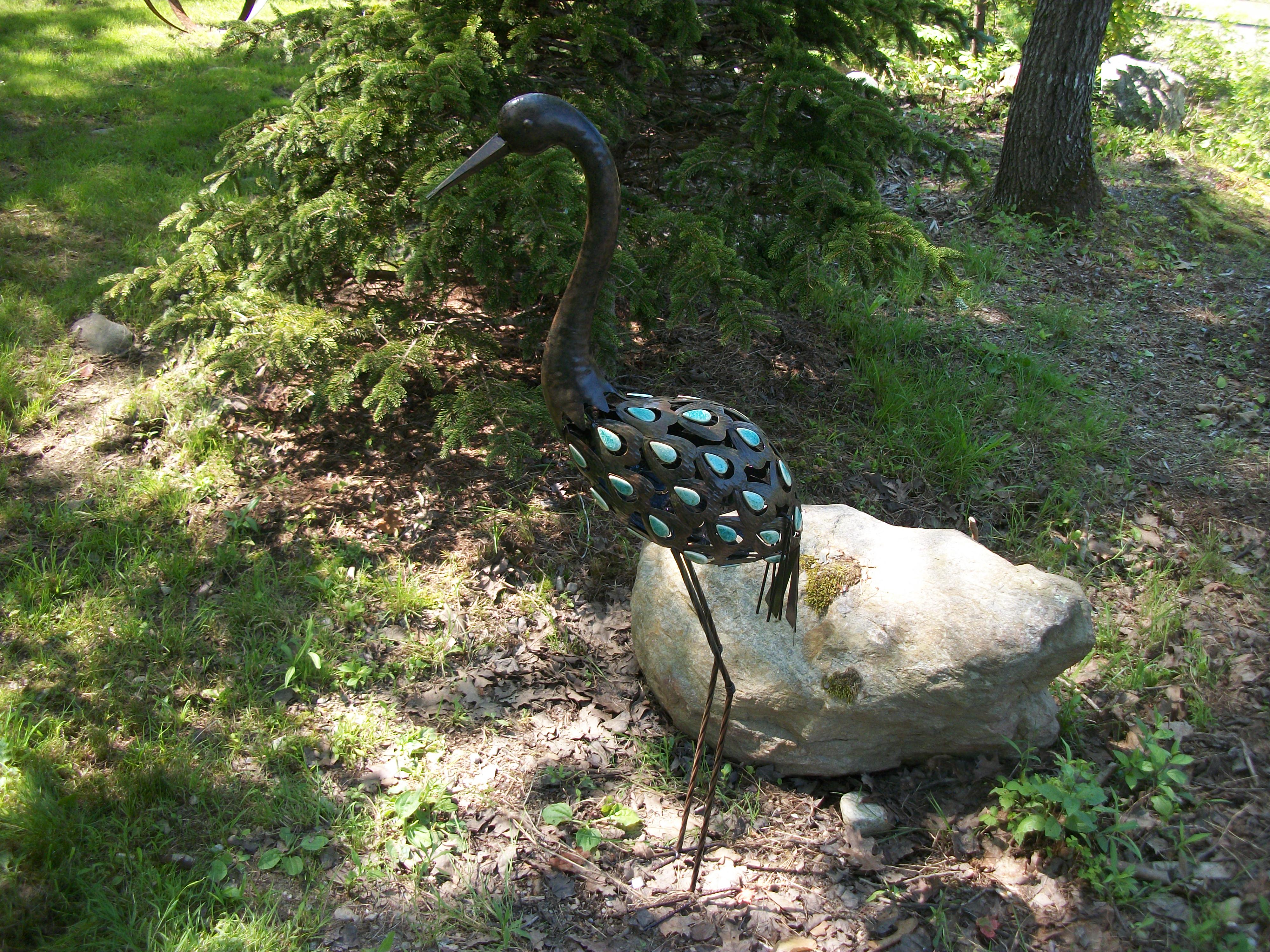
Deep shade plants with garden sculptures–note the contrast of dark and light plants:

Fernwood 6

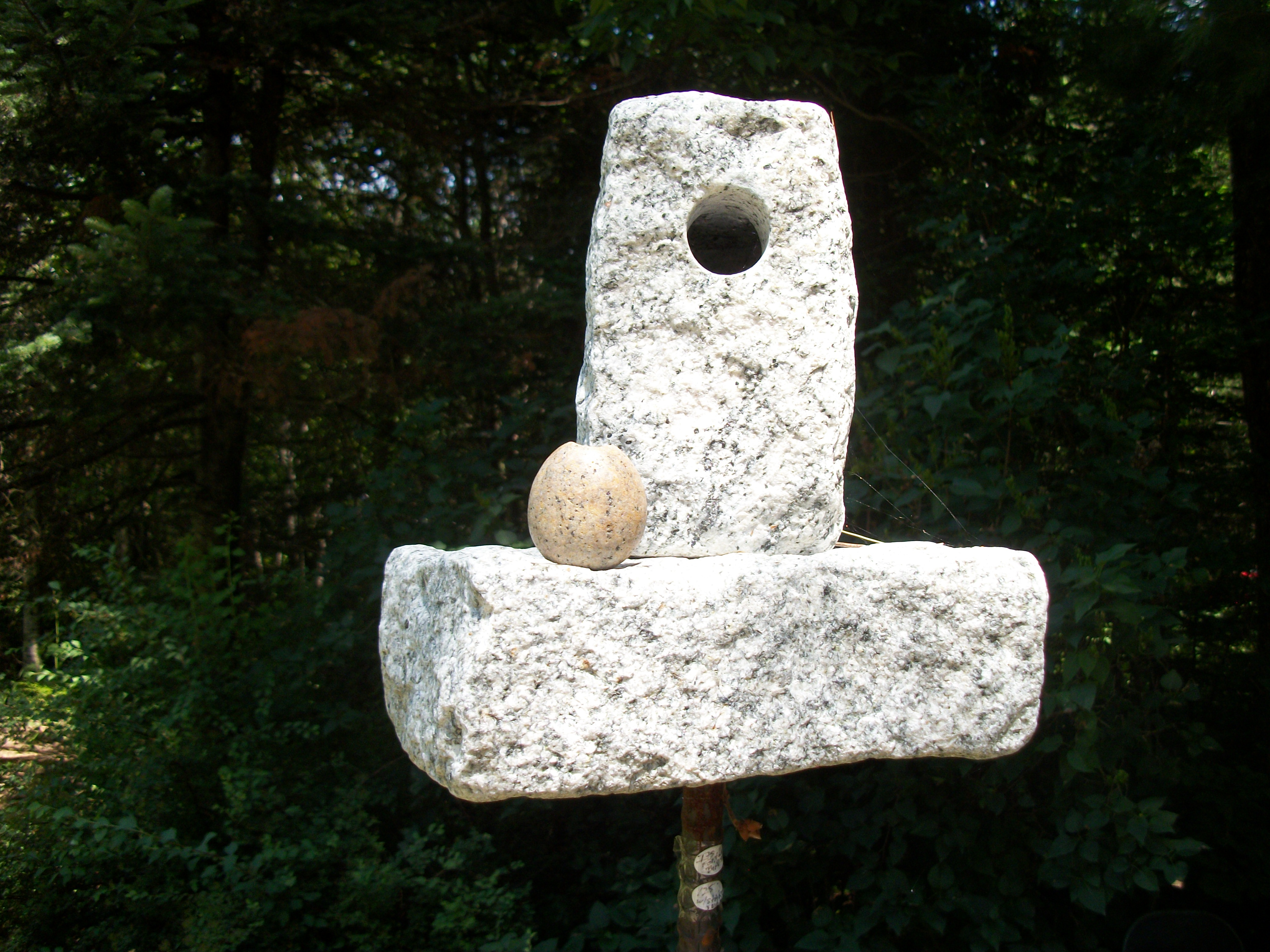
A stone garden sculpture:

Fernwood 5

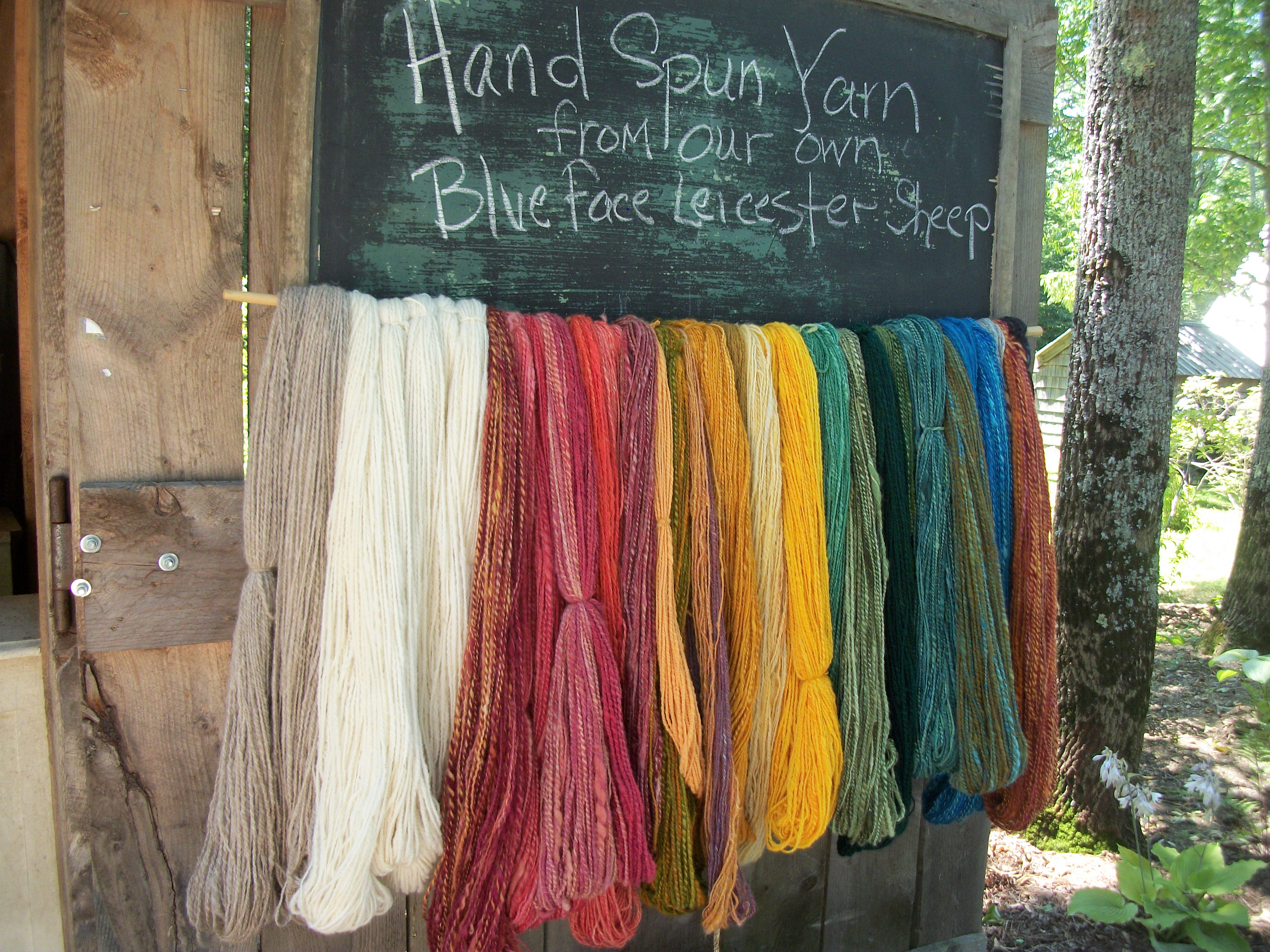
Near the center of the property the Sawyer died wool is displayed:
Fernwood 2

Here’s a close-up–which makes my fingers itch to knit…

Fernwood 3

An arched trellis leads towards the house and the home gardens:

Fernwood 7

Here’s the surprise just inside the trellis:

Fernwood 8

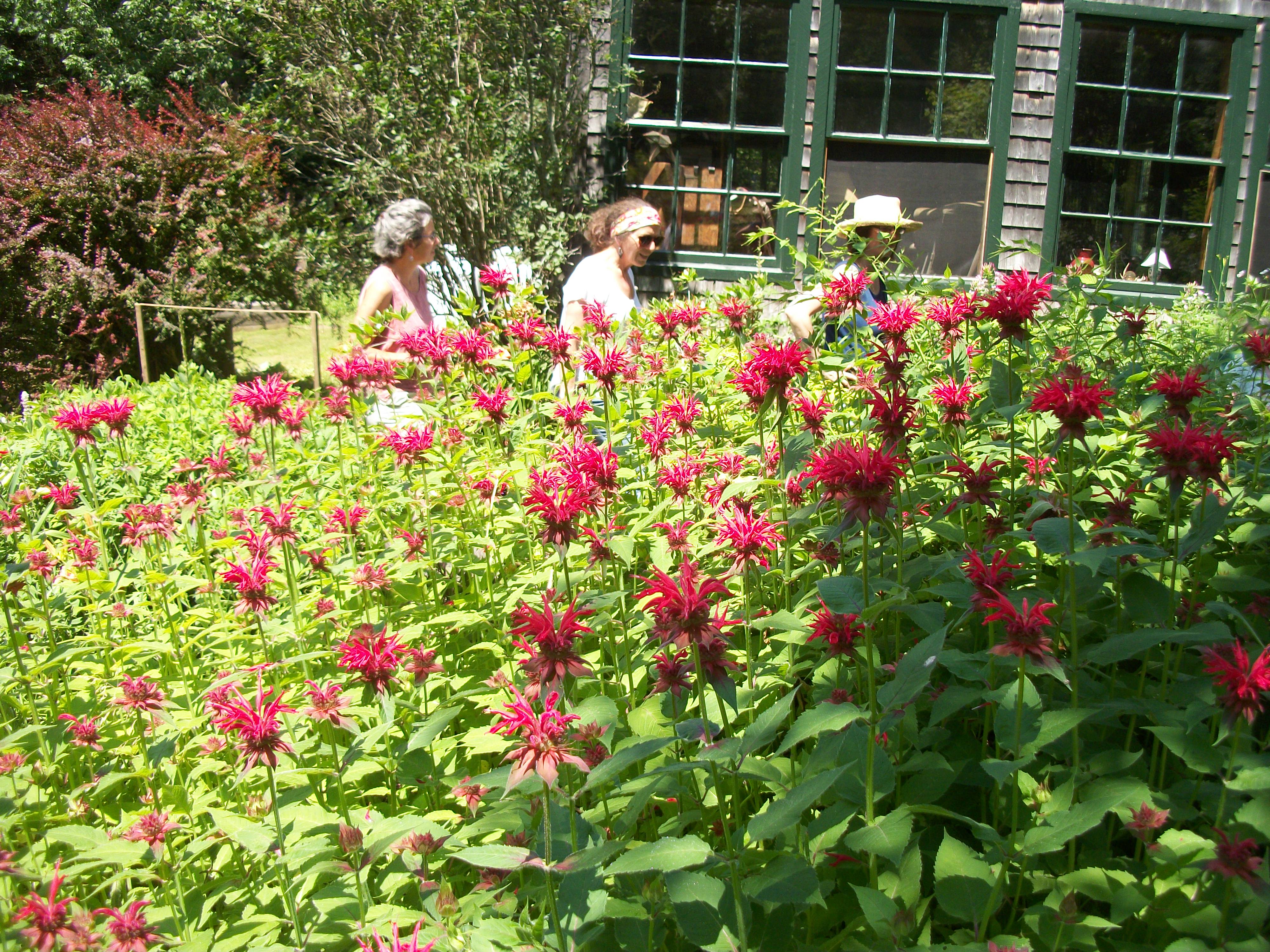
A stand of Bee Balm sits before the house:
Fernwood 9

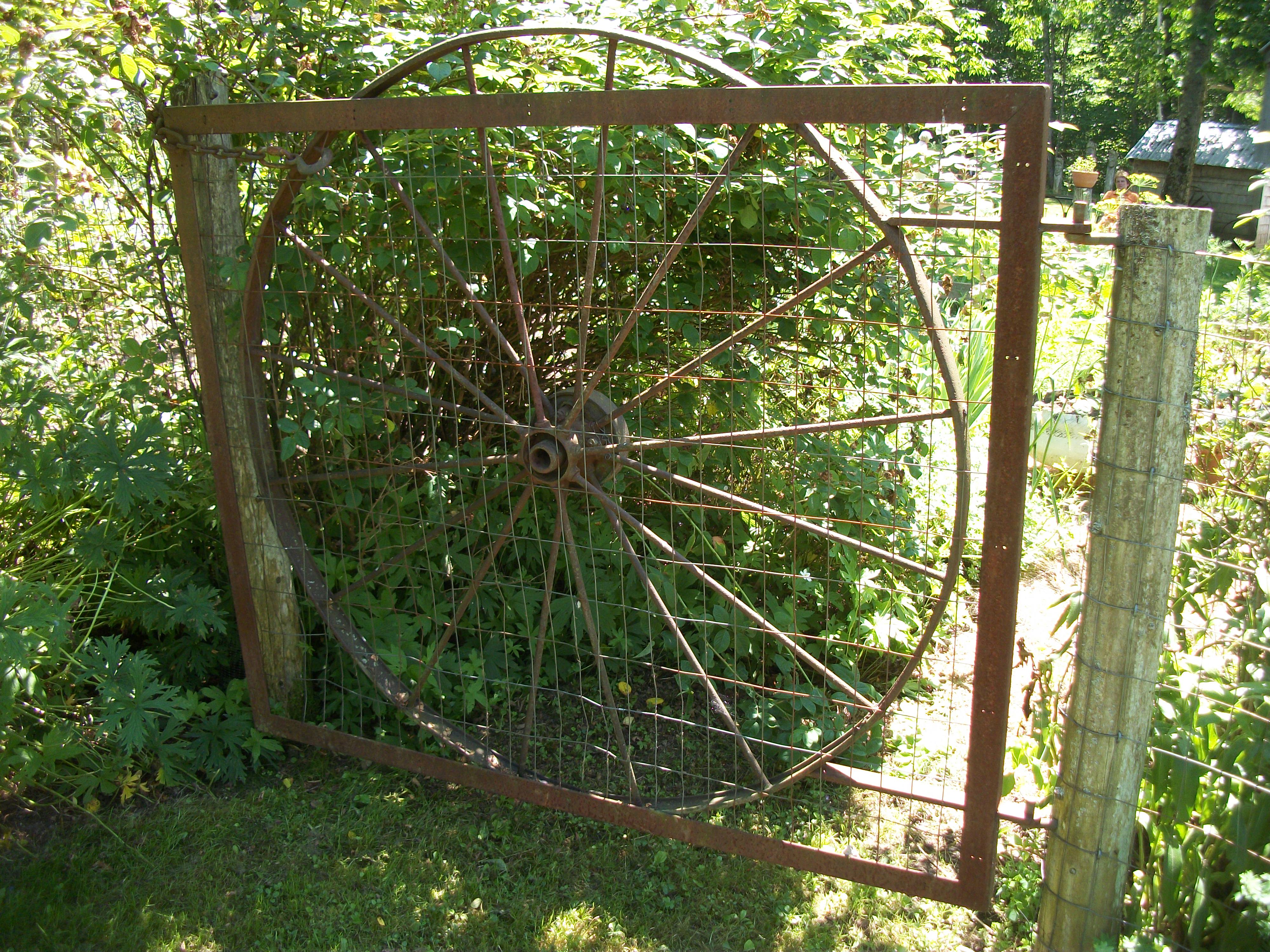
And a gate gives entrance to one of the vegetable gardens–I wish I had been taking pictures of beautiful old gates all along the way actually…
Fernwood 10

How’s this for a fabulous scarecrow?

Fernwood 13

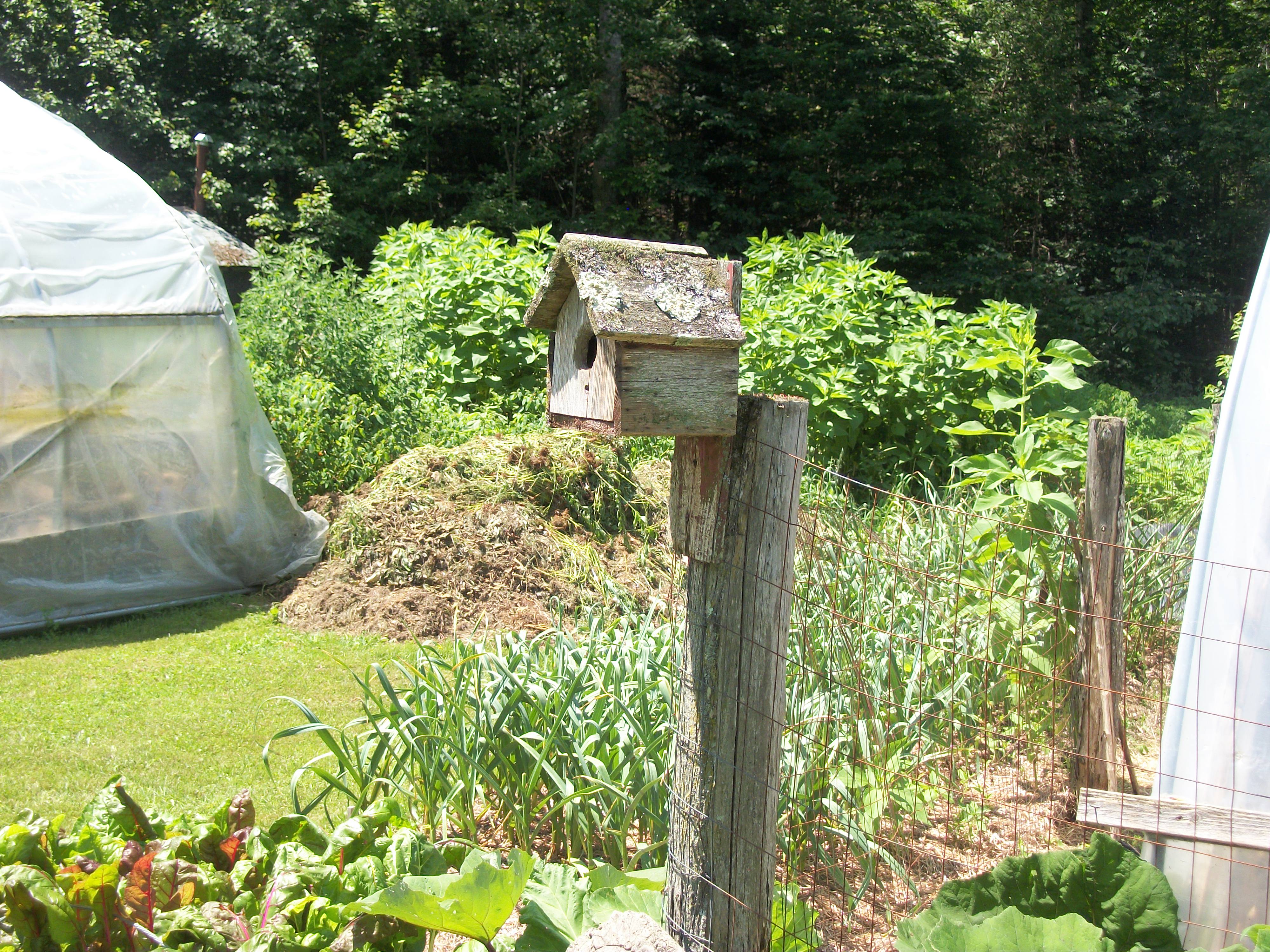
Bird houses punctuated the whole homestead:
Fernwood 11

My pictures of the chickens did not come out–and the pigs went into their house just as I tried to capture them with my camera.

But here’s a picture I liked a lot:

Fernwood 12

These figures carved from tree sections are seen frequently in Maine and always make me smile.

Fernwood and the Sawyers were an inspiration for me.

Turkey Tracks: Gardens in the Watershed: Hobbs Farm Greenery

Turkey Tracks:  August 13, 2013

Gardens in the Watershed:  Hobbs Farm Greenery

Who knew that the largest grower of scented geraniums, or pelargoniums, is a stone throw from my house.

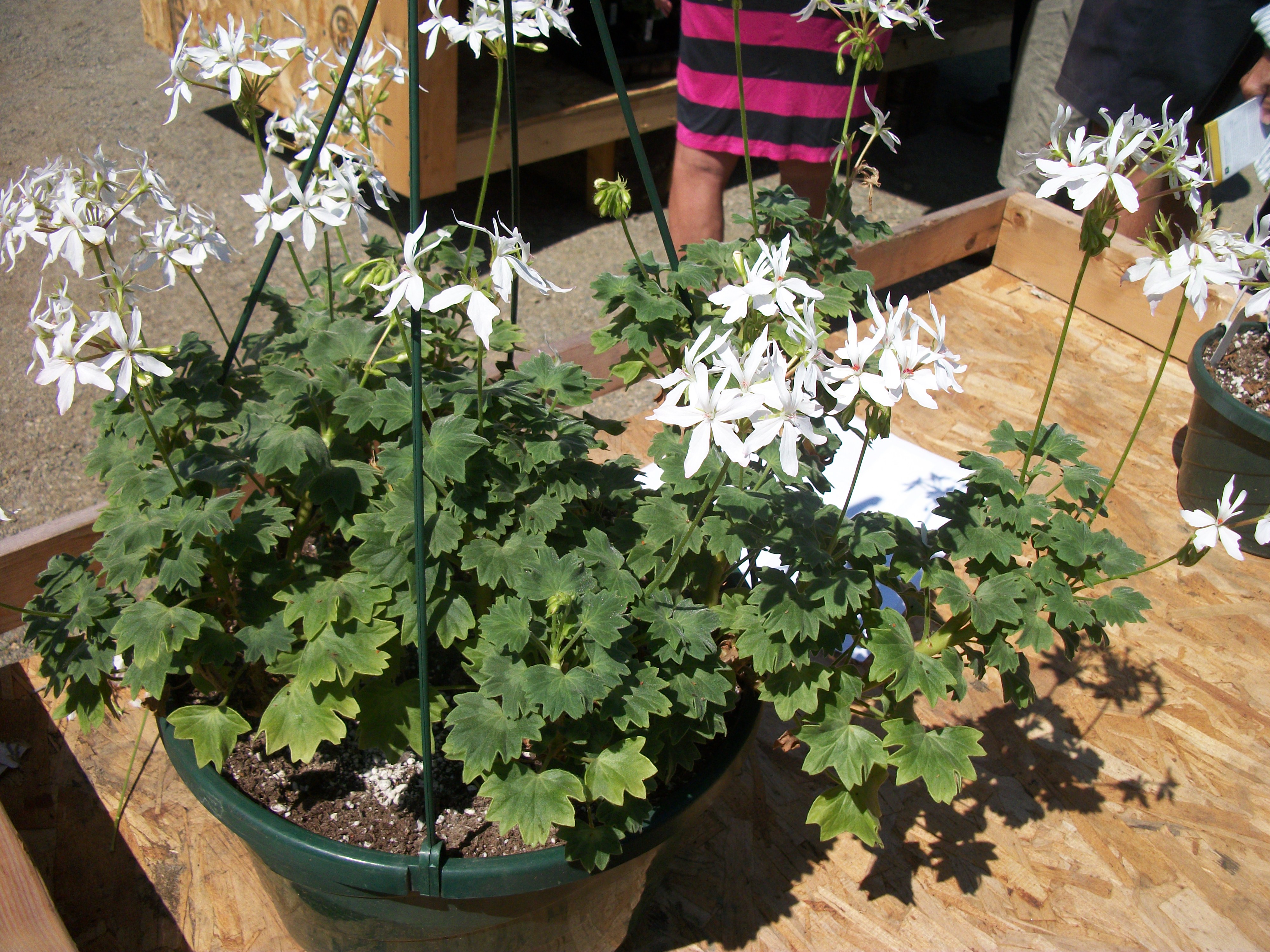
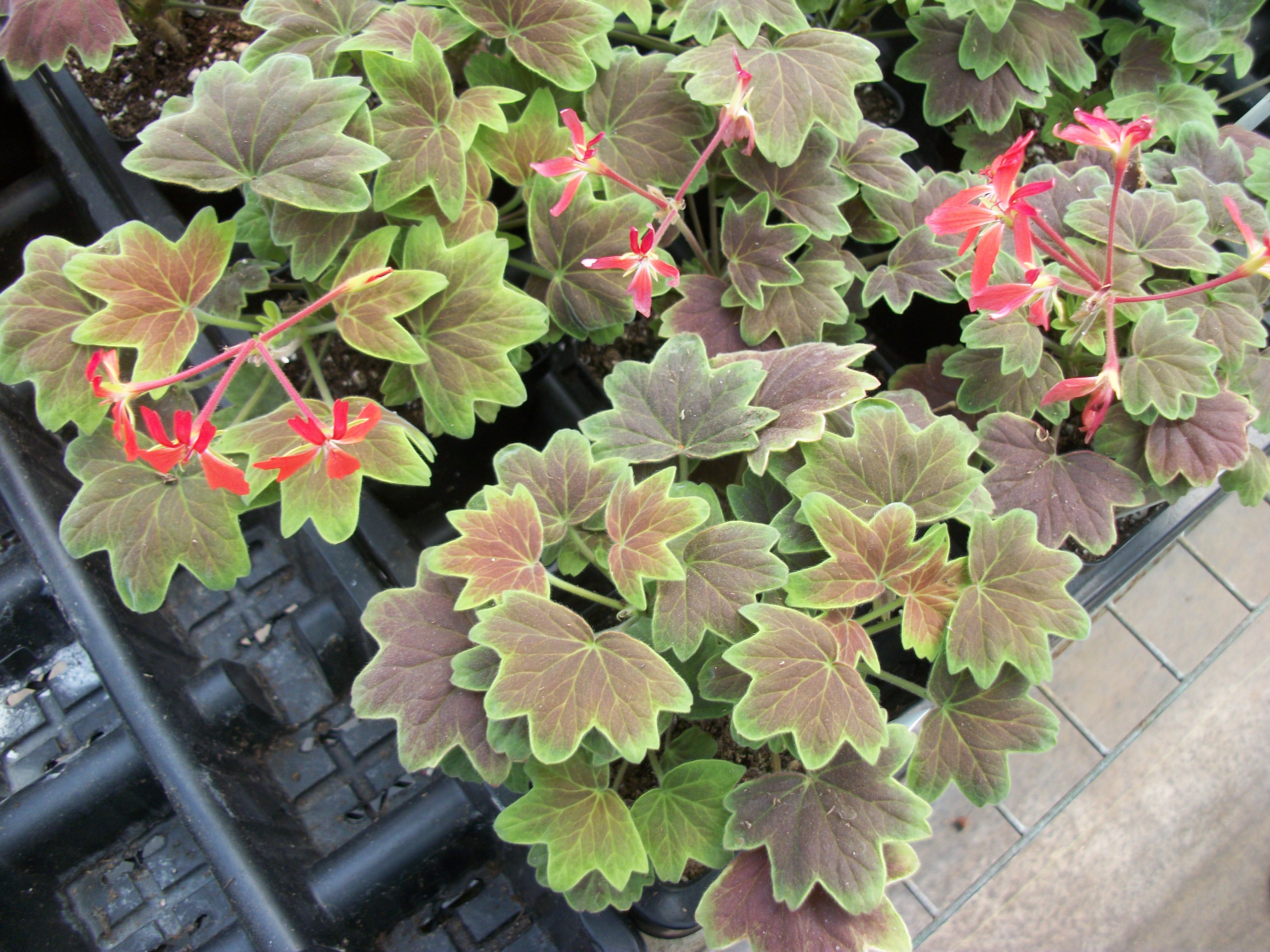
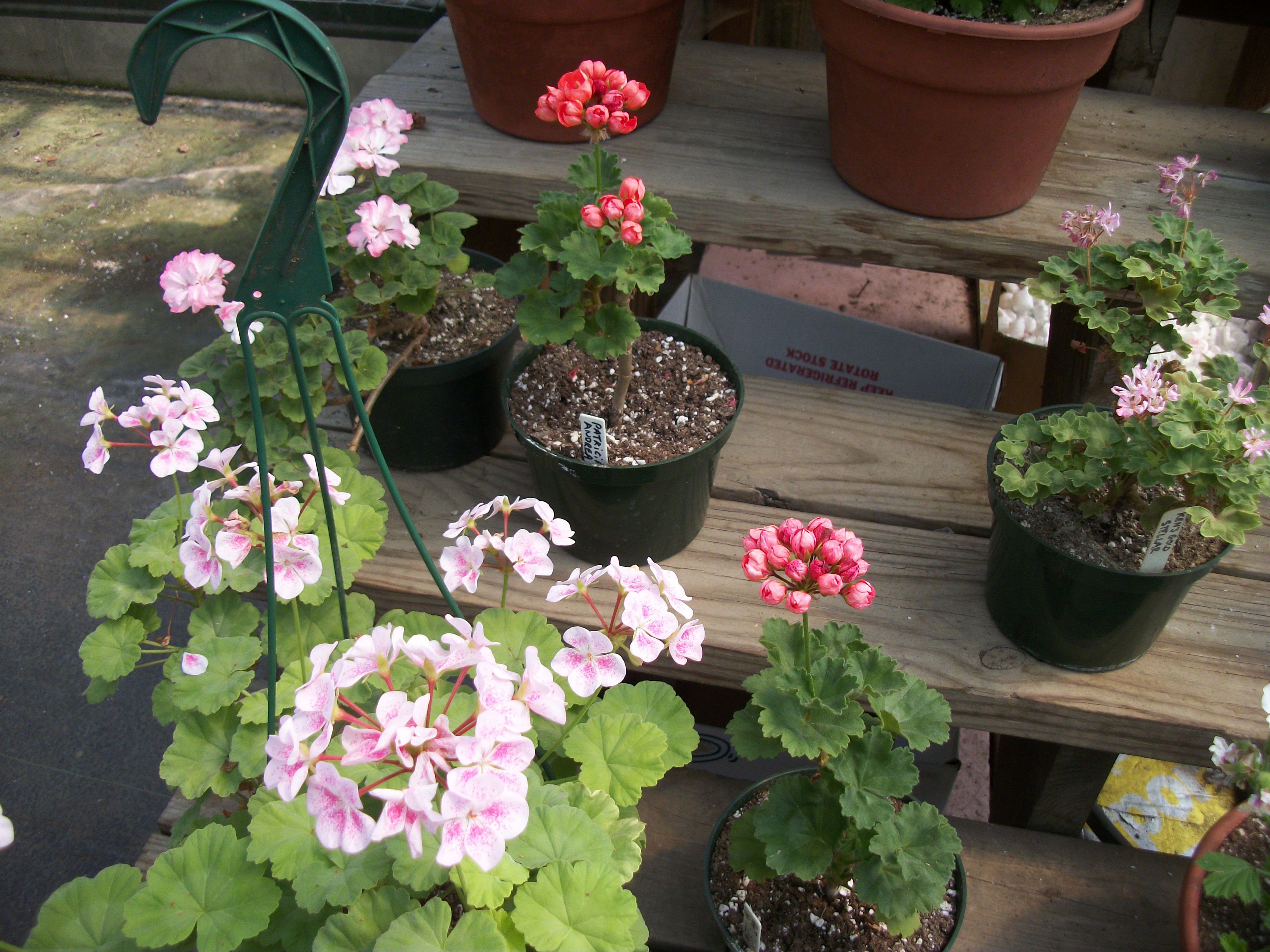
Hobbs Farm is a family owned business that has been in Hope, Maine, for 150 years.  The family now raises 270 varieties of geraniums, many of which have scented leaves–as in peppermint, lemon, rose, and Lady Mary.  Some repel mosquitoes.  They also grow stellar geraniums with colorful foliage, notched leaves, star-shaped flowers, cactus flowers, rosebud, gold leaf, miniatures, and dwarfs.

I was astonished at the variety of the foliage and the flowers before I reread the farm’s description.

Here’s Giovanna standing in front of amazing tomato plants in raised beds.

Hobbs 2

Here’s the VERY long greenhouse:

Hobbs 4

And here’s some pics I snapped of unusual plants and flowers:

This one’s flowers look like fairy flowers…

Hobbs

Single flower that looks like an impatiens almost:

Hobbs 7

Wow!

Hobbs 6

Look at the unusual flower form here of the orange flower.

Hobbs 5

Geraniums now have a whole new meaning for me.  It’s kind of like the problem with food, isn’t it?  We’ve settled for a few potato, tomato, bean, etc., varieties, when there are actually so many other kinds, each with different attributes.

Thanks for the education, Hobbs Farm Greenery!

Turkey Tracks: Gardens in the Watershed: The Ames Garden

Turkey Tracks:  August 12, 2013

Gardens in the Watershed:  The Ames Garden

I promised you a tour of the St. Georges River Land Trust annual garden tour and left you hanging when the kiddos came.  The second garden Giovanna McCarthy and I toured was the gardens of Eileen and Leonard Ames.

This lovely garden sits across the road from Tina Marriner’s sunflower gardens.  The gardens sit beneath tall trees and are primarily  shade gardens–but are dappled with patches of sunshine.

Eileen Ames writes that she and Leonard started the garden in 2000 and spent many hours clearing the land of damaged trees and stumps.  There are numerous whimsical and engaging garden fixtures mixed into the nooks and crannies of the garden.

Here’s a pretty fellow:

Ames 1

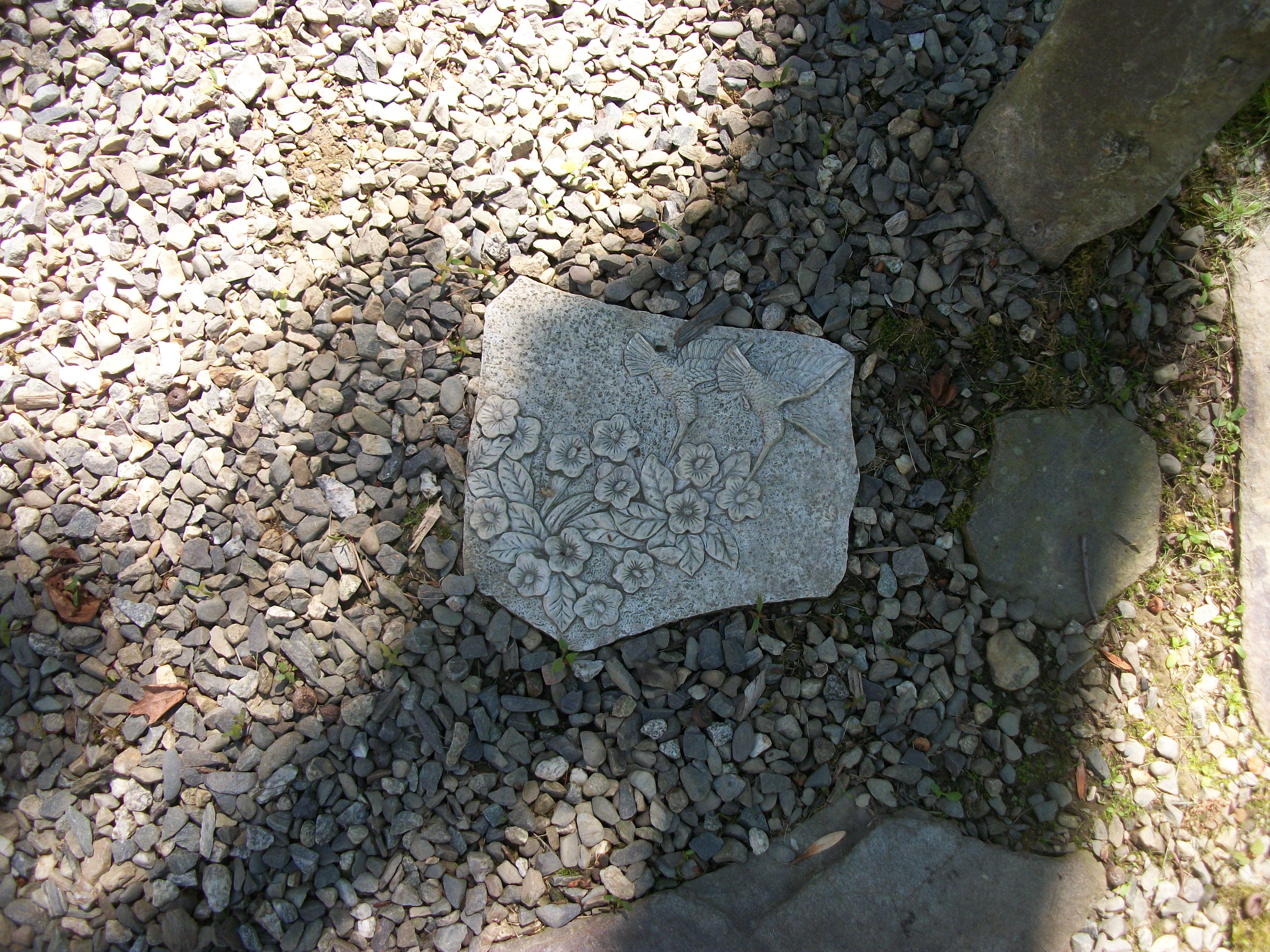
There were so many small, lovely moments–like finding this small stepping stone enbedded in the rock path.

Ames 2

I loved this idea of putting a solar lamp in a planter and wish I could see what it looks like at night.

Ames 3

This fellow moves in the slightest breeze–and catches your eye over and over.

Ames 4

The drive invites entry, don’t you think?

Turkey Tracks: Baby Robins

Turkey Tracks:  August 12, 2013

Baby Robins

Remember my tale and pictures of the Robins who tried to build 14 or so nests on my front porch?  And how they finally built two and started in to raise a family?

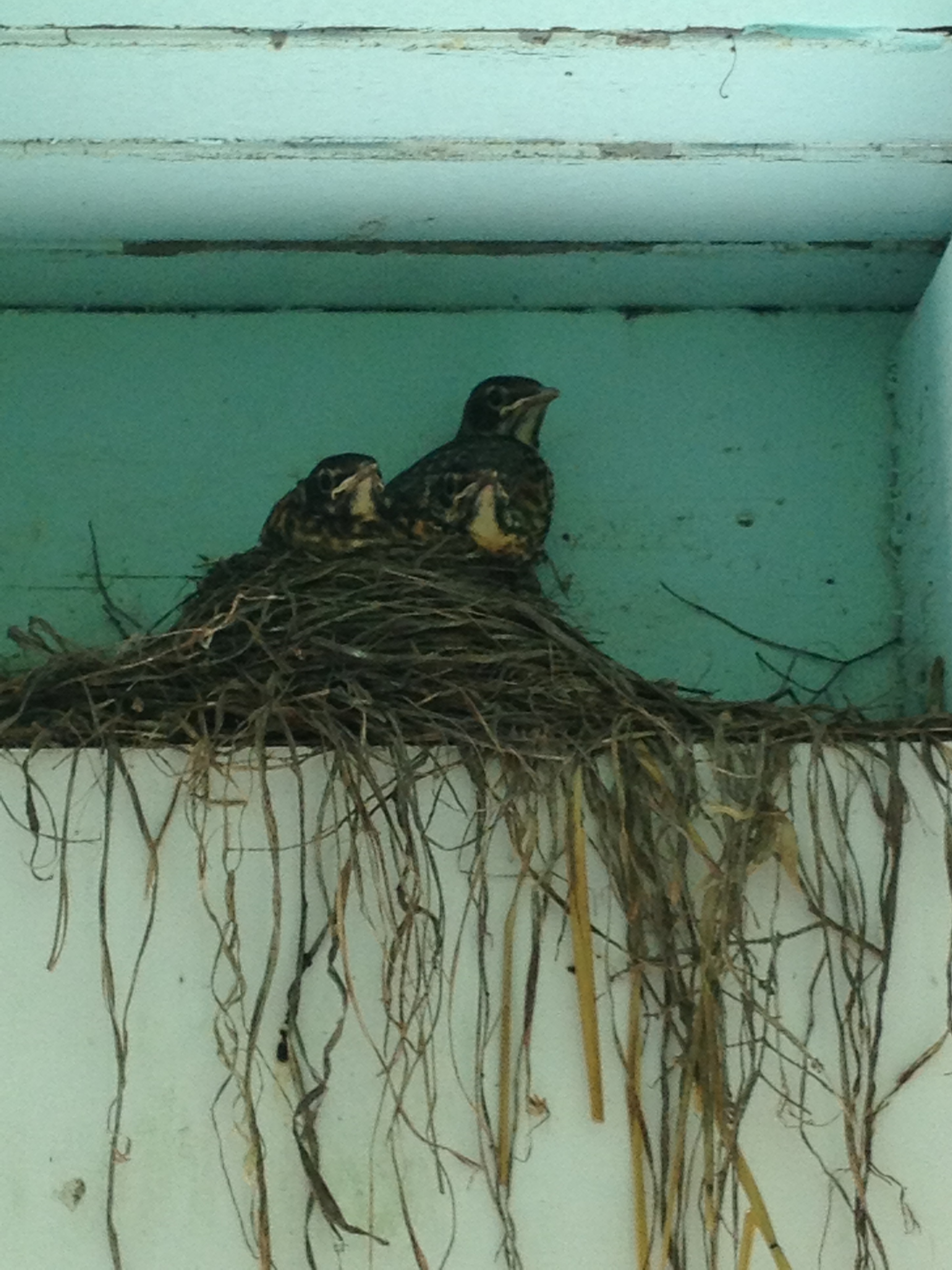
Mike got a picture of the three babies while he was here:

robin babies, July 2013

Aren’t they the sweetest little things?

I’ll take down the nest one of these days since they don’t seem to be trying to use it again.

It’s quite an elaborate next in that it is stuck together with mud and is so nicely formed.

Turkey Tracks: Back to the Blog

Turkey Tracks:  August 12, 2013

Back to the Blog


Hi Folks!

I’ve missed you all and hope you have missed me!

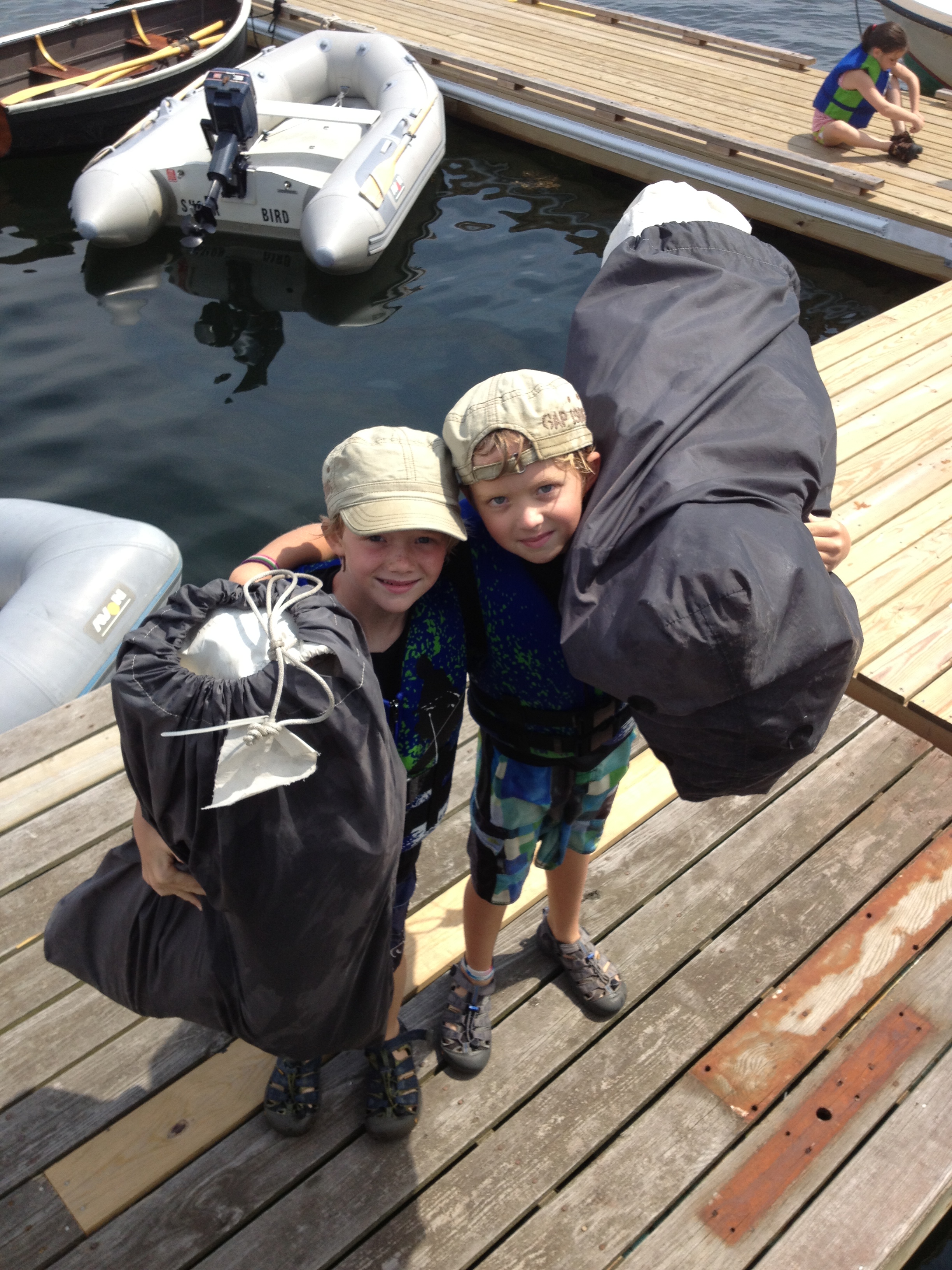
My oldest son brought the two oldest grandchildren, Bo and Kelly, to Maine on July 20th and returned to Charleston to the rest of his family.  The boys attended a sailing camp here in the mornings and “Camp Lovey” in the afternoons and evenings.

boys sailing, July 2013

While Mike was here I showed him the way to Acadia.  Here are the boys at the top of Cadillac Mountain–with its 360-degree views of the coast and land.

Kelly at Cadillac Mtn, July 2013

Here’s Kelly jumping fissures in the rocks:

Kelly, Acadia, July 2013

During Camp Lovey I had a blast with them–and I think they had fun with me.  We swam, kayaked, played games (they learned how to play Hearts with me), watched movies, and cooked a lot of good food.  We were somewhat challenged by the weather as we’ve had a really cool and rainy summer.

We had one nice kayak trip on the river–during which Kelly ran into a bank of bushes and saw a wolf snarling at him.  We determined that he’d seen either a coyote or a very large grey fox–the latter has been seen along that side of the river all summer.  Kelly learned to paddle a whole lot better after that incident.

Mike returned with Tami and the girls (Talula and Mina), and they spent a little over a week.  We went out to Monhegan Island to celebrate Great Aunt Maryann’s birthday–and to remember John’s.  But that’s a tale for another day.


Turkey Tracks: Gardens of Tina Marriner and Robert Pearse

Turkey Tracks:  July 16, 2013

Sunday July 14 was the annual Georges Valley Land Trust Garden Tour:  “Gardens in the Watershed.”  It was such a treat to see this year’s seven gardens–each one special and wonderful.  So, come along with me for some of the highlights of the day.  I am listing each garden separately as there would be too, too many pictures otherwise.


Gardens of Tina Marriner and Robert Pearse


A few years ago, I noticed that someone up the hill was creating a whole lot of new gardens.

Over the years I slowed the car, complimented the tall, slender, dark-haired woman on her project, and waved.

Sunday I met her close up and enjoyed that meeting so much.  She has been watching a crow family over the last weeks as they raise their one chick.  We could hear him crying in the background for food from his parents  all the while we talked.

Tina Marriner is growing sunflowers for the market.  She will plant 15,000 sunflowers this year, of 39 different kinds.

They are spectacular, of course.  Here’s a bed of one kind–the house belongs to Tina’s neighbor across Howe Hill Road.

Marriner- Pearse 2

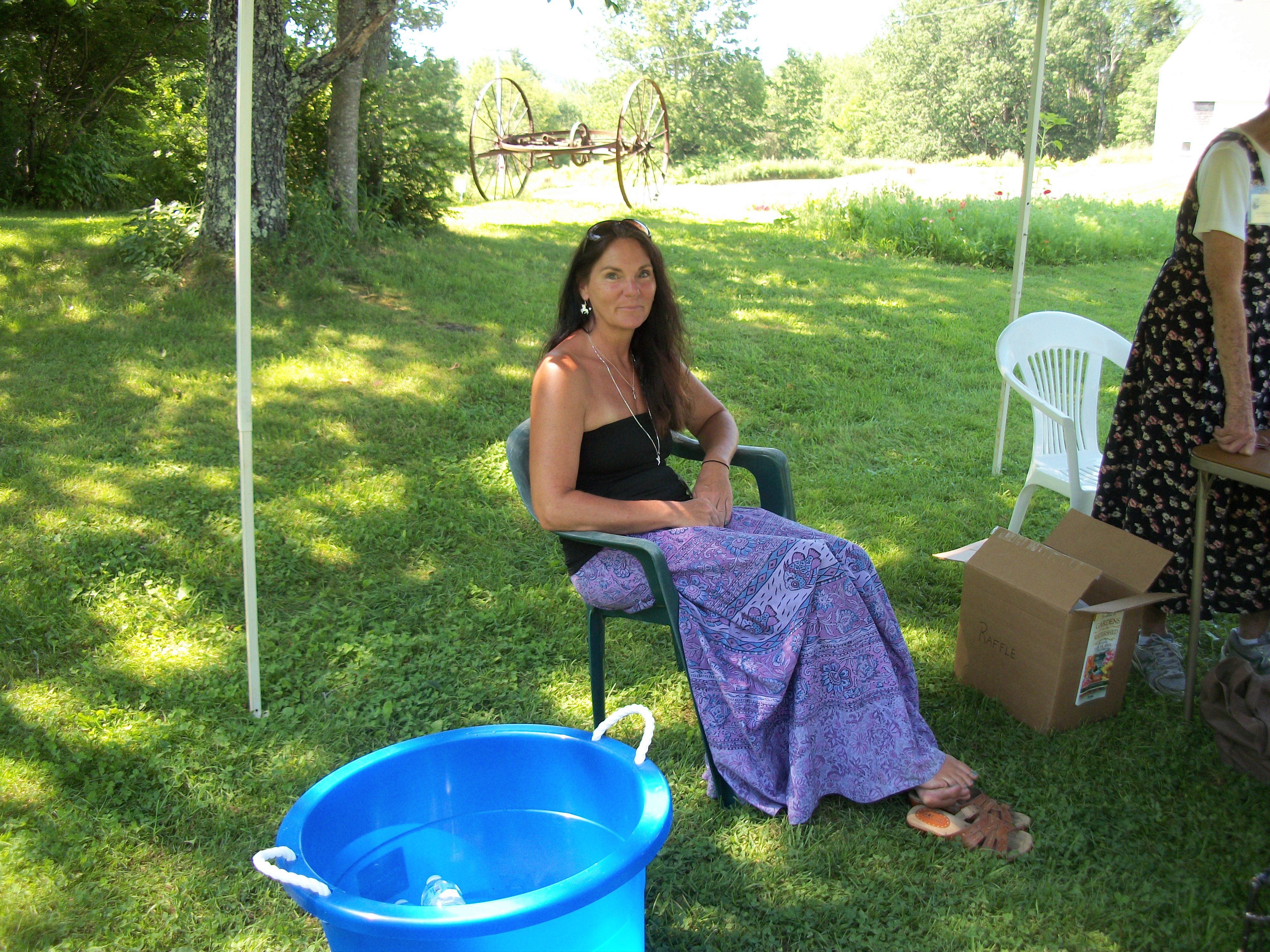
Here’s Tina herself in the volunteer tent:

Marriner, Tina

Here’s some sense of the scale of her sunflower gardens.  There are also beds behind me, including a huge round one filled with sunflowers just about to bloom.

Marriner-Pearse

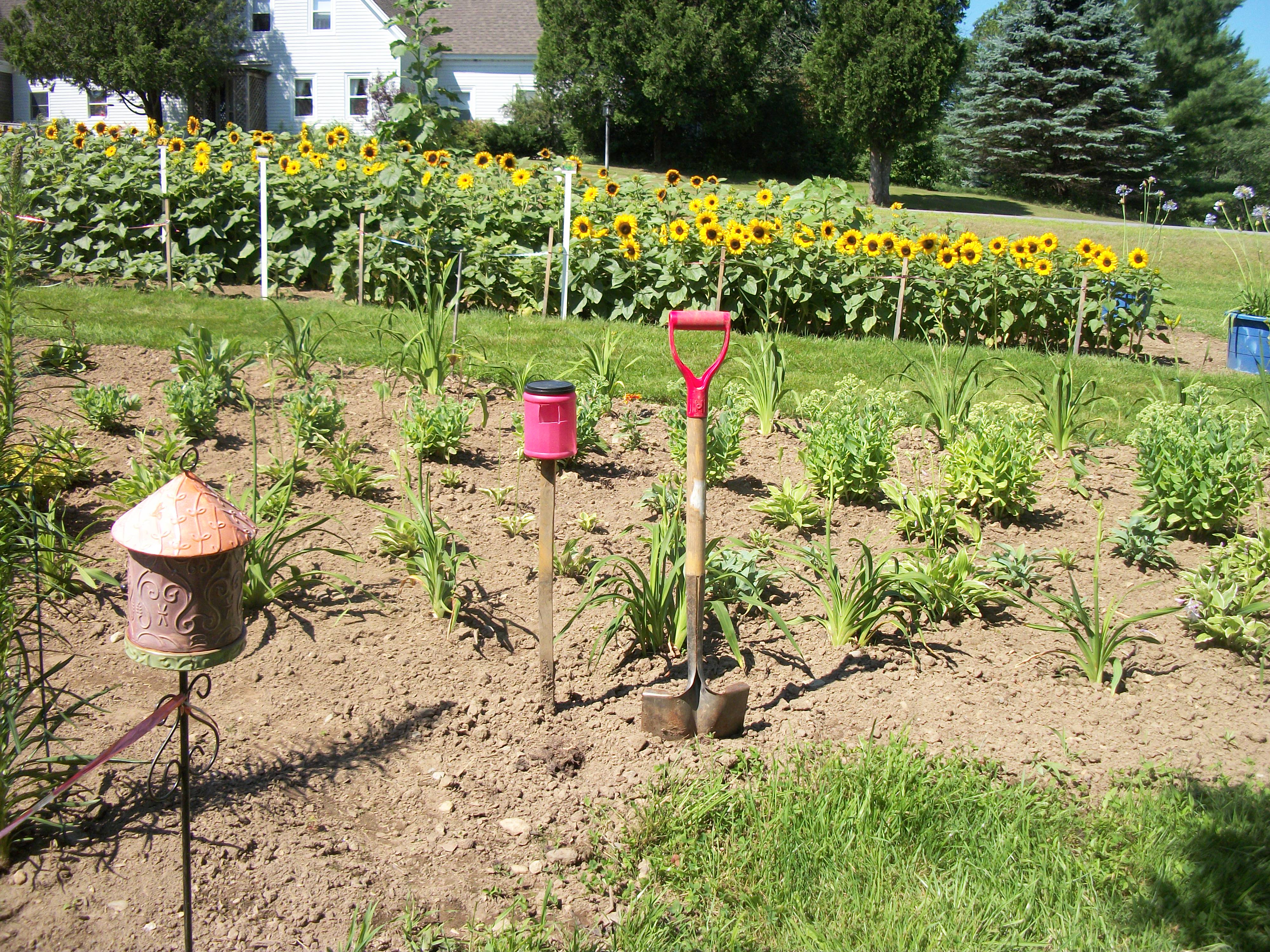
There are lots of deer on Howe Hill.  Tina is using mothballs in small red cans mounted on sticks to discourage them:

Marriner-Pearse 4

Here’s a close-up of the arrangement:

Marriner-Pearse 5


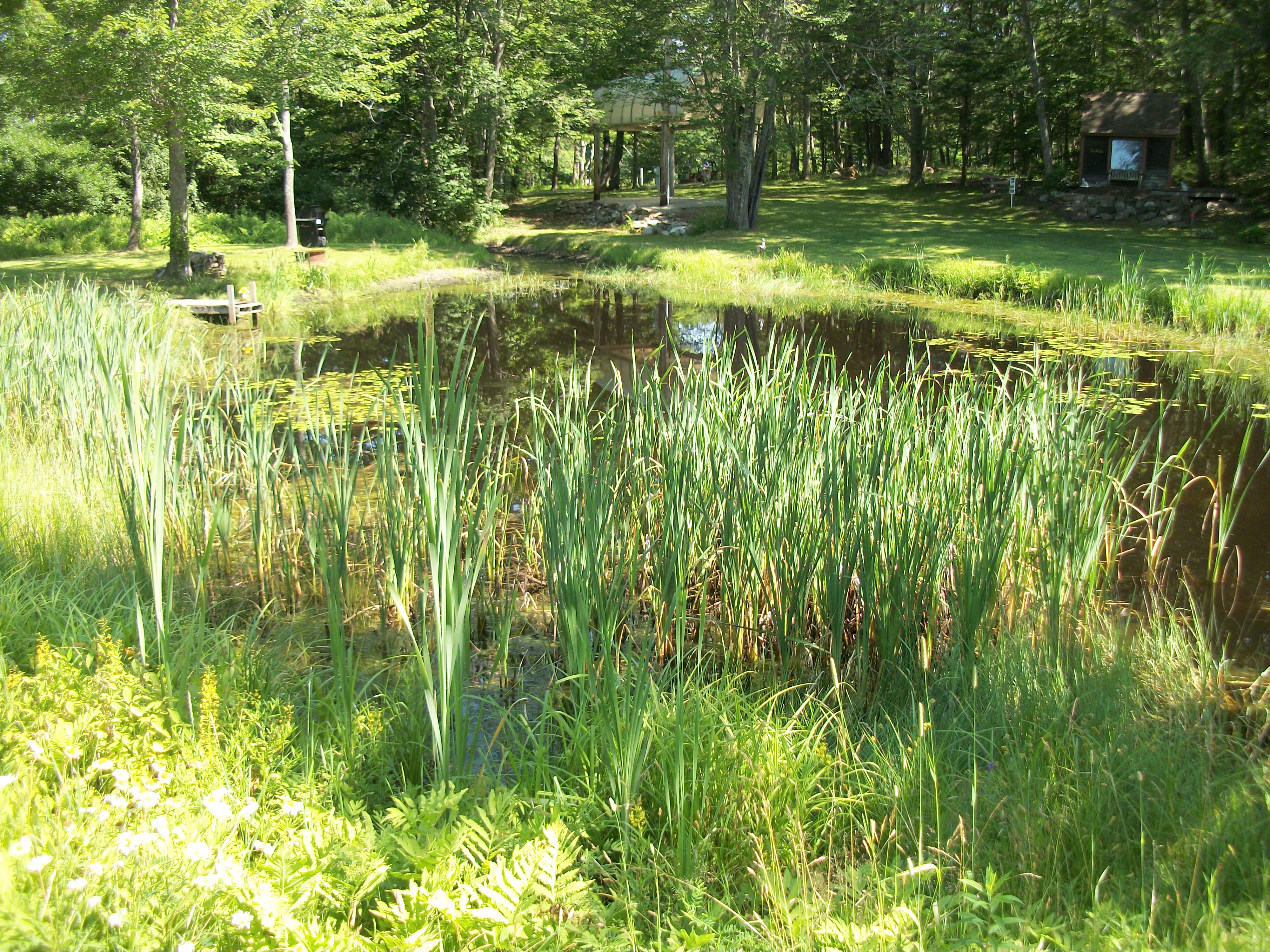
To the left of these beds is a small pond.  Big fat frogs were sunning themselves on the surface.  The house is on the other side of the trees to the right.

Marriner-Pearse 3

Here’s the house–note the solar panels.  We’re seeing more and more of them up here in Maine.

Marriner-Pearse house

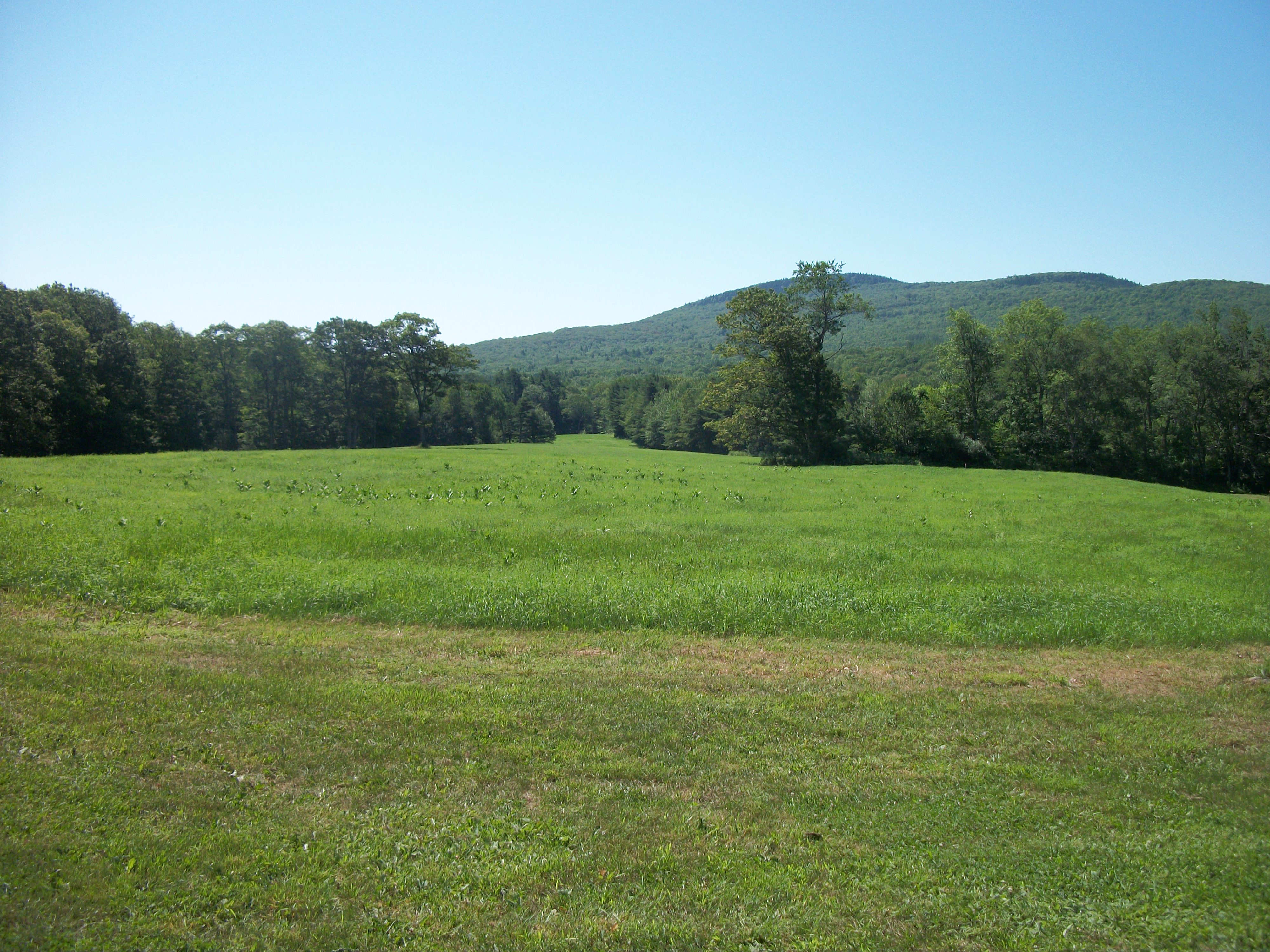
Here’s the gorgeous view from the house:

Marriner-Pearse 6

Look at how Tina is growing Sweet Peas–which are probably my all-time favorite flowers:  Plastic ribbed sheets hung with wire for the peas to climb.

Marriner-Pearse 7

What a treat to see this property.  Tina’s Facebook page is “Tina’s Cut Flowers” if you want to see what she’s up to.

Turkey Tracks: A Mouse in the House!

Turkey Tracks:  July 16, 2013

A Mouse in the House!

A few weeks back, Maryann Enright and I opened the new little grill I bought this year only to find a very extensive mouse nest.

I had used the grill only a few nights earlier, so it always amazes me that a mouse can bring so much material into the grill in such a short time.

We cleaned out the grill and proceeded with dinner.

But a few days later, I realized I had a mouse in the house–a mouse that was traveling all over the house actually–and leaving evidence of its travels.

Off I went to get mouse traps.

Mouse Traps

OK, this job is one that John always did.  And it took me some time and a few scary “snaps” before I finally got one loaded.  It’s been years since I put set, empty mouse traps on our couches back in Virginia to discourage our Springer Spaniels from getting on them.  (That works really well, by the way.)

The next morning, the mouse was dead.

I dealt with that too.

And I reloaded as “where there is one, there is often a family…”

I caught  No No Penny next.  (My female rat terrier.)

She spent the next day plastered to my side like my shadow, having learned some new vocabulary words like “hot” and “bad.”

The lone mouse must have run into the house when the doors were open a lot from the kitchen work.  Or, the night we found the nest…

Turkey Tracks: The Georges Valley Land Trust Garden Tour

Turkey Tracks:  July 16, 2013

The Georges Valley Land Trust Garden Tour:

“Gardens in the Watershed”

Sunday was the GVLT annual garden tour.

The gardens are always along the St. George River valley–which covers a big area.

Giovanna McCarthy and I headed out at 10 a.m., dressed for walking, for heat (hats), and with water and our lunches iced down in a cooler.  It was a beautiful day to explore gardens.

We started just up Howe Hill, where two gardens were located:  the gardens of Tina Marriner and Robert Pearse and the gardens of Eilene and Leonard Ames.  I’m going to do the gardens as separate entries, starting with my “up the hill” neighbors Tina Marriner and Robert Pearse.

We had lunch at Fernwood gardens, a nursery specializing in shade plant.  What a treat to see Fernwood in its new location.  i really enjoyed all the whimsical touches in their gardens.  But more on that later.

Giovanna and I ended the day by stopping by John’s ice cream on Route 3, above the St. George Lake state park.  That’s Giovanna, now hot and tired and ready for an ice cream.

John's Ice Cream

I got peach, and Giovanna got coconut–and boy did that coconut ice cream look good.  John’s ice cream is all homemade.  We each took home two quarts in the cooler.   My son Mike is bringing my two grandsons tomorrow, and they will all be delighted to see John’s ice cream in the freezer:  rocky road and butter pecan!

Turkey Tracks: 100 Watt Light Bulbs vs. (ugh!) CFLs

Turkey Tracks:  July 15, 2013

100 Watt Light Bulbs vs. (ugh!) CFLs

I just bought 20 100-watt light bulbs on Amazon.

They are gone, gone here in Mid-Coast Maine.

I hate the new CFL bulbs.  They don’t have much light.  And it’s a weird feeling kind of light.

So, imagine my delight to see John Moody take on this subject in the Spring 2013 Wise Traditions, the journal of The Weston A. Price Foundation:  “Let There Be Dark:  Turning Off the Dangers of CFLs.”

John Moody is a Kentucky farmer with kids, a “beautiful wife,” chickens, a huge garden, and is an administrator for the Whole Life Buying Club and has written THE FOOD CLUB AND CO-OP HANDBOOK.  In other words, he’s a regular guy who just started poking around to learn about the new CFL lightbulbs that he, too, dislikes.

Moody notes that the phase-out of the incandescent bulbs (the 75 and 100-watts are virtually gone) has destroyed many American businesses.  The CFL (compact fluorescent lamp) is made in China.  And it was “known to have significant issues even before rollout.”

What issues? Oh, there are many.  We can go so far as to say we have been lied to and “managed” with regard to these bulbs.

The CFL bulbs contain mercury vapor–which is a real problem if you break one. 

Breaking one of these in a small closet is a real catastrophe!  “In the hour immediately after each breakage, the team recorded mercury gas concentrations near the bulb shards between 200-800 ug/m3.  For comparison, the average eight-hour occupational exposure limit allowed by the Occupational Safety and Health Administration is 100ug/m3” (http://www.nebi.nlm.nih.gov/pmc/articles/PMC2535642).

Moody notes that Wikipedia states the following:  “Compared to general-service incandescent lamps giving the same amount of visible light, CFLs use one-fifth to one-third the electric power, and last eight to fifteen times longer.”  Moody notes that “unfortunately, researchers and reporters have shown that these claims are at times wildly false and inflated.”

CFLs do not produce the same amount of light–even after they warm up.  It takes two of them to equal the fire-power of the incandescent bulbs.  And they cost more–as much as FOUR TIMES more.  And, that’s the key to understanding why this change has occurred. 

Nor do they last eight to fifteen times longer than the incandescent bulbs.   The act of turning them on and off diminishes their lifespan.  And think how many times you go into a room and turn on and off the light switch before 10 minutes are up:  the bathroom, a closet, the kitchen for a drink, etc.  Only about two percent of these bulbs are recycled.

So, the CFL bulb doesn’t provide light, it takes 10 minutes to warm up to provide its inadequate light, it burns out with use, it’s FOUR TIMES more expensive, and it’s dangerous to dispose of safely.   Hmmmmm.  Do bear in mind this outcome is exactly how the so-called free market works when it is unfettered from the real needs of people and communities.  CFLs bring in more money.  Period. 

In addition, many people don’t like the light–they say it gives them headaches, causes eye strain, etc.  Turns out the coating on the bulb wears thin, which allows a harmful light that causes damage to eyes and skin.  In short, they are unhealthy. 

Amazon’s price is going up as the stock goes down.

Act now.

You might think about writing your congress people too.


Turkey Tracks: Margaret’s Rag Rugs

Turkey Tracks:  July 15, 2013

Margaret’s Rag Rugs


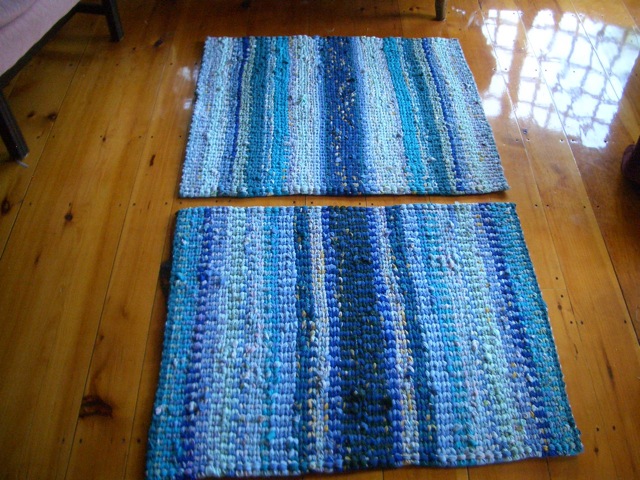
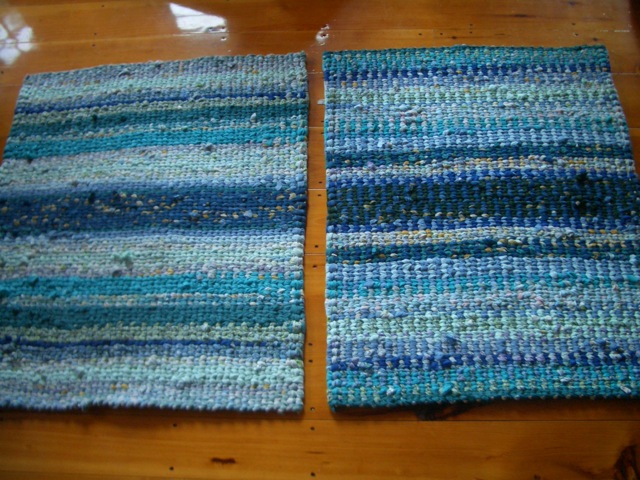
Friend Margaret Rauenhorst just made the two prettiest rag rugs I’ve seen yet.

First, husband Ronald VanHeeswjik made her the hand-held loom–using the original stacked method, not the method that miters the corners which makes the loom totally flat and, we think, harder to handle.  They figured a way to make a stand that allows Margaret to prop it over a radiator as she wanted to stand to make the rugs.  Along the way, they made some other improvements in the loom and in the braiding that I think are really good.

Margaret collected her fabrics from Good Will, The Salvation Army, and local quilting stores with fabric on sale.  Just remember to choose fabrics that don’t ravel easily and that will wash and wear–that probably means cotton sheets, tablecloths, curtains, and the like.  (And wash everything you bring into the house to prevent bedbugs.)  Margaret divided her fabrics in half so that she could keep the rugs similar in color.

First before anything, look at these beauties:

Margaret's Two Rugs 2

The one on the left is made by banding the same colors; the one on the right is more of a herringbone pattern, where you keep switching colors when a color runs out.

Margaret's two rugs

I love the clear colors Margaret has used–the rugs shimmer in the light.  So pretty.  And of course Margaret checked with the bride to see what colors she and her groom liked together before collecting her fabric.

Here’s Margaret braiding/weaving on her loom.  Note how she’s using a dowel to separate the background strands–I like that idea a lot.

Margaret's rag rug frame

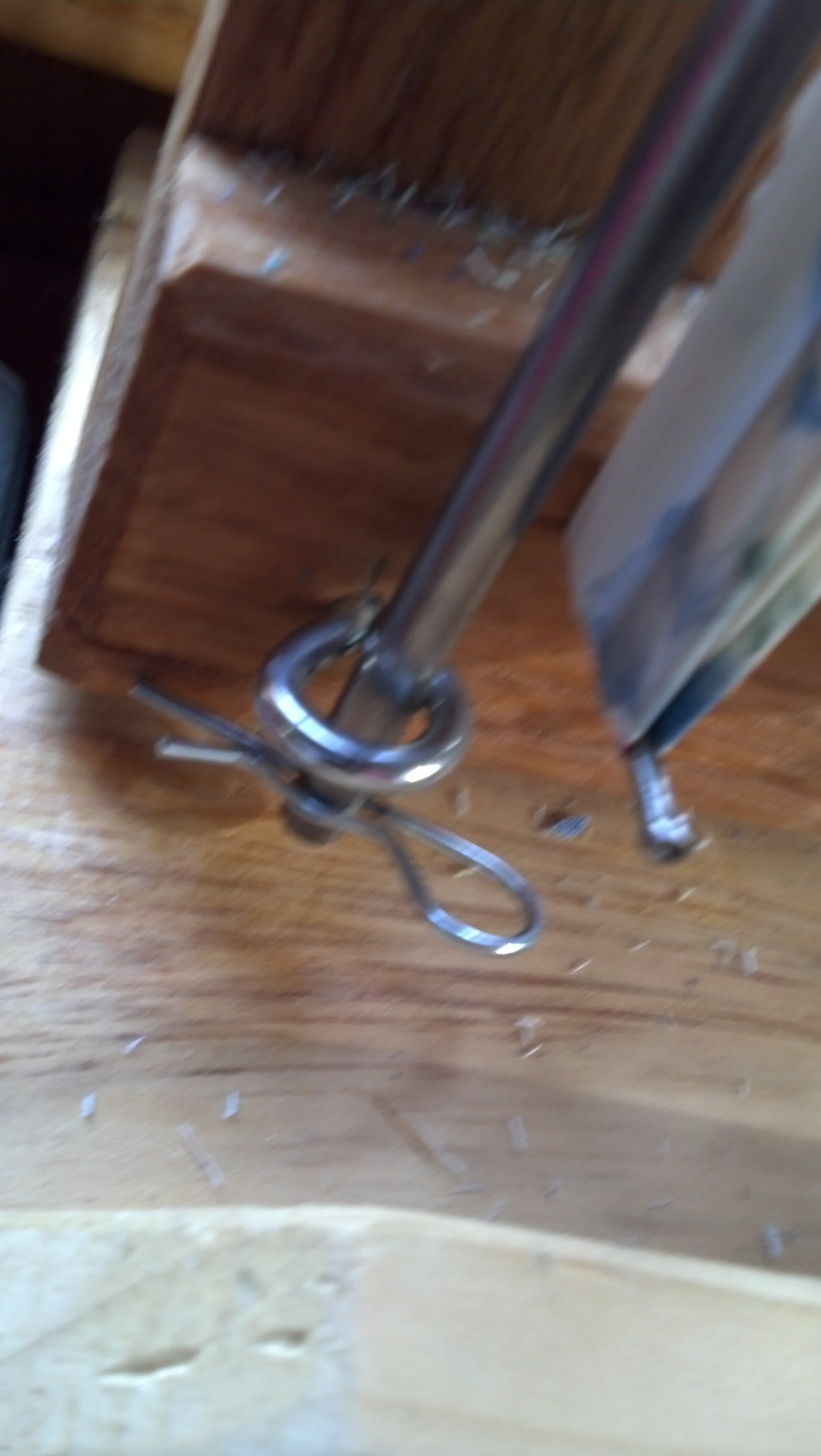
Here’s another improvement:  the side bars slip up and down until you get enough tension on them–and can slip all the way out if you are not careful to grip them when you lift the loom.  Ronald and Margaret solved this issue by drilling a hole in the bottom of each bar and attaching a clip that keeps the bar from sliding.  They’ve promised to drill mine when I finish with the rug that’s on the loom now–which will be a winter project for me maybe unless one of the kiddos or Tami gets interested.

Margaret's rag rug frame catch at bottom

As part of the wedding gift, Margaret put together a little book of all the “sayings” she said ran through her head about healthy marriages and relationships as she stood and braided.  She told me some of these one day when I went to see the first rug.  I thought them wonderful–and still think she should maybe do something more formal with that book.  (The bride loved it–how could she not?) Many of them speak to how lives get woven together as we live:  the bride and groom, of course.  But, also, Ronald, Margaret, and me as they took up this rag rug project.  And, of course, all the lives woven together on this blog.

I can pretty much bet that those two rugs will be with that bride and groom throughout their lives together.

What a gift–on so many levels!

Earlier entries on this blog give more information about a good rag-rug book and how to make the loom.  It’s pretty basic.