Interesting Information: Food is the Best Medicine – YouTube

Interesting Information:  September 25, 2013

Friends sent me this video of Dr. Natasha Campbell-McBride, who is a Russian/British neurosurgeon and nutritionist who is on the cutting edge of understanding the importance of the relationship of gut integrity to being healthy.  I’ve written about her GAPS work many times on this blog.  She is a heroine of mine.

Get a cup of coffee or tea, pull up a chair, and treat yourself to 45 minutes or so of real wisdom.  This woman cured her child of autism and has a clinical practice in Britain where she has cured so many people sick with neurological diseases or food allergies.

There are other, longer videos of her speaking on utube if you want to go further, for longer.  But this video is a very good start if this topic is new to you or if she is new to you.

Enjoy!

Food is the Best Medicine – YouTube.

Turkey Tracks: Bryan, Corinne, Ailey, and Cyanna’s Visit

Turkey Tracks:  September 24, 2013

Bryan, Corinne, Ailey, and Cyanna’s Visit

Family members are asking for pictures of Bryan, Corinne, and the girls during their recent visit to Maine.

We had a lovely time, and were able to do something fun with Ailey every morning of their visit.  Ailey will be three in late November (Thanksgiving baby), and Cyanna is entering her sixth month.  At the end of their week here, when her parents were packing up suitcases, Ailey wanted to know where Lovey’s suitcase was.  And all the way to the airport, she announced occasionally that she wanted to stay in Maine.

By showing you their pictures, I am also showing you some places along beautiful Mid-Coast Maine.

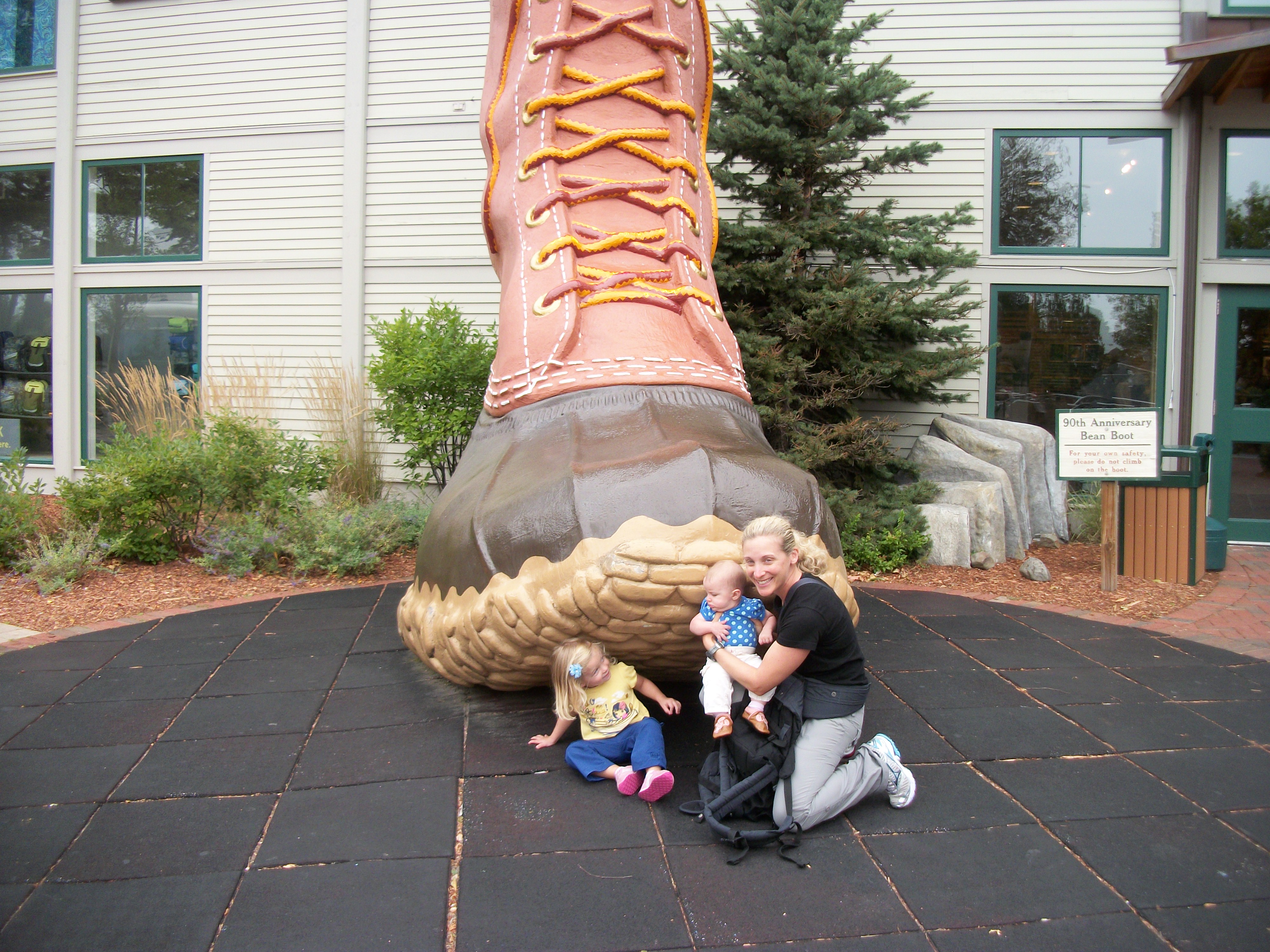
I picked them up at the Portland airport, and we stopped at LLBean to eat lunch, shop, and take pictures around the boot.  Ailey got a new pair of boots–which she loves and used every day.

Sept 2013,The Girls at the Boot, Sept 2013

We’ve had a lot of fog this year, and Ailey had read all about lighthouses and pea-soup fog.  So, we headed off to Owl’s Head Lighthouse, where obligingly, the fog bank rolled right in, setting off the fog horn.  Ailey talked about lighthouses and fog horns for the rest of the week.

Sept 2013, Ailey at Owl's Head Lighthouse

At the top:

Sept 2013, Owls Head

Here’s the fog bank starting to roll in–the view is from the lighthouse steps:

Sept. 2013, Owls Head

So, we walked down to the pebble beach at Owl’s Head–following a path through the woods.

Sept. 2013, Cyanna, Owls Head with Dad

The pebble beach.  Ailey loves to pick flowers.

Sept. 2013, Ailey, Owls Head Beach

On another day, we walked the Rockland Breakwater out to the lighthouse that sits at the end.  The breakwater was built in 1899 and is a mile out and a mile back–or so I’ve been told.  The granite rocks have big cracks between them–so someone needed to hold Ailey’s hand.  But, it was a beautiful morning–we saw dolphins, all kinds of sea birds, a lobsterman working his tracks right next to the breakwater, and lots of happy people.

See the lighthouse all the way at the end?  Ha!  You barely can…

Sept. 2013, Rockland Breakwater 1

Almost there…

Sept. 2013, Rockland Breakwater 2

One morning Bryan and Corinne took the girls to the carriage trail that is the back way up to Mount Battie.  A creek crosses the trail about a half-mile in, and Ailey had a great lot of fun wading through it in her boots.  (I was at our monthly quilt meeting.)

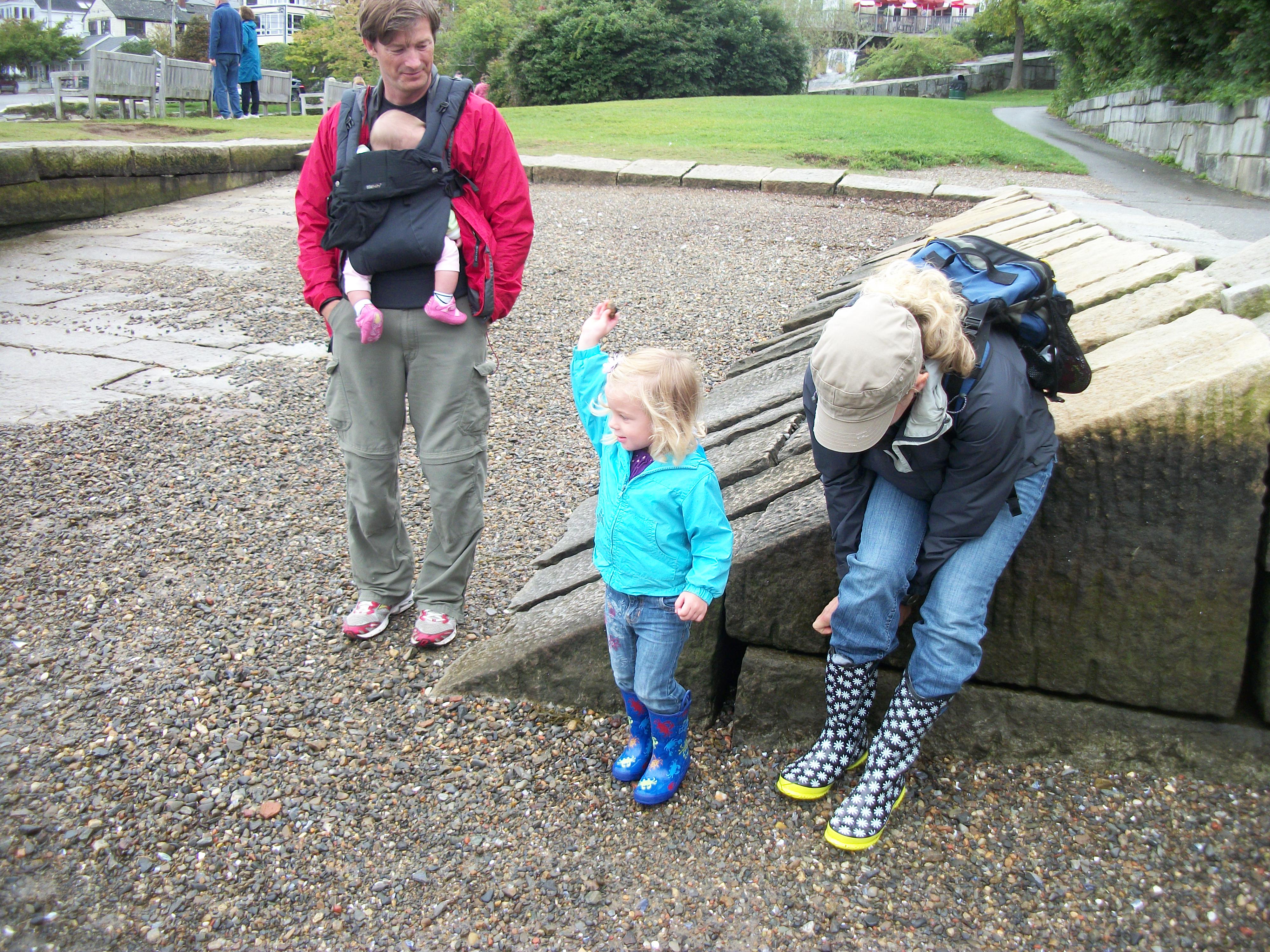
We took some bread to Camden Harbor to feed the ducks one morning–and to let Ailey throw rocks into the water–an occupation of which her Enright boy cousins seem to never tire.

Sept 2013, Camden Harbor white ducks with friend

Mommy found some boots she liked as well in Maine!

Sept. 2013, Harbor

Cyanna is always happy in her baby carrier–and she is “Daddy’s Girl.”

Sept. 2013, Cyanna at Camden Harbor

Here’s a harbor view:

Sept 2013, Harbor view from park

And I’ll print this shot to make the house photos current.  And the first one of Cyanna with Bryan.

Sept 2013, Ailey at Camden harbor

It was a lovely visit!

Interesting Information: A Horror Story

Interesting Information:  September 24, 2014

A Horror Story

I can tell this story now that my niece (and namesake) has delivered her beautiful second son and is home safely.

To tell this story before this event would have scared my niece to death.  Though she had chosen to use a midwife and to have her son in a birthing center, the birth still took place in a hospital.  And hospitals are not places one wants to be in these days.

Heather Ann (Woodward) Nichols, 29, grew up in Owls Head and Rockland.  She met husband Matt in Portland, and they married int he spring of 2011.  Heather went to one of our best state hospitals to have her first baby in early August.

The baby’s room was all ready, the couple was so excited about the birth of their first child, and the birth apparently went well.  Heather had an episiotomy during the birth process.  Heather went home with her daughter, Ruby Ann, and in a matter of hours, starting experiencing a lot of pain.  She went back to the hospital and died a few days later.  She had picked up a flesh-eating bacteria through the episiotomy–A Streptococcus, or necrotizing fasciitis.  These bacterias LIKE living in hospitals.

NPR’s Diane Rehm has had many programs on the overuse of antibiotics over the many years I’ve listened to her radio show.  She had another one last week (September 2013).  But, the herbalist Stephen Harrod Buhner says that it’s way too late now to try to cut back on the heavy use of antibiotics–most of which are used on the animals in our food supply–to promote growth in overcrowded conditions.  The barn door is already open, and we can’t go back.  Worse, there are no magic drugs in the pipeline that can control the super pathogens that we now face.
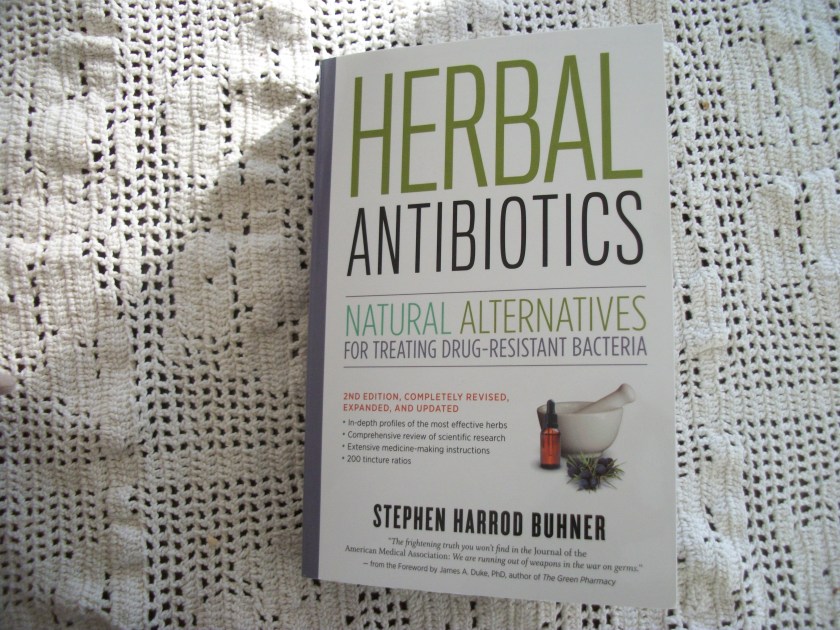
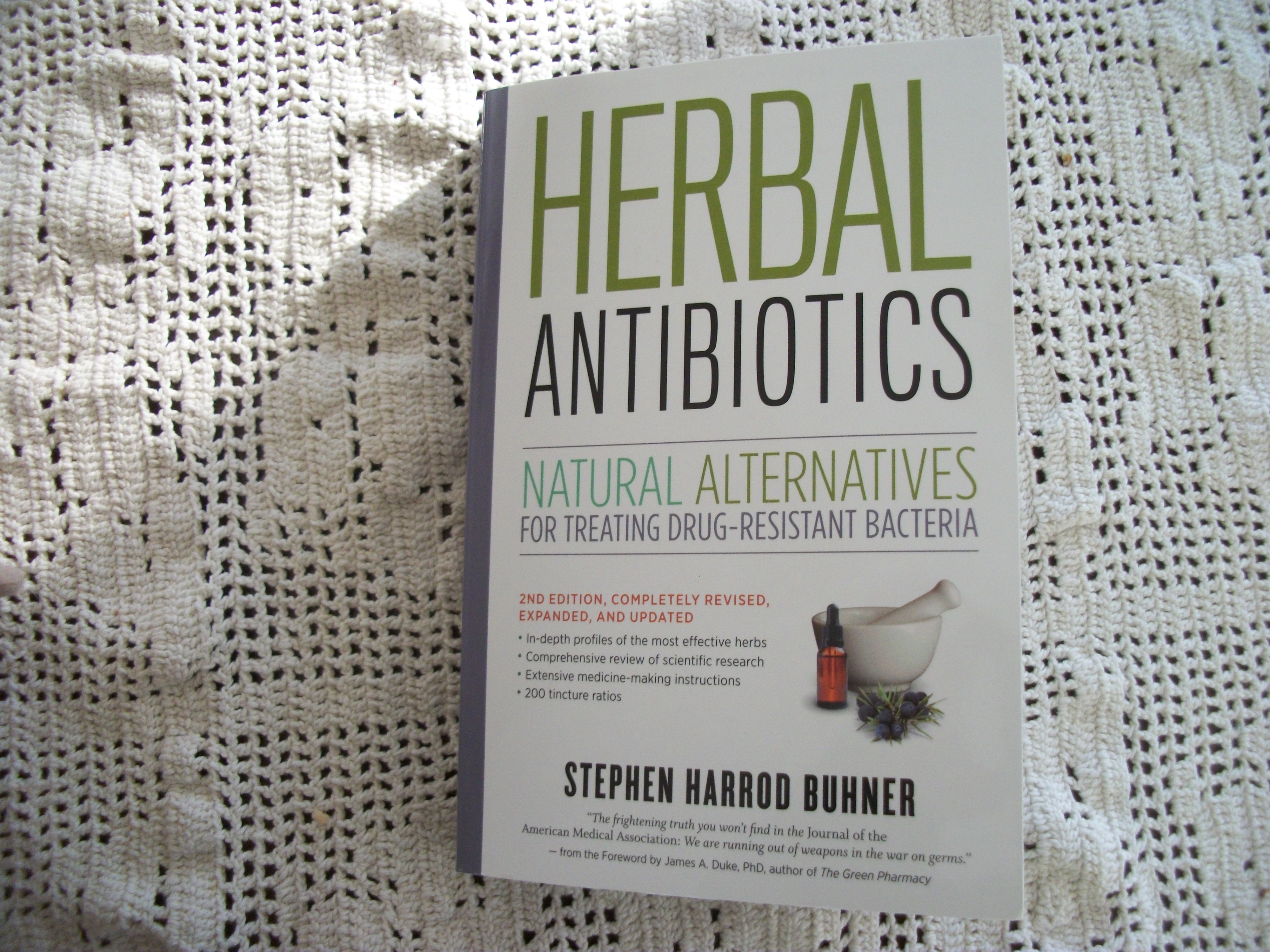
Herbal Antibiotics

Here’s a quote from Buhner’s HERBAL ANTIBIOTICS (13-14):

The thing that so many people missed, including my ancestors, is that all life on Earth is highly intelligent and very, very adaptable.  Bacteria are the oldest forms of life on this planet and they have learned very, very well how to respond to threats to their well-being.  Among those threats are the thousands if not millions of antibacterial substances that have existed as long as life itself.

One of the crucial understandings that those early researchers ignored, though tremendously obvious now (only hubris could have hidden it so long), is that the world is filled with antibacterial substances, most produced by other bacteria, as well as fungi and plants.  Bacteria, to survive, learned how to respond to those substances a long time ago.  Or as Steven Projan of Wyeth Research puts it, bacteria “are the oldest of living organisms and thus have been the subject to three billion years of evolution in harsh environments and therefore have been selected to withstand chemical assault.”

What makes the problem even more egregious is that most of the antibiotics originally developed by human beings came from fungi, fungi that bacteria had encountered a very long time ago.  Given those circumstances, of course there were going to be problems with our antibiotics.  Perhaps, perhaps, if our antibiotic use had been restrained, the problems would have been minor.  But it hasn’t been; the amount of pure antibiotics being dumped into the environment is unprecedented in evolutionary history.  And that has had tremendous impacts on the bacterial communities of Earth, and the bacteria have set about solving the problem they face very methodically.  Just like us, they want to survive, and just like us, they are very adaptable.  In fact, they are much more adaptable than we ever will be.

What does the overuse of antibiotics look like?  Buhner quantifies the overuse in this way (7):

In 1942 the world’s entire supply of penicillin was a mere 32 liters (its weight? about 64 pounds).  By 1949, 156,000 pounds a year of penicillin and a new antibiotic, streptomycin (isolated from common soil fungi) were being produced.  By 1999–in the United States alone–this figure had grown to an incredible 40 million pounds a year of scores of antibiotics for people, livestock, research, and agricultural plants.  Ten years later some 60 million pounds per year of antibiotics were being used in the United States and scores of millions of pounds more by other countries around the world.  Nearly 30 million pounds were being used in the United States solely on animals raised for human consumption.  And those figures?  That is per year.  Year in, year out.

Buhner also notes that most of these antibiotics pass through animals and are excreted into the various waste stream systems where THEY NEVER GO AWAY.  And, “hospital-acquired resistant infections, by conservative estimates, are the fourth leading cause of death in the United States.  And that doesn’t even include the death toll from infectious diseases in general, the same infectious diseases that were going to be eradicated by the year 2000 (11).

Buhner argues in HERBAL ANTIBIOTICS that our only solution is to return to plant-based medicinal strategies.  This book is daunting in its scope.  I feel like I did when I first started reading NOURISHING TRADITIONS with all its information and new ways of handling food.  But, by now I have waded deeply into traditional food ways and into sourcing local foods and into thinking about and researching alternative medical strategies.  So, I will begin with baby steps with finding ways to use herbal antibiotics–remembering that all the most powerful medicines are located in plants, which themselves organize through chemicals.  That would lead to Buhner’s THE LOST LANGUAGE OF PLANTS, which was an eye-opener for me and which I will write about in a separate post.

And, what can we do about this very serious problem of antibiotic resistant diseases–which are part and parcel of ALL the superbugs we have created with our greedy and stupid practices that have ignored the powerful interconnectedness of nature?

Stay out of hospitals if at all possible.  I, for instance, am done with getting blood tests unless I need one because I’m sick.

If you are pregnant, watch the excellent documentary THE BUSINESS OF BEING BORN.  You will be shocked to discover how much of pregnancy and birth in the United States has been colonized by practices located in making money, rather than in practices grounded in science.  And, yes, I will write a separate posting on this documentary.  For the moment, note that something like 85 percent of births across the rest of the world are overseen by midwives–and the survival rates are much higher than those in the US.  Note, too, that most OB/GYNs have NEVER SEEN a natural live birth.  These doctors are highly trained surgeons, and we are so lucky to have them if trouble develops, but have them attend normal births is a super, and expensive, overkill.  So, do some research on your own.  Learn for yourself what the issues are.  And make your birth choices not out of fear, but out of knowledge–like my niece recently did.
Turkey Tracks: Wheels of Mystery Quilt

Turkey Tracks:  September 22, 2013

Wheels of Mystery Quilt

I started this hand project earlier in the summer.  I wanted to take a break from knitting and do some hand sewing at night watching tv shows and movies–that I stream.  I HATE all the noise and confusion of watching tv shows with commercials. It’s just plain painful.

So, this quilt has grown a lot since this picture…

Wheels of Mystery

I’m going to do 9 rows by 11 rows.

And, it’s all out of my stash.  And, scrappy, of course.

This block is an old traditional block–and I love what the curved pieces do when hung together.

See?

Wheels of Mystery 2

They make BIG circles.  Isn’t that cool?

I have a childish delight in this quilt.

I tried to draw the block on QE7, but have been totally unable to do it.

Will try again, as I’d like to play with light and dark borders.  And what would an outer border of 9 patches look like?  Made with these same fabrics…

Blog Readers’ Quilts and Quilting Information: Judith Brill’s Double Wedding Ring Quilt

Blog Readers’ Quilts and Quilting Information:  September 22, 2013


Judith Brill’s Double Wedding Ring Quilt


Double Wedding Ring, Judith Brill

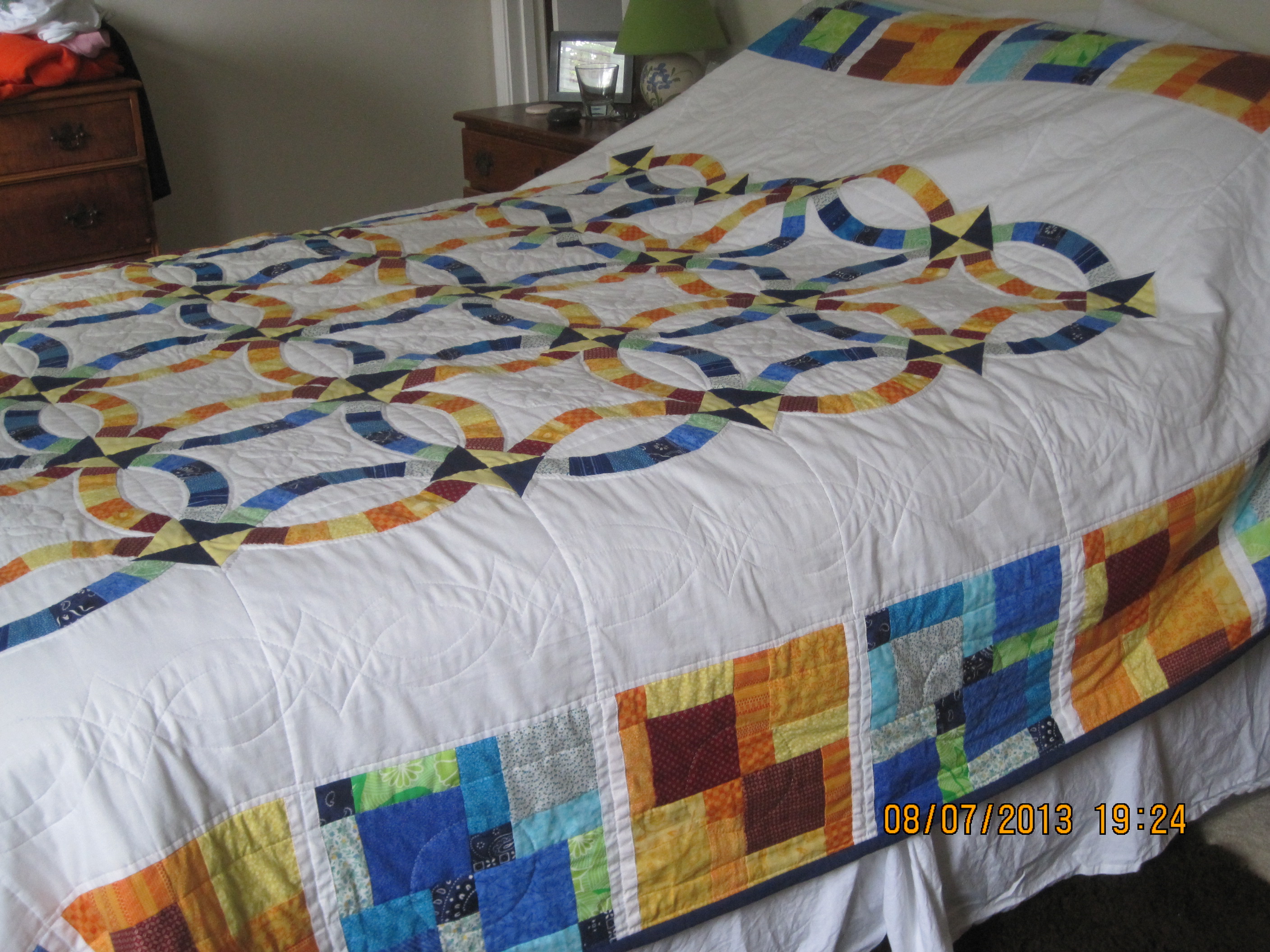
Blog reader Judith Brill sent me this picture of the Double Wedding Ring quilt she made for her daughter’s wedding.

Wow!

I love the contemporary nature of this quilt.  Look at the very interesting border.  And look at how she has hand quilted the wedding ring motif down the side–in the white just above the border.

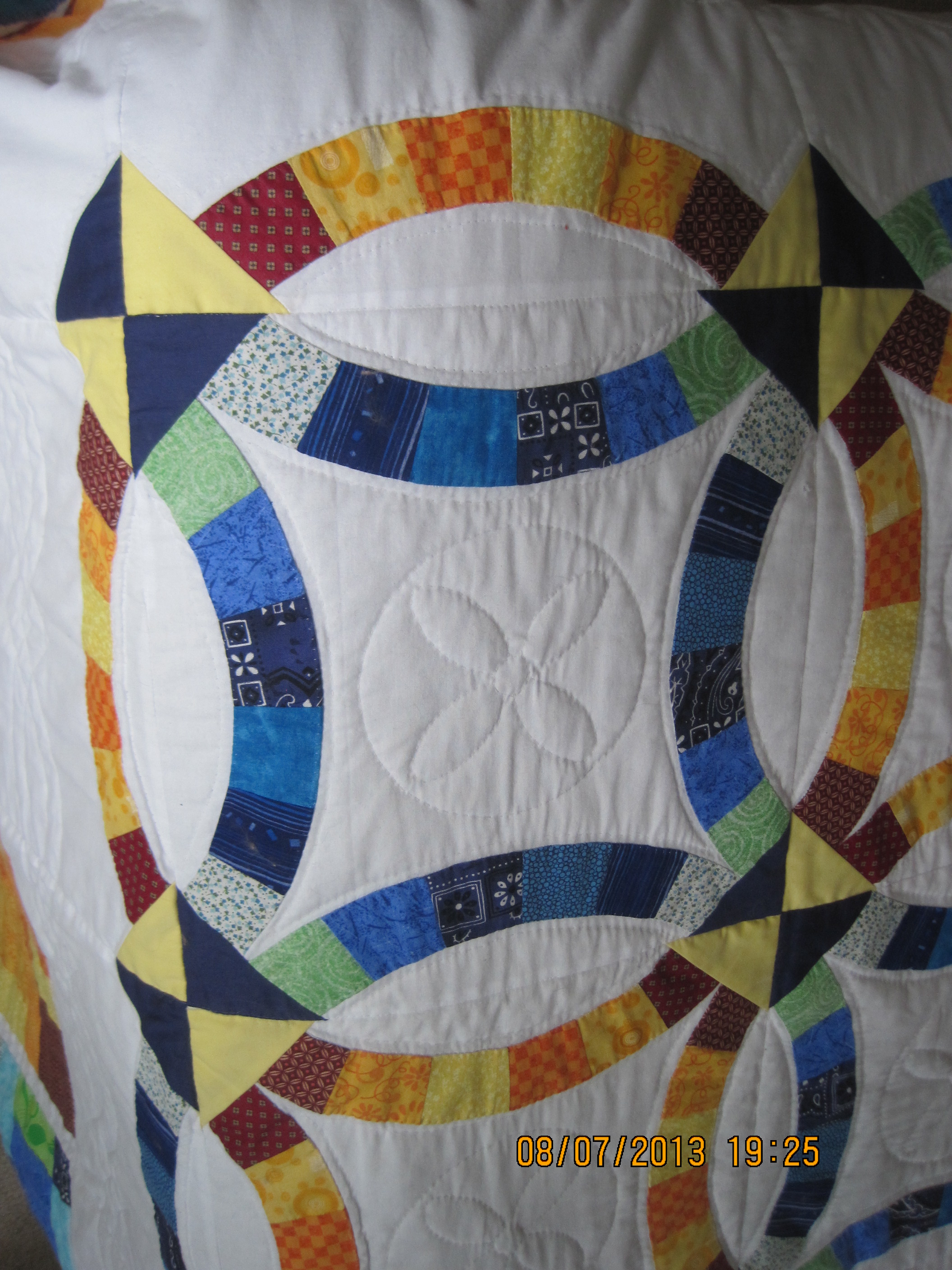
Here’s a close up of the wedding ring block:

Double Wedding Ring 4, Judith Brill

And, more of the hand quilting:

Double Wedding Ring 3, Judith Brill

And, more of the hand quilting in the border:

Double Wedding Ring 2, Judith Brill

Really, this border is quite amazing.  I’ve never seen anything like it on a double wedding ring quilt, and I love it.

I also really like the contemporary use of colors in the wedding rings.  I think Judith said her daughter helped her pick out the colors.

GO JUDITH!

And thanks for reading the blog and for sharing your beautiful quilt!

Turkey Tracks: September Update

Turkey Tracks:  September 22, 2014

September Update

Late August and ALL of September are really busy months for me in Maine.

First of all, son Bryan often comes for his birthday, which is September 11th.  Bryan and Corinne like to come visiting in the early fall as most of the tourists have gone home or are taking a breather before the fall foliage gets rolling.  And, it’s cooler.

Second, in Maine, September is the red month (tomatoes), not July, as is true for regions south of us.  Plus, the gardens are cranking out food at alarming rates.  So I am busy blanching, roasting, drying, lacto-fermenting, and generally reveling in all the bounty of our earth in Maine.

Third, MOFGA, the Maine Organic Farmers and Growers Association fair happens in the third weekend of September.  This fair, also known as the Common Ground Fair, is one of my most favorite things to attend all year.

Fourth, Coastal Quilters starts its new year in September.  I agreed to be President this year, so I’ve had a fair amount of organizing and reviewing to do to get back up to speed.  We had a terrific organizational meeting September 14th, and we’ll have a really good year this year I think.

Fifth, I start the process of putting the yard to bed for the winter.  The flower pots are played out.  The wind chimes have to be taken down.  The hummers are gone.  The porch furniture and kayaks have to be stored.  The chickens have to be winterized.  And, the garden put to bed with the new garlic planted for next year.  I have LOVED having that garden fenced all this summer–especially since I never was able to keep the hens I have now inside their pen.

So….I will do some separate entries on some of these events.  But I will leave you with some fun pictures taken more or less in late August/early September.

Susan McBride of Golden Brook Farm grew these awesome cherry tomatoes.  I experimented with drying these to see which ones were the best.  Hands down, the purple heritage cherry tomato was.  They are like eating candy–and I know I will enjoy having them on hand all winter when the snow is flying.  That bag of highly colored bits is corn from Margaret Rauenhorst and Ronald VanHeeswijk.  I’m going to grind it and make cornbread with it any day now.

Golden Brook cherries

I planted random squash seeds in the blue tubs this year.  One is growing a Hubbard Squash–which delights me so much.  I will go ahead and collect the squashes as soon as it stops raining and put them into the garage to “sugar off” for a bit.  They do better when they have a bit of time to cure.  The Blue Hubbard squash can get HUGE–and is a really great all-purpose squash.  It’s delicious to eat and makes great “squash” pie too.

Hubbard Squash

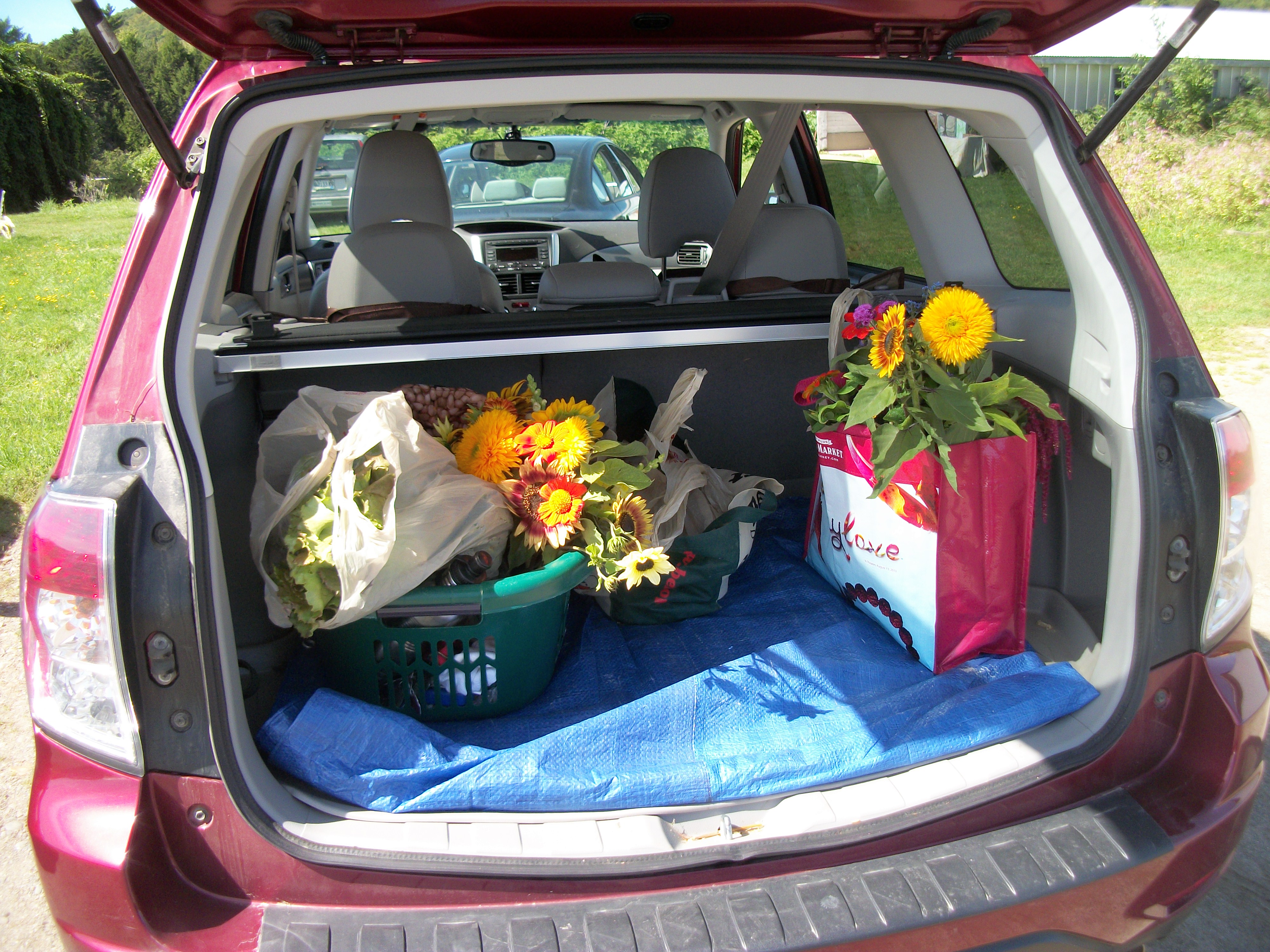
Here is a typical Hope’s Edge pick-up day–with Giovanna McCarthy.  We have sacks of food and flowers!

Hope's Edge Flowers and Food

I found this picture on John’s computer before we retired it.  It’s one of my very favorites.  He really had such a great eye for a good picture.  LIkely I’ll make some cards from this picture…

Hope's Edge

Turkey Tracks: Summer Salad

Turkey Tracks:  September 3, 2013

Summer Salad


August is not a great month for tender leaf lettuce.  It’s not a great month for any lettuce for that matter.  It’s too hot.  This year has been a bit different–with all the coolness and rain, some of the leaf lettuce has survived.

The wonderful Melody Pendleton came and bailed me out with painting tasks–which I hate and which she likes to do.  She does such beautiful work.  She brought me this gorgeous lettuce from her garden one day.  (I’ve replanted and my new crop is coming along.)

I made a gorgeous salad with her lettuce one day for lunch.  I’ve been so hungry for sautéed zucchini all summer.  So I sautéed some for this salad–and broke a fresh, soy-free egg into it at the end.  I didn’t add cheese as to the pan as I had some fresh goat cheese.  The last of the grated carrot/kohlrabi/corn/mustardy and garlicky dressing went on the side.  And, some of the Sun Gold cherry tomatoes from the garden.  And I had a very quick feast.  Thanks to Melody!  And the garden and the earth and the summer…


Summer salad

The garden is steadily producing.  Here’s a morning’s offering:

Garden haul

And look at the cherry tomatoes I’ve amassed.  I have enough to start a flat to dehydrate, though I’ll let them get a little riper on the counter first:

Summer Kitchen Counter, Aug. 2013

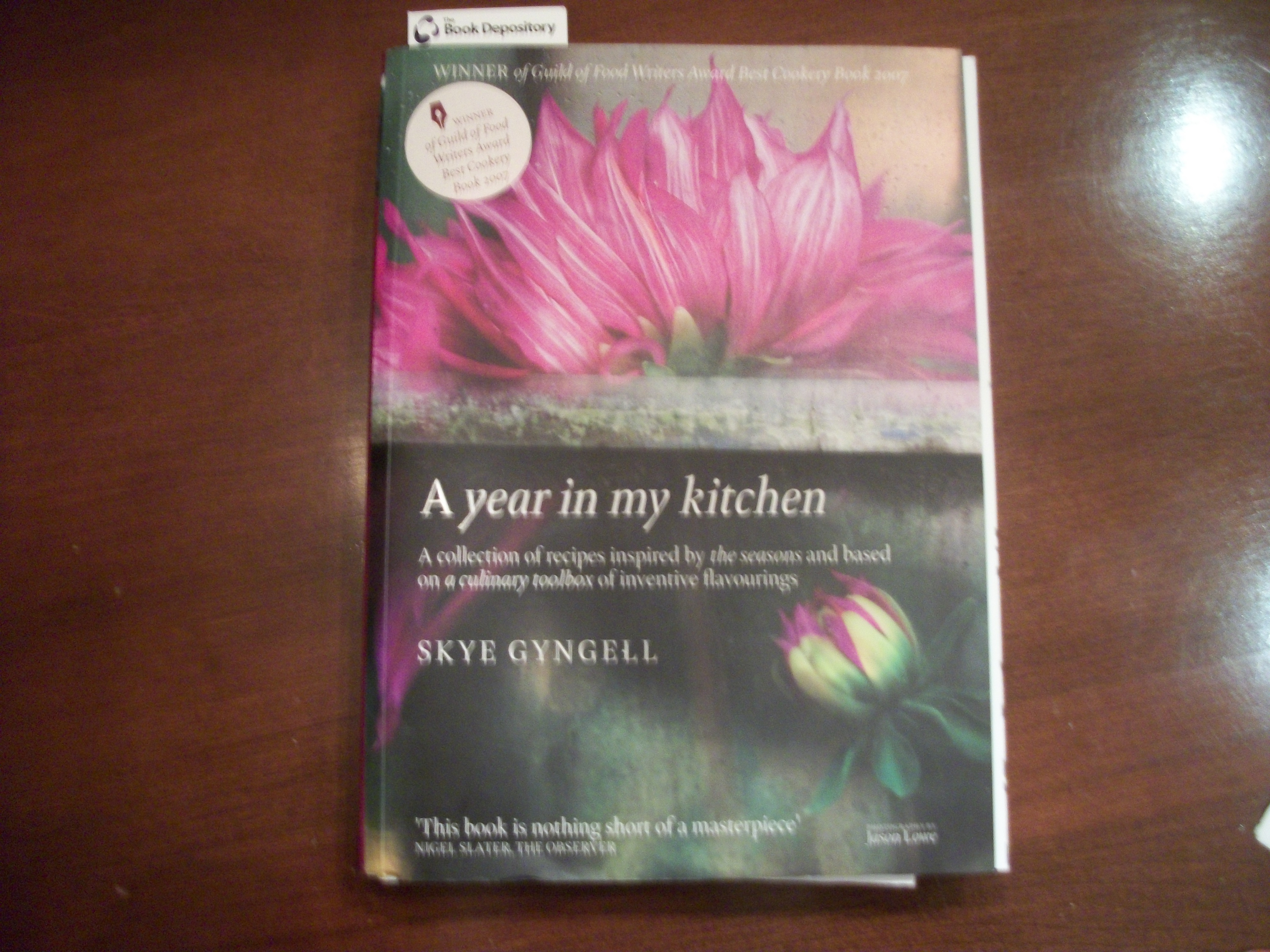
See those saladette tomatoes at the back of the cherries?  I got those from Hope’s Edge CSA.  And Melody brought me some, too.  They are TERRIFIC roasted in the agro/dolce style.  I learned that from Skye Gyngell’s book A Year in My Kitchen.  Skye takes the notion of having “assets” around the kitchen to whole new levels.  Thanks to Tara Derr Webb, of the Farmbar and Deux Peuces Farm in Charleston, SC, and Awendaw, SC, I have this book in my kitchen.

A Year in my Kitchen

Here’s a very bad picture of the saladettes roasted.  Agro-dolce means sweet/salty.  So, basically, you sprinkle a bit of sugar, a bit of salt, grind over some pepper, and SLOW, SLOW roast at your oven’s lowest heat–which can take 3 or so hours.  OK, if you get in a hurry, you can roast them quicker, and they are still delicious.  They’re good hot or cold.  Rose Thomas, La Dolce Vita Farm, roasts these guys in her wood-fired oven, and oh my gosh–the smoky taste from the wood fire is heavenly.  I’m planting more of these guys next year.


Roasted Saladette Tomatoes

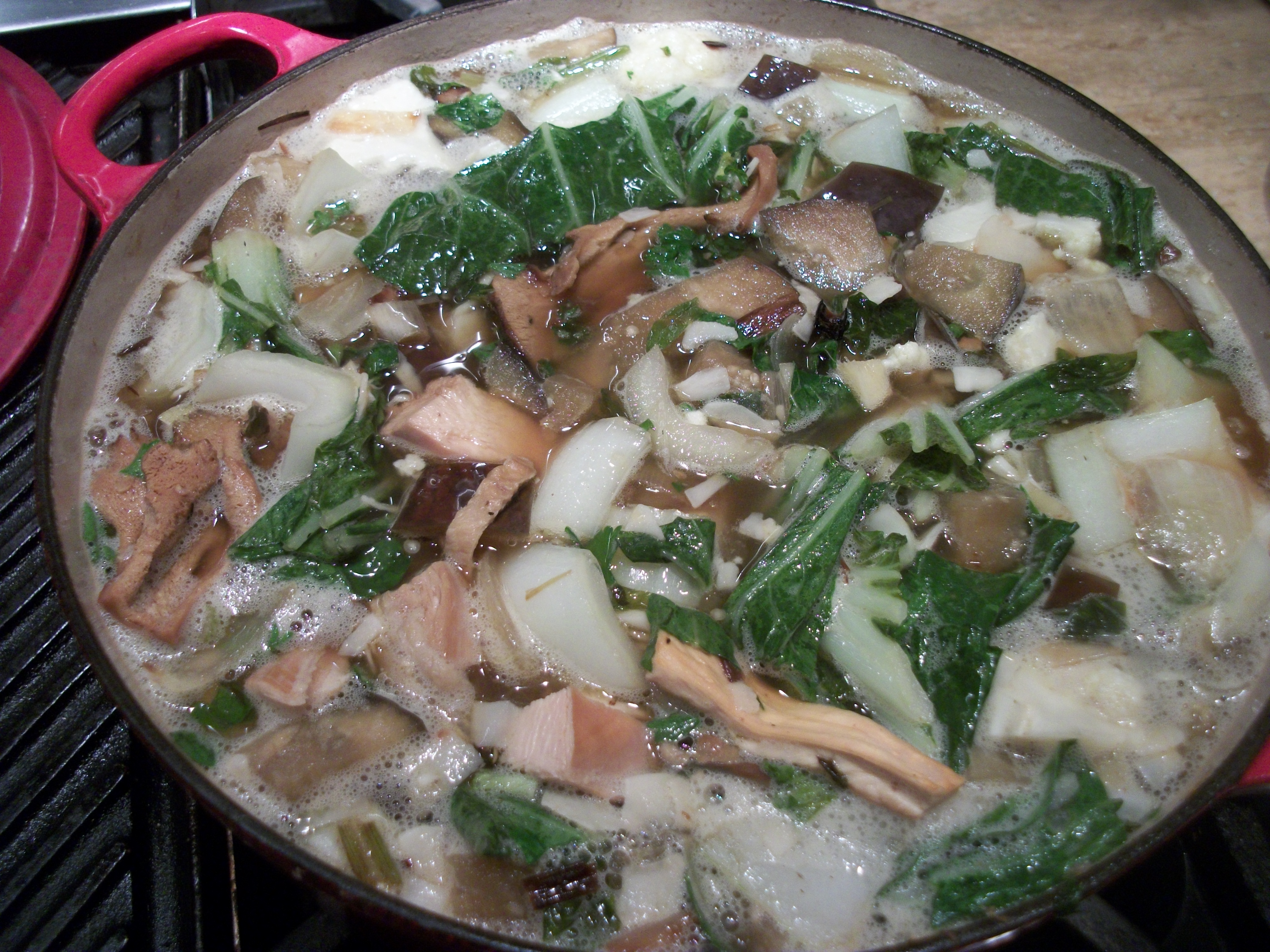
With all the vegetables needing to be used, I made a “deep summer soup” one day.  I had some frozen bone broth as a base, so I just sautéed veggies and lots of garlic–some ginger as I had a Bok Choy cabbage–and added some dehydrated mushrooms from a year or two ago.  I threw a handful or two of short-grain brown rice into it as well.  Once it’s cooked, or reheated, I spoon some of my sauerkraut into it and add a dollap of fermented piima cream.  It’s delicious and so good for you with the rich bone broth as a base.

Deep summer soup

I know summer is over, but I can still feel the summer love.

Turkey Tracks: Easy, Fun Knitted Dishcloths

Turkey Tracks:  September 3, 2013

Easy, Fun Knitted Dishcloths


At our (mostly) annual auction, one of Coastal Quilters members always gives a stack of knitted cotton dishcloths for the Silent Auction.  They are beautiful, uniform, and wash and wear like iron.

I always buy as many as I can for gifts.  Both of my daughters-in-law love these cotton knitted squared as much as I do.

“They’re easy,” my friend always says.  she got the pattern from Cut ‘N Sew Fabrics and Yarn, Globe shopping ctr, Littleton, NH.

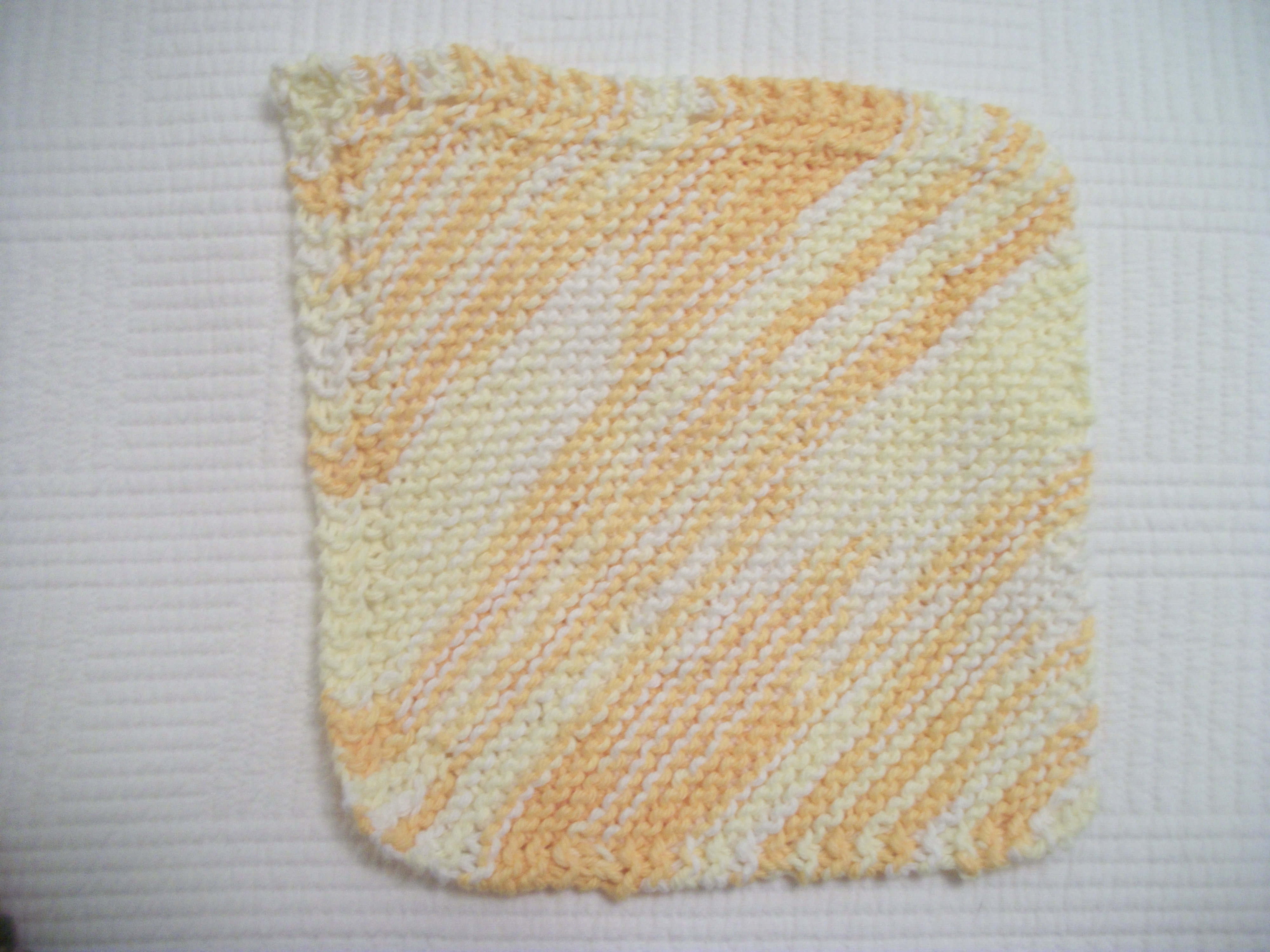
Now, don’t laugh, they are easy once you master the “yarn over” stitch–which I always seem to get garbled in my head.  Here’s my first one–made with size 7 needles, I think.  The best I can say is that it’s serviceable…  (I used Peaches and Cream varigated cotton yarn–which needs to be used up and gotton out of my yarn stash.)  I thought the knitting was too loose…  We won’t even talk about the border the YO stitch forms…

Dishcloth 1

Here’s the second one–which is much better, but knitted with much smaller needles (1’s?), which made it really tight and way too small.  (I was starting to feel like the Three Bears story…)

Dishcloth 2

Here’s the last one–and by now I felt at ease and as if I could crank these babies out.  I forget, though, what needle I actually used.  Maybe a 3?

Dishcloth 3

Best of all, the yarn stash went down by three balls!!!

Here’s the pattern:

Row 1  K2 YO K1

Row 2  K2 YO K2

Row 3  K2 YO K3

Row 4  K2 YO K4

Continue to increase in this manner until there are 50 sts on needle.  (If you want your cloth smaller, 45 sts will do, or if you want it larger, go to 60 sts)

Decreasing:

Row 1 K1 K2tog YO K2tog K to end of row

Continue to decrease in this manner until there are 5 sts. on needle.  Next row:

K1 K2tog YO K2tog (four sts remain)

K1 K2tog K1 (three sts remain)

Last row:  bind off last three

Weave in loose ends.  Happy dish washing!


Interesting Information: Interview: Reza Aslan, Author Of ‘Zealot’ : NPR

Interesting Information:  September 3, 2013

Historical Jesus

Yes, I’ve been listening to a lot of NPR, especially FRESH AIR, as I’ve been cutting up my quilting stash.  I am happy to report that I am fifteen minutes away from being done with that task.  YEAH!!!

Terry Gross interviewed Reza Aslan recently about his book on the historical Jesus–who was, apparently, a Zealot, or part of an historical movement that sought to make radical change in his world.

Aslan, an Iranian, came to the US when he was around 16–escaping from Iran with his family.  He converted to Evangelical Christianity at 16 and set off on a spiritual and educational journey that has filled his life.  From Wikipedia:  Aslan holds a Bachelor of Arts degree in religions from Santa Clara University, a Master of Theological Studies degree from Harvard Divinity School, and a Master of Fine Arts degree from the University of Iowa‘s Writers’ Workshop, where he was named the Truman Capote Fellow in Fiction. Aslan also received a Doctor of Philosophy in Sociology, focusing in the history of religion, from the University of California, Santa Barbara.[7][8][9] His dissertation was titled “Global Jihadism as a Transnational Social Movement: A Theoretical Framework”.[10]  

Aslan is now a professor of Islamic Studies at the University of Iowa.  Sometime before Harvard, he returned to being a Muslim.

Whatever you think of Aslan or the historical Jesus (versus the spiritual Jesus of metaphor),  Terry Gross’s interview is fascinating from many angles.  You can hear the interview and read all the comments following it at this url.   And, yes, there was a flamboyant Fox interview that went virile–where the interviewer was trying, unfairly, to create a sensational event and where Aslan made more claims about his historical credentials than maybe could be made.  (But blended degrees like Aslan has can contain a ton of historical work–which criticizers might not fully realize.)

Have fun.  I think the book would be an interesting read.  If only my read pile wasn’t so out of control…

Interview: Reza Aslan, Author Of ‘Zealot’ : NPR.

Interesting Information: Paying Till It Hurts: Why American Health Care Is So Pricey : NPR

Interesting Information:  September 3, 2013

PAYING TILL IT HURTS

Terry Gross of the NPR Program FRESH AIR interviewed Elizabeth Rosenthal about the series of articles she is doing for The New York Times on our very broken medical system–a system which is overcharging patients and which has no rational, controlling mechanism to keep costs (or to provide science-based good medicine) within reasonable levels.  Reasonable here can be determined by comparing US health care costs to the rest of the developed world.

Terry’s interview with Rosenthal is so interesting.  And in the following link, you can find that interview AND links to Rosenthal’s pieces on colonoscopies, joints, and childbirth in the US.

Don’t miss this one!

Paying Till It Hurts: Why American Health Care Is So Pricey : NPR.