Turkey Tracks: August Dinner

Turkey Tracks:  August 25, 2013

August Dinner

On Friday I pick up my produce from my CSA (Community Shared Agriculture).  We CSA members are now at the point where we are getting A LOT of food.  As I put away the food, I isolated these ingredients for my supper.

I LOVE Romano green beans.  They are my favorites.  (Well, ok, I like the haricot verts, too.  And the Dragon’s Tongue.  And the Providers.)  After the CSA, I came home and made a fresh bacon, lettuce, and tomato sandwich–on gluten free bread–Sami’s–and saved the bacon grease.  Lard is really good for you, actually.  By keeping the grease on the stove from lunch to dinner, I was creating an asset to use later.

That purple veggie is a kolhrabi.  They also come in green.  They’re good grated or sliced thinly and sautéed.  They’re nice, too, diced and thrown into a lighter summer veggie soup.

Aug. 2013 dinner 11

First, I cut up the eggplant, put it into a colander over a bowl, and salted it.

Next, I made a fresh salad–made by grating the kohlrabi and some of these tender new carrots.  I added in some corn I took off the cob a few days ago–I always cook extra corn and reserve the kernels for salads this time of year.  Again, that’s creating an asset for later.  I shaved in some parsley.  And over it all, I poured a mustardy, garlicky vinaigrette.  I keep that kind of salad dressing all made out on the counter–where it just gets better and better.  It’s another asset.  The salad went into the frig to mellow out.  (It is good for several days.)

Aug. 2013 dinner, 2 Carrot, corn, kohlrabi, parsley mustardy garlic dressing

Next, I washed and snapped the Romano beans and put them into a saucepan with some of the bacon grease, water, and some salt.  I wanted them “Southern Style”–or cooked until soft.
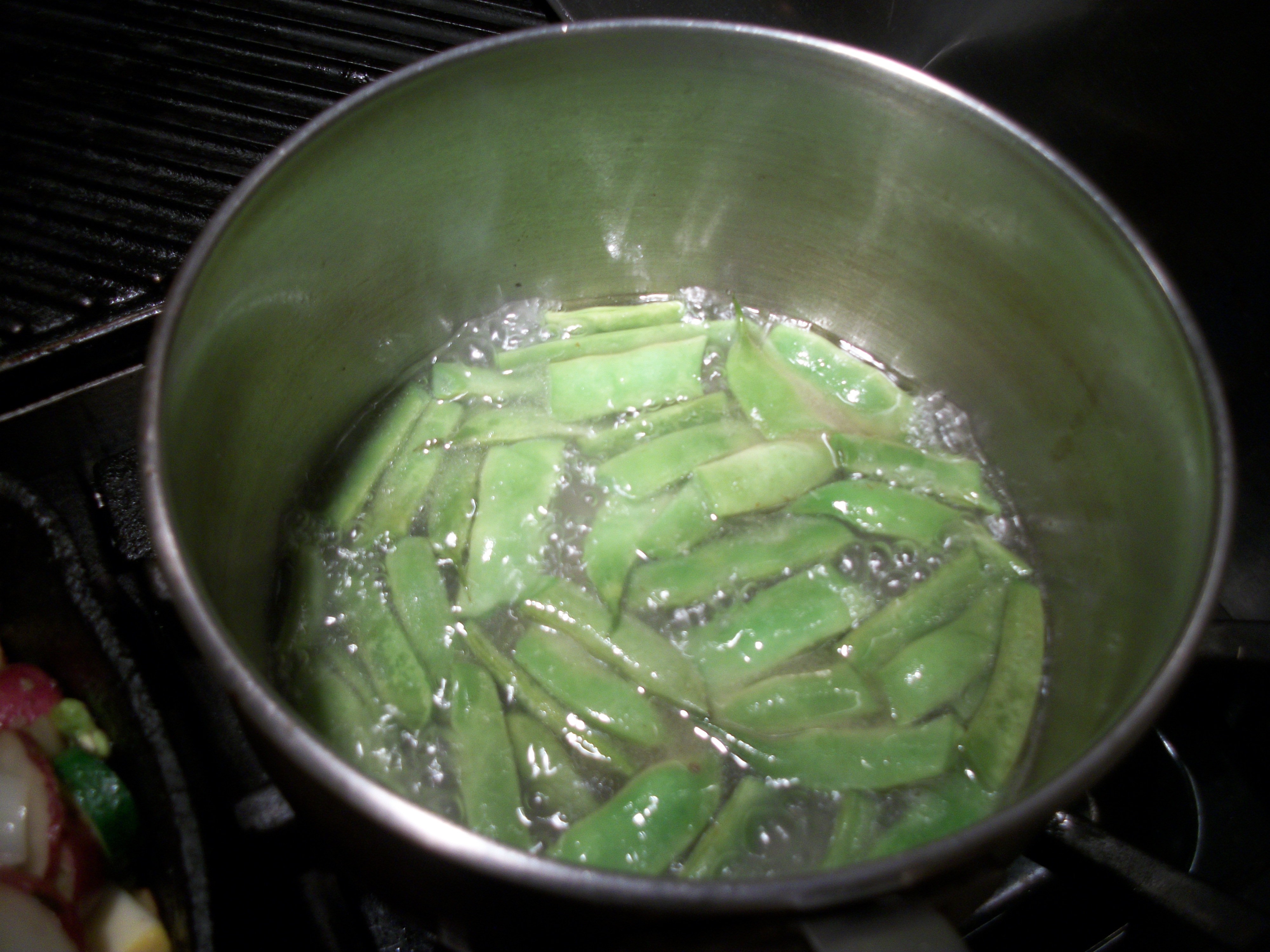
aug. dinner 5

Then, I cut up all my lovely vegetables and put them into the cast-iron skillet where I fried the bacon.  i also added a lump of unrefined coconut oil, which is so, so good for you and very, very stable–unlike frying with olive oil.  (I reserve olive oil now mostly for eating on salads.)

Aug. dinner 3

What you see in this pan is the following:  the eggplant, the fresh onion, yellow squash, zucchini squash, some fava beans i soaked in salted water and peeled (assets, yes, bukt boy are they a lot of work), and some sliced new potatoes.  Add some good sea salt.

When the veggies had cooked down a bit, I added the tomato and some basil, some chive, and some mint from the garden.  Maybe some tarragon, too.  (An herb garden is a major asset.) I don’t know what it is about mint in this kind of dish, but it’s delicious.  See the color developing?

Aug. dinner 6

It’s your call as to when you think the dish is ready.  Here’s how far I took this batch–and the flavor was deep and rich and gorgeous.  I shaved in some parsley to finish it.

aug. dinner 7

Meanwhile, I had put chicken thighs into the oven–dressed with butter and lemon slices.

Aug. dinner 9

When the chicken was done–I poured myself a glass of orange/cucumber/lemon/rosemary infused water.  (You can see I need to make more sauerkraut–which is chock full of enzymes and probiotics.  I try to eat a little every day of one of these lacto-fermented veggie concoctions.)

Aug. dinner 8

And here’s my plate of beautiful, beautiful summer food:

aug. 2013 dinner 12

I should have added one of the lacto-fermented dill pickles i just took out of the crock and refrigerated.  The roasted lemon slices carmelize, become sweet, and are delicious.

Best of all, I will have at least two meals to reheat and enjoy–or some fun foods to have for lunch.

And, look, folks.  Not a recipe in sight.  This kind of cooking is my most favorite.  You cook, simply, what is in season because that’s all you need to do.  The fresh, wonderful food will do the rest for you.
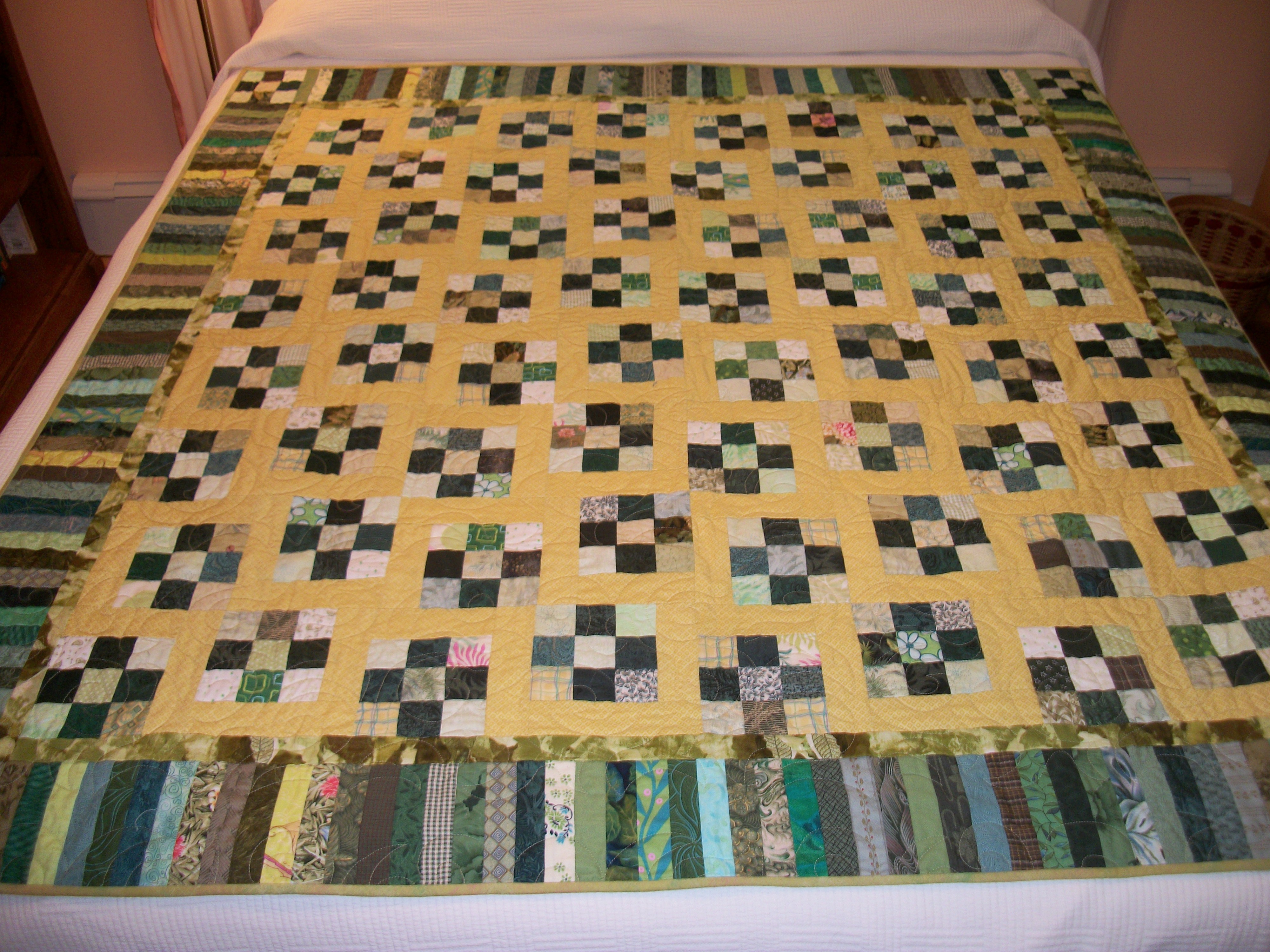
Turkey Tracks: “Sunshine and Shadows” Quilt

Turkey Tracks:  August 23, 2013

Sunshine and Shadows Quilt

I’m addicted to my scrappy project–Louisa Enright’s Scrappy Project–and have been for the past two years.  I’m determined to use my stash and to get it into some sort of useable condition.

As part of my addiction to scrappy quilting, I had started saving Bonnie Hunter’s columns in Quiltmaker magazine.  One of my earlier quilts–Spinner–pictured on this blog I’m sure–came from one of Bonnie’s columns.

Then our state quilt guild hosted two workshops by Bonnie Hunter–and that coincided with my getting her book on “leaders and enders”–and then getting ALL the books (she’s a genius with scrappy quilt design)–then finding her blog (quiltville.com), all her free patterns (more genius), her Facebook page, and QuiltCam, where she sews and talks to those who have put aside the time to sew and visit with her.   That led to the quilt “Green Camden Hills Beauty”–a green version of her “Blue Ridge Beauty”–which is in one of the books and which I also found in my “ideas” file when I cleaned it out recently.

On several QuiltCams this spring, Bonnie worked on two quilts for two family babies that she called “Dancing Nines” because the nine-patch blocks are offset so they “dance.”  She used old shirting materials from these babies grandfathers’ old shirts.  I had a whole bunch of “leader/ender” four-patch green blocks from working with my green stash–so they were easy to make into nine-patches.

And, here’s “Sunshine and Shadows”–a Bonnie Hunter “Dancing Nine” quilt.

Note that the sashing fabric is NOT yellow, but a green/yellow that blends beautifully with the blocks.  I love the piano key border.  And it’s a bit different in size than Bonnie’s since I was using strips that I had already cut.

Sunshine and Shadows quilted

The narrow inner border also works best with this quilt.  I had this perfect fabric in my stash, but it was TERRIBLE in a wider version.  I should have trusted Bonnie’s eye to begin with.

Here’s another view–but that sashing still looks yellow…

Sunshine and Shadows quilted 2

Like Bonnie, I used the pantograph “Deb’s Swirls”–but I can’t tell if Bonnie used the small or medium version.  I have both the medium and the large and have been using both a lot.  I think it’s funny that I had it already when Bonnie mentioned it…

Sunshine and Shadows blocks quilted

Here’s a close-up of the inner border:


Sunshine and Shadows top 2

And one of the binding and backing–the backing is like our forests in spring–all greens and yellow and golds.  It works really well with the front.

Sunshine and Shadows binding and backing

This quilt is so versatile.  It’s a great scrappy project with a lot of visual interest.  It can be made large or small, bright, dull, contemporary, sweet, bold, whimsical, and on and on.  I know I’ll be making it again.

Best of all, the only thing I had to buy for this quilt was the backing.  And I could have pieced a back, but since the quilt was smaller, and meant for a baby I know, I thought one piece of fabric would be best.

Turkey Tracks: Gardens in the Watershed: The Dorolenna Farm

Turkey Tracks:  August 23, 2013

Gardens in the Watershed:

The Dorolenna Farm

This farm was Giovanna McCarthy’s and my last stop on this years Gardens in the Watershed Tour, hosted and planned by The Georges River Land Trust.

In every garden, Giovanna and I learned so much more than each of us–both avid gardeners–knew.  Our creativity was sparked, and we both went home feeling we had spent our day quite well.

Andrew and Victoria Marshall have owned this 250-acre farm for seven years.  It’s beautiful land, with a mixture of forest and pasture.  The homestead dates to 1840 and is one of the few remaining farmsteads of the “Frye Mountain community which populated the area until the 1930s.

Dorolenna Farm is “certified organic and produces vegetables, tree fruit, pasture-raised poultry, cut flowers, and forest products for local markets.”

The barn is GORGEOUS.  (I love barns.)  The Marshalls built the barn in 2009 from wood harvested, milled, and cut on their farm.  The barn was raised on-site.  (Wish I’d been there.)

Here’s a picture of what must be the original part of the house–on the right.

Marshall 3

Here’s a long at the house and how it spreads out against the hill.  The barn is on the other side of the house, and I did not get a picture of it.   By this time of the day, Giovanna and I were tired and hot, and I, at least, got lazy with my camera.  I think I was a little on overload at this point too.

Marshall 6

Pastured poultry is one of the farm’s crops.  That process happens in stages where each chicken cohort gets raised together through all the steps until time for harvest.  There were chicken tractors out on the pasture holding the different age groups.  These would get moved every day so that the chickens have access to fresh grass, bugs, and are out of their own poop.   And the tractors protect them from predators.

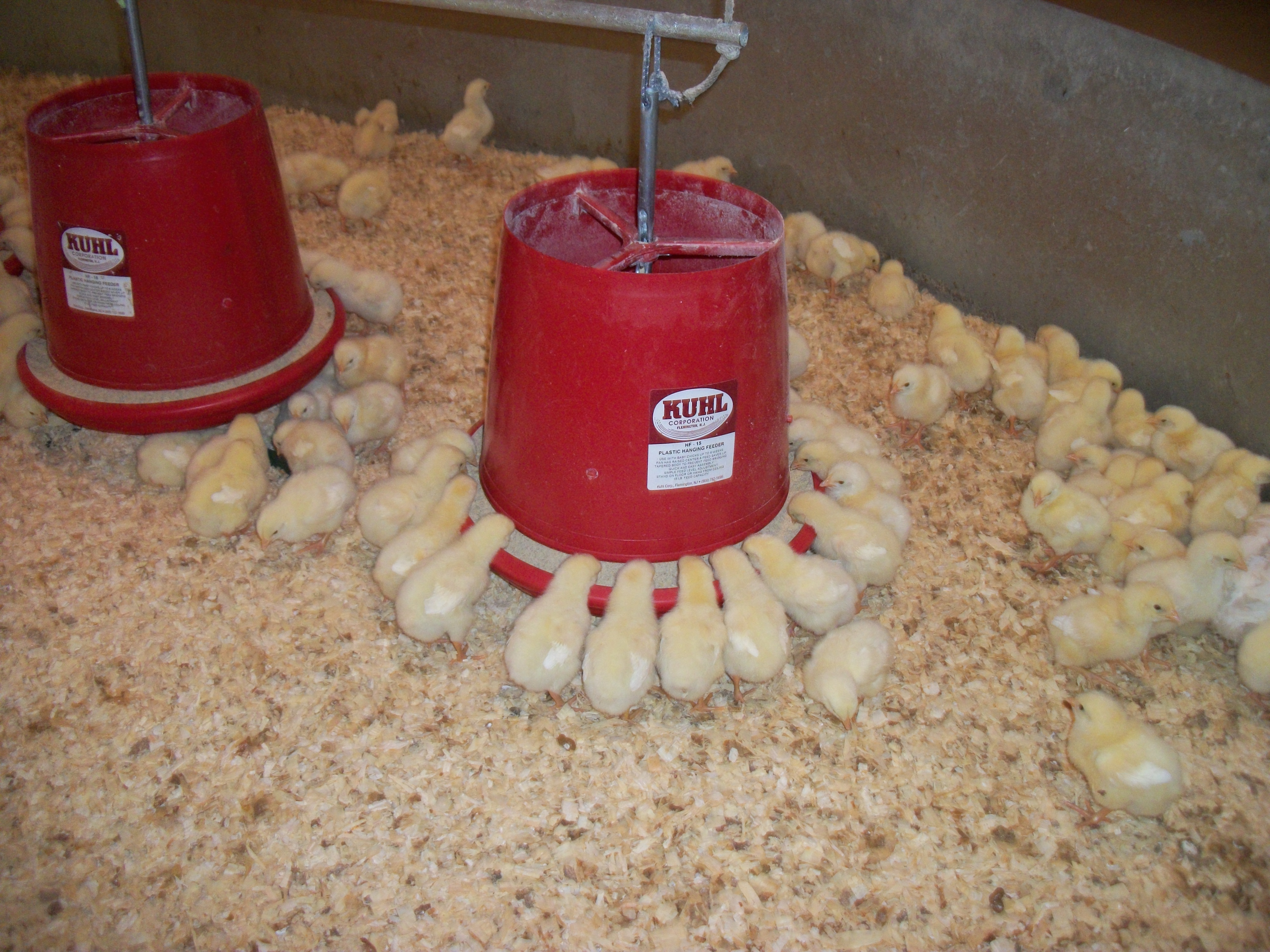
Here are a group of babies just starting out:

Marshall

It’s so fun to watch baby chickens at this age.  They eat, run around, then flop down in a pile to sleep for a bit.

Marshall 2

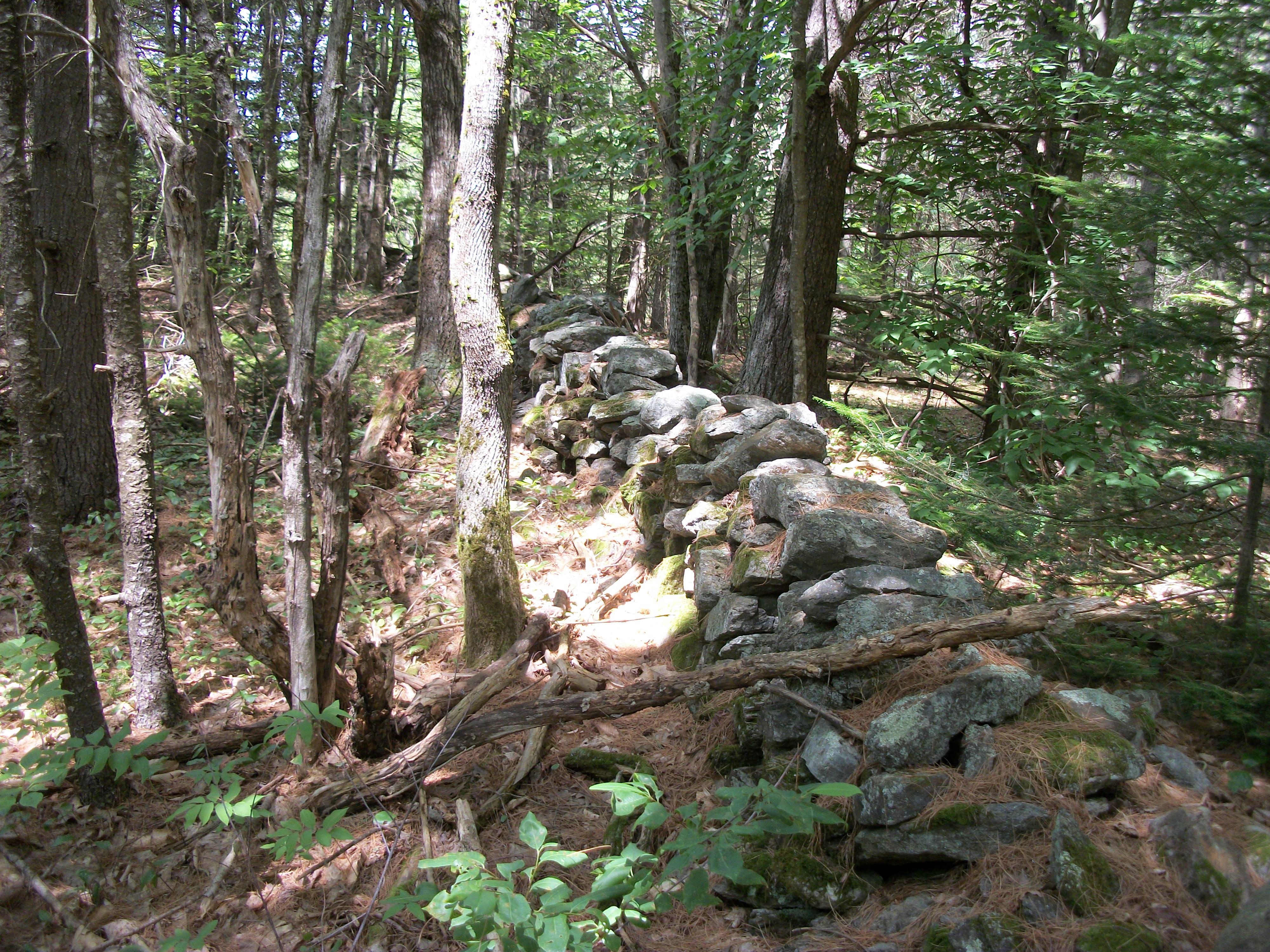
The chicken barn is on the road to the house, so one walks along the road that winds through forest.  You can see the old rock wall where the early settlers cleared this land and planted it.  Rock walls like this one are frequently seen in Maine woods–reminders of another era.

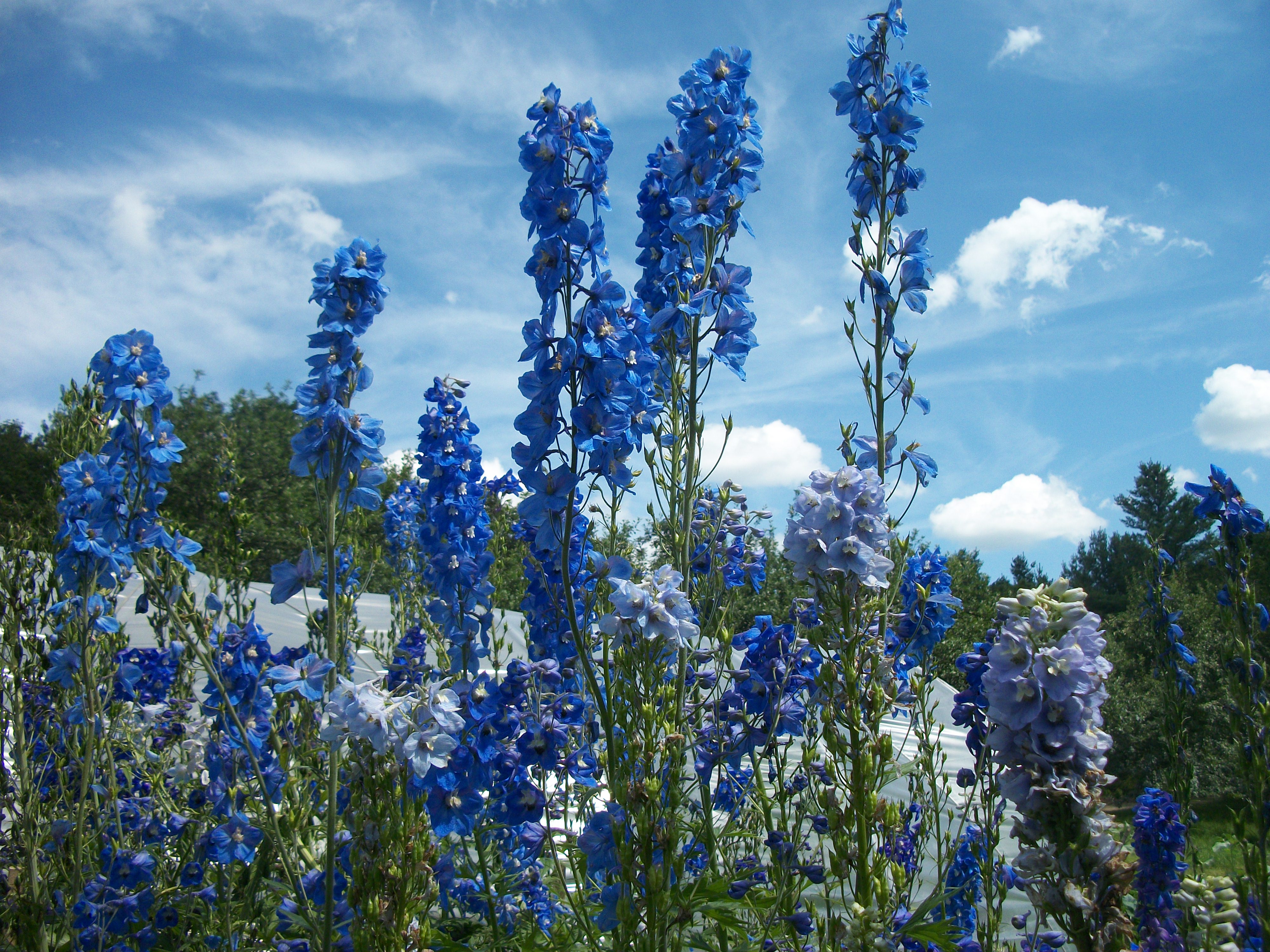
The gardens around the house were quite lovely.  Here’s my favorite shot of delphiniums against the sky:

Marshall 4

Fields near the house were planted to potatoes–which make a beautiful, richly colored green plant that has blooms.

Turkey Tracks: Black Trumpet Video

Turkey Tracks:  August 23, 2013

Black Trumpet Video

Well, I don’t quite know what I did to make the video work.

I’ve been doing what I think of as a “computer dance”–reading instructions from WordPress, trying to find out how to clean out the browser stash, the cookie stash, etc.  And to figure out whether or not to use Google Chrome as the default setting…

Whatever I did, the video now loaded.  Yeah!

What you see at first in the video is Rosie Chickie.  She’s the remaining survivor of the fox attack of this spring, and she follows me everywhere in the yard.

Turkey Tracks: Camp Lovey

Turkey Tracks:  August 22, 2013

Camp Lovey

I had my two grandsons, 8 1/2 and almost 10, here in Maine for two weeks on my own.

It was glorious.

They did the Camden Yacht Club sailing camp in the mornings–even swimming in the cold harbor water every day.

And Camp Lovey the rest of the time.

Mike and Tami brought the girls up at the end of the two weeks for a week–which went by really fast.

Mike brought the boys up, and I picked them up in Portland.  We went to Acadia the next day, I think, and all were enchanted with the views from the top of Cadillac Mountain.

Acadia View Cadillac Mountain

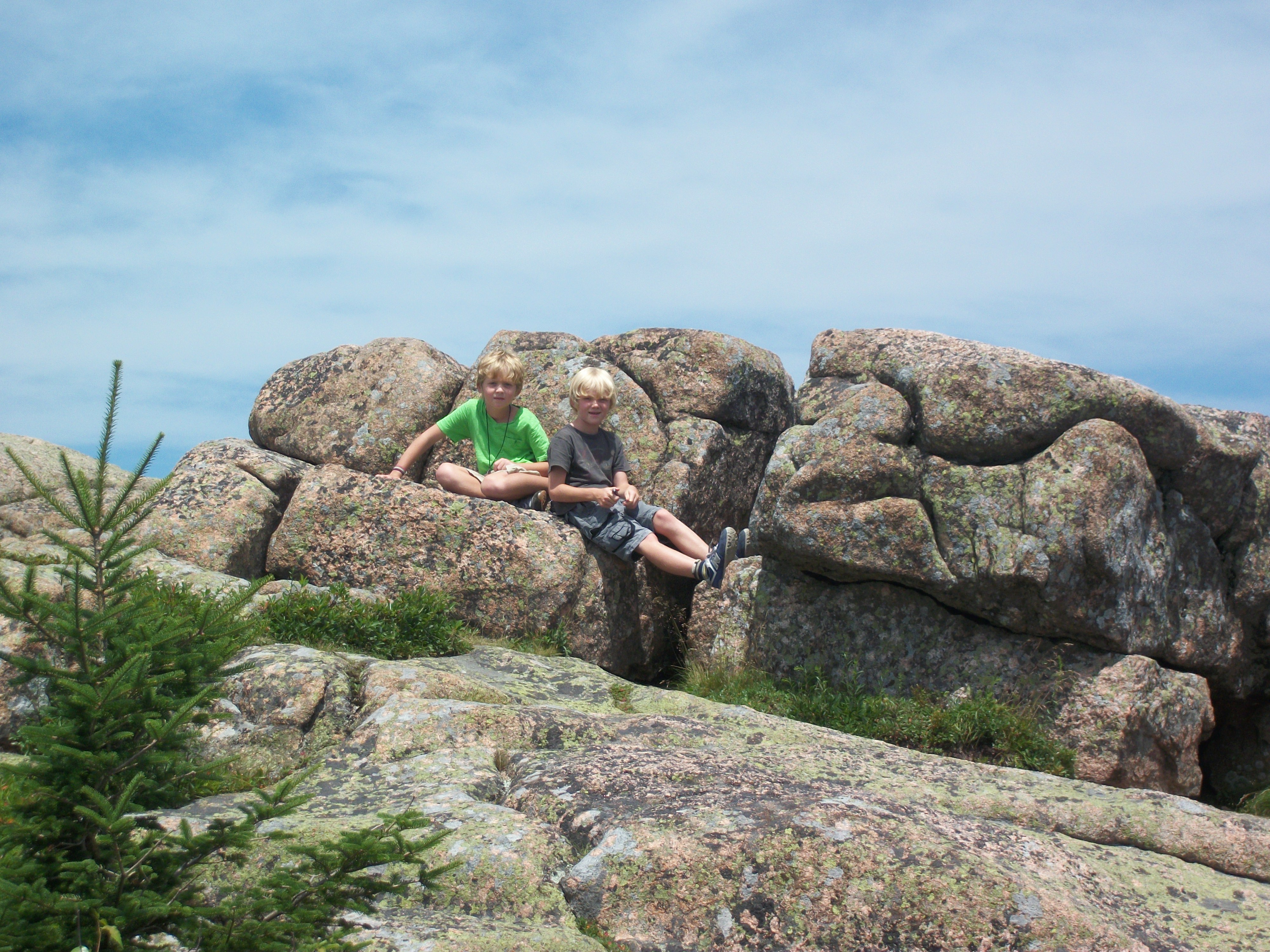
The boys loved exploring all the rocks and the nooks and crannies that the ledges offered:

Bo and Kelly, Acadia 2013

Afterwards, we stopped at the Co-op in Belfast for food and at Baywrap for ice cream:

Bo and Kels, ice cream, 2013 2

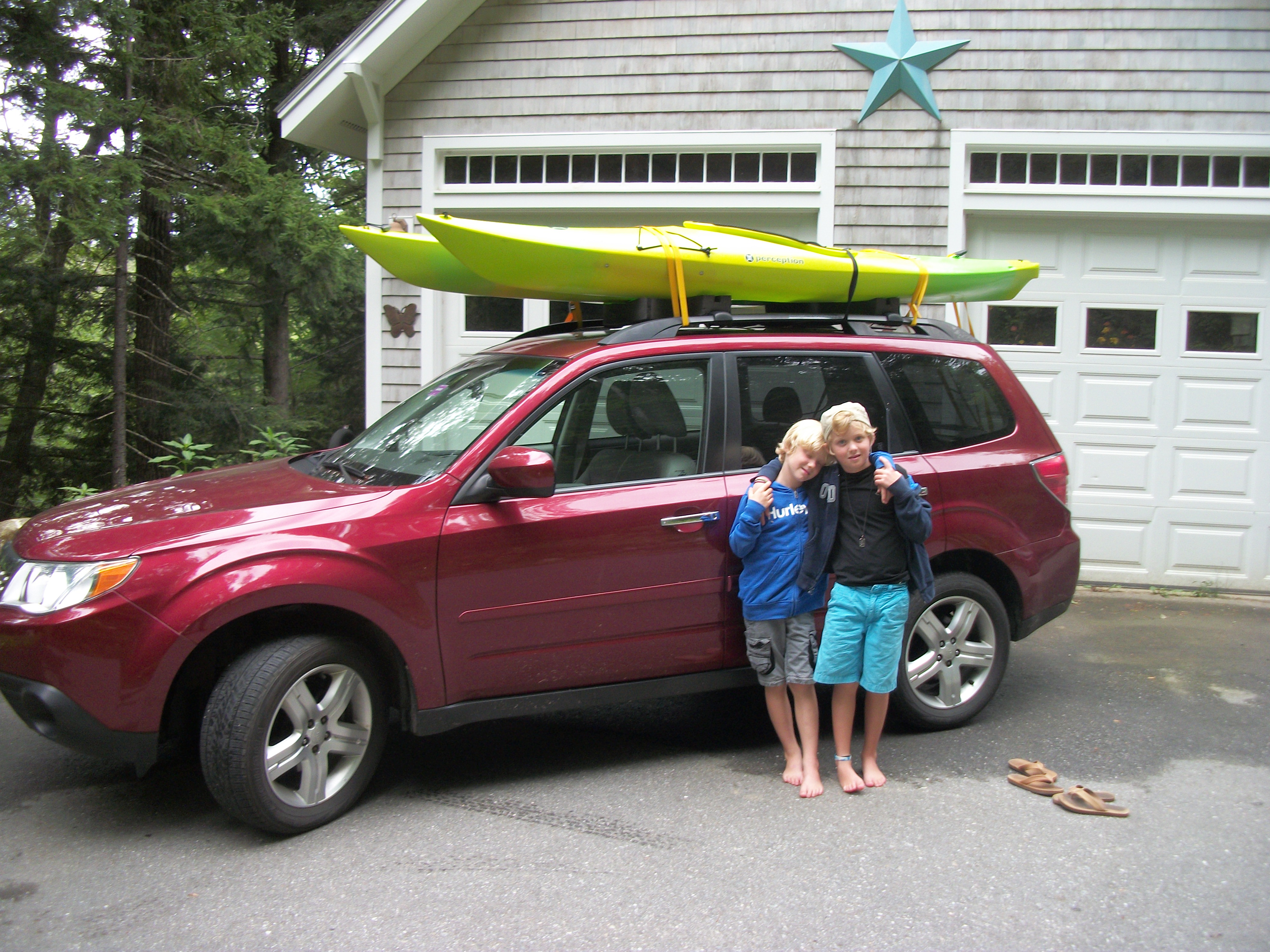
John and I had planned to get kayaks for the children last summer.  He even ventured out to price them.  So this summer, I undertook that task with the help of the boys.  Together we could load the kayaks on the car.  I got cold feet about sending them out alone on the river, where I knew they would quickly be off and running and a long way away from me, so we got Maine Sports (very kindly) to help install a “J” bar so we could carry my big kayak as well.

Unfortunately, our weather was cool enough that we only got to use the kayaks one time–and even them we got caught in the rain.  It was still a good day.

Kayaks 2013

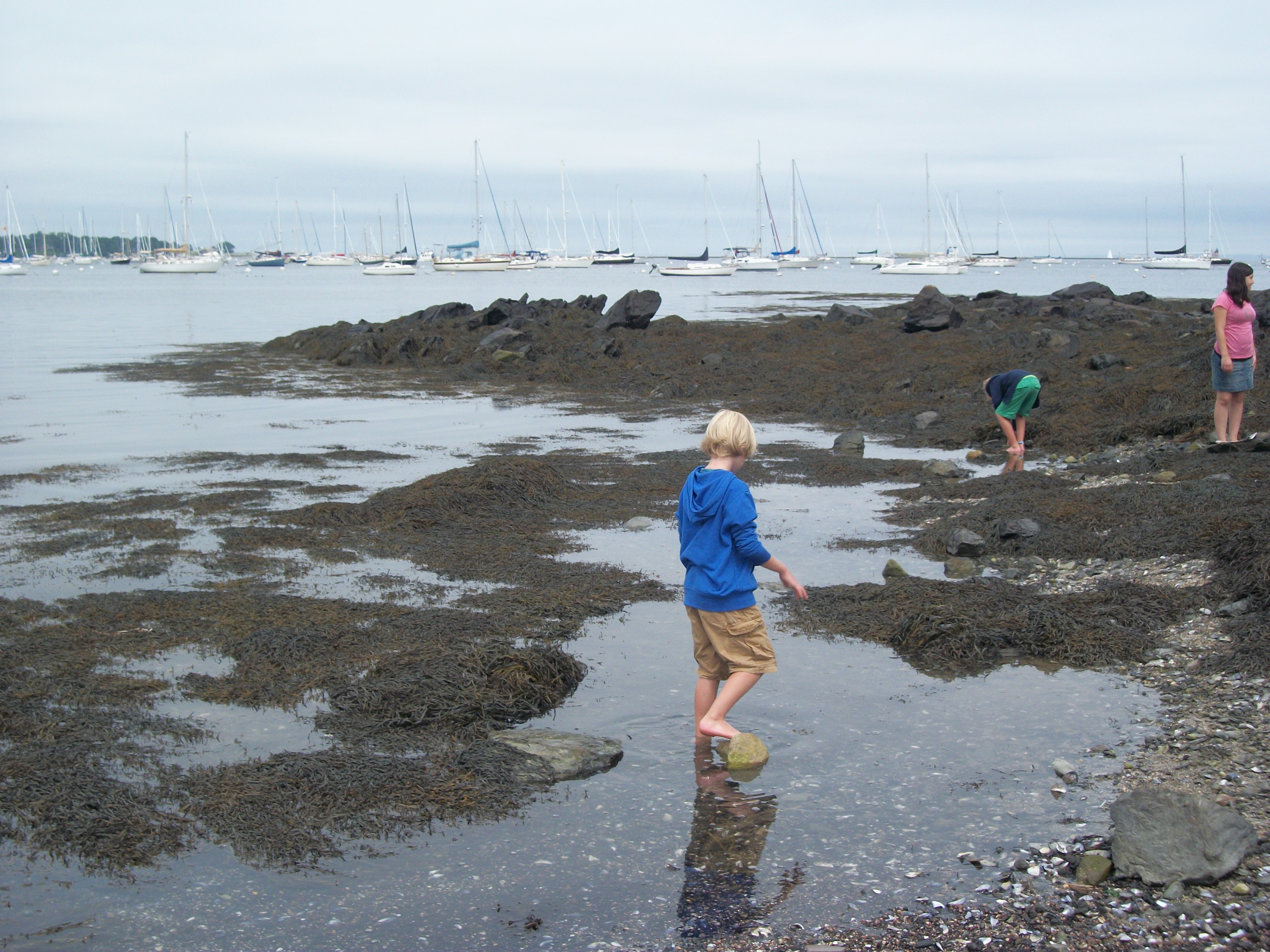
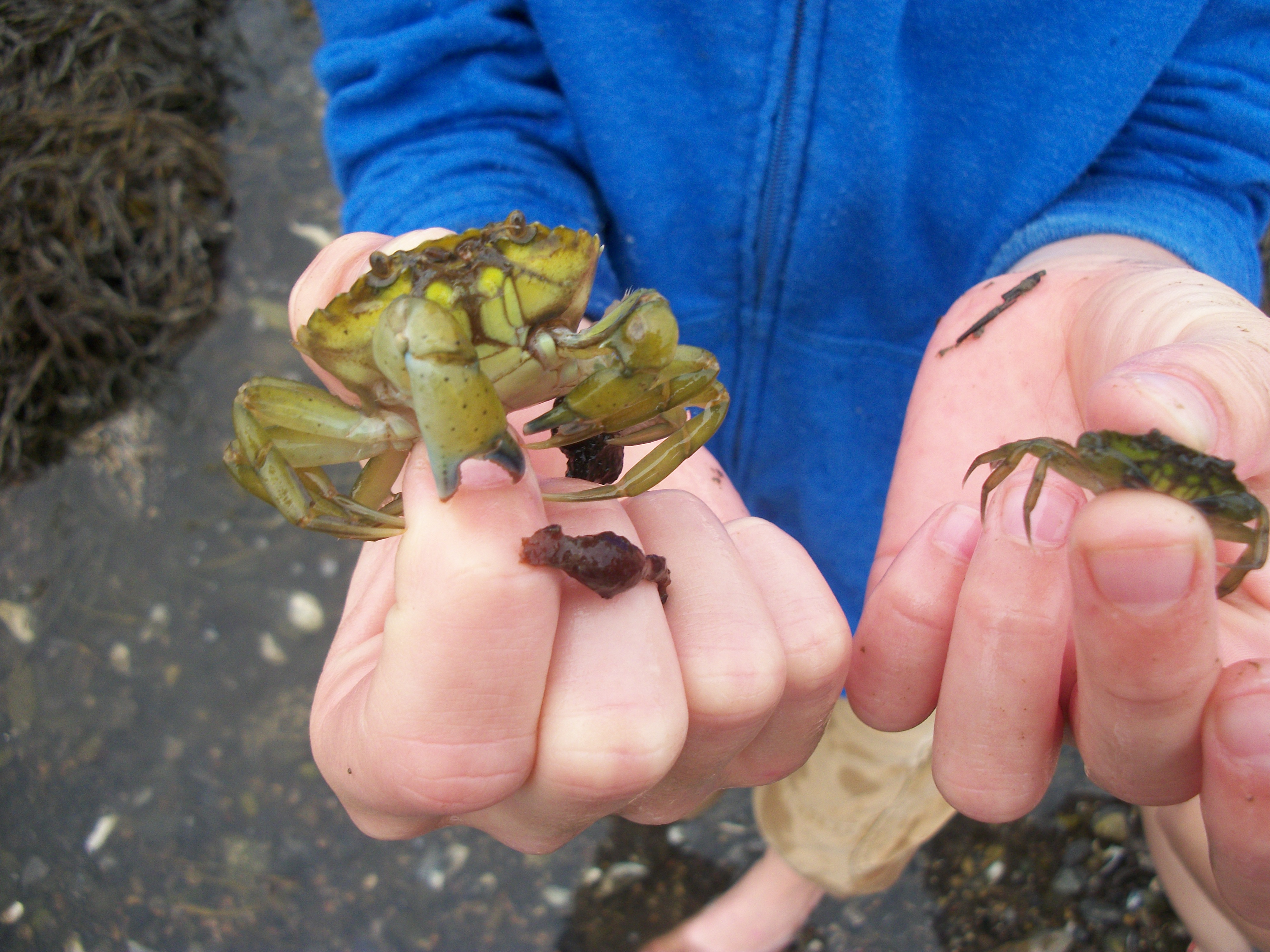
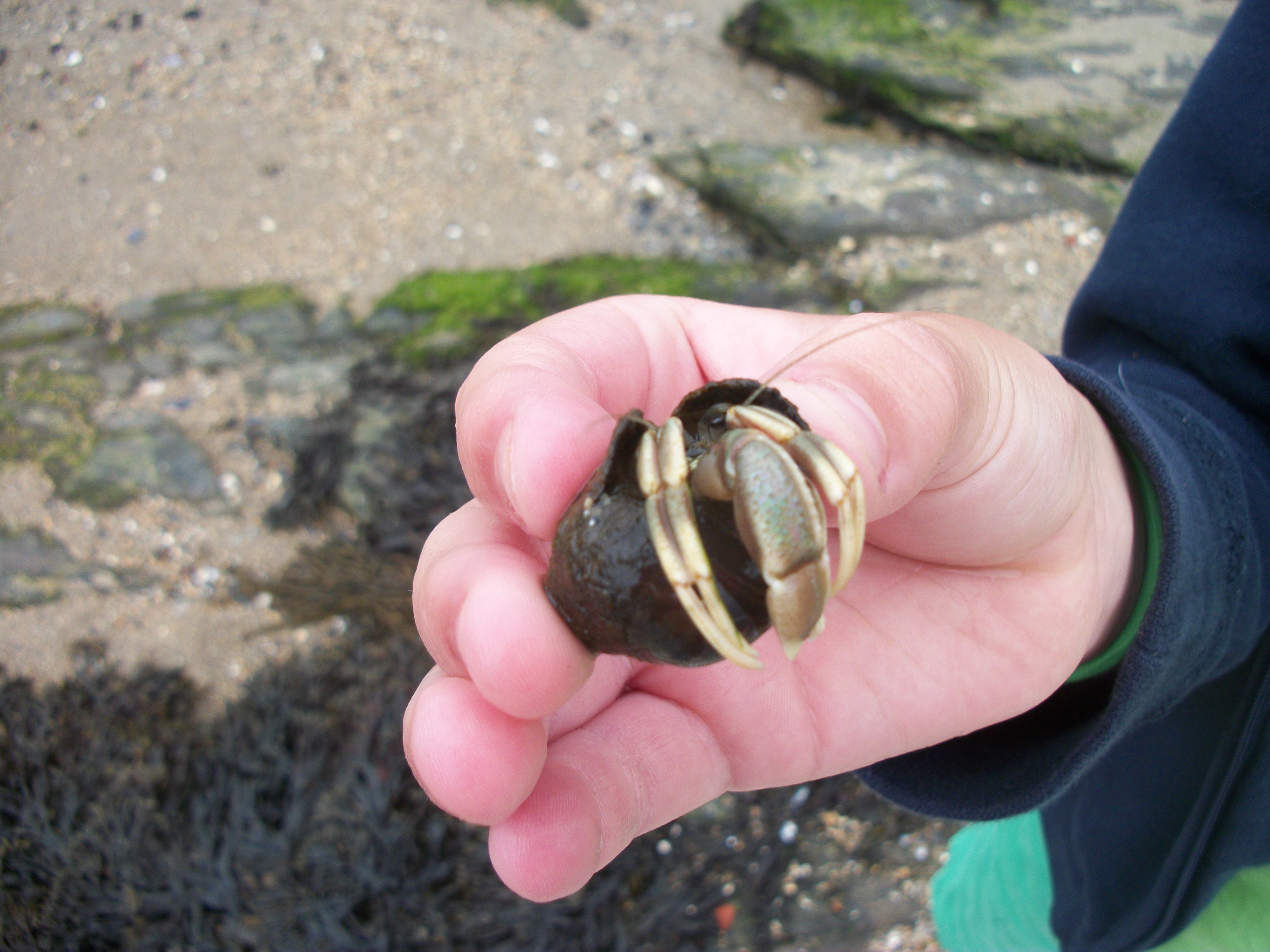
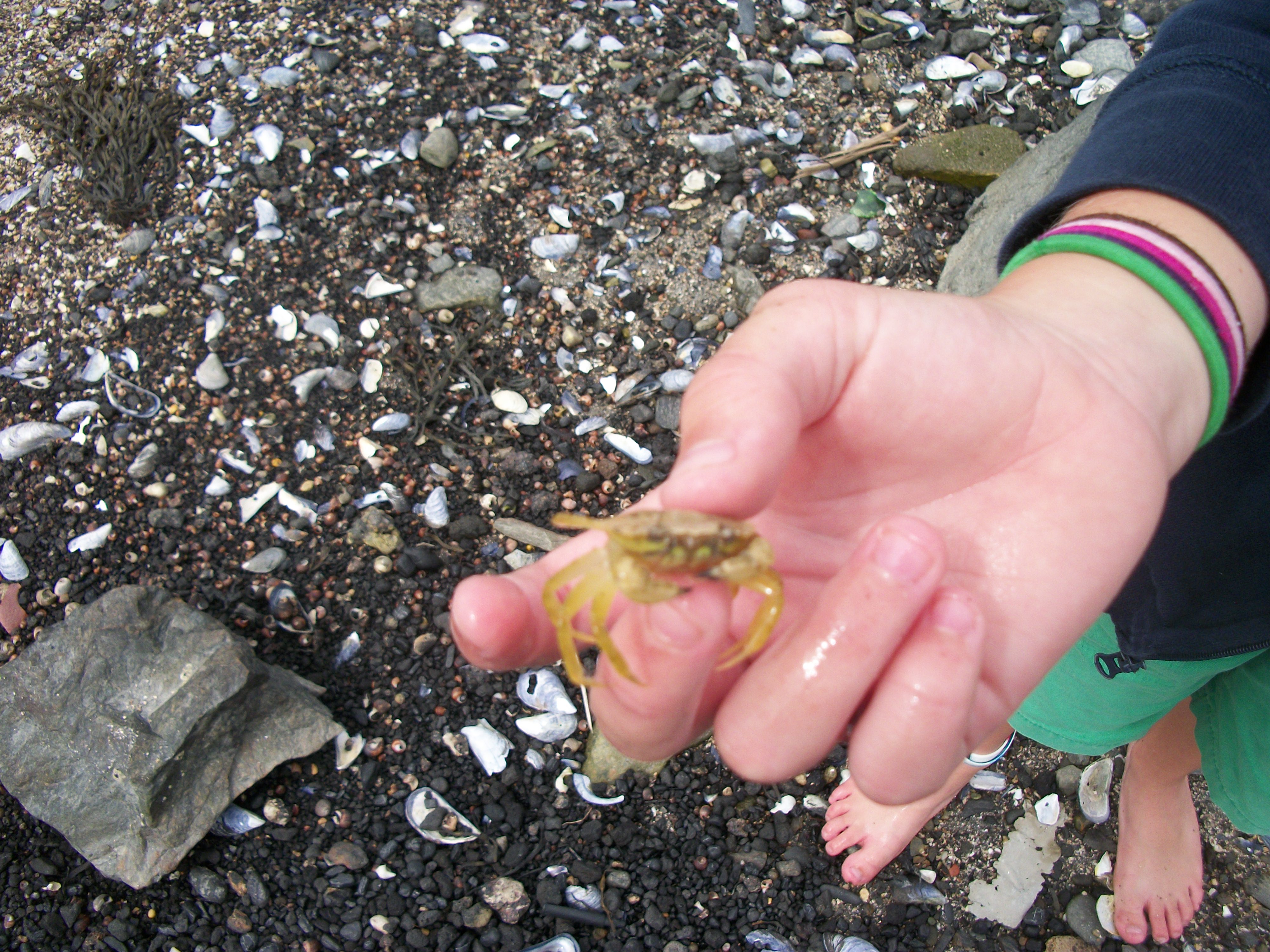
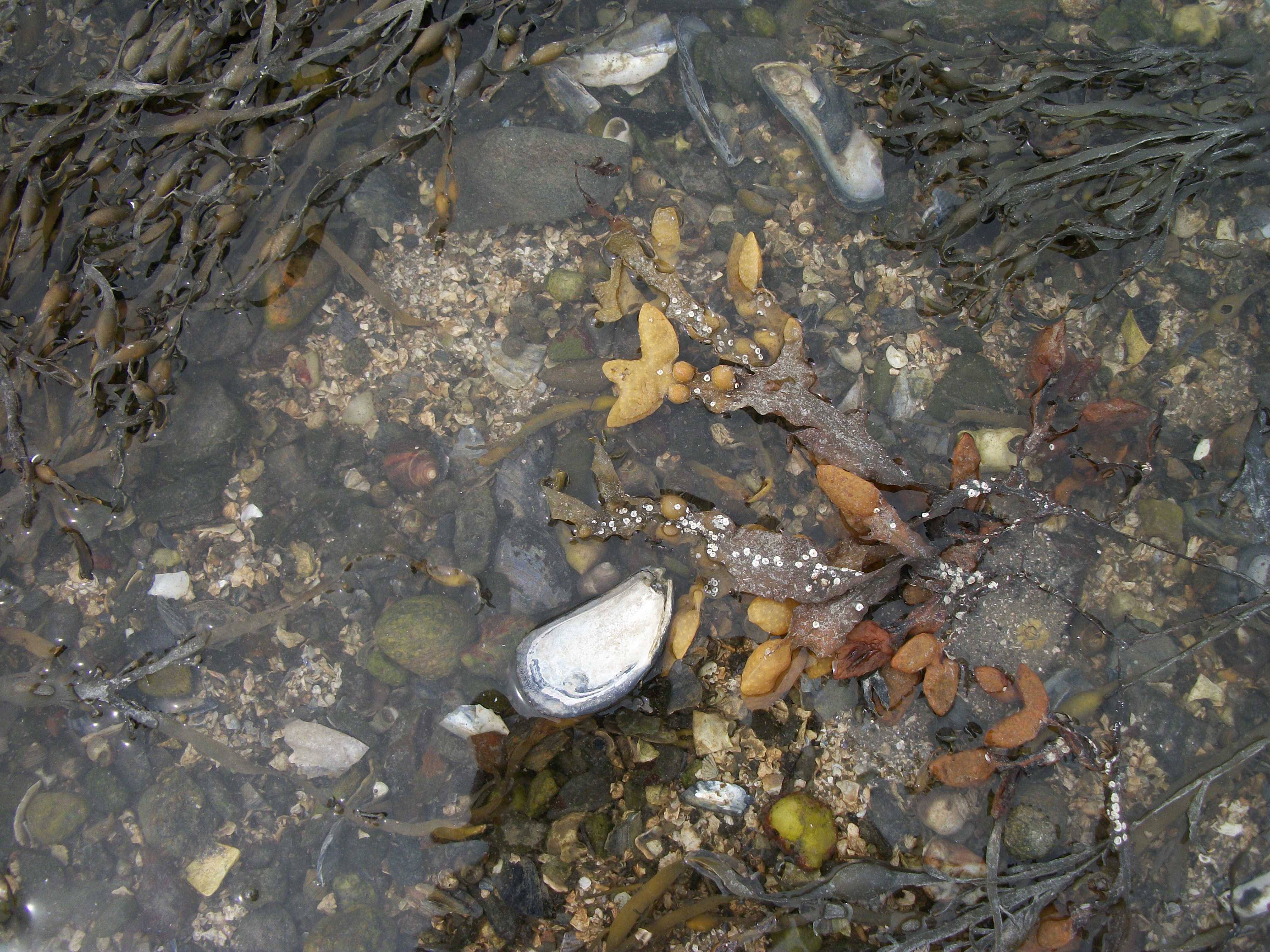
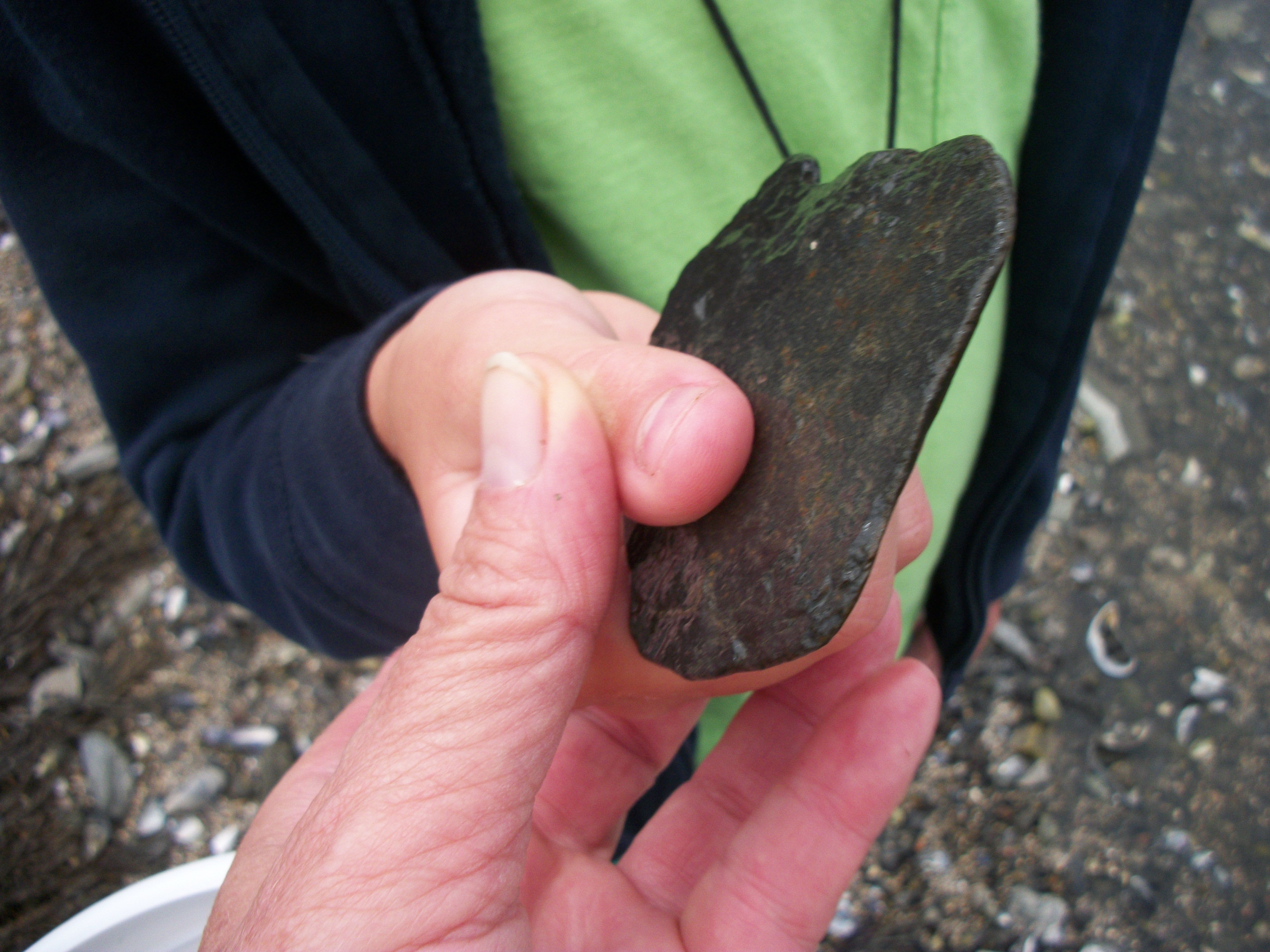
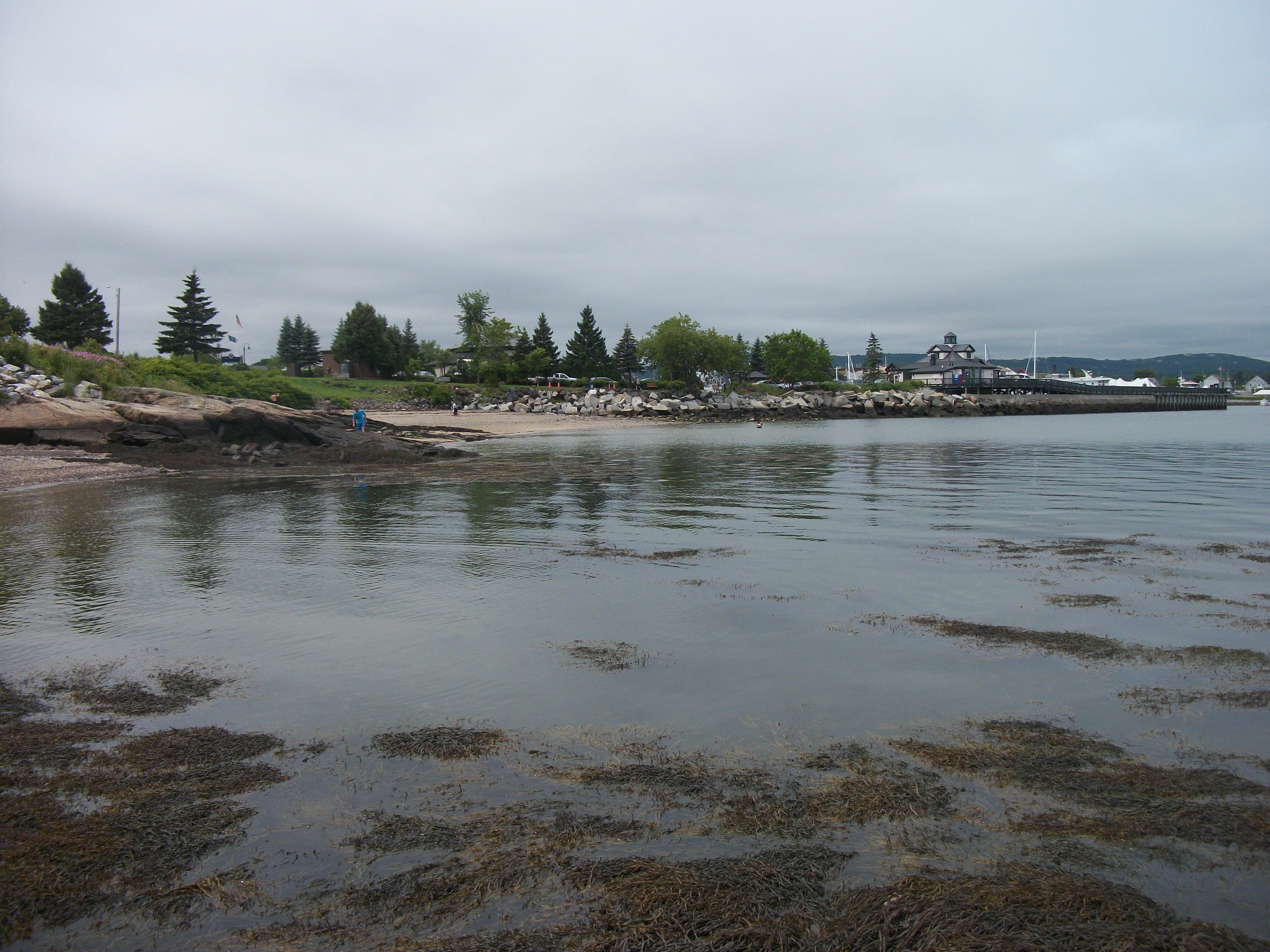
The boys loved poking around the tidal pools that line our shores.  And, looking for “sea glass”–which is now mostly just plain glass shards–is another favorite pastime.   These pictures were taken at Rockland Harbor.

Rockland Harbor 5

Boys, Rockland 2

Crabs, Rockalnd 3

Crab, Rockland

Crab, Rockalnd 5

Here’s what a shallow tidal pool looks like:

Rockland Beach 3

And much time was spent skipping “good” rocks, such as this one:

Skipping stone 3

We took the girls back, and they, too, enjoyed their time on this beach.  In fact, all four children went swimming in the cold water and in all their clothes!!!   They won’t forget that dip any time soon.

The boys went to the state quilting show–Pine Tree Quilt Guild–with me on a Saturday.  I posted that earlier, but here, again, is their favorite quilt:

Boys favorite quilt, 2013

We all went to Moose Crossing State Park one day–a beautiful place just north of Belfast:

Moosewood park 2013

Moose Crossing beach has some rather big rocks.  Bo spent some time rearranging them.

Bo, Moosewood 2013

And Talula and Kelly spent a lot of time wading through the tidal pools.  I had gotten lazy with the camera at this point, so don’t have this picture of them anywhere but in my mind.  But here’s one of Talula:

Talula, Aug. 2013

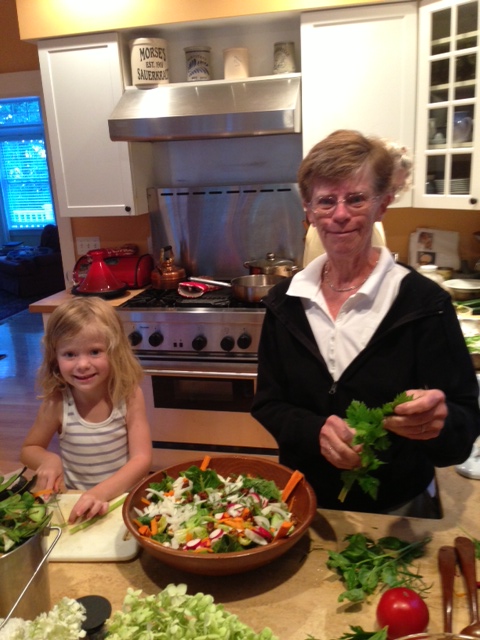
I always do a lot of cooking with the children–and this year was no exception.  Here are Maryann and Mina making our dinner salad:

Mary and Mina

Fortunately for me and for the chickens, the children love to collect the Japanese Beetles from the raspberries and beans and feed them to the chickens.  This year they became fascinated with dragonflies.  Here’s a BIG one on Bo’s hand:

Bo and dragonfly, Aug 2013

We went to Monhegan Island for two days and a night–staying at the Monhegan House Inn.  Here are Bo and Mina in Port Clyde waiting to board the boat to go out to the island:

Port Clyde 5

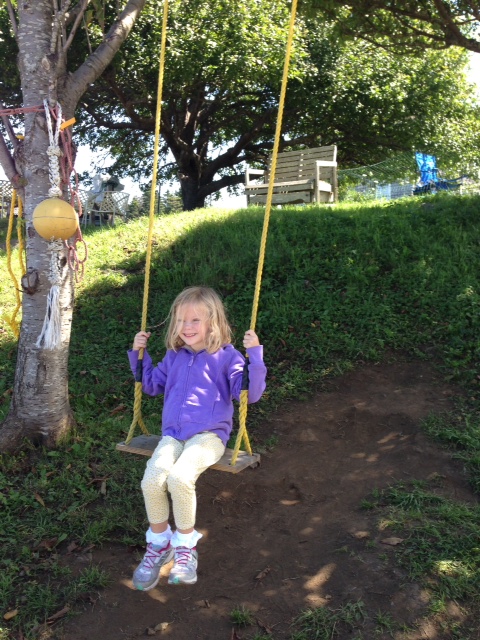
Here is Mina, swinging on a downhill swing on the island:

Mina, Aug. 2013

Here are my four kiddos, waiting to board the boat home from Monhegan:

Lovey and kiddos, Aug. 2013

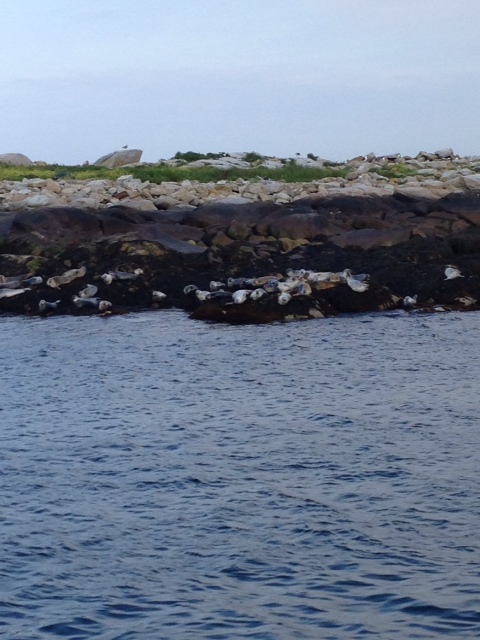
On the way home, the boat captain took us by an island filled with sunning seals:

seals, Aug. 2013

We were all enchanted.

This trip was the end of Camp Lovey, as everyone departed for the long drive home to South Carolina a day or so later–especially as we got even MORE rain.

Turkey Tracks: Dehydrator Days

Turkey Tracks:  August 22, 2013

Dehydrator Days


The hum of the food dehydrator is a constant sound in my kitchen these days.

The earth and the vegetable gardens are pouring forth the most amazing bounty.

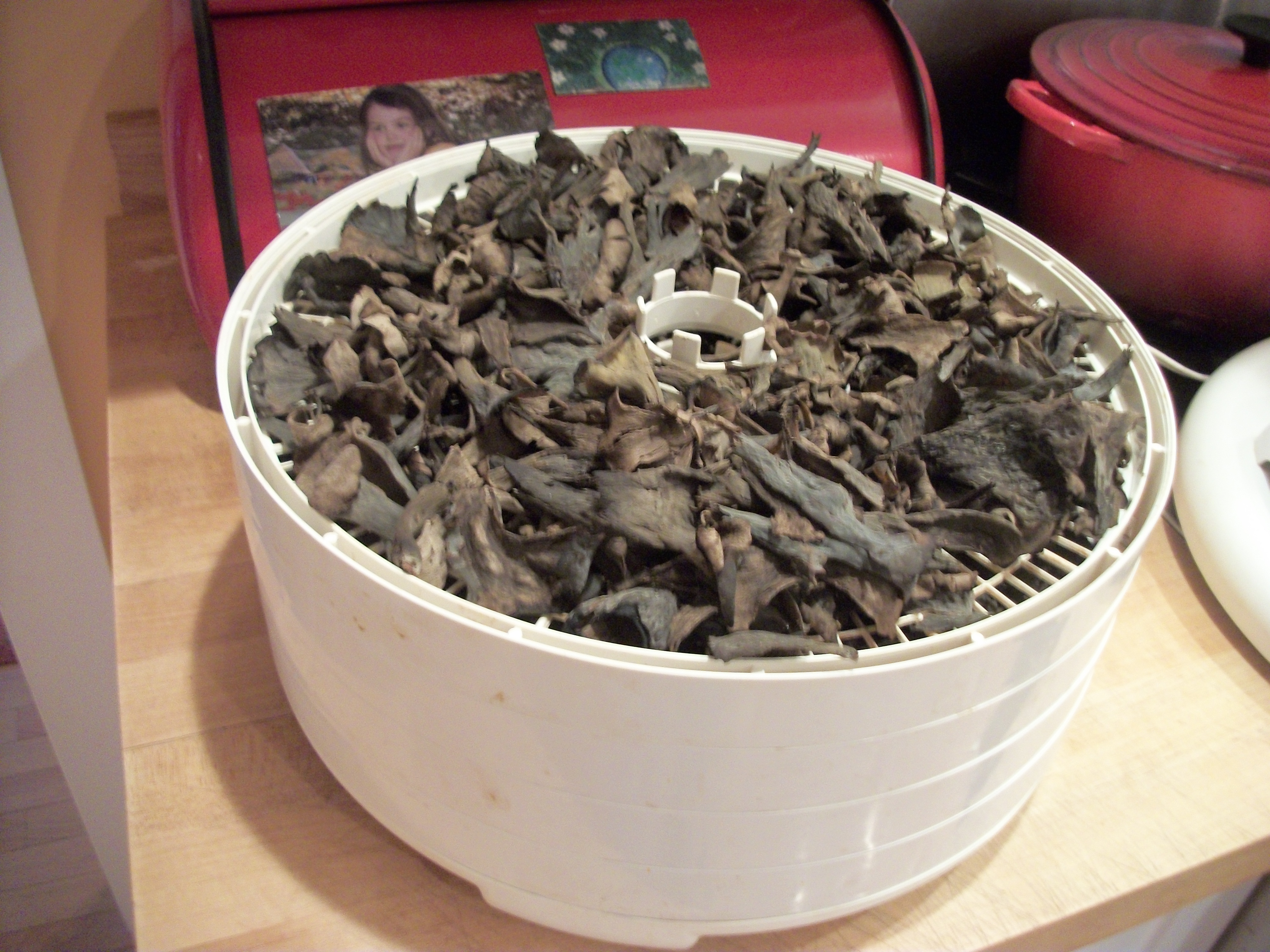
I dried the mushrooms shown in an earlier post.  They filled all the trays of the dehydrator.

Dehydrator 1

But I also am drying cherry tomatoes to use in salads all year around.  These little nuggets are as sweet as candy and are so appreciated in the white cold of winter.  They don’t taste like any bought dried tomato you’ve ever eaten.

Dehydrator 2

My garden is producing a healthy crop of Sun Golds.  Hope’s Edge, my CSA, will provide some cherry tomatoes to dry.  And Susan McBride’s Golden Brook Farm, just up the hill from me, has luscious cherry tomatoes.

I also have discovered that drying zucchini–and even excess cucumbers–is a great way to preserve them.  Grating and freezing zucchini does not work so well.  The flesh gets slimy and bitter after a bit of time.  But the dried disks reconstitute beautifully if thrown into a soup or stew about five minutes before it is done.  Cut the BIG zukes into smaller pieces…

Dehydrator 3

I am also blanching and freezing the beans that are coming in like crazy now.  It’s easy enough to snap them, rinse them, drop them into boiling water for a few minutes (don’t let them get too cooked), put them into a baggie, and freeze them.

Beans

I picked up fresh blueberries from Hope’s Edge last week.   So I made jam from the uneaten and frozen berries from last summer.

Bueberries

Blueberry jam is easier than blackberry jam since you don’t have to pick them or deseed them.  Otherwise, the process is much the same.  I do grate the rind of one lemon into the pot–and add the juice.  Lemon perks up the blueberry flavor.  Blueberry jam needs a bit more sugar than the blackberries as the blueberries don’t have as much pectin.  This jam is a bit looser as a result, but that’s ok.  It’s great over ice cream, in smoothies, over pancakes, and so forth–and the flavor is lovely.  It tends to get stiffer in the cold of the refrigerator.

***

One of the deep pleasures of my life is harvesting and preserving the food that the earth offers us.  It is the most satisfying feeling to know that I have these “assets” in my pantry to be enjoyed all winter and into the long Maine spring when we are so hungry for fresh greens.

But, let’s face it.  Feeding people really good food–and eating it myself–is one of the things that I most like to do.

Turkey Tracks: Remembering Winter

Turkey Tracks:  August 21, 2013

Remembering Winter


Those of you who have read this blog for any length of time will know that in the midst of one season, I love to harken back to its opposite.

Friend Marsha Smith, a pioneer of Citizens for a Green Camden, sent me this picture of her adorable grandson, Devon, last winter.  And I saved it for just this moment when we are in the dog days of August.

Devon's frozen shirt

As an experiment last winter–probably around the time we had the blizzard which dumped up to five feet of snow on us, Devon hung out his t-shirt for a few minutes.

It froze solid–which you can tell by his expression that he loved.

Turkey Tracks: Gardens in the Watershed: Atkinson/Stich Successional Garden

Turkey Tracks:  August 21, 2013

Successional Garden of Bo Atkinson and Alda Stich

The Atkinson/Stich Successional Garden has been forty-two years in the making.  Bo builds the alternative structures and Alda creates the fragrant perennial flower collections–fields of them.   A friend told me Alda did all the flowers for one of her children’s wedding–and that they were lovely.  Alda pioneered regional sales of fragrant perennial flower collections.

Out on the road, Bo has put up a sign that attempts to explain his structures:

Atkinson-Stich 9

And here is the whimsical outer wall on the road through which the visitor passes:

Atkinson-Stich 2

I wish my grandchildren had been with me for this garden visit.  They, as I did, would have loved it:

Atkinson-Stich

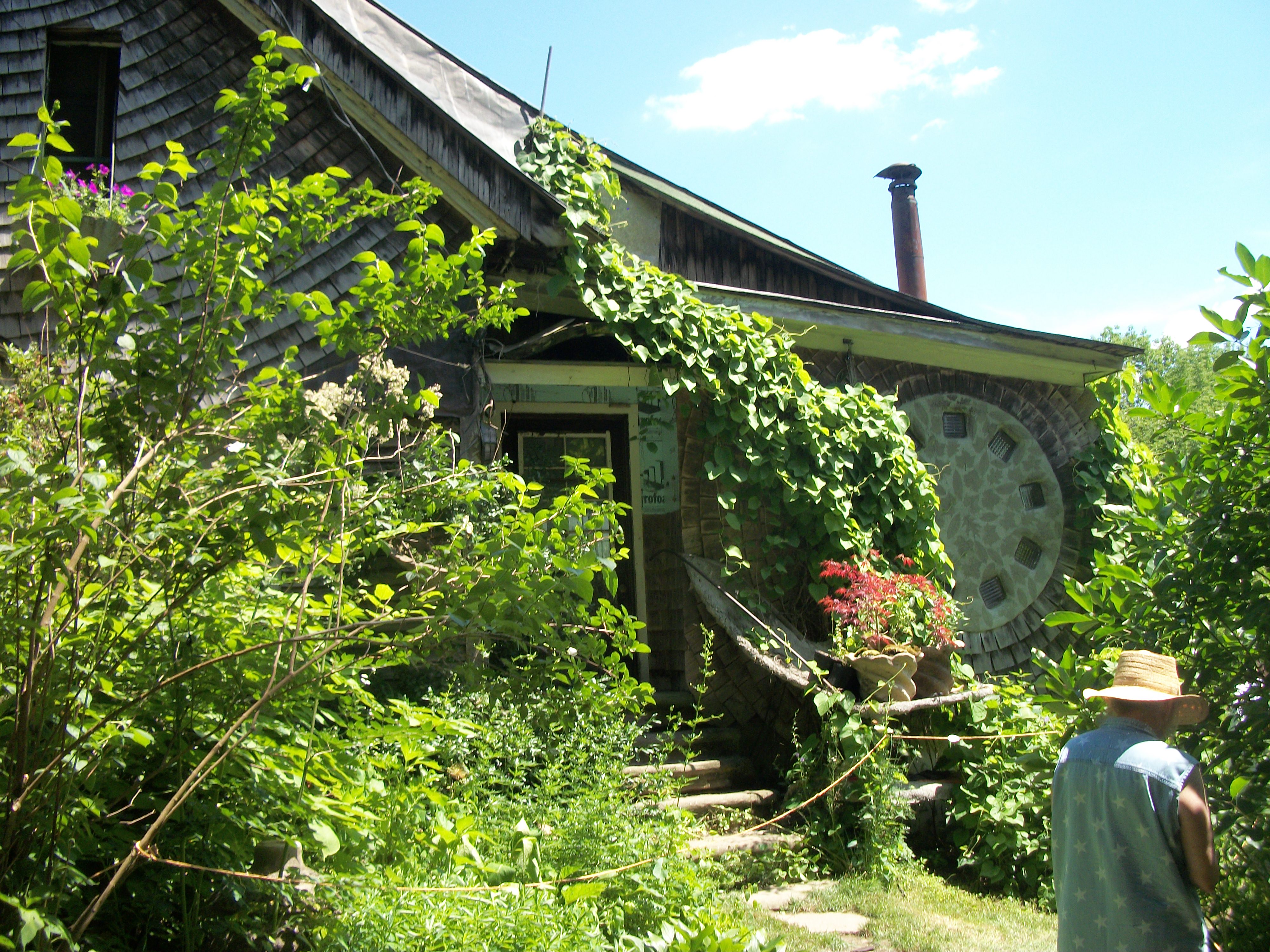
Here’s the view of the house, which sits just beyond the wall:

Atkinson-Stich 3

I loved this curved woodwork.

And:

Atkinson-Stich 4

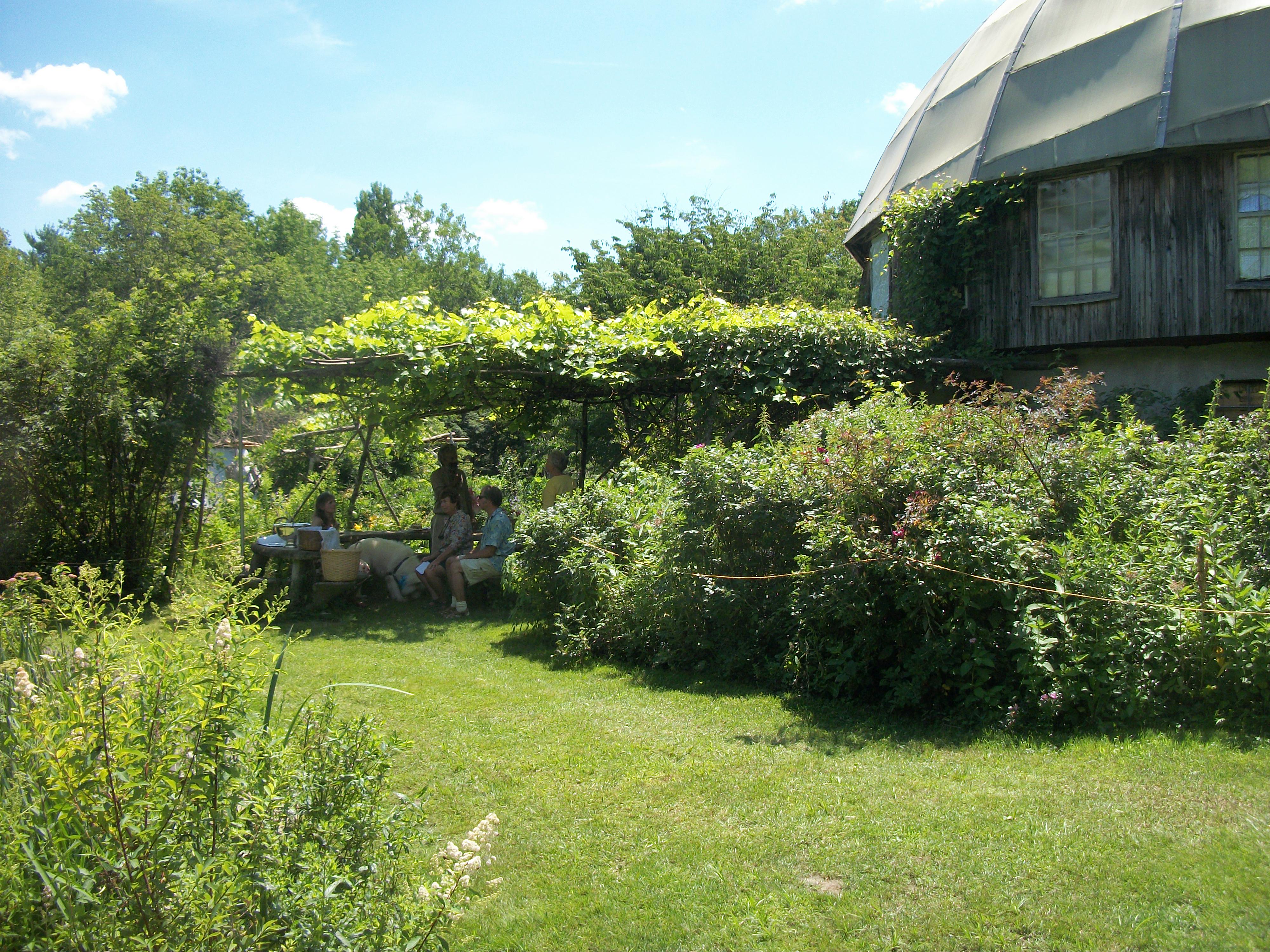
The back of the house has a grape-vine covered verandah that is cool and inviting–especially on the very hot day when we came to this garden.  People had gathered there to visit and enjoy one another.

Atkinson-Stich6

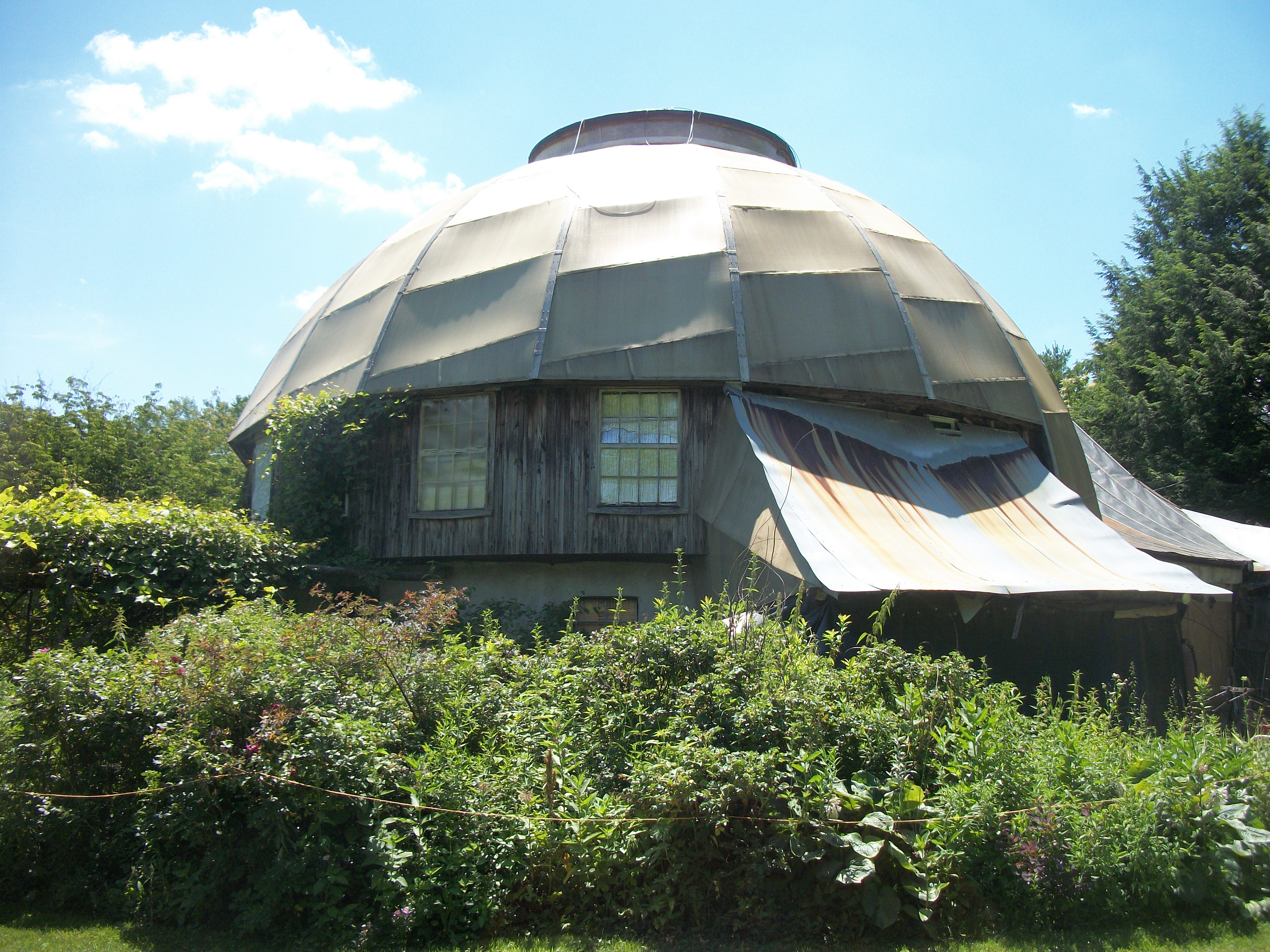
This garden is designed to work with nature, not against it.  And Bo’s structures attempt the same goal.  Here is the building to the right of the house where seedlings are nurtured and protected:

Stkinson-Stich 5


Both Bo and Alda work to encourage local bird, frog and beneficial insect habitats.  There was a small pond with an arching bridge that led to a structure on the left side of the property.  Paths snaked through Alda’s fields of flowers.  I left feeling that these folks were living in concert with their surroundings–and that whatever they did to the land were attempts to enhance its natural habits.

Turkey Tracks: Blackberry Jam

Turkey Tracks:  August 21, 2013

Blackberry Jam

When I was growing up, we spent some of every summer with my maternal grandmother, Louisa Phillips Bryan, in Reynolds, Georgia.

I’m sure my grandfather, Sydney Hoke Bryan, was also involved–he was a quiet rock that held the family together.  And he was deeply involved in growing food and in preserving food.  He had a large vegetable and flower garden “out on the farm”–and in the summer he went out there early and returned with huge baskets filled with vegetables and flowers.  One of my vivid memories is the two of them putting up tomatoes in an outdoor kitchen they fashioned in the back yard under a shed.  And, I remember hams hanging in the smoke house too.

But it was my grandmother who made the blackberry jam in the summers.   And, later, my mother.  But mother’s blackberry making was always limited by having wild blackberries nearby to pick.  We were tasked with picking blackberries in the summers–though most of the berries we picked landed up in cobblers for “dinner”–which was in the middle of the day.  Local children used to bring the blackberries they had picked to the house for sale, and that’s when my grandmother made jelly.  I have memories of cheesecloth to drains off the seeds and of melting wax for the lids…  And of discussions about whether to seed the jam/jelly or not.

I have access to a blackberry patch here in Maine–and it has been the greatest joy to pick them and to make jam.  And I am so grateful for the wonderful family who allow me to pick their berries.  What a gift!

Some years are better blackberry years than others.  And, it takes a lot of blackberries to make a jam.  One year we had blackberries, but there had been no rain, and the berries just didn’t have enough moisture to make good jam.  And every three or four years it’s a good idea to mow the patch to retard the overgrowth of other plants trying, also, to grow there.  Eventually they will crowd out a blackberry patch.  So when I make a batch of jam, I never know how far I will have to stretch it so as not to completely run out.

This year is a GREAT blackberry year.  And last Sunday, I picked about two gallons alongside friends Giovanna McCarthy and Margaret Rauenhorst.  I came home and made the jam while the berries were fresh.  I was down to my last jar–and that was dated 2010.

Blackberries

The first thing you need to know is that when you are picking blackberries, be sure to pick about one not-so-ripe mostly red berry (not a hard red one) for about every 30 or so berries.  The red berries have pectin in them that will make the jam jell.

Also, you want to make any jam or jelly in SMALL BATCHES.  I made two separate batches with these berries.

The other thing you need to know is what the jelling point is for your geographic area–and that’s info you can determine from either an internet search or from a Ball Canning Book.  At my house here in Maine, it’s 216 degrees.  Down in town, it may be a bit different.  Obviously you’ll need a candy thermometer unless you have a knack for telling when the batch is ready.  I don’t.

I put all of the berries into a pan, add about a 1/2 cup of water so they don’t burn on the bottom, and heat them to render the juice.

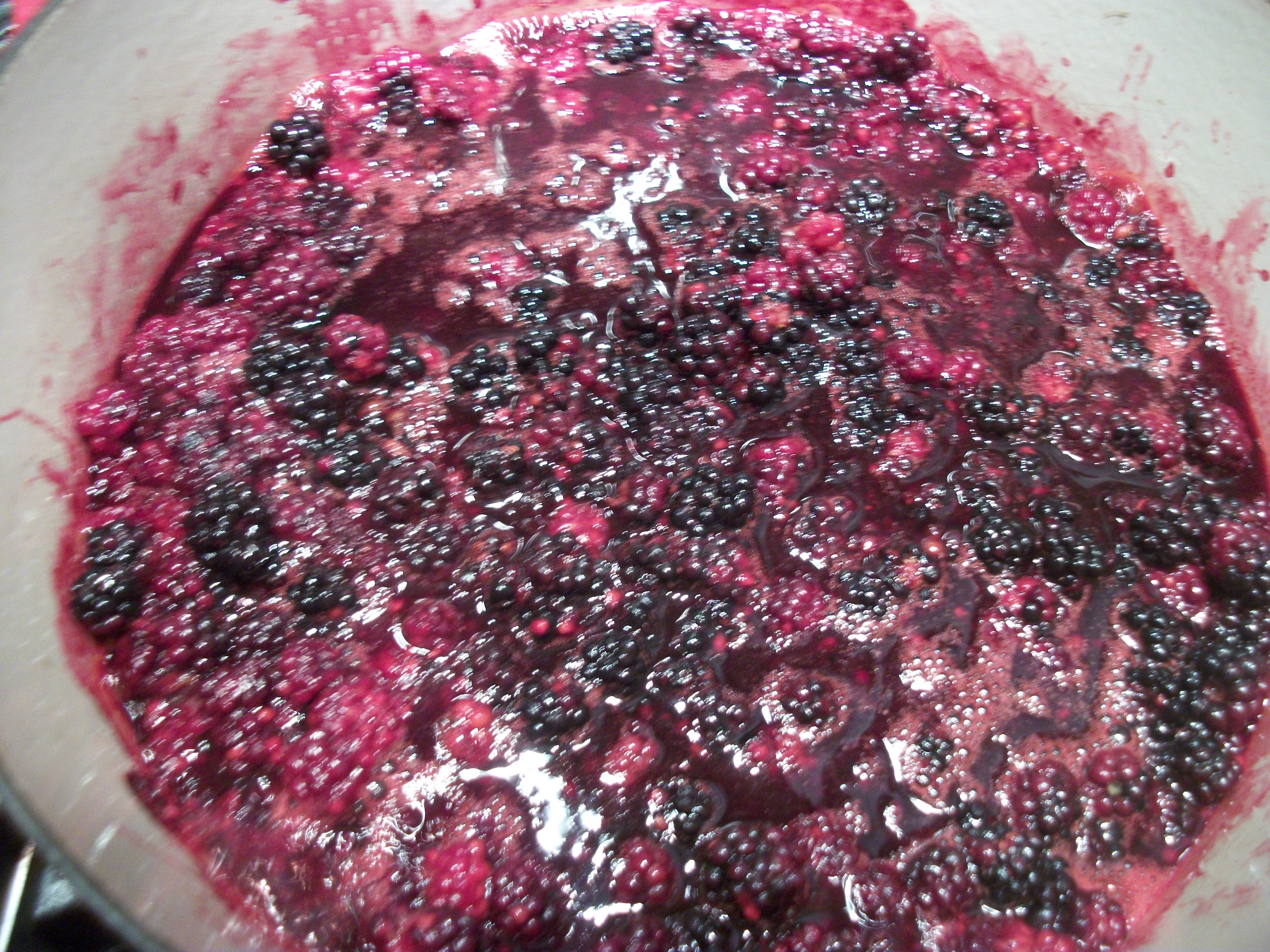
Here’s the pan of berries starting to heat up–note how he berries start to turn red.  I like to use my heavy Creuset pan–the cast iron holds heat so beautifully and evenly.  Use a heavy bottomed pan–not a thin one.   I smash them with a potato smasher to help the juice-rendering process along

Blackberries cooking

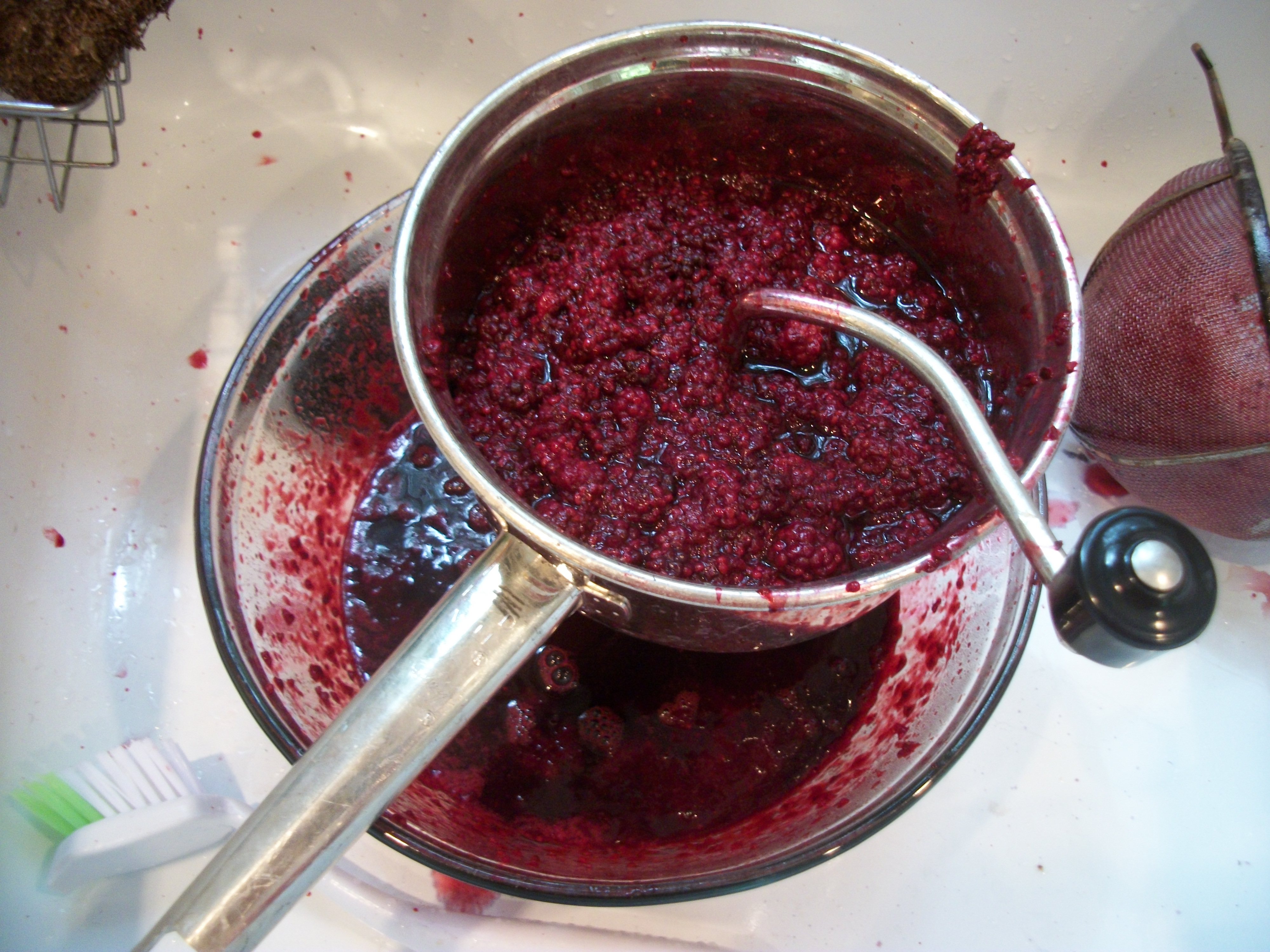
When the berries have cooked about five minutes, you need to decide if you want seeds or not.  I put the berries through a mill and remove the seeds–though I always have a few escapees.  Do this process in the sink as there is some inevitable spattering and you don’t want blackberry juice staining surfaces in your kitchen.

Deseeding blackberry jam

Put the juice back into the cleaned pan and add sugar. .  For about 9 cups of berries, I add 6 cups of sugar.  The recipes call for more, but this ratio works fine for me.  Here the rendered juice is really booking along.  It’s RED, isn’t it?  I don’t attempt to skim any of the foam at the top.

Blackberries cooking 2

Watch your heat–you want a steady boil at pretty high heat, but you don’t want the pan to overflow or the batch to burn.  DON’T LEAVE THE KITCHEN.  You will want to start testing for the jell point any time now.  You don’t want tough jam.

While the batch cooks, put your clean jars and caps in HOT water in a bowl in your sink–and arrange a space on your counter where you can fill your jars.  I have a large ladle that I use to dip up the jam.

I LOVE my large canning funnel.  It fits all jar sizes and makes filling the jars easy.

Canning funnel

Fill the jars, leaving about 1/2 inch clear.  I used to top the jam with melted paraffin wax, but I don’t do that anymore.  The jam keeps just fine without it.

Screw on the lids really tight and with a protective towel (they are HOT), turn each one upside down–which creates a nice vacuum seal on each jar.  Watch to make sure you don’t have a leaky one where the threads were just not tight enough.  Be careful picking up a leaky jar–the jelly is HOT.

Blackberry jam, Aug. 2013

Label the tops–using a year date, too.  I also make blueberry jam, so sometimes it’s hard to tell the difference between these two jams in the jars.

ENJOY!

Turkey Tracks: Black Trumpet Mushrooms

Turkey Tracks:  August 20, 2013

Black Trumpet Mushrooms

Mushrooming is something I really like to do.

And I have not been in the woods mushrooming much in the past two years.

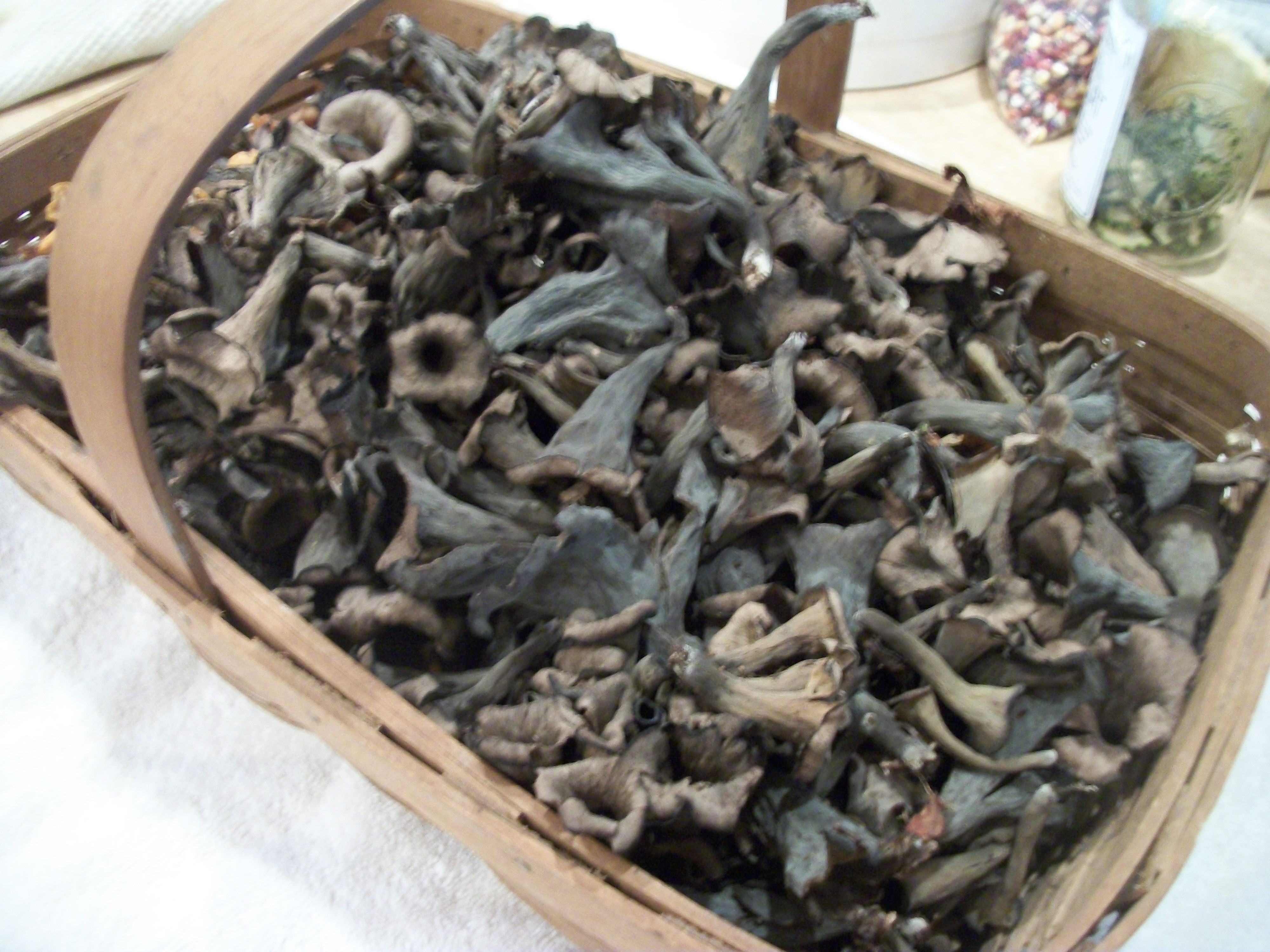
Here’s a whole basket of Black Trumpet mushrooms, some Golden Chanterelle mushrooms, and a few puffball mushrooms–all of which I found at the end of last week.  The puffballs are white and are lost in the basket in this picture.  There is no puffball that is poisonous, but I would not eat any mushroom that has grown in an area that has been sprayed with any kind of chemical.  So, avoid sprayed lawns and golf courses.


Black Trumpets, Aug 2013

I have a very nice video that I can’t get to upload–telling you how difficult these mushrooms are to see growing on the forest floor among the dried leaves of last year.  You don’t see the dark stems–what you see you see by looking straight down–and if you look at the tops of these mushrooms, you will see they appear as a light grey/brown.

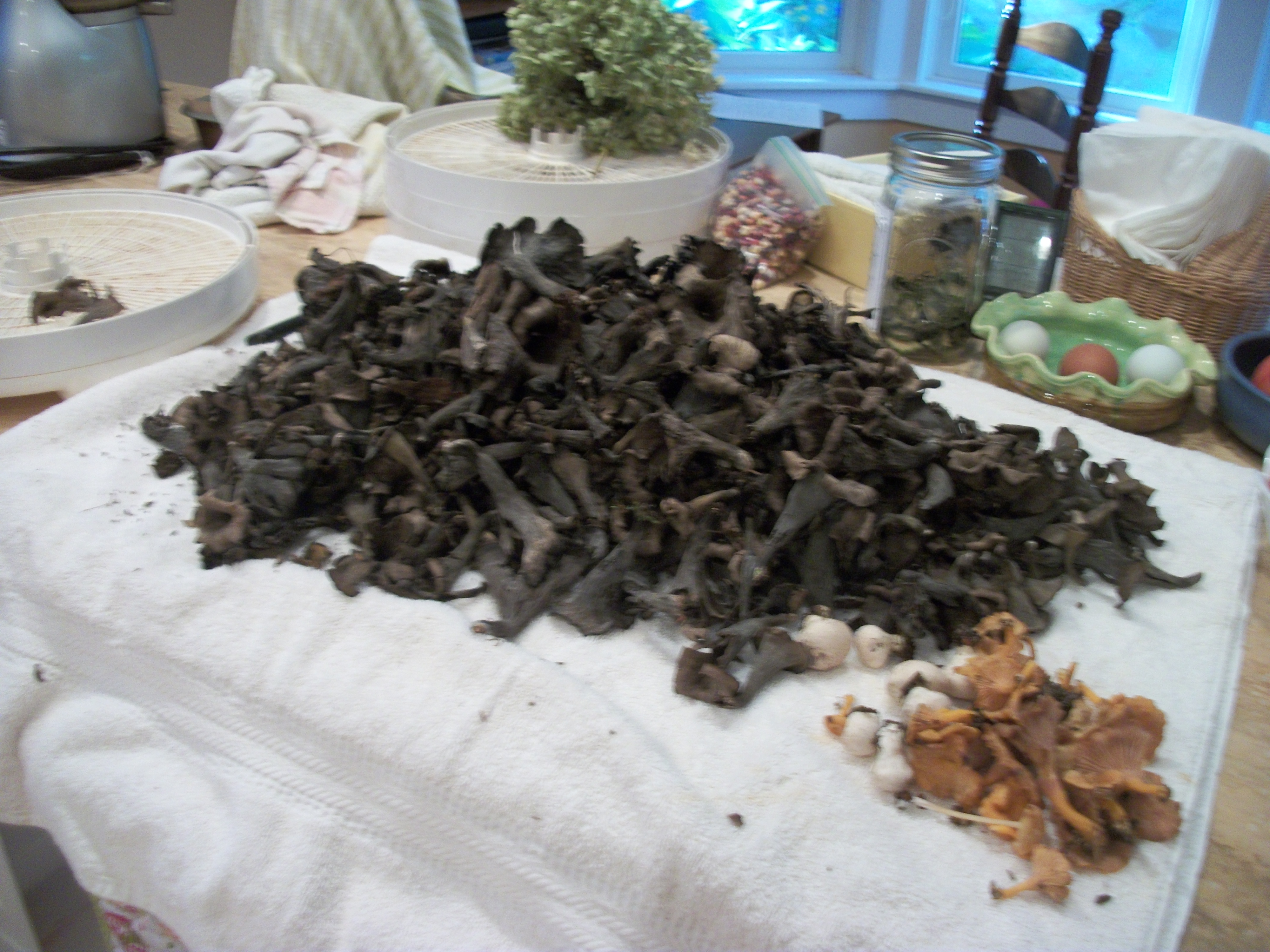
Here’s what the pile looks like on the kitchen counter.  Now you can see the puffballs.

Black Trumpets 2

The Golden Chanterelles smell like apricots–and all of these mushrooms are delicious sautéed in a little butter or duck fat and added to a cream sauce, scrambled eggs with a bit of cheese, and  soups and stews.

I cleaned the trumpets–you have to snip the ends, open them a bit, and scrape out any debris or critter that has lodged in the funnel.  Mostly they are pretty clean.

I dried all but a few of the trumpets and ate the rest with a rich lamb stock I had going in the kitchen.

Yummo!!!