Interesting Information: ‘All Natural’ Yogurt Products Found To Contain Aspartame And Artificial Colors

Interesting Information:  July 16, 2014

“All Natural” Yogurt Products Found to Contain Aspartame and Artificial Colors

I am so lucky to live in a state where I can buy glorious raw milk from grass-fed Jersey cows from local stores and from farms.  And, of course, many of those farms also make glorious yogurt.  Or, I make it myself.

I am so spoiled now as I don’t think I could ever go back to the commercial trash that passes for yogurt in the grocery stores.

Once you’ve tasted a living, fermented food, you can’t really go back very easily.  Once you’ve experienced how it FEELS in your body, you KNOW the difference.

I ONLY buy commercial yogurt when I am hopelessly trapped in a food desert while traveling–and I buy whole milk plain yogurt then.

So, this “wake up” call came from Health Freedom Alliance a few days back.

Health Freedom Alliance » Yogurt Buyers Beware: ‘All Natural’ Yogurt Products Found To Contain Aspartame And Artificial Colors.


First of all, I hope you all know by now that “natural” as a term describing food is totally without meaning.

Second, don’t buy the fruit sweetened yogurts.  They’re just candy and will play havoc with your insulin response.  They’re a recipe for making you hungry fast and for leading to diabetes.  THEY ARE NOT HEALTHY.

Third, claims for the beneficial flora and fauna in those commercial yogurts are highly suspicious–since most industrial cooking methods involve high heat (pasteurization, etc.), these products arrive with the flora and fauna that may have been used at some point in the production process, already dead–which means they are useless to you.  I’d like to see some tests on what exactly is now living in this dead food.

Fourth, READ LABELS.  What you’re eating is cooked food that is made solid with pectins and the like.  And taking all the whey out of yogurt to make “Greek” yogurt results in removing a fair amount of the protein that makes real yogurt healthy.  Whey itself, in a living dairy product, is extremely healthy.  Greek yogurt is analogous to eating the white of the egg and not the yolk.  You’re splitting the real, whole food into parts which is never a good idea.

Fifth, KEEP READING LABELS as they change all the time as the industry strives to make foods even more profitable by putting more and more cheap junk into food.

LEARN TO “OCCUPY YOUR KITCHEN.”

Interesting Information: A Pretty Picture of a Farmer

Interesting Information:  July 15, 2014

A Pretty Picture of a Farmer


Tara Derr Webb sent me this picture this morning–from Awendaw, South Carolina, which is north of Charleston.  (See her updated web site:  www.thespartanproject26.com)

IMG_8856

That’s Georgia, the baby goat she brought home in her car and raised.

Here’s a video of a young Georgia:

Interesting Information: “Buying and Selling of Homemade Food” by Cynthia Rosen

Interesting Information:  July 15, 2014

A Letter to the Editor of THE FREE PRESS


Here’s a letter to the editor in one of our local papers, THE FREE PRESS, from July 10, 2014.

The issue is “food safety” and how it is being used to kill small businesses–or, how our government is using food safety to stop all competitors to our Big Ag/Big Food industry.

I’ve written about this issue before.  These kinds of “food safety” laws are also being wielded all over Europe to run out small farmers, to stop farmers’ markets, to hobble produce growers, and so forth.

Maine has a lot of small farms.  We’re one of the few states that still does.  And Mainers are fiercely independent.  SMALL FARMS DO NOT OPERATE LIKE THOSE BIG COMMERCIAL FARMS IN ANY WAY.  We cannot hold them to the same rules that big, dirty farms should have.

So what does “freedom” really mean if we don’t have the choice to eat what we want.

This letter raises some really interesting points, and I hope you will consider them as there is such a slender line now between letting Big Food and Big Ag drive out all the small artisan food producers.  You can view other posts on this blog about this issue.  There is a Mainely Tipping Points Essay on the situation in Poland, many posts about raw milk, about Sandor Katz’s live lacto-fermented food, about how what we now call commercial yogurt, cheese, bread, kombuchu are but pale shadows of the real thing.  We have to stand up to this movement–as its sterile, processed food is killing us.


7/9/2014 10:33:00 AM

Buying and Selling of Homemade Food-

I was given homemade blueberry wine for my birthday. I shared with my friends and it was delicious. Another gave me a quart of homemade raw yogurt. Soon after, someone I know shared a butchered chicken from their backyard flock. My family ate fresh, local baked bird for dinner and enjoyed a pot of chicken soup from its carcass. Someone else makes scrumptious old-fashioned kraut and another makes out-of-this-world pies. What if I gave the wine-maker, the yogurt-maker, the chicken producer, the kraut and pie-makers something in trade? What if I wanted to give them some money? I don’t know how many folks realize that if I gave money for their homemade foods that they’d be breaking the law. How many understand it’s against the law to sell to me what they can give to me?

The government has decided we’re not allowed to trade with each other without permission and the courts agree. Dan Brown sold milk directly to folks who wanted his milk and Dan has been taken to court and found guilty because he wasn’t permitted by the government to do this. They say it’s about food safety. Then why isn’t it illegal to give homemade food away?

Most people find acceptance for government regulation when it’s about products on mass scale that change hands before getting to the consumer. What the government has made illegal, though, has no middle men. There is no chain of custody to track. There is only the producer and the consumer involved. What kind of arrogance treats me like a dimwit who cannot decide what to eat?! What kind of elitist garbage treats us as children that need permission to trade with each other?!

The state’s interference in private transactions is a violation of what is sacred. I accept no government authority over my GD-given natural right to feed and nurture myself. The continued decline of small diverse farms results in less food choices for us all. When the government makes immoral laws it is up to the people to reject them. I will get my food how I decide and more so from folks who are not state sanctioned; from folks I know and trust. I will trade what I want with whom I want. Natural law does not cease to exist just because man says so!

Cynthia Rosen, Washington


Books, Documentaries, Reviews AND Interesting Information: No Time To Cook

Books, Documentaries, Reviews AND Interesting Information:  July 11, 2014

No Time To Cook


I’m so enjoying this summer.

In the mornings, I’m getting up early, feeding and releasing the chickens from their coop, feeding the dogs, making a big cup of tea, and sitting on my back deck with a book for at least an hour before really starting my day.

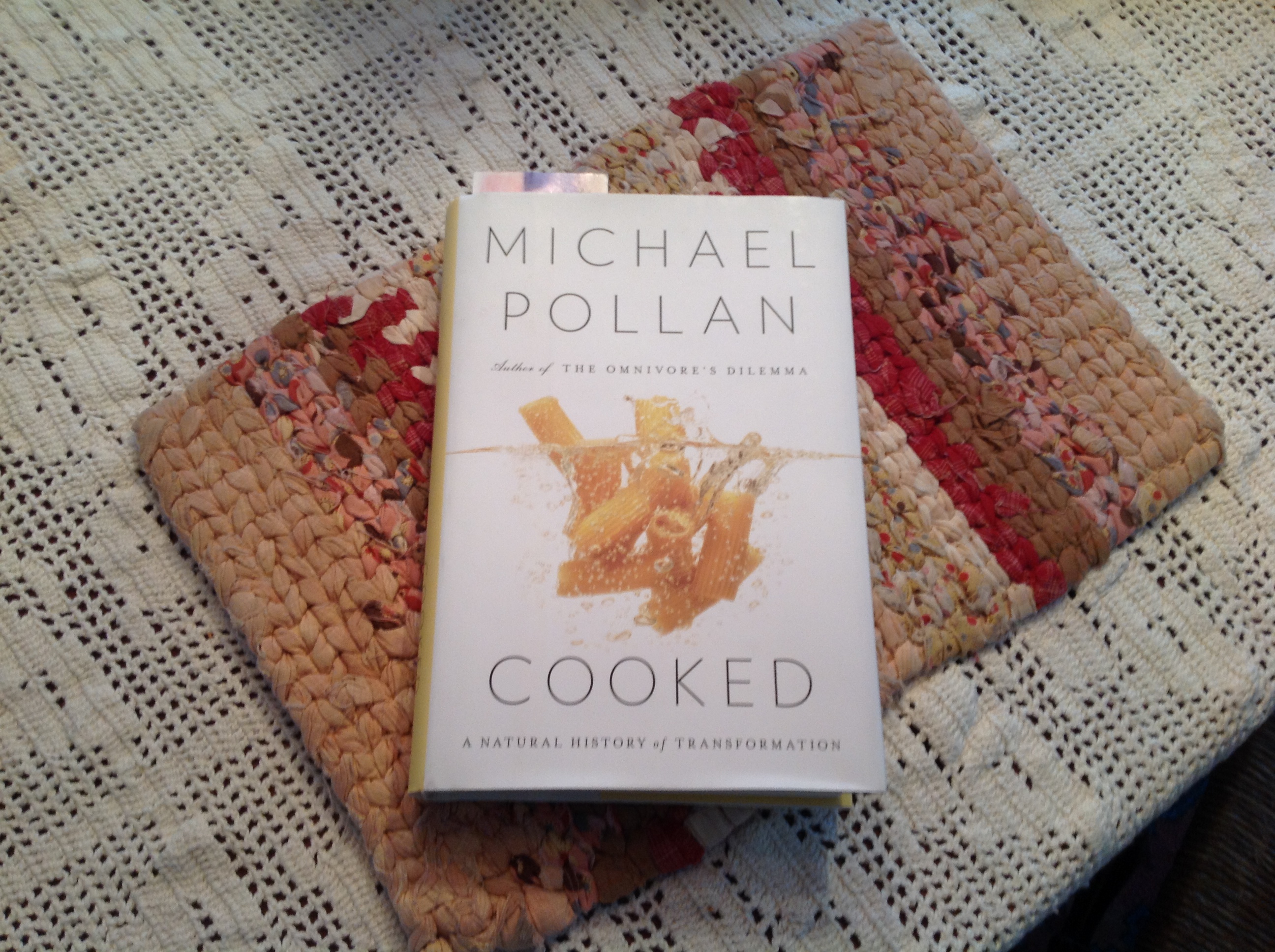
At night, before bed, I read fiction.  In these early morning hours, I am reading mostly nonfiction.  My current book is Michael Pollen’s Cooked, which I’m really enjoying in all kinds of ways.  I love the way Pollen THINKS about his subjects as it’s thinking that is informed by a lot of research of all kinds–to include spending time cooking.

IMG_0251

I’ve waded through the “fire” section–which is all about roasting meat over coals and all the implications of this very male form of cooking.  Think pit barbecue.

I’ve almost finished “water”–which involves stewing, souping, braising–or cooking in a pot with aromatics and liquids.  This “water” section also takes on the fact that we say we have no TIME to cook any more.  If buying food saves us thirty minutes a day, what are we doing with that time?

But wait!  Does buying food really save us thirty minutes?  Does going to a restaurant?

Americans work longer than any other industrial nation, writes Pollen.  Since 1967, we’ve added 167 hours, or the equivalent of a month’s full-time labor, to our work year.  With two parents involved, the amount is more like 400 hours.  Why?

This probably owes to the fact that, historically, the priority of the American labor movement has been to fight for money, whereas the European labor movement has fought harder for time–a shorter workweek, longer vacations.  Not surprisingly, in those countries where people still take home cooking seriously, as they do in much of Europe, they also have more time to devote to it (183).

And these people who cook are thinner, Pollen points out in a number of places in the book:  “the more time a nation devotes to food preparation at home, the lower its rate obesity” (191, 192).

So, we spend more time working.  We spend more time on the car.  We spend more time shopping.  We spend more time in front of screens (35 hours a week on average watching tv), surfing the Web (13 hours), and playing games on our smart phones.

Folks, WE HAVE TIME TO COOK good food.  It’s always already about the choices we are making, isn’t it?

We’re also doing a lot of what is called “secondary eating”–or eating while doing something else:  watching tv, driving, getting dressed, and so on.  We now spend 78 minutes a day in secondary eating and drinking (190).

Pollen and his family try an experiment:  Microwave Night.

He and his son go to the grocery store to pick out a dish for each person–three dishes (the third for his wife) and a dessert.  The total cost was $27.  (Pollen notes that he could have bought grass fed beef and veggies for a stew that would feed the family for two nights for the same amount of money.)  Their first obstacle is to buy food that has recognizable ingredients and isn’t full of hydrolyzed vegetable protein (soy).  Their second is realizing that some of their foods have packages that announce that they need to be cooked in the oven for best results and will take up to 45 minutes.

To make a longer story short, it takes an hour to microwave all the food–and at no time can they sit down together at the table as someone is always checking on the dishes in the microwave or their food isn’t ready yet, or is, but is getting cold.  Dinner time was a disaster in terms of family time.  The food also all tasted “remarkably similar”–no matter how exotically different–and much like what airline food used to taste like.

The next night, they ate a stew, visited over the table, and were relaxed and energized.  The stew had been in the refrigerator since Sunday–when it had been cooked for the week–a practice Pollen has worked into his schedule.

By the time the sweet smells of allspice, juniper, and clove began to fill the house, Isaac and Judith had gravitated to the kitchen; I never had to call them to dinner.  I brought the pot out to the table, and began serving everyone from it (200).

For the first time all day, it felt like we were all on the same page, and though it would be overstating things to credit that feeling entirely to the delicious braise, it would also be wrong to think that eating the same thing from the same pot, this weeknight communion of the casserole, had nothing to do with it, either (201)

So, I’m looking forward to the Air and Earth sections of Cooked.

And I remain certain that I will continue to “occupy my kitchen”–as I have all of my adult life.

Interesting Information: “Water Fluoridation Lowers IQ: Medication Without Consent”

Interesting Information:  July 10, 2014

“Water Fluoridation Lowers IQ:  Medication Without Consent”


Here’s a quote from this little sidebar article in the July/August 2014 issue of Well Being Journal (10, 12):

At present, 37 out of 43 studies, conducted in China, India, Iran, and Mexico, show water fluoridation lowers IQ in children.  Even the lowest level of fluoride assessed in these studies–1.8 part per million–lowered IQ.

So why is fluoride still being added to our water???

I’ve written at least three Mainely Tipping Points Essays on the high points of the issues involved in water fluoridation–using information from scientists with the credentials to evaluate this issue.  You can click on the Mainely Tipping Points Essays OR use the search button on the right side bar.

Interesting Information: Magnificent Magnesium Rescues The Heart

Interesting Information:  June 9, 2014

Magnificent Magnesium Rescues The Heart


So many people I know are taking blood pressure medicines.

And many of them are having additional problems as well.

I am wondering if the additional problems are connected to the BP med and/or to the other meds that seem to accompany the decision to take the BP med?


I ran across an article in the July/August 2014 issue of Well Being Journal that offers some interesting information about my question:  “Magnesium Balances Calcium and Rescues the Heart” by Scott E. Miners.

Basically, the article is a review of Carolyn Dean, M.D.’s book THE MAGNESIUM MIRACLE.

I googled Dean and discovered that she is both an MD and a Naturopath Doctor–so she sits astride the chasm that often lies between allopathic (mainstream medicine) and alternative medicine.   In addition, she worked with magnesium expert Mildred Seelig, MD.


Disclaimer:      Since posting this review, with the help of PhD nutritionist Judith Valentine, I did more research on Carolyn Dean.  (See judithvalentine.com)  Dean is really riding the coat tails of Mildred Seelig’s very valid and published work on magnesium.  Take a look at Selig’s publishing record:  http://www.mgwater.com/seelig.shtml.  It turns out that Dean lost her Canadian MD license.  Yes, she is operating out of the medical norm and is critical of today’s doctors and that’s always a problem for the medical police, but having said that, there is just too much “off” about Dean herself.  I ordered Dean’s picometer magnesium, for sale on her web site.  Maybe it’s ok.  She owns the company, which is now based in Hawaii.  (It’s unclear if California has also revoked her medical license.)  I have to tell you that Dean’s liquid magnesium tastes TERRIBLE.  My body just hates it, for whatever that’s worth.  For also whatever it’s worth, I’ve had no more leg cramps and none of the diarrhea that  some forms of magnesium that hang around in the gut can cause.  I think there is enough evidence that what Dean is saying about magnesium deficiency in Americans and the tremendous downsides to getting caught up in three to five medicines is probably accurate–so I am leaving the post here–but putting in this disclaimer.  And I have no idea about the quality of her magnesium product.  I also think WELL BEING JOURNAL needs to review their info on Dean’s work.

Dean thinks that about 80 percent of Americans are magnesium deficient.

Magnesium is the mineral that “activates” nerves and muscles, “including,” writes Miners, “the muscle cells in the heart.”  Further, “magnesium is important for maintaining optimal heart rhythm, blood pressure, muscle and nerve function, blood sugar regulation, and brain health.”  Signs of magnesium deficiency are “constipation and other digestive problems, irregularities in menstrual flow and reproductive health, muscle spasms, nocturnal leg cramps, and migraine headaches.”  And “loss of appetite, fatigue, numbness or tingling, and nausea.”

One idea I walked away with was the notion that blood tests don’t show magnesium deficiency because the body robs magnesium from other sites in the body to keep the blood level at about 1% magnesium.

Another idea was that one has to eat significant amounts of foods containing magnesium to get enough–and even then, the amount of magnesium in the foods can depend upon the soils in which the food grew.  With commercial farming, soil depletion is increasingly a problem.  The magnesium food list is seaweeds, leafy dark green vegetables like chard and kale, legumes, green beans, almonds, cashews, filberts, pumpkin seeds, and sesame seeds.

Dean says most magnesium supplements , especially magnesium oxide, are poorly absorbed.  Up to 96 percent stays in the digestive system, where it acts as a laxative, rather than getting to the cells where it is desperately needed.  Dean recommends picometer-sized forms of magnesium as that form can be totally absorbed at the cellular level.  Epsom salt soaking (magnesium sulfate) is another excellent way to get more magnesium into your system.  [And, more sulfur–see other blog posts on sulfur deficiency.]

DRUGS DEPLETE MAGNESIUM, says Dean–based on Seelig’s laboratory work with drugs and her own work since working with Seelig.  (Seelig tried to tell her drug company bosses that their drugs were depleting magnesium in bodies, but they “weren’t interested.”)

Dean details the following situation:   you are stressed when you see your doctor, so your BP might be high at that moment.  The doctor might put you on a diuretic–which drains your magnesium and potassium, which makes your blood pressure truly higher.  So now the doc will “worry that your calcium levels are going to rise, and will prescribe a calcium channel blocker.  Most doctors don’t know that magnesium is a natural calcium channel blocker.”  And, they’ll put you on a third drug, an angiotensin converting enzyme (ACE) inhibitor.  So now you’re on three drugs.

But the tale continues:

After two or three months, you come back and have blood taken to make sure the drugs aren’t hurting your liver….But all of a sudden your cholesterol is elevated; your blood sugar is elevated….The doctor says, “Oh, we caught your cholesterol.  We just caught your blood sugar.  We can put you on medications.”  Dean goes on to say that they didn’t catch these conditions; they caused them.  The more you reduce your magnesium, the more your cholesterol will go out of control.  She notes magnesium is important to balance an enzyme used in the manufacture of cholesterol in the body; magnesium helps to stabilize cholesterol.

Further, Dean notes that Statin drugs destroy an enzyme that magnesium needs.   And, that a sign of diabetes is low magnesium.

Miners notes that Dean writes that “doctors only recognize drug side effects 4 percent of the time because they do not want to believe they are harming their patients via their prescriptions.  More, drug intake also causes inflammation.”

And, isn’t this situation the HUGE elephant in the medical room these days?  Doctors are caught in what I’ve been calling a “kool-aid loop” of information crafted by the drug industry AND by the “standards of care” they are expected to follow.  It’s the rare doctor these days who is researching this information for themselves and trying to understand what is really happening in bodies.  Dean appears to be one of the rare ones.

Here’s what Dean says to do:  keep taking magnesium:

Take it in the various sources:  the picometer-sized magnesium, Epsom salts, and so on.  Take an oxide if you’re constipated…you may need the magnesium oxide, but take the others as well.

I would note that magnesium and calcium are “paired”–one effects the other.  Too much magnesium can block calcium.  But, my thinking is that if you are eating dairy products (cheese, yogurt, milk), nuts, seeds, homemade bone broth, and dark leafy vegetables, adding a quality source of magnesium to protect your heart might be a good idea.  I’m going to do it.


SO WHAT’S A GOOD BP TO HAVE?

I don’t have high blood pressure.  But I had always heard that 100 plus your age–over 90–was a reasonable BP, especially as you age.   Sherry A. Rogers, MD, an environmental doctor who has been a fairly prolific writer, has a book called THE HIGH BLOOD PRESSURE HOAX.  She quite seriously supports the more modern BP figure of 120 over 70.  BUT she advocates trying to figure out why the BP is high and counsels treating with diet and other lifestyle changes.  You can read a Weston A. Price book review at the following url if you want more information on this subject of BP measurements.

High Blood Pressure Hoax by Sherry A. Rogers

Interesting Information: Charcoal for White Teeth

Interesting Information:  June 29, 2014

Charcoal for White Teeth


Some months back, niece Nancy Howser Gardner posted an article about using charcoal to whiten teeth.

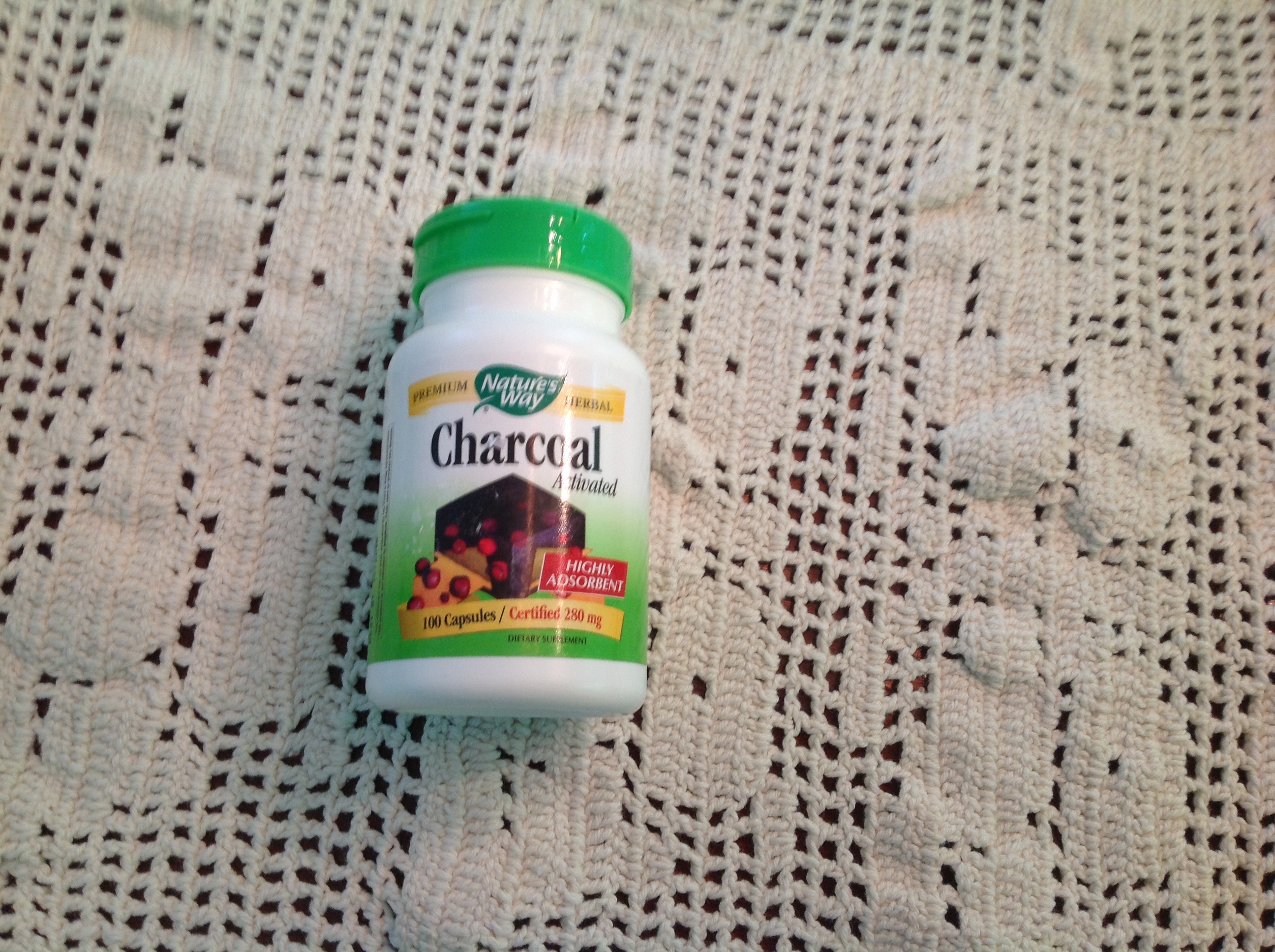
Here’s what I bought.  The bottle is full of capsules.  You break one open (into a glass or mug), dip in your toothbrush, and lightly brush.

IMG_0296


I was SHOCKED at how black, black, black my toothbrush got, and my teeth, and everywhere I dripped–which is why I’m suggesting a glass or mug from the get-go.  My goodness, I thought, what have I done.

And then I rinsed.

I was SHOCKED again at how WHITE MY TEETH WERE.

The plus here is that the charcoal is highly absorbent, but takes away tea tannins, coffee stains, and the like–not the minerals from your teeth or the enzymes from your mouth.

No questionable chemicals here.  Just plain old charcoal.

Oh my goodness…

The remains in my toothbrush continued to clean, too.  And I’m thinking that the more one uses the charcoal, the more absorption of dark things takes place.


Interesting Information: Dr. Oz and Weight Loss Scams

Interesting Information:  June 25, 2014

Dr. Oz Promotes Weight-Loss Scams


I’ll bet I got 20 to 30 emails or questions about Pure Green Coffee, raspberry ketone, and Garcinia Cambogia over the past few years.  Many from people who should either know better or were just sharing.

I kept responding that there was no science behind these claims.

None.

Zero.

And I repeated that I didn’t care what Dr. Oz was saying because he had clearly sold out in some fundamental way.

I’d like to follow the money with regard to Oz’s (let’s remove the title “Doctor” from his name please as he’s an entertainer) claims about these fake weight-loss product, and I’ll bet someone will discover  that Oz is personally benefitting from these fake products.  Why else would he behave in this shabby way?

I’ll go further and tell you that I think and have said to many that Oz is a megalomanic who is only interested in himself.  I watched the program one day as Dr. Kaayla Daniel was a guest speaker meant to discuss soy issues.  Oz allowed her one or two sentences TOTAL and ended that segment by passing out soy plants to the audience.  I thought then that he had sold out in some way to the soy industry.  Dr. Daniel is a recognized authority on humans eating soy and published an impeccably researched book on all the ins and outs of soy and the soy industry.

Dr. Joseph Mercola’s post today discusses this Oz issue.  Here’s part of what he wrote, and I hope you go to the url below and read the rest as false advertising is ILLEGAL.


Senate Hearing Puts Dr. Oz in the Hot Seat

The hearing featured testimony from Dr. Mehmet Oz, who ended up getting grilled over his role in promoting what amounts to fantasy.2 According to Senator Claire McCaskill’s website:

“Last month the Federal Trade Commission (FTC) announced that it is suing the Florida-based company, Pure Green Coffee, alleging that it capitalized on the green coffee bean diet fad by using bogus weight-loss claims and fake news websites to market its dietary supplement.

The FTC claimed that weeks after green coffee was promoted on the Dr. Oz Show, Pure Green Coffee began selling their Pure Green Coffee extract, charging $50 for a one-month supply.”

Senator McCaskill read off a number of statements Dr. Oz has made on his show, such as:

“You may think magic is make-believe, but this little bean has scientists saying they’ve found the magic weight loss cure for every body type: It’s green coffee extract.”

“I’ve got the number-one miracle in a bottle, to burn your fat: It’s raspberry ketone.” “Garcinia cambogia: It may be the simple solution you’ve been looking for to bust your body fat for good.”

“I don’t know why you need to say this stuff,” McCaskill said, “because you know it’s not true.” Indeed, Dr. Oz is quite knowledgeable and we agree on many things. Unfortunately, I think he may have fallen into the ratings game when it comes to pushing “magic” weight loss pills.

I personally disagree with his stance on hyping up weight loss supplements. I’m particularly against the idea that a pill would be able to take the place of eating right and exercising, and this is something Dr. Oz is likely encouraged to promote due to successful ratings.

In a November 2012 show, he stated: “Thanks to brand new scientific research, I can tell you about a revolutionary fat buster. It’s called Garcinia cambogia.” Meanwhile, the words “No exercise. No Diet. No Effort” were emblazoned on the screen behind him. Most recently, Dr. Oz featured a product he referred to as “my Rapid Belly Melt.”3 Part of the show involved audience members photographing their stomachs. The photos were then photoshopped into a slimmer version. This, supposedly, was the result you could glean from this “insta belly melt” product.

It’s quite clear to me that these kinds of products, and especially these kinds of fantasy-based promotions, devalue the supplement industry as a whole. This is tragic, considering the fact that nutritional supplements serve a critical function by helping to correct specific nutritional imbalances or deficiencies.

Weight Loss Supplements: Are They Worth the Potential Risks?.


Here, too, is John Oliver in a 14-minute clip completely destroying what Oz has done–if you want to see for yourself the claims Oz was making.

Watch John Oliver Verbally Pants Dr. Oz Over Dietary Supplements.


Meanwhile, note that the only way to weight loss and good health is eating clean, nutrient-dense foods that are, hopefully, locally sourced so you are eating them in season and at the height of their powers.

There are no magic bullets to undo that which we have done.

Interesting Information and Turkey Tracks: Weed/lawn Chemicals

Interesting Information and Turkey Tracks:  June 1, 2014

Weed/lawn Chemicals


Here’s a really lovely column from my neighbor Marina Schauffler on using lawn chemicals and weed killers.  This column appeared in the Maine Sunday Telegram today.

http://www.pressherald.com/life/Sea_change__Create_a_thriving_backyard_community_.html


Here’s an attempt to paste the column–not always easy with the ipad…


Sea Change: Create a thriving backyard community
See your yard as habitat, not lawn.

By Marina Schauffler

Landscape planners encourage us to visualize the area around our homes in terms of rooms that act as external living spaces. If we extend this idea, going beyond visions of upscale patios with grill stations, we can see our yards as habitats that help supply what we need to thrive: food, water, community and beauty.

Consider starting with “edible landscaping” – plants that provide fruits, blooms, roots and greens to enjoy through the growing season. Foraging opportunities include plants that typically have only decorative use – like daylilies and wild beach rose. Ample guidance exists for those seeking to create edible yards, thanks to the tireless efforts of Scarborough’s Roger Doiron, founder of Kitchen Gardeners International (kgi.org), and book authors like Rosalind Creasy and Lee Reich.

To generate abundant food, your backyard habitat will need consistent water. Gutters and rain barrels can capture downpours and help redirect water to plants during dry spells. Mulching with materials like shredded leaves or composted wood chips can help the soil hold moisture, and reduce the number of uninvited plants that take up residence. Mulching also helps feed the staggering number of microorganisms that share in the habitat underfoot: one square yard of healthy soil can contain more than a billion bacteria, fungi, nematodes, earthworms and other creatures reliant on organic matter. To keep them happy, factor a “compost room” into your yard design if you can, or sign up for a service like Garbage to Garden that takes away food scraps and delivers finished compost.

Many species that live within backyard habitats contribute to the health of the whole in ways we’re only beginning to understand. It helps, therefore, to approach yard management with humility – striving to observe carefully, learn continually and consider the essential needs of other creatures. In her book “Suburban Safari,” South Portland writer Hannah Holmes characterizes this as a move from “biological boss” to “benevolent dictator.”

In an increasingly developed and polluted world, our yards need to be a safe haven. Consider, for example, a pair of warblers that takes up residence in a nearby bush. They’ve migrated thousands of miles, possibly from wintering grounds compromised by deforestation. That journey, made more challenging by light pollution, may have been through areas of drought where food and water were scarce. Their grassy nest is interwoven with ubiquitous plastic trash. Will the yard they rely on for insects be doused with toxic lawn-care  products?

If we take a communal view of our yards and acknowledge the needs of all the resident creatures, applying pesticides becomes a short-sighted and untenable choice. By definition, habitats are places that foster life, so deliberately introducing a far-reaching agent of death produces a fundamental conflict. E.B. White described this paradox in his 1949 poem “Pasture Management” (see sidebar) about the herbicide 2,4-D. Still a common ingredient in lawn-care products (with more than 40 million pounds applied annually in the US), 2, 4-D is linked in numerous studies to groundwater contamination, wildlife die-offs and non-Hodgkin’s lymphoma.

As White demonstrates, taking a more benevolent view of our fellow species moves us beyond the spray-bottle illusion that we can eliminate unwanted “pests.” When we see ourselves as part of an interdependent community of organisms, we gain confidence that imbalances will rectify themselves if we foster the health and resilience of the whole. That principle applies in our yards, and in our watersheds – where our backyard actions have impacts far downstream.


PASTURE MANAGEMENT

E. B. White

Down below the pasture pond,
O’er the lovely lea,
I went spraying bushes
With 2,4-D.

(For young, susceptible annual weeds,
apply one to two pints per acre.)

I had read my bulletins,
I was in the know
The two young heifers
Came and watched the show.

(Along ditches and fence rows, use 2,4-D when weeds
are in a succulent stage. Won’t harm livestock.)

Rank grew the pasture weeds,
The thistle and the bay;
A quiet, still morning,
A good time to spray.

(Control weeds the easy way with Agricultural Weed-No-More –
not by chemical burn but by hormone action.)

Suddenly I looked and saw
What my spray had found:
The wild, shy strawberry
Was everywhere around.

(An alkyl ester of 2,4-D is produced by
reacting alcohol with the raw 2,4-D acid.
The result is an oily liquid that sticks to weed leaves.)

What sort of madness
Little man is this?
What sort of answer to
The wild berry’s kiss?

(Any 3- or 4-gallon garden pump-up sprayer
can be used, after the standard nozzle
has been replaced with a new precision nozzle.)

It seemed to me incredible
That I’d begun the day
By rendering inedible
A meal that came my way.
All across the pasture in
The strip I’d completed
Lay wild, ripe berries
With hormones treated.

(The booklet gives you the complete story.)

I stared at the heifers,
An idiot child;
I stared at the berries
That I had defiled
I stared at the lambkill,
The juniper and bay.
I walked home slowly
And put my pump away.
Weed-no-more, my lady,
O weed no more today.
(Available in quarts, l-gallon and 5-gallon cans, and 55-gallon drums).

— E.B. White, “Poems & Sketches of E.B. White”

A BETTER BACKYARD HABITAT

1. Learn more about ecological practices to foster healthy lawns and gardens at sites like
http://www.yardscaping.org
and
http://www.cascobay.org/bayscaping
Visit the yardscaping demonstration garden along the Back Cove in Portland.
2. Think soil health before lawn care. Take a soil sample – kits are available through county Cooperative Extension offices – and build organic matter (leave grass clippings on the lawn and top-dress each season with a quarter-inch of fine compost).
3. Avoid a summer buzz cut: Mow at a height of 3 inches since taller grass withstands drought better and helps shade weed seeds.
4. Create diversity: Consider replacing some of your turf with native plants, flowering shrubs and groundcovers.
5. Go native: Avoid botanical thugs like purple loosestrife, burning bush and Asiatic bittersweet. Read “Gardening to Conserve Maine’s Native Landscape” at http://www.umaine.edu/publications/2500e/
6. Look online to find the Material Safety Data Sheet for any substance you (or your lawn-care firm) might apply. For reference, read “The Organic Lawn Care Manual” by former Maine resident and Safe Lawns founder Paul Tukey.

Marina Schauffler, Ph.D., is a writer and environmental consultant who runs Natural Choices (naturalchoices.com). She is also a volunteer Master Gardener.


Interesting Information: Jello…is Toxic!

Interesting Information:  May 24, 2014


Jello is Toxic!


Last summer when the kiddos were here, one had severe stomach upset and diarrhea.

We tried all the good cures:  applesauce, bone broths, banana.   Not much was working.  Jello, we thought.  That might help.

We went to the store and bought several packages of fruity jello.

Then we got home, read the labels–which we should have done in the store–and threw out the packages.

There was NO WAY we were feeding this jello to anyone.

And it’s not just a matter of A LOT of sugar…

The ingredients are…scary.

Slide13


Niece Nancy Howser Gardner sent me this post from the Food Babe blog–where the writer goes into much more detail about why these ingredients are extremely problematic.

http://foodbabe.com/2014/05/21/this-childhood-favorite-has-a-warning-label-in-europe-why-not-here/

***

Gelatin from healthy animals is laden with minerals and nutrient-dense fats and lots of other ingredients.  This gelatin is what makes a good broth…into jello.

Apparently it’s easy to make delicious gelatin desserts by using a safe, clean source of gelatin.  It’s something I’m going to try this summer.

I’ll keep you posted if a really good recipe develops.