Roxanne Wells’ Gorgeous Garden

Turkey Tracks: July 24, 2020

Roxanne Wells’ Gorgeous Garden

Long-time friend Roxanne Wells is a master gardener and a master quilter who mostly designs her own astonishingly wonderful quilts. Unlike my wild gardens here on Howe Hill, on property that is on a hill, Roxanne’s gardens are meticulously planned and tended. I have been in awe of her garden and her quilts for many years now.

We email pretty much daily, and we send pics back and forth—pics mainly of gardens and quilts. The emails cover a wide range of our thinking, ideas, worries, and joys. She is a special friend in my life.

I thought that it would be fun to see pics of how Roxanne’s gardens develop over the summer and to hear how she thinks and plans for how the garden looks as each grouping of plants comes into bloom. Roxanne chooses each plant carefully for the statement it makes in its own blooming season. She thinks about how the garden will look during the WHOLE summer season.

So, I asked her if she would put together a series of pictures that show her garden’s changes over this season so far. The text is also hers from this point.

My Gardens Throughout the Season

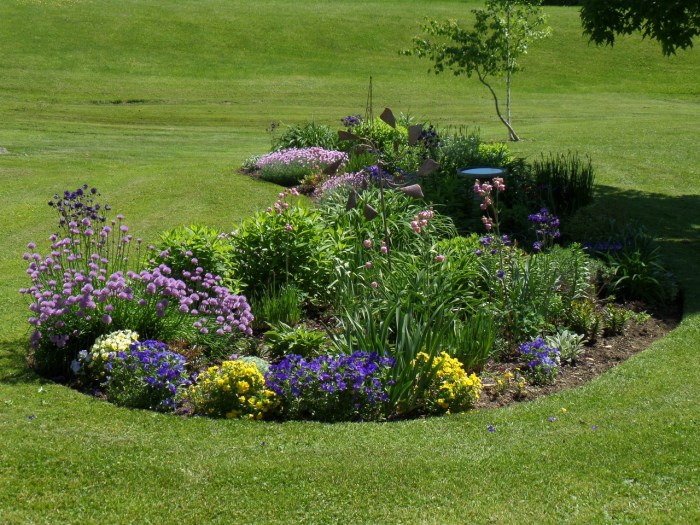
Given this large bed is the focus from most of the rooms in the back of the house, it’s the largest of my gardens. I’ve included photos over a span of the growing season to see how this garden changes – sometimes only in a matter of a week or two.  There are no annuals in the gardens.  The closest I come to annuals are the violas which self-seed from year-to-year.

June 13th.  The larger bed with chives, violas, aquilegia (both pink and purple hybrids), and pinks in bloom.  
SAMSUNG CAMERA PICTURES

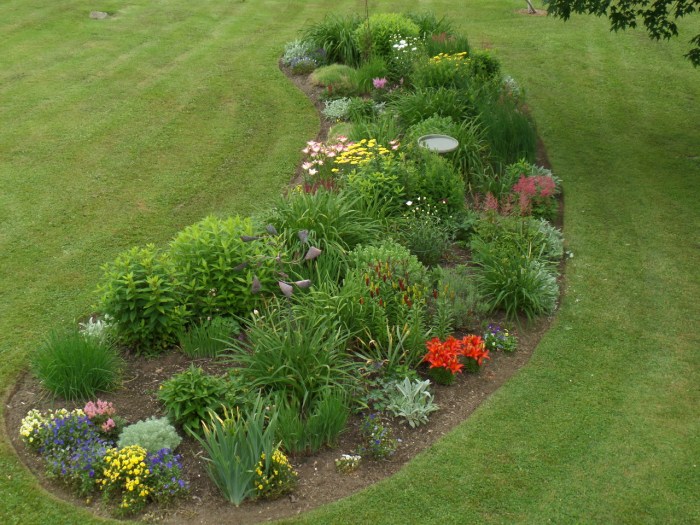
Three weeks later, on July 4, the pinks and purples on their way out and reds appearing. The reds are from astilbe and asiatic lilies (two different asiatic hybrids in differing heights).
SAMSUNG CAMERA PICTURES

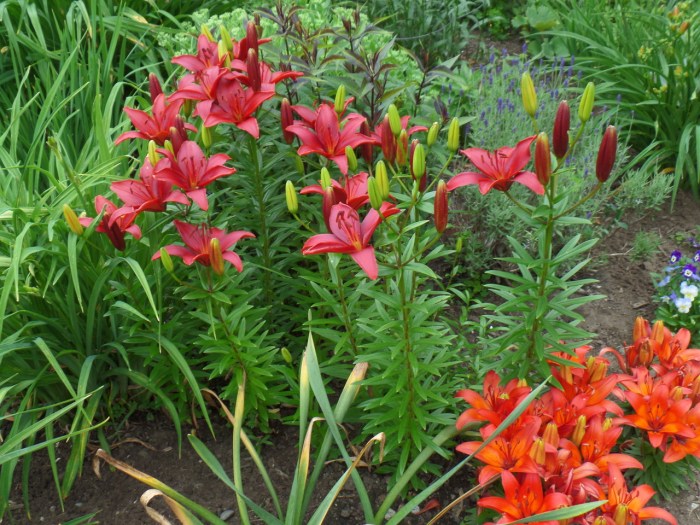
A closer look at the red asiatic lilies: Tall, dark red is the hybrid “Montenegro” and the shorter orange/red is “Matrix.”
SAMSUNG CAMERA PICTURES

Another two weeks—on July 16th—and this is the same bed seen from the far end looking back at the house. Now the pink and purple colors are fading and being replaced by darker and hotter colors that are just beginning to color up. At this time, from this angle, the darker astilbes hold your attention and move your eye along the border of the bed where I have the same hybrid planted in several places.

SAMSUNG CAMERA PICTURES

July 22nd, and only a week later, from the same far end of this large bed. Day-lilies carry the bulk of the colors now, as well as the astilbe and some fuchsia-colored phlox (just beginning to open).

Far end large bed 3rd wk July

More photos below show closer looks at “vignettes” within the larger bed.

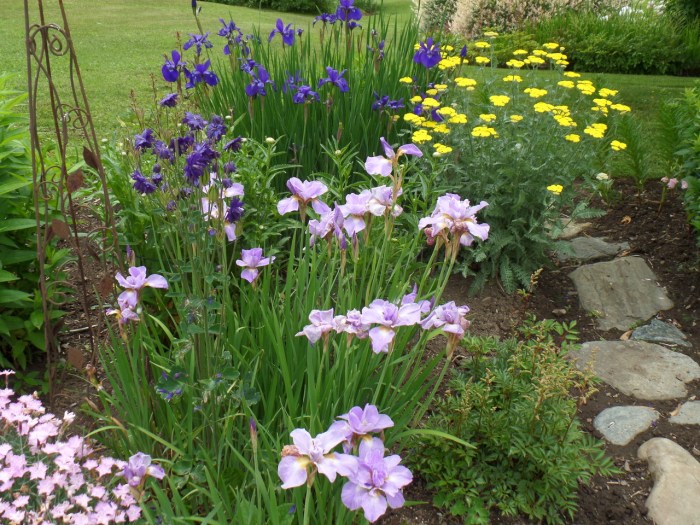
June 22, far end of above bed with Siberian iris (“Midnight Velvet” and “Ranman”), aquilegia (purple hybrid) and achillea “Moonshine.” Pinks are in the lower left.
SAMSUNG CAMERA PICTURES

On July 8th, in this same spot, the above blooms are replaced with pink astilbe and white daisies. The achillea’s yellow blooms remain for many weeks. I like this achillea hybrid (“Moonshine”) for its soft yellow, which compliments many other colors, and the length of its bloom time.

Daisies, Achillea Moonshine, Astilbe

July 4th. This is the center of this large bed. Once again I’ve used the achillea “Moonshine” to facilitate moving the eye from one area of the bed to another, but still maintaining the overall color scheme. However, here the pink color comes from a small, but prolific asiatic lily (“Lollypop”) and a dark pink astilbe—which mimics the darker pink on the edge of the asiatic lilies.
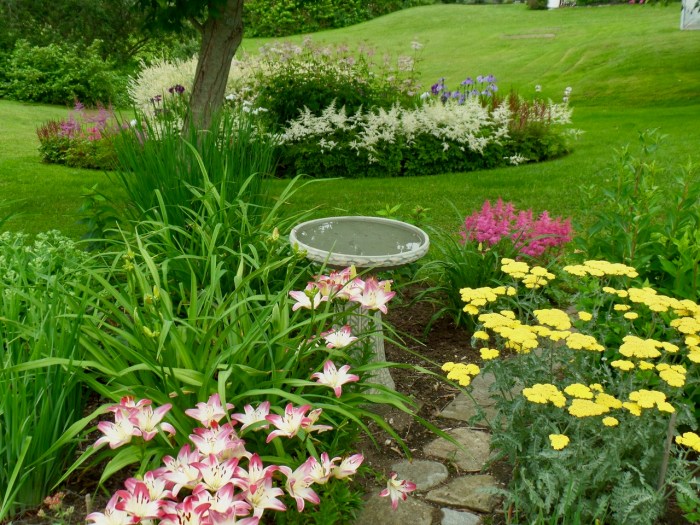
Birdbath, Lollypop asiatics, achillea Moonshine and astilbe

As you follow the center path and look thru this large bed vignette (above), there’s a wetter area where bog plants flourish.

July 8th: The “bog bed”: astilbe, Japanese iris and filipendula.

Bog bed. Queen of the Prairie, astilbe,

And behind this bed (just visible at the top right of the above photo) there’s a steep embankment along the back of the garage. This area is a challenge to garden. The area is steep, so needs plants that will hold the soil. And, it is dry, so needs plantings that will tolerate dryness as well. Here I’ve incorporated a mix of hosta (large leafed and with a varied color range to add interest to this otherwise non-blooming area) and a mix of evergreens. There are also barberry to add a touch of red.
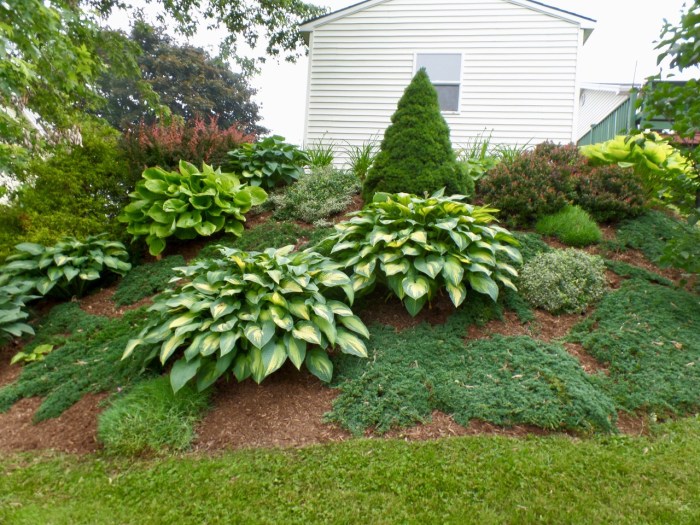
back of garage hill

My yard has presented a challenge with its wide range of topographies, but also given me an opportunity to “garden with a bit of everything.”

Enjoy! Roxanne
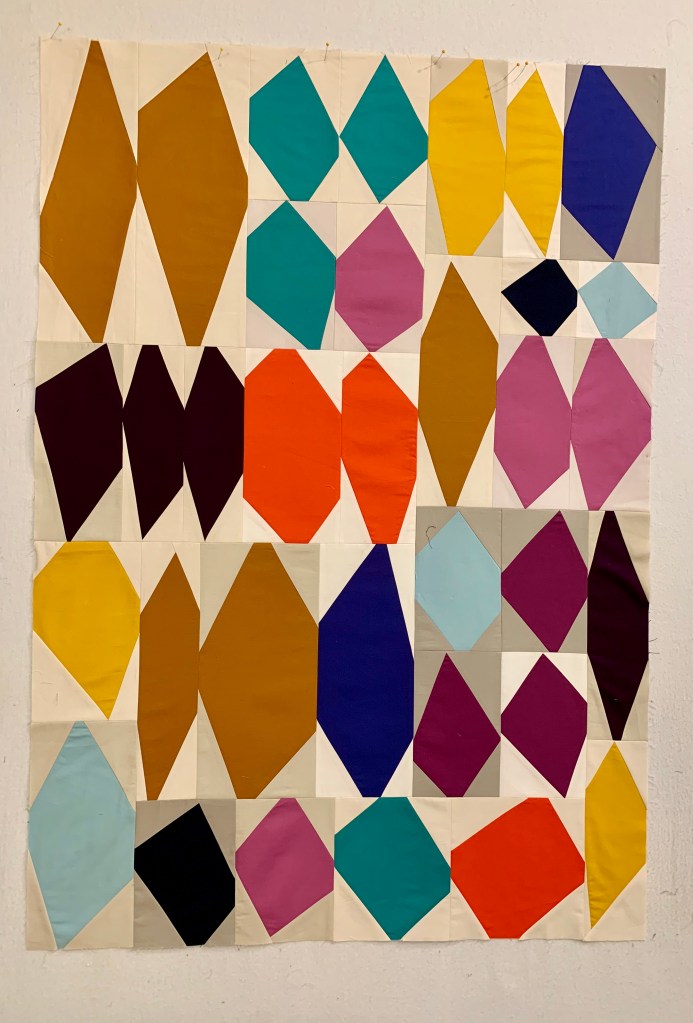
“Bedrock” Quilt Top Finished

Turkey Tracks: July 23, 2020

“Bedrock” Quilt Top Finished

Well! That was fun!

Here is the 5th project of 7 from this year’s online class The Color Collective sponsored by Amy Newbold’s Sewtopia. Tara Faughnan is the designer and curator of each month’s fabrics.

I wanted a wall hanging, so my version is 31 by 45 inches.

I LOVED this project. And I was so pleased that my blocks and sections went together without a hitch. There is math involved here. And a lot of thinking about balancing color. But the improve “rock” block is really fun to make.

I am not sure how I’ll quilt it, but likely the matchstick lines on my domestic machine. I liked how that looked on an earlier project, “Gumdrop.” I am not sure about thread color though. Possibly my “go to” light grey. Possibly a neutral cream? I will use a “skinny” 50-weight as I don’t want the lines to take over the quilt.

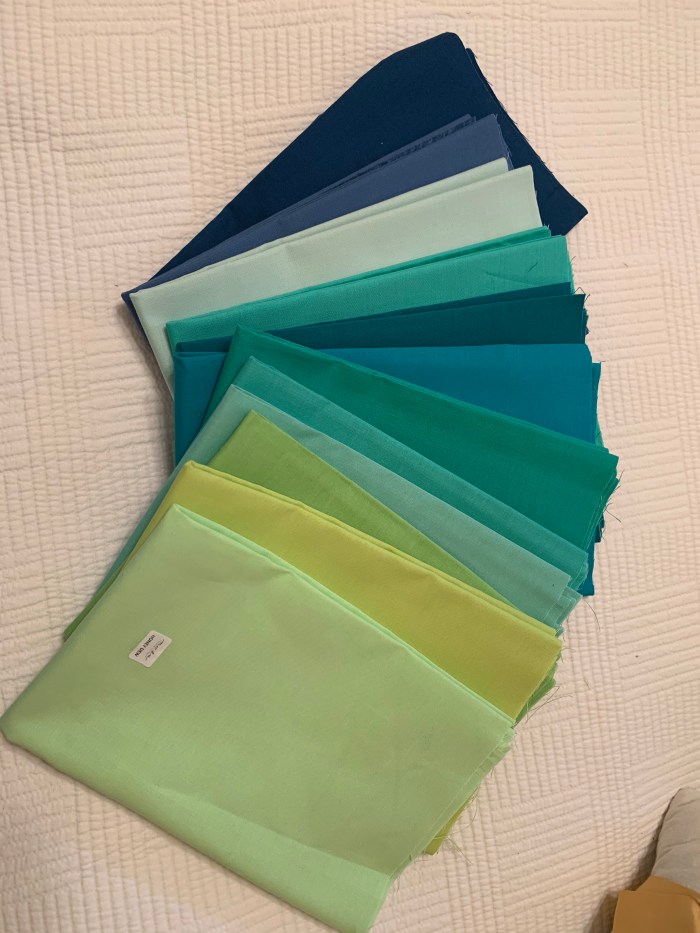
Here is the fabric palette for project 6, “Give and Take,” which I’ll start next. It would be impossible to make an ugly quilt with these gorgeous analogous colors.

Look what’s in my kitchen window today.

I picked them yesterday before last night’s rain.

The day-lilies continue to brighten the whole yard. The Pee Gee hydrangea bush/tree is loaded with blooms this year. The hostas are blooming with their tall lavender spikes. The little perky flower on the right in the little jar is tickseed. Bee Balm is the magenta on the right of the big arrangement. And, of course there is a lot more in there: Queen Anne’s Lace, a rose-colored yarrow, the dusty pink bloom of a creeping succulent that has a life of its own here, AND one hot orange cone flower that is making one part of the garden glow with color.

We have dense, dense fog this morning, but it was so cool and lovely last night. Great sleeping weather!

Simple Choices

Turkey Tracks: July 21, 2020

Simple Choices

I’m enjoying the red geraniums in the oak barrels. They were a “simple” choice as in the past I planted an array of different flowers in these barrels.

It will be a “simple” choice to weed the rocks behind the barrels after the next good rain. They come out pretty easily. OK. I could wet them with the hose too. But it is hot and humid, which always saps my strength and energy. It’s a simple choice to just go with what the body says it needs too. Weeding gravel paths is an ongoing summer project around here.

On Sunday I grilled some boned chicken thighs on the grill, which only takes a little time as without bones, the meat is flat. I’ve left my little grill out away from the house rather than putting it away neatly after each use. It’s so easy to just run out, light it, and put some food on it. It heats up really quickly. AND there is no messy clean-up in the kitchen.

I love thighs and drumsticks. Each has so much more flavor than the overblown breasts which in my opinion are pretty tasteless—unless, of course they are a free-range chicken raised locally. Grilling the quick-marinated chicken gave the stir fry I was making a whole new level of “tasty” good.

I sliced up the cooked chicken and added it at the very last minute to a stir fry cooked in chicken fat. As usual, I used many types of vegetables—all fresh and in our local markets and also coming to me weekly from Hope’s Edge CSA. This one has cabbage, carrot, red pepper, celery, garlic scapes, some diced potato, herbs, salt, and some cut up pre-cooked broccoli rabe from another meal. Spring onions are added toward the last as I don’t like them cooked to mush. I started the stir fry with the diced potato in the fat as it would cook a bit slower than the other items. The chicken is added when I turn off the heat. I like stir fries that are not limp, so I turn the ingredients on a regular basis.

Quinoa cooks in 15 minutes. And I was hungry, so I went with quinoa rather than rice. Grains are a treat for me, so this meal was satisfying, for sure. And I have enough leftovers to feed me for a few more meals, which is nice on these hot, humid days when I also have an engaging sewing project. Cooking up a big stir fry is also a simple choice.

The “Bedrock” quilt top is almost done—from The Color Collective and designed by Tara Faughnan. There will be pictures this week for sure.

Sugaridoo QAL: Part 9

Turkey Tracks: July 18, 2020

Sugaridoo QAL: Part 9

My solid row looks just like it should, so I didn’t take a picture of my own developing solid rainbow quilt. The deep rose color of this block/row is so luscious. And I love the big X block we made—with it’s secondary bloc that forms such a nice pattern between the big X’s.

This picture is the mock-up that Sugaridoo’s Irene gives us each month—with each new row added. I am enjoying the very graphic nature of this quilt. And, there are so many cool methods in this Quilt Along; so many terrific blocks. The blank rows are the remaining three left to do.

I am also making the quilt in my Cotton+Steel/Ruby Star Society fabrics—which I’d like to whittle down a bit. It’s been fun trying to come close to the rainbow colors of the solids Sugaridoo chose.

Somehow I didn’t get the line of the butterflies centered just right on the accent block. Even though I wasn’t happy with it, I sewed the strip together. The next morning I took it apart and redid the long butterfly piece. Now I’m happy. It was an easy fix when I wasn’t tired, and I learned how to handle this problem with the freezer paper method along the way.

I’m pretty sure the Cotton+Steel/Ruby Star Society fabrics are breeding in their bins. They don’t seem to be going down with use. Of course, I keep adding to them!!!

The green row above the big Delta row—Mowed Lawn—is an improv method that lends itself to all kinds of uses. I’ve loved the many blocks with tree trunks cut into them that one sees around and about today. One of them is Bright Birch Trees by Crazy Mom Quilts. Beth Guntner Jones posted a picture on the Sugaridoo FB page and others identified the Bright Birch Trees pattern.

Oh boy, I found myself making some stripped fabrics from the off-cuts on a table I keep near my sewing machine, cutting them into one-inch slices, and digging into my solid stash for some bright colors.

Now I can’t stop making them, so I have TWO leader/ender projects going on. My “trees” are on smaller blocks than I think Crazy Mom’s pattern uses. I cut at 8 1/2 inch and trimmed to 8 inches, which will finish at 7 1/2 inches. I tried this method once before but got frustrated. After the Sugaridoo improv row, Mowed Lawn, it was easy.

BUT, one hint: when you cut your solid block, number your slices from left to right on the RIGHT SIDE of your fabric. Otherwise, it’s just way too easy to get the pieces mixed up.

Now I want to vary the trunk widths a bit…

And I’ve started “Bedrock” from The Color Collective, designed by Tara Faughnan. Pics likely to follow in a few days.

Cutting The River Birches

Turkey Tracks: July 17, 2020

Cutting The River Birches

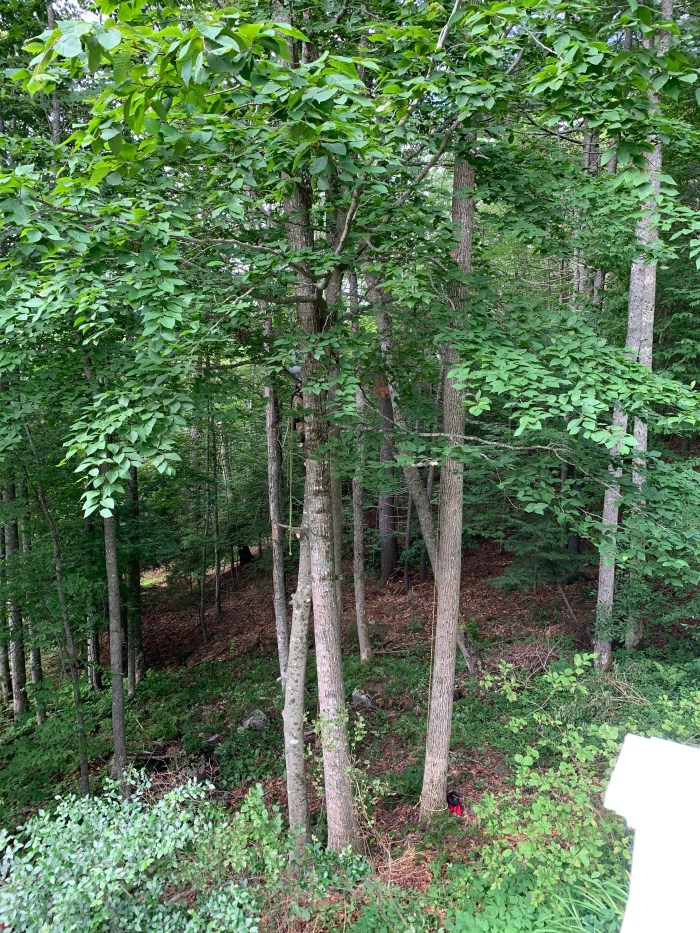
They were big, overgrown, bent, and an accident waiting to happen.

We planted them when we first moved here in 2004. River Birches don’t have a long life span, so I knew that they were entering the time frame when they would cause trouble—especially in the winter.

Tom Jackson of Jackson Landscape Services, who has bailed me out so many, many times now, came to view the problem and agreed that the best course was just to cut them down. And, to add to the work order a regular birch tree out front that was overgrowing the front yard and upper deck.

Tom organized Timbercliff Tree Services to do the work that happened this week. Tibercliff does terrific work and has a terrific crew. They actually came about five years ago and trimmed these same river birches after they had been badly damaged in a winter ice storm—which gave them another five years of life here.

I will miss the beautiful bark and these graceful trees, but I’m also looking forward to having more sun in this part of the yard.

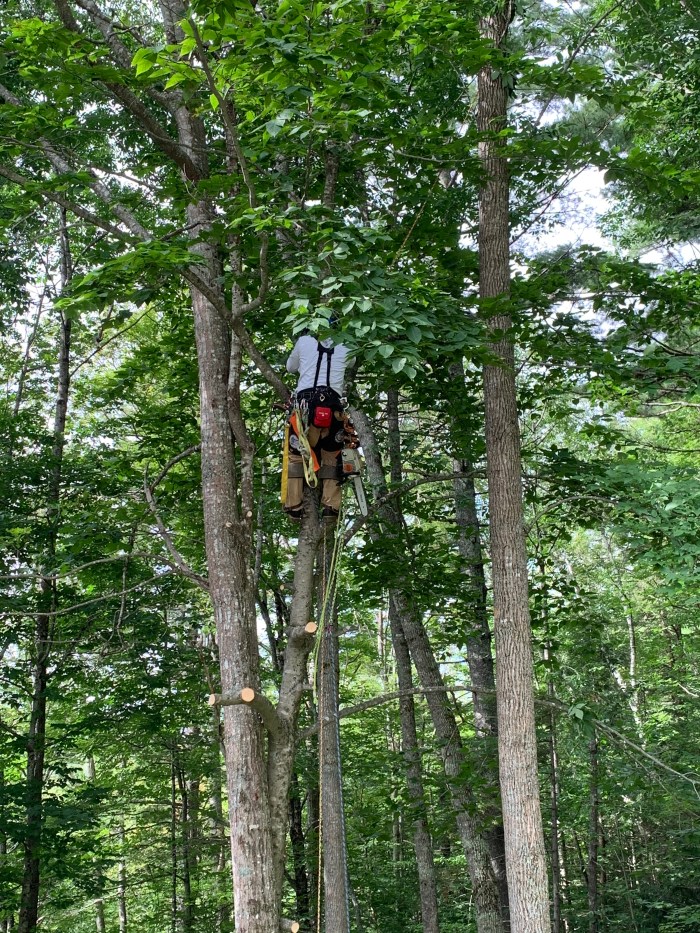
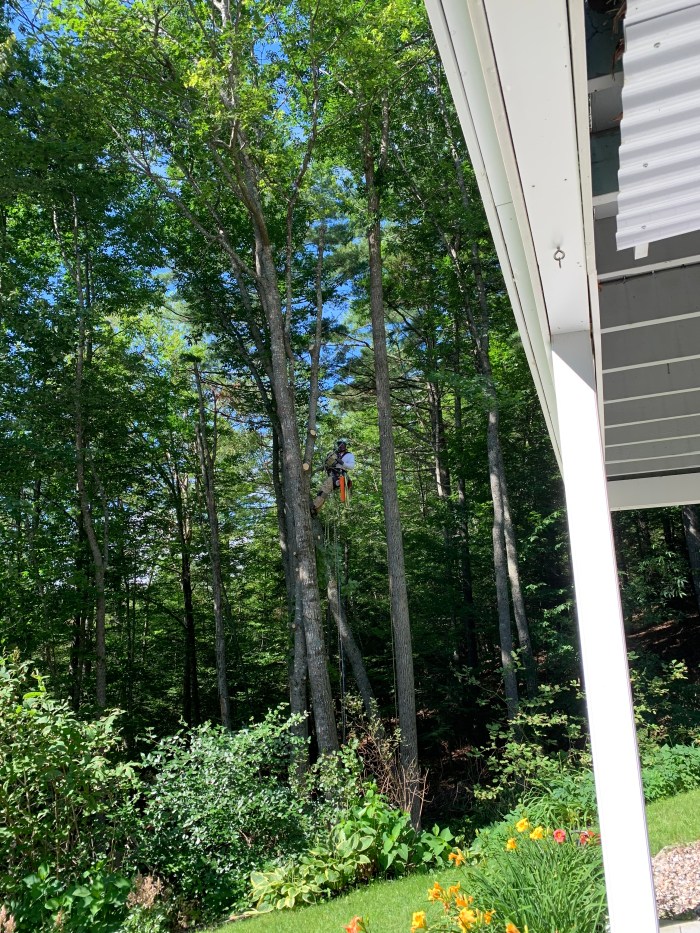
Timbercliff uses a bucket to get to the tops of the trees when they can.

Wow. You can see the house again.

And this bed will now get a lot of sun. I love the way our woods are so dark and mysterious in the summer. They beg you to come explore.

The birch tree out front was kind of wrapped around a big oak. The lower branches have been cut now, but you can see, on the left, the oak in front and the birch behind it. For this work, a brave man climbs the tree—which is on a VERY steep hill. The cut tree parts will just be laid at the base on the hill to help shore it up. We used to have a path to the meadow down this hill, but I gave up that work a long time ago.

I’ve never seen AC ask to go inside when there is lots of activity outside. But he’s almost 2 1/2 years old now, and he’s learned some wisdom. Clearly he thought all the men on the property and the heavy sound of the saws was dangerous.

Taking down the birch in the front is giving the front beds much more light. There is a new feeing of openness out there now.

After the Rain

Turkey Tracks: July 12, 2020

After the Rain

Last night and yesterday morning we got a good rain from the remnants of tropical storm Fay. Around noon, the skies cleared and the sun came out. Earlier, I had roasted some Hope’s Edge CSA beets in the oven and was making a salad with them, so I went out to the garden to get some fresh herbs: tarragon, mint, and lemon thyme came inside for the salad—along with these flowers as you can’t turn me loose in the garden with a pair of kitchen shears and downed flowers offering themselves up. It was painful to see the downed delphiniums.

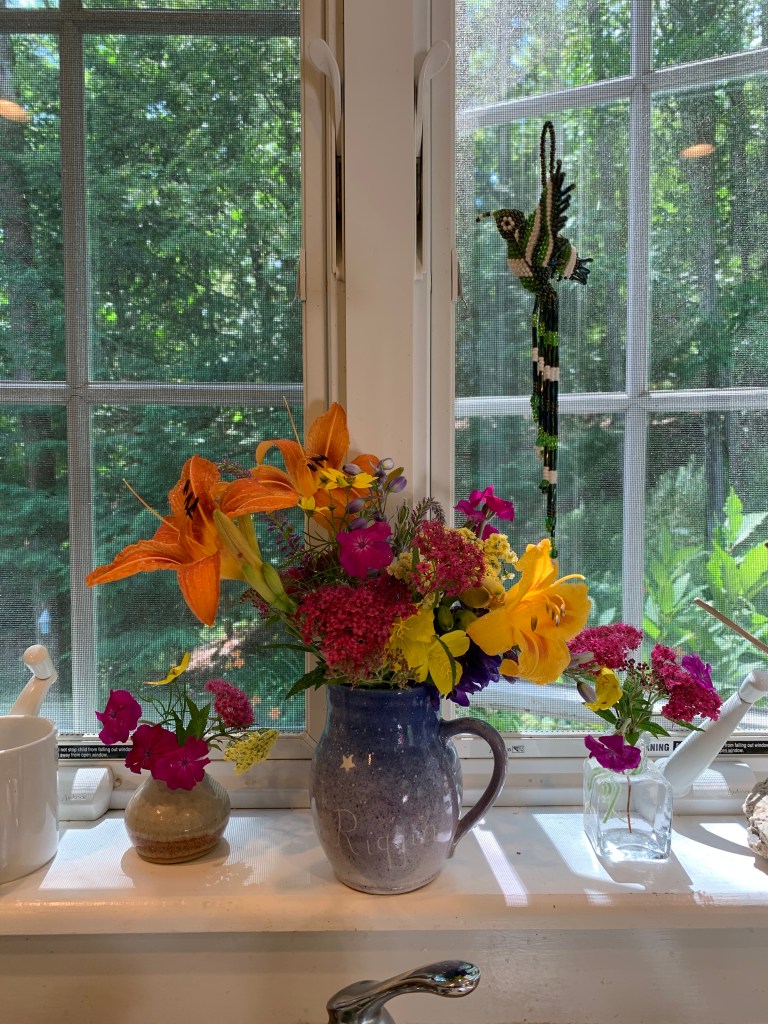
Before I knew it, my kitchen window was so pretty.

The beaded humming bird was a gift from a grandchild a few years ago. And I can’t use vinegar in a salad, so I use the herbs to give my roasted beet salad some interest. The mint was especially nice in the beet salad, which turned out to be delicious. I used olive oil, salt, some Penzey’s Sunny Paris (to which I am addicted), diced roasted beets, chopped spring onions, chopped Vidalia sweet onions, some drops of Young Living Essential lemon oil, and the herbs. You could add vinegar—a fruity one would be nice. Or balsemic. And maybe a tiny, tiny bit of Dijon mustard?

I finished getting the “little circles” quilt top together later in the afternoon. It is so sweet. And now it is OFF the design wall as it is time to make this month’s Sugaridoo QAL row. Then on to The Color Collective project “Bedrock.”

I was intrigued with these double prong pins to be used to keep seams together and each “flap” in place so ordered some. They worked REALLY well. When I get close to a pin, I sew up to them in slow motion—sometimes sewing over the prongs REALLY slowly, sometimes removing them as I get to the first prong—depending on where my sewing machine needle is going to land. I got them from Connecting Threads I think. (The one pictured below is inserted a little too crooked; they need to be straighter.)

ENJOY YOUR SUNDAY!

Washer/Dryer Woes and Joys

Turkey Tracks: July 11, 2020

Washer/Dryer Woes and Joys

I knew my American washer was on the way to dying. At only eight years old, it was making ominous grinding noises. It’s predecessor, the same maker/size washer, died after eight years.

I was bracing for doing something about the washer so I wouldn’t find myself without one at any moment now, when the 19-year-old gas dryer died about 10 days ago. Getting an old Sears product repaired, or even examined, in this rural area was going to be a real problem.

Oh my!

And “Oh My” again when I learned at our local really good appliance store (Kelsey’s) that no one makes either a washer or a dryer that would fit the built in space where the old ones were now going or gone. No one. Everything is either HUGE or little. The middle ground is…gone.

What to do?

I ultimately went with very high-tech European stackables that will sit side by side. They are smaller, but I did not want to have to redo this whole space to accommodate bigger appliances. The washer plugs into the dryer, so the gas feed had to be capped and a new 220-240 outlet had to be installed. (A shout-out here to Rubenstein Electric who, despite being crazy busy once again bailed me out and came to install the new outlet between the old washer/dryer removal and the new installation.)

Here they are:

There are spaces all around them now, but I’ve since taken the tv trays off their stand and slid them into the side spaces. That’s a streamline that works well as the stand of tv trays was a footprint that wasn’t especially visibly pleasing.

AND HOLY COW!

These very high-tech babes are AMAZING!

The washer will take a 17-pound maximum load. That’s a lot of clothes. The dryer needs no vent. It removes moisture from the air and shuttles it into a drain, so it, basically, dries the air rather than just pouring heat into the drum. And it knows when to just…stop…rather than blindly following a timed schedule. Each machine has an amazing array of controls that allow all sorts of washing and drying possibilities.

There is a whole new learning curve involved here. You can see I have both manuals on top of the counter with a pen.

My first four washes/dries came out beautifully. Basically there were no wrinkles in anything, and the clothes were very clean with very little soap used.

I’m happy now.

PS:

I LOVE to hang out wash on my clothes line. But with the brown tail caterpillar hairs still flying around, I don’t think putting sheets, especially, on the outdoor line is a great idea.

BUT, an outdoor line provides a lot of pleasure in many ways, including saving $$$$, as neighbor and friend Marina Schauffler details in this lovely essay—which also talks about European dryer technology.

Hanging Out: Reducing Clothes Dryer Use

Bits and Pieces: July 9, 2020

Turkey Tracks: July 9, 2020

Bits and Pieces: July 9, 2020

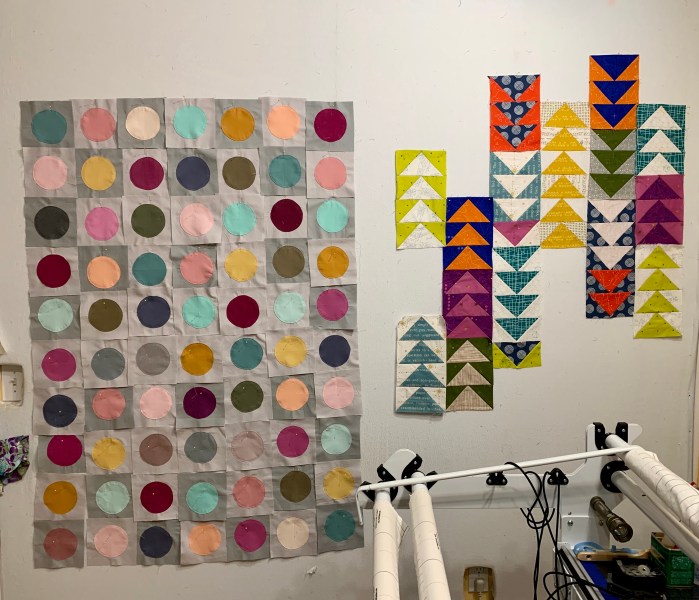
Here’s what’s happening on my design wall at the moment. These circles are from the backs of the big circles we learned how to do in The Color Collective (Tara Faughnan, Sewtopia) season 1. When you trim out the back of the big circle after you have sewn down the circles on the front, you have these little circles left over. I couldn’t throw them out. Some time over the past two years I bought the light grey solid and cut it into squares on which I planned to mount the little circles. When I started sewing, though, I had more circles than I thought and I ran out of the light grey, so I just added in a darker grey from my stash.

My goodness these are cute! I was planning to use these circles in an improv quilt, but they really just wanted to stay by themselves. I made myself throw out the little grey circles from the backs of these circles. Time to STOP.

The 6 by 3-inch flying geese are a “leader/ender” project. Bonnie Hunter pioneered this method to keep running sewing projects through your machine rather than breaking thread. She suggests a new leader/ender project each year in July and has just revealed this year’s choice. Basically, you are making two quilts at the same time. That info for this year’s project is on her blog at quiltville.com.

I’ve cut a lot more fabric combinations, so these present colors will spread out. I’m thinking at least 10 rows wide. For play, I often stop and make some of these geese blocks. Who was it who said “no more new projects until the to-do projects are done”?

The shell peas are ready to pick now. I picked these at Hope’s Edge on Tuesday, came home, and put some raw on my lunch salad. They are delicious! The rest I added into a lamb/rice stew when it came out of the oven. I just recovered the pot and let the peas cook in the heat of the hot stew. BTW, the lamb also came from Hope’s Edge last fall.

On the way to pick up my weekly raw milk order, I passed a mommy duck walked her babies…somewhere. I tried for a longer video, but a biker came by me and ruined that one. Aren’t they adorable?

I’ve been in the garden for DAYS, and order has been restored out there. For the most part. There are always small jobs that have to be done. I am so grateful to Duane and Leslie Smith and their crew for helping me.

We are having cool weather, mixed with overcast, rainy, and sunny days. The temps fall at night into the 60s, so the sleeping has been lovely. The drought has broken, and everything is looking green and lush again.

Summer doesn’t really come to Maine with predictable hot weather until after July 4th. This year is no exception. Our summers are short and sweet and so filled with wonderful food and beautiful flowers.

Nipplewort Wildflower

Turkey Tracks: July 8, 2019

Nipplewort Wildflower

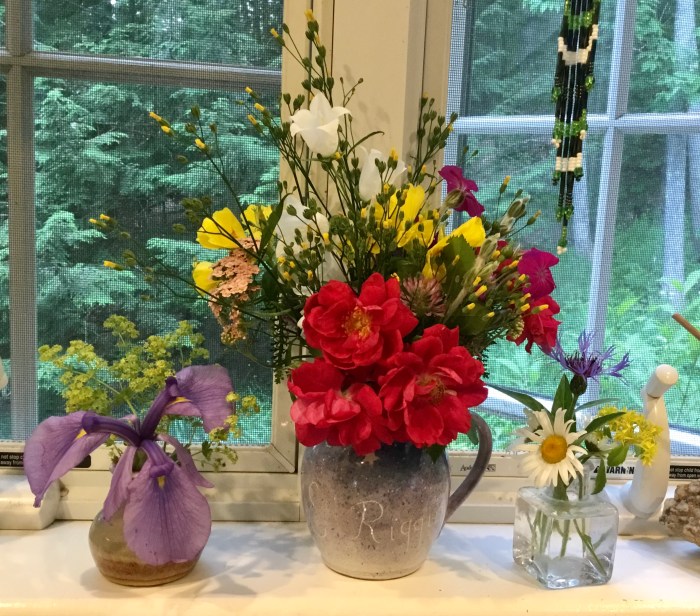
Remember this bouquet from a few days back?

The tiny yellow flower I couldn’t identify is Nipplewort, or as it is known around here by those who know these things, “Common Nipplewort.” It is in the larger aster family. “Wort” just means “plant” in Europe, so it’s just known as “the nipple plant.” The fancy name is lapsana communis, which means it grows in a “community of other plants.

It is in my New England wildflower book, but what was throwing me was that I could not identify what some were calling leaves on the lower part of the plant that supposedly resemble a “nipple.” I could only see large leaves that were opposed by two tiny leaves. And what kind of “nipple” did the description mean? A nipple like on a baby bottle? A nipple like on a female dog’s belly—elongated and protruding. Or like a human’s nipple that is surrounded with a wider circle?

I finally found what I think is a more plausible explanation on the web site https://www.juliasedibleweeds.com/general/nipplewort. Julia says that this plant is an astringent, so back in the day (or today too I suppose) it “probably helped heal chapped nipples or breast ulcers.”

It is edible. It is used as a salad vegetable in Europe. It has a calming effect. Used in a tea, it can help staunch breast milk when it’s time to stop breast feeding.

There are big leaves at the bottom, which give way at the top to just mostly bare stems with flowers and an occasional slender pointed leaf. The tiny yellow flowers only open in sunshine and close up by mid-afternoon. The seeds do not have “tufts of hairs to help the seeds fly away—they rely on being carried on shoes or by birds eating them.”

So there you have it. It’s an interesting plant, isn’t it? Who knew?

And remember that all plants interact with the world via chemicals they produce. These chemicals can be very strong—for either good or bad, depending on the dose one gets. So, always be careful. Respect plants! Even supposedly benign plants we eat all the time carry chemical packages to which one must pay attention. Eating plants in their own seasons is always a wise choice.