Turkey Tracks: POPCORN!

Turkey Tracks:  May 21, 2014

POPCORN!


Ok, I’ll confess.

I LOVE popcorn!

Always have.  Always will.

BUT, BUT, I don’t eat it very often.

It’s a grain that has very little nutritional value, and it makes me fat.

So, popcorn is a rare treat for me.  I indulge maybe about every six months or so.  I love to make it for “movie night” when the grand kiddos are here.

I use an air popper and organic popcorn.  Air poppers are not expensive.  Organic popcorn does not have GMO issues, which are serious.  There’s no messy pan cleanup.

The problem with popping in oil is…the oil.  Most vegetable oils are highly-processed, rancid, and nothing but trouble for your heart.  You could try unprocessed/unheated coconut oil or, even, beef or pork fat from grass-fed/holistically raised animals.  All of these fats can take a lot of heat.

When the popcorn is done, I sprinkle it with real sea salt and drown it with my wonderful, raw butter melted.  (You can’t eat too much raw butter.)

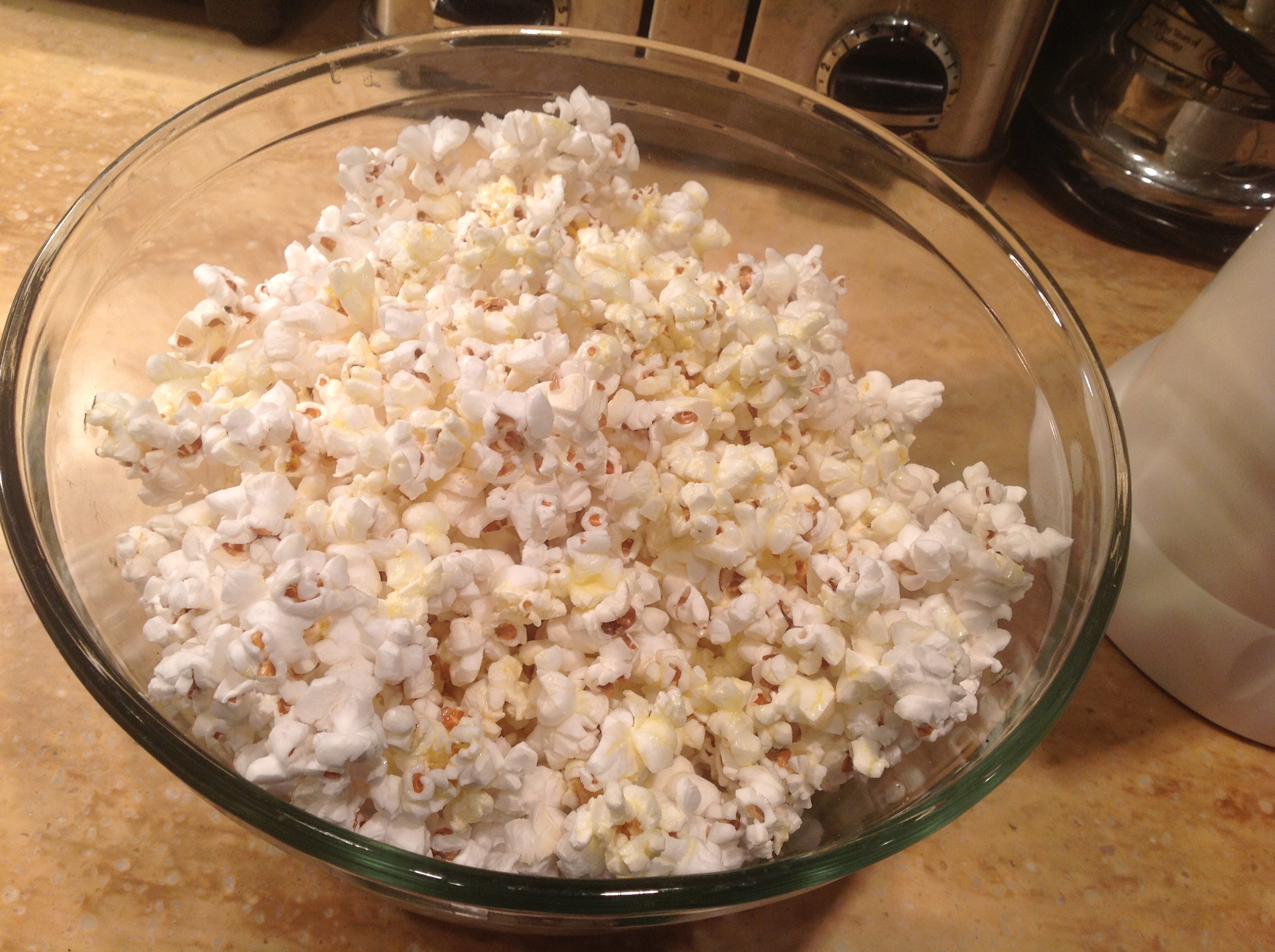
IMG_0209

Yum Oh!  Just look at that popcorn!

IMG_0210


I hope you all know NOT TO USE THOSE MICROWAVE POPCORN sacks in a microwave.  They are full of ingredients that are terribly harmful.  Google and you’ll turn over that info in a New York minute.

No, no, no, no….!!!

Now you’ll hear my voice echoing in your head…

Turkey Tracks: Honeycomb Hand-Sewing Project

Turkey Tracks:  May 21, 2014

Honeycomb Hand-Sewing Project


Well, isn’t this fun?

IMG_0279

This piece will be finished when I complete the circle of white English Paper Piecing templates–which I bought from Alewives Quilting in Damariscotta, Maine.

Lucy Boston pioneered this “honeycomb” quilting.  A “honeycomb” is a hexagon, but with an elongated top and bottom side.

Here’s the “how to” and inspirational book by Linda Franz.

IMG_0278

And here’s some ideas of how the honeycombs can be combined.  Lucy Boston used combinations of 24 honeycombs ringed by 24 white honeycombs.  I started with the top left version.

IMG_0276


I’m probably only going to do four of these in shades of red and green and link them into a four-patch.  Or, as a banner.

The “blocks” are joined by a series of squared.  And if one wanted to make something bigger that gets squared off, one needs a series of templates that will “square off” the blocks.  You can order those or make them yourself as the patterns are in the book.

I am joining the pieces with the method Leah Day demonstrated on a utube video.  I posted that link on this blog earlier, but you can google Leah Day and “English Paper Piecing” for the series of three videos.  I like this method because it does not show the whip-stitch stitches on the front.

Turkey Tracks: Beaver Dam 2014

Turkey Tracks:  May 16, 2014

Beaver Dam 2014

Camden, Maine


I put up a video of the beaver dam just below my house about a year ago.

Here’s a little video showing how this dam has developed over the past year.  What used to be a stream is now forming into a small pond.


Also, the fall after we moved to Maine in June 2004, I planted a lot of daffodils around the property.  They have done the best in the little postage stamp meadow below my house.  They are naturalizing so nicely.  This year was the best yet.  (Clearly the camera focused on the trees, but you get the idea here anyway.)

100_3917

Turkey Tracks: Quilts For Twins

Turkey Tracks:  May 12, 2014

Quilts For Twins

First, these two quilts are meant to be loved, dragged around, put on the floor for tummy time, and washed.

AND, both of these quilts are made from what is now a “deep” stash of fabrics–so each has many pieces of fabric that have gone into other family quilts–which forms a lovely linkage I think.  So, those of you who have been recipients of one of my quilts, look to see if some of your fabric has been used in these two baby quilts.


Mister’s:

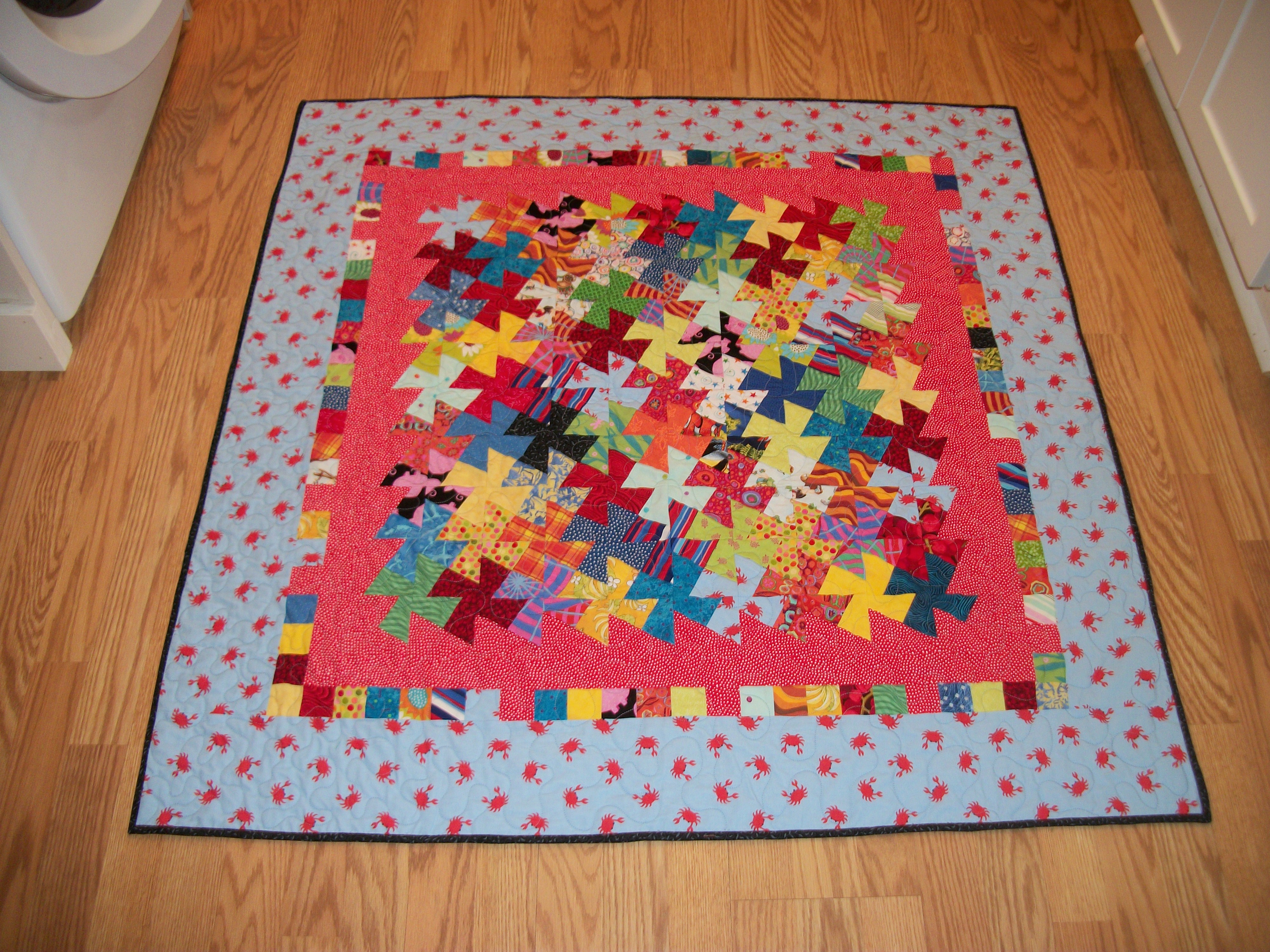
I made “Mister’s Twister” for the boy twin using a “Lil’ Twister” ruler brought home from the Mid-Atlantic Quilt Show in Norfolk, Virginia, I attended last March.

What a fun project!

One starts this project with a grid of 5-inch squares surrounded by a 3-inch border.  One positions the ruler (which is a square with intersecting lines) over the place where the square blocks all four join (or over where a block joins with the border) and then cuts out the template square.  Inside the new square are parts of four adjacent “twisters.”  One sews this first line of blocks together and then proceeds to the next line of intersections and cuts those outs.  As you sew the rows together, the twisters start to emerge.  (I posted an earlier blog on the Lil Twister ruler with links to some cool internet sites.)

100_3854


Leftover pieces of the grid–which now has big holes in it) can be squared up to use as a border–which you can see I did:

100_3843

I really like the way the black binding is working with this quilt.

Here’s a picture of the backing:

100_3850

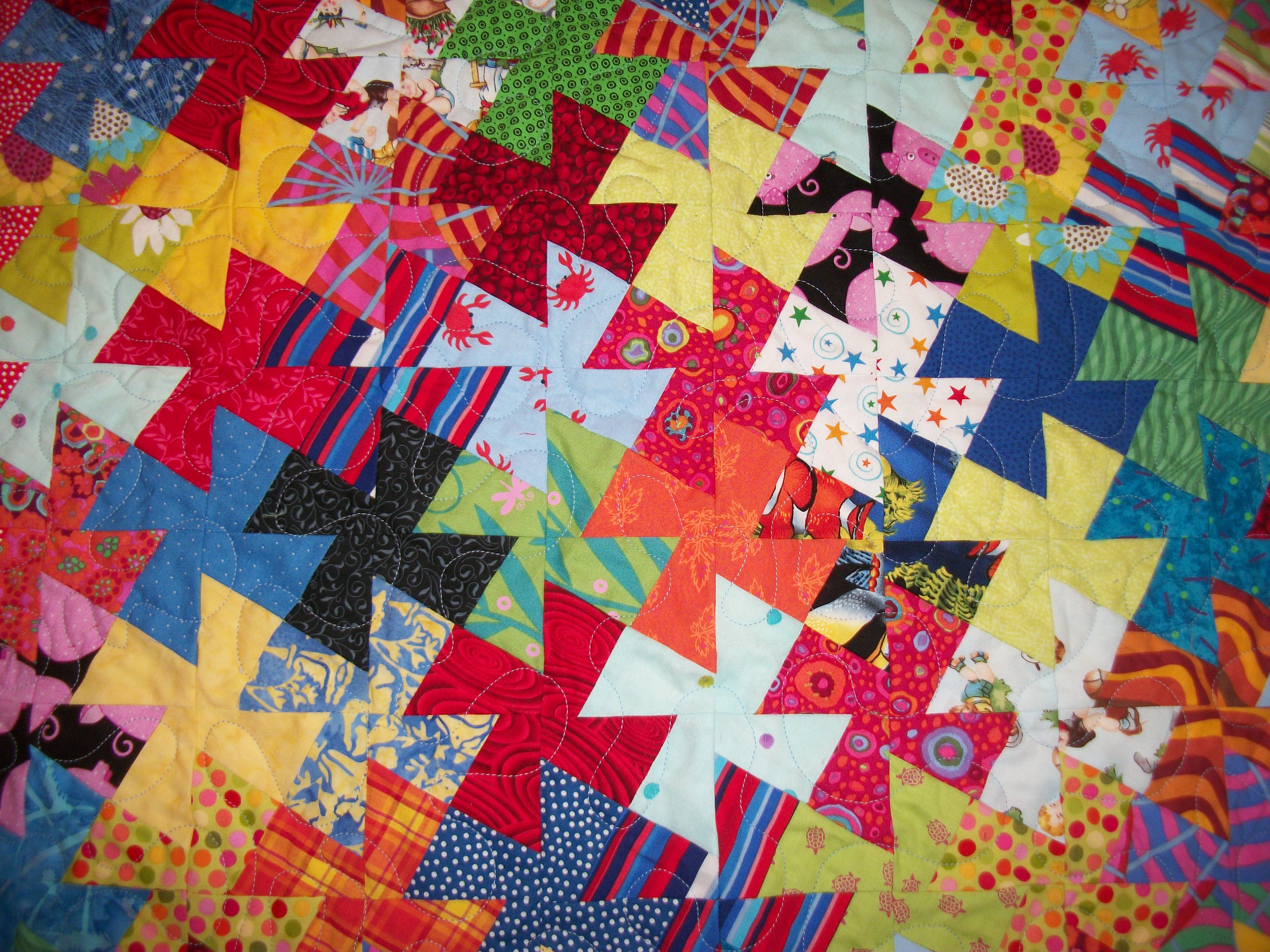
And a picture of the wild and colorful twisters:

100_3855

I quilted with a blue thread–free hand large, big curves.

The Lil Twister ruler comes in tiny, tiny and in sizes that use 5-inch blocks and 10-inch blocks.  You can easily order any of these rulers on-line.


Sister’s:

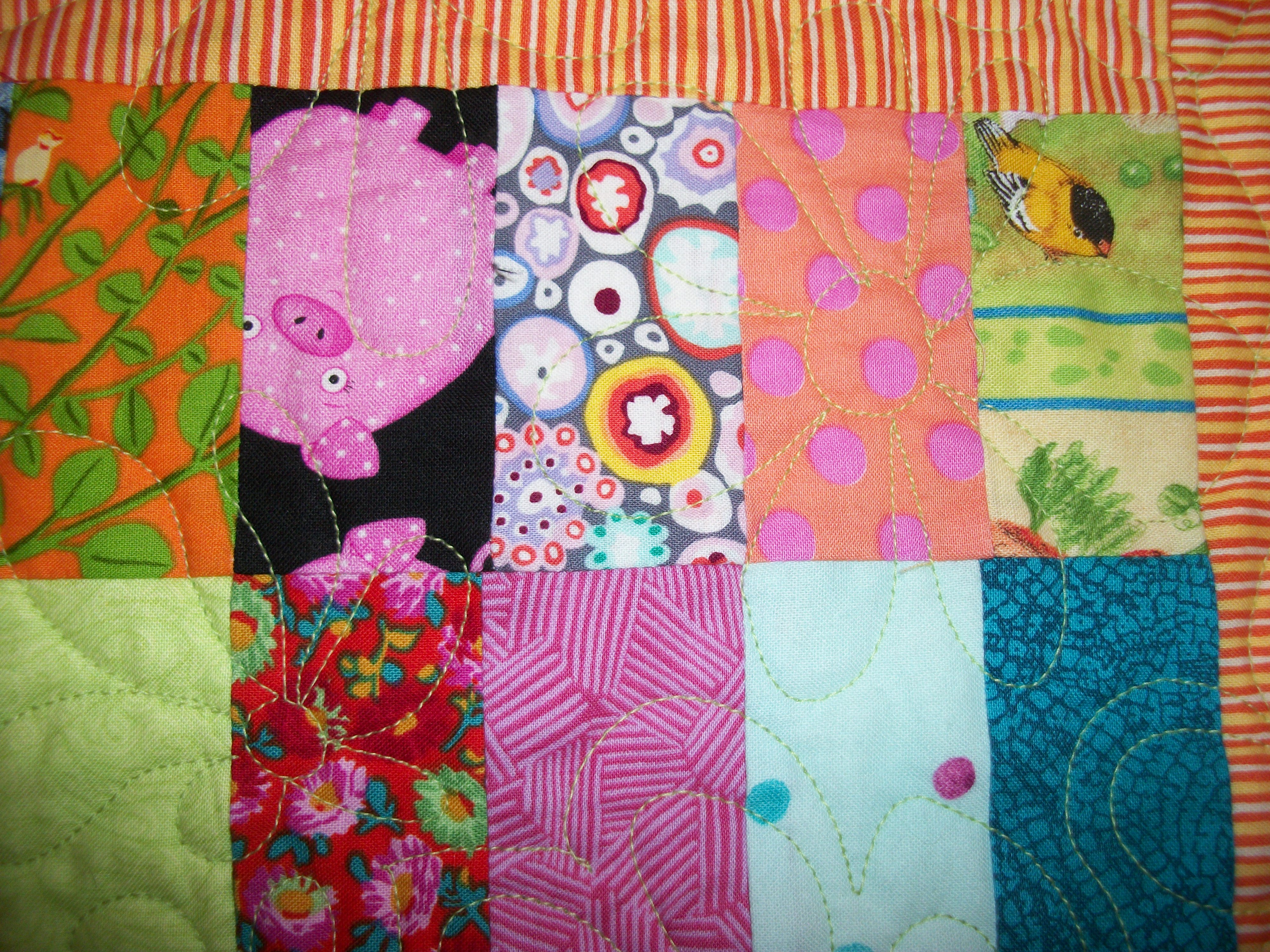
The girl twin’s quilt is “Sister’s Critters,” and for it, I chose the brightest of my 2 by 3 1/2-inch squares.

100_3857


I mixed in squares that had critters other than the focus fabric with its bunnies–along with more bunnies:


100_3865

I quilted free-hand with a pale green thread (which works on both the back and front), using a big daisy pattern.

100_3867

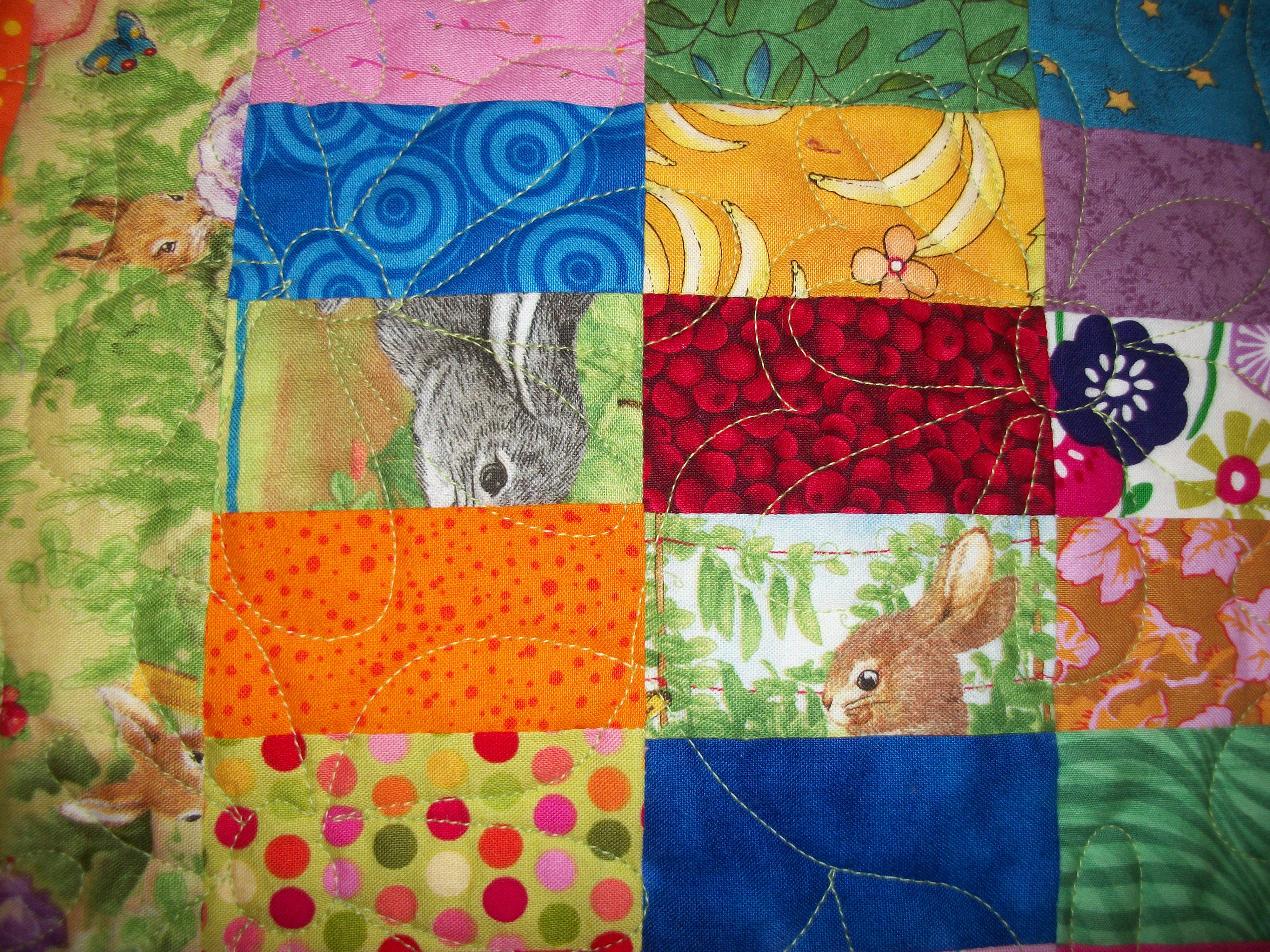
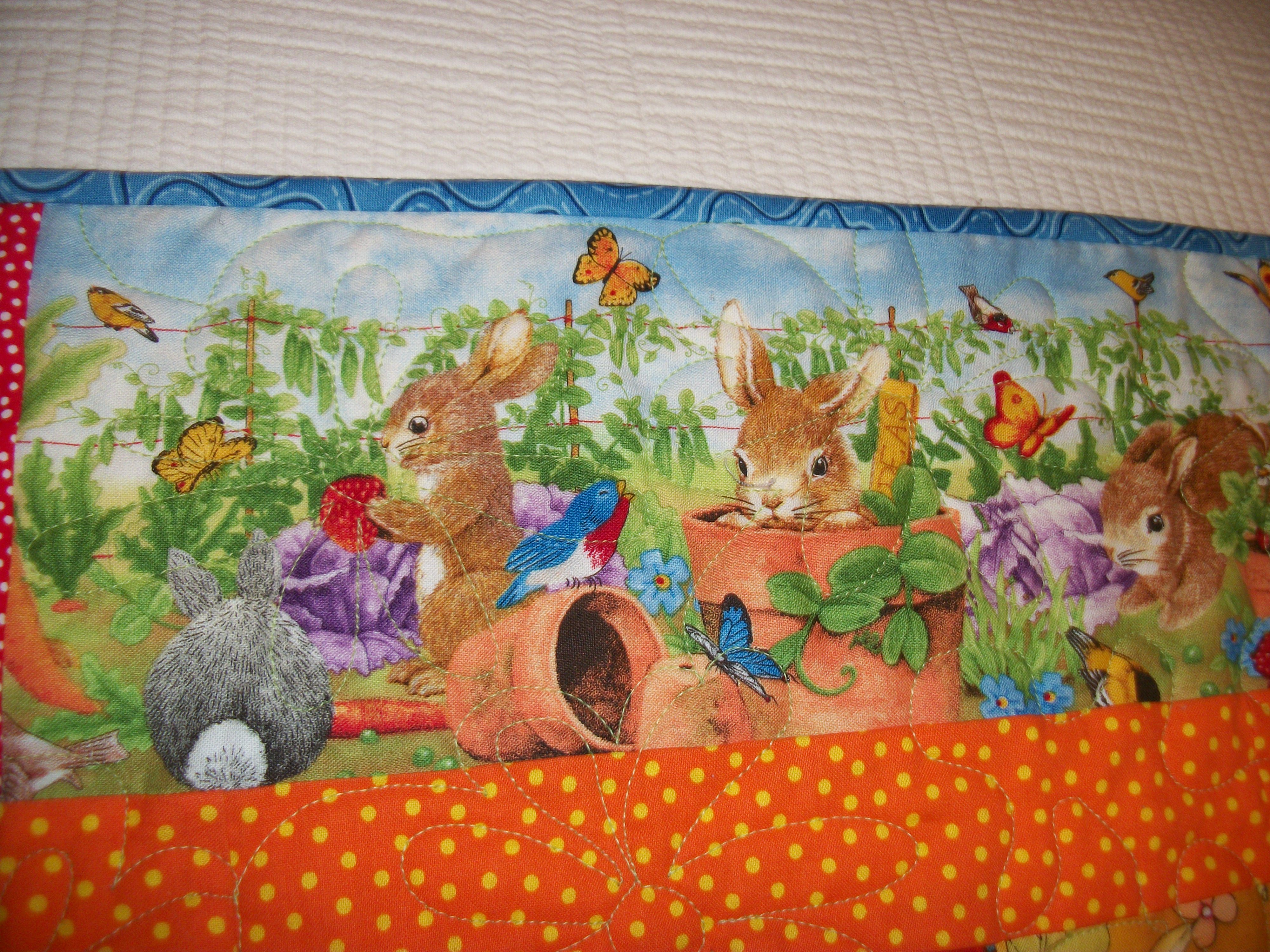
Here is a close-up of the bunny focus fabric:

100_3864

I had enough of this fabric suite left to do the backing:

100_3863

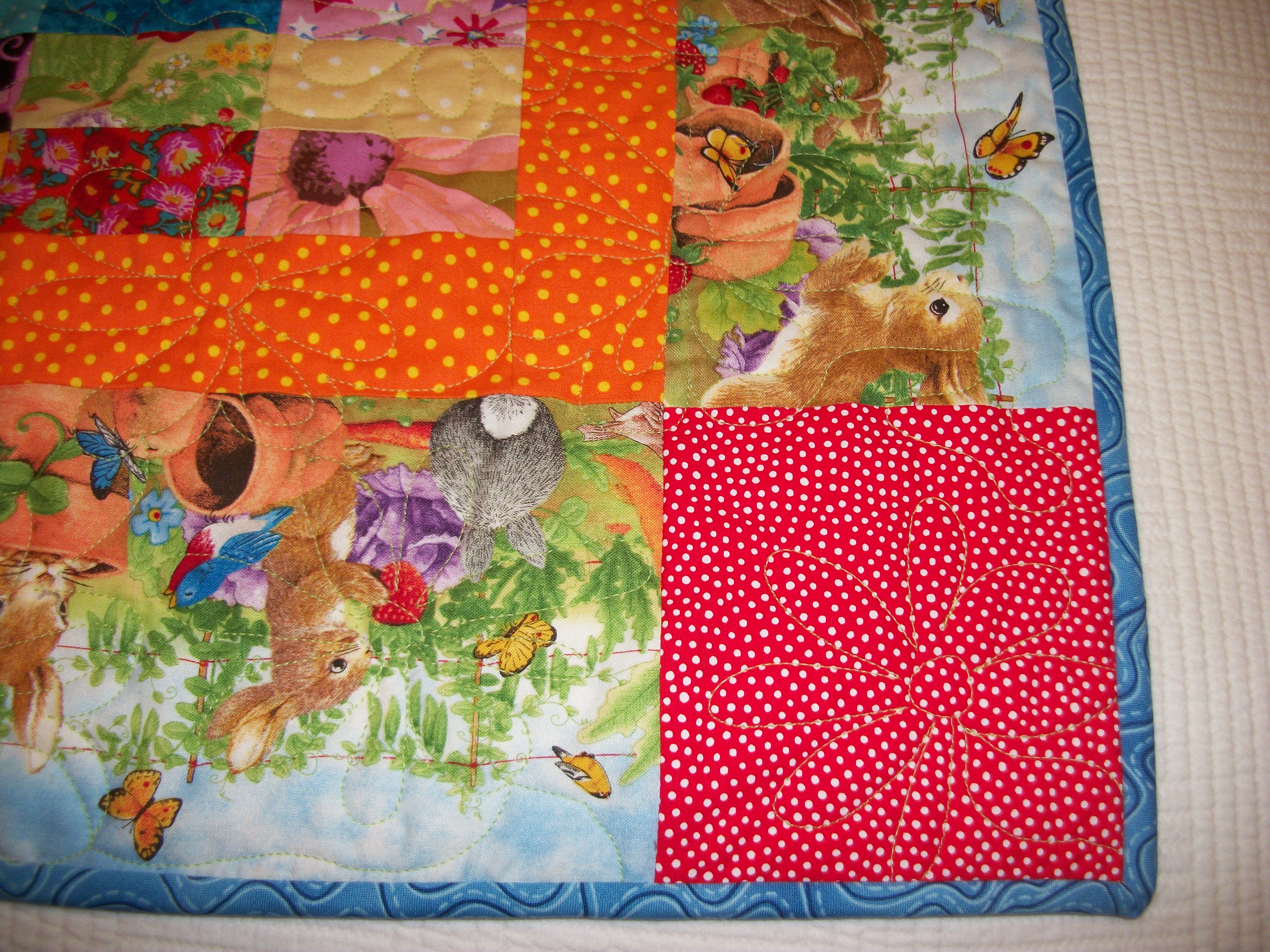
And I used fabric from Mister’s quilt for the corner blocks:

100_3862


I had quite a time choosing the binding, but in the end, chose the blue, and I think that works really well, especially with the blue sky that runs around the edge of the quilt.

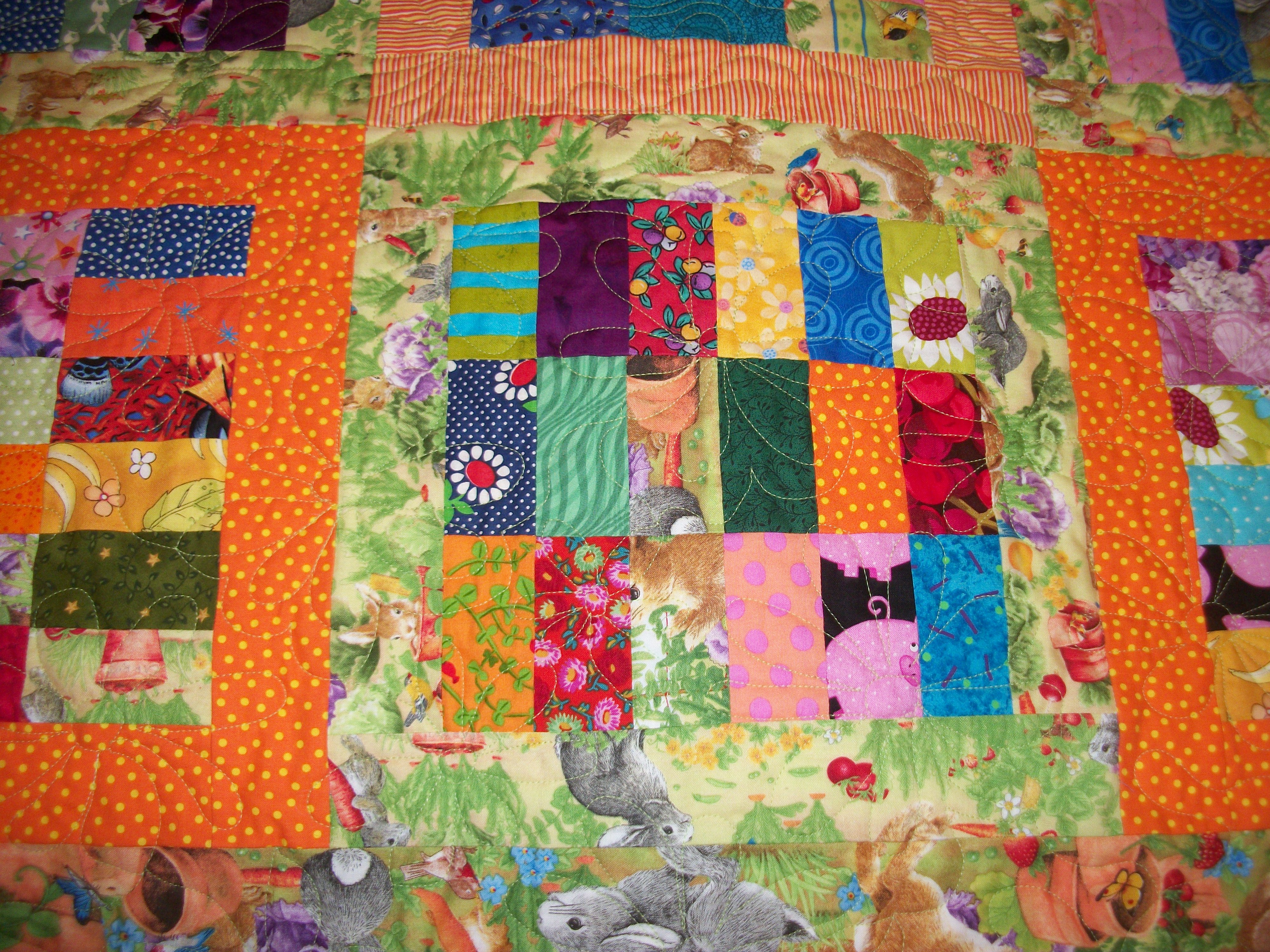
Here’s a close-up view of some of the big blocks:

100_3861

So, these quilts go in the mail today, and I will post this blog post when I know the quilts have landed at their new home.

PS:  Heard from the new mamma-to-be any minute now.  The quilts have arrived.

Turkey Tracks: House Projects

Turkey Tracks:  May 12, 2014

House Projects


With spring, I’ve sprung into house projects–with a lot of really good, cheerful, help.

First, Stephen Pennoyer replaced the rainguard over the front door.  Isn’t it nice?

It’s pitched to run rain off into the garden.

I would be way too embarrassed to show you what lived there before now…

100_3880


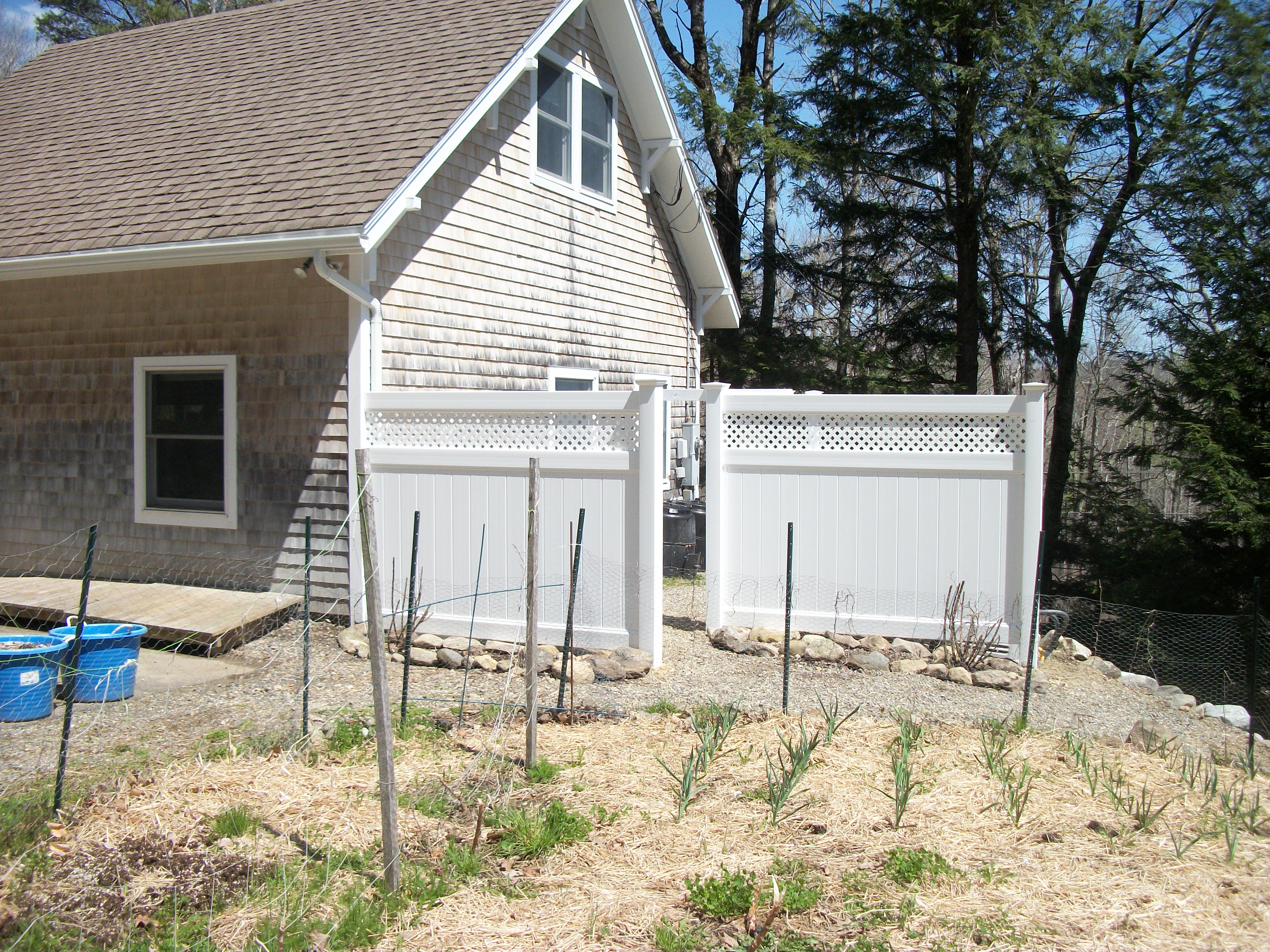
Stephen has now finished the new fence panels that hide the propane tanks and generator.  (See the garlic up in the garden?  And the strawberries?)  And you can also see the new gutter coming down the back of the fence panel next to the garage.

100_3892

And another view:

100_3889

Busily coming up in these little gardens are the white lily bulbs that Bellevue High School friend (class of 1963) Kay Rood sent me when John died.  I planted them last year, but they didn’t “take.”  Now, here they are like a lovely spring surprise.

Stephen also rebuilt the clothes line–and I had clothes on it yesterday!

100_3891

Stephen had to dig through all of this rock–and he dug down about 4 feet or so–to install concrete that will hold these new fences and the clothes line steady through winter ice and spring heaving.

He also dug a long trench between the generator and the back post of the clothes line to sink the new gutter that’s on the drive side of the garage–our effort to redirect water away from the garage floor.  (I had real flooding issues this spring when it rained and the ground was frozen.)

Now I have to get the generator rebalanced–it’s looking a bit tilty.  That generator runs all the power in my house when we lose electricity–and has made life pleasant many times and saved me this winter when it was so cold and an ice storm took out all power and cable here for days and days, including Christmas Day.

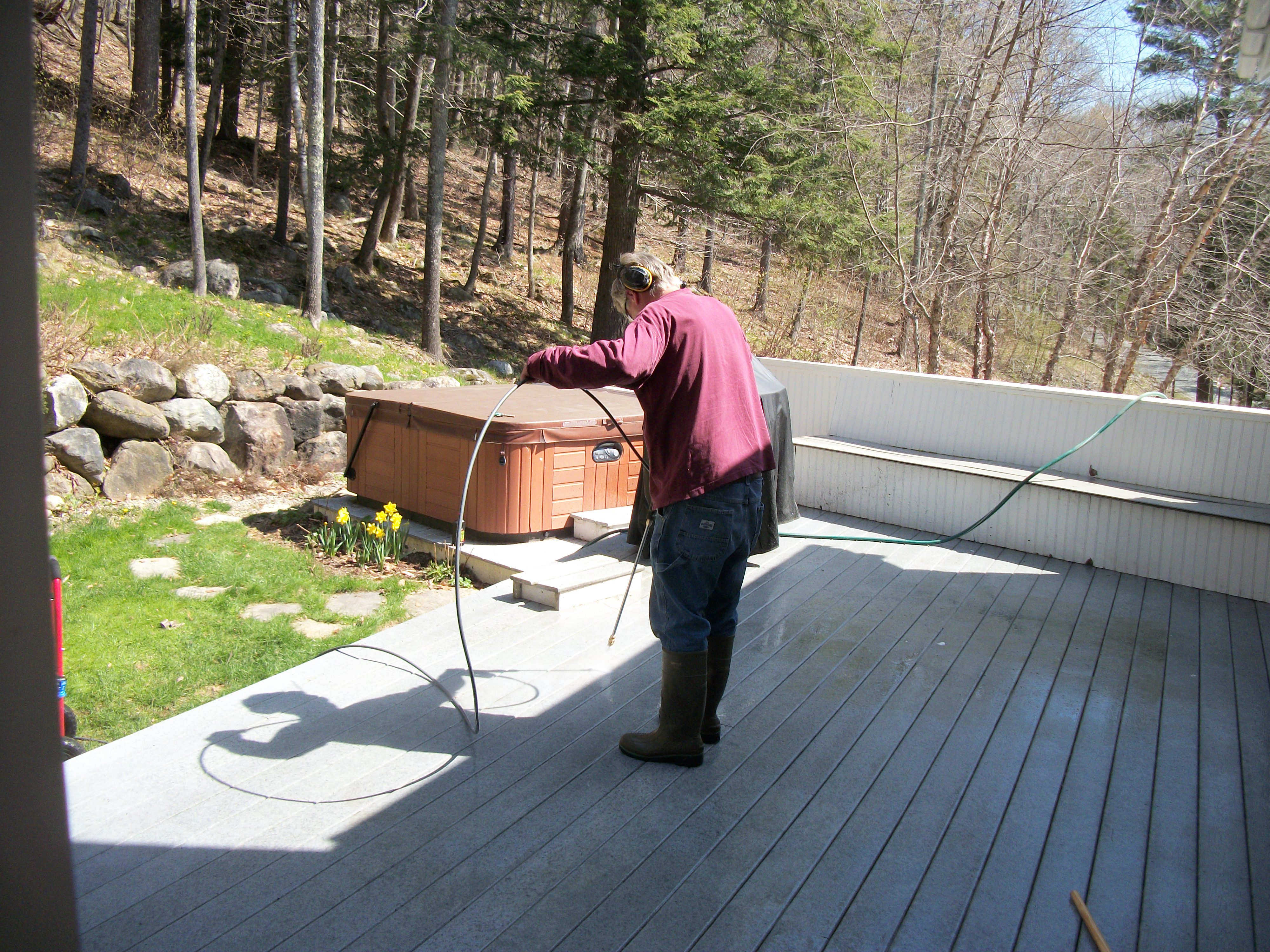
Stephen bought a power washer and kindly power washed all my moldy decks and rails and trim.  This whole house is shiny clean outside at the moment.

100_3895

Plumber Ben Larner was also here installing the new sink.  We first discussed this project back in the fall of last year.

100_3893

And now, here’s the new real cast-iron sink and faucet.  (The old sink was a composite porcelain–not cast iron–and was badly chipped.)

100_3899

Meanwhile, I made a dump run to take all the old lumber from the fence panels and the clothes line–where the nicest Camden, Maine, dump employee unloaded the whole lot for me.  That part of the dump was ankle deep in mud, and I had on “good” shoes.  I had determined I’d have to go home and put on boots when he said “No, back her up right here, and I’ll take care of it all.”   LOVE MAINE!


100_3874


Penny is on the front seat, sucking her blanket and waiting to “go in the car””

Meanwhile, I have installed the temporary chicken fence I use in the summers AND extended it’s height up to about 6 feet.  The whole thing is held together by those plastic ties where you slip one end into the apparatus on the other and pull it tight.  Once on, those ties have to be cut off, so dismantling all in the fall will be…fun.  The chickens are staying put, which means I am winning this round and fox can’t get them.

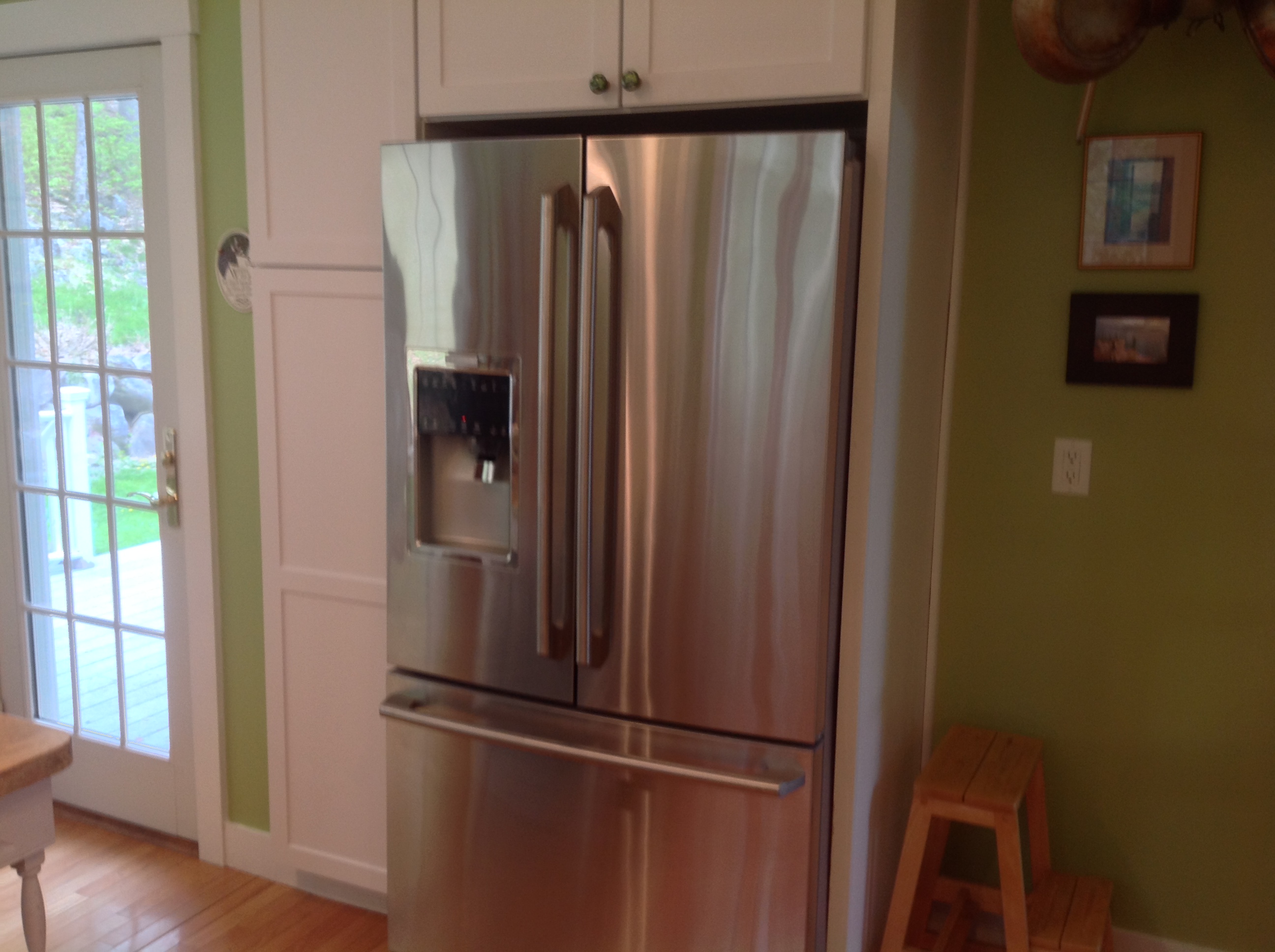
The refrigerator went belly up last week.  The new one is being installed as I write, and I am glad as it’s a long trip to the garage every time I want a slice of lime for a cup of tea, not to mention any serious cooking.  The good news is that the new refrigerator is gorgeous–French doors and a slide out freezer drawer below.  I HATED the side-by-side GE Profile–it had to be designed by someone who never cooks or stores food.

Here’s a frig for someone who cooks, puts up food, and has a lot of visitors:

IMG_0270


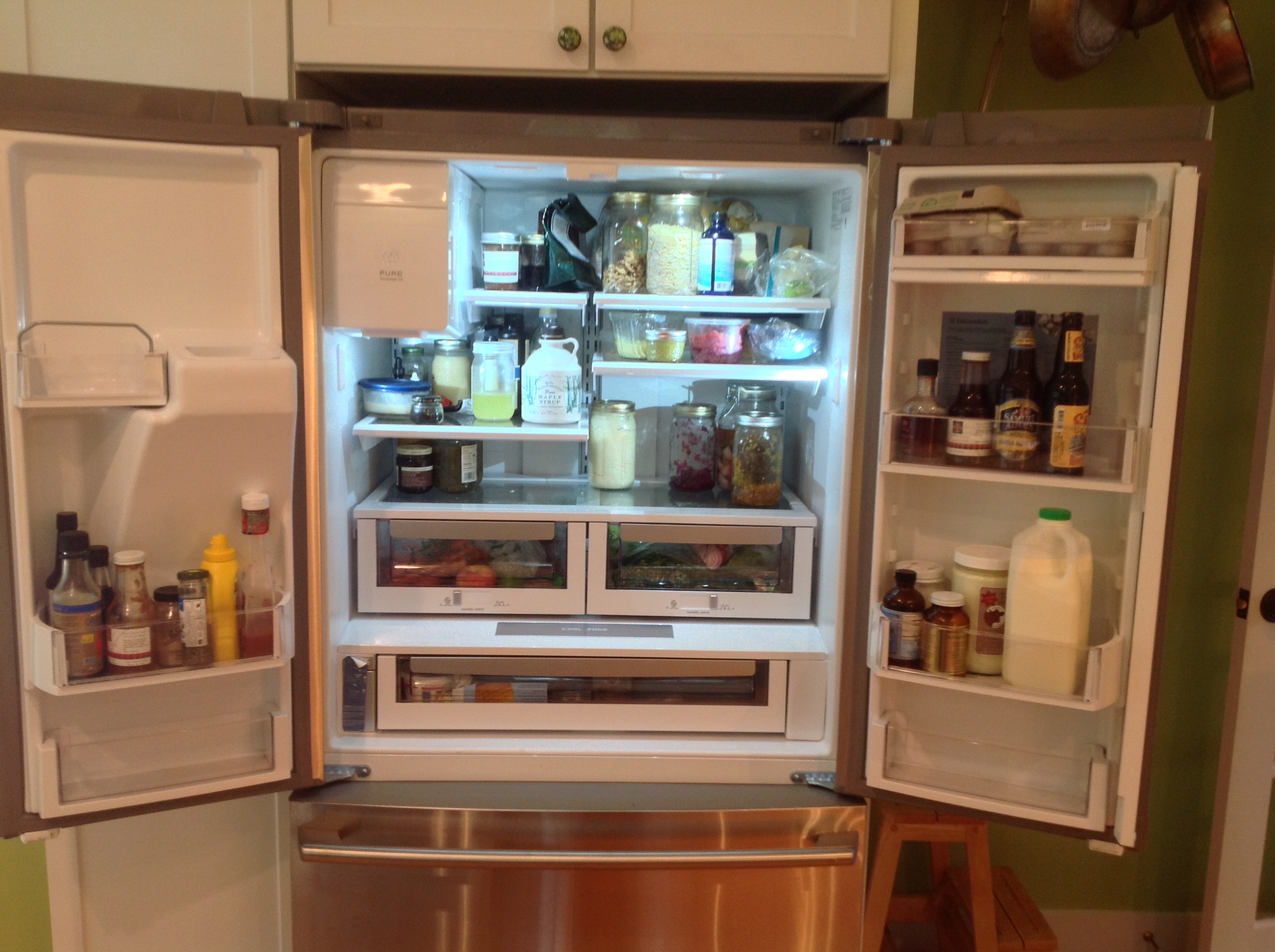
Look at the amazing inside:

IMG_0271

It has two icemakers.  One in the fresh food section that is attached to the controls on the front of the door–for cubes or crushed.  And one in the freezer for heavy-duty use–such as I have in the summer.


IMG_0272


As hard as it was to absorb the sticker price, I feel like I’ve died and gone to refrigerator heaven.

And, look at what got its borders on and is ready to load onto Lucy the Longarm:

IMG_0265

I think I should have made the borders 9 inches–as called for.  I did 6 inches.

The backing fabric is cut, matched, and ready to be ironed and sewn together.

This quilting project from Material Obsession 2 has been so much fun and has provided many lovely hours of hand-sewing at night.  For me, it’s all about the work of the hands…


And, now, the grass is dry, so the lawn will get its first MOW.  And the black flies will try to feast on me.  I’m not swelling up much this year, so it must be true that one builds up a certain immunity over time.

Turkey Tracks: Balance: A Philosophy of the Nourished Kitchen

Turkey Tracks:  May 5, 2014

Balanced:  A Philosophy of the Nourished Kitchen


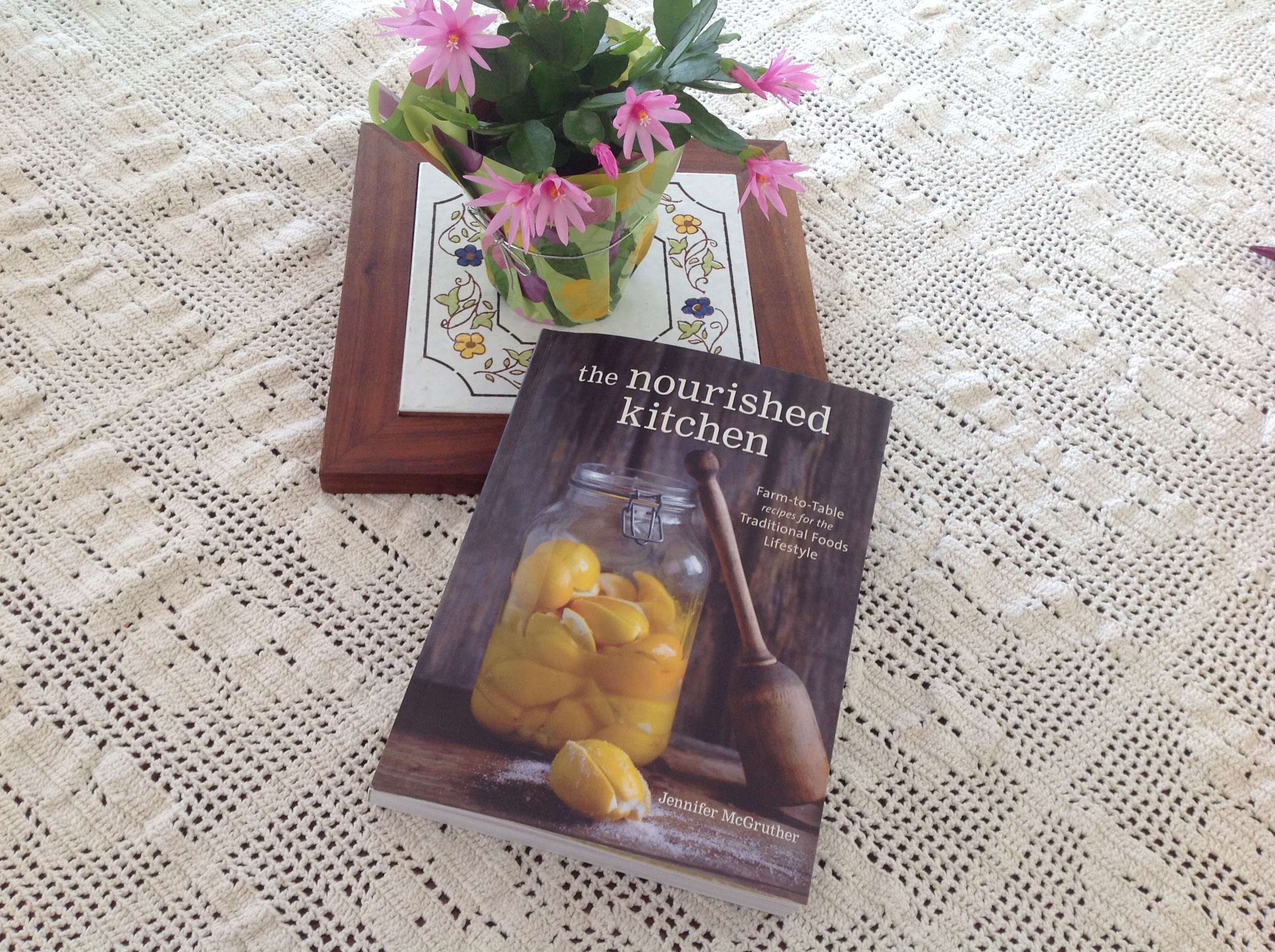
Here’s another quote I like from The Nourished Kitchen by Jennifer McGruther:

IMG_0255

Balanced:

There’s a deeply pervasive disconnect in the collective relationship with food that persists in American culture:  We often view healthy eating as synonymous with restrictive eating, and we likewise view joyful eating as a guilty pleasure, something that begs for strict limits.  I believe that real food allows us both the gift of nourishment, and the gift of pleasure, without unnecessary restrictions.  Eating a diet of traditional foods helps us to develop a positive relationship with our food, not one born out of guilt and denial; rather, the traditional foods movement teaches us to purchase, prepare, and enjoy our food with intention.

Real, traditionally prepared foods offer nuanced flavors, subtle differences in texture or aromas that change continuously as the seasons of the year wax and want.  Enjoy meats and fish.  Relish grains, breads, and pulses.  Take pleasure in good fat and take a mindful approach to sweets.  The multidimensional flavors of traditionally prepared real foods bring a complexity of different notes and textures to your tongue, and even a small amount of concentrated foods like butter from the raw cream of grass-fed cows, or a lovely single varietal honey will bring deep satisfaction that is otherwise missing from industrialized foods with their single notes, cloying sweetness, or overt saltiness (3-4).

Note that McGruther works with ancient grains and fermented sourdough breads.  The former do not have the gluten content of today’s wheat and the latter mitigates further the impact of gluten and the phytates in grains.  So, if you do not have a gluten-intolerant gene, like me, McGruther’s bread recipes are wonderful.


Turkey Tracks: The Traditional Food Movement Defined

Turkey Tracks:  May

The Traditional Food Movement Defined


Here’s another quote from Jennifer McGruther in her new cookbook, The Nourished Kitchen:

IMG_0255


A Traditional Foods Movement:

Traditional foods are the foods of our great-great grandmothers–the foods of gardens and of farms.  They represent a system of balance, emphasizing the value of meat and milk, grain and bean, vegetables and fruits.

There is a movement afoot to restore this way of eating The movement honors the connection between the foods that we eat, how we prepare these foods, and where they come from.  In this way, the traditional foods movement celebrates the connection between the farm that produces the food, the cook who prepares it, and the individuals who eat it.  Traditional foods is a system of connection, emphasizing support for time-honored ways in farming, cooking, and eating, and finding a place for fat and lean, animal and vegetable, raw and cooked.

Where other diets and philosophies of eating emphasize good and bad, black and white, a message of balance exists within the traditional foods movement.  Unlike vegan and vegetarian diets, which restrict animal foods, the traditional foods movement emphasizes their importance while encouraging the purchase of locally produced meats, milks, cheeses, and fats from grass-fed and pasture-raised animals.  Where the Paleo diet restricts grain, pulses, and dairy, the traditional foods movement embraces them, focusing not only on how the food is produced, but also on how it is prepared to maximize the nutrients it contains.  While the raw foods movement restricts cooked foods, the traditional foods movement embraces the, honoring the place of cooking as one of balance in partnership with raw foods, and fermented foods, too.

Emphasizing whole and minimally processed foods, the traditional foods movement calls you back to the kitchen, to real home cooking, and offers you an opportunity to weave the connections between the food on your table, the time you take to prepare it, and the farms that produce it (1-2)

AND:

Join a CSA.  Hold a community supper featuring wholesome, local foods.  Celebrate the beauty of your foodshed, and support local farmers practicing sustainable agriculture.  Support nutritional advocacy groups like the Weston A. Price Foundation and the Savory Institute, as well as the work of farmer and consumer rights organizations like the Farm-to-Consumer Legal Defense Fund (5)

I am old enough that I can tell you that the generation referenced here is not my great, great, but my grandparents.  I remember these food practices well, especially from my rural Georgia grandparents, as well as the fact that few were sick, cancer and heart disease were rare, and food allergies were not rampant like today.  Both my grandmothers lived long, fruitful lives.  They ate traditional foods.


IMG_0259

Turkey Tracks: Acadia Quilt

Turkey Tracks:   May 12, 2014

Acadia Quilt


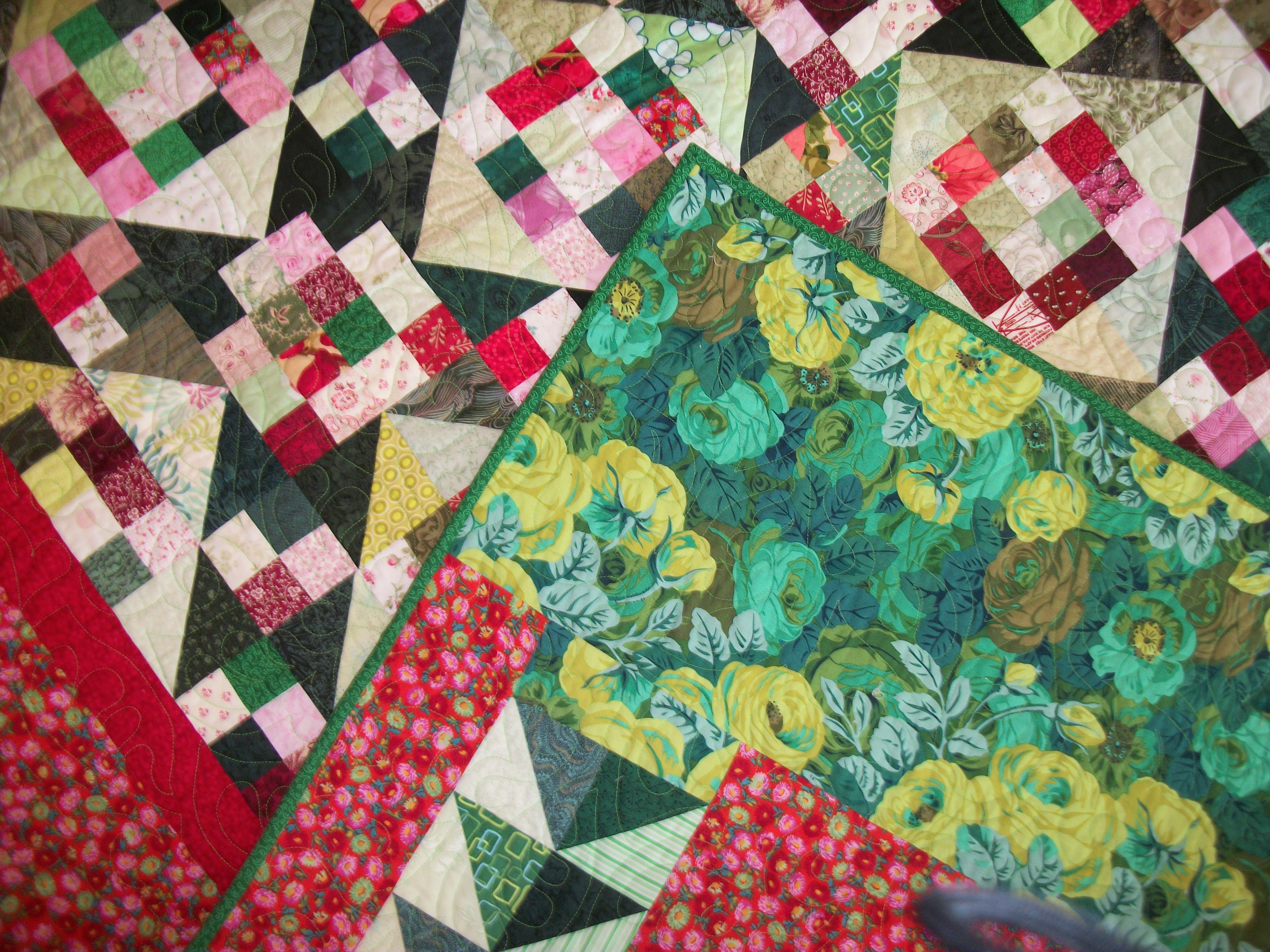
“Acadia” started as a leader/ender project–pioneered by Bonnie Hunter who now has TWO books of her own leader/ender projects.  (Basically, you keep a pile of blocks near your machine while working on another quilt, and when you need to cut the thread on the primary quilt, you run through a “leader/ender” block instead.)

AND, I ve long had a yearning to make a red and green quilt.

This quilt is BIG, heavy, warm, and I absolutely love the way it came out.  It’s built on the “Contrary Wife” quilt block, but I split some of the larger blocks into four-patches.

(My rug is out to be cleaned–hence the dark pad on the floor.)

100_3901


I love the way the secondary pattern developed in this quilt–forming not only a trellis, of course, but squares inside the light squared an inside the trellis center with dark and light centers:

100_3904


100_3902

Here’s a corner and the inner and outer borders:

100_3903

The back was really fun because I did not have enough of the wild green Kaffe Fasset floral I used on the back, so I used more of the bright red remnants I had and every orphan block I could find that would work in this quilt:

100_3910 100_3909 100_3908

Here’s the backing turned to the front, and you can see the bright green binding:

100_3905


I used a Kelly green thread and a pantograph entitled “Arcadia” from Urban Elementz.  It has nice gentle curves and just the right amount of coverage for this quilt.

100_3911

But this quilt is “Acadia”–no “r” added–after the famous national park just north of Camden, Maine.

Turkey Tracks: Bits and Pieces in Early May

Turkey Tracks:  May 4, 2014

Bits and Pieces in Early May


I stopped by Fresh Off the Farm yesterday to get a few vegetables.

I could not resist the organic Driscoll strawberries.  They looked luscious, and I was hungry.

I had some this morning, and I knew from the moment I touched them that I had made a “hungry” mistake:  bright red, but sour as lemons.

* * *

I am so enjoying reading, now, Jennifer McGruther’s The Nourished Kitchen.
IMG_0255

Here’s a quote I wish I had read yesterday when I bought those pitiful strawberries:

Fruits and vegetables prepared in their season bring joy to the table.  As the days turn from dark to light as spring nears, and just when you’ve had enough of hearty stews and root vegetables, the brightest and lightest of vegetables appear–sprouts, herbs, tiny little strawberries, and crisp lettuces.  These vegetables fade and bolt with the heat of summer that, in its turn, brings robust and juicy foods–watermelons, vivid red tomatoes, and plums that drip with juice at the first bite.  The days grow dark and cold once more, and the apples, pumpkins, potatoes, and roots return.  The changing seasons bring excitement and heady anticipation that cannot exist in the seasonless aisles of the supermarket.

I have a feeling that the chickens will enjoy the strawberries.  I’ll be waiting for my own to come into season, and believe me, they are worth the wait.

* * *

I woke to rain this morning.  And, then, magically the sun came out, and I changed clothes and went out.

The project:  replanting the climbing rose and clematis in front of the new fence panels that shield the propane tanks and the generator.  AND, re-carving out the flower beds in front of those panels.

As I worked, it was glorious to see the summer thunderstorm moving towards us.  And to hear it!

It was NOT glorious to see the chickens out of the fence that I installed yesterday.  They are jumping over it from a large bush next to the fence.  But they have to stay inside as fox ate one of the hens this week–one of the two hens that are actually laying.  You will remember that the pattern last year was one missing hen one day, all chickens missing the next…   So as the rain came in, I was shooing chickens back inside their enclosure.  (I have an idea for how to block that jumping off bush.)  And I’m hoping that one of the hens will go “broody” and raise a batch of eggs by my sweet rooster and the one hen that is laying.

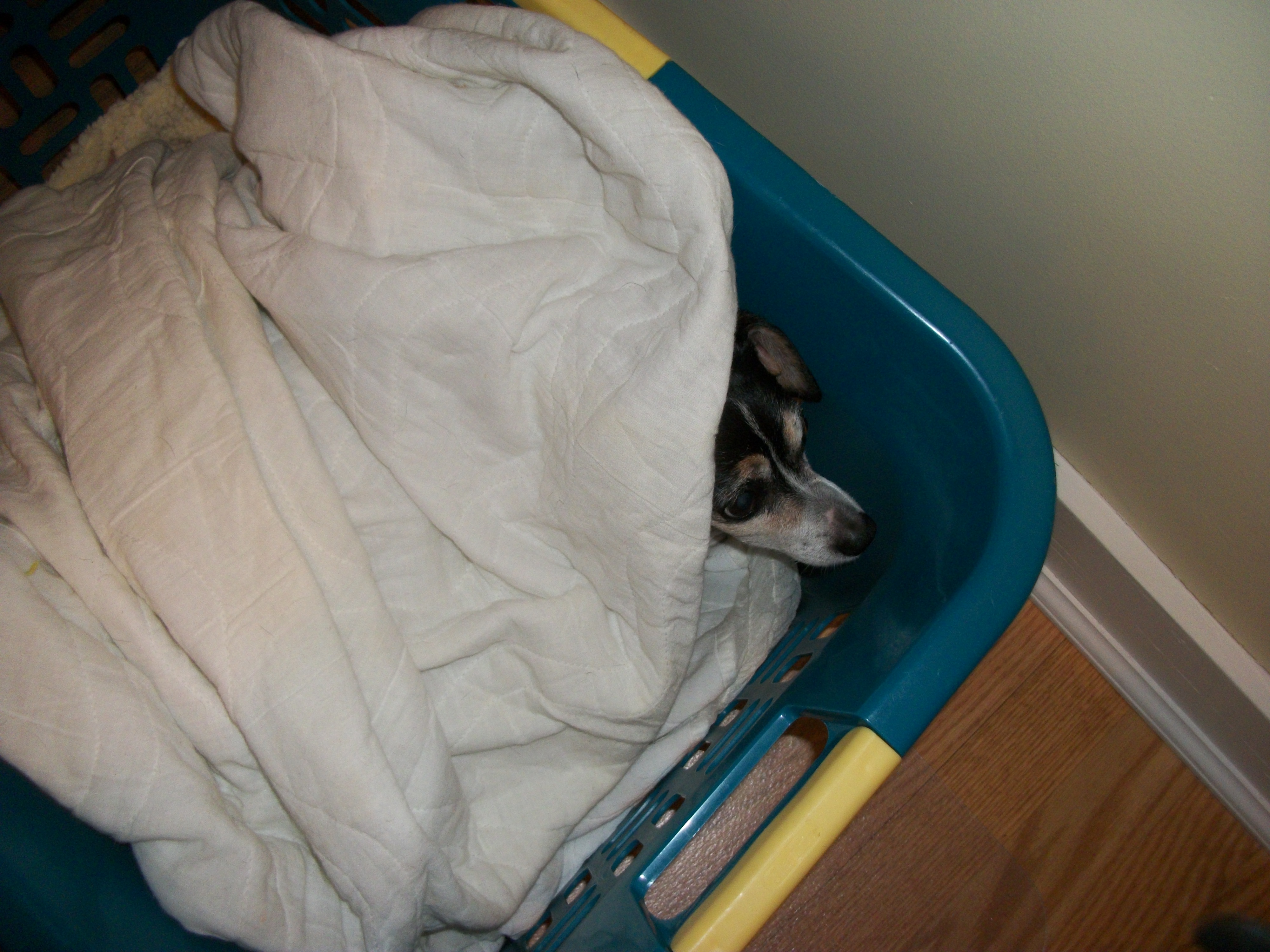
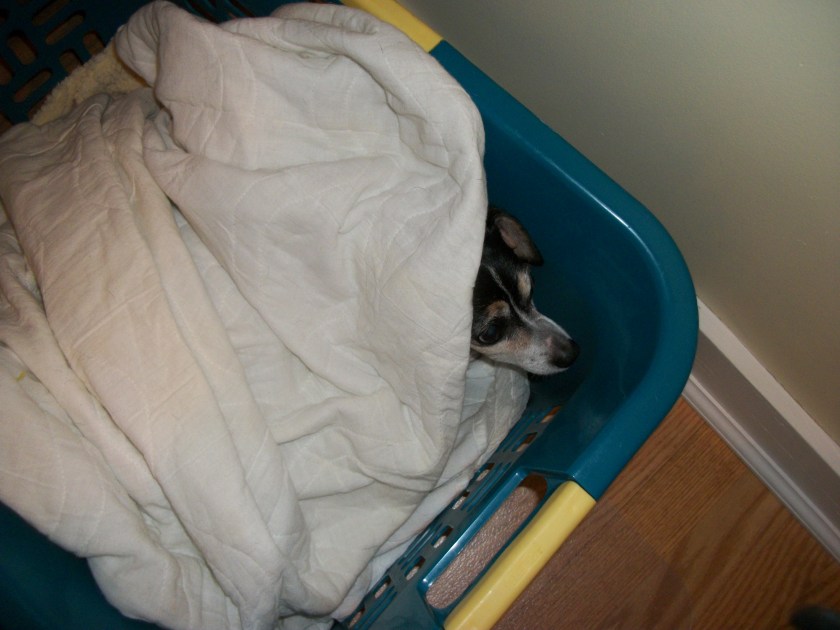
Anyway, Miss Reynolds Georgia is terrified by thunder.  She is presently in her laundry basket at my side, shaking and under the covers:
100_3872

Anyway, when it stops raining, I’ll post some pictures of all the work that Stephen Pennoyer has made possible at this house.  I have been blessed, blessed, blessed to meet him.  He is so competent, skilled, cheerful, and an awesome worker.  What a gift!

* * *

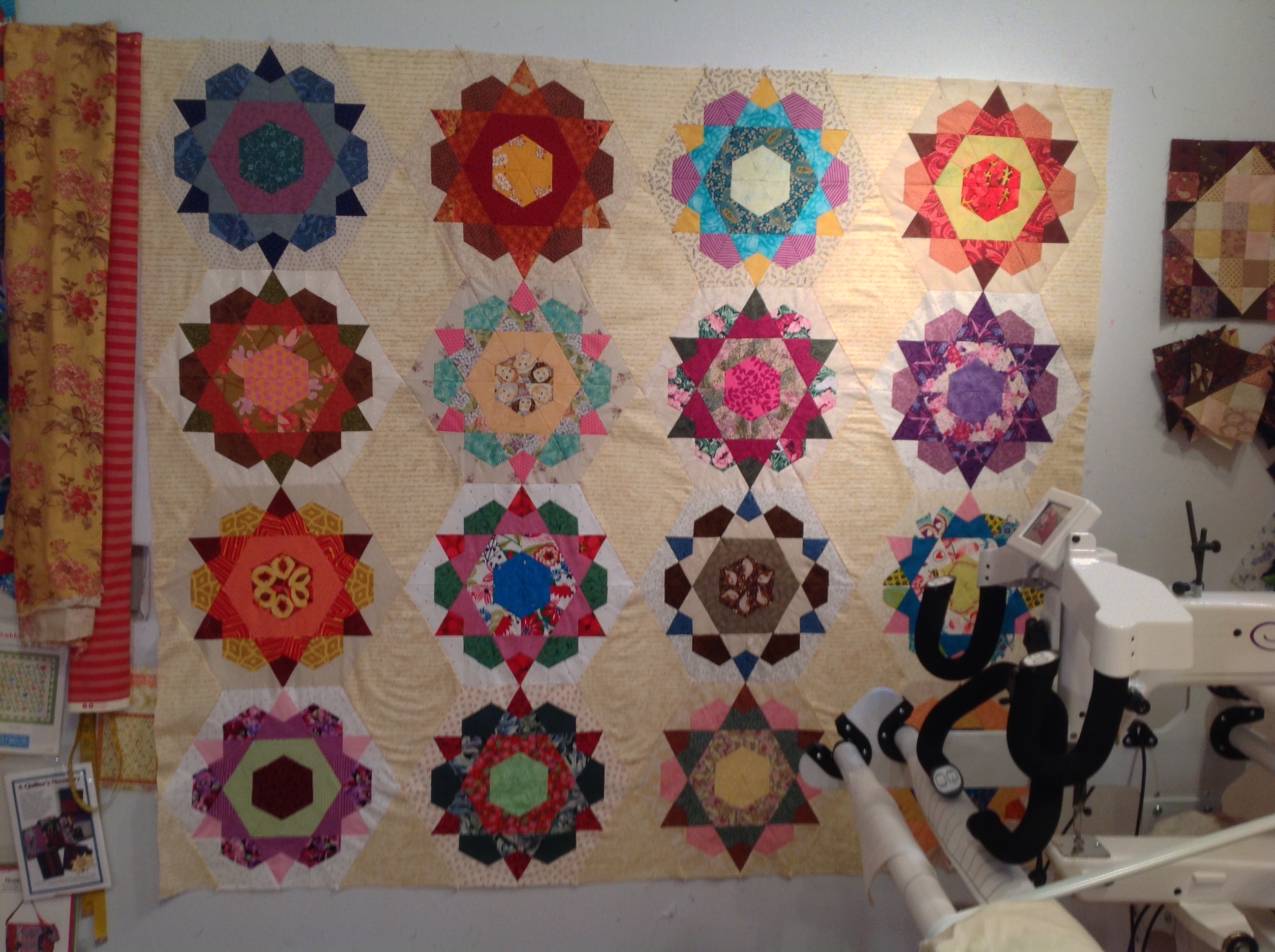
This quilt will be my 100th quilt–remember it is from Material Obsessions 2:
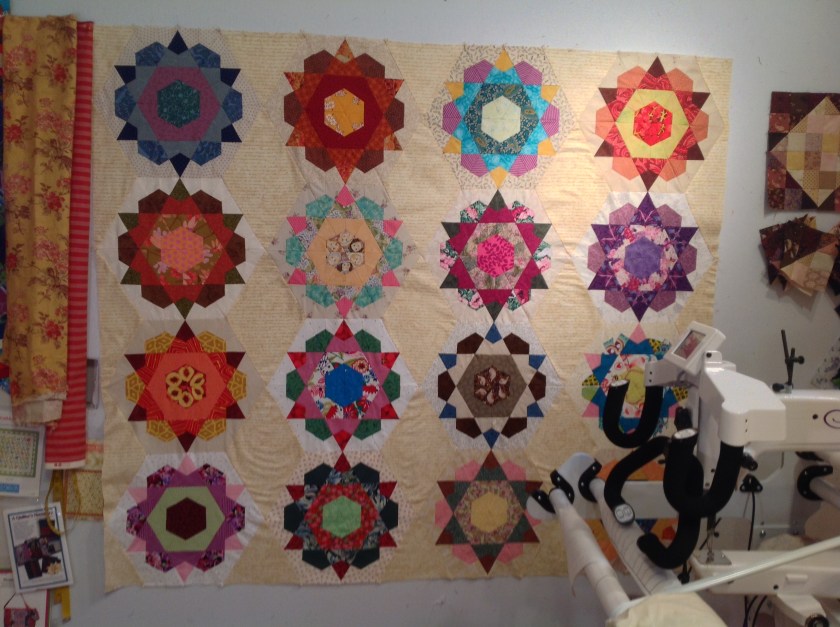
IMG_0261

Don’t mind the wrinkles around the diamonds–it’s just how the quilt is sticking to the flannel–and I have not ironed much as there are so many biased edges.  I won’t really iron it until I get the borders on it.

BUT, BUT, I think it really needs one more row.  It’s looking way too…SQUARE.

So, I’m picking out fabrics for four more blocks and will “unsew” that bottom row so as to be able to insert the required diamonds.

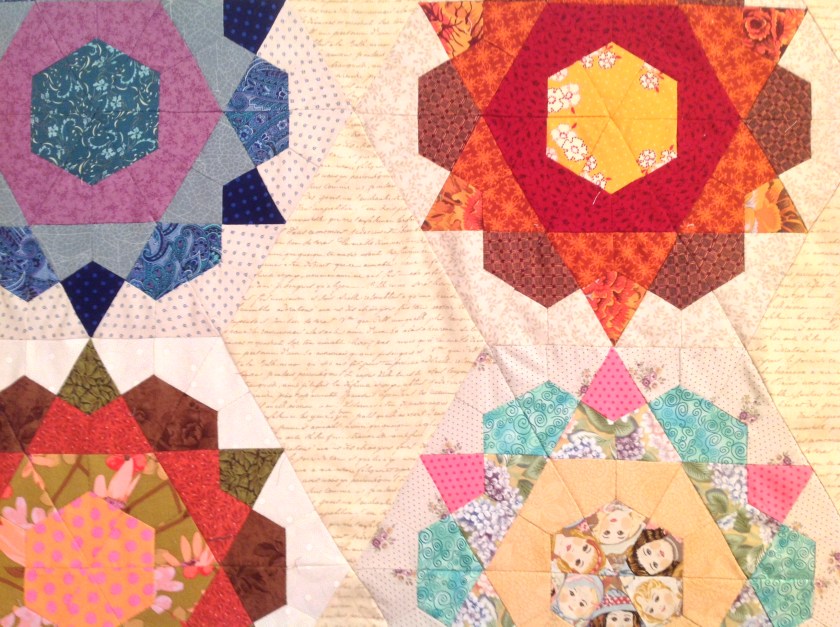
The diamonds get sewn in on the diagonal lines–with each medallion left unjoined down its center–which is doable…

I think you can see the method of construction on the diagonal lines here.
 

IMG_0262


I was in Alewives quilting in Damariscotta Mills earlier this week and took pictures of the version of this quilt that Rhea Daiute did–the one that drew me to this project in the first place.  I loved the way she used a stripe for the inner border:

100_3868

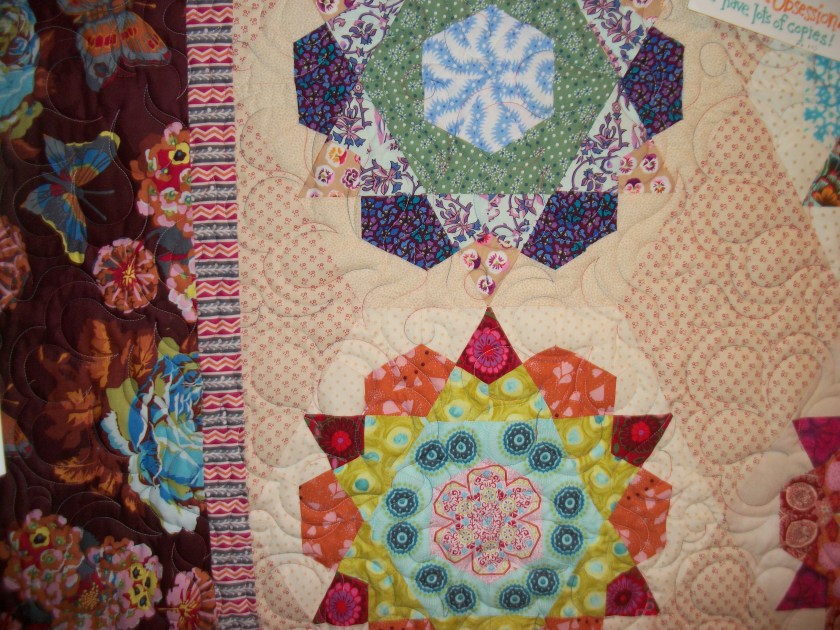
And I love her BIG, BOLD border.  Rhea has the greatest eye for color and pattern.  Here’s a close-up of her blocks and that striped border:
100_3869


I could not find a big, bold border so am going with a quieter one that lets the medallions shine.


* * *

I have finished the baby quilts for the Enright family twins that are in the offing in, hopefully, early June.  Hopefully as everyone wants them to stay put until early June…

We have our Coastal Quilters’ meeting this Saturday, and I want to “Show and Tell” the baby quilts before mailing them on Monday.

Then it’s on to my niece’s baby daughter, also due in June.  I am excited about the fabric that I’ve bought for baby Stevens’ quilt.

Interesting Information: The Good Life: The Movement that Changed Maine

Interesting Information:  May 4, 2014

The Good Life:  The Movement That Changed Maine


Friend Marsha Smith (founder of the immensely successful Citizens for a Green Camden group here in Camden, Maine) sent me this post at least two weeks ago.  I treated myself to reading it this morning.

Lo and behold, the little gem is not just about reading, it’s a very different kind of internet presentation to tell a story.

I knew many of you would enjoy this experience.

It will take you 20 to 30 minutes, depending on how involved you get with the text.  So ENJOY!

This site operates differently–just keep scrolling down, as instructed, and click on each chapter as it comes to you.
 

The Good Life: The movement that changed Maine.


The story starts with Scott and Helen Nearing–who spawned a back-to-the-land movement back in the 1970s.  They, in turn, helped spawn Eliot and Sue Coleman’s work on an adjacent farm–now known as Four Seasons Farm.  Eliot Coleman went on to pioneer growing/harvesting greens/tomatoes/etc. in hoop houses in the middle of the Maine winter.  That marriage broke up, and Eliot Coleman is now married to the horticulturist Barbara Damrosch, who has written about food for The Washington Post for many years, has written numerous books, and is a mainstay of MOFGA–the Maine Organic Farmers and Growers Association.  I heard her speak a few years back and found her to be an engaging speaker.