Turkey Tracks: Around and About–June 2011

Turkey Tracks:  June 15, 2011

Around and About–June 2011

Chive is in full bloom everywhere now.  Here’s one in Margaret and Ronald’s garden.  I have three or four now as well.  They reseed themselves all over the place.  The leaves are wonderful snipped with scissors over a salad, over cheese (goat, feta, yogurt), or soup.  But, I didn’t know until coming to Maine that the flowers are also delicious.  I kept asking people at potlucks, “what are these lavender things in the salad?”   The chive is one of the earliest herbs to come back in Maine spring (and yes it is still spring here; we don’t get summer until July 4th or so), and it lasts all summer and up to a killing frost.

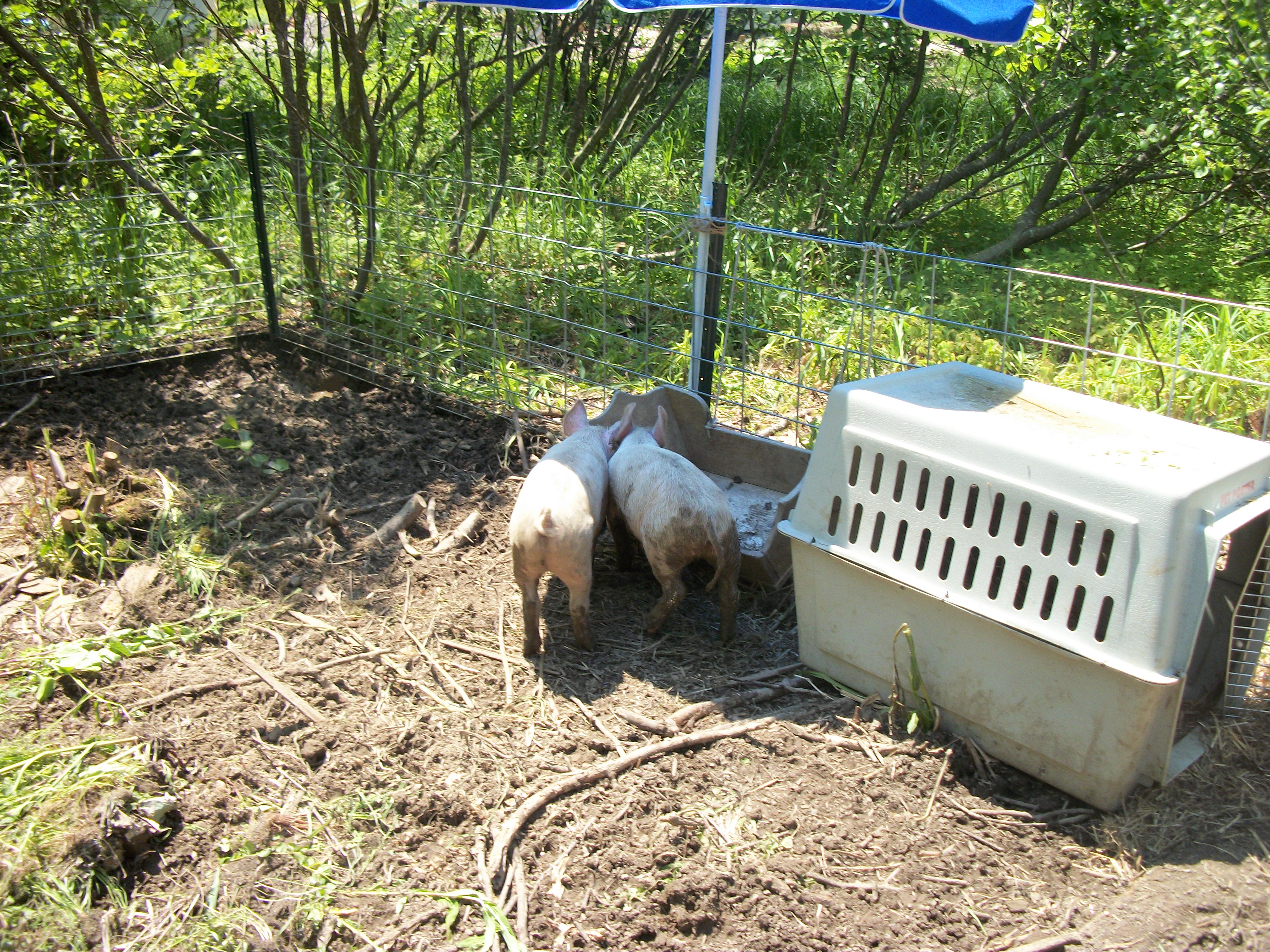
Margaret got  two pigs about 10 days ago.  They’re pink, so will sunburn; thus, the umbrella.  Margaret has always wanted to see what pigs would do on their land.   She’s talked about it as long as I’ve known her.  Now she’ll find out.  She’s moved them once already, and they had completely tilled their former pen at least a foot deep overnight.   They’re now in an area filled with alders–an area M&R would like to clear out for more gardens.  So, they just cut down the alders, put the pigs in, and voila!

I’m still awestruck at how big pigs will get and how quickly they do it and how much they eat–all info gleaned from FARM CITY, by Novella Carpenter, which is a terrific read!

M&R are also raising Freedom Ranger chicks.  Here’s one–a beauty–with her tail cocked and ready to fly!

The lupines are blooming everywhere–all along the side of the roads.  It’s a glorious sight.  Maine lupine come in a variety of colors:  the most common is blue/purple, but there are also pink and lavender shades and white.   Here’s some up at our neighbor’s home, Sarah Rheault:

Here’s some on the side of a road leading west out of Camden.  Lupines line both sides of the road:

Rose and Pete have finished their bread oven, and Rose is learning how to use it and developing recipes.  Here’s a pic of some bread in progress:

Our River Birches are something to behold.  I couldn’t resist taking this picture of the shedding bark:

We went out for lunch today and came back via Barrett’s Cove–one of our swimming holes and a beautiful view.  Here it is:

This little tour does not begin to cover everything exciting that is happening these days.  But, that’s Maine for you!

Turkey Tracks: The Garden is In–June 2011

Turkey Tracks:  June Turkey Tracks:  June 15, 2011

The Garden is In–June 2011

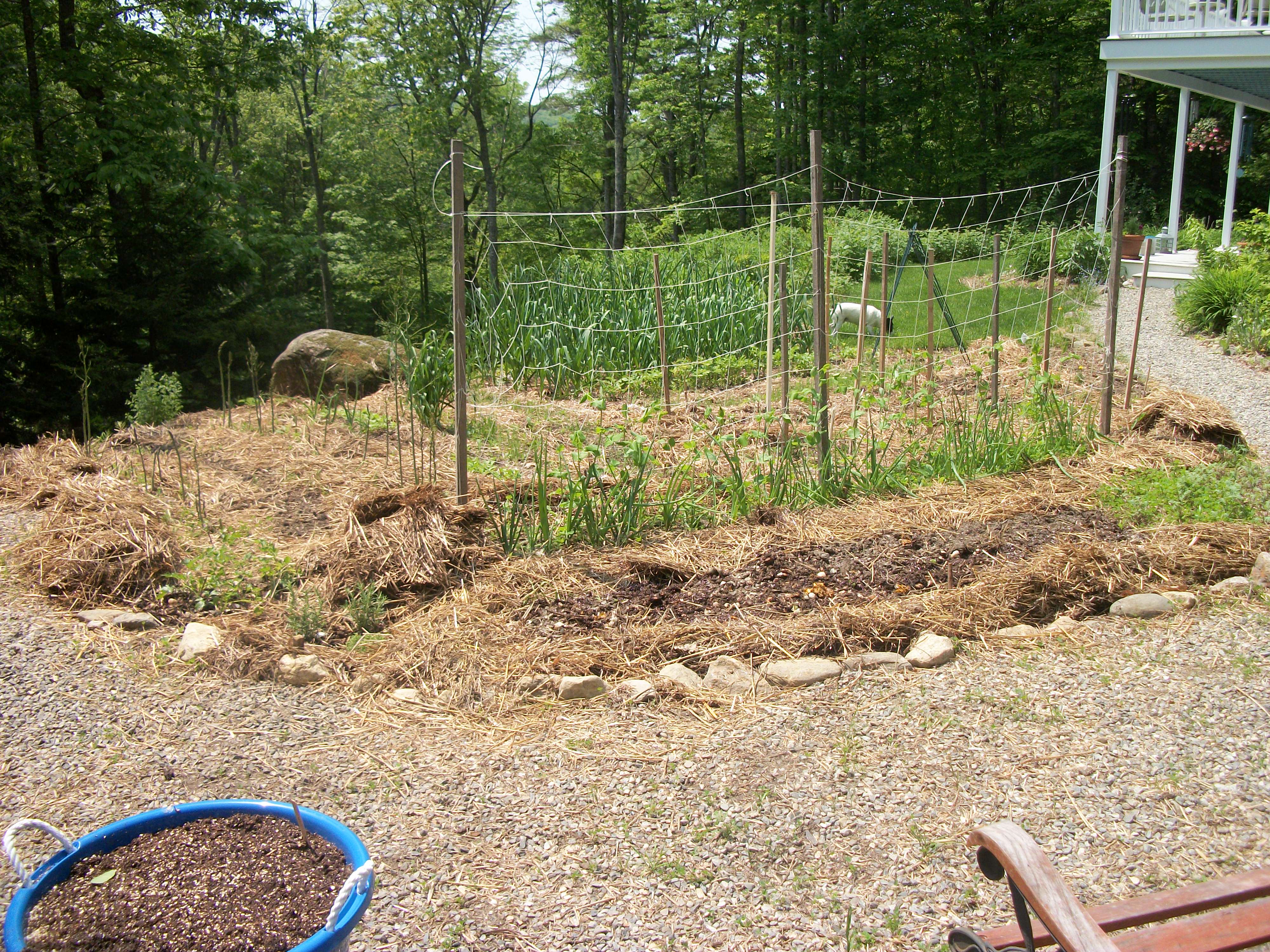
The gardens are all planted.  Several days of rain has been terrific for all the seeds and little seedlings.  Since I took these pictures about a week ago, the beans (dragon’s tongue, haricot verte, and a dry climbing bean) and–hold on to your hats since they produce SO much–the zucchini are up.  So are the kale, the lettuce, the beets, and the radish.  I don’t see the Hubbard squash I planted next to the zukes in the front bed yet though.  And I forgot to check for the winter squashes along the driveway now that the sun is out.  The potatoes are sprouting in their tubs.  No sign yet of the carrots or the cukes.  Here are some pictures of what is now an early garden, but one that is GROWING hourly.

The asparagus, there on the left, has doubled in size now.  We got about 5 meals this year–its third year.  The peas on the trellis are now halfway up.  Way in the back you can see the very healthy garlic–planted last fall–fronted by La Ratte fingerling potatoes, which I planted in late April and am hoping to “grabble” (sneak some out early) when my children are here this summer and early fall.  La Rattes are beyond delicious!

I planted four kinds of onions.  Two kinds are a bedding onions which should get big and round.  I planted scallions, which are all up.  And the onion sets I put out last year did nothing-it was too dry last year–and when that happens we can’t water a lot or we’ll run out the well, especially if the house if full of family.  I put the sets out again–you can see some in front of the peas–and they’re doing really well.

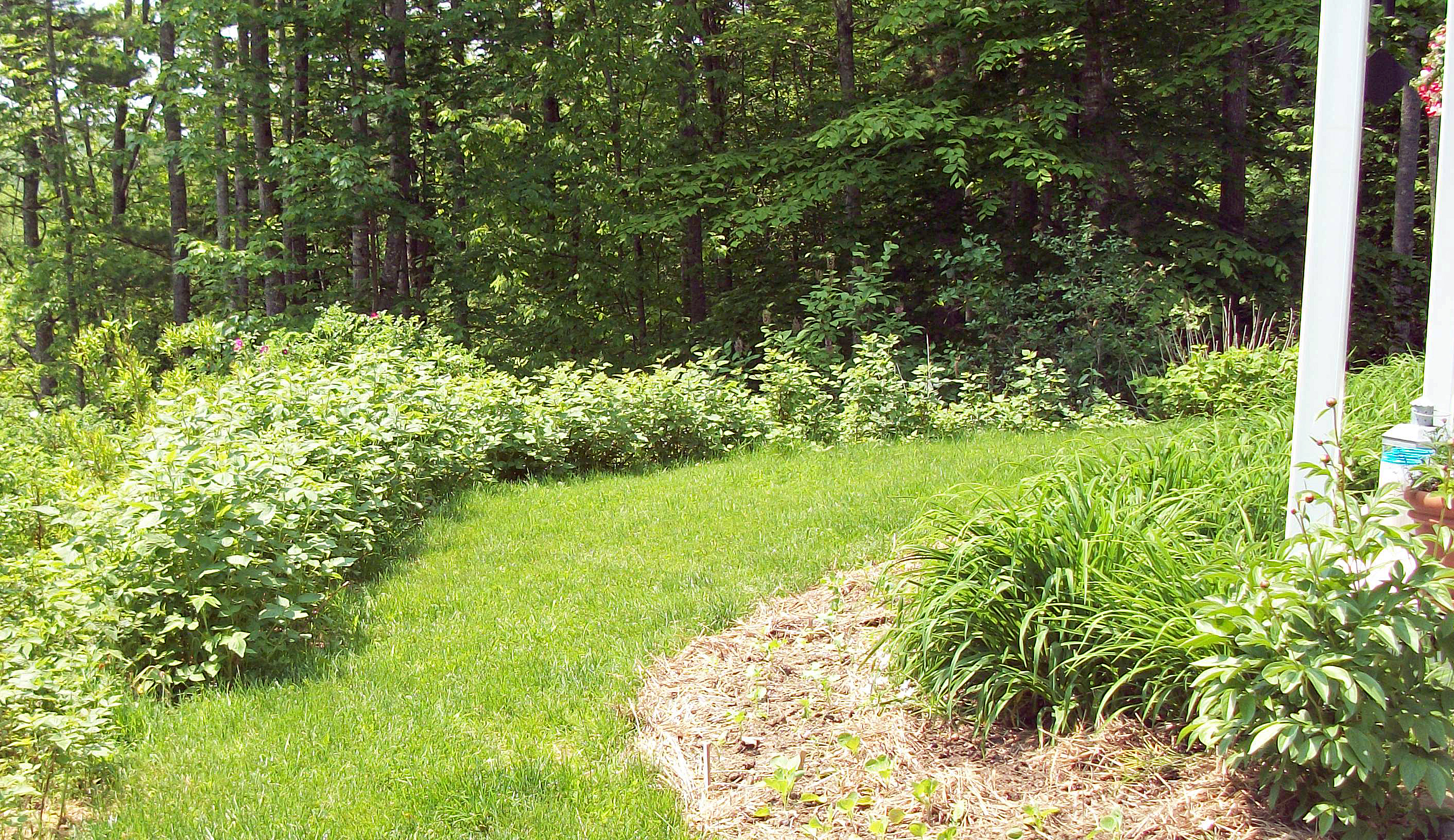
The raspberries are starting their third year and are making a lovely border fronting rugosa roses and some struggling bayberry that lines the steep hill to the left.  (We were afraid of grandchildren falling off our hill.)  The raspberries are FULL of blossoms!  As are the strawberries, which are on a hill at the side of the house.

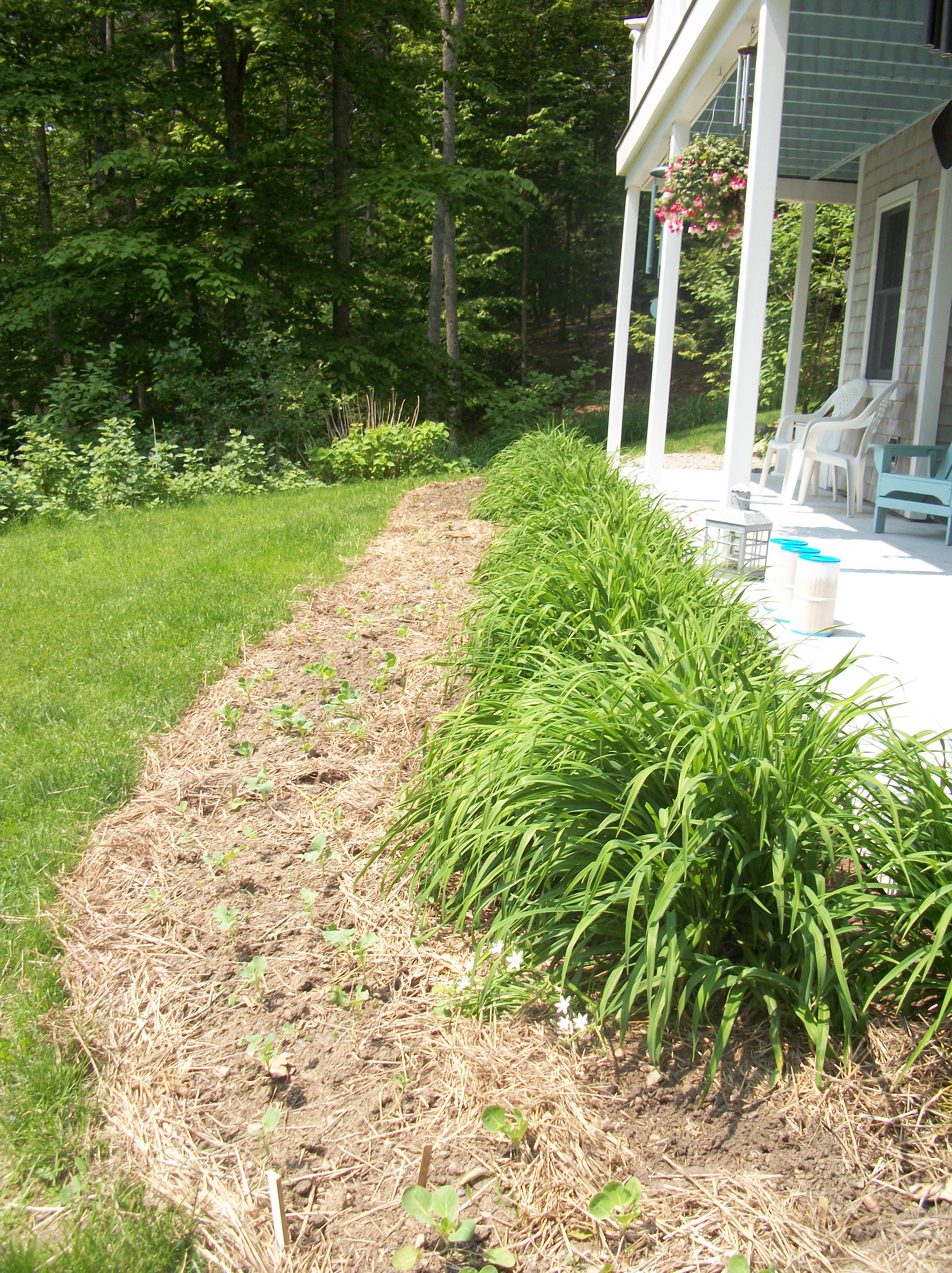
Our big experiment this year is planting potatoes in tubs–which we got at our local Renys (a terrific Maine store) for, I think, $4 each.  We’ll keep the dirt in them over the winter , augment it, and plant something else next year.  Maybe squash?  The potatoes are sprouting as of this morning.  There’s a selection of 5 kinds.  I put the extras in the front bed, behind the brassicas.  The dried bean vines are planted beneath the new white fencing John upgraded and painted this spring.  Doesn’t it look nice?

The front bed is planted with cabbage, Broccoli, Brussel Sprouts, zucchini, a Hubbard squash, leeks, extra potatoes, and, at the far end, I threw in some sunflower seeds.   In the foreground, peeking out from a daylily, are some white flowers–Star of Bethlehem–a flower my grandmother in Georgia brought up from the swamp, planted in her front hard–when I was a baby or earlier.  They now cover the front yard in the spring.   The daylilies are setting buds, and the wind chimes along the porch sing so sweetly in a soft breeze.   Beyond you can see how dense and dark the Maine woods get in the summer.  They are full of mystery and beckon one inside.  There’s an intermittent creek at the edge of the woods, and by now, Jack in the Pulpit will be blooming all along its edges.

So, there you have it, the 2011 garden.

Turkey Tracks: Rat Dogs Love to Roll…In Filth

Turkey Tracks:  June 13, 2011

Rat Dogs Love To Roll

In Filth

OK, they’re not really rat dogs.

They’re rat terriers.

Unless they’ve been over bred, they’re indomitable hunters and protectors.

They think they’re HUGE, and not much convinces them they’re not.

They love to roll in…whatever smelly awful thing they can find.  They’re always so sorry when their owners scream “no, no, go away, don’t get near me, you have to have a bath right now, why did you do it again, I just washed you yesterday, what were you thinking, come right now, no you cannot come in, stand right here until I find a towel…


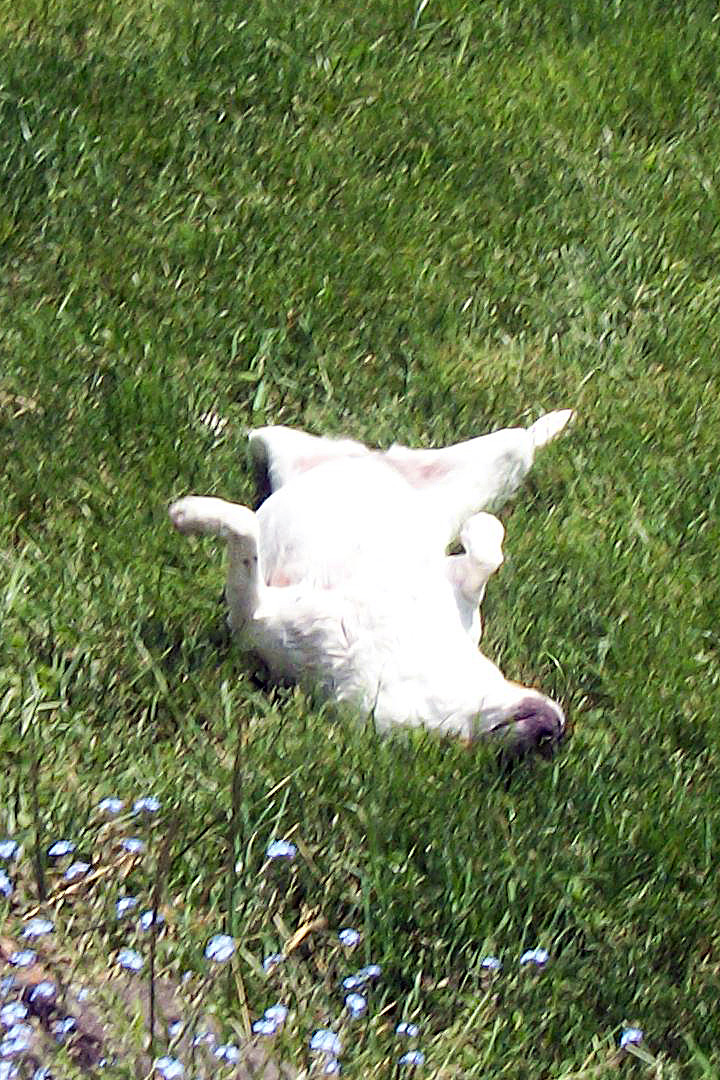
She doesn’t look dirty in this picture because it’s her other side that’s plastered with some sort of goop–which came from–I don’t even want to know.  At the very least, deer scat.

Once washed, a rat dog has to run and roll in the grass.  If left inside, the rolling and drying would take place on all the furniture and the carpets.

Miss Reynolds Georgia, who is a highly bred babe, has, so far this year, escaped rolling and the following bath.  She is refusing to go outside unless she has a DIRE NEED.  We think she either got bitten by the black flies or dive bombed by a big bird.  She has NOT FORGOTTEN.

Interesting Information: Homogenization of Milk and Cheese

Interesting Information:  June 13, 2011

Homogenization of Milk and Cheese

Steve Bemis is a retired corporate attorney who farms hay in Michigan for local farmers.  He is also a founding Board member of the Weston A. Price Foundation’s Farm-to-Consumer Legal Defense Fund–which works to insure greater access to local foods, especially raw milk.  In the Spring 2011 WAPF journal WISE TRADITIONS, Bemis poses an interesting theory about the real need for homogenization and pasteurization of milk (http://www.realmilk.com/cheese-is-serious.html).  The real reason, poses Bemis, might be the dairy industry’s incredibly profitable cheese business.

Let’s back up for a moment.  In my lifetime, one’s milk was delivered to the door in glass bottles.  One judged the milk by the cream line at the top of the bottle–clearly visible for all to see.  But, the dairy industry wanted that cream to make other products.  Ice cream, yes, but also cheese.

So, industry begin figuring out ways to get that cream.   How they did it was to, first, convince women that milk had to be pasteurized as real milk was unsafe–a claim never proven scientifically.  Second, they instituted, over time, a process of fractionalizing milk into parts and reconstituting some of the parts back into milk–minus all the cream.  (Whole milk might not have the whole amount of cream that came from the cow.)   Says Bemis:  “Milk, milkfat, skim milk powder and other fractions of milk are processed into cheese, butter, ice cream, yogurt, kefir, and other industrial component which are ubiquitous in processed and ultra-processed foods.”  Third, they successfully got the federal government to police this new terrain.  This is how industry works:  maximize profits any way possible, including gaming the information.

Processed, fractionalized milk was then homogenized, so no one could ever see the cream line again.  And, the glass bottles disappeared.  But, here’s where Bemis gets really interesting.  Once milk is homogenized, it “will go rancid within a matter of hours.”  Thus, the milk has to be pasteurized to keep it from going rancid.   “Hence,” writes Bemis, “once the dairy industry took the homogenizing step to follow the dollars, it had to pasteurize.”  Bemis continues:  “And the industry will have to stick with the gospel of pasteurizing, since their current economic structure requires it.”

Hmmmm….  Pasteurization came AFTER homogenization.  Pasteurization was NEVER about food safety.  It was about maximizing profits, fooling customers, and extending shelf life.

So, if you can’t get the whole, raw, living, healthy REAL milk, try to find a dairy that produces a cream line, even if the milk is pasteurized.  Homogenized milk is really, really processed.

Bemis then turns his attention to the cheese issue.  He asks an important question:  “Is contamination of raw milk a huge red herring keeping our eyes off a far more important reason for pasteurizing milk?”  Cheese is a keystone product for the dairy industry.  Cheese is a billion dollar business.  Cheese is probably why both the USDA and the FDA have launched even more intense, fear-based attacks against raw milk and against artisan cheese makers.

The good news, writes Bemis, is that “raw milk consumption continues to surge; FDA’s interstate ban is under legal attack, and FDA’s dogma is regularly being shown to be inconsistent, illogical and unscientific–an embarrassing and ever-deepening quandary in which the agency finds itself due to its steadfast refusal even to hold a dialogue on the subject.”

As for the USDA, one part of it promotes cheese consumption while another part (the new food guide) says its unhealthy.  How’s that for mixed agendas?  It’s time to locate any kind of government recommendations on how to eat somewhere other than the USDA and to put science back into the process.

Turkey Tracks: Chicken Update

Turkey Tracks:  June 8, 2011

Chicken Update

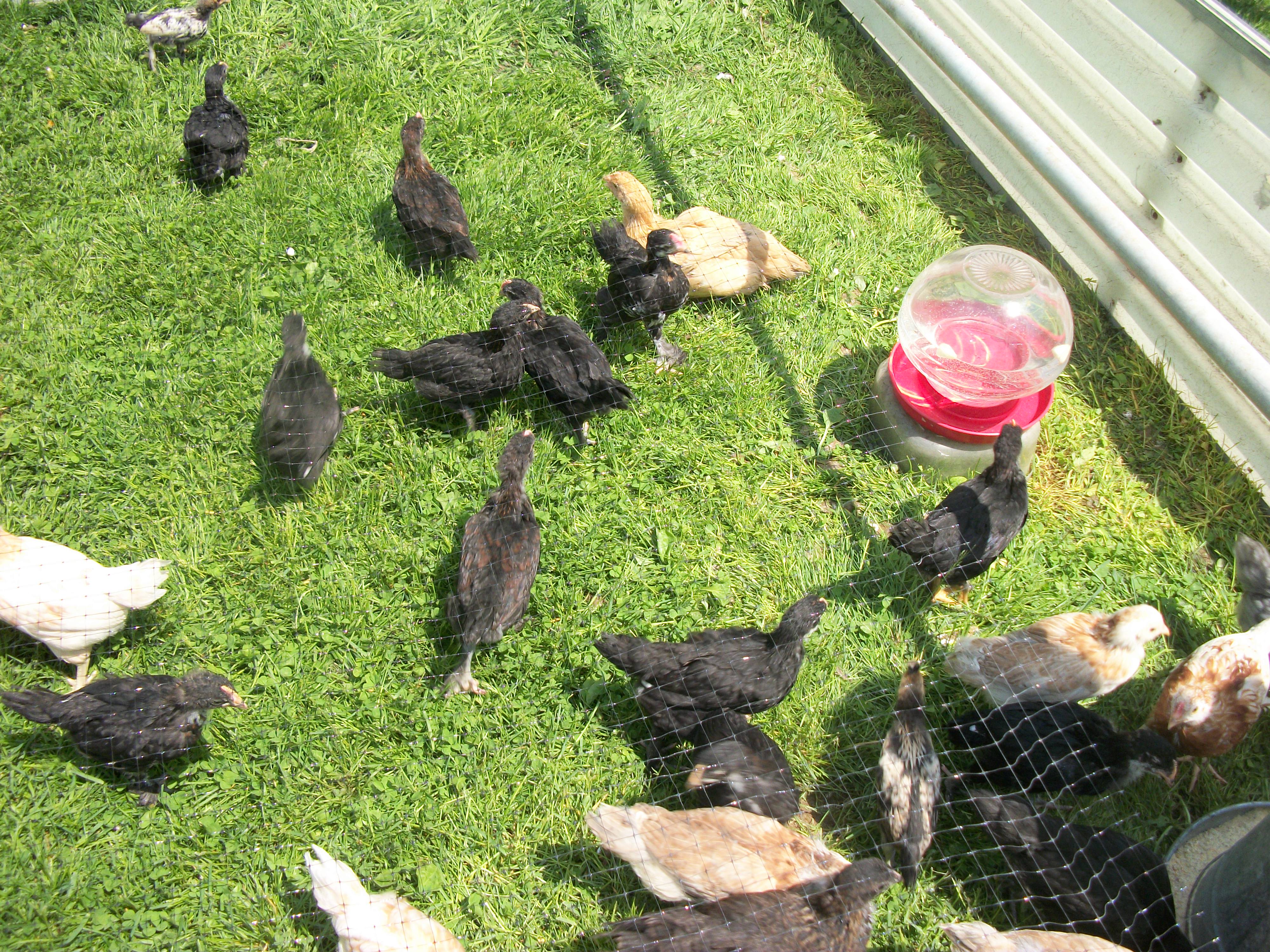
The Freedom Ranger chickens are 7 weeks old now.  We’ll slaughter some of them in 3 weeks time–at 10-11 weeks.  They’re beautiful, healthy birds.  The color variations are so interesting.  I’ll have a hard time choosing one of them to keep as a layer.  We can’t tell the hens from the roosters yet, though some of the roos are starting to try to crow.

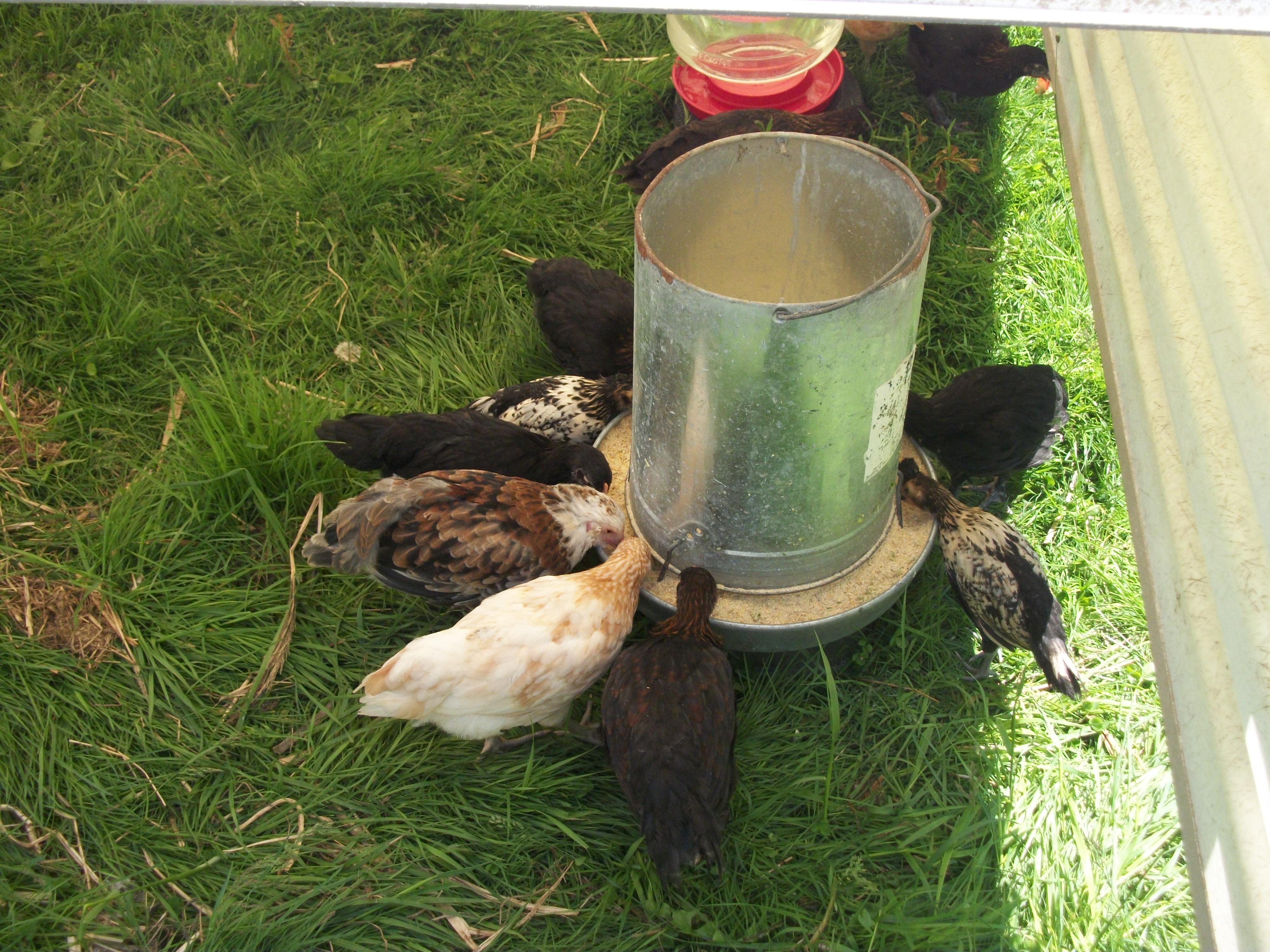
 HEre they are in the shade of their tractor.  Rose and Pete move them every day, so they always have fresh grass and a new set of bugs to catch.

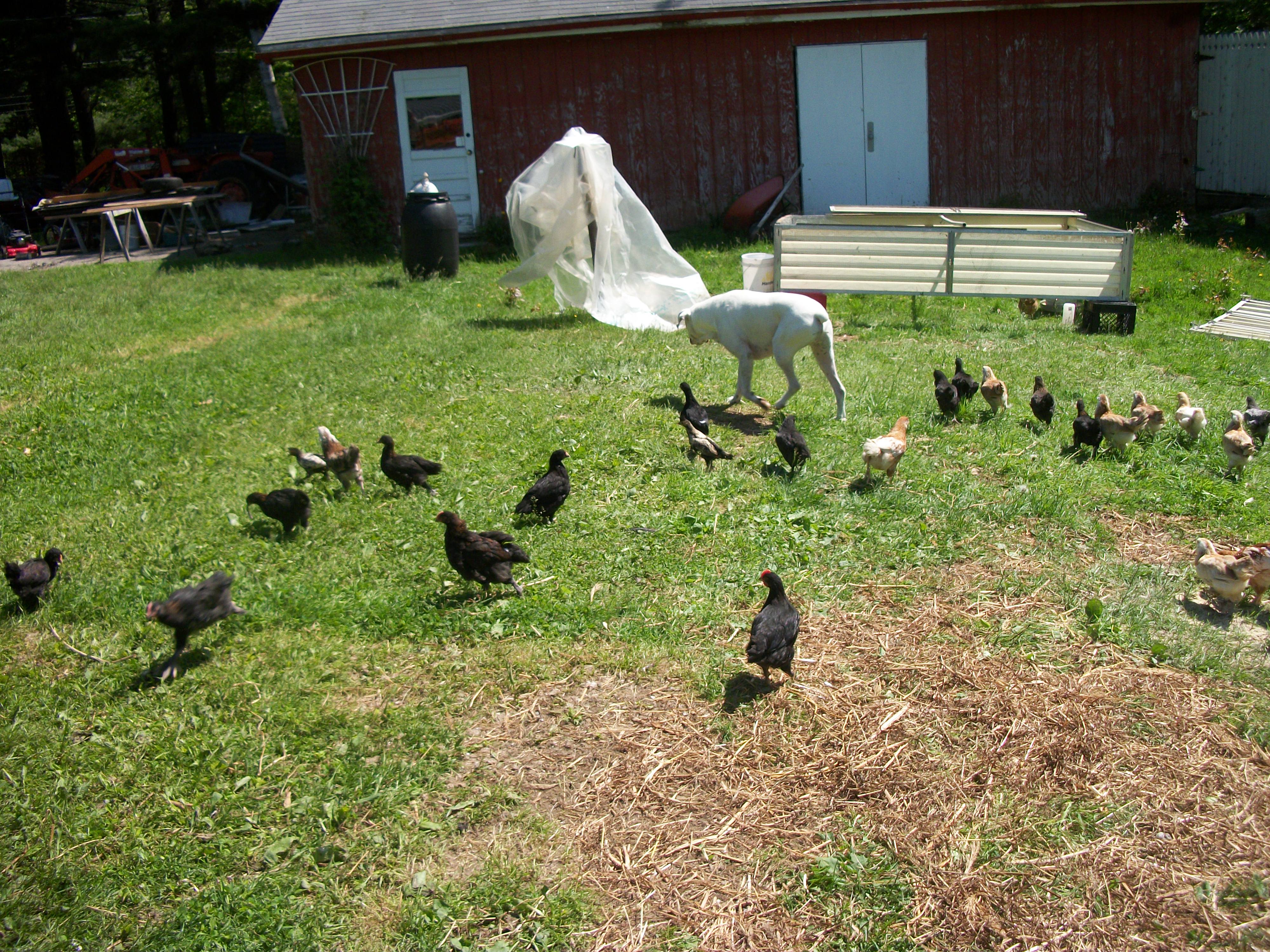
Here are the batch of Copper Black Marans, Wheaten Americaunas, two Barbanters, and backyarders.   We’re starting to see which of the CBMs will be roosters as their wing feathers are turning orange.  They are loose in Rose and Pete’s yard.  Below them to the right is a planting field, and behind them are some protective shrubs.  They run from their tractor–you can see the edge propped up in the back right of the picture–to the shrub.  They’re already looking for and eating bugs from the yard.   I just happened to catch mostly marans in this picture.

Here are some of the others.  The little speckled chicks are the two Barbanters.  They are a week or so behind the marans.  Look at the topknot on the one at the right.  Probably a rooster in the making.  The Wheatens and backyarders (all from blue eggs) are about 6 weeks old now.   You can see a purebred wheaten–the blondie in the front.  And that bigger backyarder is quite striking in that s/he has coloring like an eagle–with a white head.  There are 3 of them like that.   The maran in front will be a roo–see the copper coming in on his wings?

Oh what fun we are having this spring!

Turkey Tracks: Skunk Recipe!

Turkey Tracks:  May 30, 2011

Skunk Recipe!

We don’t usually have skunks around the house.

No No Penny does not allow them under any circumstances.

If we do get a whiff of skunk, it’s always been in the spring.  That’s when I thank my lucky stars neither of our girls has taken on a skunk and when I check to see if I have skunk-bath ingredients on hand.  It’s a pretty simple mixture, and Mainers swear it is better than tomato juice:  1 quart of hydrogen peroxide, 1 cup of baking soda, and 1 Tablespoon of dishwashing detergent.  Wash until the odor goes away.

So, the other night Miss Reynolds Georgia, aka The Beauty Queen, NEEDED to go out in the middle of the night.  She signals this need by crawling out from the covers, sitting on the end of the bed, and harumping in a low throaty growl–like dripping water–until you get up and put her out.  Which I did finally.  She takes her sweet time, too, and strolls about the yard smelling things in the moonlight.  I know she does because she’s so white that she stands out like a neon light.

Once back in bed, I began to realize that skunk odor was flooding through the windows at my head, though the bedroom is on the second floor.  It was so strong that I seriously wondered if Rey Rey had been skunked and in my sleepiness, I had not picked it up.  I hauled her our from beneath the covers to smell her.  No, she was good.

It was so strong that I worried I would smell like it the next day since my understanding is that “skunk” is an oil that disperses into the air.  Or, the room would.  For days!  Gradually it faded, and I fell back to sleep.

Tomorrow:  hydrogen peroxide.   Ours is a year out of date now.

And, thanks, girls, for being too smart to get skunked!

The girls are 8 and 9 years old now, and it’s hard to believe.  Here’s a pic taken last summer in June:

No  No Penny, on the left, is a Katrina rescue–when she was about 2 years old.  She is the kind of Rat Dog I grew up with–a savvy and relentless hunger, a huge protector of her people and her property, a sunny and funny personality.  She’s a bit heavier this year because she crawls under or into the chicken house–though she is terrified of the rooster–and eats whatever meat and milk they have not finished yet.

Rey Rey is on the right and has a lot of Chihuahua in her line–something breeders are doing to perfectly good rat dogs.  She is my faithful shadow throughout the day and night–except when the black flies are biting.

Both are smarter than you can believe and have huge vocabularies.    Except for Penny’s early life, they’ve never had any dry dog food.

Turkey Tracks: Chicken Update

Turkey Tracks:  May 30, 2011

Chicken Update

I went out to see Rose, Pete, and the chickens on Friday.

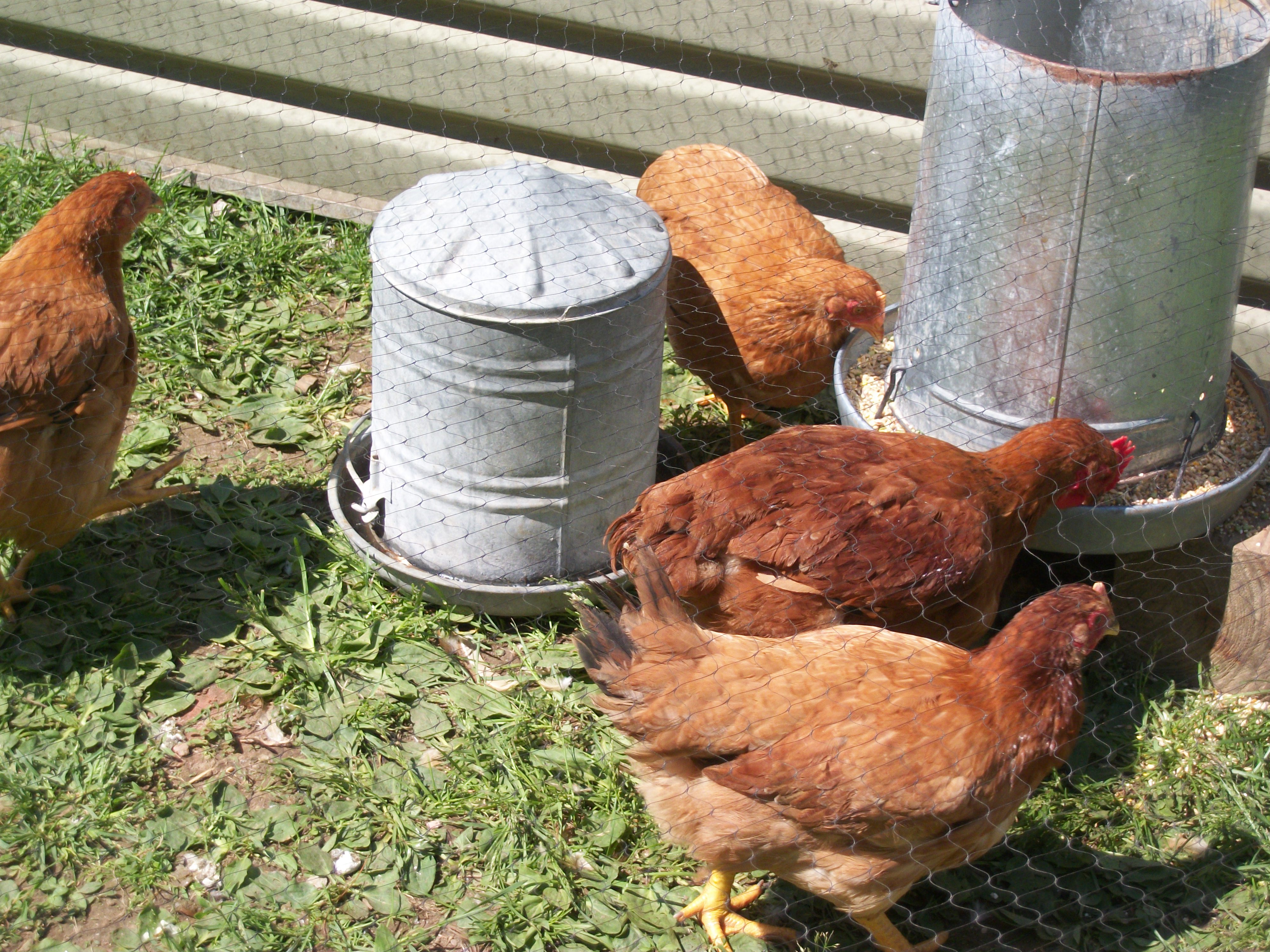
The Freedom Rangers are SO BIG!  It was hot, so they were resting in the shade, but you can get some idea of how much they’ve grown.  They’re about 5-6 weeks now and are beautiful birds!  I can’t wait until we can tell male from female, and I can take home one of the girls.

Here’s a picture of Rose with the other chickie batch.  That little speckled creature with the top knot on top of his/her head is a Barbanter.  This batch of chicks was born late April, so is only about two weeks younger than the Freedom Rangers–which will give you some idea of the difference in how much bigger a big old meat chick will get in a hurry.  This batch of chicks are the Copper Black Marans from Georgia and the “blue egg” chicks–some of which are pure Wheatens.   All, except for two Barbanter chicks, are fathered by William, the Wheaten roo.

Here’s a better pic of the Marans.  I love it that they’re so shaggy.  The larger hen laying down is a Freedom Ranger with an injured leg.  She’s getting better now:

Turkey Tracks: Millie Young’s Quilt

Turkey Tracks:  May 29, 2011

Millie Young’s Quilt

Coastal Quilters have an annual auction in the fall.  Two years ago, Millie Young generously donated a beautiful quilt top and over 5 yards of backing and at least 2 yards of fabric that would be lovely for the binding.  I bid on the quilt, but not vigorously since I knew it would take me a long time to quilt it.  I loved the colors!

The quilt showed up again at the fall 2010 auction!  And this time, I had a long arm.  I can’t remember what I paid for the quilt, but it was, truly, a gift.

 I used a pantograph on a smaller quilt–generously donated by quilter Prudy Netzorg, so I could learn how.  Learning all the tricks of a long-arm machine is a huge learning curve actually.  So, Millie Young’s quilt became my second pantograph experience.  I chose a big pattern–hyacinths–and it came out so pretty.  When the light catches the quilt, the pattern forms raised areas and creates all kinds of lovely shadowing.

I just finished binding the quilt last night.  Here it is flung across a bed:

And, here’s a close-up which shows the quilting:

I did a great job with the pantograph–but learned to think about how the first and last sweeps of the pattern will play out on the quilt.  I looked at a quilt I have done by a professional and can see that the quilter organized the sweeps so that they are even on both sides.  But, that’s the kind of detail few would see, too.

I chose a peach-colored thread, which came out lovely.

I’m throwing ZEN (you can have the work but not the fruit of the work) out the window on this one.  It’s staying here!  I believe, given the history, that I was meant to have it!

Turkey Tracks: John’s Socks

Turkey Tracks:  May 29, 2011

John’s Socks

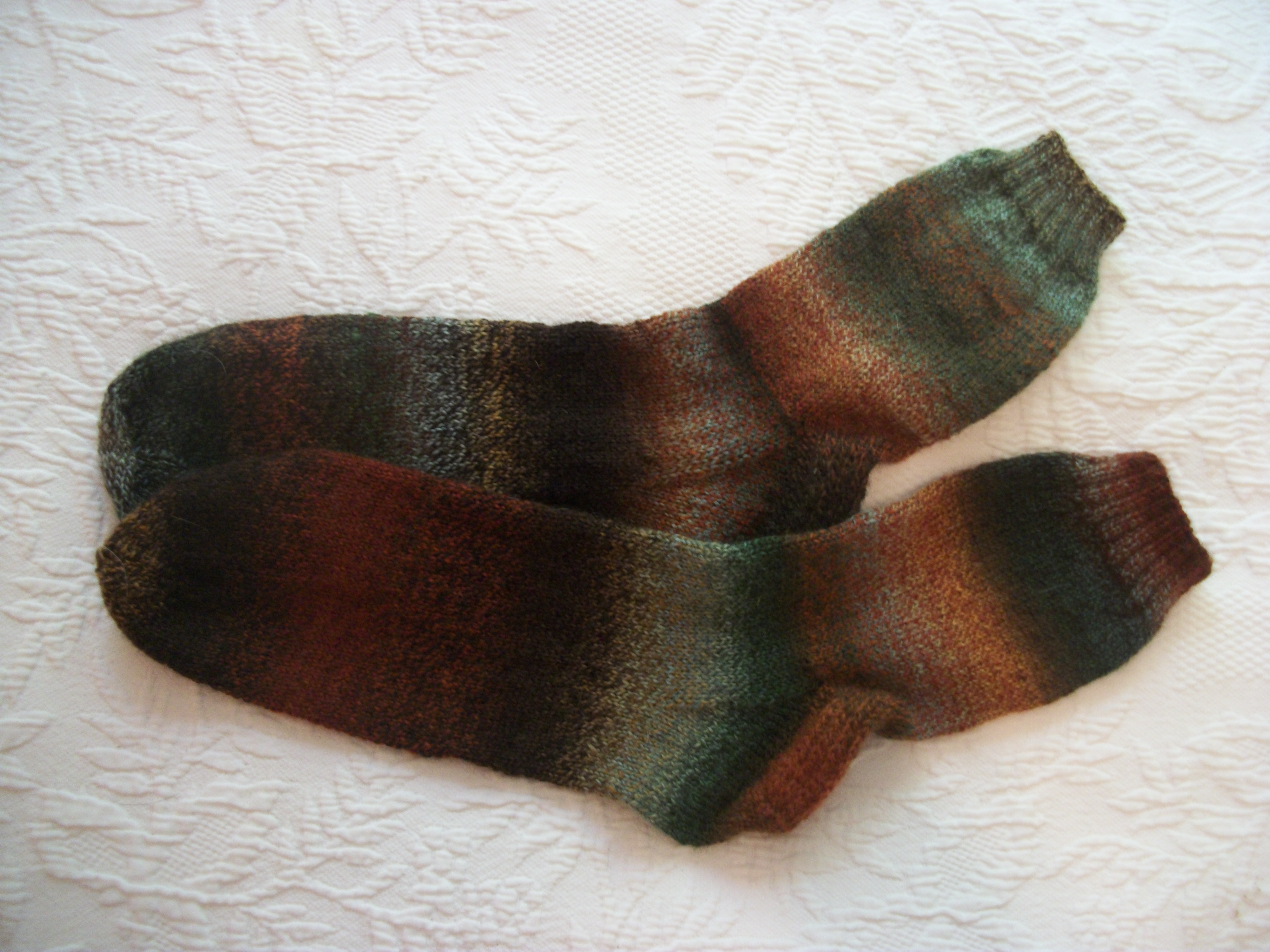
Earlier in the spring, I visited Halcyon Yarns in Bath, Maine.  Halcyon Yarn is famous in Maine.  I can’t imagine why I haven’t ever visited since I go by Bath not infrequently.  Here’s the web site:  http://halcyonyarn.com/.

I bought a ball of yarn I fell in love with.  Zauberball yarn:  http://halcyonyarn.com/products/yarn/06716600.html.  I saw socks, not shawls.  Ok, the truth.  I bought 2 balls.  One I fell in love with, and one I knew would make a pair of socks that would go with a winter sweater and pair of corduroy pants I have.  I don’t really have socks that work well with this combo.

Of course I started with the ball I loved.  As I worked, John thought he loved the developing socks too.

 In retrospect, this beautiful yarn–lovely to work with–would have taken a pattern with no trouble–without taking away from the changing pattern in the yarn itself.

Turkey Tracks: Juicing

Turkey Tracks:  May 27, 2011

Juicing

My niece, Lauren Howser Black, is starting to experiment with juicing–which she shared on Facebook.

I am trying to figure out juicing myself and am slowly coming to some conclusions.

First, all food is made up of three ingredients:  protein, fat, and carbohydrates.  Protein and fat are the building blocks of the body.  They are absolutely necessary for ideal  human health.  Carbohydrates are, apparently, not, since one can get every single nutrient, vitamin, enzyme, etc., one needs from meat alone.  (This information comes most recently from Gary Taubes in WHY WE GET FAT–which I covered in Tipping Points Essays 29 and 30.)

We eat carbs to give ourselves energy.  And, they taste really good for the most part as most are yummy fruits and vegetables.  But, the plant kingdom has been vastly misunderstood for some time.  Plants are chemically based, and they can pack a powerful punch.  For instance, all the major drugs that really work come from plants.  And, plants have chemicals that are absolutely addictive for humans.  Sugar and grains are an example.

Second, humans do not handle cellulose well at all.  Unlike cows, we don’t have four stomachs full of bacteria specifically meant to break down cellulose, in the form of grass.  Our system is much closer to dogs.  We have a single stomach, longer intestines, and bacteria specializing in processing meat and fats.  When we overload them with cellulose, we set up gut conditions that make us sick since all that bulk in the gut, according to Dr. Natasha Campbell-McBride, who wrote GUT AND PSYCHOLOGY SYNDROME, starts preventing the absorption of the good nutrients we need.

Third, humans really do not handle sugars well at all.  Sugars of all kinds throw off the delicate balance of our digestive system–which, in turn, causes the host of chronic diseases associated with people who have settled in one place and are growing, particularly, grains.  You’ll recognize some on the following list:  arthritis, diabetes, hypertension, heart disease, stroke, depression, schizophrenia, and cancer.   Autoimmune and inflammatory conditions abound.  These all appear alongside developmental degradation, like crooked teeth and bad eyesight.  Hunter-gatherers and nomad herders, on the other hand, have been and are (yes there are still some in the world) disease free.  [This kind of assessment is widely discussed.  Here, I’m using Lierre Keith’s recounting of this history in THE VEGETARIAN MYTH (139+).  She is, in turn, drawing on the work of Dr. Loren Cordain, who has worked extensively with archeological evidence of what earlier people ate and how it affected their bodies.]

Given this information, one might avoid all carbs.  I think that would be hard, and most hunter-gatherers and nomadic herders foraged for greens, tubers, seasonal fruits (which were much less sweet than our fruit today), and the like.  Plus, we are surrounded with eye-catching produce all year around.   AND, one has to consider, also, that juicing has long had a place in healing circles.  Maybe it works to detoxify the body–short term–but long-term health requires nutrient dense foods.  Vegetables are not nutrient dense.  Period.

Dr. Natasha Campbell-McBride absolutely holds a place for juicing in the GAPS diet.  (I wrote about GAPS in Tipping Points 31.)  But, she is dealing with a population of sick people (autism, in particular) who have significant gut issues.  (There is a growing recognition that autism almost always has a particular profile of an impaired digestive system AND that autistic people crave carbohydrates and have very limited diets.)  I know I have a gut issue–it was the root cause of my food allergy issues.  I suspect most Americans today do, given all the grains, other carbs, processed food, and chemicals they’re eating.

Dr. Max Gerson was one of the pioneers of healing the body through, among other practices, juicing.  But, he also used infusions of raw liver as well.

Dr. Joseph Mercola, who has an interesting web page and who wrote THE NO-GRAIN DIET, juices–but mostly green vegetables.

So, how to think about this issue?

It’s pretty clear that fruit juices are really high in sugar and offer a terrible jolt to the system.  Fructose sugars are particularly difficult for the body to handle and cause elevated insulin levels.  No one should ever drink commercial fruit juices.  If one is struggling with obesity, too much fructose can and does lead straight down a road that has stops at diabetes, metabolic syndrome, and so on.  But, what about vegetable juices?

I have a Vita-Mix, which pulverizes whatever goes in, so I have to think about all the added cellulose as well.  I’ve decided I need to strain whatever I am going to mix up.

Let’s start with a seemingly balanced approach.  Campbell-McBride says juicing is a great way to get nutrients without all the cellulose.  She advocates about a 50-50 ration of fruits to vegetables.  The sweet in the fruits make the good of the vegetables drinkable–especially for picky eaters.  And, the GAPS work shows that some fruits help heal the gut.  She  recommends two cups of juice a day total.  Here are some of her suggestions:

Pineapple, carrot, and a little bit of beetroot (5%  total) in the morning prepares the digestive system for the coming meals.

Carrot, apple, celery, and beetroot cleanses the liver.

Green juices from leafy veggies (spinach, lettuce, parsley, dill, carrot, and beet tops) with some tomatoe and lemon chelate heavy metals and provide magnesium and iron.

Here’s a list of vegetables she uses:  carrot, beetroot (5% of mixture only), celery, cabbage, lettuce, greens (spinach, parsley, dill, basil, fresh nettle leaves, beet tops, carrot tops, white and red cabbage)

And, her list of fruits comes from the GAPS approved fruits.  She also really likes black elderberry as an immune builder.

The Green Approach.  Dr. Mercola does not permit fruit juice because of the elevated levels of sugar.  I’m not sure I see the difference between eating an apple and juicing it, however, especially since I have this new sensibility about all the cellulose in the apple itself.  Anyway, his juicing is confined to green vegetables.  He avoids carrots, beets, and squashes.

Here’s his beginner green drink:  2 stalks of celery, 1 cucumber, 2 stalks of fennel.

He recommends starting with 1 or 2 ounces and adding to that until you are drinking 12 ounces at a time.

He recommends mixing mild greens (lettuces, but not iceberg; endive, escarole, spinach, cabbage) with stronger veggies (kale, collard, dandelion greens, mustard greens), and adding herbs, eggs (1 to 4), and some flavorings (1 Tablespoon coconut that is whole fresh grated or unsweetened dry from a health food store, 1 Tablespoon fresh cranberries, 1/2 lemon, 1 inch ginger root).

Hmmmm.   I’d have to work up to liking these green mixtures.  But, it’s something about which to think.  I would caution that spinach and chard have high levels of oxalates which can give you kidney stones if eaten in excess.   Also, I really like the cookbook THE GARDEN OF EATING, Rachel Albert-Matesz and Don Matesz.  She has a few juiced drinks as well, but has a Vita-Mix and one eats everything.

CAUTION:  YOU MUST USE ORGANIC PRODUCE!  If you want to be healthy, you cannot consider eating anything that is full of poisons.  Juicing for health when you’re using a tainted food defeats your whole purpose.  The Environmental Working Group now has a web site listing what poisons are on our foods:  http://www.whatsonmyfood.org/

I juiced a mixture of fruits and veggies today, and we drank it for lunch.  I used too many fruits.  It was sweet and good, but I had a headache an hour later.  I think for the moment I’m going to stick with my homemade yogurt, egg, coconut oil, fruit smoothies for the moment, with more limited fruit included.  And, a tonic of raw eggs, lemon juice, and honey.  Maybe I’ll play around with Mercolas more green suggestions.  But, we eat so many fresh, locally grown greens and bone-broth soups, that maybe I don’t need the juicing thing.   I am worried about too much fruit and weight loss, which I need to do.  Hey!  I just read that cinnamon is MAGIC for getting tired, insulin-resistant cells to give up fat.  Will add it to my smoothie in the morning.  I do like Campbell-McBride’s suggestions–just have to curb the urge to put in more fruit.