Turkey Tracks: Scrappy Knitted Blanket Growing

Turkey Tracks:  July 16, 2012

Scrappy Knitted Blanket Growing

Believe it or not, I was already running out of leftover yarn to make the blanket of on-point squares I blogged about a few weeks back.  The biggest issue was not having a good choice of pretty colors.

I put out a call to some knitting friends, who responded very generously (and in some cases happily as they got rid of scrap yarn too and it went for a nice purpose).

Now I have lots of colors from which to choose!  Thanks everyone!

I’ll put up a picture of how this project is going soon–it’s slow as it takes about 40 minutes to make most of the squares–but fun as I love working with all the different colors and textures.  It’s like making a quilt out of yarn…

Turkey Tracks: I Have Some Socks For These Feet!

Turkey Tracks:  July 16, 2012

I Have Some Socks For These Feet!

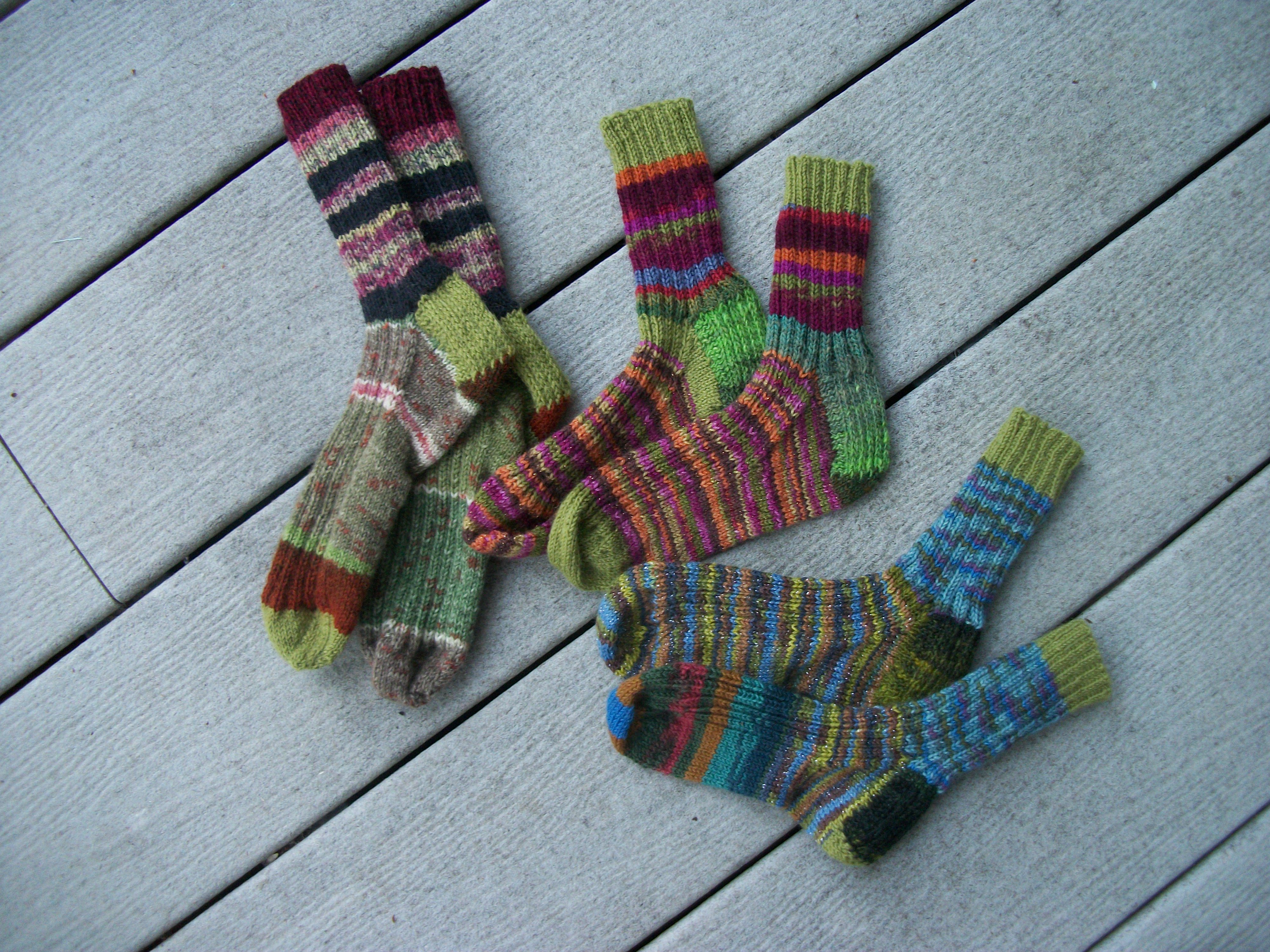
See?

Talula’s are the middle.  She liked the orange/green glitter yarn.  And, Wilhelmina liked the blue/green glitter yarn, so I crafted around those choices.  Bowen’s are less wild, which is fitting for a boy.

These socks will be birthday gifts–to be gifted in September when three of the five grandchildren have birthdays.  All three pairs have been made from leftover sock yarn.  Kelly Enright got a pair back in February for his birthday, as you may recall.  They’re here on the blog.

Let’s hope they will all fit by fall/winter.  These children are growing like weeds!

Turkey Tracks: Saturday Road Trip

Turkey Tracks:  July 9, 2012

 Saturday Road Trip

Last Saturday, John and I took a little road trip west of Camden.

Our primary destination was The Village Farm in Freedom, Maine–home of Prentice Grassi and Polly Shyka since about 2001.  See http://www.villagefarmfreedom.com/

For the past two years, we have raised our year’s supply of meat chickens with Pete and Rose Thomas–and slaughtered them all together.  But this year, Arabella, the wood-fired bread oven, is up and running.  Rose is fully occupied with making pizzas and breads of all kinds.  She is baking or getting ready to bake many hours every day, and Pete is buy cutting wood and filling in all over the farm.

So, I took on the job of researching where we could get healthy, non-Cornish chickens, preferably with the feet still in the mix.

That place turned out to be The Village Farm, so John and I headed out to pick up ten meat chickens–with the promise of being able to get more over the winter when the freezer gets depleted.  Best of all, these Red Bros (a cousin to Freedom Rangers) come with their feet in a separate packet.  And, Prentice and Polly raise them on grass in little tractors that are moved three times a day.

Freedom is about an hour west of us–in the vicinity of MOFGA’s Common Ground Fair Ground.  It’s beautiful country and a beautiful ride through rural Maine to get there.   We crossed the St. George River several times–this time of year it’s full of water rushing over stones and filled with pools where trout would live.  Our route is partly on the St. George River scenic by-way.

Along the way, we were amused at all the creativity we were seeing.  Here’s an example:


Gardens were starting to flesh out, and it was really fun to see how many people had vegetable gardens.  There are beautiful fields, glossy-coated animals, interesting houses, glorious barns, beautiful woods.  It’s such a joy!

We had no trouble finding The Village Farm.  Here’s the entrance sign–with some corn (probably sweet corn) planted beyond it:

The main farm buildings and house sit at the end of this longish road, which is bordered by vegetable fields on both sides.  Polly told me they have several commercial customers as well as CSA members.  And she told me that when she and Prentice bought the far in 2001, I think, that it was all commercial corn fields–just corn stubble and dirt.  Now it’s filled with green grass, grazing meat cows, chickens, and vegetables.   That’s a heartwarming story of land recovery, and I am so grateful that there are people in this world like Prentice and Polly who are willing to do this work–and indeed–love this work.  They are the future of America, if we are wise about helping them.

Once down the road we parked, and here’s the first thing we saw.  A lush, fenced enclosure with beautiful little white pet goats:

Here’s Polly bringing us our chickens.  That’s a rabbit hutch to the left.  And you can see three of the chicken tractors way down in the fields to the left–past the fruit trees.

Here’s Polly and Prentice–at the center of this amazing farm they have created:

After we left them, feeling richer because of our chickens and feeling energized by our visit, we traced our steps home–with a small detour.

Mainers who love ice-cream probably know about John’s Ice Cream.  It’s a little store on Route 3, just a few miles beyond Liberty and Lake St. George.  John’s ice cream is all hand-made from whole, rich ingredients.  There isn’t a chemical in it.  And, it tastes like ice cream should taste–a taste long forgotten now by most people who have not had  the real thing with which to compare what they are buying in their local grocery store–or, even, a local ice-cream stand.  Slow down and take a look at the labels, which show the chemical brew that ice cream has become.

Here’s the board of flavors we could chose from Saturday:

I had Rocky Road–chocolate oozing with marshmallow running through it–creamy and dreamy–and replete with big, fat, whole nuts.

John had Chocolate Orange Peel–a dense chocolate with big fat LONG candied orange peels embedded.

The Bay Wrap in Belfast carries a few of John’s Ice Cream flavors–about six I think.  And, you can take home hand-dipped quarts from John’s if you think ahead and bring some ice packs and a cooler.  We brought home peanut something or other.  John loves peanuts.

This ice cream was so rich that we weren’t hungry for lunch.  That’s not a really good thing, but once in a while, it’s a real treat.

I can see a future swim at Lake St. George, an ice cream at John’s, and a slow ride home enjoying the beautiful Maine countryside and the river rushing over stones, big and small and topped up with sunshine and shadows.

Interesting Information: “What Really Makes Us Fat”

Interesting Information:  July 6, 2012

“What Really Makes Us Fat”

Husband John reads The New York Times every Sunday.  It’s a national paper, and we are lucky to be able to get a national paper way up here in Mid-Coast Maine.  We don’t get The NYTs until mid-morning on Sunday, but we do get it delivered to our driveway–which did not happen until about a year ago.  Before that time, one had to go to a nearby market mid-morning on Sunday to get a copy.

I rarely have time to read the Sunday paper, so John brings me articles in which he knows I’ll be interested.

This Sunday he put Gary Taubes’ “What Really Makes Us Fat” at my place at the dining room table.

I’ve written about Taubes’ work in my essays.  He’s a careful researcher, and he’s telling a story that has a lot of scientific data behind it but which isn’t catching much fire in the mainstream understanding of how the body works with regard to obesity.  His work has pretty thoroughly debunked the “calorie is a calorie” and you-just-need-to-cut-back” theory of fat accumulation–showing that what kind of calorie one eats does matter rather a lot.

In “What Really Makes Us Fat,” Taubes cites a very recent article (last week) in The Journal of the American Medical Association detailing the results of a clinical trial by Dr. David Ludwig of Boston Children’s Hospital and his collaborators.  This study, writes Taubes, speaks to a fundamental issue–what causes obesity.

Ludwig’s team did something that has never been done before.  First, explains Taubes, they “took obese subjects and effectively semi-starved them until they’d lost 10 to 15 percent of their weight.  Such weight-reduced subjects are particularly susceptible to gaining the weight back.  Their energy expenditure drops precipitously and they burn fewer calories than people who naturally weigh the same.  This means they have to continually fight their hunger just to maintain their weight loss.”

Next, “Dr. Ludwig’s team then measured how many calories these weight-reduced subjects expended daily, and that’s how many they fed them.”  But, the subjects were “rotated through three very different diets, one month for each.  They ate the same amount of calories on all three, equal to what they were expending after their weight loss, but the nutrient composition of their diets was very different.”

One diet was low fat so was high in carbohydrates–it’s the “diet we’re all advised to eat:  whole grains, fruits, vegetables, lean sources of protein.”  One diet had a “low glycemic index:  fewer carbohydrates in total, and those that were included were slow to be digested–from beans, non-starchy vegetables and other minimally processed sources.”  The third diet was Atkins, which “is very low in carbohydrates and high in fat and protein.”

The “results were remarkable” write Taubes.  “Put most simply, the fewer carbohydrates consumed, the more energy these weight-reduced people expended.  On the very low-carbohydrate Atkins diet, there was virtually no metabolic adaptation to the weight loss.”

On the low-fat diets, participants “had to add an hour of moderate-intensity physical activity each day to expend as much energy as they would effortlessly on the very-low-carb diet.  If the physical activity made them hungrier–a likely assumption–maintaining weight on the low-fat, high-carb diet would be even harder.”

Taubes notes that if we consider the weight-reduced participants as being “pre-obese,” their reactions to foods tells us what can make us fatter.  This study showed that “the fewer carbohydrates we eat, the more easily we remain lean.  The more carbohydrates, the more difficult.  In other words, carbohydrates are fattening, and obesity is a fat-storage defect.  What matters, then, is the quantity and quality of carbohydrates we consume and their effect on insulin.”

Taubes notes that “from this perspective, the trial suggests that among the bad decisions we can make to maintain our weight is exactly what the government and medical organizations like the American Heart Association have been telling us to do:  eat low-fat, carbohydrate-rich diets, even if those diets include whole grains and fruits and vegetables.”

Taubes notes that these conclusions are controversial, and he calls for experiments to be “replicated by independent investigators.  We’ve been arguing about this for over a century.  Let’s put if to rest with more good science.   The public health implications are enormous.”

In his books, which I wrote about in my essays on this blog, Taubes discusses many ongoing clinical trials and numerous obesity clinics (like the one at Duke) which are showing that people lose weight and improve their health data on an Atkins-type diet.  Many other diets utilize parts of the Atkins approach–Paleo and GAPS among them.

Turkey Tracks: Flamboyant Fall Quilt

Turkey Tracks:  July 5, 2012

Flamboyant Fall Quilt

This contemporary bar quilt is another colorway of an earlier quilt:  “Bar None”–which is on this blog.

I started with Flamboyant Fall with bar strips of neutral rectangles–2 by 3 1/2–cut up and saved as I finished other quilts.  I cut up any leftover scrap that was not approximately the size of a fat quarter.  Bigger pieces went back into my stash.  About 2 years ago, I realized that I had bags and bags of pre-cut squares and rectangles, and I began to quilt with them.  I purchased a Handi-Quilter long-arm two years ago and that enabled my production rate to increase sharply.  This past winter, I made a real dent in the saved bags of pre-cut quilting fabric.

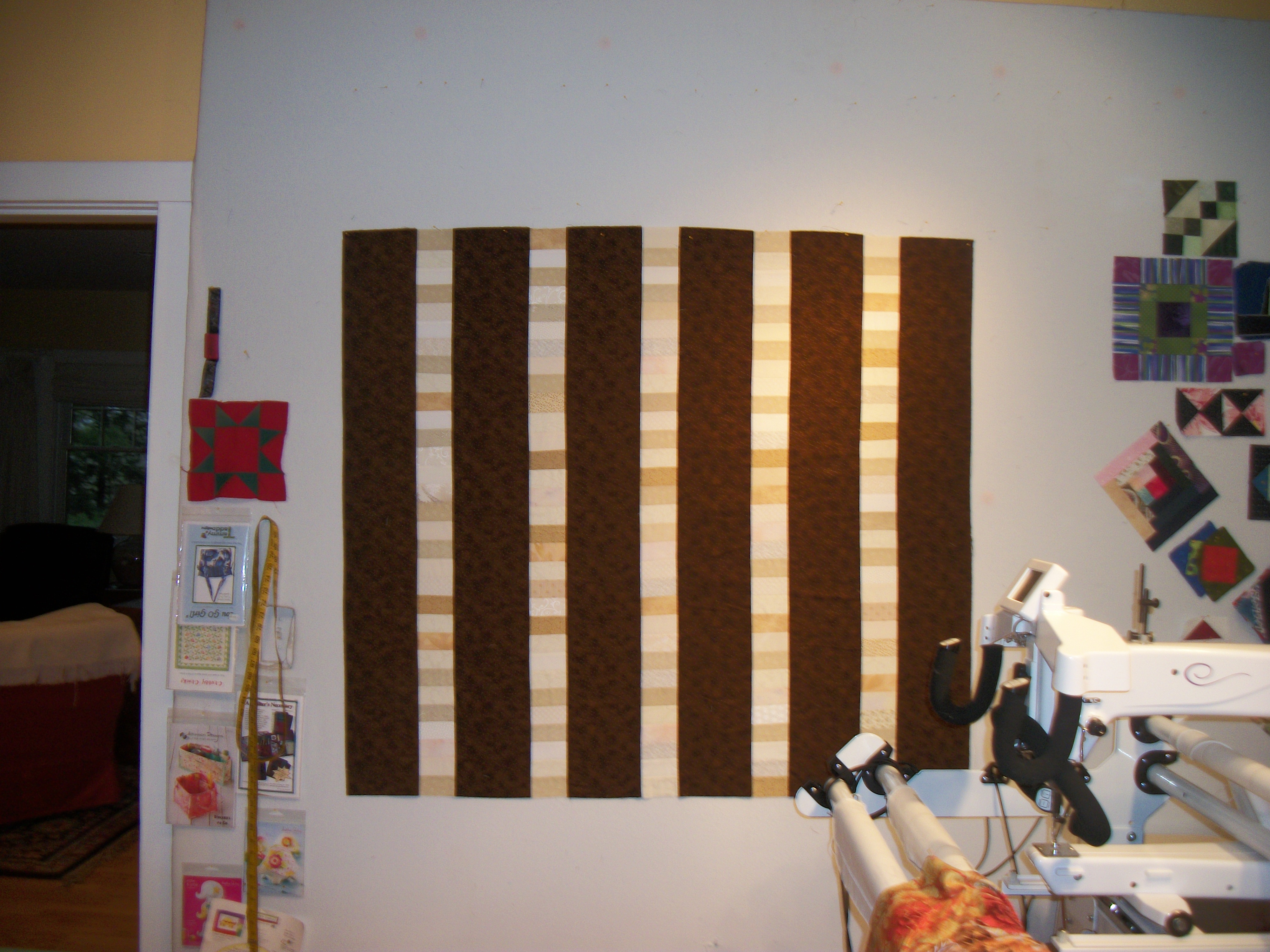
At first I thought this quilt would be really pretty with browns, golds, and creams–and here’s what I pulled from my stash to highlight the neutral rectangle “bars.”

Here’s what the dark brown strips and the neutral bars look like on the design wall…

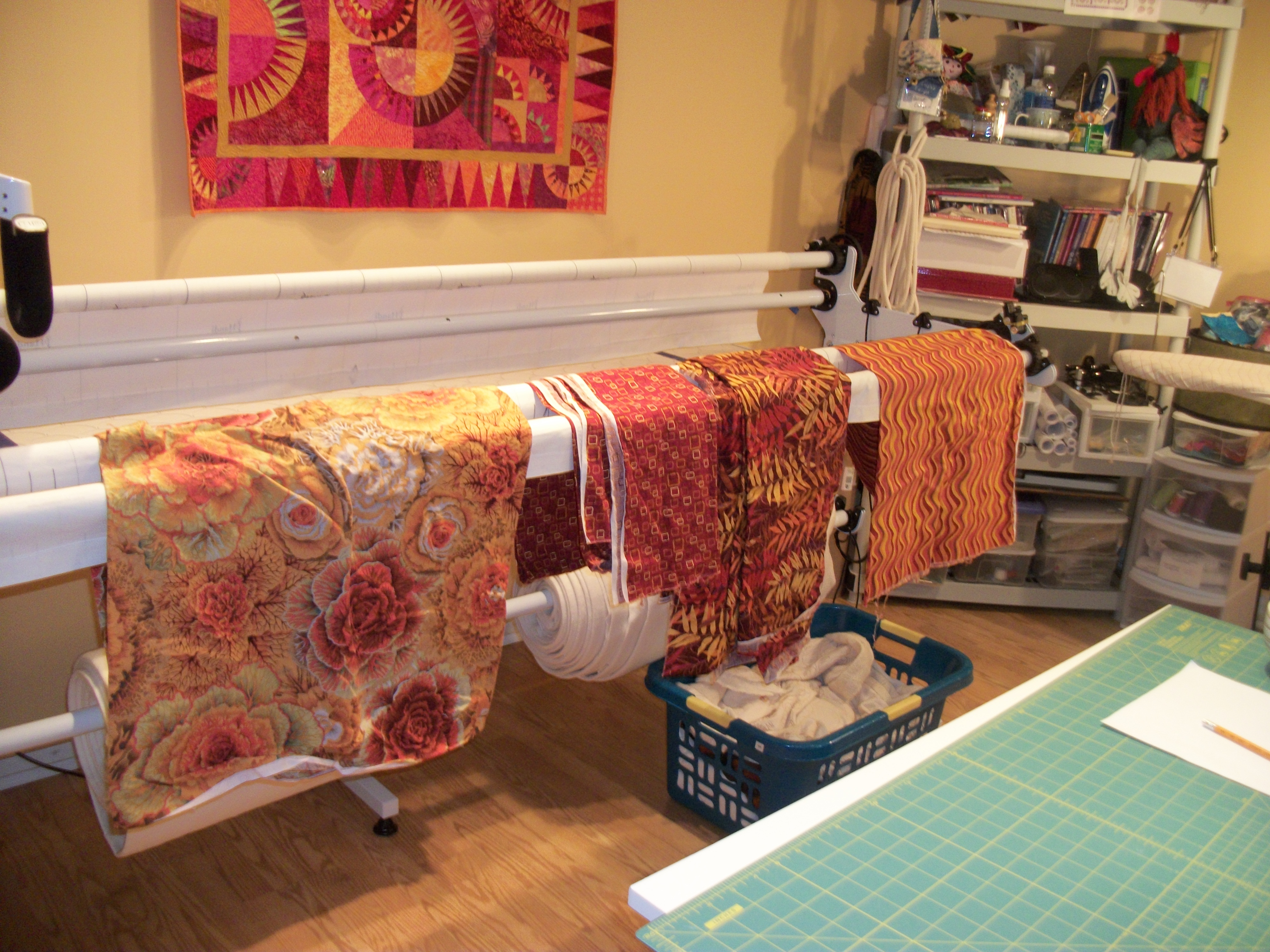
At this point, I headed off to Marge’s Mainely Sewing to get borders.  I had bought some lovely large fabrics for backing at a sale at Quit Diva’s in Rockland–one of which really wanted to be part of this quilt.  TAnd I did not have enough of the paisley to use in the quilt.  The plan for a mostly neutral quilt went right out the window.

Here are the fabrics that came home with me–the backing is the third from the left–the fabric with the leaves.  Marge found the big Kaffe Fasset floral for me, and I loved it at first sight.  (The laundry basket is a dog bed for whichever dog is hanging out with me in the quilt room.)

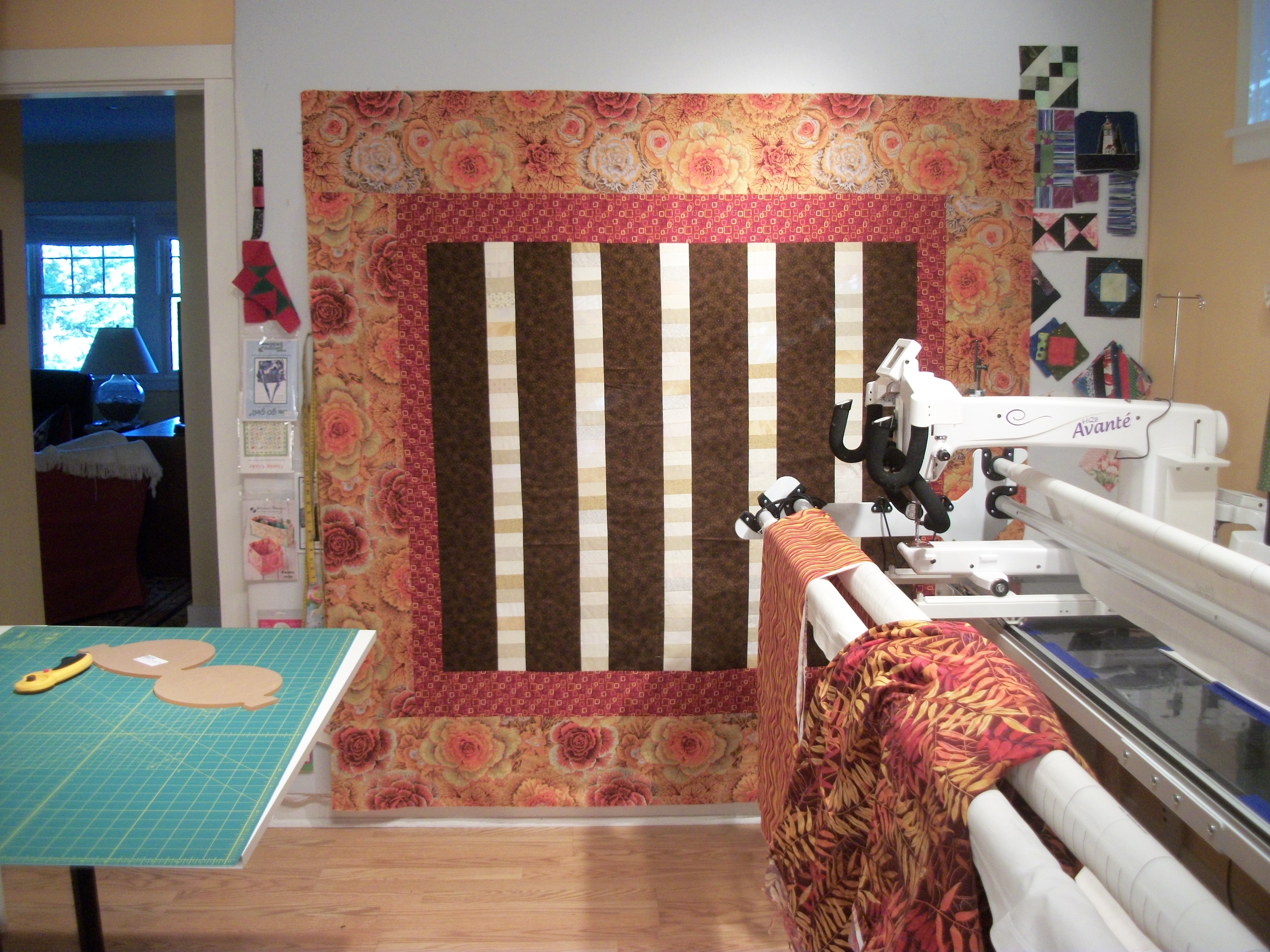
Here’s the top on the design wall–ready to be put on Lucy the longarm and quilted:

I quilted with a varigated thread that had all the colors of the quilts in it–all the golds, oranges, deep reds, and so forth.  This pic doesn’t do this thread justice, but you can at least see the pantograph pattern:

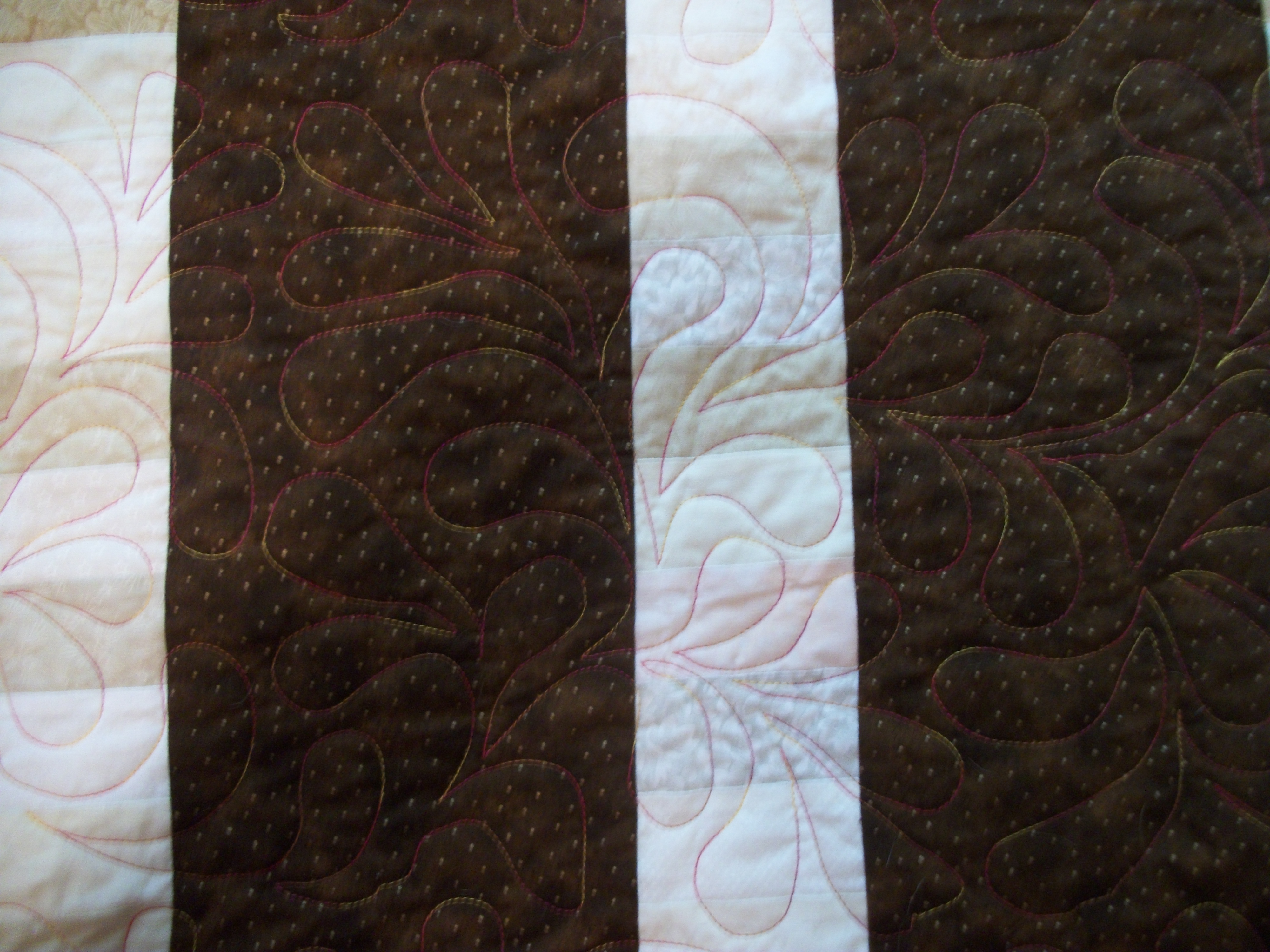
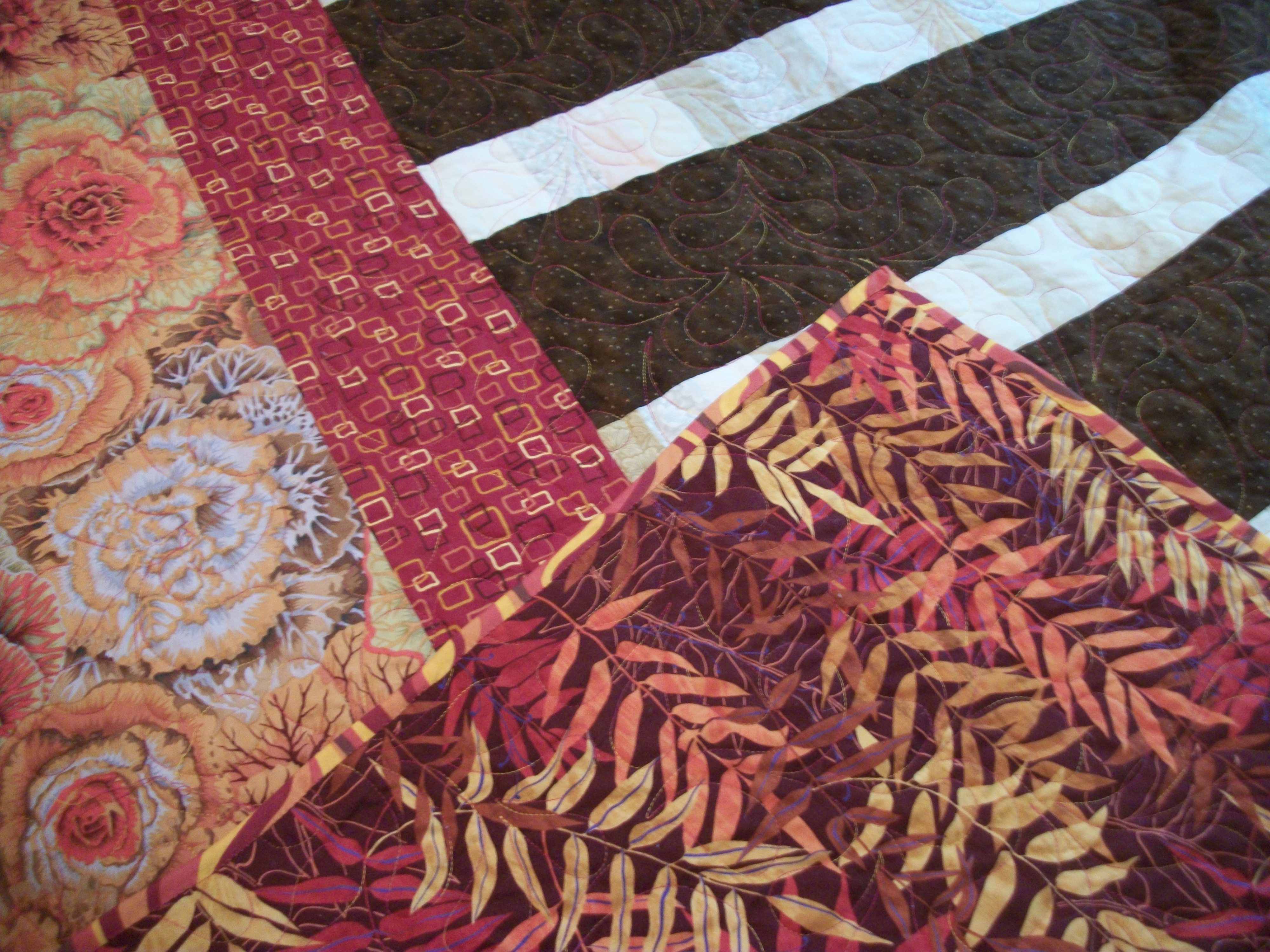
Here’s a good pic of the outer and inner borders.  Note how the inner border has the dark brown of the bars.  I love how the swirly fabric worked for the binding.  I cut all bindings on the bias these days, so that really made this fabric’s movement shine.

Look at how well the backing and the binding work with the quilt.

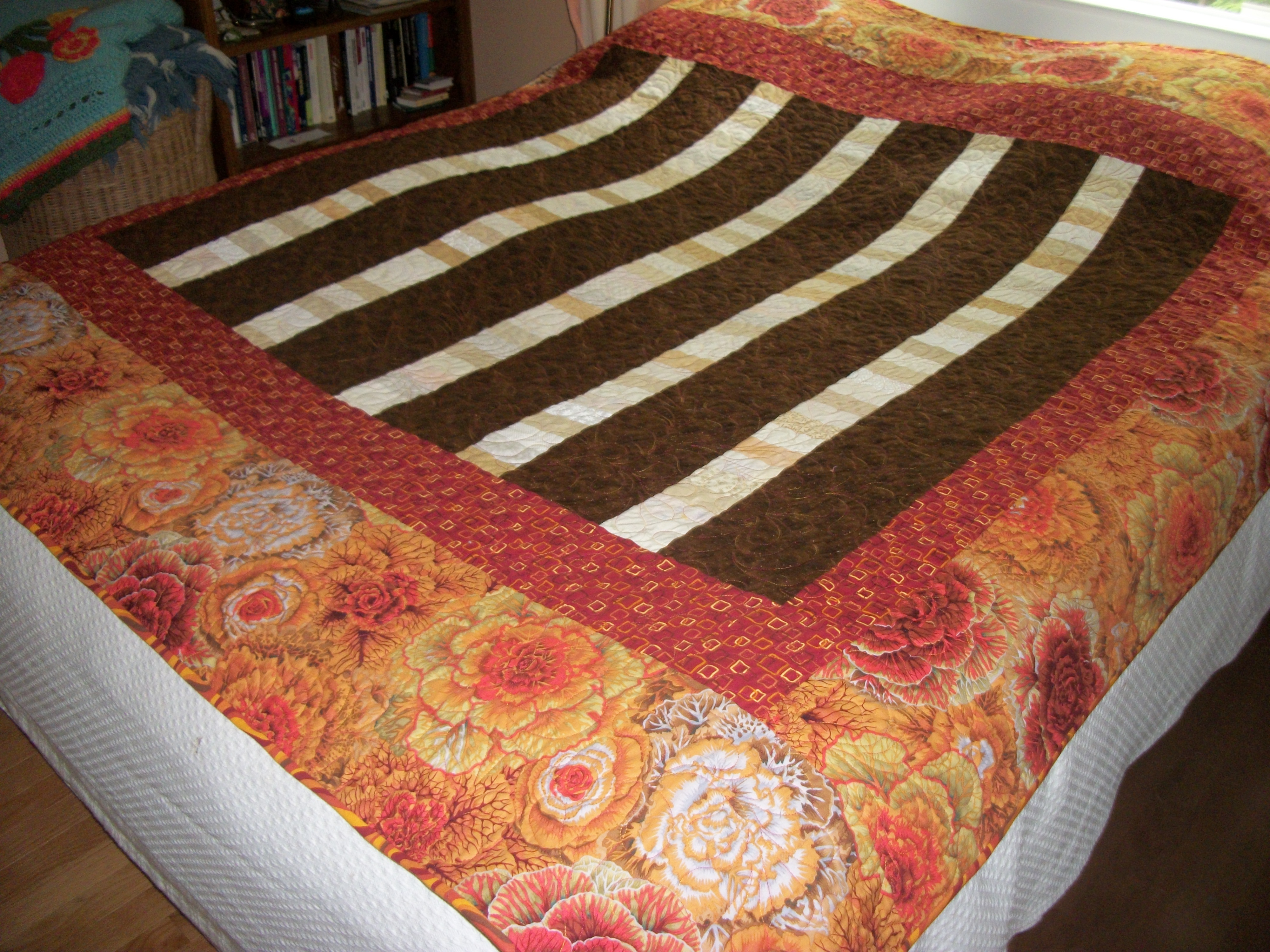
Here are two pics of the quilt on a low bed upstairs.  Neither do it justice.  One is faded and the other’s colors are a bit “off.”  But, here they are.

And:

Flamboyant Fall is both wild and controlled, what with the bars in the center.  I love the fabrics in this quilt.  I’m really pleased with how it came out.

Interesting Information: The China Study Myth

Interesting Information:  July 4, 2012

The China Study Myth:  Flaws in the Vegan Bible

T. Colin Campbell published THE CHINA STUDY in 2006.  Campbell is a “heavy hitter” in terms of credentials:  a PhD from Cornell, authorship of over three hundred scientific papers, and decades of research in the field of nutrition.

Campbell’s premise in THE CHINA STUDY is that ALL animal foods cause modern ailments like heart disease and cancer.  This idea came from a rat study done in India and rat studies Campbell did, from which he extrapolated his flawed conclusions.   The rat studies point to animal protein as being protective, not deadly.

THE CHINA STUDY rocked the nutritional world and about half a million copies have been sold so far.  Vegans call this book their “bible” and have taken to shutting down all questions about the health of their diet choices with “read THE CHINA STUDY.”  But, beware that only one chapter is actually devoted to the actual China study–a tipoff that belief system might well be at work in Campbell’s conclusions.

Chris Masterjohn, who is associated with the Weston A. Price Foundation (WAPF), critiqued Campbell’s work early on.  You can find his analysis on his blog and on the Weston A. Price foundation web site.  See, for instance “The Curious Case of Campbell’s Rats”–http://www.westonaprice.org/blogs/2010/09/22/the-curious-case-of-campbells-rats-does-protein-deficiency-prevent-cancer/  And, Denise Minger, a health writer, editor, researcher, and vegetarian for about a decade, started digging into Campbell’s data.  She concluded that THE CHINA STUDY is “more a work of fiction than a nutritional holy grail.”  And, that the book “is not a work of scientific vigor.”  And, “the book’s most widely repeated claims, particularly involving Campbell’s cancer research and the results of the China-Cornell-Oxford Project, are victims of selection bias, cherry picking, and the woefully misrepresented data.”

 Minger’s article “The China Study Myth:  Flaws in the Vegan Bible” was published in the spring 2012 “Wise Traditions,” the journal of the Weston A. Price Foundation–you can read it for yourself at http://www.westonaprice.org/vegetarianism-and-plant-foods/the-china-study-myth.  And if you harbor the notion that meat is unpure or bad for you and that vegetables are pure and good for you, I hope you take the time to do so.

It’s pretty clear, after reading Minger’s article and Masterjohn’s early analysis, that Campbell’s belief system got in the way of what his data was actually telling him.

Minger explains that Campbell’s now-famous rat study involved exposing “rats to very high levels of aflatoxin–a carcinogen produced by mold that grows on peanuts and corn–and then feeding them a diet containing varying levels of the milk protein casein.”  Rats eating low levels of casein remained tumorless, but rats fed higher levels developed tumors.  Only, the casein was separated from the rest of the components in milk, which “work synergistically” together in countless ways.  Certainly isolated casein can’t be generalized to all forms of animal protein–which Campbell does.  And, Minger notes that “an impressive number of studies shows that the other major milk protein whey, consistently suppresses tumor growth rather than promoting it….”

Campbell’s studies showed that wheat or soy protein did not produce cancer, even at high levels.  But, what he discovered but left out of his book is that “when wheat gluten is supplemented with lysine to make a complete protein, it behaves exactly like casein to promote tumor growth”–which shows that “animal protein doesn’t have some mystical ability to spur cancer by mere virtue of its origin in a sentient creature–just that a full spectrum of amino acids provide the right building blocks for growth, whether it be of malignant cells or healthy ones.”  Minger notes that, therefore, “theoretically, a meal of rice and beans would provide the same so-called cancer-promoting amino acids that animal protein does.”

Minger references Materjohn’s analysis–using the very Indian study that jumpstarted Campbell’s research–which showed that rats on a low-protein diet experienced increases in the acute toxicity of aflatoxin.  The high-protein diet for rats was at least keeping them alive.  Iin other words “when the aflatoxin dose is sky high, animals eating a low-protein diet don’t get cancer because their cells are too busy dying en masse, while animals eating a higher-protein diet are still consuming enough dietary building blocks for the growth of cells–whether healthy or cancerous.”  This fact highlights  a major problem with Campbell’s conclusions about plant-based diets and prompts Minger to write that “in a nutshell, the animal protein fear-mongering in THE CHINA STUDY stems from wildly misconstrued science.”

Campbell, writes Minger, cannot prove a relationship between animal protein and diseases because “that relationship does not exist.”  Indeed, with plant proteins “we find almost three times as many positive correlations with various cancers as we do with animal protein, including colon cancer, rectal cancer, and esophageal cancer.”  And, animal-food eaters in rural China “are getting less cardiovascular disease than their more vegetarian friends.”  In short, once again we see that plants are NOT nutrient dense and do not fully support abundant human health.

Minger goes on to show that “although wheat gets nary a mention in the China Study chapter, Campbell actually found that wheat consumption–in stark contrast to rice–was powerfully associated with higher insulin levels, higher triglycerides, coronary heart diseae, stroke and hypertensive heart disease within the China Study data–far more than any other food.”

Minger’s arguments, born of her in-depth analysis of Campbell’s data and his previous papers, is, obviously, much more detailed than I can repeat here.  Yet, the paper is easy to read.  And, it shows clearly that, once again, correlation has been used to target causation and that belief systems blind one to what science is actually telling us.

Minger writes a blog dedicated to revealing the bad science with regard to food issues (www.rawfoodsos.com), and her upcoming book DEATH BY FOOD PYRAMID will be published in late 2012.  I, for one, look forward to reading it.

Turkey Tracks: It’s Raining Baby Mice

Turkey Tracks:  July 4, 2012

It’s Raining Baby Mice

Last night John opened the grill–which hasn’t been used for about a week–and a mouse ran out, startling him.  She left a nest with at least two baby mice that had to be removed before we could cook our lamb chops.

This morning when I swung open the chicken coop roof, as I do every morning to fluff up the bedding, change the water, and check grain levels in the food bowl, like fat pink raindrops, out dropped five baby mice onto the bedding below.  They must have been wedged into the stuffing in the top of the coop’s roof.  I can’t imagine how the mother mouse accomplished this feat since the roof is steep and metal, except for the stuffing at the roof’s apex.

The chickens promptly ate them.

Interesting Information: A Healthy Diet Includes 50-70% Healthy Fats

Interesting Information:  July 3, 2012

A Healthy Diet Includes 50-70% Healthy Fats

How’s that for a shocker?

It’s especially shocking when the idea that plant-based diets are your healthiest choice is being pushed so strongly by the USDA and way too many health practitioners who have hopped onto this bandwagon without adequate scientific data for support.  The health of plant-based diets is another one of these food myths that I’ve been writing about for the past few years.  I can’t find any science that supports it that has stood up to peer reviews.  I can find TONS of science that refutes it.  Plants are NOT nutrient dense.  Period.

Dr. Joseph Mercola’s health web site published “Why I Believe Over Half of Your Diet Should Be Made Up of This,” on May 31, 2012 (http://articles.mercola.com).

The “this” was healthy fats, and Mercola noted that his own diet included 60 to 70% of healthy fats daily.

Mercola’s article begins with a history of Crisco, the industrial, white, vegetable-based lard made by Procter & Gamble and introduced a “little over 100 years ago.”  “Atlantic Magazine” published a history of the introduction of Crisco in their April 26, 2012, issue–using an excerpt from the book THE HAPPINESS DIET by Drew Ramsey, MD, and Tyler Graham.  (Mercola’s article contains a link to this Atlantic article.)  Up until Crisco, people used animal fats for frying and in baked goods like pie crusts.  But, the introduction of Crisco included a wildly successful ad campaign claiming that Crisco was “modern” and was healthier than the use of animal fats.

Crisco is an hydrogenated vegetable oil.  Actually its made from the “waste product of cotton farming,  cottonseed oil.”  It’s what we call a “trans fat.”  It causes heart disease for sure and “contributes to cancer, bone problems, hormonal imbalance and skin disease; infertility, difficulties in pregnancy and problems with lactation; low birth weight, growth problems, and learning disabilities.”

Mercola walks readers through the myth of saturated fat being harmful–and gives a history of the misinformation that is still very much present today–misinformation that has no science whatsoever behind it.  (Many of the Mainely Tipping Points essays on this blog discuss this history and what clinical trials and science are actually showing.)  Mercola retells how Ancel Keys ignored countries which contradicted his premise that saturated fat caused heart disease.  Mercola also cites the often-cited statement of Dr. William Castelli, former director of the famed Framingham Heart Study, wherein Castelli notes that “the more saturated fat one ate, the more cholesterol one ate, the more calories one ate, the lower the person’s serum cholesterol….We found that the people who ate the most cholesterol, ate the most saturated fat, ate the most calories, weighed the least and were the most physically active.”  Mercola also includes a video of his  interview with Gary Taubes, whose work I’ve written extensively about also in the essays on this blog.

Saturated fats “provide a concentrated source of energy in your diet.”  I’ve read elsewhere–and I’ll need to find this discussion again–that when your body is burning energy from carbs and sugars, it puts a lot of pressure on the body, causing it to malfunction, causing energy swings, and constant hunger.  Saturated fats don’t have this effect–they provide sustained, steady energy for long periods of time.  And, Mercola discusses why trans fats and sugars, particularly fructose, are the “true culprits of heart disease.”  The Weston A. Price Foundation would add that overuse of highly processed vegetable oils (canola, safflower, etc.) are also a root cause of heart disease.

Saturated fats , notes Mercola, are also carriers for many of the minerals and vitamins that are crucial for the body’s health.  Saturated fats are needed for the body’s conversion of nutrients to useable forms in the body–like the conversion of carotene to vitamin A.  Saturated fats are building blocks for cell membranes, help lower cholesterol levels, act as antiviral agents, modulate genetic regulation, and help prevent cancer.

So, writes Mercola, don’t eat processed foods.  Elsewhere, Mercola has advocated not eating grains.

And, writes Mercola, do eat organic butter (hopefully made from raw milk), use unprocessed coconut oil for cooking, and eat raw fats, such as “those from avocados, raw dairy products, and olive oil, and take a high-quality source of animal-based omega-3 fat, such as krill oil.”  (The Weston A. Price Foundation recommends unprocessed, fermented, high-vitamin cod liver oil instead of fish oils and would add beef fat (tallow), pork fat (lard), and chicken fat–all from healthy animals NOT raised in CAFO environments–to the list of saturated fats to use and consume.)

Mercola notes that Paul Jaminet, PhD, author of PERFECT HEALTH DIET, and Dr. Ron Rosedale, MD, “an expert on treating diabetes through diet” both agree that “the ideal diet includes somewhere between 50-70 percent fat.”

Turkey Tracks: Using Leftover Scrap Yarn

Turkey Tracks:  July 3, 2012

Using Leftover Scrap Yarn

This blog’s readers know I’ve been engaged all winter with what I call “The Scrappy Project,” which is using quilting fabrics left over from over 80 quilts–and already cut into useable shapes and stored–to make scrappy quilts that I really, really like.  I have only been knitting about six or seven years this go-round, but, already, I’ve accumulated more scrap yarn than I felt comfortable storing.

My friend, master knitter Giovanna McCarthy, gave me two ideas/patterns for using up this scrap knitting yarn.  I chose this one from Shelly Kang’s blog–www.shellykang.com.  Once there, look for “Let’s Do a Gauge Swatch.”  You can even get to the pattern by googling “Let’s Do a Gauge Swatch.”  The directions are perfect and there are lots of pictures so you can clearly see how to proceed.  The project reminds me of making a quilt–it’s little squares of differing colors, knitted “on point.”

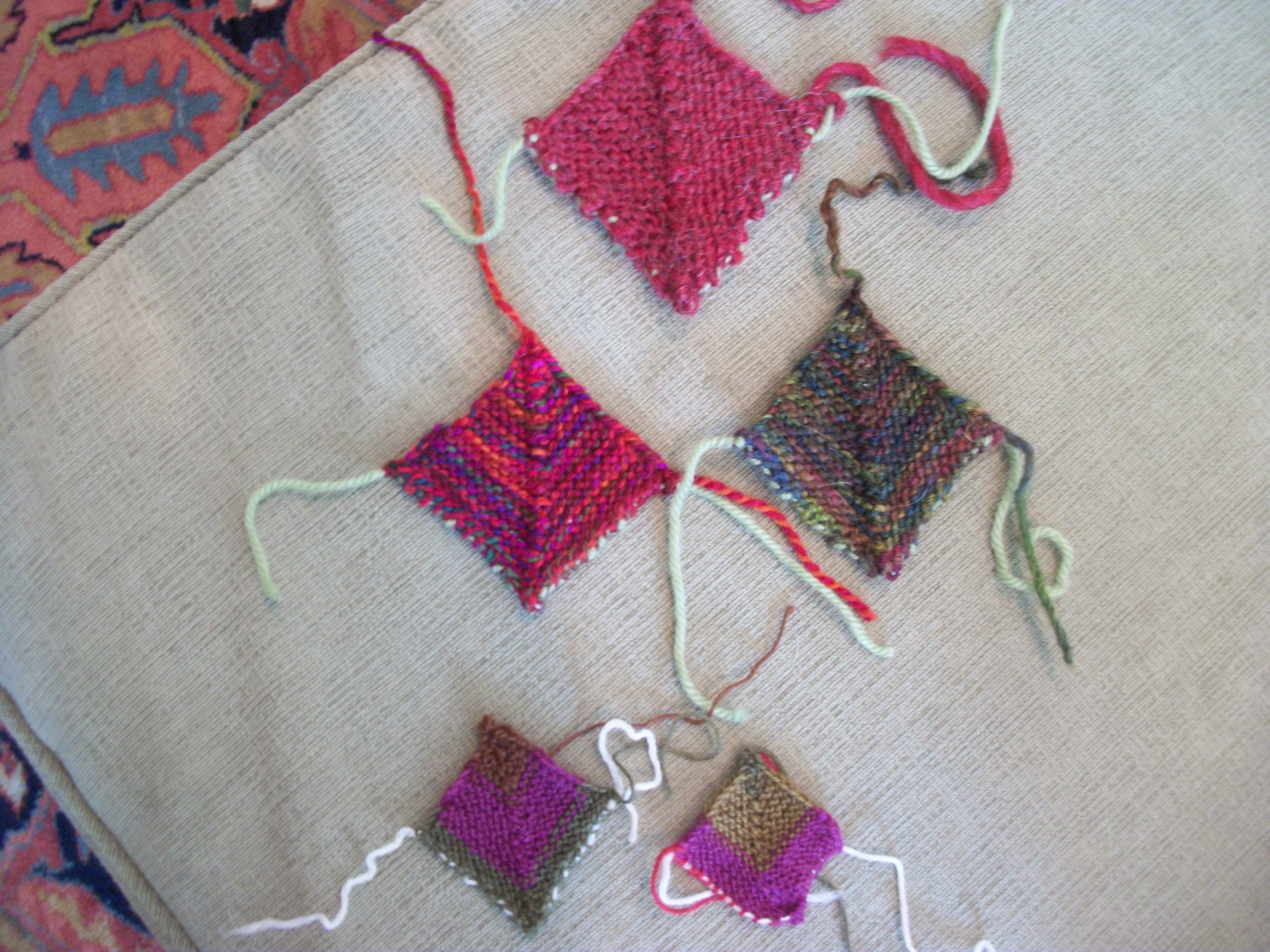
First, I made a series of the squares from some of my available scrap yarns.  The top one is made with a thicker yarn and is a bit bigger.  The middle two are made with a normal weight worsted.  And the bottom two are made from fingerling weight sock yarn.  They are waaaaay too tiny, and it would be insane to use them unless one were making some sort of tiny art project.  It does work to knit with two or three fingerling strands of yarn to get size and thickness.

The thicker, bigger square actually combines ok with the worsted squares, so I did use them when I started using Kang’s method of putting blocks together.  Note that the pale green thread is part of a provisional cast-on (which is really easy and can be found easily on-line) and will be taken out when the squares are joined or edged.  I love the textured stripe in the middle of each block.

Here’s what the blanket looked like about 10 days ago.  It’s getting bigger now–but I’ve capped how wide it will be.

Again, note that the  pale green ties will come out of that bottom row.

I’m obsessed with this project.  I have to make myself do other projects for a set period of time before I can work on the blanket.  (I’m working on grandchild socks made from leftover sock yarns, and I’m close to finishing the 4th pair so pics will be coming up soon.)

And I’ve already reached out to knitting friends begging for some of their leftover yarns…

Turkey Tracks: In Soil We Trust

Turkey Tracks:  July 2, 2012

In Soil We Trust

A friend sent me some cartoons she liked, knowing I would as well.

Here’s one:

I’ve been spending hours outdoors with my own soil this past six weeks or so.  The blog has been neglected as a result, but I can see the end of the weeding, reordering, planting and replanting, and so forth.  I was able to find some really terrific help to put out 65 bags of mulch–which the gardens really needed.  And the watering, weeding, and food gathering will go on all summer.

Anyway, I’ll get back to finishing the Paleo essays and will move to the dangers of soy soon now.  And, I have lots of book reviews and lots of interesting information to share with you.  The pile at my right hand as I type this piece is quite tall these days!  I have been spending an hour in the early morning, when the grass is still wet, reading.

Here’s a picture Tami sent me after we got back from Charleston that I really love!

This little plate has gorgeous bees underneath the cherries.  Tami now has two hives and plans for 4 more on Tara Derr Webb’s land.  Best of all, this sweet plate was a gift from a friend of Tami’s as a “thank you” for some homemade soup delivered to her house in a time of need.  That’s what we call community.   Cherries might be my favorite fruit.   I so look forward to them every spring.

The chickens want babies.

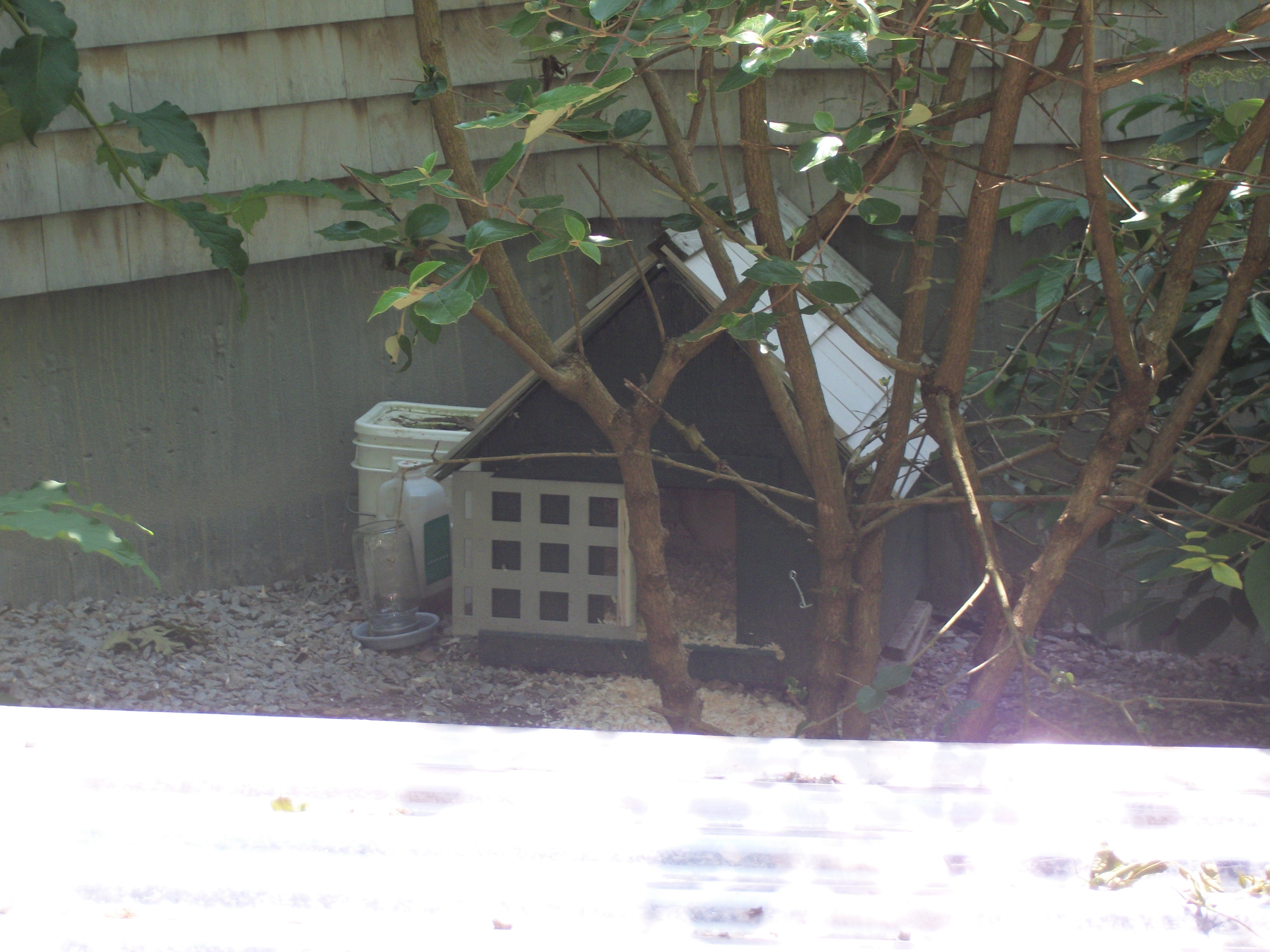
Last year, I found the cutest little doghouse at the dump, and John and the grandsons cleaned it up, repaired it, and painted it for me.  This spring I put bedding in it, and John put on a strong door.  We put it under the eaves of the house, back in the bushes, so it would be protected from the rain.  You can see it up next to the house, beyond the chicken coop protected cage.

Here’s a close-up view–the door slides open and shut and has a lock on it.  John reinforced it so racoon can’t pull it out of the sliders.

Those chickens loved nothing better than laying eggs in the doghouse.  One day I realized I had not gotten eggs in a day or so.  I had to get down on my knees and bend way down and reach way back in there with my left hand–to find 10 eggs.  Twice, one of the hens sat through the night, but abandoned the eggs the next morning.  Now, if I keep the house open, the hens line up outside the door and peer in as each hen lays and Cowboy will run at you if you come near it when one or more is inside.

Now we have a broody hen sitting on 5 eggs, as of this morning.  She seems likely to stick to them.  She screams at me and fluffs out her feathers when I check on her.  Only, she’s in an eggbox in the coop, not in the doghouse, which I’ve kept closed up as I got tired of fishing out eggs from inside it.  She’s sitting on 4 Americauna eggs and 1 Maran egg.  It’s the Maran’s we need, since I opened the coop and found one dead about two weeks ago.  Not a mark on her body.  And she was so heavy and solid.  It’s tough to lose a prize year old hen…   Ninja.  She had been kind of sluggish, I realized, after the fact.

We’ll see where all this baby-chickie thing goes…  And of course, half of them will be males, and it is terribly hard to rehome roosters…  I’m hoping if Nancy actually hatches out eggs that she will keep the youngsters in the doghouse as they will be in danger in the coop from the older hens.

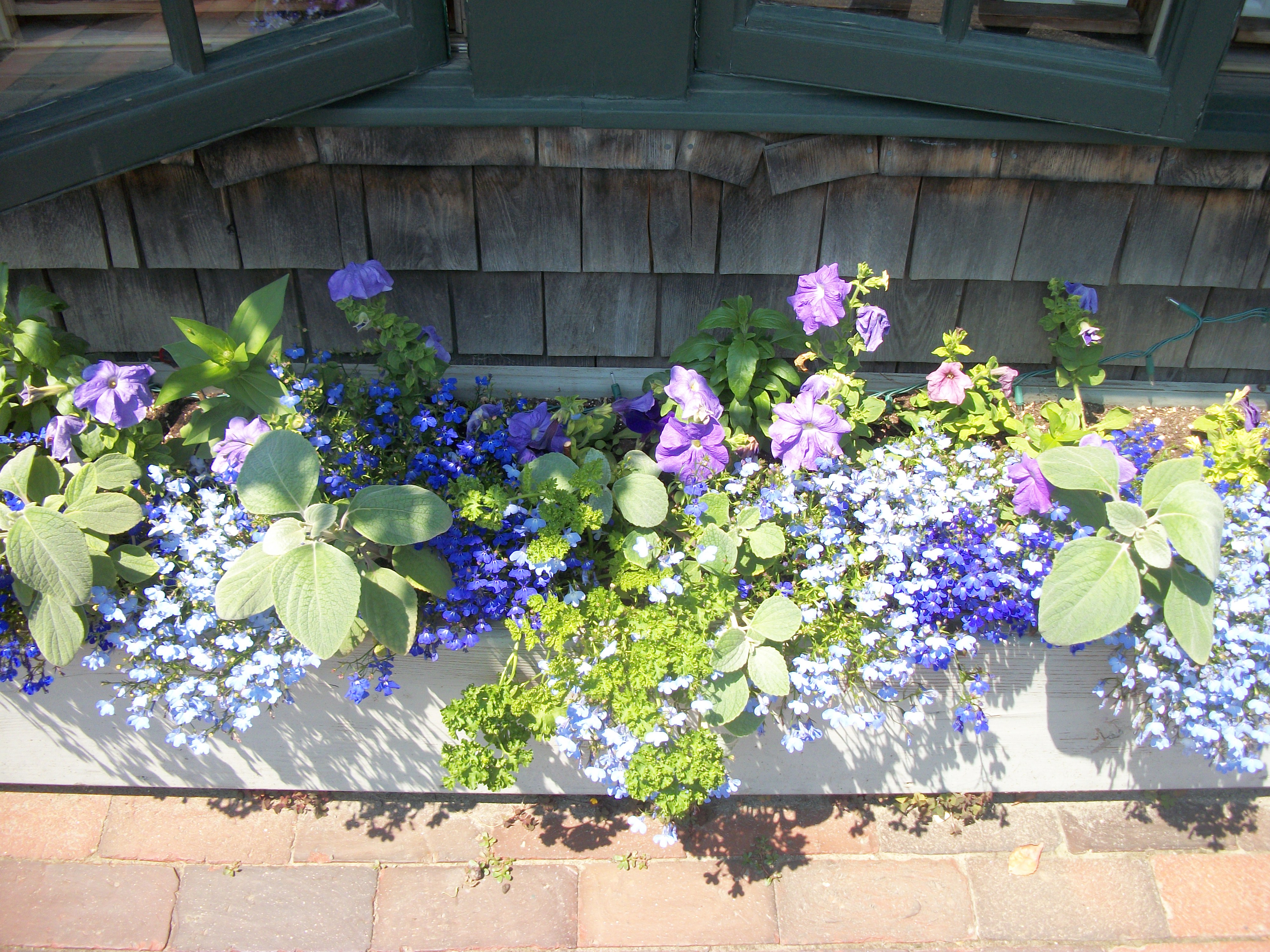
Maine has such beautiful gardens and flowers.  The window boxes in town are gorgeous.  Here are two from around the Waterfront restaurant.  I loved all the blues in this box, which is low to the ground.

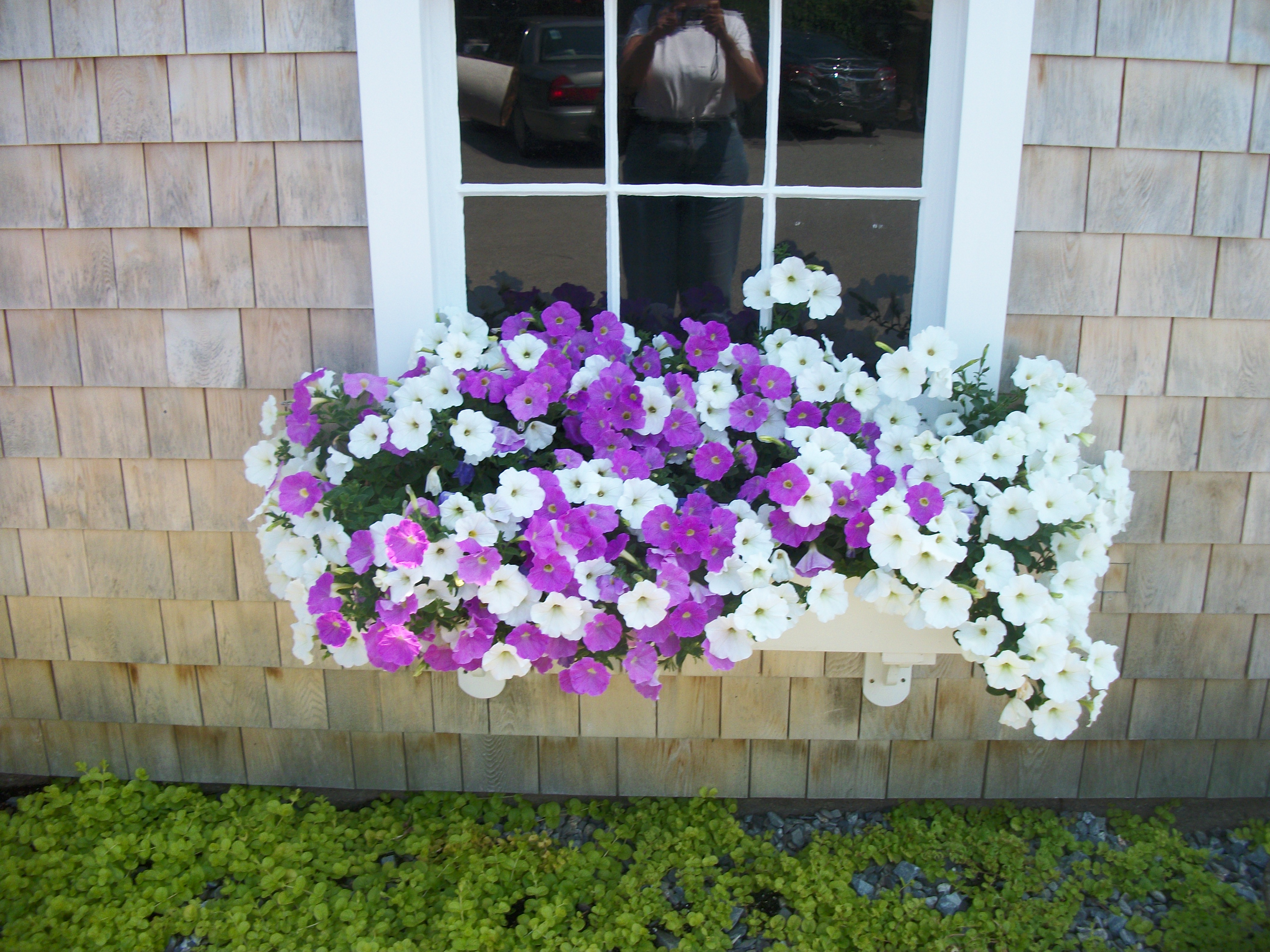
And this one is very typical of the kind of lush growth we have.

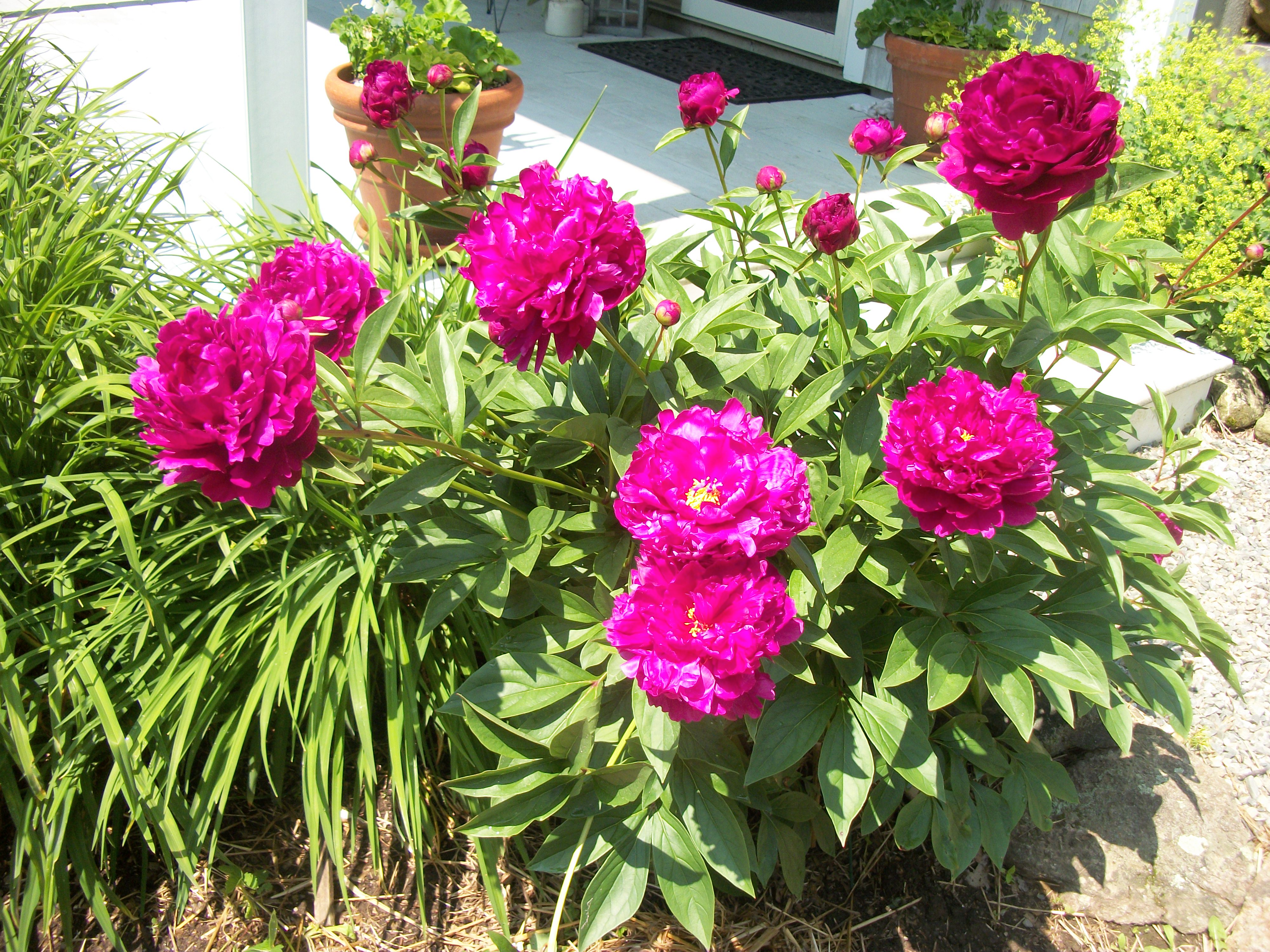
The peonies were gorgeous this year.  We actually got to enjoy them before a rainstorm shattered them–a first in the past few years.  Here’s a clump of them on the walkway to the porch.

 So, on that note, I’ll close out this entry.