Interesting Information: 53 Paper App

Interesting Information:  January 19, 2014

53 Paper App


When I inherited John’s IPAD, Tara Derr Webb told me I’d like the App 53 Paper.

She’s right; I love this drawing APP, but don’t take enough time to just play with it.

Toni Venz likes it too, and she just a super duper stylus to use with it that’s she’s still learning.

Here’s a quick sketch she just sent:

IMG_0141


Big smile to see this fun little sketch.  One can draw lines, or use watercolor effects, and on and on.  You can google 53 Paper to see how artists are using it.  And, of course, the pictures can be saved and sent…

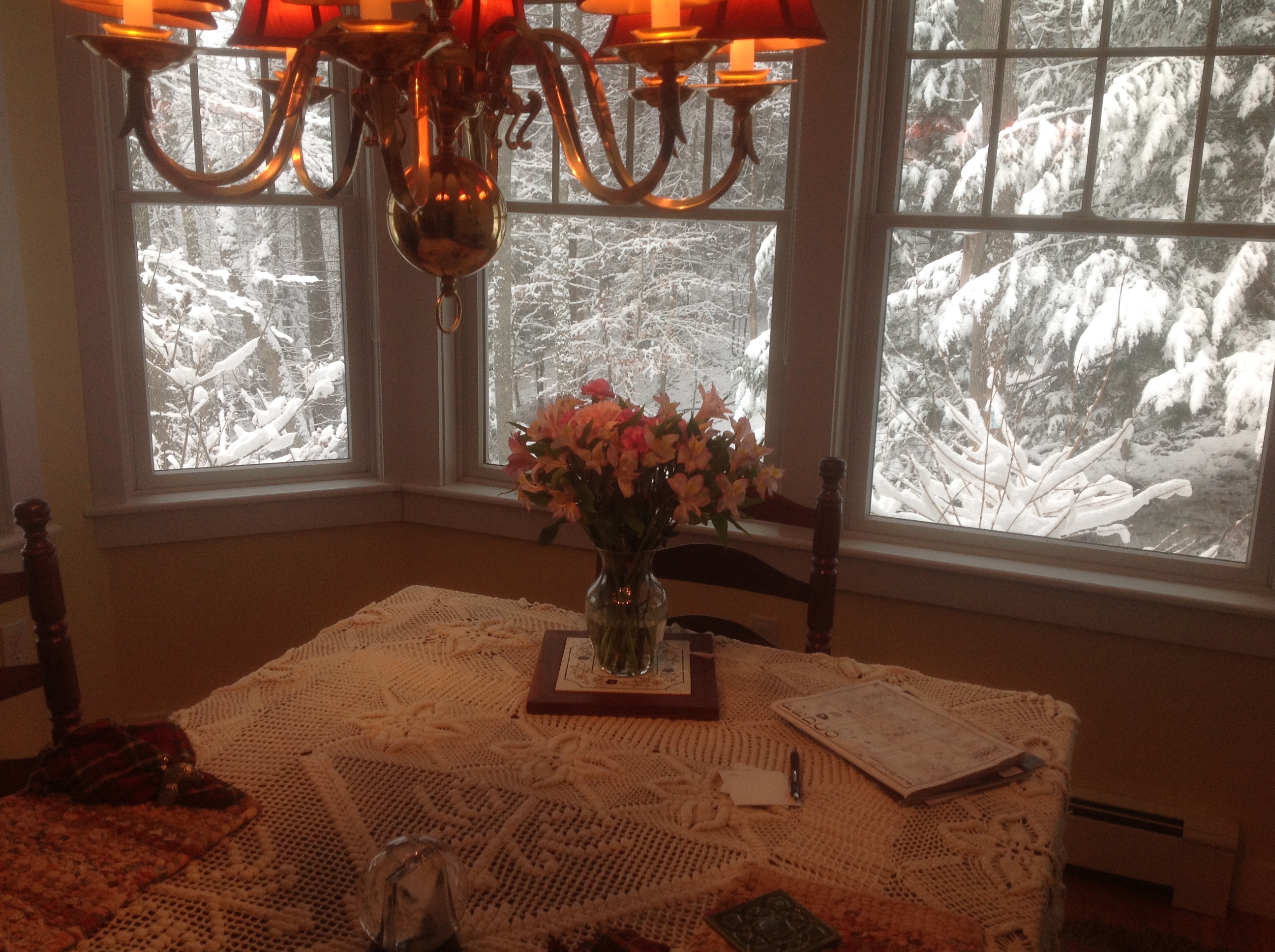
Here’s what I was looking at today when Toni’s message came through:

IMG_0142


Wet snow…

No No Penny is very bored with snow:

IMG_0143


I downloaded Checkbook Pro today and set about putting my 2014 checks into it.  I needed something that could sort expenses by categories.  I had decided that I loathed, LOATHED, Quicken.  With Checkbook I could put the credit card and bank on, but I really just want something so I can sort checks and categories of spending.  The credit card does that kind of reportage at the end of each year, and I run as many expenses as I can through it for the miles.  It didn’t take me a minute; it’s easy and fast and intuitive, and I’m now happy.

Books, Documentaries, Reviews: Book Club List for 2014 and Early 2015

Books, Documentaries, Reviews:  January 19, 2014

BOOK CLUB BOOKS FOR 2014—EARLY 2015

Our book club met this week to pick our books for next year.

We are six in number:  three sets of two neighbors.

We each pick five books for the other members to consider, and we are guaranteed two of our books.  Six times two equals twelve.  Only we sometimes throw in an extra, as we did this year.

Here’s our AWESOME list:

February:  Dear Life, Alice Munro

2013 Nobel Prize, fiction: Canadian with Scottish roots, short stories and some autobiographical pieces.

March:  Claire of the Sea Light, Edwidge Danicat

Haitian author—explores black social classes through eyes of seven-year old Claire.

April:  The Boys In The Boat, Daniel James Brown

Nonfiction: 1936, Olympic eight-oar crew—sons of loggers, shipyard workers, farmers—win all and against Hitler’s German crew at Olympics.

May:  The Signature of All Things, Elizabeth Gilbert of Eat, Pray, Love

Love, adventure, discovery—spans 18th and 19th century—follows one family.  One member becomes a botanist, but meets a man who draws her into the spiritual.

June:  Life Among Giants, Bill Roorbach

Growing up next door to a famous dancer who pulls the protagonist and his family into mystery and murder.  He tries to figure out where truth lies and where love is.  Winning national prizes.

July:  The Flame Throwers, Rachel Kushner

Starts in Utah, with the “fastest girl in town”—motorcycle fast.  Moves to New York City and on to politically turbulent Italy in the 1970s.  Solid reviews.

August:  When We Were The Kennedys, Monica Wood

Memoir.  Growing up in Mexico, Maine.  Getting great reviews and winning prizes.

September:  River Town:  Two Years on the Yangzte, Peter Hessler

Nonfiction:  Hessler comes to Fuling in the Sichuan province, as a Peace Corps volunteer, to teach English and American literature, but learns more from his students while living in a radically different society.

October:  The Goldfinch, Donna Tartt

BIG novel tracing what happens to Theo Decker after he survives a bomb in a New York City museum that kills his mother.  As he makes his way out of the museum, dazed, hurt, but alive, he takes a very famous painting that mother and son had viewed together.  Layered, dense, compelling story.

November:  In Falling Snow, Mary-Rose MacCall

Love, war, secrets set against backdrop of WWI France.  Moving novel about the small unsung acts of heroism which love makes possible.

December:  Mastering the Art of French Eating, Anne Mah

Nonfiction:  Mah’s husband is posted to Paris.  The couple is only getting settled when the husband is posted to Iraq, which leaves Mah alone in Paris.  After feeling terribly lonely and a fish out of water, she rights herself and sets out on “food” journeys across France.  Not unlike Julia Child’s experiences…

January:  The Lowlands, Jhumpa Lahiri

Lahiri’s newest, set in India and America in the 1960s.  Follows the stories of two very-different brothers:  activist and scientist.

February:  Philomena:  A Mother, Her Son, and a Fifty-Year Search, Martin Sixsmith

Ireland, mother pregnant teenager in 1952, sent to convent, baby sold in America for adoption.

Turkey Tracks: Friday Night Update

Turkey Tracks:  January 17, 2014

Friday Night Update

It’s 4:04 p.m., and it is not pitch dark yet.

But, soon.

And, soon, spring will come, too, as the days are growing longer.

We have been having a January thaw for the past week.  We can see green grass again, and there is still lettuce in my cold frame.  Imagine that…  Beneath all that snow…

I HAVE TO ORDER SEEDS!

The chickens are laying again.  Rosie, the Copper Black Maran, laid her first egg since, I don’t know, October?  The Americaunas molted in the fall and started laying again a few weeks ago.  They are, once again, looking posh with all their new feathers.  Beauty, who is so ugly I called her Beauty, laid all winter–though the shell to her eggs is very thin.  She is so friendly and sweet.

The Diva, who I think is Queeny, is in the kitchen, resting, healing (one hopes).  Her neck still looks pretty bad, but her eyes are bright, and she’s eating.

The brother of my friend Linda, who house sits for me and cleans, was standing beneath the edge of a roof with lots of ice on it.  A slab broke loose and hurt his arm, side, and leg and broke his foot.  Last Tuesday, in the middle of our January thaw, Linda went to get into her minivan, slipped on hidden ice next to the van.  Her face is all bruised, and she broke her wrist.  She drove herself to the emergency room.

Of course she was not looking for ice; everything had melted off.  And that’s when the ice is the most treacherous.  When you think it’s gone.  Now she and her brother visit each other, each nursing a broken bone, and laugh wryly.

I talk to her every few days to see if she needs anything and to remind her to go slowly.  The loss of income is very serious for her, of course, and I will pay her same as always, work or no work.  She is so good to me in so many ways–I can’t even begin to tell you all she did for me when John was so sick and how she has cared for me this past year.

Today I went to Belfast (about 40 minutes north) to the big Coop for ground chicken for the dogs and green things for me.  AND to pick up this amazing herbal powder from Dr. Herzig, a holistic vet, that keeps Miss Reynolds Georgia bright and busy tailed.  She thinks she’s a puppy again, which is great since twice now I have been sure she was not going to live through the night.  For about three months this summer I had to gently force feed her.   Anyway, it was nice to get out a bit.

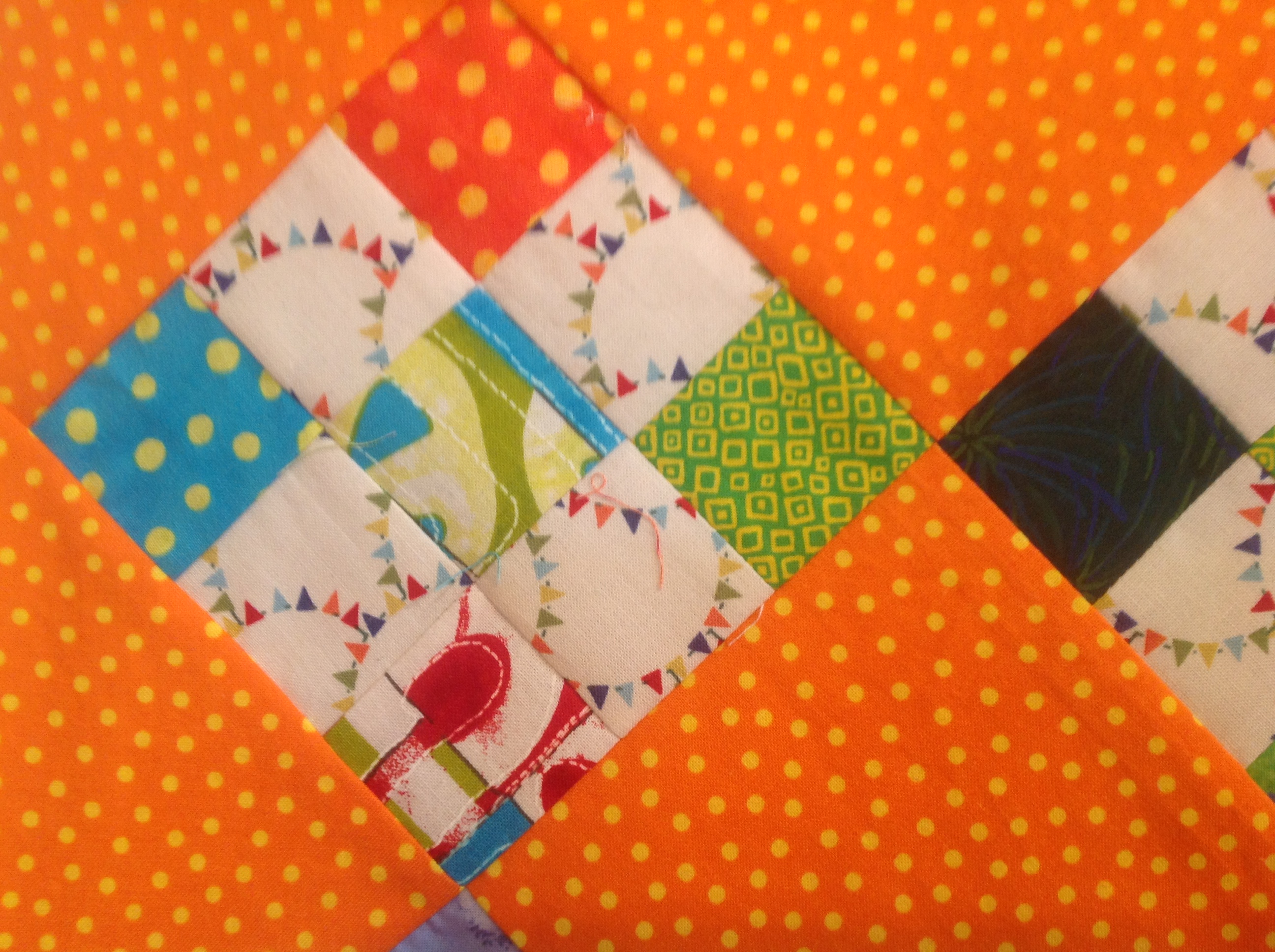
Celtic Solstice:  I put on the white border yesterday.  And got one triangle border on when I realized that I had TWO blocks with the orange going the wrong way.  Mercy!  I took the rows apart and turned the blocks, and the job was easier than I had expected.  When I finish here, I’m going to make a cup of tea and put on the other three borders.  Tomorrow I’m going to a big quilt fabric sale to get some green or blue to finish this amazing quilt.  And, the backing and binding.  There are so many seams that I do not want to piece blocks for the back.  It will be so hard to quilt if I do.

“Sails Up and Flags Flying,” the bright orange quilt,  is loaded onto Lucy the longarm, and the great yellow thread has come in the mail.  So….  Tomorrow, maybe…

Here’s a block to remind you…

IMG_0083

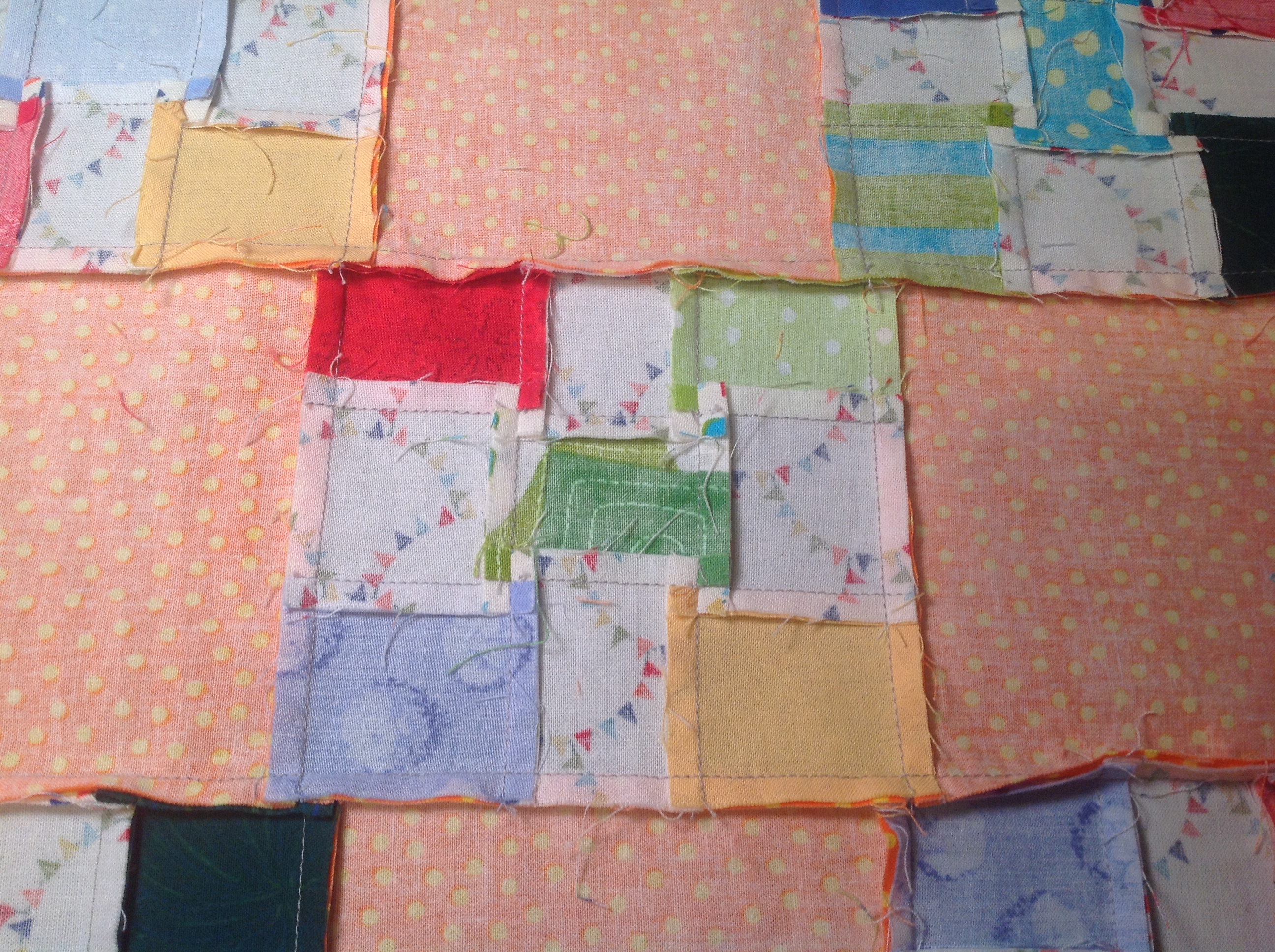
And one of the really fun things I’ve learned from Bonnie Hunter is to take the time to “swirl” your seams on the backside of a block as it cuts down on bulk when it’s time to quilt the layers.  See the little tiny squares in the middle of each block–that “swirling” means two layers of bulk, not four.  Bonnie has detailed instructions under the four-patch unit “clue” of Celtic Solstice on her quiltville.com blog.  Look for the “Celtic Solstic” mystery information.

IMG_0090

I have been hand-sewing blocks for this great quilt–pictures below–from Material Obsession 2 by Kathy Doughty and Sarah Fielke, both from Australia.  I have not decided which layout to use yet.

IMG_0136

IMG_0138

I am kind of leaning toward the second one, but maybe making it a bit bigger.  I have almost finished two blocks and have cut out pieces for the third and chosen fabric for a bunch more.  I am getting obsessed with the beauty of these blocks.  I’ll take some pictures tomorrow.

BUT, if I do the first layout, it might make a great quilt for the red guest bedroom…

Who knows?  It’s a work in progress…  And I’m just having fun.

It’s dark now.  I’m going now to lock up the chickens, fix dinner (stuffed green peppers and baked squash), make a cuppa, and sew.  And to listen to what is likely the final part of P.D. James’ Devices and Desires, which has been wonderful, wonderful.  James is a master of murder mysteries.  This book is so full and rich and so full of depth.

Tonight after watching two Castle episodes from season 2–which is really all about watching Nathan Fillion whose Firefly series got cancelled way, way too soon (Josh Whedon, and  the movie Serenity kind of finished off that series)–I’ll read another big chunk of Donna Tartt’s The Goldfinch, which I’m really enjoying.

And, oh my gosh!, when checking spelling for Fillion, I realized he’s also in Buffy the Vampire Slayer just a bit, which Josh Wheden also did!!!  I’ve always wanted to check out that tv series…ever since Julie Powell wrote Julie and Julia (from her blog about Julie cooking her way through Julia Child’s Mastering the Art of French Cooking) and spoke of her delight in Buffy…

If you don’t have dog-eared volumes of Child’s Mastering the Art of…, you might want to get at least the first one and cook around it a bit.

Life is so full of wonderful surprises some times…

Turkey Tracks: Maine Winter Poem

Turkey Tracks:  January 17, 2014


Winter in Maine

A Poem


Friend and fellow quilter Barb Melchiskey sent me this poem last week.

I chuckled, of course.

You might, too.


It’s winter in Maine

And the gentle breezes blow.

Seventy miles an hour

At thirty-five below.

Oh how I love Maine

When the snow’s up to your butt

You take a breath of winter air

and your nose gets frozen shut.

Yes, weather here is wonderful

So I guess I’ll hang around

I could never leave Maine

‘Cause I’m frozen to the ground.

When I asked Barb who wrote it, she confessed her niece sent it to her.

Here’s Barb’s nieces reply to Barb’s query about authorship:


Hi Aunt Barb,

I got it from the Facebook.  It has no attribution, but it was initially posted by a woman named Bambi Trawn Boucher.  It has been around FB for a few years.

Doing some research, it seems to be a poem called “Winter in Canada,” also unknown author.  Maine has been switched in for Canada.

So…your friend probably would want source both!!

Glad you liked it”

Books, Documentaries, Reviews: THE LOST LANGUAGE OF PLANTS, Stephen Harrod Buhner

Books, Documentaries, Reviews:  January 14, 2013

The Lost Language of Plants

Stephen Harrod Buhner

I read this book over two years ago.

It still haunts me.

LOST LANGUAGES OF PLANTS

This book haunts me because it describes how far down a very-wrong-road mankind has traveled–a road that ends in a cliff with no where else to go.  The cliff is sickness, starvation, and certain conflict for resources.

Can we turn around and backtrack?

Increasingly, I think it’s unlikely as a species that we can–because the losses of traditional knowledge are too great, so great that we cannot recuperate them.  And doubly unlikely because most of us are not in touch at all with what has been lost or what, as a species, we have created.  The tragedy springs from our fatal flaws–pride, arrogance, and greed.  We set about with chilling abilities–that grew stronger over time–to change the environment within which we found ourselves and, in the process, set in place what is killing and will kill…us.

Pessimistic?

You bet.  It’s why I called my essays “tipping points.”  I wondered where the tipping point would be for needed corrections to our behavior.

But now, when one out of two people are getting cancer and when we still continue along the road without making changes–caught as we are in an immense system that increasingly ties our hands and muffles our voices–I have lost hope in seeing change in my lifetime at least.

Change will come eventually, but only after this planet has swept most of us off its surface.  Hopefully, those who survive will begin to understand that mankind is part of Earth’s system, not in charge of Earth’s system, and that we must learn to live within Earth’s systems and alongside other life forms–each of which is important–for survival, let alone for flourishing.  And, yes, I recognize that we have multiplied and are, maybe, living longer, but what we have done to create this situation is not sustainable and will crash.

There is an awful lot in this book to take in and understand.  Yet, Buhner, a master herbalist whose life work has been understanding the chemistry and life force of plants, walks us through what has been lost and what we need to understand in accessible prose.  

The “lost” language of plants is a language that used to tell us about our system, where we fit in, the importance of the other life forms (animals, plants, soil, bacteria), and how they worked within the system.  Here, nature is not always “red in tooth and claw,” but synergistically connected.  Here one huge loss is the loss of the understanding of the whole of things–lost to modernity’s constant move to separate out the parts for study or control.  Or, destruction.  

Buhner makes the connection of mankind to the system and mankind’s destruction of the system in many places.  His use of this quote by Wendell Berry from Berry’s The Unsettling of America may give you some food for thought.

[Our bodies] are not distinct from the bodies of plants and animals, with which we are involved in the cycles of feeding and in the intricate companionships of ecological systems and of the spirit.  They are not distinct from the earth, the sun and moon, and the other heavenly bodies  It is therefore absurd to approach the subject of health piecemeal with a departmentalized band of specialists.  A Medical doctor uninterested in nutrition, in agriculture, in the wholesomeness of mind and spirit is as absurd as a farmer who is uninterested in health.  Our fragmentation of this subject cannot be our cure, because it is our disease.

And here’s a quote Buhner uses from the renowned scientist Edward O. Wilson (59):

Other species are our kin.  This statement is literally true in evolutionary time.  All higher eukaryotic organisms, from flowering plants to insects and humanity itself, are thought to have descended from a single ancestral population that lived about 1.8 billion years ago.  Single-celled eukaryotes and bacteria are linked by still more remote ancestors.  All this distant kinship is stamped by a common genetic code and elementary features of cell structure.  Humanity did not soft-land into the teeming biosphere like an alien from another planet.  We arose from other organisms already here.

Now before some of you react to this view, as some of you immediately will, before you grab the polarity religion/science, take a moment and think about what is being described.  Here is a whole design.  A magnificent design–within which we are a part.  And I can tell you that what Buhner is moving towards is trying to show you how intricate is this design– down to the cellular level.  He uses the work of Barbara McClintock, taken from her 1983 Nobel lecture, to reinforce his understanding of the intelligence that is involved.  And Buhner does hold a huge place for spirit underlying this system, as I will show below.

Antibiotics, it has been found, can act as bacterial pheromones, biologically based chemical motivation signals, that literally pull bacteria to them.  Once in the presence of an antibiotic, the bacterial learning rate immediately increases by several orders of magnitude….Bacteria also intentionally inhibit the internal mechanisms for reducing mutation in their genetic structure in order to promote quicker resistance development.  Nor do bacteria compete with each other for resources, as standard evolutionary theory predicted, but rather, they promiscuously cooperate in the sharing of survival information.

The recognition, long delayed by incorrect assumptions about the nature of genetic structure, is now widespread that genetic structures in all organisms are not static but fluid, sometimes within a wide range.  (This is part of a growing recognition that nature may not be red in tooth and claw but much more mutualistic and interdependently connected than formerly supposed.)  Barbara McClintock, who early recognized the existence of transposons, noted in her 1983 Nobel lecture that the genome “is a highly sensitive organ of the cell, that in times of stress can initiate its own restructuring and renovation.  She noted as well that the instructions for how genotype reassembled came not only from the organism but from the environment itself.  The greater the stress the more fluid and specific the action of the genome in responding to it.  This has had a great many unlooked for consequences.  (122-123).

The growth of our disease rates, Buhner argues, parallels “the decrease of diverse plants as foods and medicines” (206).  The substitution of man-made chemicals, born out of reducing the whole to various parts, treat symptoms, not the underlying causes of disease.  This is not a new argument Buhner makes.  But Buhner notes, as do many others now, that our ability to create technical “fixes” is coming to an end, for we have nothing in the pipeline to treat superbugs, superweeds, and super mad living entities that we have incited to…survive…us.

One of the most poignant–and useful–sections of the book is when Buhner describes the development of a plant community.  He begins by noting how the “naming” of plants (taxonomy) involved grouping plants that looked similar or had similar evolutionary origins does not work.  Plants need to be “seen” by how they function within their community:  “To understand plants and Earth’s ecosystems they have to be viewed as living systems, not isolated within the language of Western taxonomy” (176).

And:

Naming plants instead by their function, by their relationship to their habitat, connects people to that habitat, to the communications and purposes that run through ecosystems.  Such naming carries within itself the implicit knowledge of what will happen if a plant is driven to extinction or declines in population.  Many older folk taxonomies–often more complex than Western systems–have long recognized that plants play unique and important functions in ecosystems.  Their names for them (as with such plants as Elders and Ambrosias) often reflect plant/ecosystem connections and interdependencies and describes more accurately their true nature and functions.

Plants mean nothing in isolation; they are a life-form rooted in and identified by their community, by their relationships to and interactions with all other life on Earth.  Individual plants form local neighborhoods and neighborhoods associate together in communities and those group together as ecosystems that interconnect together to form biomes which together form the larger system called Gaia.  Ecosystem function determines the plants that grow within them and the nature of plant associations (176-177).

Buhner goes on to describe a Sonoran Desert plant community and how it formed and how it has an Ironwood tree (an Elder) at its center.  The description of the anchoring Ironwood, the understory plants, the ground plants, the interrelated insects, the chemical smells produced to communicate and heal is…mind-blowing.  And, allows one to begin to see what has been “lost” when we mindlessly cut down and clear land and plant monocrops.  The integrity of the system is ripped apart and various components simply do not know how to relate.  Sickness evolves.

Buhner describes the framework in another way–by listing the basic components of a basic framework found when nonindustrial epistemologies are compared.  Here is Buhner’s list–it offers much food for thought.  Note that the starts with “Spirit.”

At the Center of all things is spirit.  In other words, there is a central underlying unifying force in the Universe that is sacred.

All matter is made from this substance.  In other words, the sacred manifests itself in physical form.

Because all matter is made from the sacred, all things possess a soul, a sacred intelligence or logos.

Because human beings are generated out of this same substance it is possible for human beings to communicate with the soul of intelligence in plants and all other matter and for those intelligences to communicate with human beings.

Human beings emerged later on Earth and are the offspring of the plants.  Because we are their offspring, their children, plants will help us whenever we are in need if we ask them.

Human beings were ignorant when they arrived here and the powers of Earth and the various intelligences in all things began to teach them how to be human.  This is still true.  It is not possible for new generations to become human without this communication or teaching from the natural world.

Parts of Earth can manifest more or less sacredness, just like human beings.  A human being can never know when some part of Earth might begin expressing deep levels of sacredness or begin talking to him  Therefore it is important to cultivate attentiveness of mind.

Human beings are only one of the many life-forms of Earth, neither more nor less important than the others.  Failure to remember this can be catastrophic for individuals, nations, and peoples  The other life in the Universe can and will become vengeful if treated with disrespect by human beings (37-38).

Well, there isn’t much in our education or training or, often, in many of our religions, that constructs a list like this one.

The first time I read it, I dismissed parts of it out of hand.  Then I read it again after reading the book, especially the parts of how a natural plant ecosystem is created, looks (messy by our standards), and functions, and the list called to me in different ways.  Reading it now is, yet again, a different experience, and I am reminded of how much has been lost when so many of us have become so profoundly disconnected from nature, from the land, from plant ecosystems, from animals, from our food, from…each other.

 

Turkey Tracks: Diva Update

Turkey Tracks:  January 13, 2014

DIVA UPDATE


I went to sleep last night after watching the weather.  We will have a few more mild days and then the bitter cold will return.

I knew my severely frostbitten Anconda hen would not be able to stand any further damage.

I went to sleep knowing that she would have to come inside, or I would have to put her down.

Inside, first, I determined.  She has been through so much, and her spirit is so strong.  She deserves a chance.

So, this morning I got up and organized to bring her inside.

When I went out to feed the coop chickens and let them out, I saw the Diva on the hillside.  She had not gone into the coop’s cage last night.  She sat so still that I thought she might have frozen sitting straight up.  But, it hadn’t been that cold last night…  She moved a little as Penny dog went to sniff at her.  She was weak, but alive, just sitting on the hill above the junipers.  When I called to her, she moved and tried to come toward me, and limped her way down the hillside as if she were very stiff,  and I gave her a hand full of mealy worms, which she began to devour.  So, I went on to let out the coop chickens and to throw the leftover food in the coop to the twenty or so turkeys who are now bold enough to come right up to the coop.  It is quite something to see four or five turkey males in full puffed-out plumage strutting around not ten feet from you.  And it is fun to have them talk to you when you call to them.

After I fed the dogs and dressed, I organized a big box for the Diva in the kitchen.  Two trips to the garage retrieved what I needed:  a tarp to put under the box, the box, a screen to cover, and materials to line the box.  When I had the box ready, I went outside with the fish net to catch her, which it turned out I did not need.

She was very weak when I picked her up inside the coop, where she had gone as the other chickens were outside.  She hardly struggled and only squawked weakly when I picked her up.  There was no weight to her–just feathers and…air.

But, she was outraged when I put her in the box!  Where was this?  What was I doing to her?

Before I could get her into the box and put the screen over it, she flew up into the far left window and flailed around weakly.

IMG_0123

I had to weight the screen on top of the box with books to keep her inside.

After a time, she accepted the box and settled down.  And in the past hour or two does not stand up and scurry around as I go in and out of the kitchen.  These Ancondas are very, very skittish.

She ate all of the hamburger I gave her.  But not the sunflower seeds.  She has scattered her food all out of its bowl.

The box is the box that the electric lawn mower came in–saved for just this sick-chicken purpose–summer before last.  The screen was a gift of the Swap Shop–back when we raised Chickie Annie after incubating eggs.  (You may recall she was the only one who hatched due to problems with humidity.  Later, she got eaten by a fox–which broke my heart.)  I lined the box with newspaper and an old towel–so she will have a little warmth and traction around her feet. Later I will drape another towel over the box top to make her feel safer and to keep her warm tonight.

And I will sleep without worrying about her freezing to death outside or being eaten by something that goes bump in the night.

The rooster flies up to the porch railing and calls to her.  He was very upset when I picked her up and she cried out.

I will not take a picture of her for you until she is better.  She is very disfigured, but her feet and neck do seem better.


Interesting Information: Red Palm Oil

Interesting Information:  January 13, 2014

Red Palm Oil

I read a really interesting article on red palm oil a while back.  Sometimes it takes me a while to act on information, and it took me about an hour to refind the article!  I was shocked to realize I read it back in the spring–which shows you how backed up my blog information pile is.

“Red Palm Oil:  A Healthy Fat with a Daily Dose of Vitamins,” Bruce Fife, N.D., Well Being Journal, May/June 2013, 8-13.   (This journal has an url, but does not let you read articles for free.)

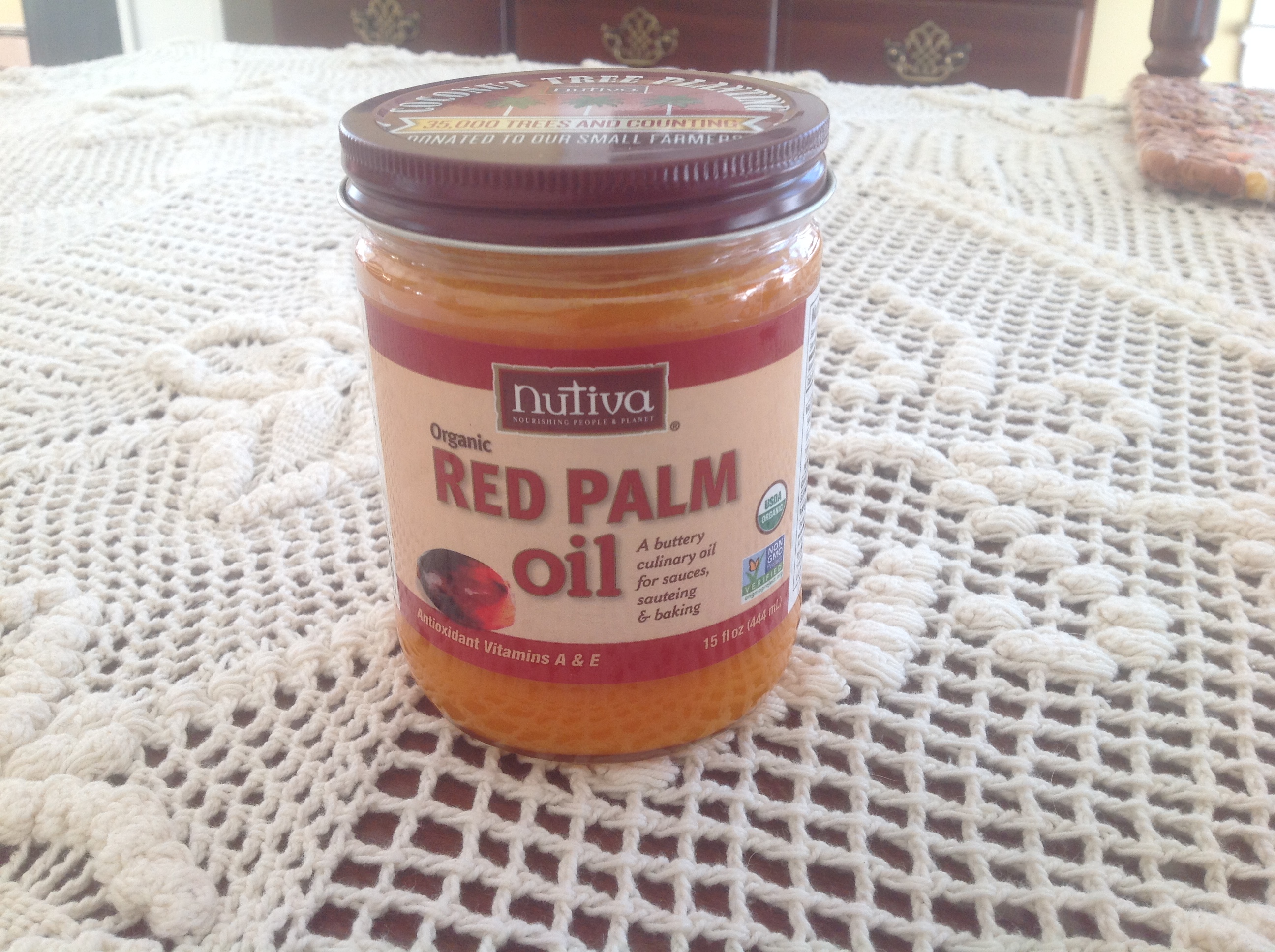
Anyway, a week or so ago, I bought a jar of the red palm oil.

IMG_0121

Turns out that the shopping booklet that the Weston A. Price Foundation sends me every year lists this Nutiva brand under its “best” category.

First I tried it instead of olive oil when roasting some cauliflower.   Hmmmmmm.  Pretty color on this white veggie.  Taste, and, Delicious!  Buttery and warm with an intriguing red/gold color.

Next I tried it instead of butter over the top of a roasting chicken.  Again, delicious!

So, what’s so good about this delicious, pretty fat besides the taste?

First, Fife writes that red palm oil has been a traditional part of the human diet in areas where oil palms have grown for “at least 5000 years.”  These oil palms started in tropical Africa, but now are an important crop in Southeast Asia, West Africa, and South America.

Besides being used in food preparation, red palm oil is used as medicine.  At the first sign of illness, one living where red palm oil is in the economy would down a cup of red palm oil.  And, red palm oil in these regions is “regarded as essential in the diet for pregnant and nursing women in order to assure good health for the mother and child.”

Red palm oil supplies essential fatty acids, yes, but it is also “packed with an assortment of vitamins, antioxidants, and other phytonutrients important for good health.”  The rich, deed red color comes from carotenes (like beta-carotene and lycopene)–which are also found in tomatoes and carrots.  But red palm oil has “15 times more provitamin A carotenes than carrots and 300 times more than tomatoes”–all of which makes it an excellent prevention for Vitamin A deficiency, which causes, Fife reminds, blindness, weakened bones, lowered immunity, and degraded learning abilities and mental functions.

Carotenes in fruits and vegetables, writes Fife, “can supply the needed vitamin A if an adequate amount of fat is also consumed.”  Voila!  Red palm oil is the whole package of nutrients and needed fat.  (And I would add that big strides have been made in the past two years towards recognizing how much humans need good fat sources to be healthy and towards restoring the role of good fats in recommended diets.  Good fats are NOT the highly processed vegetable oils which are devoid of nutrients and the fat-soluble vitamins.  Good fats are the animal fats, coconut and red palm oils, and properly processed olive oil.)

In addition to the carotenes, red palm oil “contains at least 20 other carotenes along with vitamin E, vitamin K, CoQ10, squalene, phytosterols, flavonoids, phenolic acids, and glycolipids.”  Red palm oil is so full of good nutrients and fats that it is being encapsulated and sold as a vitamin supplement.  Indeed, red palm oil is one of the richest natural sources of vitamin E.

Fife describes several studies–done with appropriate control groups–that show that red palm oil can stop heart disease and, for some, reverse it.

Fife writes that the antioxidants in red palm oil work to keep inflammation under control.  As such it helps lower blood pressure and may serve as a “potent anticancer food.”  It also protects “against neurological degeneration.”

Fife writes that red palm oil is excellent for cooking and baking–and my fledgling experiments begin to confirm its uses.  The label on the bottle I bought said it was good for medium heat, so I would not use it for high heat searing.  For that I use lard, tallow, or coconut oil.

So, I’m on board with adding this fat to my kitchen.

Besides, it’s just so darn pretty!

Turkey Tracks: January Thaw!

Turkey Tracks:  January 12, 2014

(I don’t know why some recent posts are not separating paragraphs…  Sorry…)


January Thaw!

It’s a January thaw!
It’s 50 degrees!
We can see grass in the snow paths again, and the chickens came out of their coop/cage and are re-exploring the yard.  There is all sorts of talking and crowing and clucking and general delight going on in the yard.
Today’s job was to retrieve TWO glass bowls that the chickens have dragged to the back end of the cage.  The chickens, in their boredom and hunger for different foods, literally lick those bowls clean and drag them around.  Did you know that chickens have tiny little tongues?
Until today, I could not reach them from the front end of the cage with the crab net.  Or poke a broom handle through the chicken wire to push them forward from the back end as the tarps were knee deep in snow.  I’m going to try the very tall tree/limb cutter which has a curved saw on the top–and if that does not work, will try to life the tarps at the back end.
I NEED those bowls to continue feeding the chickens things like warm mash, leftovers, meat and milk, and so forth.
Well!  The tree saw was too tall to wedge into the flap/gap between the coop and the cage.  I finally got the bowls with a leaf rake–the longest one I had.  The tines kept collapsing, but patience and effort was rewarded, and I gradually was able to turn each bowl over and over until I could reach it with the thick pole I use to prop open the coop roof.  Yeah!!!!  I am easily amused, apparently.
Meanwhile, the rooster herded his girls up together next to the house and told them I was an extremely dangerous intruder into their space.  He is so cute and has come into his own.  He crows all the time now.  I’ll try to get some pictures of him soon, but we are getting more weather coming in over the next few days.
Last night I sewed the fifth row of seven of Celtic Solstice.  It’s so pretty.  Only I sewed one of the units upside down, which threw off the pattern.  I took the offending block out of the row, fixed the unit, and resewed the row together.   Now I had TWO blocks upside down.  I took it all apart and fixed both units and resewed and QUIT for the night, thinking I would finish the rows today.  But I have not yet, and I’m not quite sure where the day has gotten to.
I have downloaded another audio book:  P.D. James’s DEVICES AND DESIRES.  Oh my gosh!  There is a mini-series of this book:
516IphbtWCL._SY300_
There is something so seductive about having someone read a story to you while you sew.  I finished BEST OF WOMEN’S SHORT STORIES, Vol. 1, William J. Locke, yesterday and thoroughly enjoyed it.  There were a number of stories I read in school, like Charlotte Perkins Gilman’s “The Yellow Wallpaper,” and it was a pleasure to hear them dramatized.
41IsleBb77L._SL500_AA300_PIaudible,BottomRight,13,73_AA300_
I spent some time yesterday going through ALL the 1200 titles of the audio books as the search engine is not great on this system.  I found so many books I will love to hear and made lists of the same.  I thought a mystery would be fun for a change.

Turkey Tracks: Dianne Hire: Master Quilter

Turkey Tracks:  January 12, 2014

Dianne Hire:  Master Quilter


Yesterday was a miserable, rainy, icy, threatening day.

BUT, the Coastal Quilters met, and many members managed to make it to the meeting–where we were treated to a history of Dianne Hire’s gorgeous quilts and books, and the story of her latest book, “APP is for Appliqué.”

Really, we all felt as if in the middle of this challenging day we were basking in so much warmth.  Dianne’s gracious humor, her own color-drenched and amazing quilts, the quilts of so many local quilters made from Dianne’s new patterns and brought in to share up close and personal, and our being all together made for a wonderful morning.  And by the time we left, the weather had warmed considerably and grass was appearing in the snow paths.

For this new book, her fourth, Dianne drew fourteen complex, amazing patterns, and quilters she knew, many of them local, some of them met while she taught around the country, each took a signature pattern for their personal quilt–which would be included in the planned and approved book.  The quilters could also use the other patterns in their quilts.   And if you know quilting and quilters at all, you can begin to imagine the diversity these quilts represent.  No two are even remotely alike, and all are astonishing!

Here is a quote from Stevie Kumble, Coastal Quilter’s press person, describing the new book in our press release:

The book itself has received acclaim from the quilting world and beyond. According to one reviewer, “The result is a nicely disguised technical manual as a feast for the eyes and an exciting project book. Fourteen stylized floral pattern designs provide the reader with the right place to embark on a unique journey of creativity. Tips and techniques from each contributing quilter will advance the reader’s sewing expertise in multiple ways. This book will either set appliqué design on its ear, advance it for the ages, or both.”

Dianne is famous for her use of color, and she helped pioneer the use of curves, innovative piecing, and so on.  Dianne was on the cusp of taking quilts out of the traditional and into the contemporary.  

Here is a web site with a lot of her quilts pictured–just scroll down and enjoy:  http://dhquiltsandclasses.blogspot.com.

As you perhaps know, I can applique, but I am very drawn to and happy with my ongoing scrappy piecing project and using up my stash.  But Dianne swears that these complex designs are not hard to make.  The results, I can tell you, are well worth the effort.

The quilts of Coastal Quilter’s members Gail Galloway Nicholson and Roxanne Wells appear in Dianne’s new book.

And, this program was arranged by Gail Galloway Nicholson.  Thanks, Gail!

And Dianne’s information is as follows:

Dianne S. Hire

One Hundred Bayside Road, Northport, Maine 04849

207-338-4789

email:  alternatives2@bluestreakme.com

Turkey Tracks: Dump Run!

Turkey Tracks:  January 12, 2014

DUMP RUN!

What do we do with our trash and garbage in Camden, Maine?

We take it to the dump–where we have a massive recycling program.

I start by recycling as much of my garbage as I can here at home.  I have three compost containers out back of the garage for anything I can compost, and I have a bin of worms in the utility room here in the house.  (There is a blog post on the worms–vermiculture.)

I sort trash in the garage.  There is the garbage that can’t be composted (meat, oils, for instance).  Other categories include returnable bottles (Maine has a returnable tax/refund on bottles), cans/steel, aluminum soda cans (I don’t have any of those really), glass, milk jugs (not many of those as I buy milk in glass containers), food plastic, newspapers, mail and boxboard, cardboard, brown paper sacks.  You get the idea…

Here’s a video of our dump, and you can tell I went on a very windy, cold day.  I speak at first of the blue bins at the front end of the dump line where bottles are deposited.

Recyclable/refund bottles get sorted by clear and color–and there are bins where the Lion’s Club picks up bottles for the refunds.  Just off-site is another organization (Coastal Workshop) where one can drop bottles and the organization gets the refund.

Here’s a long shot down the recycling containers–you can see the entry point–the little red building–behind the car.  I’ve never been sure what goes on in the big building to the left.  There are offices in there–and probably dump equipment.

100_3673

Here’s a container.  There are big openings to throw stuff in along both sides of the containers.

100_3671

My goodness!  My car is waaaaayyy  dirty!

100_3669

What can’t be recycled goes into yellow pay-as-you-go bags–I think they are $1.50 now–and gets burned.  This method is thought to encourage people to recycle as much as they can.

This trip I have two bags:

100_3670

The bags get thrown into a hopper as one leaves the dump–where the bags are crushed into a much smaller footprint.

100_3674

The dump also has a “Swap Shop”–which is closed for the winter.  The Swap Shop is run by volunteers and is beloved by the community.

100_3679

In the summer, there are always interesting items to be found at the Swap Shop.  It’s a great place to take items you are not using, but which someone else might treasure.  I got a small dog house there that John painted and repaired.  The chickens adore it!  I used it the year we let a mother hen hatch and raise babies.

And in the summer, or warmer weather anyway, you never know who you will run into at the dump.  It is often a place for a quick visit with someone you maybe have not seen in a while.