Dressing During the Virus

Turkey Tracks: October 11, 2020

Dressing During the Virus

Many months ago now I stopped wearing my beloved Ka Ora bracelets, made by a local friend here in Maine.

And I stopped wearing pierced earrings every day.

Why would I wear these things if I don’t really see anyone or go anywhere to mix with other people?

My answer NOW is because they make ME feel as if I am doing something nice for myself every day. And also, I was born to a mother who grew up after the depression when “things” in the market were scarce, so “saving“ a piece of clothing to be pristine “for a good event” was part of my childhood. Over the years, I have “saved” way too many clothing items for “good” and had them just go out of style without really being worn. I’m changing that right now.

The retrieved earrings made my ears sore—who knew after 50 years of wearing pierced earrings that taking a months-long break would make ears tender again?

The bracelets had to be polished—which does not happen when I wear them all the time.

And there is more to this story of rethinking how one lives during the pandemic.

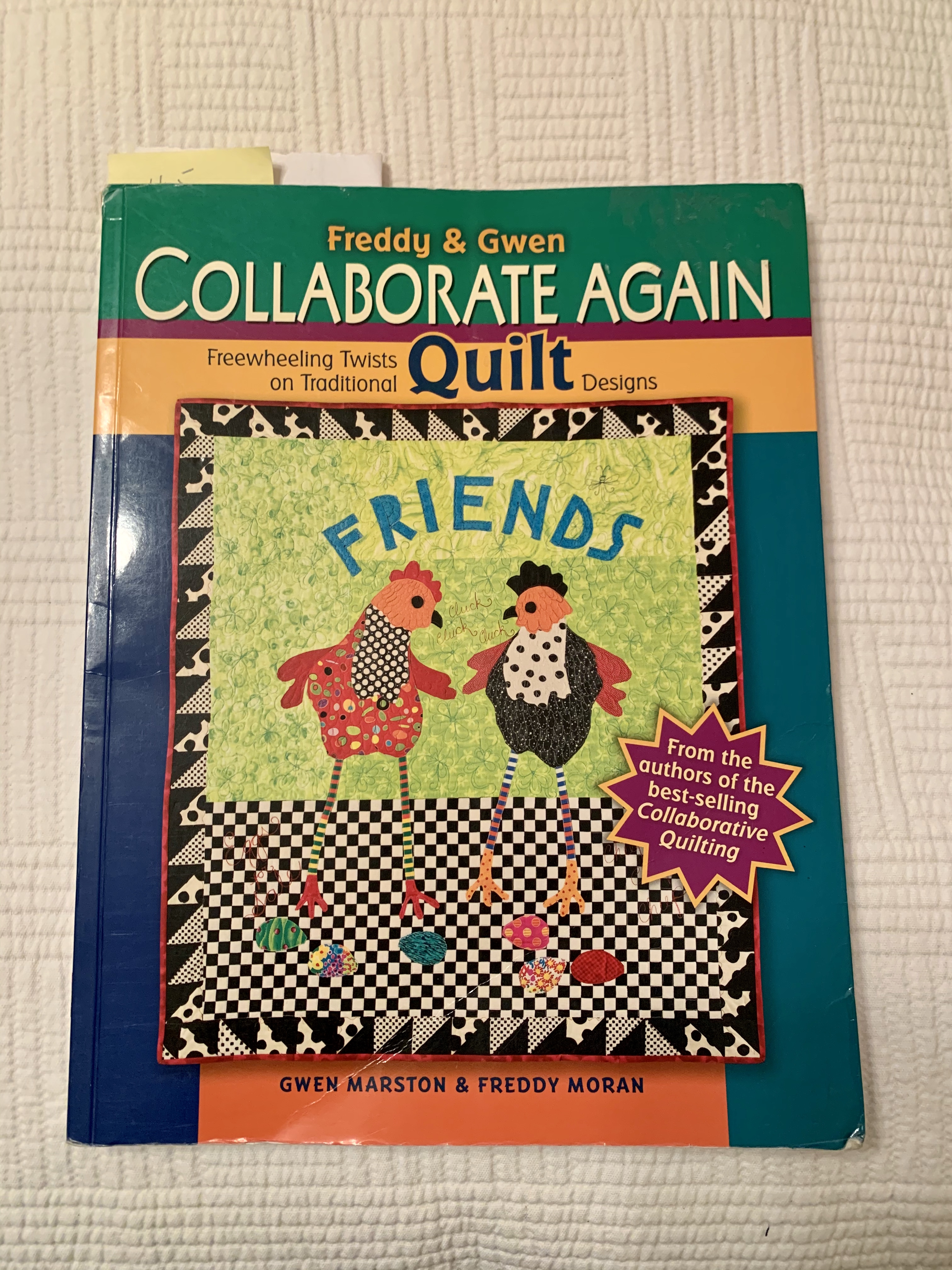
At least two springs ago I went into Mainely Sewing in Nobleboro, Maine, and saw a beautiful dress of rayon batik that would be just perfect to wear over a summer t-shirt. I walked out of the store with the pattern and some rayon batik fabric. The dress sample was for a shorter length version than this one on the cover.

This pattern has TONS of options for making this dress—options that vary the bodice and the skirt—to include a tunic version that is on the back cover.

The pattern and fabric sat untouched that spring—and the next spring as we were now socially distancing. Where would I wear such a dress? And I was preoccupied with keeping my head above water with all the summer tasks outside.

Sometime over this past summer, I cut out the dress, but didn’t get any further. The sewing task fell into “to do” sewing projects. But, with the realization that I wanted to spend the next amount of pandemic time differently, I started sewing the dress.

This dress has a number of learning curves—to include making two buttonholes in the waistband where the tie would exit the enclosed waistband. I have not made a sewing machine buttonhole in probably 50 years!! But, I have to say that part of the learning curve went well.

Here’s the dress—I just put it over a winter t-shirt for this picture as I’ve put away all the short-sleeve t’s now.

The bodice has these sweet little pleats—another learning curve:

I’ve put the dress away with my summer clothes now, but it will be waiting for me next spring. And I will be wearing it.

The Final Sugaridoo QAL Row

Turkey Tracks: October 9, 2020

The Final Sugaridoo QAL Row

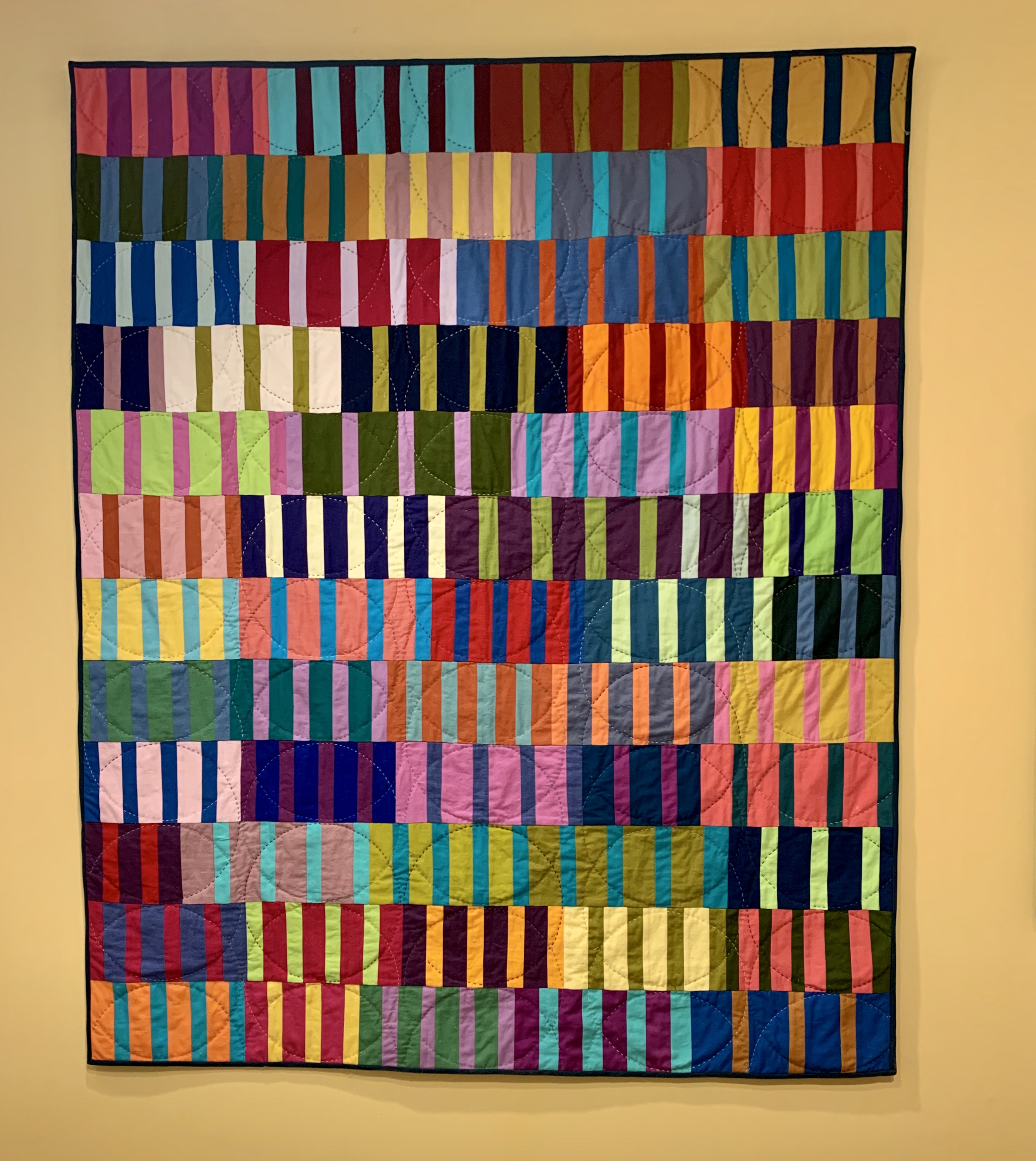
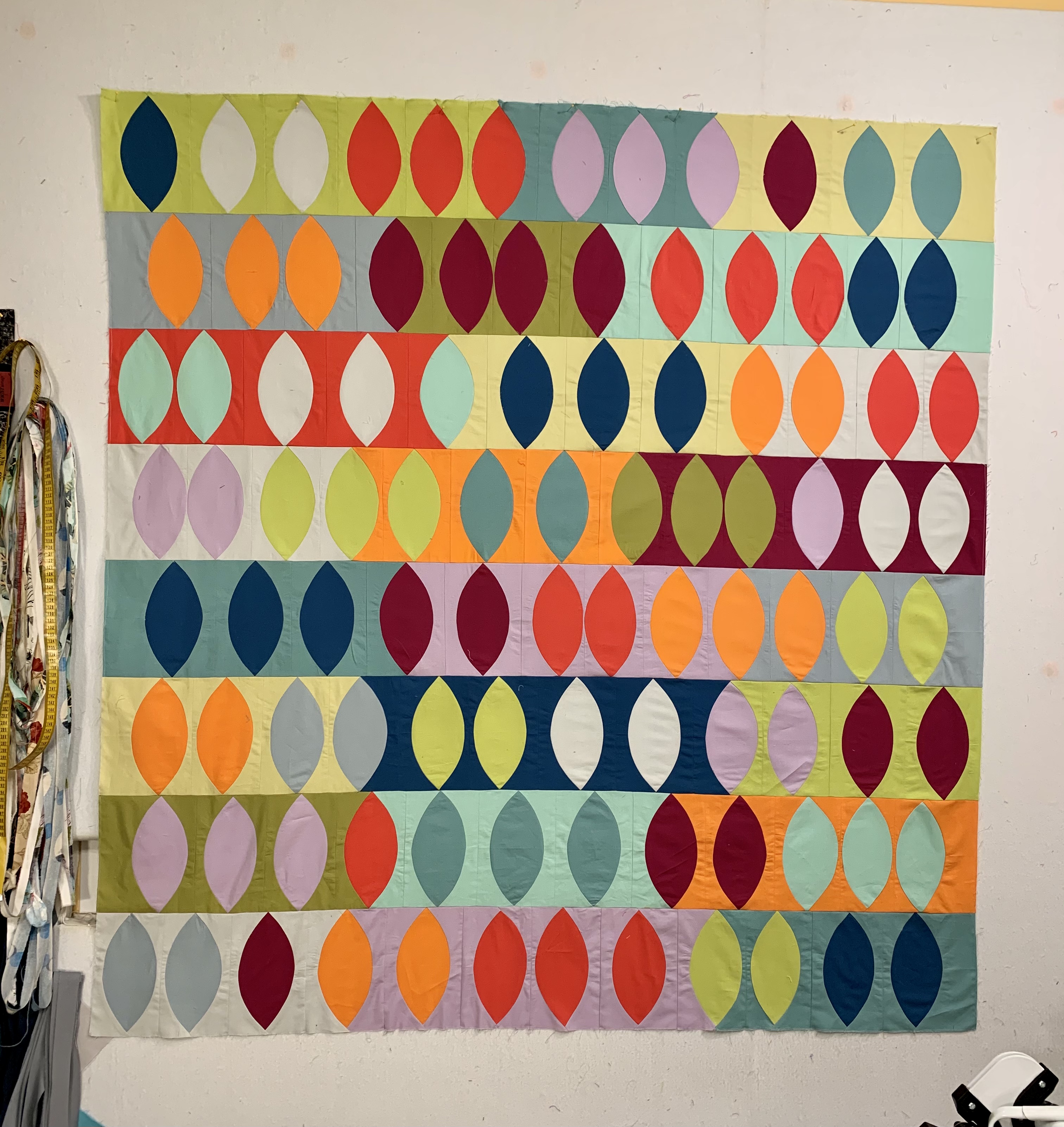
Here’s what this graphic, modern quilt looks like with the release of the final row.

I haven’t made mine yet as I’m finishing up a few other projects first. But this year-long journey has been fun and instructive. Look at all these fun patterns! And I’ve learned some new sewing methods for sure and am using them elsewhere.

The patterns and the videos will apparently stay “up” at the Bernina blog for some time if you want to check out anything in this project.

“On Point” Quilt Finished

Turkey Tracks: October 8, 2020

“On Point” Quilt Finished

This quilt is another very different project for me. But I loved making it, especially as decisions about the colors and the setting of the colors were made for me. The block that guest designer Denyse Schmidt created for Season 2 of The Color Cellective is BIG—20 inches.

This quilt is the final project (7), finished just in time for Season 3 to start in November.

I wasn’t quite sure how to quilt it, but opted in the end for this overall design with curves and some sharp points. I like the texture that developed a lot. The pantograph is Checks and Chase by Lorien Quilting. The row is 8 inches and is double, so 16 inches wide.

The thread color is the same kind of jade green that’s in the quilt—and that worked well too. It was dark enough for the darker fabrics and not too dark for the lighter. My fallback for quilt thread is always shades of grey, but they just didn’t work here with the mixtures of bright/dull/dark and light and dark. I use Signature 40-wt. all cotton thread on the longarm, and this thread color is Jade.

I also wasn’t sure what would work well as a backing, but I’m happy with this duller taupe colored fabric that has sprinkles of color that are, for the most part, also in the quilt. It’s Ruby Star Society, Speckles, and there is a very large range of colors in that line. This backing does not draw attention from the front of the quilt.

The luscious dark brown in the quilt provided enough for the binding, which I always cut on the bias. I did order extra dark brown in order to have enough for this 60 x 60 quilt. I could have easily and happily made this quilt much bigger, but wasn’t sure how it would come out in the end, if I would like the block, and so forth. I have tended to copy the Color Collective projects and then play with them—once I’m sure I understand how they work. I never think about using a luscious dark brown instead of black, but I will now.

November is coming up fast!

Haricot Vert Beans and More

Turkey Tracks: October 5, 2020

Haricot Vert Beans and More

I voted this morning and came home to pick the filet beans again. I rescued the plants twice about two weeks ago from frost in the night by covering the plants with a tarp, and now they are turning to delicious, tender beans that are such a treat.

Look how healthy the plants look in the cold frame—as do the new raspberry plants behind the beans, which have been trimmed back so they don’t try to fruit.

This was my first batch of these little beans, and I have had two batches since, including this morning. There are loads of flowers and beans growing on the plants, which will fruit until they are stopped by a hard freeze. I thought maybe I had waited to late to seed them into the cold frame this year, but here they are.

And look at these beautiful squashes, garlic, onions, and shallots. They are almost too pretty to eat. The red onions are cipollini onions. I found a recipe to pan sauté them until they are caramelizing in the pan and then to finish them in the oven.

Nights have been much cooler, but rather than organize a wool blanket for my bed, I chose a quilt—the improv quilt I made in 2019—“Parts Department Party”—that includes blocks from two friends as we all made an improv quilt with our shared blocks. (This quilt is BIG and is folded in half here. Here’s the 2019 post that has all the pictures: https://louisaenright.wordpress.com/wp-admin/post.php?post=11105&action=edit)

I love the bear’s face in one of the little stars. The bear is an old Cotton+Steel fabric. But the designers did take their fabric designs when they changed manufacturers, so maybe someday we’ll see this image appear again.

I am putting binding on my “On Point” quilt from The Color Collective, season 2, designed by Denyse Schmidt. She also chose the fabrics and this placement of the colors. I like the way my quilting choice came out on this quilt—it has lovely texture. When the binding is done I’ll post pictures of the whole thing. When I’m sewing binding on a quilt I fold them and put them on this chair so I can admire them as I come and go during the day.

VOTE!!!!

September Bee Inspired Block

Turkey Tracks: October 2, 2020

September Bee Inspired Block

The Mount Battie Modern Quilt Guild met on Zoom recently and shared our blocks for September’s prompt challenge: our receiving member, Nancy Wright, wanted creative circles in brights placed on a neutral backgrounds.

You can see all the blocks we did on the Facebook page Mt. Battie Modern Quilt Guild.

I used the appliqué method I learned from our Sugaridoo QAL challenge in our other local quilting group, the Coastal Quilter’s (Maine). Sugaridoo used small half circles and then, in another row, 4-inch full circles. I hoped that a BIG circle would also work. It does.

I used one of my diner plates to trace the circle on the fusing side of 101 SF interfacing. I layed the interfacing circle on the FRONT of the newsprint fabric and sewed around the drawn circle. Next, clip away the inner circle and clip into the curves. Turn the interfacing to the back—and if you’ve got the fusible side next to the fabric, you can use the tip of the iron to lightly fuse the circle edge so it is stable and all the interfacing is no longer showing. (Don’t fuse any more than just around the circle edge.) Then you just lay the open newsprint/backingcircle over your prepared circle fabric and pin it down. Pull at the edges of the outer fabric to smooth everything down well. Next, sew around the edge of the (newsprint fabric here) circle—use a bigger stitch. Then trim out all the excess fabric on the back, leaving your backing intact of course. Finally, give the finished piece a nice ironing.

I’ve been looking for a painless way to create BIG circles where the method does not need a ruler. This method works for me.

I deliberately placed my circle off-center and left a lot of surrounding backing so Nancy will have lots of room to manipulate/trim my block when quilt top assembly begins.

Beet/Carrot/Ginger Soup

Turkey Tracks: Recipes: October 2, 2020

Beet/Carrot/Ginger Soup

The root veggies are in full abundance now, so let’s make some delicious soup with some of them.

Start by roasting some beets. Mine are golden beets. Just put your beets in a covered container that can go in the oven, add an inch or so of water, cover the beets, and bake them at 350 degrees until a sharp knife pierces to their centers. Medium size beets take about 40 minutes. Let them cool for a bit, slice off the ends, and the peel will slide off if rubbed with something rough, like a paper towel. Chop, use some in salads, and reserve the rest for this soup.

When you are ready to start your soup, pan fry some carrots and onions in a heavy pot until they start to color a bit. Season with salt. I used duck fat. Add the chopped ginger at this stage—you don’t need to peel it. Just it into small pieces. I didn’t add garlic, but you could.

Add some stock or water—whatever you have. This is chicken stock with its fat intact. And I added herbs from the garden: tarragon, a touch of mint, and some basil leaves I froze whole. See how green the basil leaves stayed in the freezer? This is probably too much stock to add, so I will cook it all down a bit. But for a quick and flavorful soup, add less stock—just enough to cover the veggies by an inch or so.

When the stock is hot, add the roasted beets and cook until the carrots are tender.

You could eat the soup in this “chunky” form.

Or you could blend it—as French country cooking would do. I love my “boat motor” appliance for this task as I don’t have to try to put hot soup in a blender. (I like the type that plugs in as the battery ones I’ve had don’t hold up over time due to the battery stopping to take a charge.)

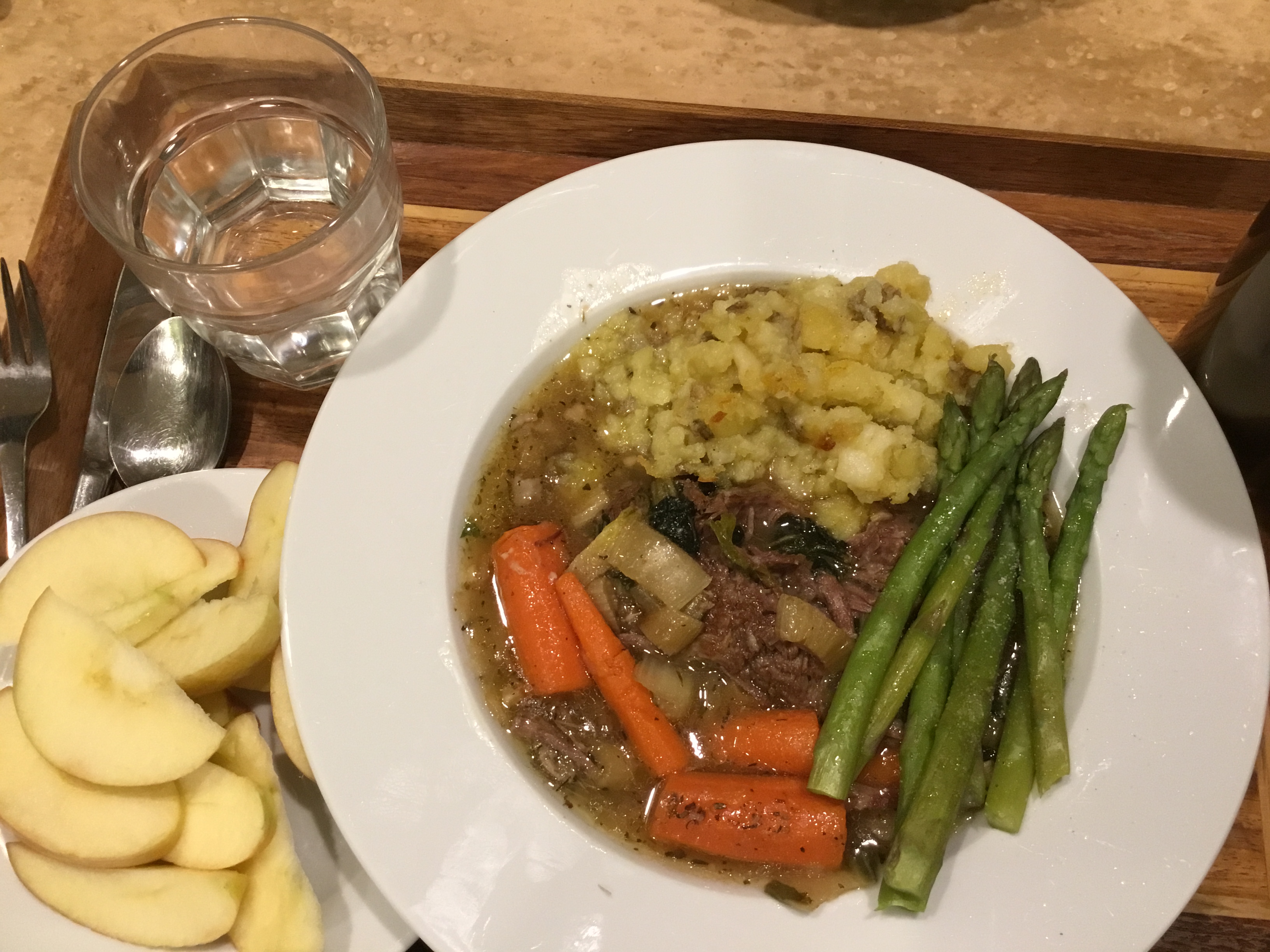
Here’s my lunch, which I’ve topped with a swirl of heavy raw cream. And it is delicious! This soup is naturally very sweet. On the side: tangy goat cheese and Mary’s Gone crackers.

I have enough soup for other meals and will freeze some too. The frozen soup can be eaten in this form or added to another soup to deepen flavor.

The Little Bag Is Done

Turkey Tracks: September 30, 2020

The Little Bag Is Done

I finished this bag the other day. It’s the little version of Kelly Lautenbach’s Not Your Basic Blue (Ikea) Bag. Two of these will fit into the big bag, which I did some months ago.

I used the basting spray (505 is less smelly) this time, and that worked REALLY well. The fabric did not walk away from the Soft and Stable inner layer while I quilted the bag layers. And I have LOVED learning how to install leather straps.

Here’s how the inside of the bag looks. Lautenbach’s method of construction is really fun to make. I do hand sew the top binding down, as I would a quilt, as I am somehow unable to machine sew a seam like this so that it looks neat.

Here’s a close-up of the strap mechanism. The screws have two parts that screw together, and I use a little of the blue screw lock liquid to insure that they don’t come loose. The handles can be removed if one wants to wash the bag at some point.

You can see the size of the big bag here—it will hold three full-size quilts and has double straps to help lift and carry it—the longer size goes over one’s shoulders, and the smaller ones are for hands to help.

I think that I have enough carrying power now, don’t you? The grey bag is the Market Bag” from Noodlehead. But there is a middle-sized bag possibility for the Lautenbach bag…

Information on the leather handles and screws is on the earlier post of the big bag. One would need a leather hole punch for this work, but they are not expensive. https://louisaenright.wordpress.com/wp-admin/post.php?post=11585&action=edit.

Radicchio in Salads

Turkey Tracks: Recipes: September 29, 2020

Radicchio in Salads

Bitter greens are really good for you.

And radicchio is red, so when you eat it, you’re “eating in the rainbow” of colors nature provides for us.

So, how can we knock back some of the bitterness of the heartier greens, especially when eaten raw? Add a little of something tart but sweet (some citrus juice or a fruit flavored vinegar) or just add something sweet (honey, maple syrup). Or add both.

In this salad, I drizzled some yummy honey over the greens—just a tablespoon. I can’t eat the tart foods.

DIL Tami Enright, who helped pioneer the Bee Cause and helms it now, sends me this delicious Tupelo honey from the Savannah Bee Company, the original sponsor of Bee Cause. (The Bee Cause Project seeks to provide habitat for endangered bees and now has hives in all 50 states.)

Tupelo honey is absolutely delicious and rare. Bees make it from Tupelo trees that grow in wet swampy soil. The blossoms on the trees have a very limited life span. The honey has a unique taste that is very different from our own local honey here in Maine.

Savannah Bee sells and ships this honey. It would make really lovely gifts during the holidays. Or, anytime. Be sure to order a bottle for yourself if you place an order.

RBG: A Life Lived Fully

Turkey Tracks: September 28, 2020

RBG: A Life Lived Fully

I grew up and married in the days before Ruth Bader Ginsberg began to change the American culture with regard to discrimination of all kinds. I could give you lots of examples of where I was not only “lesser than” the men who formed relationships in my life, but under their thumbs, which meant I was considerably less free than these men were.

Now I’m 75, and I am having a really hard time believing that we have returned to a time where much of what was changed can be made to revert. And, that a solitary white woman who thinks she has the right “truth” might be the fulcrum that makes this reversion possible.

We are all now faced with the power of a minority of white male politicians to change our lives in ways many of us cannot imagine. In the end, I do not think they will be successful, but the burning question is how far away “the end” lies.

Here’s a screenshot of a poem that might have been read at RBG’s funeral service and that holds something different: the power of love to change a culture in ways that are healthy for all human beings.

RBG will be powerfully missed and is powerfully loved by so many people in this country—precisely because she understood the power of love.

Fun and Busy Fall Days

Turkey Tracks: September 28, 2020

Fun and Busy Fall Days

We finally got some rain today—not much so far, but it is RAIN.

The fall days for some weeks now have been clear, mostly warm, beautiful, and very dry. The winter squash and root vegetables are being harvested and are filling up our local produce stores. These two striped Delicata squashes, garlic bulbs, and shallots came from Hope’s Edge, my CSA farm; the Hubbard came from friend Margaret-Elaine Jinno’s garden, which she started this year.

I plan to post a golden beet/carrot/ginger soup recipe in the next day or so.

I’ve never seen fresh Holy Basil (Tulsi) before last week’s pick-up at Hope’s Edge. This herb is a power house for the immune system apparently. I’ve dried mine and will use it in winter teas. The smell is way too strong and medicinal for me to use it in food.

I love coffee, especially in the fall and winter, though the days of sharing it with friends has been seriously curtailed.

These are favorites I keep on hand most of the time.

Green Tree’s Dark Harbor is richly dark and complex. The Origin Select bag holds Green Tree’s espresso mix, which they grind for me to use in my mokka espresso coffee pot. I love to get a latte when passing Green Tree (Lincolnville Beach, Maine) as I love this “Roma” espresso mixture so much.

The “Wicked Joe” mixtures, available at our local Hannaford’s grocery store, are roasted in Maine and each is deliciously different. The Italian (blue bag) is very dark and tastes like a good espresso; the Breakfast Blend (gold bag) is milder and tastes like chocolate with a touch of “sunshine”; and the French (red bag) is deeply smoky and dark.

This fall has been a BIG year for mice coming in to the garage. I’ve trapped 19 out there now. And the other night when I lit the grill, a mouse ran across the grate. I shut off the flames immediately, removed the grates, and saw at least 6 panicked mice—though I’d used the grill only a few days earlier. AC dog went nuts as he tried to catch them as they bailed out of the danger zone. The mice are way too quick for AC to catch in this situation. Fortunately, the nest they were setting was rudimentary and easily cleaned out. Gloves were involved, and I will spare you pics of mouse traps and so forth.

I’m pretty much ready for winter now. Everything has been put away; the snow boardwalk is down over the gravel path to the house; flower beds have been put to order; and the days are growing darker now as the trees are putting on their fall outfits.