Turkey Tracks: Fall Foliage

Turkey Tracks:  October 22, 2013

Fall Foliage


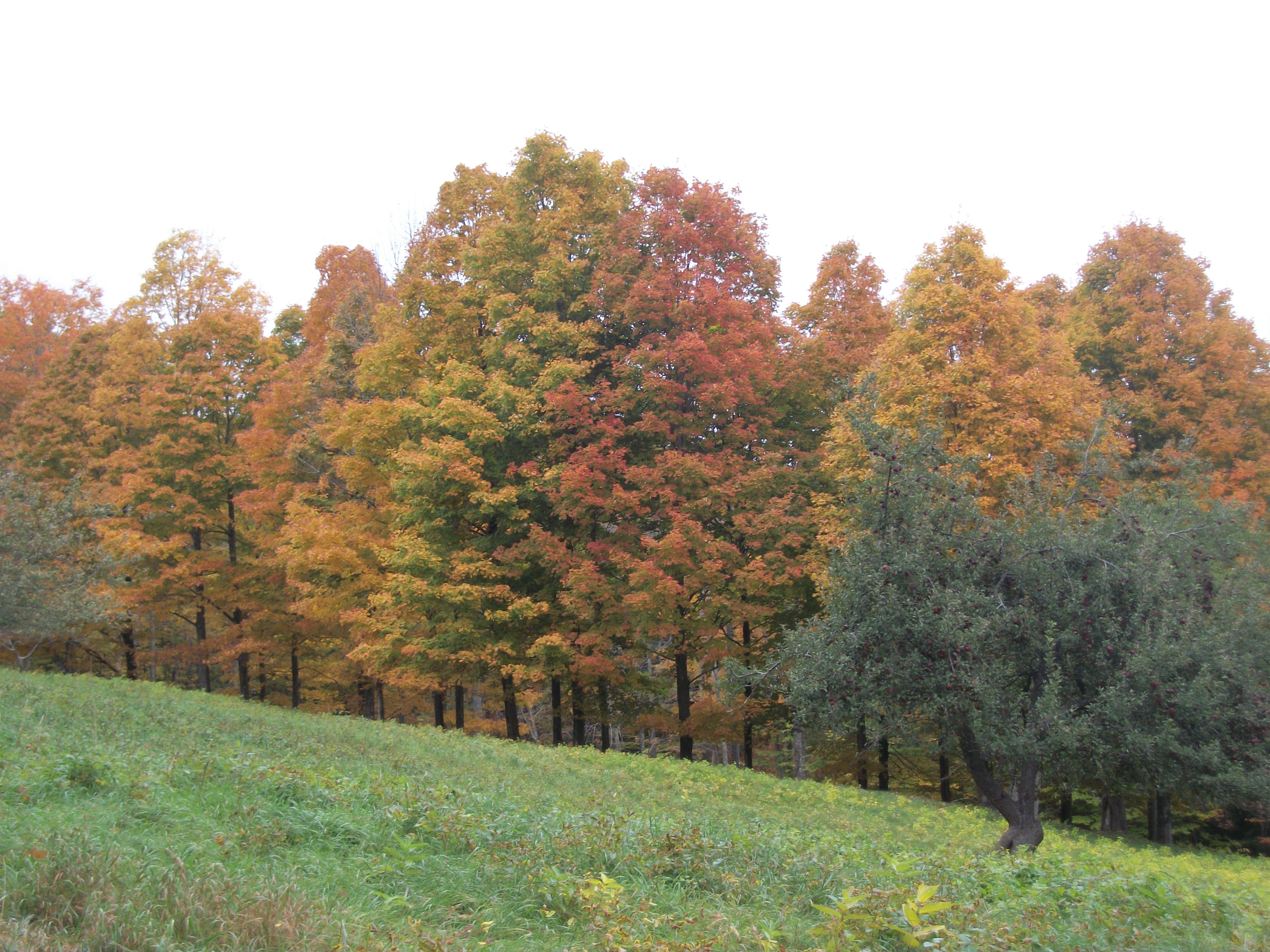
Oct. 16, 2013, Sarah's field close-up

These trees are on Sarah Rheault’s land, and they were so pretty one day last week that I turned the car around, went back, and took this picture.

The green tree is an apple tree, and it’s got lots of deep red apples that are not really showing up in this picture.

This view is the kind of fall foliage I wanted to show to my sister when she came for the week of Oct. 6th.  But, the trees up north had lost their leaves in a storm, and our trees had not yet turned.

The fall foliage here on the MId-Coast seems late this year.  We have had a long dry spell.  That’s probably a factor.  But they sure are pretty now.  One just wants to ride around in the orange and gold light.

Turkey Tracks: A Prairie Home Companion

Turkey Tracks:  October 22, 2013

A Prairie Home Companion

One of the delights of my life is listening to the LIVE BROADCAST of Garrison Keillor’s weekly program “A Prairie Home Companion.”  It airs on NPR from 6 to 8 p.m. on Saturday night and is repeated on Sunday from noon to 2 p.m.  Sometimes I listen to it twice–while I quilt.

“A Prairie Home Companion” is filled with music and skits–and always has a segment where legendary sound man Fred Newman creates the sounds that illustrate a Keillor story.  This program can and does make me chuckle, sing along, and spend some quality time with music and creativity right in my own home.

I podcast the “Lake Wobegon” segments and often listen to them more than once.  But, I thought that once the program was over for the week, it was over–due to copywrite restrictions from the many guests on the show.

This past week’s show was in Lincoln, Nebraska.  Some of you know that I spent many years growing up in Nebraska, from eighth grade through high school.  One guest on this week’s show was a farmer who talked about why he loved farming in Nebraska.

This show featured  Sara Watkins, jazz vocalist Jackie Allen, Tim Russell, Fred Newman, Lynda Crotty, The Guy’s all-Star Shoe Band, and the latest news from Lake Wobegon.

But guess what!!!!  The web site has many utube clips from the show.  So I’m listening again while I type.  And, am thrilled to discover this additional resource.

http://prairiehome.publicradio.org

Here’s a link to videos from last week’s show:

http://prairiehome.publicradio.org/programs/2013/10/19/videos/index.shtml#video-7

ENJOY!

And think about slowing down to do some hand work or machine quilting work while listening to “A Prairie Home Companion.”

Turkey Tracks: Quilting Projects Update

Turkey Tracks:  October 15, 2013

Quilting Projects Update

I have really enjoyed making the Wheel of Mystery/Winding Ways blocks–many of which I did by hand.  Here’s a picture to remind you what these blocks look like:

Wheels of Mystery 2

The line-up of lights and darks makes the “wheels of mystery.”

Anyway, after sewing while watching all of the tv series “Suits” and “Falling Skies,” I started making some blocks by machine to speed up the process.  And, then, started wanting to get the top finished.  (There is a quilt to make for granddaughter AIley’s third birthday in late November.)

When I get focused on finishing a top–it gets finished.  All the blocks are done–so I will start sewing rows together–which will require patience as there are lots of joins that need to be perfect.

i’m going to do two borders that will finish at 3 inches–and come out to a border of 6-inch nine patches in the fabrics of the quilt–with the dark fabrics predominant.  I hope the math works.  It does on paper.  These blocks are kind of stretchy and wonky–what with all the bias edges.  It could be a disaster.  It could be ok.  Time will tell.  It will be what it will be.

Anyway–handsewing blocks is a big thing in quilting now.  “Hexies” are all the rage.  And other shapes are showing up.  Micky Dupre and Bonnie Hunter have a new book out that mixes hand-sewn blocks with machine patchwork.  I can’t wait to see it.

I love hand-sewing.  For the moment I’ve given up on knitting and am hand sewing some clam shell blocks.  I walk around with the ingredients in a bag in my purse–such as at the airport last week to pick up sister Susan. Here are some of these blocks sitting on my knees:

Clam shells

Here area  few sewn together against the blue arm of the chair in the airport waiting room:

Clam Shells 2

Here’s what the top looks like as of today:

Clam Shells 3

It has not been ironed–but it’s going to lay down nicely.  I’m not sure it’s wide enough.  I’ll trim up and put on multiple borders and will hand quilt the clam shells at the very least.

This fabric came from a collection Susan Barry, who died of cancer a few years back now but who is still remembered, put together.  It came to me in a nice plastic box–all matched up and ready to go.  I wanted to do something with it to remember her by.  The clam shell block seemed to be perfect for these fabrics–which are sweet and soft.

Can I tell you that clam shells are hard to sew?  There is a lot of fabric that has to be eased into a small curve.  Heres’ a TINY clam shell block done by a dear friend who is leery of internet so she will remain nameless.  It’s not a great picture.  I’ll try to retake it.

100_3316

Each of these tiny clam shells is perfect.  The quilt is called “Shore Dinner” as I recall.

I can tell you that I have grave reservations about my clam shells being this perfect.  BUT, I am enjoying making them.

Turkey Tracks: How to Feed Your Gut

Turkey Tracks:  October 15, 2013

How to Feed Your Gut


More and more information is appearing daily about the importance of keeping your gut healthy.

You may recall from other postings on this blog that I compromised my gut health over the years–and have paid a pretty hefty price for doing so.  It turns out that I have a genetic sensitivity to gluten–tested by a reputable lab sanctioned by the government with a fecal test.  (Blood tests don’t often catch these kinds of food allergies.)  The hefty price is that when I harmed my gut by eating gluten and other foods that let the opportunistic gut flora and fauna we all carry get out of control–read sugars and too many carbs here–they perforated the walls of my gut and food particles began to escape into my bloodstream–which, in turn, created conditions where my body thinks it is being attacked and produces a classic histamine reaction.  My blood pressure drops, I lose all muscle control, and I pass out and have to be hauled off to the hospital where I recover in time.  It takes days to get my brain fully functioning again.

This falling domino sequence did not happen overnight.  It took years.  And I ignored all the warning signs:  reactions to red wine, allergic runny nose and sneezing after eating a food my body did not like, irritable bowel reactions that could strike without warning, the yo-yo effect of constipation followed by diarrhea, weight gain, and on and on.  I didn’t stop until I started passing out and my list of foods that would set off the reaction began to grow and grow until I was afraid to eat anything for fear of setting off an attack.

You can’t take a pill to “fix” this kind of thing.  The only way out is to heal your gut.  And to do that, you have to stop eating any kind of processed food and to start eating nutrient dense whole clean foods that nourish your body.

So, guess what is one of the very best things you can do?  Eat lots of lacto-fermented foods EVERY DAY at EVERY MEAL.  This food has more probiotics and enzymes than any probiotic product you can buy in a store.  Lacto-fermented foods are changed in ways that make them even better than they were when raw.  It’s how people used to store foods before canning and freezing came along.  And, note that canning kills foods and freezing is an energy drain.  I reserve freezing real estate for things like meat, local fruit, and roasted tomatoes, where it takes many tomatoes roasted down to fill a pint jar.

But, first, let me explain that “lacto” is from the wild ingredient that lives in the air, lactobacillus.  Cultured milk products also contain lactobacillus, so that’s where you might have first heard that term.  And I learned all that and how to make sauerkraut first from The Weston A. Price Foundation’s Sally Fallon Morell and Dr. Mary Enig’s book NOURISHING TRADITIONS (a must have in your library).  Then, I built on that knowledge after a few  years with Sandor Ellis Katz’s book WILD FERMENTATION.

Katz was the Maine Organic Farmers’ and Gardners’ Association keynote speaker at the Common Ground Fair this past September.  He has a new book out that is more comprehensive than WILD FERMENTATION.  The new book, I think it’s called THE ART OF FERMENTATION, includes fermenting meats–like corning beef, for instance–which is something I really want to try.

Thus, Katz was in our region, and that sparked other programs on lacto-fermentation.  One such was given by Ana M. Antaki at the Belfast Library–and Margaret Rauenhorst and I went.

Here’s Margaret outside the library–we got to the program a bit early.  Belfast had all sorts of clever benches done by various local artists and placed all over town.
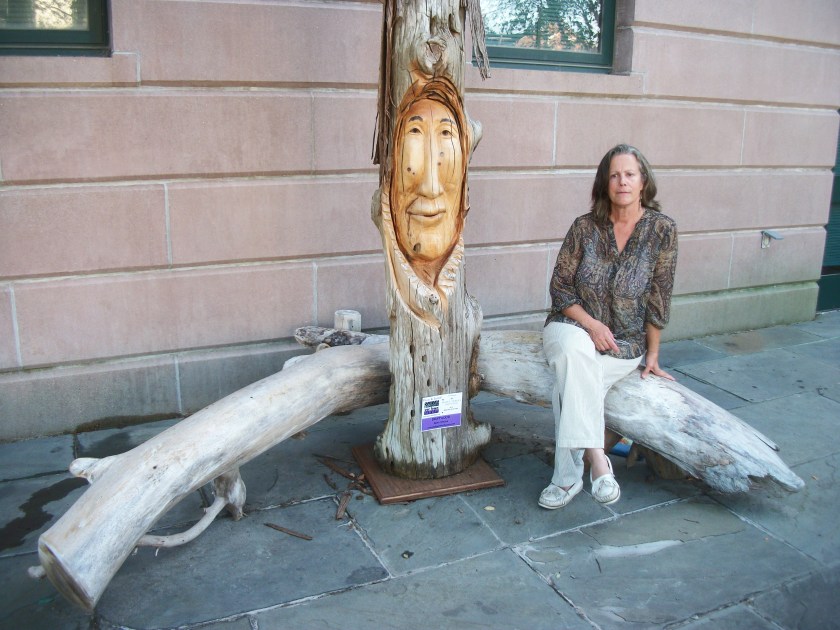
lacto-ferm, Margaret, Belfast library

Margaret is important here because her recipes differ a little from mine–and it’s important to realize that there are different ways to lacto-ferment foods.  For instance, I first learned to lacto-ferment cabbage into something we call sauerkraut (which bears little resemblance to cooked cabbage that’s fermented) from NOURISHING TRADITIONS–the excellent book from Sally Fallon Morell and Dr. Mary Enig of The Weston A. Price Foundation.  That recipe uses some whey drained from yogurt along with a bit of salt, whereas Katz does not use whey.  And Margaret, who does not refrigerate her sauerkraut at all, says the whey makes it go softer quicker.

And Ana Antaki uses glass jars with a bailer and rubber seal (Fido jars) to lacto-ferment, whereas Katz uses mostly crocks.  Ana likes the bialers and seals as she says they let out gasses that form but do not let in outside air.  I use, in addition to jars with rubber seals and bailers (FIDO jars) and crocks, half-gallon Mason jars because that’s what I have on hand and because I have the refrigerator room to store them so they stay cool.  The crocks require a bit more attention to keeping liquid levels high enough.  The Mason jars maybe need to have the gases inside let out from time to time if the jars are in places that are not cool enough.   I do have questions about the glass Fido jars not letting in enough “wild” organisms not so much to help ferment the foods, but to let even more of the “wild” of nature do even more work.

Ana and her husband Roy put up ALL of their produce from their Weeping Duck Farm every year using methods like lacto-fermentation and dehydration.  They do not buy any fresh produce all winter.  And it’s important to realize that the food inside the jars/crocks stays as fresh and bright as the day you put it into the container.  Ana has kept lacto-fermented jars for as long as five years before eating the contents.

Lacto-fermentation takes only two ingredients:  salt (real sea salt please) and water (no added fluoride or chlorine).  How simple is that?

And there are two methods:  one for foods you want to cut or grate into small pieces and one for foods you can preserve in larger chunks.

Both methods could not be simpler to make and are delicious.

Sauerkraut and Sauerruben (a mixture of grated root veggies) put grated veggies into a bowl.  One then adds salt and whatever spices or herbs one wants.  (Ana adds less salt than Katz, but Katz says to use salt to your own taste.  Ana adds 3 tablespoons of sea salt to about 5 pounds of veggies.)  NOURISHING TRADITIONS adds 4 tablespoons of whey dripped out from yogurt and 1 tablespoon of salt.  (I don’t know if the whey from commercial, processed yogurt would work–it is a dead food.)

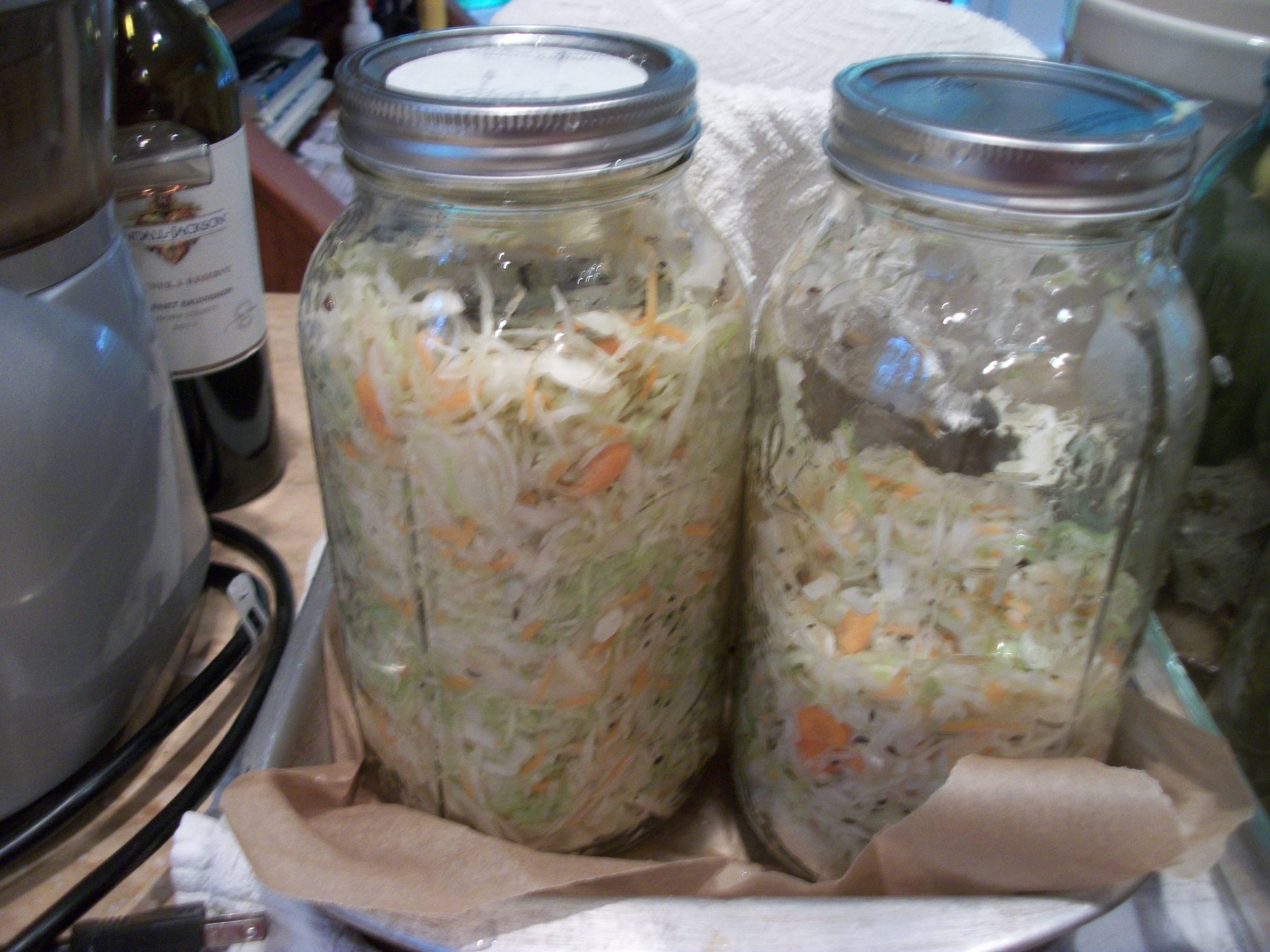
Here’s a bowl of grated cabbage with bits of carrot–you could also fine-cut the cabbage with a knife.

Lacto fermented cabbage started

I started using a pestle to bruise the cabbage enough until it started rendering its liquid–until I saw a 6-minute video Katz put on utube that showed him using his hands to squeeze the cabbage.  That seemed to work a bit better.

Once the cabbage renders enough liquid, one just packs it into a jar and lets it sit.  I turn mine upside down a few times a day and refrigerate it after a few days as that slows down the fermenting action.  I still use 4 tablespoons of whey and maybe only one tablespoon of salt, but I don’t stress about it.  I add things like some caraway seeds.  Garlic is good in anything.  You could add some herbs from the garden.  Use what sounds good to YOU.

You can start to eat any of these foods after a few days.  But the longer they ferment, the more they “develop” interesting flavors that are richer and deeper.  Refrigeration slows the reactions.

Here’s the sauerkraut packed into a jar:

Lacto fermented cabbage

After after a few days, I was able to put the contents of the half-filled jar into the full one…

If you use a crock, you need a plate you can push down over the top of the veggies  to make the liquid rise and cover them–and a weight to keep it pushed down–like a Mason jar filled with water–and a clean dish towel or cheesecloth over the top–tied around so fruit flies that are very present this time of year don’t get inside.  You want this food to be able to breathe.

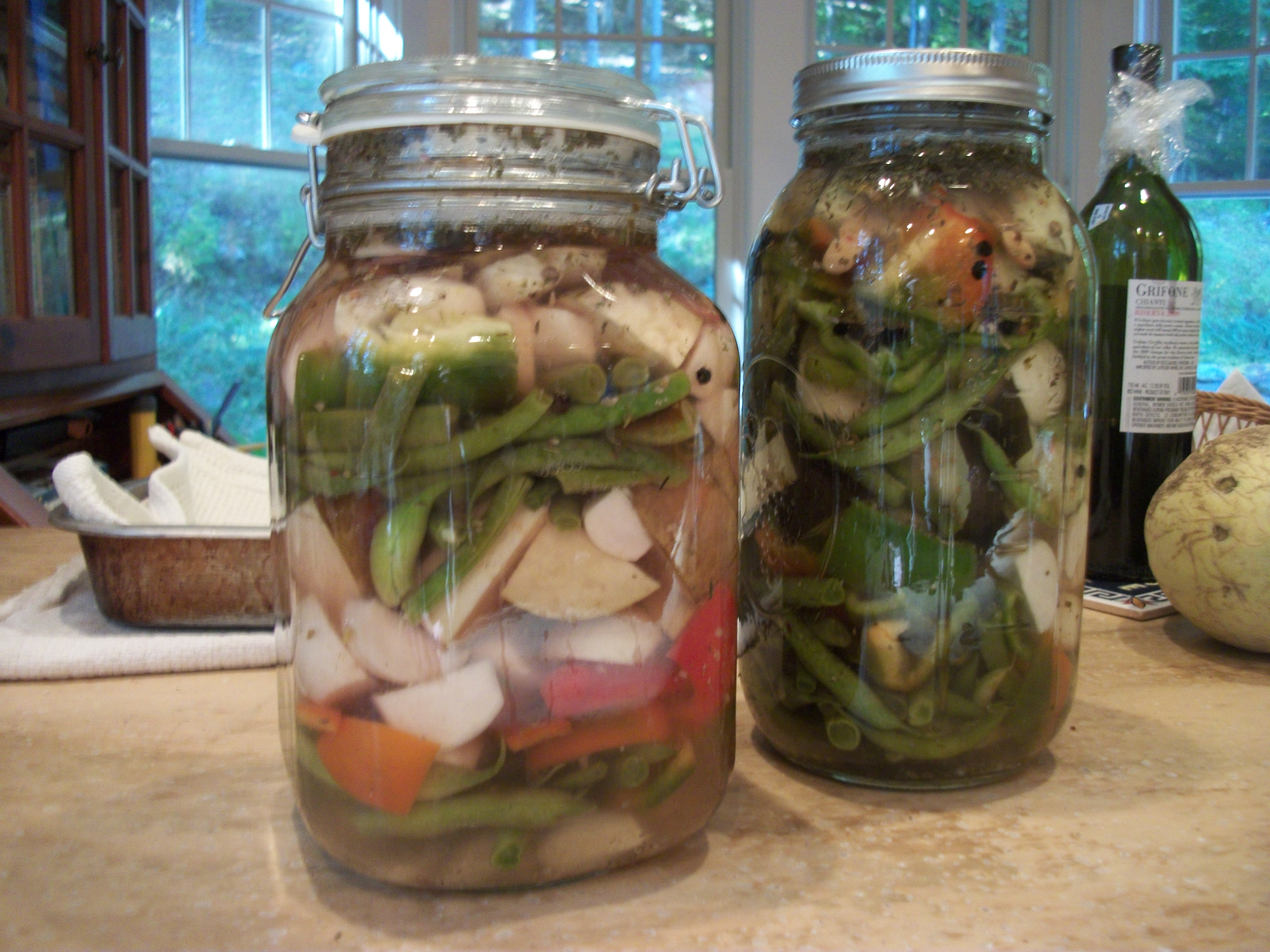
The other method involves cutting up veggies, adding spices and or herbs (I put whole garlic cloves into everything as it is a great immune builder–and I eat them as I go along) and pouring some brine over the mixture until the jar is full.  Ana uses wooden popsicle sticks pushed down into the neck of her jars to keep the liquid covering the food–and that works really well.

The brine is simple–you can mix in 3 tablespoons of sea salt to one liter of water.  Katz uses about 6 tablespoons for about 8 cups and replenishes evaporated liquid with a mixture of 1 tablespoon salt to one cup of water.  You just put the salt into cold water, stir it around, and pour it over the veggies.

Here are my mixed veggies:

lacto-fermented mixed veggies 2

This batch has eggplant cut into chunks, carrots, beans, salad turnips, green peppers, red peppers, and so forth.  Green beans are delicious done this way.  And, of course, Katz has a recipe for New York garlicky pickles that is delicious!  I can’t get enough of them.

It’s wise to always put a fresh jar/crock into a pan or a container so that if there is overflow, it won’t ruin anything.  Especially with the crocks and especially if they are fullish.  With the jars, you will see bubbles rise to the neck of the jar and when you see a ring of bubbles–or bubbles rising if you pick up the jar and shake it–you know all is well.  Again, putting a jar into a cool place slows the reactions.

Remember that the veggies are in an acid environment–so will not go bad.  And remember if using a crock, it’s entirely normal for the top of the liquid to “bloom” with white bits and blue bits.  Just skim those off.  They don’t hurt anything any more than the white and blue bits in blue cheese.  It’s normal.  It’s WILD.

I just tasted a crock I did two weeks ago of grated turnips (about 4 pounds) and carrots (1 pound)–with added sage from the garden.  It is DELICIOUS!  It has no “turnipy” taste at all–is just clear and fresh and lovely.  I’m going to transfer it to a glass jar and think about doing it again and adding in some parsnips…  And, maybe, rutabega as I have some.  I might have grated in some Daikon radish and I did add garlic…   How healthy is that?

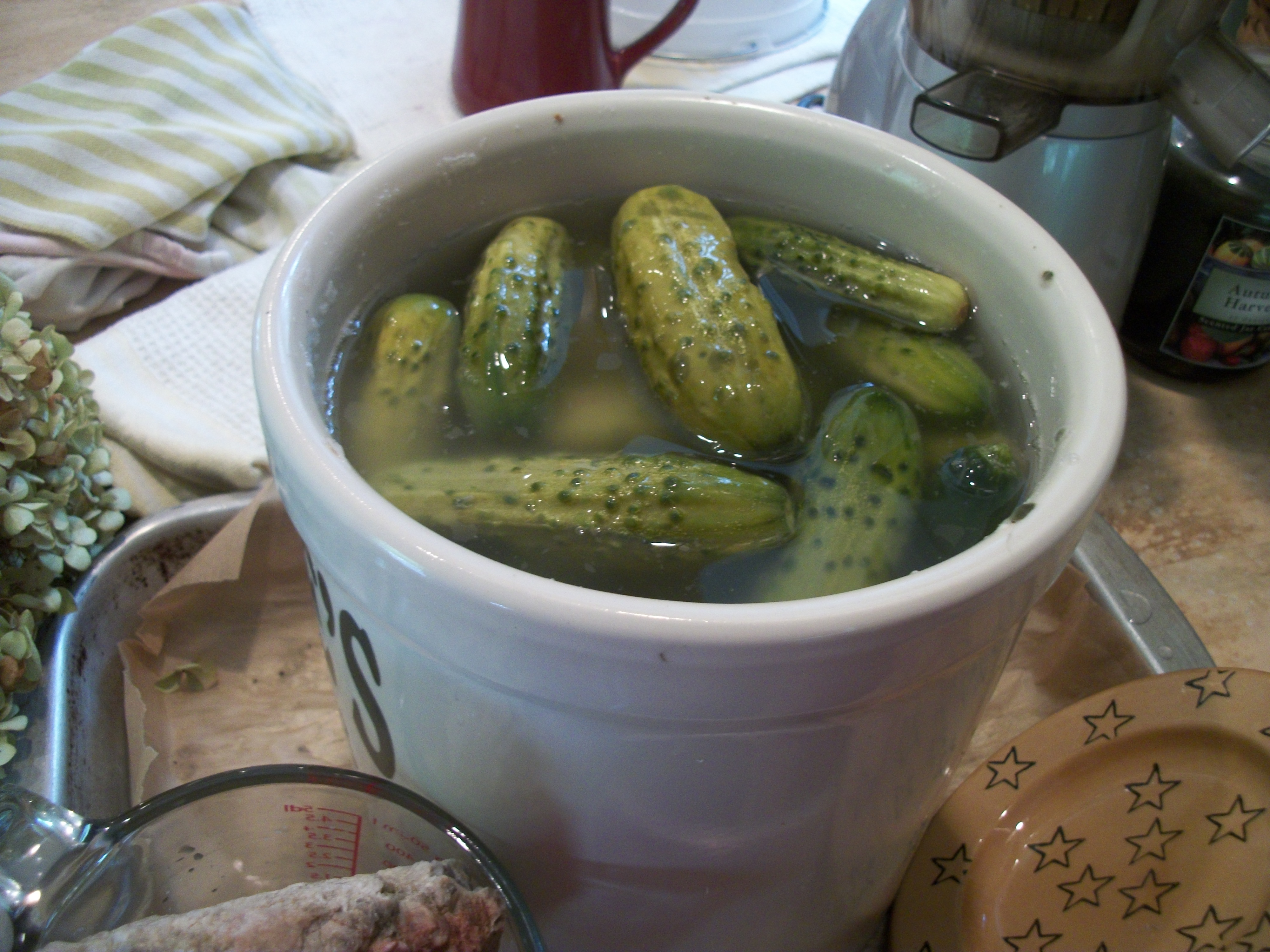
So, here’s a picture of the New York garlicky pickles this summer–lots of garlic, grape leaves to keep the pickles crisp, some peppercorns, and fresh dill:
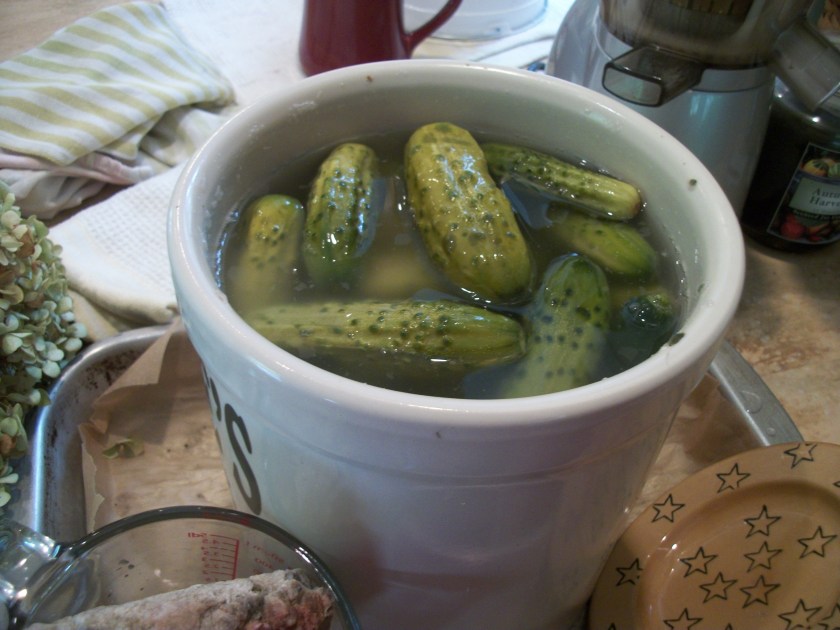
Sour Pickes in crock

And a summer favorite–a bacon, lettuce, tomato (from your garden), slivered onion sandwich with homemade mayo and with a pickle on the side:
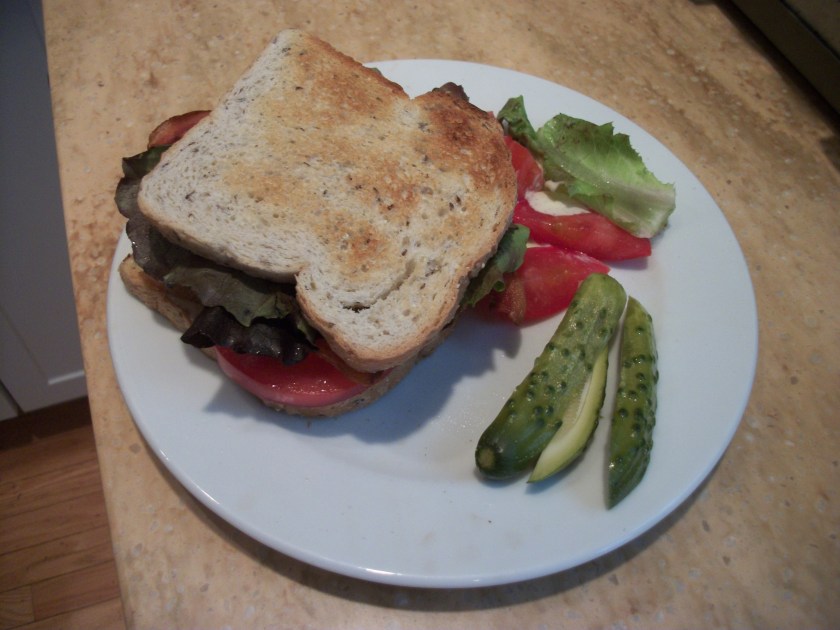
Sour Pickles

Turkey Tracks: Fall Update

Turkey Tracks:  October 15, 2013

Fall Update

Well, I’ve neglected the blog for the past few weeks.  It’s just been too pretty outside, and I have been too busy being outside, to sit down and write. I’ve been saving pictures, though. And thinking about what I would post eventually… So, here’s a group of pictures I took on September 29th–a week or so after Bryan, Corinne, and the girls were here visiting.

It was definitely time to switch the mailbox covers!

Although the Indian Summer weather is what brings out the ladybugs in droves.  It’s not unusual to see them clustered on the sides of the house in a warm, sunny spot.

Sept. 29, ladybuy mailbox cover

Still, the leaves are turning now, so it’s time to honor that:

Sept 29, fall leaf mailbox cover

I think this picture would make a good card, actually.  So I printed some extra prints to try out that idea.

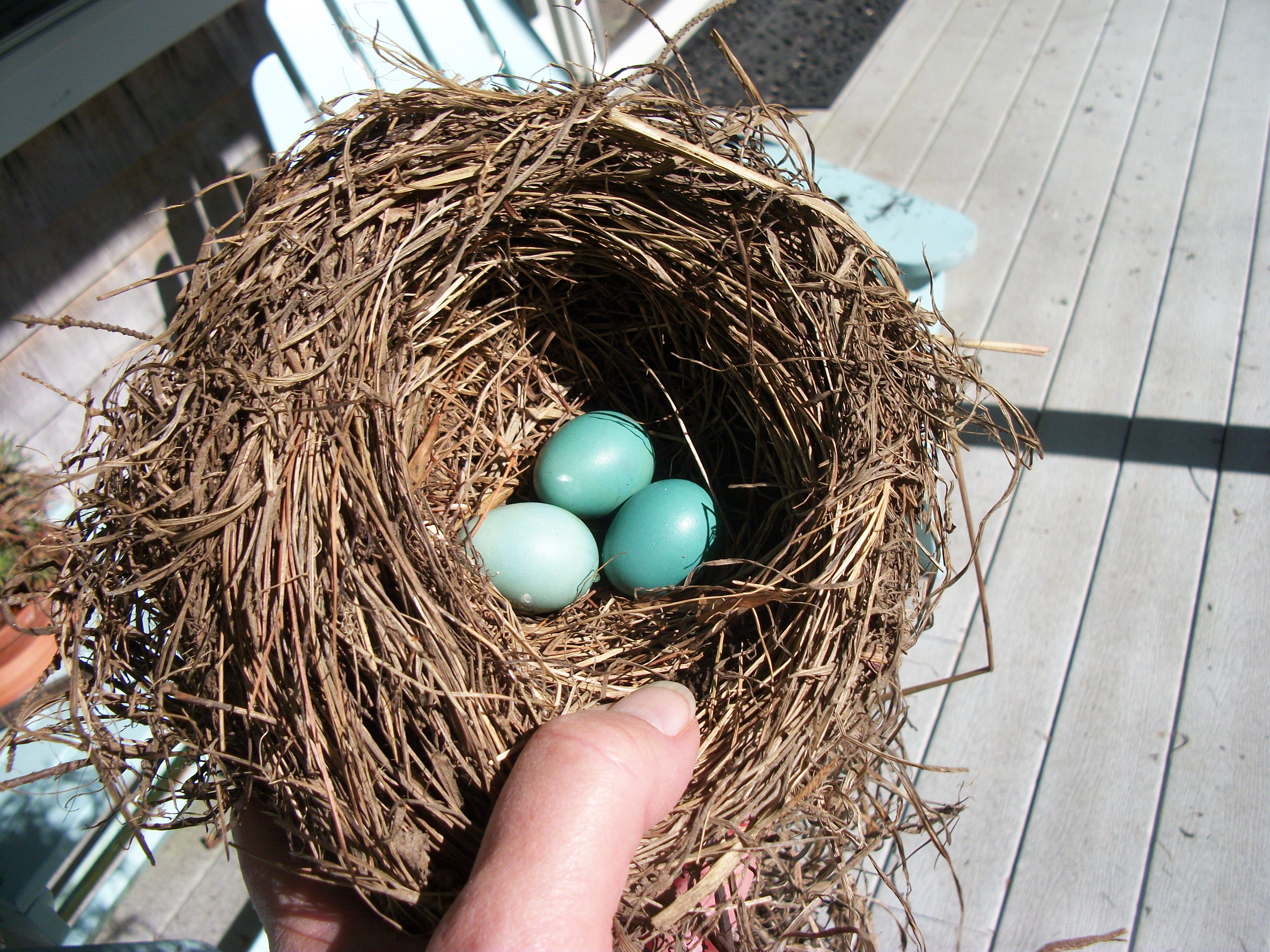
Remember the post on the robin mother that went wild this summer and build 14 nests across the front porch–then settled on two good ones and raised three babies in one?  When I went up on a ladder to clean out the nests for the winter, here’s what I found:

Sept. 29, Robin's Eggs

It’s way too late to raise more babies…   But the eggs showed no signs of decay…

Sean Floyd came and helped me store all the outside furniture, pots, lawn ornaments, and so forth.  He also put down the winter boardwalk–which is a heavy-duty job to do.

Sept 29, boardwalk down

That’s NO NO Penny who at ten is still going strong.

There’s something about the boardwalk that I really love.

I’m leaving the garden fence up for the winter–though I have not had the nerve to call Tom Jackson, who does the winter plowing to say so.  I’ve loved having the garden fenced all summer–not one chicken got in there–which was great as those escape artists got out of their fence whenever they wanted to get out.

Miss Reynolds Georgia, at 11, has had a hard few years.  She may have Lyme.  She has the markers.  She does not do well with the rabies shot.  So our wonderful vet has stopped those.  And I thought she would die several times this summer and last after giving her the heartworm pill–for only one time each summer.  (I spread Penny’s out to no more than every 45 to 50 days, which has to do with the mosquito life cycle.)  Anyway, Rey stopped eating, and I’ve had to gently force feed her by putting bits of food into her mouth and holding her head up.  It’s like neurologically she just can’t get everything together to eat.  She’s a bag of bones and skin.  Yet, just lately, she’s been perky and playful and seems happier.  AND, she’s eating again.  Not much, but some, all on her own.  Maybe she’ll get through another winter.  And, no more meds!!!  Ever!!!!

Sept. 29, Miss Reynolds Georgia at 11

The cold frame is FULL of lettuce and delicious French Breakfast radishes.  What a treat!

Sept 29, cold frame

The garden is still very productive.  The kale and chard are going strong.  the pole beans are putting out another crop.  The haricot verte bush beans will produce until killed by a frost.  The cucumber vine is spewing out cukes way faster than I can eat them.  I found six big ones in there just yesterday.  They will likely go into cucumber water as they are too big to eat or pickle.  Maybe with the seeds removed, they would be good quick pickled in a little white vinegar, water, some slivers of onion, and salt and pepper.  That only takes about an hour to be ready to eat.  The Sungold cherry tomatoes ares till producing.  If I feel we are going to get a killing frost, I will pull the remaining green ones and lacto ferment them.  And I’m still getting the odd zucchini or two off and on.

Sean Floyd helped me dump out the inside vermiculture worm bin.  I let this smelly black gold dry out a bit and staged it in the garden where I will plant next year’s garlic–once we have a freeze and I have removed the frost-killed tomatoes, etc.

Sept 29, worm black gold

All these Brandywine tomatoes ripened on the window ledges in the kitchen.  This may be the first year of my life where I felt that I’ve truly had enough tomatoes–to eat, to dry, to roast, to store up for the winter.

Sept. 29, Green Tomatoes

I think my dehydrator ran for most of August and September:  wild mushrooms, tomatoes, zucchini, and tomatillos.

Sept. 29, drying tomatoes

Drying whole tomatoes cut into wedges went surprisingly well.  I have enough jars of dried cherry tomatoes to offer a taste of sunshine in winter salads.


Turkey Tracks: “Big Bunny Hug” Quilt

Turkey Tracks:  September 30, 2013

“Big Bunny Hug” Quilt


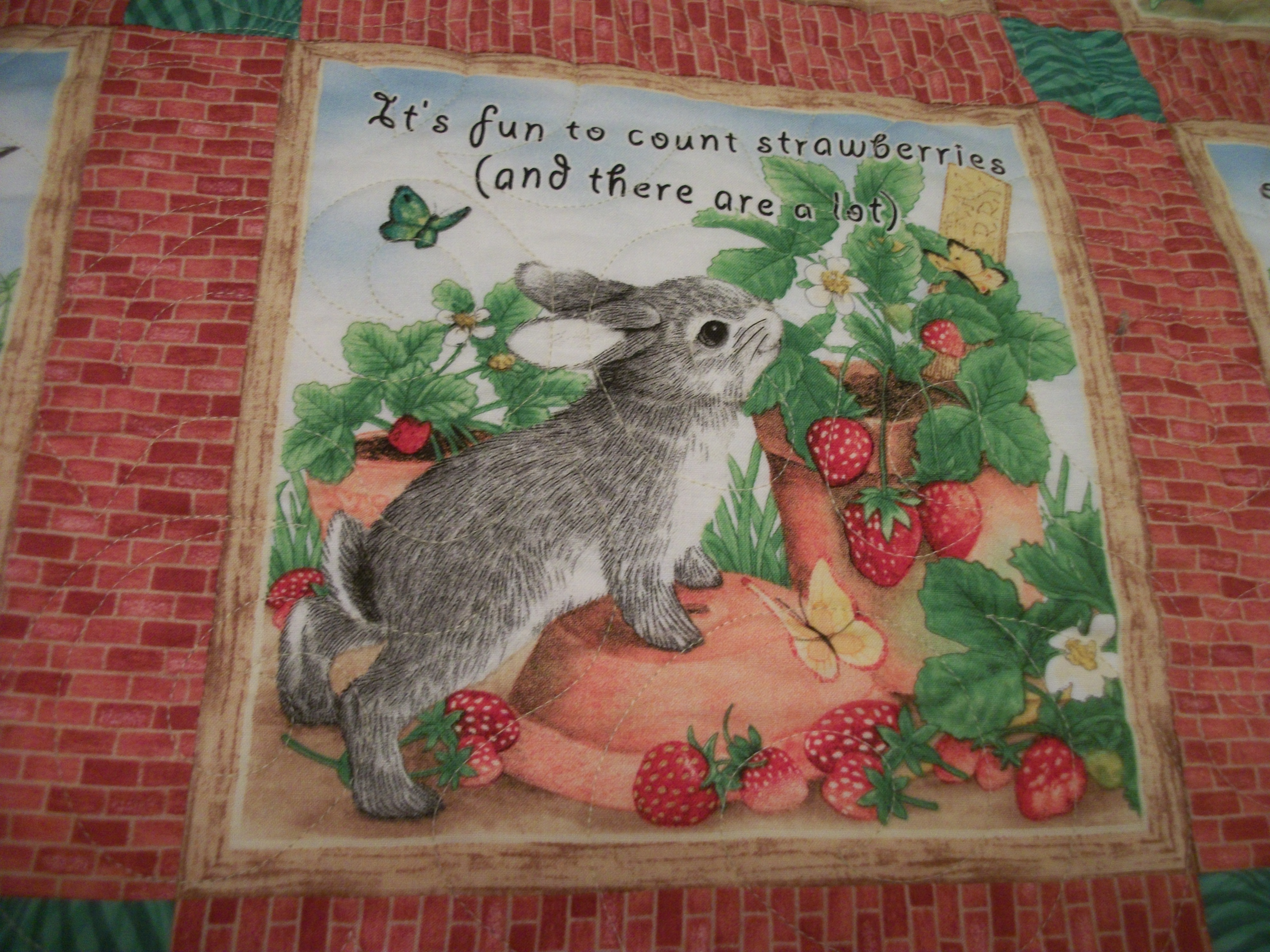
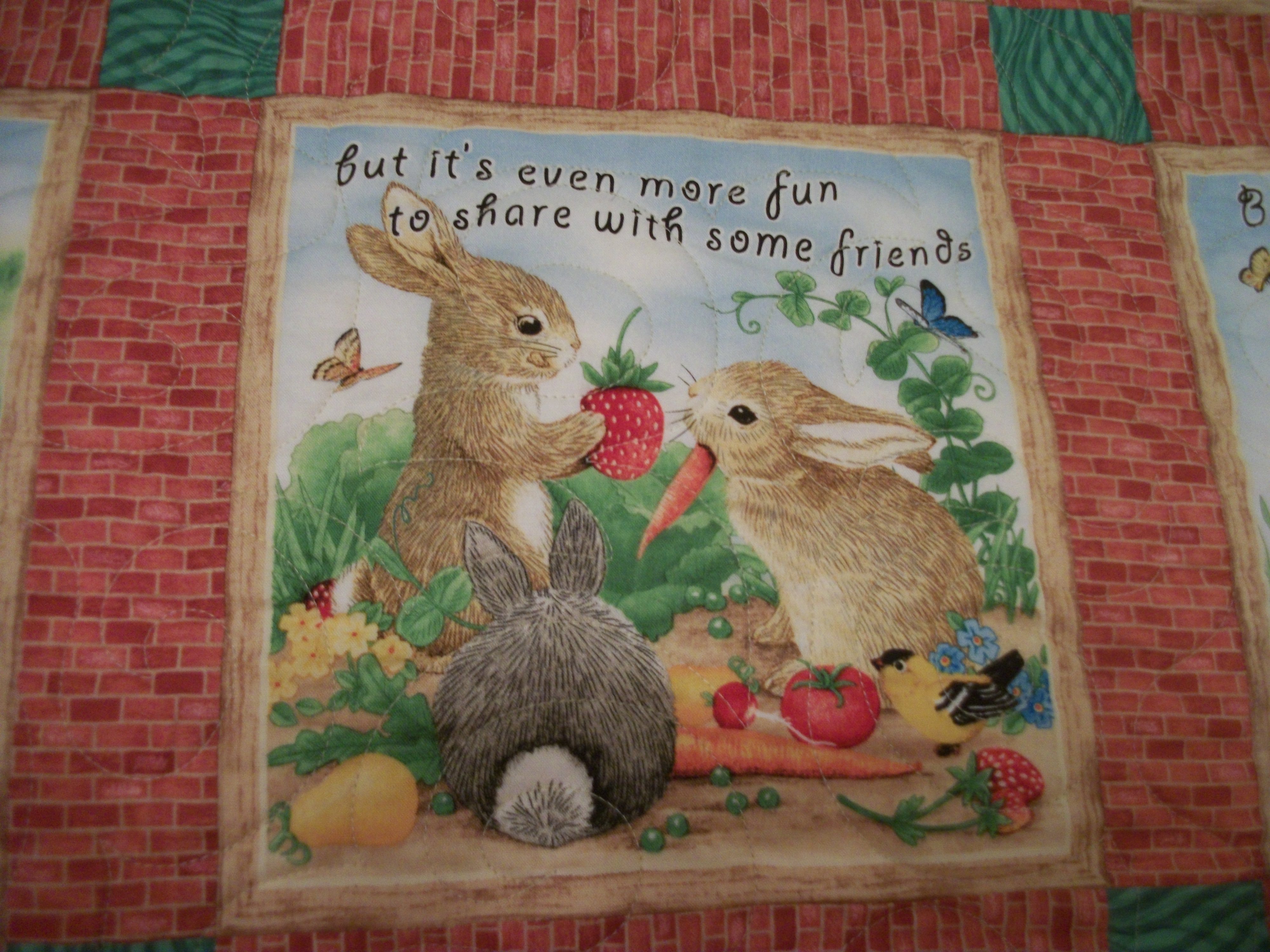
Here’s a quilt I mailed a few weeks ago to my niece and namesake Louisa Nancy Howser Gardner–called Nan–celebrating the birth of her second beautiful son almost a month ago now.

Big Bunny Hug 3

I bought the fabric three or so years ago in Williamsburg while with my Virginia quilting friends for a week.  The panel was meant to be a fabric book, but I thought I would like to make a quilt with the story inside it.  I did a similar quilt for Nancy’s sister Lauren for the birth of her first son almost two years ago now.

The red brick fabric and the green swirly fabric came out of my stash.  I had intended a border fabric to run along the sides, but decided I liked it on the back instead.

Here are some individual blocks:

Big Bunny Hug Block


Big Bunny Hug Block 3


Big Bunny Hug Block 2

Here’s the back, made up of the border fabric;

Big Bunny Hug Backing

And a close-up of the border print:

Big Bunny Hug Border detail

And here’s how the front, binding, and backing work together:

Big Bunny Hug Backing and Binding

I quilted with a limey green thread that just goes right into the quilt–with the pantograph “Deb’s Swirls,” medium size.  The quilting is lovely if I do say so myself.  (I’m getting so much better.)

It’s a cute quilt with very cute fabric.  BUT, but, getting the blocks all to match mathematically was a small nightmare as the “book” pages were not all the same size.  I’m glad it all came out nicely.


xxx

Turkey Tracks: MOFGA (Maine Organic Farmers’ and Growers’ Association) Fair, 2013

Turkey Tracks:  September 25, 2013

MOFGA’S COMMON GROUND FAIR

I went on the first day–Friday.

By myself, as it turned out…

And that was ok…

It was HOT though, so I found myself going home sooner than I might have in cooler weather.

I visited some of my favorite people in their booths, though some sort of inertia set in and I didn’t take many pictures.  The chicken house has been a bit lacking in recent years–not so many types of chickens.  And I confess I would never take any of my beloveds to be gawked at and yelled around for three days.  I continue to admire and think about a cold hardy, dark brown, chicken from Ohio–Buckeye.  Here’s a rooster.

I visited Kelly Corbett of Romney Ridge Farm.  Kelly is now being accepted into major shows up and down the East Coast.  I stopped by The Spinnery booth.  Bill is the most amazing knitter, and his yarns are gorgeous.  I strolled through the craft tents, but I’m not really into buying many “things” these days.  I stopped by Roots, Coops, and More.  Lori and Steven have so many interesting and well-designed chicken coops for people with small flocks.

I didn’t go near the livestock barns–just got too hot and tired.  So, I missed the man who brings ten mules to the fair–ten mules he hitches up together about once a day.  Mules are like potato chips, he says.  You can’t have just one.  Mules, like parrots, live to be VERY old, over 50 years, so getting one is not a small undertaking.

I bought this year’s t-shirt and listened to Sander Ellis Katz (lacto-fermentation–WILD FERMENTATION), who was the keynote speaker.  (He has a new book out, and it does contain a recipe for corning beef, which son Bryan and I talked about when he was here–I think the new book is called THE ART OF FERMENTATION, and it’s meant to be an “everything you need to know” kind of book.)

I stood in line for the lamb shish-k-bob I love to get each year:

MOFGA, lamb vendor

And it was as delicious as ever…

MOFGA, lamb k-bobs

And I always get a “blood” drink from the Solar Cafe–beet, apple, fresh ginger, and lime.

MOFGA Solar Cafe

Delicious!

MOFGA, bull d

I stopped by John’s ice cream on the way home.  I love the way John changes the flavors on a regular basis.  I got Spumoni, which was filled with dates and figs and coconut and chocolate.  Mercy!  It was so good!

I drifted home on a cloud of sugar energy.

Once a year…

Turkey Tracks: Bryan, Corinne, Ailey, and Cyanna’s Visit

Turkey Tracks:  September 24, 2013

Bryan, Corinne, Ailey, and Cyanna’s Visit

Family members are asking for pictures of Bryan, Corinne, and the girls during their recent visit to Maine.

We had a lovely time, and were able to do something fun with Ailey every morning of their visit.  Ailey will be three in late November (Thanksgiving baby), and Cyanna is entering her sixth month.  At the end of their week here, when her parents were packing up suitcases, Ailey wanted to know where Lovey’s suitcase was.  And all the way to the airport, she announced occasionally that she wanted to stay in Maine.

By showing you their pictures, I am also showing you some places along beautiful Mid-Coast Maine.

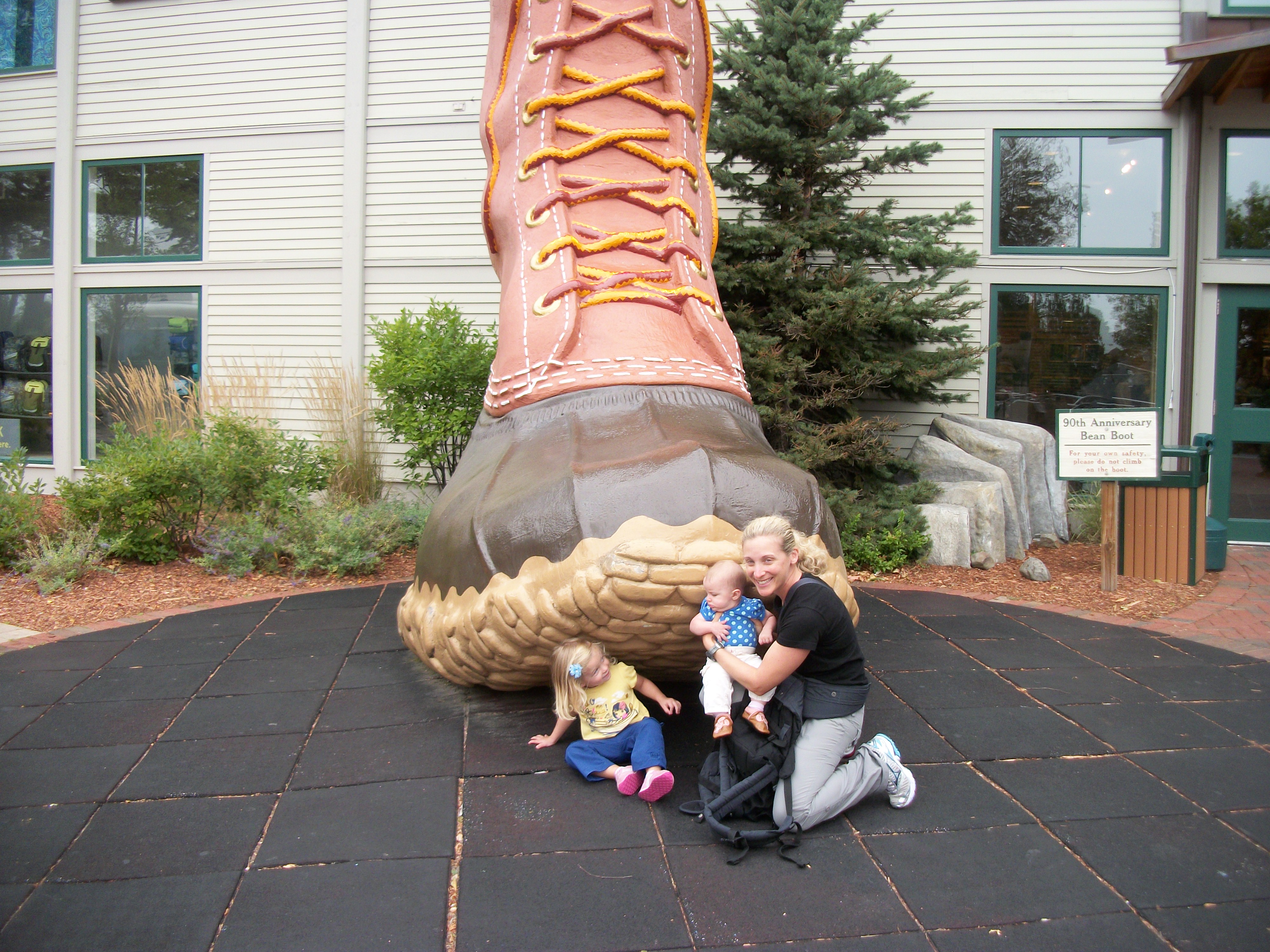
I picked them up at the Portland airport, and we stopped at LLBean to eat lunch, shop, and take pictures around the boot.  Ailey got a new pair of boots–which she loves and used every day.

Sept 2013,The Girls at the Boot, Sept 2013

We’ve had a lot of fog this year, and Ailey had read all about lighthouses and pea-soup fog.  So, we headed off to Owl’s Head Lighthouse, where obligingly, the fog bank rolled right in, setting off the fog horn.  Ailey talked about lighthouses and fog horns for the rest of the week.

Sept 2013, Ailey at Owl's Head Lighthouse

At the top:

Sept 2013, Owls Head

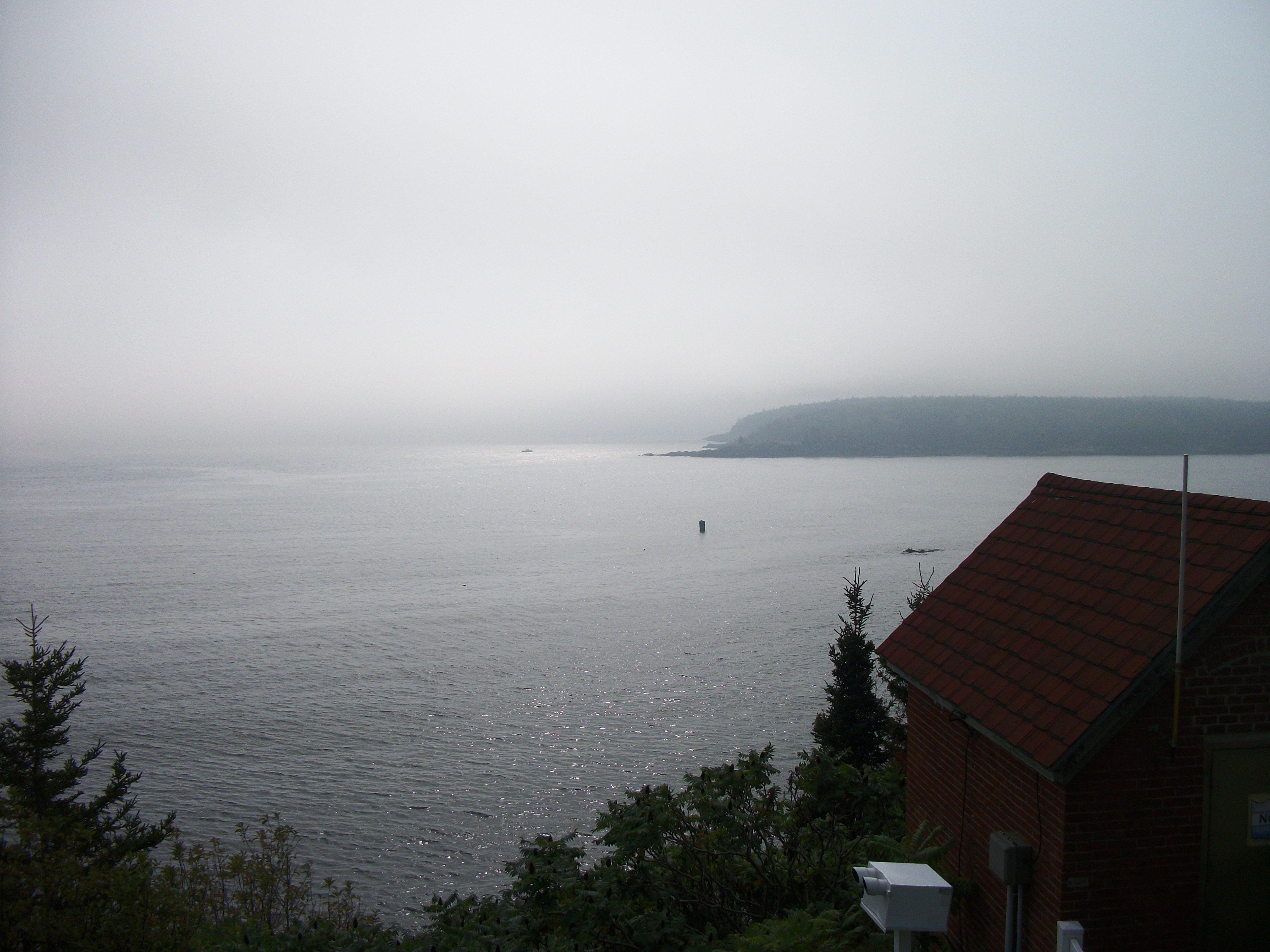
Here’s the fog bank starting to roll in–the view is from the lighthouse steps:

Sept. 2013, Owls Head

So, we walked down to the pebble beach at Owl’s Head–following a path through the woods.

Sept. 2013, Cyanna, Owls Head with Dad

The pebble beach.  Ailey loves to pick flowers.

Sept. 2013, Ailey, Owls Head Beach

On another day, we walked the Rockland Breakwater out to the lighthouse that sits at the end.  The breakwater was built in 1899 and is a mile out and a mile back–or so I’ve been told.  The granite rocks have big cracks between them–so someone needed to hold Ailey’s hand.  But, it was a beautiful morning–we saw dolphins, all kinds of sea birds, a lobsterman working his tracks right next to the breakwater, and lots of happy people.

See the lighthouse all the way at the end?  Ha!  You barely can…

Sept. 2013, Rockland Breakwater 1

Almost there…

Sept. 2013, Rockland Breakwater 2

One morning Bryan and Corinne took the girls to the carriage trail that is the back way up to Mount Battie.  A creek crosses the trail about a half-mile in, and Ailey had a great lot of fun wading through it in her boots.  (I was at our monthly quilt meeting.)

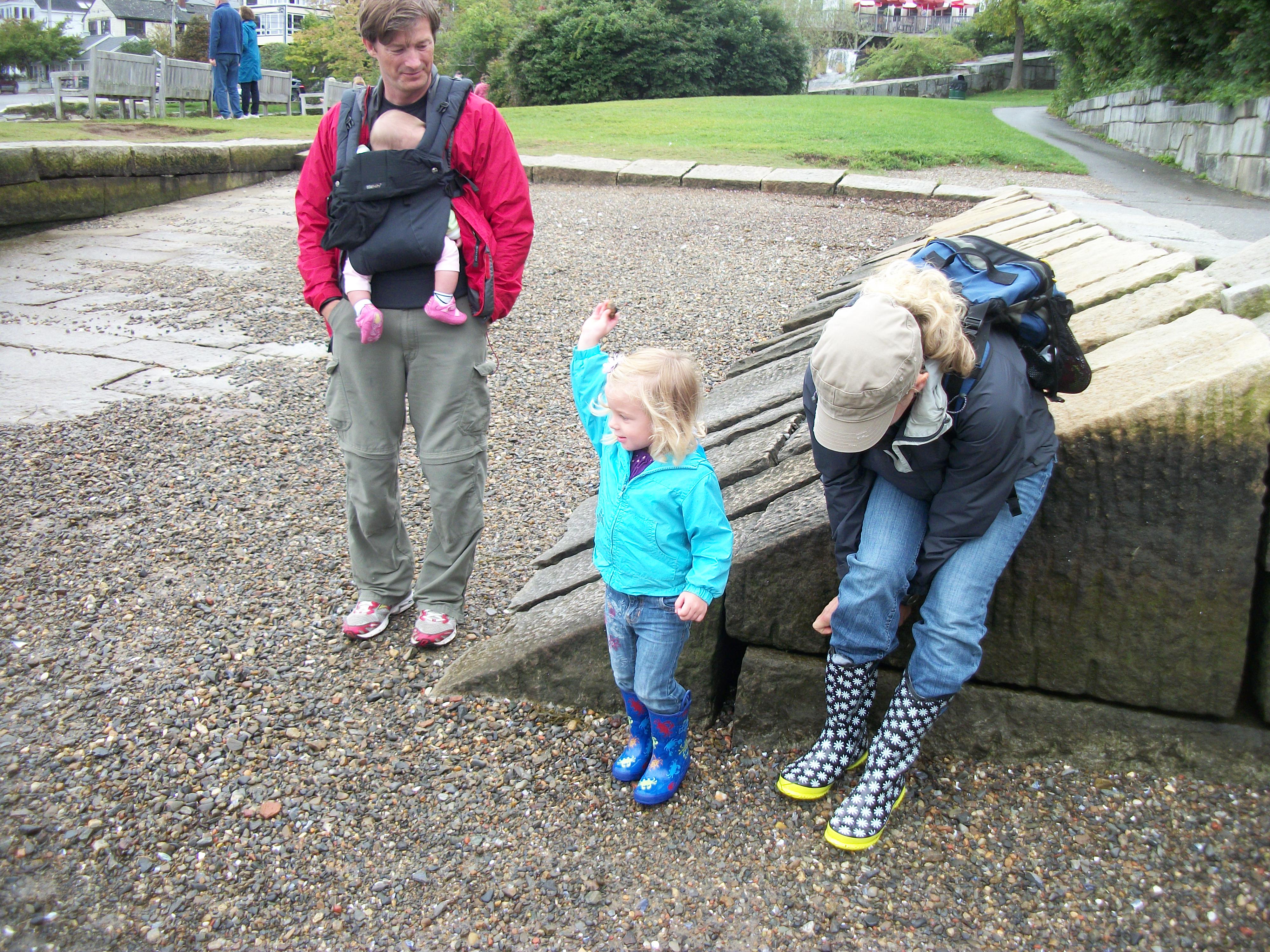
We took some bread to Camden Harbor to feed the ducks one morning–and to let Ailey throw rocks into the water–an occupation of which her Enright boy cousins seem to never tire.

Sept 2013, Camden Harbor white ducks with friend

Mommy found some boots she liked as well in Maine!

Sept. 2013, Harbor

Cyanna is always happy in her baby carrier–and she is “Daddy’s Girl.”

Sept. 2013, Cyanna at Camden Harbor

Here’s a harbor view:

Sept 2013, Harbor view from park

And I’ll print this shot to make the house photos current.  And the first one of Cyanna with Bryan.

Sept 2013, Ailey at Camden harbor

It was a lovely visit!

Turkey Tracks: Wheels of Mystery Quilt

Turkey Tracks:  September 22, 2013

Wheels of Mystery Quilt

I started this hand project earlier in the summer.  I wanted to take a break from knitting and do some hand sewing at night watching tv shows and movies–that I stream.  I HATE all the noise and confusion of watching tv shows with commercials. It’s just plain painful.

So, this quilt has grown a lot since this picture…

Wheels of Mystery

I’m going to do 9 rows by 11 rows.

And, it’s all out of my stash.  And, scrappy, of course.

This block is an old traditional block–and I love what the curved pieces do when hung together.

See?

Wheels of Mystery 2

They make BIG circles.  Isn’t that cool?

I have a childish delight in this quilt.

I tried to draw the block on QE7, but have been totally unable to do it.

Will try again, as I’d like to play with light and dark borders.  And what would an outer border of 9 patches look like?  Made with these same fabrics…

Turkey Tracks: September Update

Turkey Tracks:  September 22, 2014

September Update

Late August and ALL of September are really busy months for me in Maine.

First of all, son Bryan often comes for his birthday, which is September 11th.  Bryan and Corinne like to come visiting in the early fall as most of the tourists have gone home or are taking a breather before the fall foliage gets rolling.  And, it’s cooler.

Second, in Maine, September is the red month (tomatoes), not July, as is true for regions south of us.  Plus, the gardens are cranking out food at alarming rates.  So I am busy blanching, roasting, drying, lacto-fermenting, and generally reveling in all the bounty of our earth in Maine.

Third, MOFGA, the Maine Organic Farmers and Growers Association fair happens in the third weekend of September.  This fair, also known as the Common Ground Fair, is one of my most favorite things to attend all year.

Fourth, Coastal Quilters starts its new year in September.  I agreed to be President this year, so I’ve had a fair amount of organizing and reviewing to do to get back up to speed.  We had a terrific organizational meeting September 14th, and we’ll have a really good year this year I think.

Fifth, I start the process of putting the yard to bed for the winter.  The flower pots are played out.  The wind chimes have to be taken down.  The hummers are gone.  The porch furniture and kayaks have to be stored.  The chickens have to be winterized.  And, the garden put to bed with the new garlic planted for next year.  I have LOVED having that garden fenced all this summer–especially since I never was able to keep the hens I have now inside their pen.

So….I will do some separate entries on some of these events.  But I will leave you with some fun pictures taken more or less in late August/early September.

Susan McBride of Golden Brook Farm grew these awesome cherry tomatoes.  I experimented with drying these to see which ones were the best.  Hands down, the purple heritage cherry tomato was.  They are like eating candy–and I know I will enjoy having them on hand all winter when the snow is flying.  That bag of highly colored bits is corn from Margaret Rauenhorst and Ronald VanHeeswijk.  I’m going to grind it and make cornbread with it any day now.

Golden Brook cherries

I planted random squash seeds in the blue tubs this year.  One is growing a Hubbard Squash–which delights me so much.  I will go ahead and collect the squashes as soon as it stops raining and put them into the garage to “sugar off” for a bit.  They do better when they have a bit of time to cure.  The Blue Hubbard squash can get HUGE–and is a really great all-purpose squash.  It’s delicious to eat and makes great “squash” pie too.

Hubbard Squash

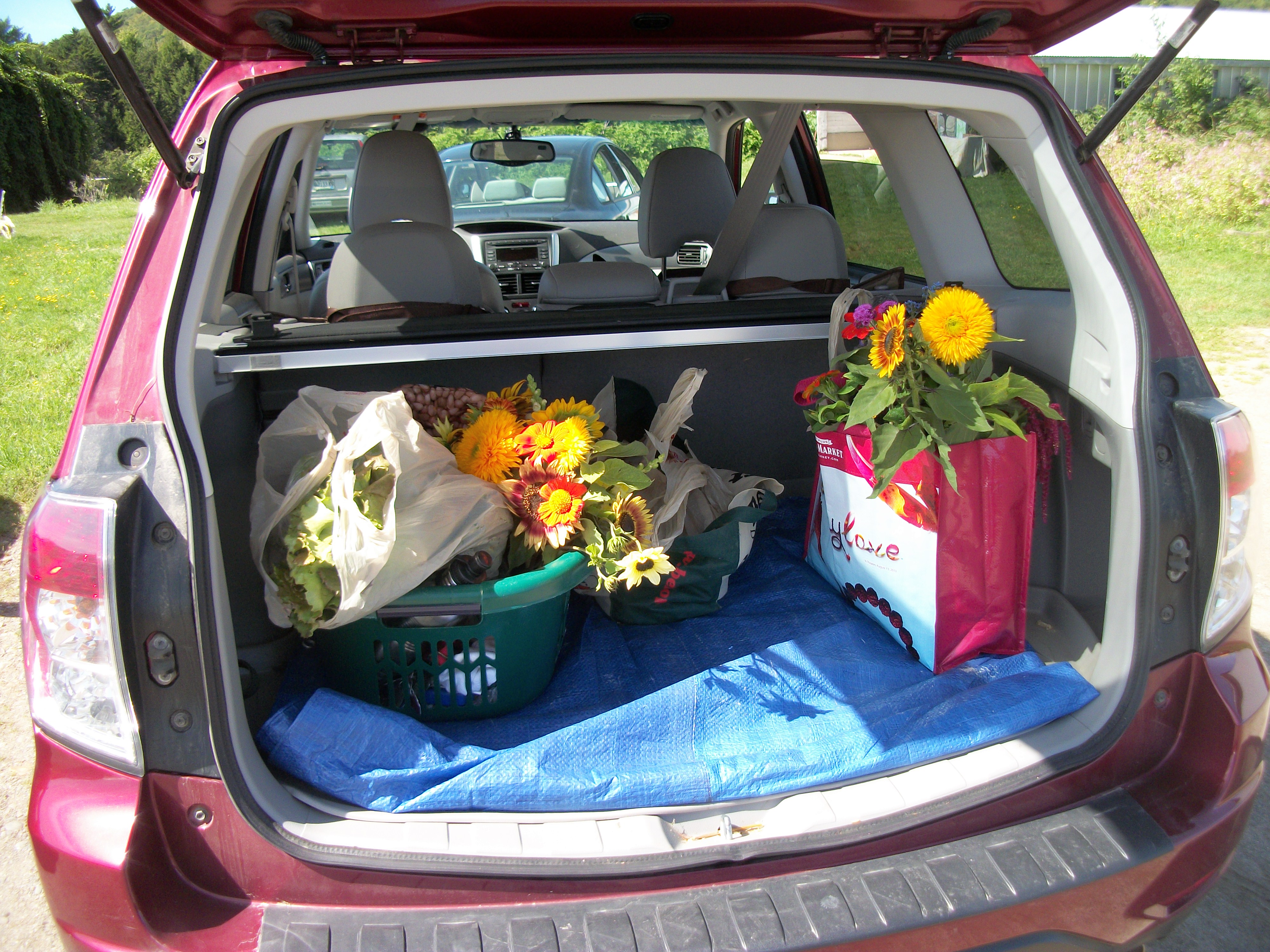
Here is a typical Hope’s Edge pick-up day–with Giovanna McCarthy.  We have sacks of food and flowers!

Hope's Edge Flowers and Food

I found this picture on John’s computer before we retired it.  It’s one of my very favorites.  He really had such a great eye for a good picture.  LIkely I’ll make some cards from this picture…

Hope's Edge