Linda Satkowski sent me this interview article featuring Sara Trail and her formation of the Sewing Justice Sewing Academy (SJSA), and I hunted down the link so I could share it as this story about Sara Trail and the SJSA formation is so interesting.
Aurifil threads is a sponsor of Sara Trail’s Sewing Justice Sewing Academy, and they have a really nice blog. I signed up for it and am getting their interesting and informative posts.
Betsy Maislen has been steadily quilting all winter up in Vermont.
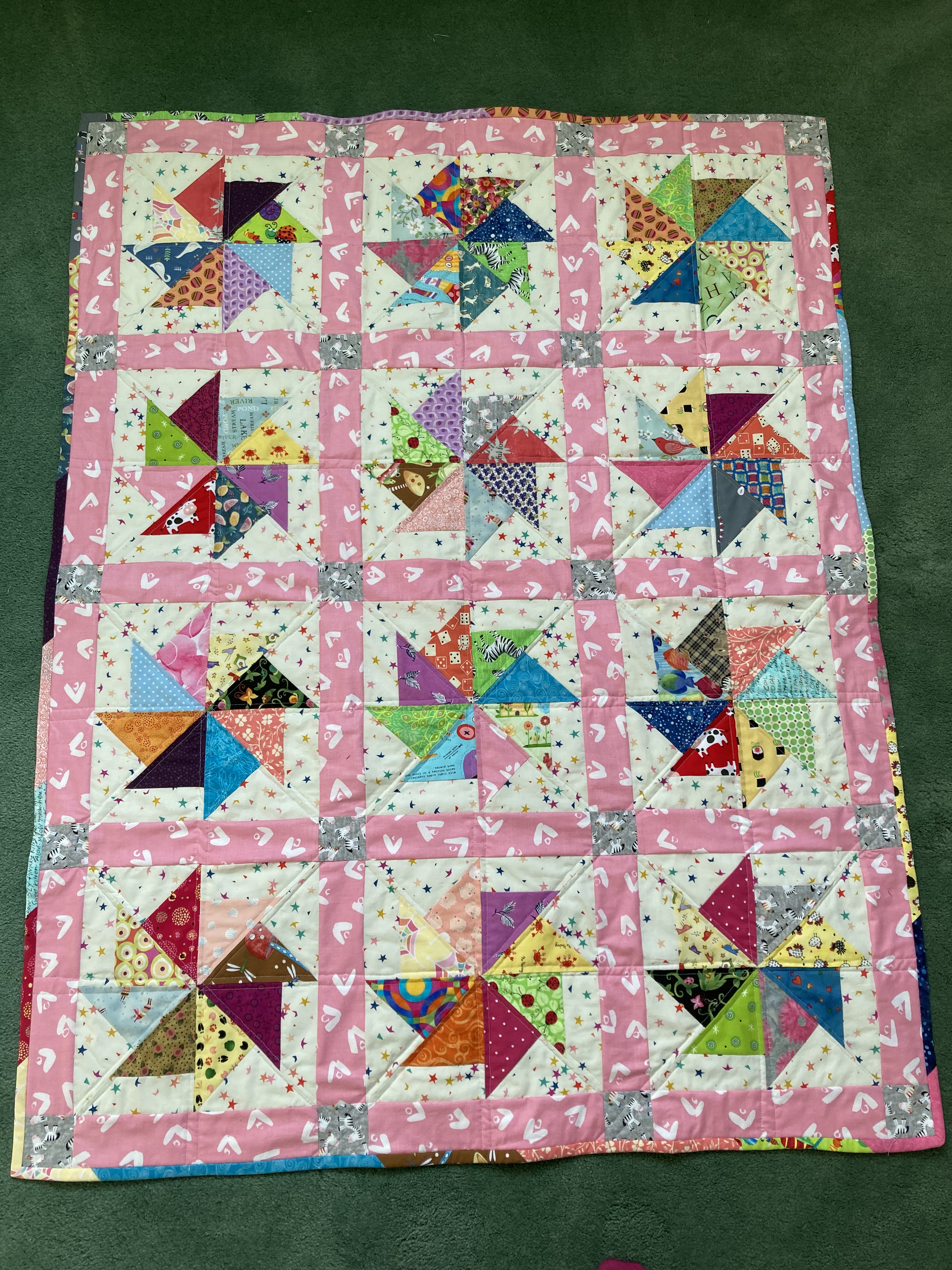
I think she has completed 4 or 5 baby quilts in recent years and at least 3 this winter. Plus, she just made a BIG quilt of her own design that will be gifted soon—it’s out at the longarm quilter’s at the moment.
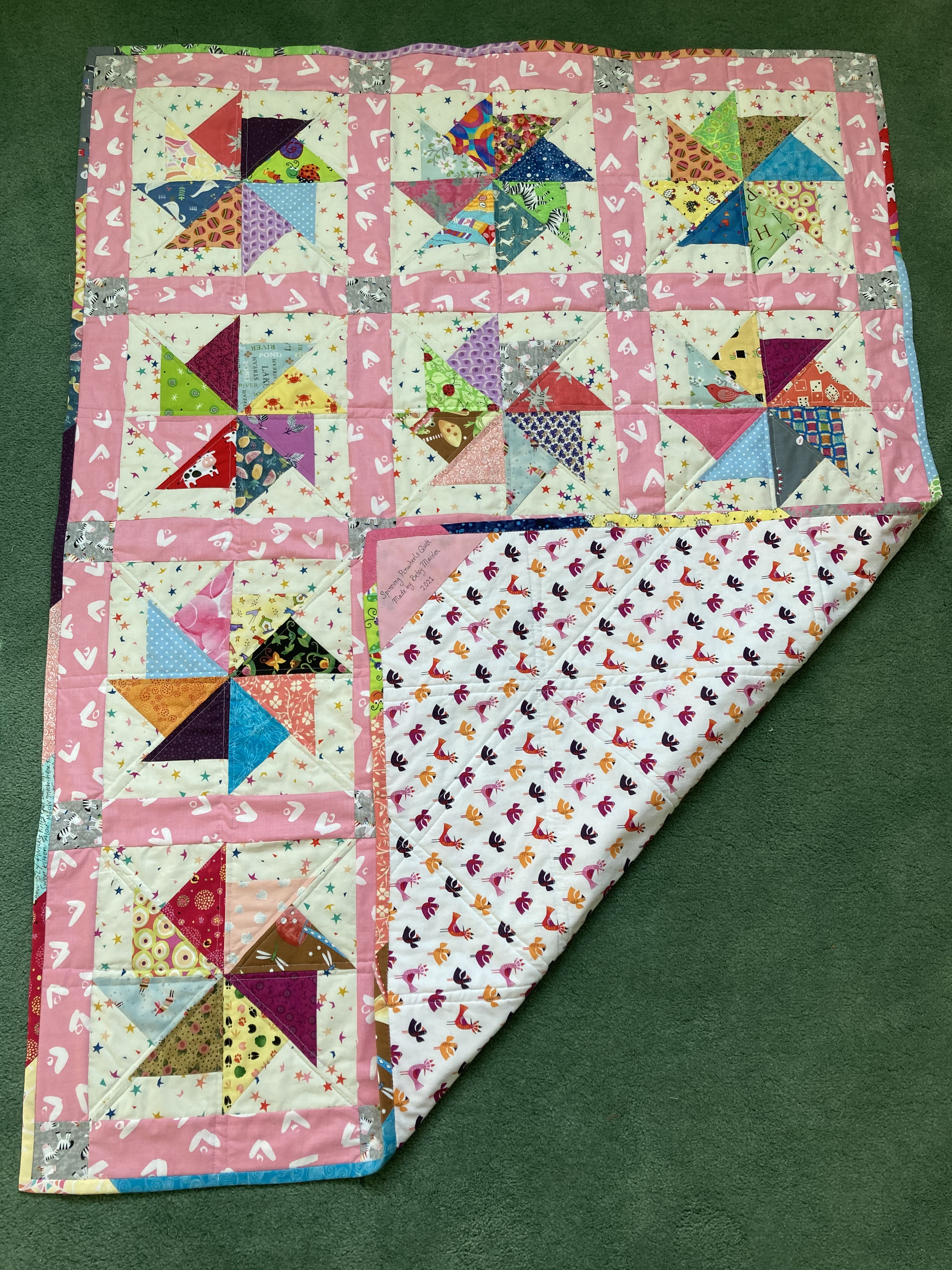
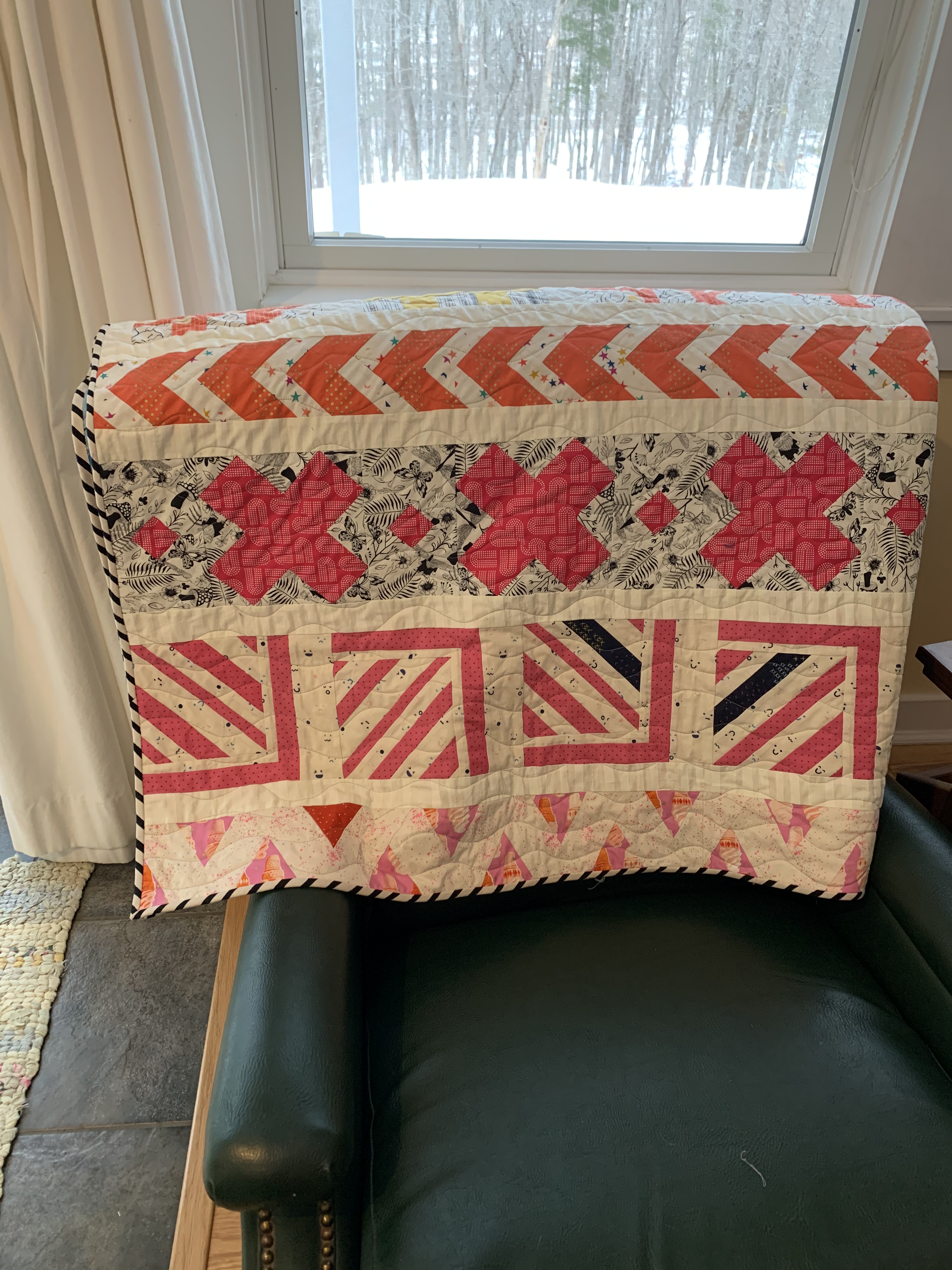
I love this pin wheel block quilt she made—and this is the second one of these. What I especially love is the star print background behind the pinwheels. I think that is a Cotton+Steel print. Anyway, it just makes this quilt sing, don’t you think?
Betsy has a really good eye for combining fabrics—very different from mine—and I always enjoy seeing what she has done. There are other blog posts here of her quilts, if you care to explore her “eye” choices.
I smiled when I saw her backing—and she sent me a piece of it too for my stash, which was fun. I sent her something in return that I hope will be fun for her too.
She got me into trouble a week ago when she sent me a picture of a fabric print she loved. I wound up ordering YARDS of it for a backing. But more on that later…
It’s Monday morning, and the temperature at my back door is 10 Degrees!
How did that happen after our series of such pretty and warmer days? It’s spring in Maine, that’s how. She’s a teaser, that spring.
My cataract operations have both been done now—the second eye was done two Tuesdays ago. And my vision is once again AWESOME! I only need some reading glasses for fine print—and I can see my phone screen just fine if I hold it away from me. My world is filled with LIGHT (lots of light) and color again, and I am so grateful for this senior citizen gift.
I got a MUCH-NEEDED haircut this morning and am now feeling less old and way less all-the-time messy.
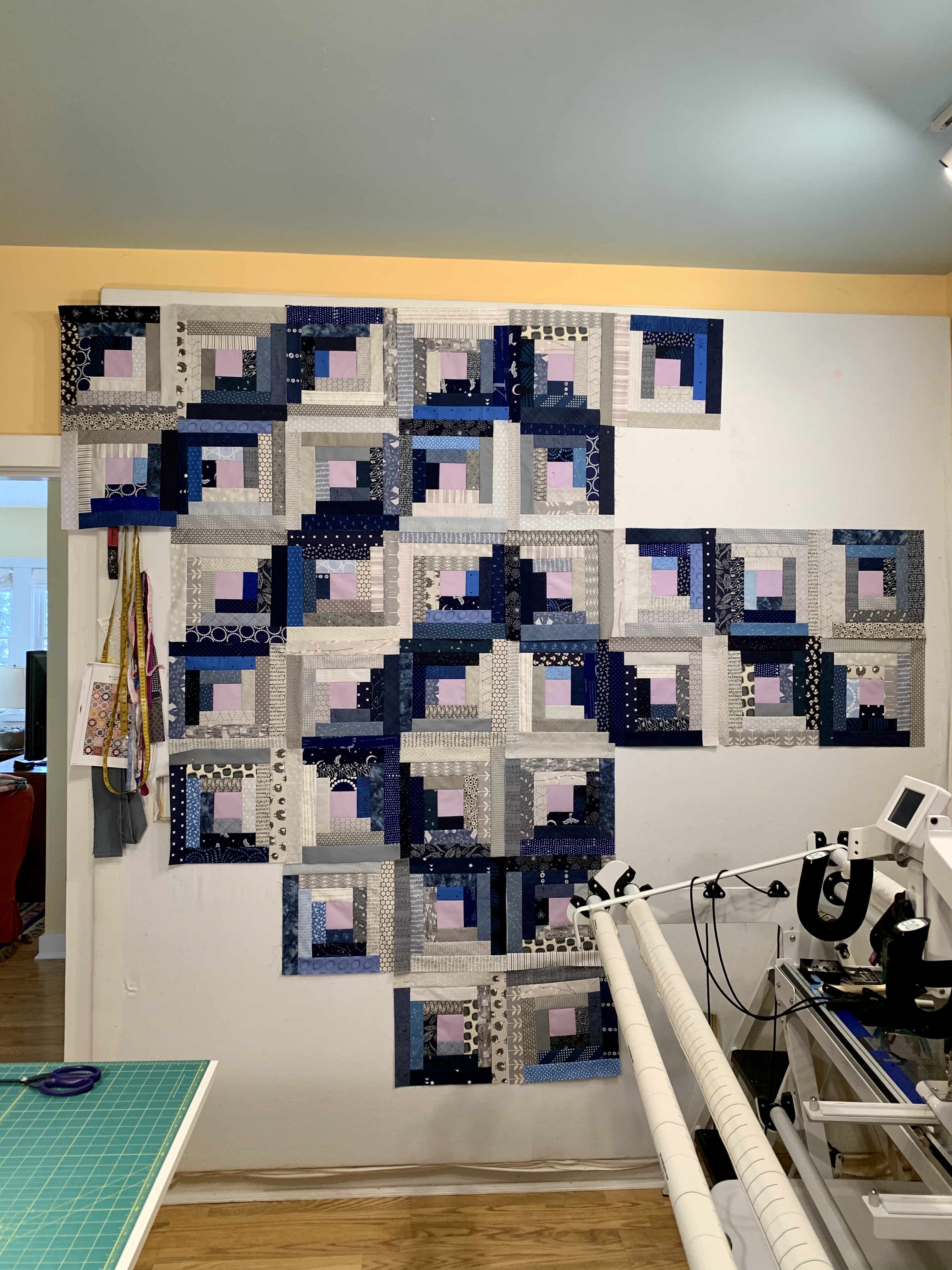
I’ve been working on the log cabin quilt for my niece and have a bit over half the blocks done now. It will be 8 rows by 8 rows, or 96 inches square.
The fall crop of butternut squash is running low in our stores now. I found one and roasted the cubes I cut out of it. Roasted this way, butternut squash is like eating candy it is so sweet. And it is easy to make. I love it best in the fall with fresh rosemary, lots of garlic, some good olive oil, and a sprinkling of coarse sea salt. I make do now with dried herbs if I don’t buy fresh rosemary, which is expensive.
Cut the squash in half lengthwise and them slice the halves into half circles. Turn these on their sides and trim off the outer skin and cut each slice into chunks. Place them all in a parchment lined pan and apply the herbs, garlic, salt, and olive oil. Roast at 350 degrees for about 30 minutes—you may want to turn up the heat at 25 minutes or so to pop the chunks with stronger heat—which starts to caramelize them.
Enjoy! And the extras reheat well, but they are also good cold in a salad.
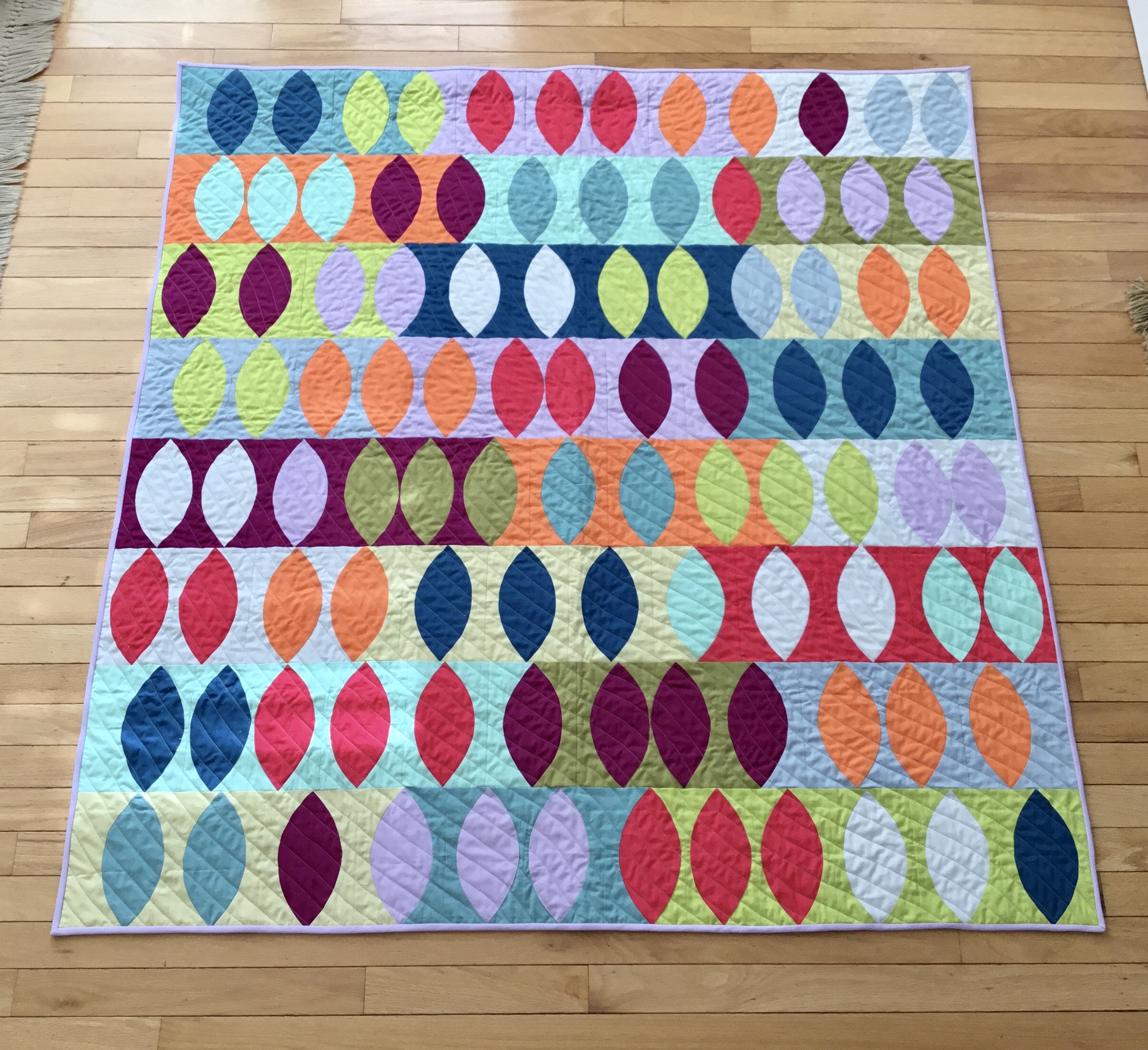
You may recall that this quilt is a project in the current season (3) of The Color Collective, hosted by Amy Newbold’s Sewtopia, and with projects by designer and quilter extraordinaire Tara Faughnan and one month with another designer—this year it is Latifah Saafir. I think the fabric palette Tara chose for this project was just delicious. I cut and sewed until I ran out of fabric.
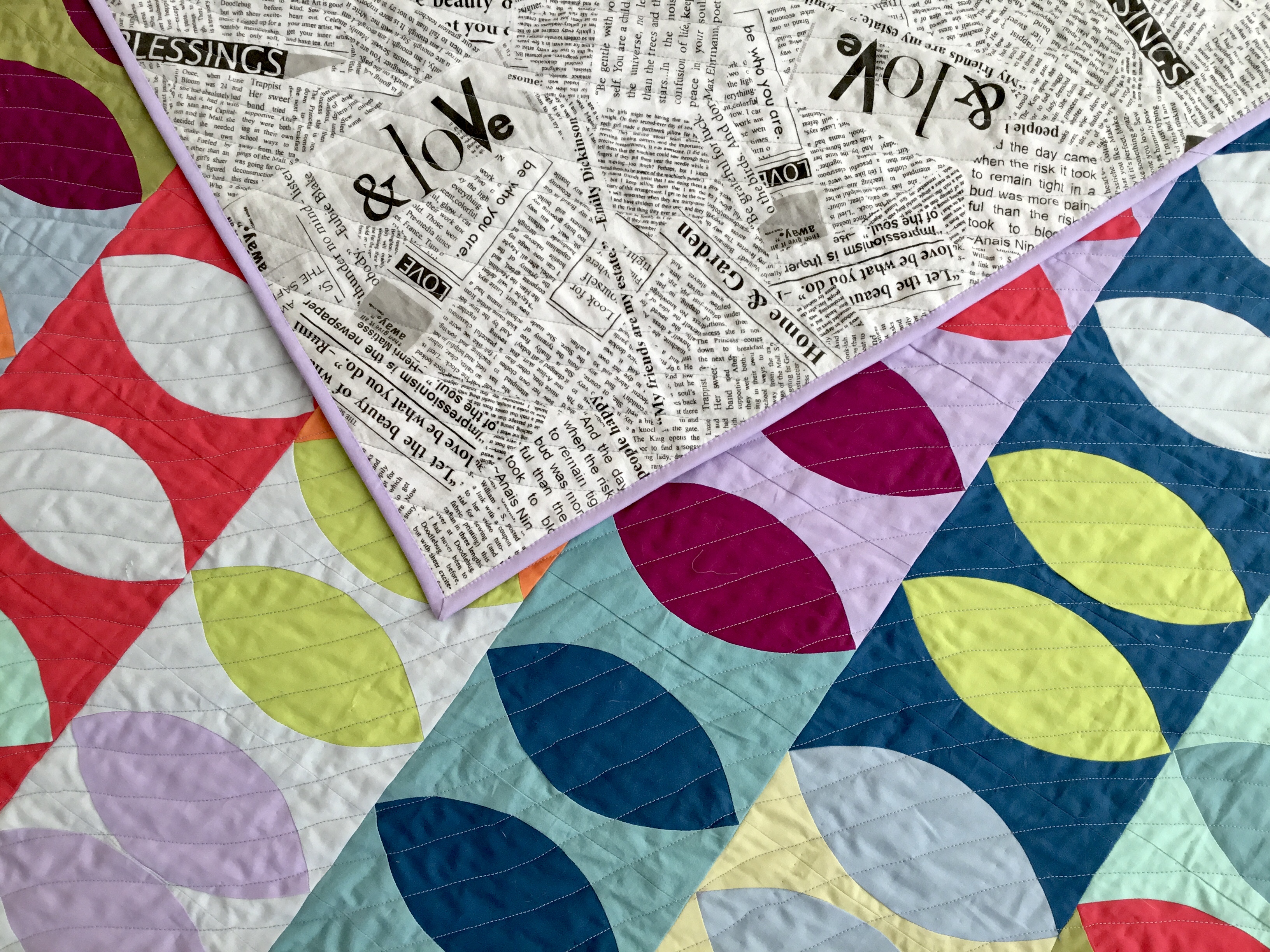
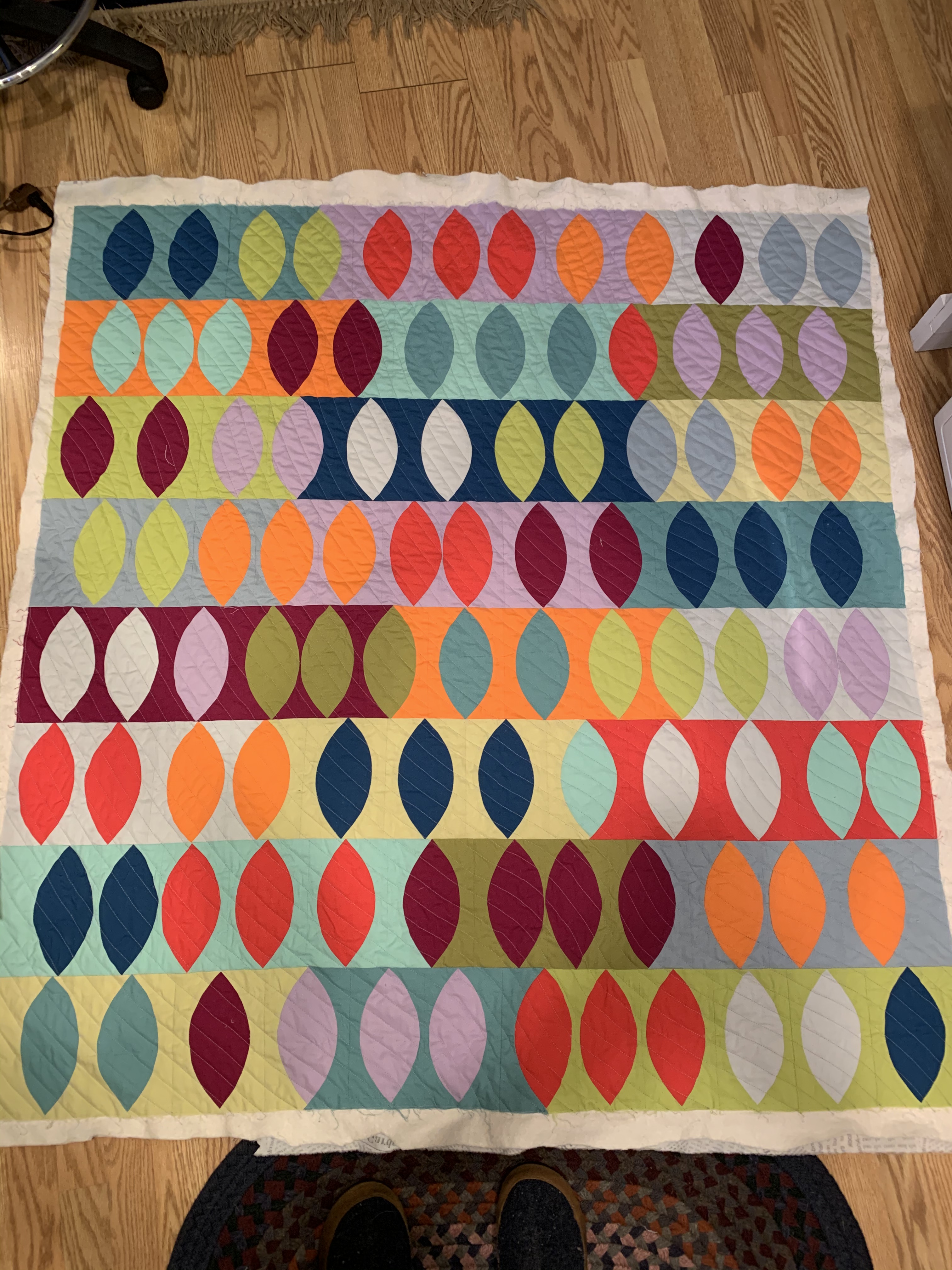
I quilted on my domestic with a walking foot (see the book WALK by Jacquie Gering) with a medium grey Gutterman thread, using a swirly pattern I saw in a post in Debbie’s A Quilter’s Table blog. I did not do the opposite diagonal as the quilt told me it was done. Pips are apple seeds, and this quilting pattern made me think of spring winds swirling through apple trees as they begin to leaf out in spring.
I would also say that I lost some of my points on the top and bottom rows—as the quilting shrank up the quilt, as quilting does. I think if I were to make this block again I would set my top and bottom rows BEFORE trimming those blocks at the top and bottom—and would only trim them after the quilting was finished.
I had enough of Carrie Blomston’s “Newsprint” fabric (108 wide leftovers) to cover the back, and I ordered more of the Kona “Thistle” in this palette for the binding and for another project as well.
I can see other uses for this block—for sure. It could be made to highlight a printed fabric in a quilt for someone to whom the fabric would “speak.” Learning about using Sewline glue to hold the curves while one sews is an awesome trick.
I’ll use this picture to make a photo card to have on hand—I’ve been doing these cards for years now and use them for every purpose where I need to send a card.
Thank you Tara Faughnan for this beautiful project!
One of the projects in our Mt. Battie Modern Quilt Guild this past year was to make Temperature quilt during the year, starting in January 2020.
Jan Corson sent me pics of her finished Temperature Quilt the other day. And it is quite interesting and engaging.
Jan and I have been exploring methods and patterns in Jacquie Gering’s book WALK, which uses one’s walking foot to quilt. Jan used the information in the book to quilt her Temperature quilt.
The big “reveal” of several ongoing challenges will occur later this month in the Mt. Battie Modern Quilt Guild meeting. So pics of these challenge projects will be on the Mt. Battie Facebook page some time after the reveal.
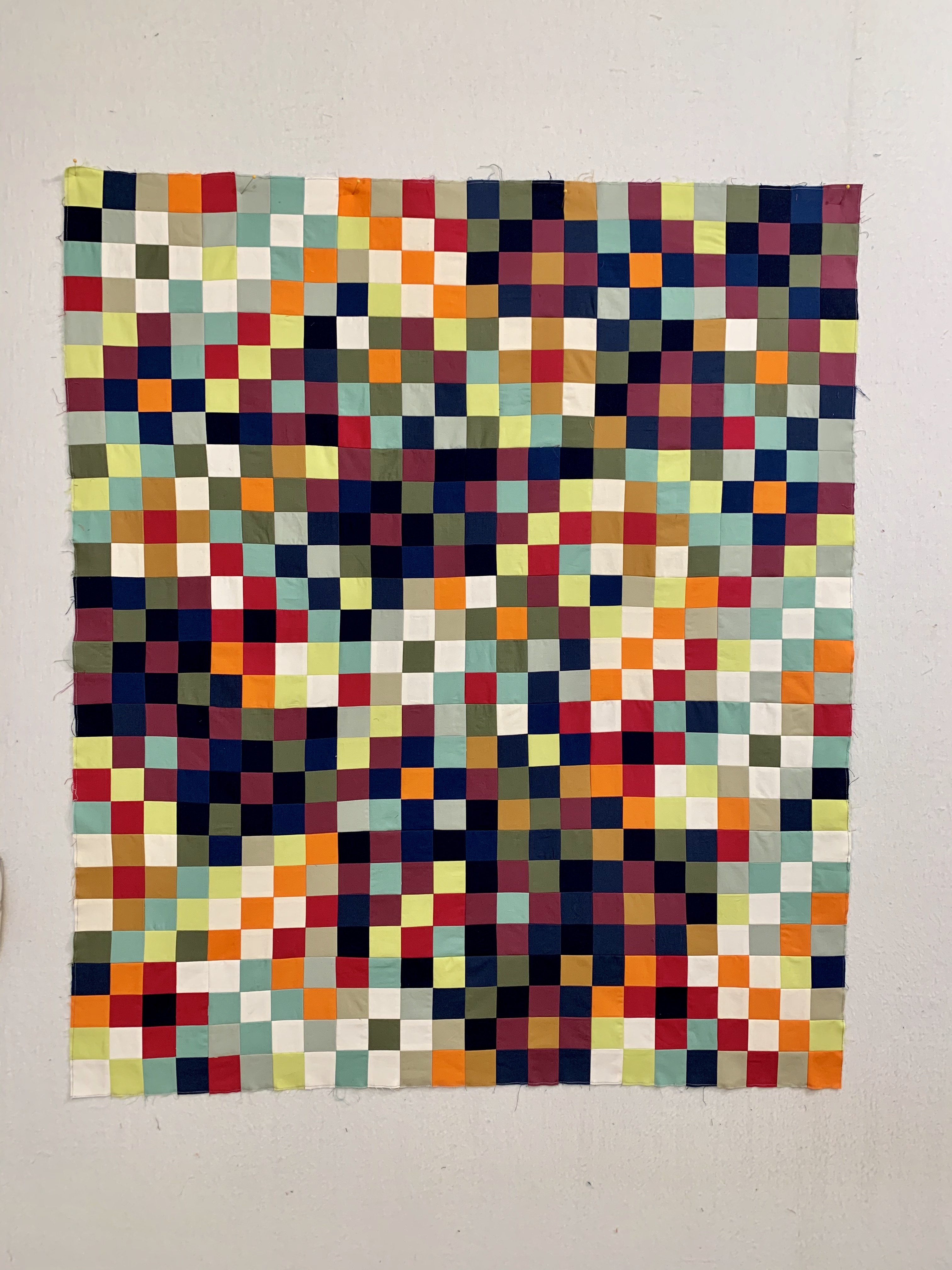
I finished this top last night—it’s 36 by 42. It is the 4th project in my online class with Tara Faughnan, hosted by Sewtopia’s Amy Newbold. Tara called her demonstration quilt “Bokeh.” I’m not going to post a picture of her work as I do not have her permission to do so and could not get a picture of her whole quilt anyway, just parts of it. She will post images of her Bokeh when she is ready to do so.
I looked up what “Bokeh” means and found it is a photographic term for pictures with deliberately manipulated fuzzy backgrounds with a sharp foreground image. Suddenly what Tara was attempting fell in to place for me. And I loved the transferring of that concept to fabric “pixels.”
I don’t think I’m done with this project. I have more fabric and could add more (I added white and cream here). I wasn’t sure how to think about color in the individual blocks, and now I would NOT line up strips of color but would work with light, medium, and dark blocks, but in a way where individual pops of color allow more “twinkling” in all of the blocks. The light blocks could almost always have a pop of dark color and the dark ones could pop with the bright fabrics. In that way the way the colors fall doesn’t necessarily matter. So I may start from a light center and work out to medium and dark blocks—but with patches of light blocks mixed in appropriately. It won’t be a large project. I just want to see if this way of thinking about the colors would work.
I do like my dark patches here—they seem to glow—and I didn’t expect that effect. I think that speaks to how well Tara chose these palette colors. I moved blocks around and moved them around, but still wound up with three places that butted up the same patches. Ugh!
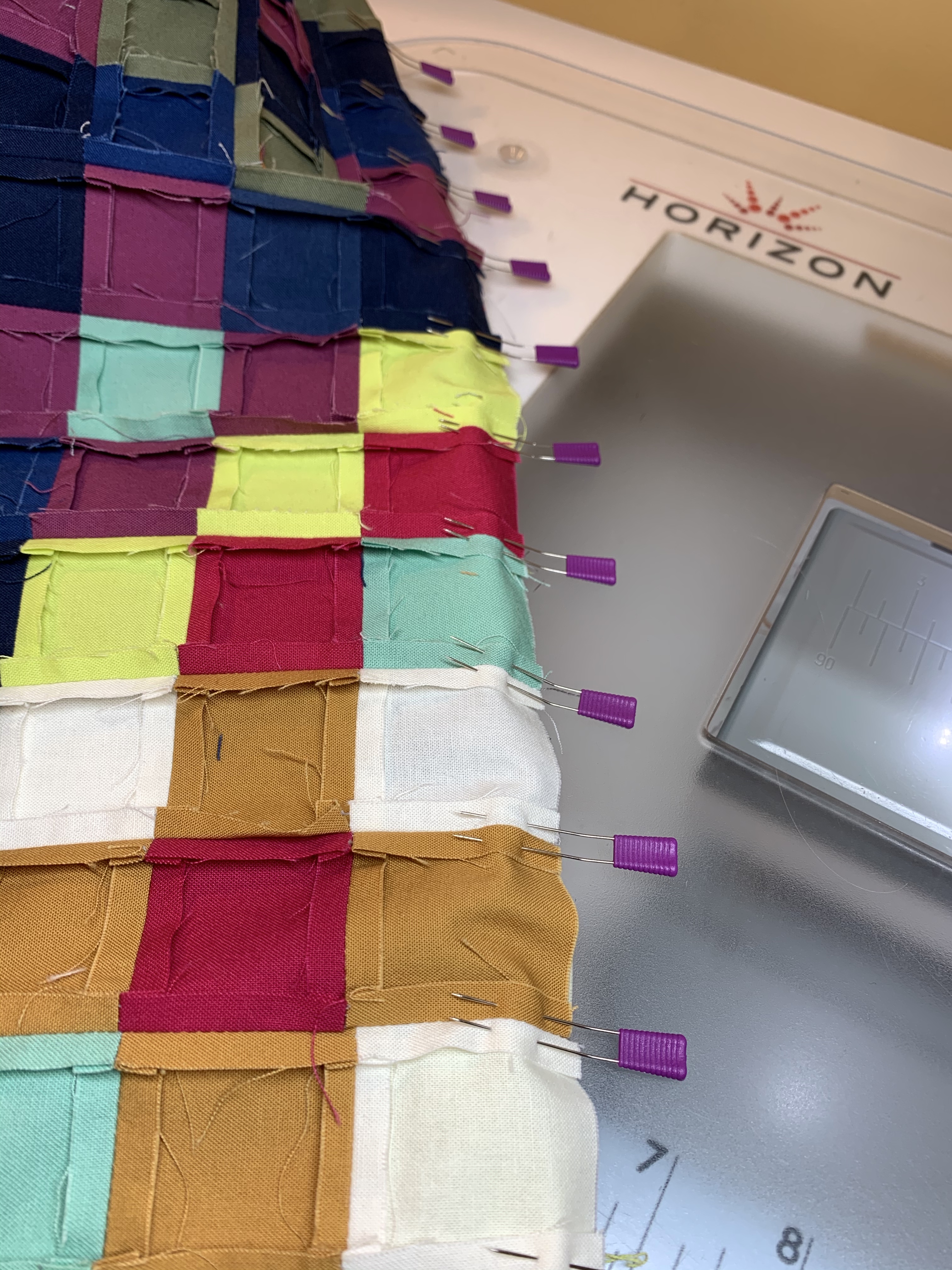
Also, I’m finding that these clips I purchased (and included in a previous blog post), REALLY help with keeping all these seams perfectly aligned for sewing. So a big thumbs up for this product. I sew right up to the first prong and then hold the fabric with finger pressure as I slowly slide out the prong to near it’s end so I can keep sewing without hitting the metal of the prong. I also fold back the fabric to make sure the seams are nested correctly before inserting the prong at each seam.
What a fun project this is. Thank you Tara for this one. It’s been a real distraction from the required social distancing of the pandemic. And a joyful project for winter sewing.
This yearly show and celebration of modern quilts is taking place now, and this post arrived in my email this morning.
How fun to see that many of my favorite quilters were recognized this year: Maria Schell, Shawn Kimber, Amy Friend, and Tara Faughnan among them. This post contains links to others being recognized, like the link to modern log cabin quilts which features a log cabin quilt by Tara Faughnan.
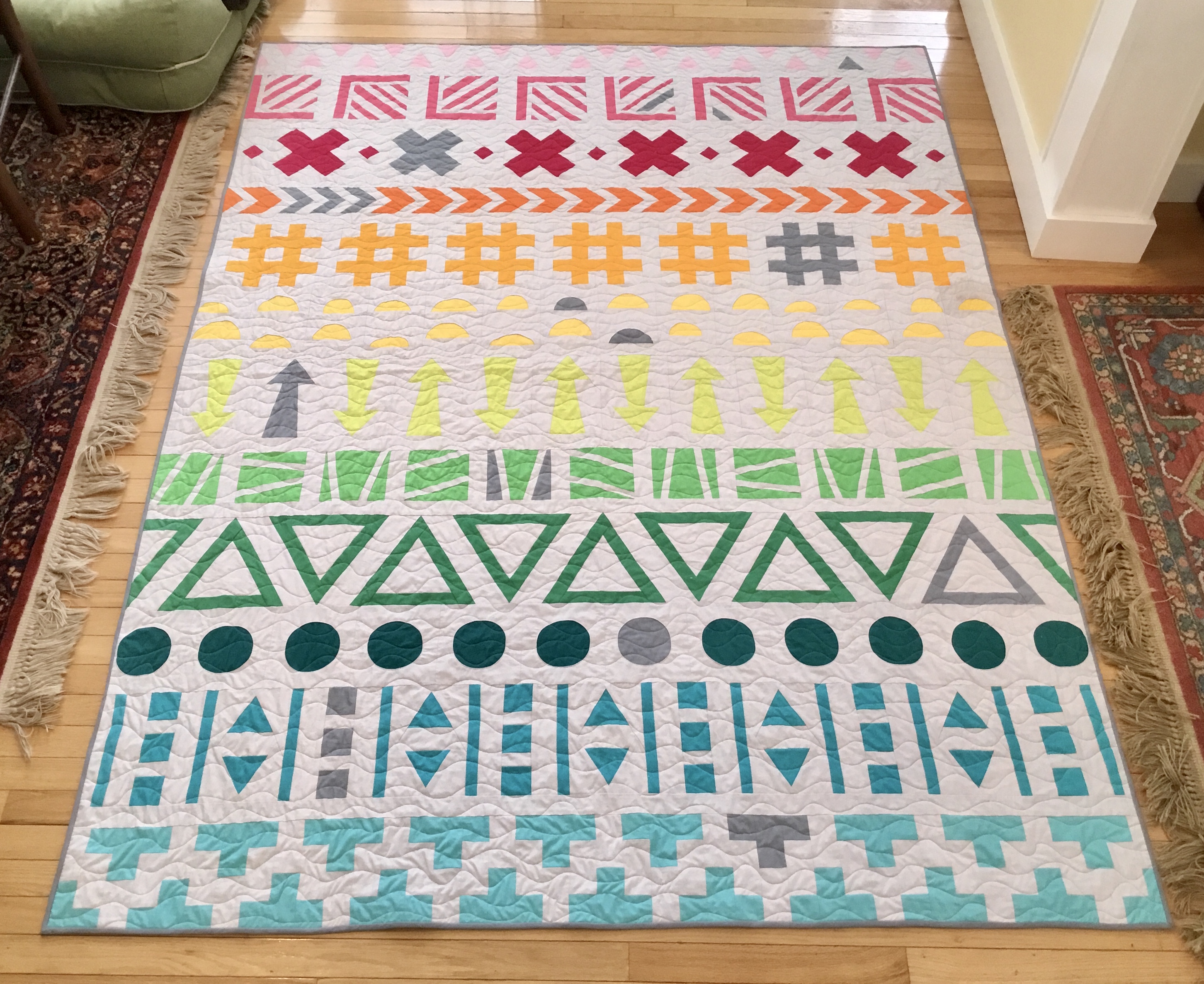
It would be hard for me to pick which one of these two Sugaridoo/Bernina Quilt-Alongs I like the best. Certainly I had fun with picking the fabrics on the Cotton+Steel version. And since I always started each month with the Rainbow version, the C+S version was much easier to make.
As a reminder, here is the solid Rainbow version—with fabrics Sugaridoo chose.
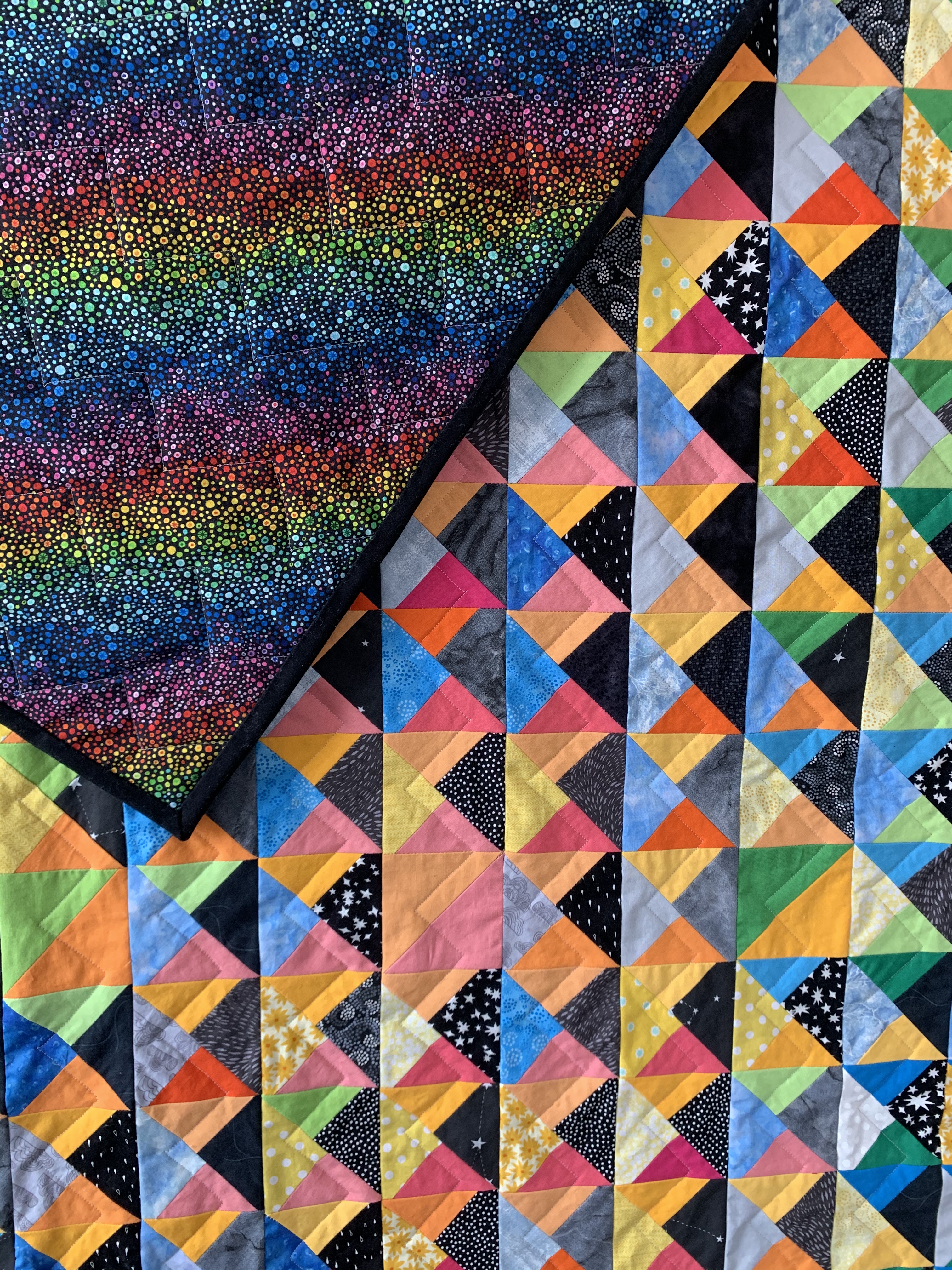
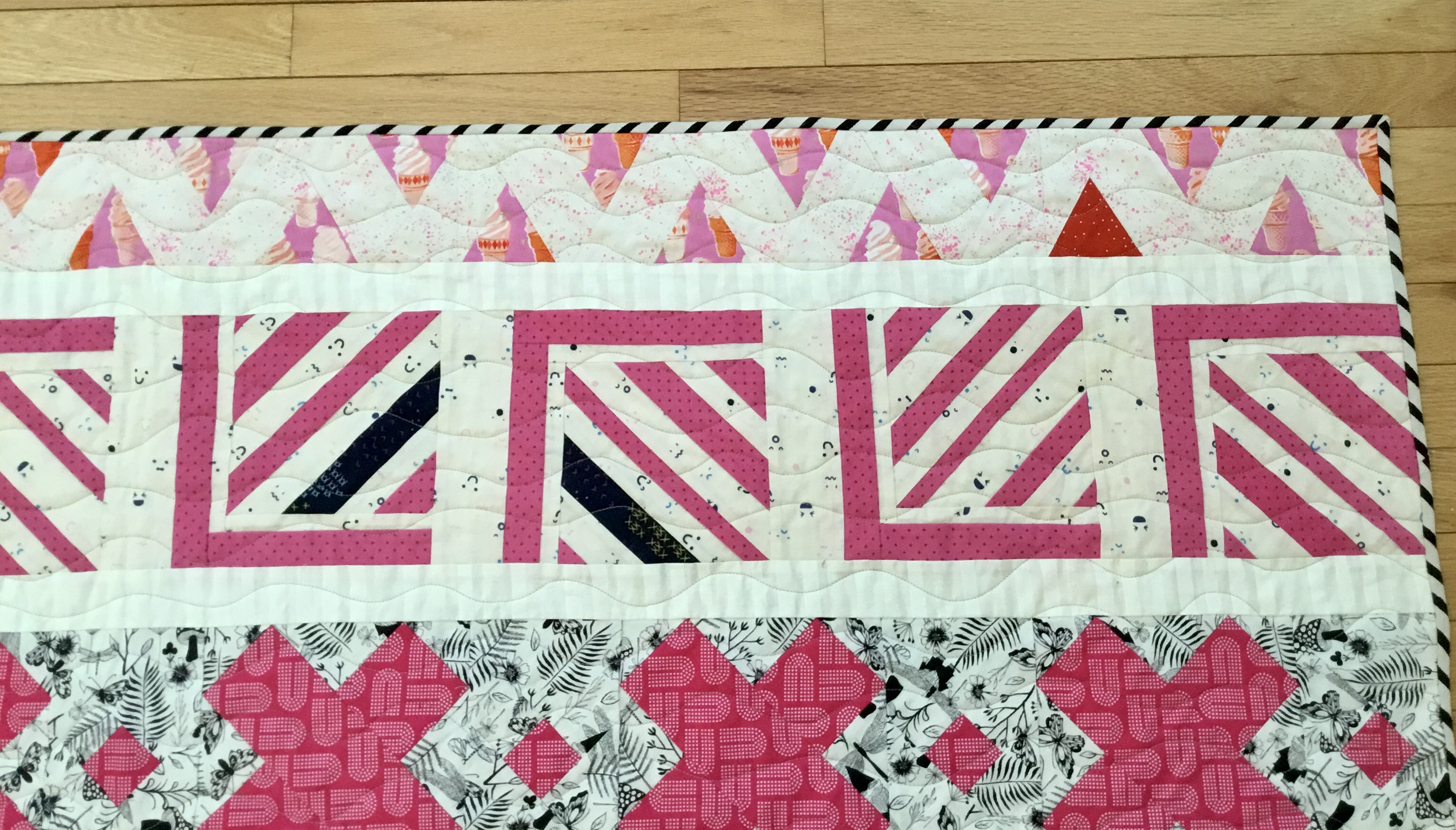
I took a bit of a chance with the wide stripe binding—but I’m really pleased with how it turned out. I cut bindings on the bias, so a bias-cut stripe can work really well with some quilts. There is actually a lot of black in this quilt, so the binding fits right in just right. The first pic below is the bottom, and the second the top.
And, this binding works well for the backing fabric as well.
Here are some close-up pics of various parts of this quilt. Note that I varied the “accent” piece in each row to fit that row.
As noted in the post about the Rainbow version, each row’s pattern offered both a pattern and a learning curve.
It is very satisfying to finish a year-long project, let alone TWO os the same project. I’m still not sure what possessed me to undertake two of the same quilt at once. But I’m not sorry…
And now the promised snow is starting, so I will have another quilty day.
This last week was a busy one for me, so blog postings got put on hold. This coning week will contain several snow storms, starting later today, and that is just fine by me. I have food (or will get what I need this morning), and I have LOTS of ongoing quilty projects.
The “Trees” quilt top is done now. Remember that these quilt blocks were inspired by the work of Amanda Jean Nyberg of Crazy Mom Quilts. Making the tree trunks turned out to be the most time-consuming task in this project. A lot of solid stash went into “Trees” and more printed scraps and cuts from the print stash then I would have thought.
I purchased a new WILD print for the backing—as I didn’t have a backing in my stash that would work for this quilt. It’s a “rainbow” print from Alison Glass and Andover fabrics called “Art Theory Whole Cloth in Day.” It’s WILD, right? But it screams about the abundance in spring/summer flora and the insect world. The colors are perfect though. I don’t know about the binding yet—probably a solid green from my stash. Or maybe that majenta.
The “My Pips” top is now quilted, and I will trim it today and install the binding. This quilt block and these fabrics are a project in season 3 of The Color Collective, Tara Faughnan designer/teacher, on Amy Newbold’s Sewtopia platform. I really, really liked the fabric palette for this project.
After Debbie from A Quilter’s Table recommended WALK, a book about quilting on a domestic sewing machine with one’s walking foot, I scrolled her blog once again to look at her quilting and found this quilt on her “Working Small, ”December 27, 2020, post (https://aquilterstable.blogspot.com/search?updated-max=2020-12-28T08:09:00-08:00&max-results=1&start=5&by-date=false). I include it here to show the lovely curved quilting she did—by starting her diagonal curve lines from opposite corners and working from the center line on each side and working out to the corners of the quilt. And, by the way, right now Debbie is doing a self challenge of 50 small scrap quilts in 50 days, which is inspiring and down right fun to see.
Here’s “My Pips” at this point. I’ve been looking and looking at these great swirls—which remind me of spring winds swirling about and bringing warmth with them. I think I’ve decided NOT to do the opposite swirl pattern on this quilt. I think what is there now is enough. And I am noting that my swirls are an inch apart. Debbie’s seem to be a bit wider, and that, I think makes a difference in the acquired density. The binding will be the Kona “Thistle” lavender fabric you see in this quilt.
Here’s a closer view.
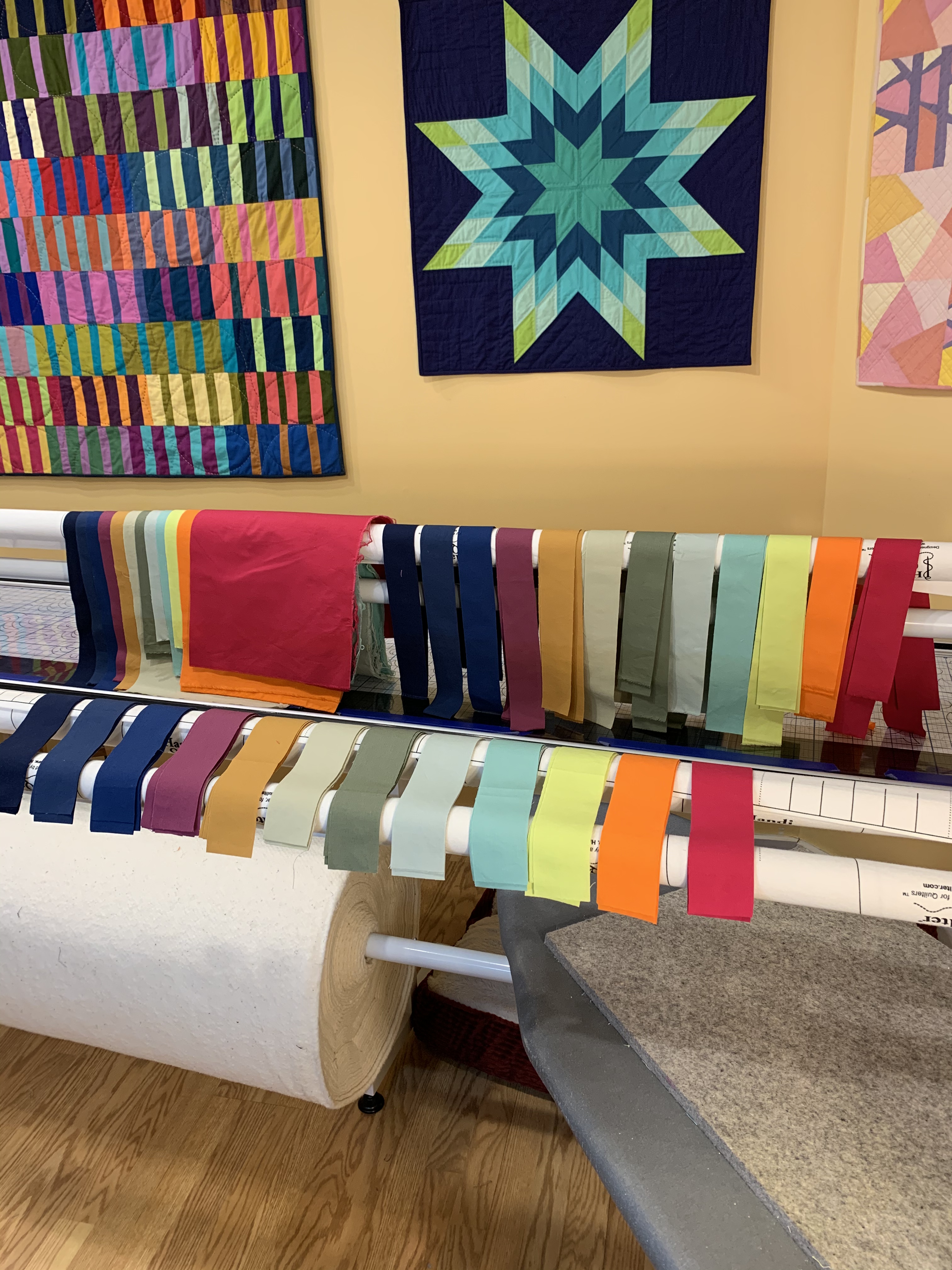
The February Color Collective project in somewhat underway now. The fabrics are washed, ironed, and partially cut. Tara’s improv quilt is called “Bokeh” and is, in part, all about how color relationships work to create certain effects in a quilt. These end-cut squares are going to allow me to figure out how my blocks will look—and I’m already moving around ideas A LOT before I actually sew ONE idea together—maybe later today. (I probably won’t be able to resist). This quilt involves MANY ideas about how blocks function in a quilt, and I think these improv block versions will begin to inhabit a life of their own. Quilts DO talk to their maker if the maker listens.
Here’s one block mock-up to try. I’ll probably change it, knowing me. But once chosen, each idea will make four blocks. And you can see that they can be turned in multiple ways and spread throughout the top. Or, not. I will definitely spread them around. I was thinking of a small quilt, just to try out this method. But I can already see that I’ll get addicted. I usually do to Tara’s projects. And these projects are so much fun when one gets rolling with them.
Here’s the palette. There are darks, lights, brights, mediums, cools and warms.
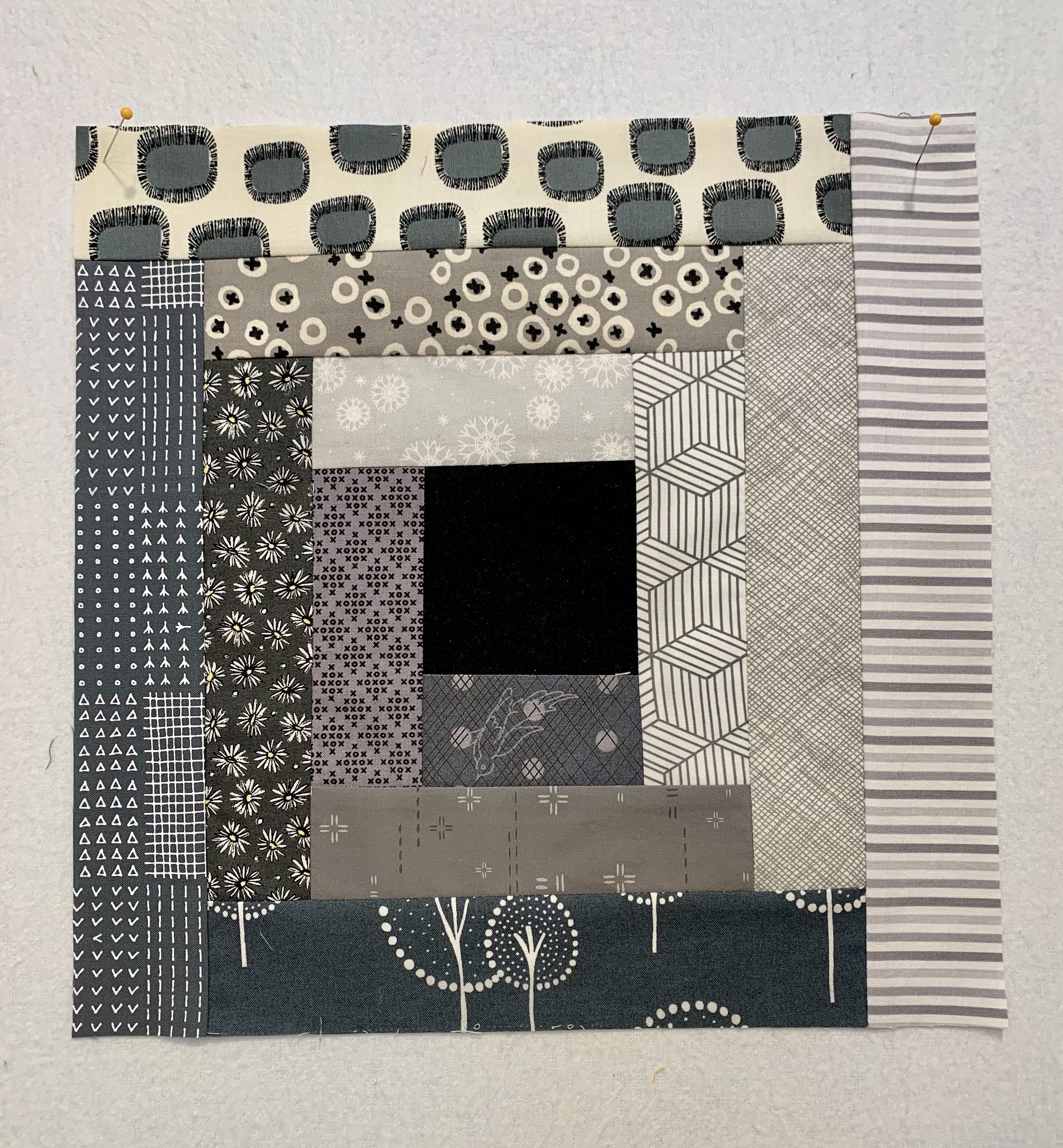
I have been ironing and cutting and replenishing blue and grey fabrics for many days now—for a large log cabin housewarming quilt for a niece out in Wyoming. I played with ideas for block size and decided on a 12-inch block made using a Creative Grids ruler that will also make a 6-inch block. I had one of these rulers in the 8-inch size, but it didn’t feel right to me for this project. I REALLY like these rulers for both log cabin and pineapple block projects as the finish for each block is dead perfect.
With the “Trees” top finished and the design wall vacuumed and ready to go, I made some initial blocks. I don’t know about the setting yet—when I’ve made more blocks my niece will choose the setting she likes. And I’m sure blocks will get moved around. But here are the first blocks. This is the primary quilt project for me now as this family is moving into their new home TODAY.
I’m thinking down the road that I’ll make this quilt in dark and light greys with a black center chimney. So while cutting, I made a trial block, and I really like it. I’ve been wanting to make a grey quilt.
The binding on “Sugaridoo: Cotton+Steel/Ruby Star Society”—the second Sugarisoo quilt—is almost done, and I really love the wider black and cream stripe for this quilt. I will finish it tonight probably, So pics will come soon.
The hand quilting thread for “My Splice” came, so I will circle back to that project after I complete the binding on “My Pips.” I have no idea how I’ll quilt “Trees,” but it will be likely on the longarm as I think it needs curves. Did I just say “curves” after loving the curves on “My Pips.” Hmmmm…
Meanwhile, as you can see, I have lots of fun projects for quilty play and production. And I am noting that I did not cover three projects I would really LIKE to make—OR the assembling of the improv blocks made for me by my fellow “Be Inspired“ prompt challenge members.
There are some quilts I make that just don’t want to go on the longarm. A longarm machine quilts side to side, so any kind of long diagonal line, or, even, a straight line that runs down the length of the quilt, would not work well with my machine’s 18-inch throat.
Jacquie Gering’s book WALK comes to the rescue of how to quilt with your walking foot.
Debbie of her A Quilter’s Table blog recommended this book, and you can see her work with this kind of walking foot quilting in so many of the quilts in her gallery.
What I learned immediately is how to figure out exactly where the needle is when the walking foot is installed—so that it is easy to make clear, precise lines AND to echo curves. Some of the quilting designs are just…amazing.
If you read this blog at all you know that I love learning curves—especially quilty learning curves. So, you will not be surprised to learn that I’m going to quilt “My Pips” with curves made with my walking foot.













 Louisa Enright's Blog