Turkey Tracks: Running River and Returning Birds

Turkey Tracks:  May 23, 2011

Running River and Returning Birds

We’ve had a lot of rain this spring.  Last year this time I was planting beans, so the soil was already 65degrees.   This year is cool and wet.  So far.

Here’s a pic of the Megunticook River down by the Megunticook market.  Look at the white water!  And the many shades of green and orange/red.


The hummers have been back for several weeks and are delighting us with their crazy antics.  The Baltimore Orioles and the Rose-Breasted Grosbeaks, often called the Northern Cardinal, showed up this week.  Here’s a site where you can see what they look like if you don’t know:

http://www.northrup.org/photos/rose-breasted-grosbeak/

They’re pretty spectacular.  As are the Baltimore Orioles:

http://www.northrup.org/photos/oriole/

I’d put in pics, but I updated the browser, and how I do things (like pressing pictures) is momentarily part of a new learning curve!

Turkey Tracks: Charleston, SC, in May

Turkey Tracks:  May 22, 2011

Charleston, SC, in May

 We spent late April and early May in Charleston, SC, with our family performing grandparent tasks.  This trip we kept our four oldest grandchildren while their parents (Mike and Tami) had a little vacation–their first for longer than two nights in almost eight years.   These four children range from 7 1/2 to 3 1/2 years, and this is the first time we felt we could safely keep them all by ourselves, especially as they are all in school now and can, mostly, dress themselves.  Of course, we had to get them to two schools every morning for four days–thank heavens for Tami’s GPS system and the schools’ lunch programs.  And, pick them up mid-afternoon.

We immediately complicated this endeavor by keeping each one of them at home for a “special day”–which proved to be immensely enjoyable for everyone concerned–especially as we featured a trip to Hominey Grill as a part of each’s child’s day.  Talula holds the record for eating ALL of her pancakes, which she smothered with butter, honey, syrup, and jam!  I LOVE the fact that Talula is so adventuresome with food.

We were going to be backed up by our younger son and his wife, Bryan and Corinne, who also have a new baby, their first, Ailey, born last Thanksgiving.  The notion that B&C were nearby provided more than a little comfort as we had nightmares about broken bones, emergency medical issues, and the like.  We also had four chickens, a new bee hive, and an African water frog to keep well and alive.  (Fortunately no one got poisoned by the water frog, which I’ve read since carry pathogens that are causing the CDC to issue dire warnings about NOT handling these frogs.)

The children were fabulous, and just about the time we were all getting into a groove and Talulah stopped crying for her mother at, especially, bedtime, their parents came home.  Here is the only decent picture I took of the four of them.  And I can’t even remember when I took it as by the time they all went to bed, with clothes for the morning laid out, I went to bed too!

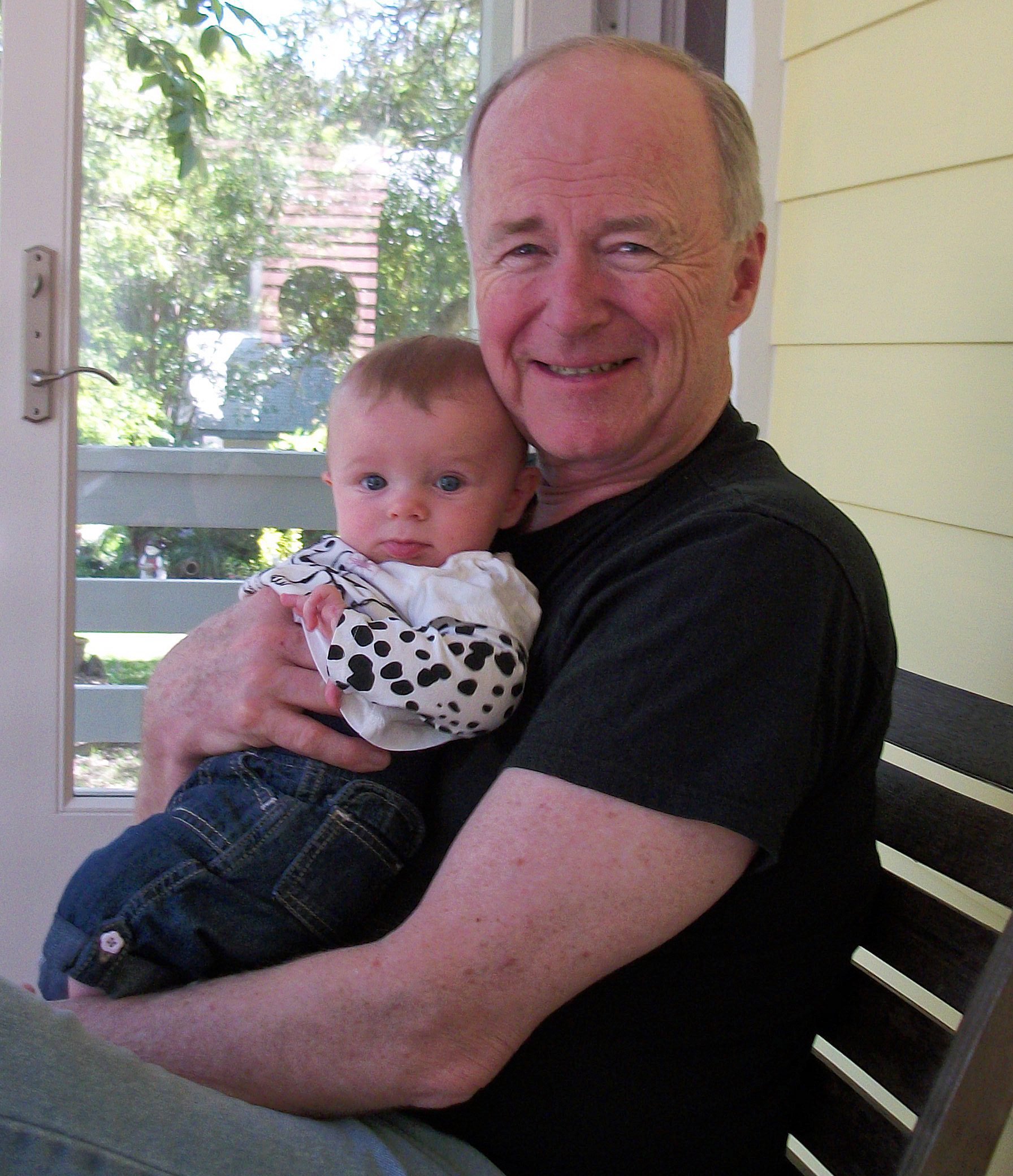
 Before I go any further, I want to put in a picture of Ailey, seen here with her grandfather, whom she is, at the moment, looking very like:

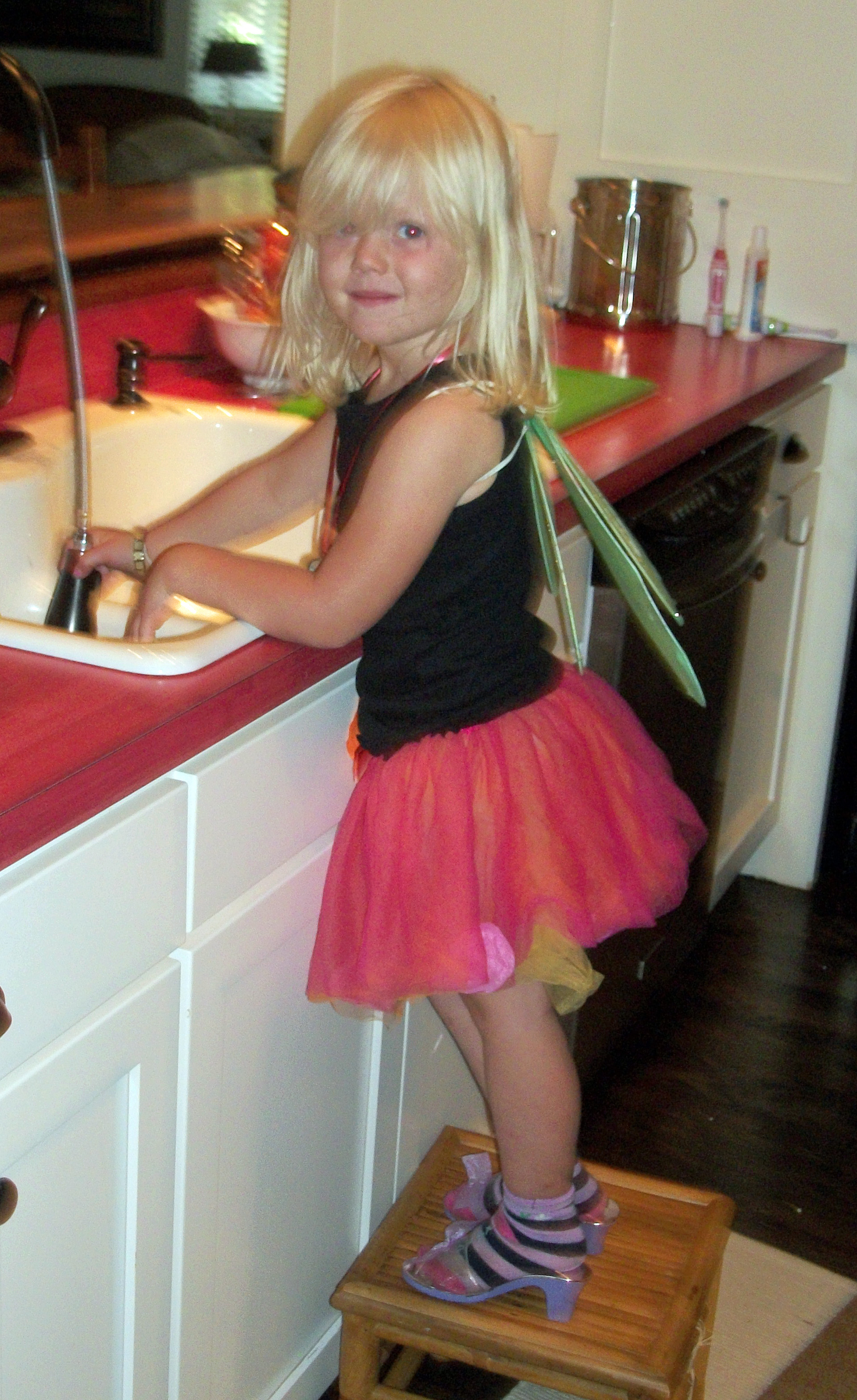
Here’s one of my favorite pictures of Talula.  I raised two boys, and let me tell you, girls are different than boys!  And this girl already has a sense of style that is unique.

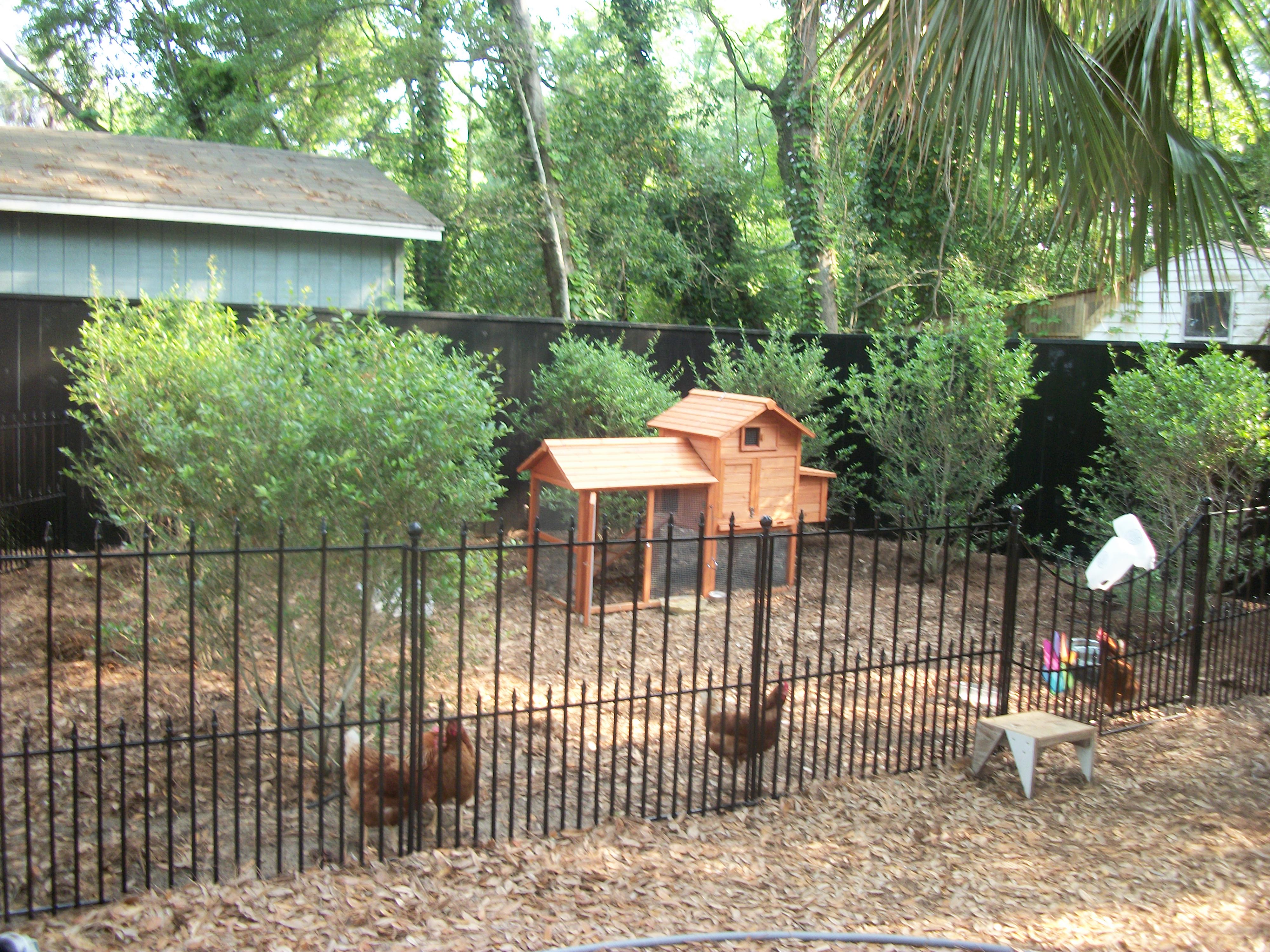
 Here’s a pic of the four new chickens and their coop and yard.  The coop is MUCH smaller than Tami and I thought when looking online, but it’s quite nice and perfect for four chickens.  The milk bottles on the gate were an emergency measure to keep the chickens from flying out of the fenced area.  These chickens are red stars, or red sex links, and they are legendary for being gentle and sweet.  And, for being escape artists.  When Tami returned, we had to clip their wings, but they can STILL get out, I think, by jumping onto the fence bar at the top.

Here’s a pic of Tami and her friend, Kay, checking out the bees in the new hive:

Look at Kay in shorts!  Yet, it’s Tami who got stung.  My hat’s off to Tami, who while still a little nervous about the bees, has taken on bees as a project.  I’m not sure I could, and I am fascinated with bugs of all kinds.

And, to close out pics from this trip, here’s one of Ailey on her snuggly monkey and holding her own bottle!  Here she looks a bit like me.

I forgot to say that the jasmine was blooming and that it was warm enough to swim!

Tipping Points 30: The Very Bad Breakfast

Mainely Tipping Points 30 

THE VERY BAD BREAKFAST


Cold cereal with milk and, maybe, some orange juice on the side–we think this breakfast is nourishing, right? 

Well, let’s take a look at the individual ingredients.  Sally Fallon Morell provides such analysis in “Dirty Secrets of the Food Processing Industry,” recently updated and reprinted in Well Being Journal, March/April 2011, 11-19.  The original text, given in a speech, is at www.westonapricefoundation.org.  Both texts cover much more than packaged cereal, milk, and orange juice.   

All ready-to-eat cereal grains are so highly processed that whatever good the whole grains once contained is killed.  Grains are made into a slurry, are put into a machine called an extruder, and are “forced out of a tiny hole at high temperature and pressure, which shapes then into little o’s and flakes, or shreds them or puffs them.”  The shapes are then sprayed with oil and sugar to seal the grains from “the ravages of milk” and to give them crunchiness.  This process destroys the fatty acids, the synthetic vitamins added at the end, and the “crucial nutrient” amino acid lysine. 

This extrusion process “turns the proteins in grains into neurotoxins.”  Biochemist Paul Stitt describes the now-famous, but still unpublished, 1942 rat study which fed four groups of rats differing diets.  The rats fed vitamins, water, and all the puffed wheat they wanted died within two weeks—even before the rats who received no food.  Rats fed plain whole wheat, water, and synthetic vitamins and minerals lived for one year.  Somehow, writes Morell, the extrusion process produces chemical changes in the grains that make them toxic.

In 1960, researchers at the University of Michigan divided rats into three groups.  One group received cornflakes and water, one the cardboard box the cornflakes came in and water, and the control group received rat chow and water.  The rats receiving the cornflakes died before the rats eating the cardboard boxes.  And, before dying, the rats eating cornflakes “developed aberrant behavior, threw fits, bit each other and finally went into convulsions.  Autopsy revealed dysfunction of the pancreas, liver and kidneys and degeneration of the nerves of the spine, all signs of insulin shock.  This experiment, designed as a joke and still unpublished, undoubtedly shocked its designers. 

The extrusion process alters the structure of grain proteins, so cereals in health food stores made of whole grains rather than refined grains may be more dangerous because they have a higher protein content.  Once disrupted, it’s likely that these altered protein bodies “can interact with each other and other components of the system, forming new compounds that are completely foreign to the human body.”  As these proteins become toxic, they can “adversely affect the nervous system, as indicated by the cornflake experiment.”   

Additionally, Morell notes that many of these cereals are “at least 50 percent sugar.”  Given that grains are carbohydrates that break down into sugars in the body, there is a double sugar load involved when sweeteners are added.  Further, Lierre Keith, in THE VEGETARIAN MYTH, notes that grains contain powerful opioids that make them addictive for humans (33-34).  No wonder we like them so much!

I wrote three Tipping Points on commercial milk (6, 7, 8), so I apologize for repeating some of that information in order to do Morell’s article justice.  Morell notes that most industrial milk is highly processed and, in my terms, a fake food.  This milk comes largely from cows fed foods cows do not eat, to include waste products from other industries.  These cows produce “huge amounts of watery milk with only half the amount of fat” normal cows should produce.  Milk from all these cows is combined and shipped to factories where it is separated into “fat, protein and various other solids and liquids.”  The ingredients are then reconstituted according to “specific levels set for whole, low-fat and no-fat milks”—levels which allow fat to be skimmed off of even whole milk for other products, like butter, cheese, and ice cream.  Reduced fat milks are boosted with powdered milk concentrate to give them body. 

Powdered milk is made by forcing milk “through a tiny hole at high pressure” and then blowing the particles out into the air.  This process causes “a lot of nitrates to form” and, worse, it oxidizes the cholesterol in the milk.  Oxidized cholesterol is dangerous for humans.  It’s used “in animal research to cause atherosclerosis,” or heart disease.  (Cholesterol in your body is not the same thing as oxidized cholesterol.)

Once reconstituted and homogenized, milk is pasteurized, or, more likely today, ultrapasteurized, which cooks it until it is (supposedly) sterile.  It does not need refrigeration.  It will last for many weeks as it’s thoroughly dead. 

I have followed with much pleasure the progress of Maine’s own organic Moo Milk.  This milk comes from local family farms, is processed in Maine, and is not ultrapasteurized.  Moo Milk takes a healthy direction for both the farmers and for Maine consumers.  Hopefully, in time, Moo Milk will pasture Moo cows except in winter, will not homogenize milk, and will offer a line of raw milk for those who are committed to consuming whole foods.   

Morell shows that commercial orange juice is a toxic soup.  Conventional oranges are “sprayed heavily with pesticides called cholinesterase inhibitors [among which are organophosphates and carbamates], which are very toxic to the nervous system.”  Whole oranges are thrown into huge squeezing vats and enzymes and acids are added that help extract as much of the juice as is possible.  The dried orange peels, still loaded with organophosphates, are fed to cattle, which the work of Mark Purdey shows causes a “degeneration of the brain and nervous system in the cow.”  So, what’s it doing to you?

The juice is then pasteurized, but “researchers have found fungus that is resistant to pressure and heat in processed juices.”  And, they’ve found E. coli strains in the orange juice that was, obviously, “pressure resistant and had survived pasteurization.”  Further, like the extrusion of grains, “the heating process produced intermediate products which, under test conditions, gave rise to mutagenicity [changes genes] and cytotoxicity” [causes cancer]. 

In addition, eating cold cereal with low-fat milk and drinking a side of orange juice is eating exactly the kind of easily digestible sugar-rich carbohydrates that are being identified as causing obesity, metabolic syndrome, diabetes, and other chronic diseases.  And, there is very little fat.  Morell reminds us that the demonization of saturated fats and oils has no scientific basis and is “nothing but industry propaganda.”  With so much sugar and so little fat, one will be hungry shortly. 

If you want to eat a grain for breakfast, “soak grains overnight to get rid of the anti-nutrients that are normally neutralized in the sprouting process.  Soaking will neutralize the tannins, enzyme inhibitors and phytic acid and gently break down complex proteins.”  Soak grains in “warm water and one tablespoon of something acidic, like whey, yoghurt, lemon juice or vinegar.”  In the morning, your grains will cook in just a few minutes.  And, it’s best to eat them with “butter or cream, coconut and chopped nuts like our grandparents did.  The nutrients in the fats are needed in order for you to absorb the nutrients in the grains.  Without the fats—especially the animal fats, which are the only sources of true vitamin A complex and vitamin D3–you cannot absorb the minerals in your food.”

For me, grains and fruit are a rare and much appreciated treat.  For breakfast, I eat from the following:  eggs, often scrambled with leftover green vegetables and cheese; fermented meats like salami or prosciutto; bacon; cheeses; homemade yogurt with nuts, seeds, bits of fresh or dried fruit, and dried coconut; leftover soup; and tea with honey and whole heavy raw cream.  I do not get hungry again until about 2 p.m.

Turkey Tracks: The T-Shirt Rug and Rags

Turkey Tracks:  April 23, 2011

The T-Shirt Rug and Rags

On a very pretty and warm day last week or so, I switched out my winter clothes for spring/summer ones.  (I’ve been freezing practically every day since!)

In the process, I realized I had accumulated way too many stained t-shirts put aside for yard work or painting.  What to do with them?  I couldn’t bear to just throw them away, and I have a lot of rags already.  Or, so I thought.

I found myself wondering if I could weave strips of them into abraided  rug or placemat on the hand-looms.  But, I didn’t think I had enough for a rug, and I don’t need placemats right now…  Then, I remembered making Kelly’s rug out of potholder loops linked together.  So, I took the t-shirts to my sewing room and began cutting the thrunks, up to the arm pits, into strips with a rotary cutter, which slices right through the double layers.  I used a long ruler for stablity.  I cut the short sleeves off and realized I had a pretty nifty doubled rag of a nice size.  (I threw the long sleeves away once I realized they were too bulky to loop like the potholder loops.)  That left the armpits to the neck, which I slashed in half for two more rags.  (Cotton t-shirts make such nice soft rags.)  I divided the rag pile in half and put one-half in the laundry room and the other half in the kitchen bowl with the white washcloths I’ve been using.  (See earlier posts about NOT using so many paper products like paper towels.)

Connecting the loops like potholder loops made too bulky a knot.  So, I opened the loops, slit the ends, and looped the lengths together like I would while making a rag rug.  Since I wasn’t sure I would have enough materials for a braided rug, I decided to knit the strips on big needles (13s).  If you knit constantly, you get a garter stitch, which has interesting texture.  Here’s the start:

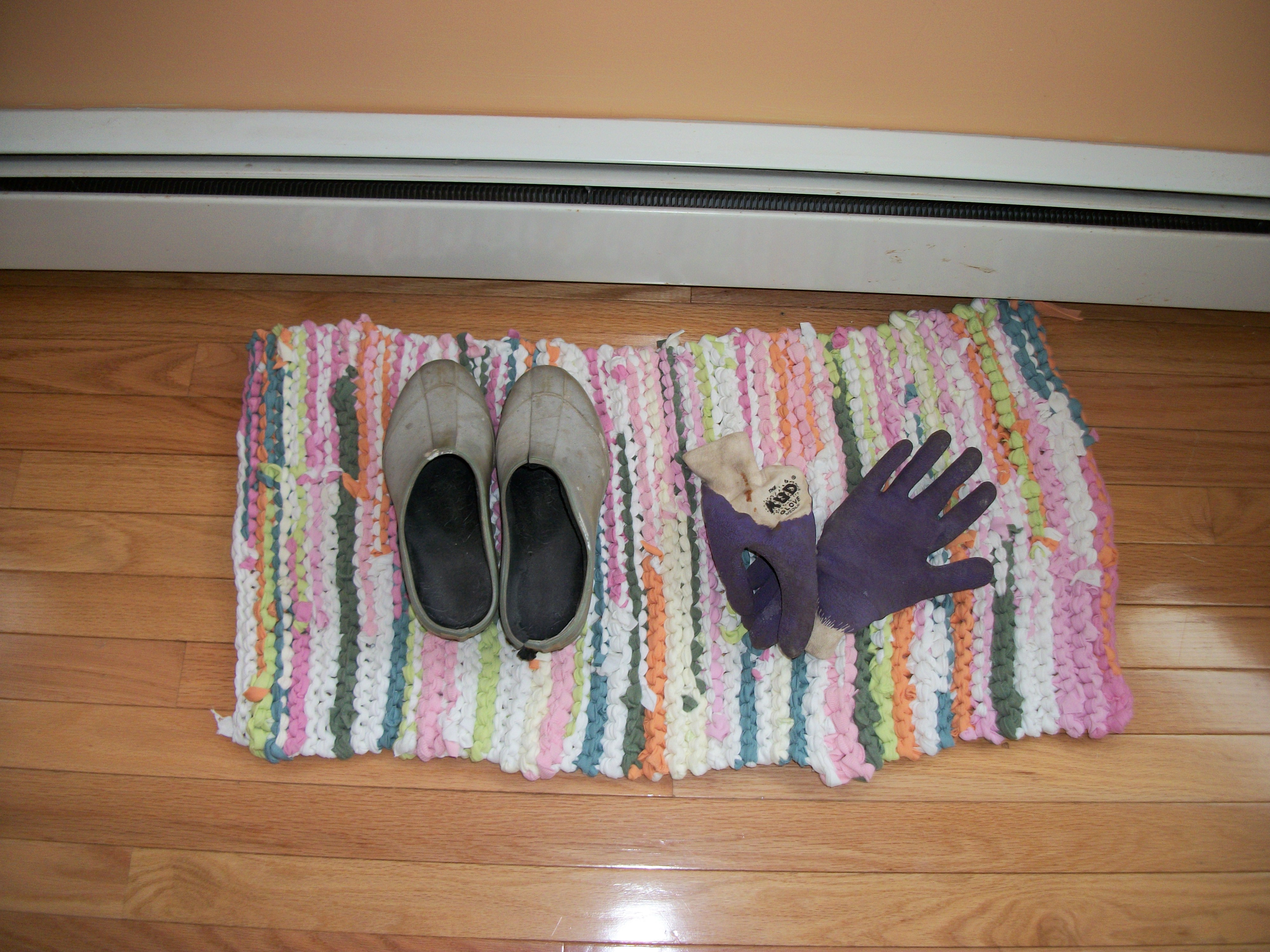
Here’s the finished rug:

It’s stretchy and endearingly rough looking and very sturdy.  It will work fine near doors for muddy, wet shoes/boots coming into the house.   It only took me a few nights to make it while watching movies.

Here it is in use–the mud/garden shoes came from Tara Derr Webb when she moved from Reston to California over…10 years???…ago.  I release and feed the chickens first thing in the morning, so I need a pair of mud shoes or winter boots very near the back door:

Now, here’s the fun part.   I’ve been looking for ways to cut down on paper towel use, and dripping out bacon strips was one of our last uses for paper towels.  I took two of the short sleeves this morning, put them on a plate, and used those.  Afterwards, I just threw them in the laundry.  I usually wash kitchen towels, etc., separately any way, so I think this use of the sleeve rags will work just fine!

Interesting Information: Culturing Dairy Uses Up Its Sugars

Interesting Information:  April 20, 2010

Culturing Dairy Uses Up Its Sugars

Sugar is bad news for human health.

A little sugar does hurt–especially the highly-processed, white, refined sugars.  And, on average, we aren’t eating a “little sugar” daily.  A lot of sugar is hidden in our foods. 

Jen Allbritton, in “Zapping Sugar Cravings:  Hair-Raising Stats on this `White Plague’ and How to Reduce Your Need for Sweets,” in WISE TRADITIONS, Winter 2010, 53-59–the journal of the Weston A. Price Foundation, notes that “our ancestors likely indulged in around one tablespoon (60 calories) of honey per day (when available), which is stunningly low compared to today’s average sugar intake of one cup (774 calories) per day!”   And, I’d add that our ancestors didn’t eat fruit out of season, unless they dried it, and the fruit they ate had not yet been bred to be big and very sweet.  Also, the honey they ate was unheated, raw honey.

I’m a lover of whole, real/raw  milk, and we can buy it in local markets and our coops here in Maine.  Between the chickens, the dogs, and John and me, we go through about 2 gallons a week and 2 pints of heavy cream.  I don’t worry about the fat or protein in the milk, but it also contains sugars.  So, I was very interested to read in Allbritton’s article that culturing milk (yogurt, kefir, pima, etc.) uses up most, if not all, of these milk sugars.  Yeah!!!  We’ll now move toward eating even more of the yogurt I make and keep on hand and drinking less of the milk form.  (Look in the recipe section of this blog to see how easy it is to make your own yogurt–and it’s light years better than anything you buy., most of which as added junk like pectin, seaweed, and dangerous dried milk).  This morning we had big bowls of fresh yogurt topped with a mixture of “crispy” nuts, seeds, dried fruits, bits of chocolate!, and dried coconut.  (See the blog recipes for how to make crispy nuts.)  It’s 1:37, and I’m still not hungry.  Tomorrow or the next day,  I’ll make us yogurt smoothies with added raw egg yolks, unrefined coconut oil (it doesn’t stick to your body), and some of the fruit I froze last summer.     

By the way, Allbritton has a nice chart with the sugar content in some common products.  You know that labels split up the sugars by using separate names for them, right?  If industry didn’t play this kind of game, they’d have to show that sugar is often the first ingredient in a product.  So, note that 6 ounces of 99% fat-free flavored Yoplait yogurt contains 8 teaspoons of sugar !!!  Isn’t that the yogurt that’s advertised on tv as a weight-loss tool?  I don’t think so.  All that sugar is going to have you hunting for more food in short order, especially since there’s no fat to satisfy and sustain hunger.  You’ll end up eating MORE and feeling guilty.  And, if you eat more sugar, it becomes a vicious cycle. 

Much of that 1-cup daily average is not immediately detectable simply because it comes in bits and pieces added into our foods, which is why home-cooking whole, nutrient-dense foods is a good thing.  (Remember that the 1-cup average means that many folks are eating way more than 1 cup of sugar a day.)  And, Allbritton is just dealing with processed sugars, she isn’t dealing with the further sugar load of the increased use of grains, starchy vegetables, and so forth. 

Allbritton points to the work of Nancy Appleton, PhD, who wrote SUICIDE BY SUGAR.  She has a blog:  www.nancyappleton.com where you can find details of how lethal sugar consumption is.  For starters, it both si connected with cancer development and feeds cancer cells.  It disturbs the balance in your body in countless, disease-causing ways.  It causes obesity.  It also contributes to destructive, aggressive, restless behavior.  It is addictive and can, Allbritton writes, “rival cocaine in its addictive strength” (55).   

We mostly confine daily sugar ingestion to honey, which we both love.  I do, occasionally, make a really good cake with loads of butter and our fresh eggs and, hopefully, limited amounts of sugar and white flour.  They are a real treat, but not something either of us craves these days. 

Here’s the link to Allbritton’s article:  http://www.westonaprice.org/childrens-health/2108-zapping-sugar-cravings?qh=YToxNjp7aTowO3M6NzoiemFwcGluZyI7aToxO3M6NDoiemFwcyI7aToyO3M6MzoiemFwIjtpOjM7czo1OiJzdWdhciI7aTo0O3M6ODoic3VnYXJpbmciO2k6NTtzOjY6InN1Z2FycyI7aTo2O3M6Nzoic3VnYXJlZCI7aTo3O3M6Nzoic3VnYXIncyI7aTo4O3M6ODoiY3JhdmluZ3MiO2k6OTtzOjc6ImNyYXZpbmciO2k6MTA7czo1OiJjcmF2ZSI7aToxMTtzOjY6ImNyYXZlZCI7aToxMjtzOjY6ImNyYXZlcyI7aToxMztzOjEzOiJ6YXBwaW5nIHN1Z2FyIjtpOjE0O3M6MjI6InphcHBpbmcgc3VnYXIgY3JhdmluZ3MiO2k6MTU7czoxNDoic3VnYXIgY3JhdmluZ3MiO30%3D


Interesting Information: Airport Scanner Scandal

Interesting Information:  April 20, 2011

Airport Scanner Scandal

 The winter issue, 2010, of the Weston A. Price Foundation’s journal, WISE TRADITIONS, has an article on the danger with airport scanners (13-14):

In essence, Sally Fallon Morell and Dr. Mary Enig, in “Caustic Commentary” are saying that while these new devices operate at “relatively low beam energies,” the “majority of their energy is delivered to the skin and the underlying tissue.”  The government is claiming that very low doses of radiation are safe, but Morell and Enig are saying that if the “low dose” was distributed “throughout the volume of the entire body,” it would be safer.  However, “the dose to the skin may be dangerously high.” 

Morell and Enig also note that four scientists from the University of California, San Francisco, have written to Dr. John P. Holdren, Assistant to the President for Science and Technology, expressing “concerns about the backscatter X-ray airport security scanners, noting the lack of safety data and the probable increased risk to the elderly, children, and adolescents, pregnant women, and those at risk for breast and skin cancer.”  These scientists specify concern for potential targets for damage, including the cornea, the thymus, and sperm.  They note that comparing the X-ray dose from these scanners to cosmic ray exposure inherent with airplane travel or to a chest X-ray is misleading, in that air travel cosmic ray exposure and chest X-rays “have much higher X-ray energies and the health consequences are appropriately understood in terms of the whole body volume dose.”  The airport scanners deposit energy into the skin and adjacent tissue, which is a “small fraction of body weight and volume, possibly by one to two orders of magnitude,” so “the real dose to the skin is now high.”

In addition, the scientists are worried that TSA personnel, who are already complaining about resolution limits, “might be tempted to raise the dose (www.npr.org/assets/news/2010/05/17concern.pdf). 

Recommendations:  TAKE THE PAT DOWN, REFUSE THE SCANNER, COMPLAIN TO YOUR CONGRESSMEN.       

Scroll down to “Airport Scanner Scandal.”

http://www.westonaprice.org/caustic-commentary/2086-caustic-commentary-winter-2010?qh=YTo1OntpOjA7czo3OiJhaXJwb3J0IjtpOjE7czo4OiJhaXJwb3J0cyI7aToyO3M6ODoic2Nhbm5lcnMiO2k6MztzOjc6InNjYW5uZXIiO2k6NDtzOjE2OiJhaXJwb3J0IHNjYW5uZXJzIjt9


Turkey Tracks: Noro Iro Sweater

Turkey Tracks:  April 19, 2011

Noro Iro Sweater

It’s finished.

And, it’s quite wild, isn’t it?

The color mixture is not really “me,” actually, but I’ll have fun with it next winter nevertheless.  I can see it worn with a VERY plain top and VERY plain pants/skirt.   I made a bubble hat with leftover yarn that, believe it or not, tames everything down a bit.

I like the buttons that Helen of Heavenly Socks in Belfast helped me pick out:  http://www.heavenlysocksyarns.com/.  Helen is the best!  She will order more yarn than SHE needs just to get what you want.  And she always encourages you to buy extra “just in case,” which she takes back if you don’t use it.   The buttons pick up the lime green bits in the yarn.

A reminder:  Noro yarns are variegated in brilliant colors in ways that are impossible to “match.”  They just knit up the way the color wants to arrive.  I was successful at some matching up though…

Turkey Tracks: Notebook Covers and Fabric Boxes

Turkey Tracks:  April 18, 2011

Notebook Covers and Fabric Boxes

 NOTEBOOK  COVERS

On Friday, April 8th, Barb Melchiskey of Coastal Quilters organized a workshop with Carol Boyer, who came to us from New York with Marty Bowne, the founder of Quilting By the Lake, to make notebook covers using our overflowing button collections.   Eight participants started at 9 a.m. and quit about 3 p.m.  Some of us went home (me) and sewed even more as the projects were so much fun.  (The workshop enrolled 10 participants, but two could not come last minute.)  You might recall the blog entry I made last year during Carol’s visit.  We learned to stamp and paint on fabric, and Carol brought some of the many dolls she also makes to show at the Saturday meeting. 

 Here’s a picture of Carol with the first prototype cover she made:


Here’s a picture of completed notebooks as Carol and Barb refined the method Carol taught, which used bias tape to edge the covers. 


Here’s a picture of a Carol Boyer cover in process:


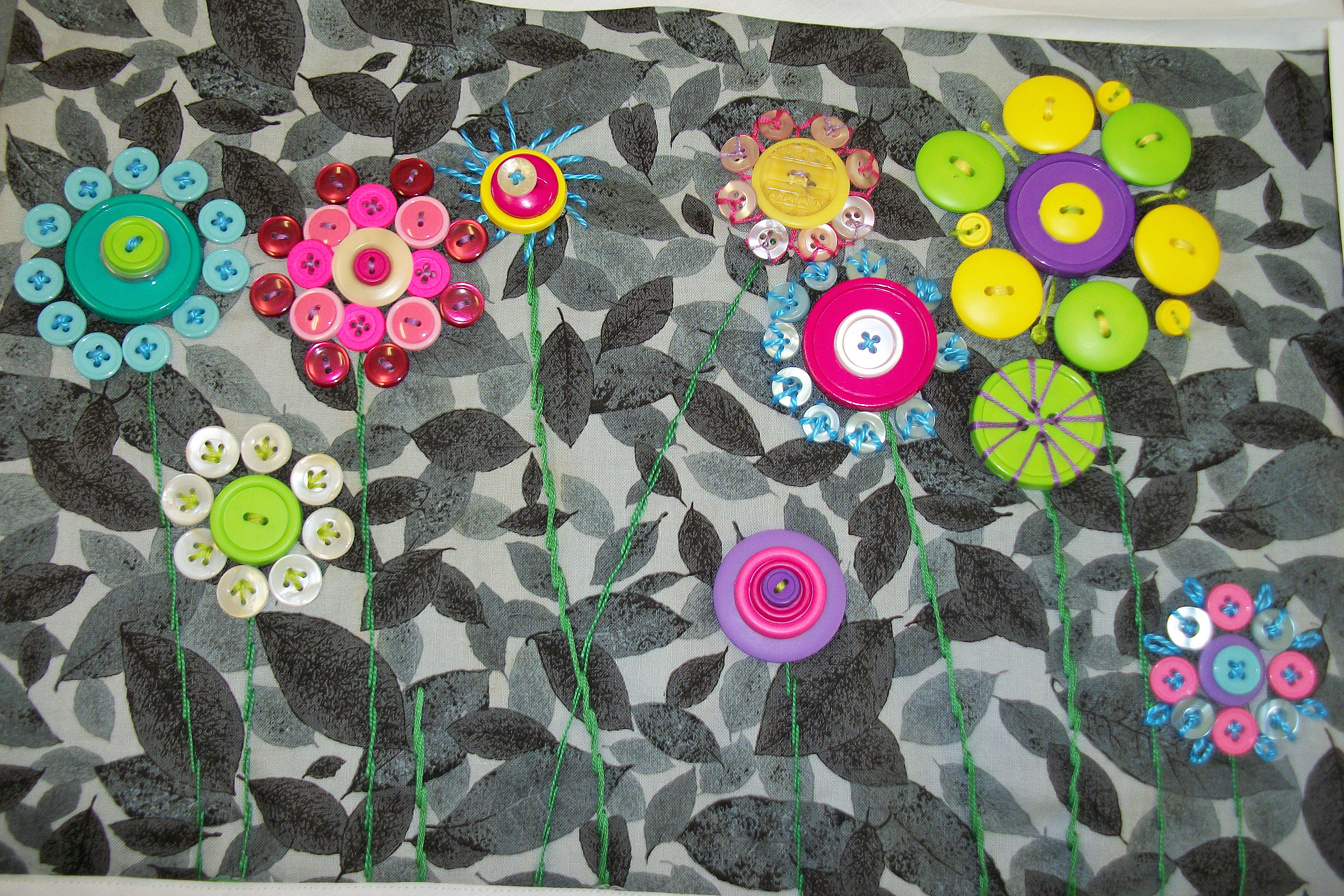
Here’s a picture of the possible variety with these book covers—from plain to decorated—that I did. 

The fabric and buttons on the “Bloom” cover–and the idea for single blooms–came from People, Places, and Quilts in Summerville, SC.  Here’s their number:   1-843-871-8872.  They sell kits with the fabric, buttons, and a colorful array of embroidery floss.  Their focus is pillows, and they sell books with the most adorable “sayings” one could embroider on a pillow and then decorate with buttons.  Carol Boyer taught us to use buttons as both single blossoms and to make multiple button “petals.”  And, she taught us to use embroidery thread–the whole six strands–in some of the creative ways you see above. 

I beaded the central leaf in the reddish cover fairly heavily–yet the effect is still fairly subtle.  – And the navy cover is of a Japanese indigo fabric, so I’m playing off the idea of Sachiko. 

FABRIC BOXES

On Saturday, April 9th, Coastal Quilters hosted Cheri Raymond, who taught us how to make fabric boxes. 

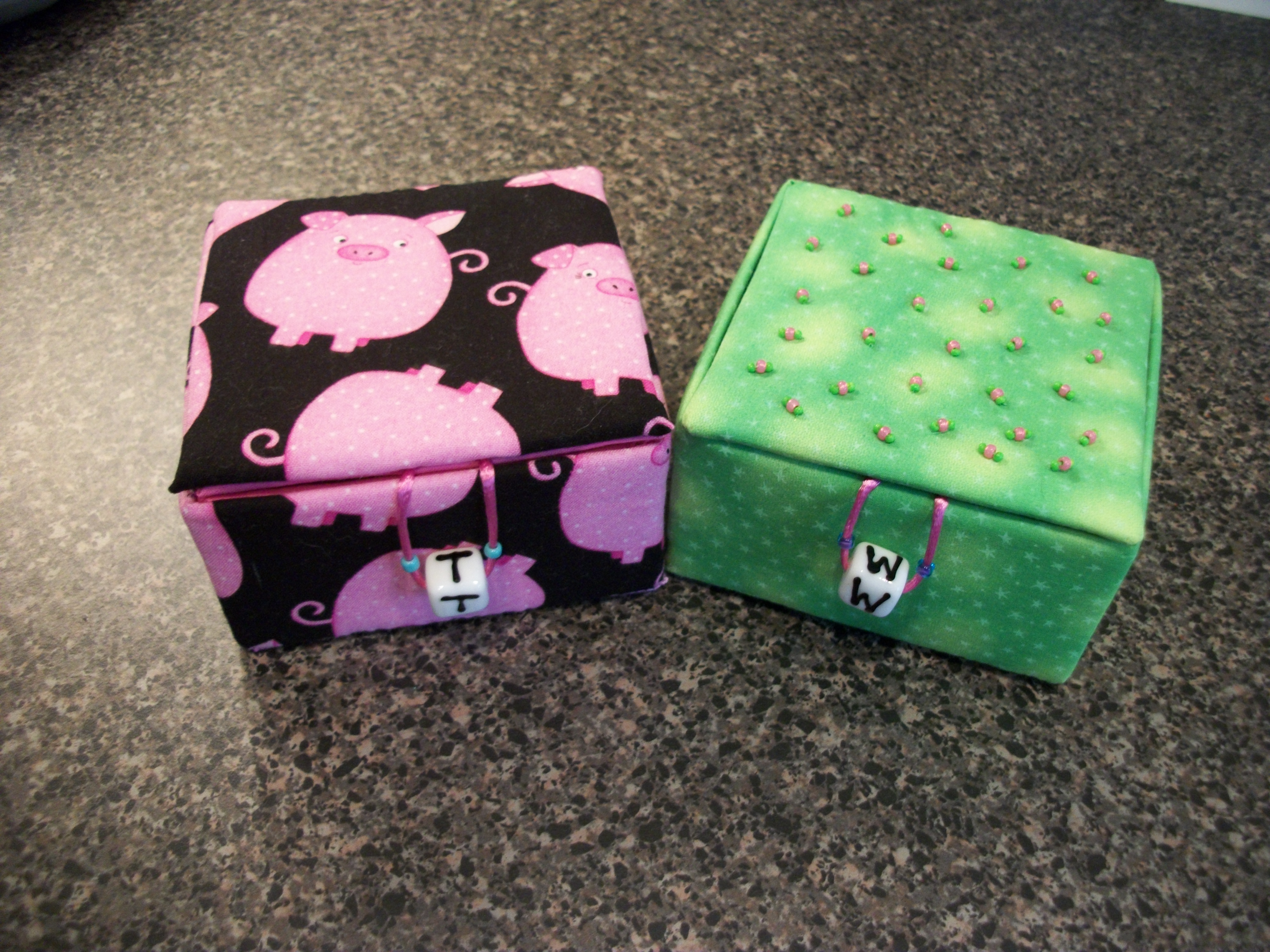
I’m afraid I did not do a good job of taking pictures of the amazing color combinations of boxes being made all around me as I was obsessed with making my own box.  But, here is one Beth Guisely made (green box) that I bought at our auction last year.  And, the one I made (pink pigs) at the meeting, so you can see what we did:

I glued the silk cord into the box top on the pink pig box and attached the cord on the inside of Beth’s box.  I experimented with beading the top of Beth’s box, and that worked out well.  (The boxes are gifts for two of my granddaughters.

And, here are the elegant insides of Cheri’s design:

It turned out that Pat Vitalo has been making fabric boxes for some time.  Here’s a picture of Pat’s very clever boxes:

The large open one folds up and is held together by its top.  I think it’s intended to be a sewing kit…

Anyway, you can see the Coastal Quilters had an intensive sewing weekend!

Turkey Tracks: First Freedom Rangers

Turkey Tracks:  April 16, 2011

First Freedom Rangers

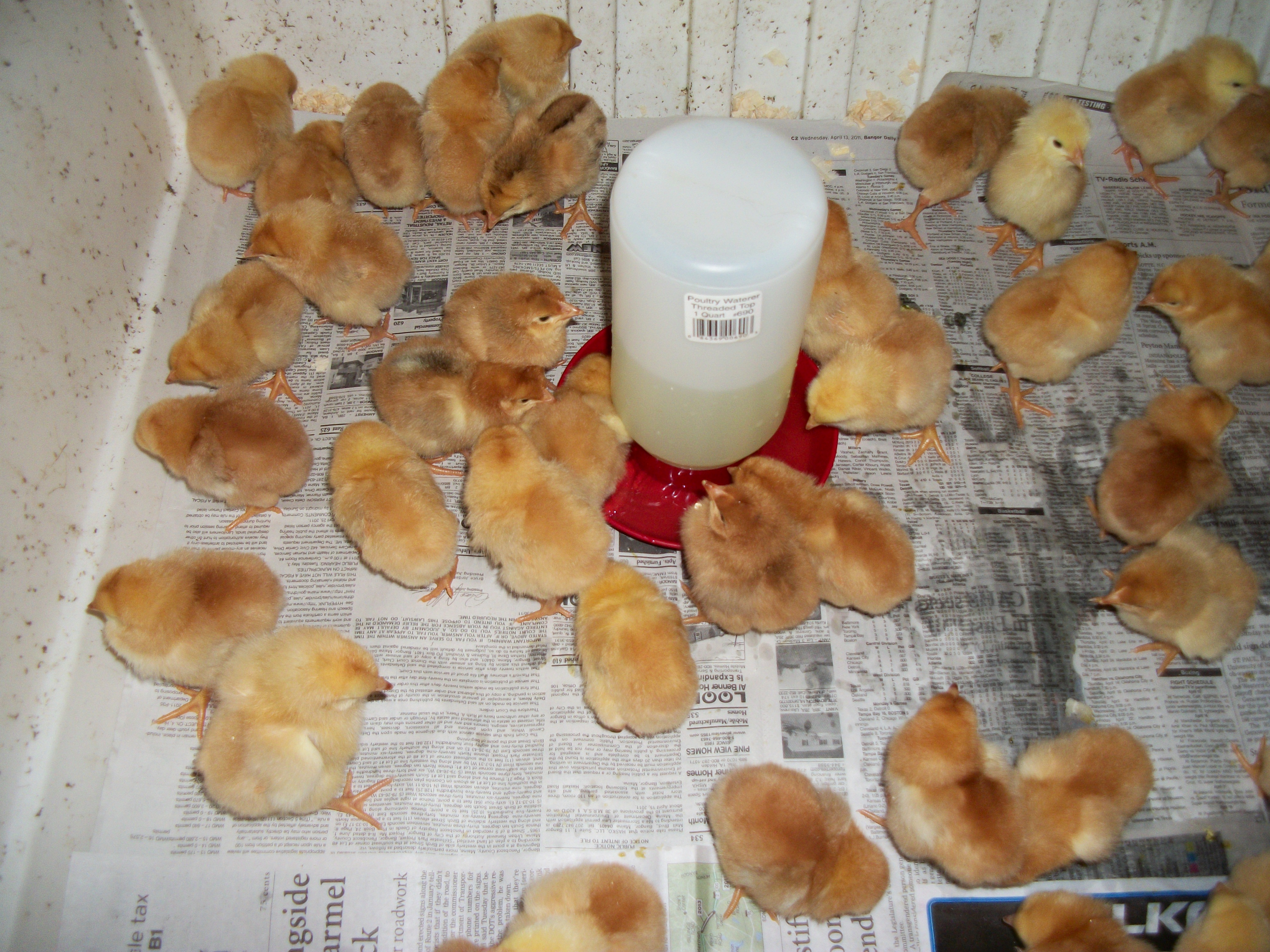
Here they are!

Our first Freedom Ranger chickens!

All 77 (75 plus two extras “in case”…) arrived at the Lincolnville, Maine, post office bright and early on Friday morning, April 15th.  Pete went to pick them up, and I met him at the house.  Margaret was there, too, as she was taking 15 of them.

As you can see, they are big, and lively.  There wasn’t a frail one in the bunch.

.

Freedom Rangers are good layers and good meat birds.  We will have some of each.

Freedom Rangers DO NOT HAVE any Cornish chicken in them, which makes them unique for meat birds.  The market, as I discussed in Tipping Points 9 on meat chickens, settled on meat birds which are all, virtually, Cornish or Cornish crosses.  The Cornish breed grows to over 5 pounds in 6 weeks and has a HUGE white, tasteless breast–produced for a market that went crazy about fat-free meat.  These chickens grow so quickly and are so heavy that their bones and organs won’t support them.  They are Frankensteins.  Their flesh has no texture and melts in your mouth.  Their bones don’t have the minerals they should have, so bone broths made from these bones aren’t as healthy as they should be.

Last year we tried Silver Cross’s–a cross between a barred rock and a Cornish.  The meat texture was lovely–like chicken I remember growing up.  The taste–was wanting.

Freedom Rangers are the same bird as the French sell under their Red label–which is highly sought after in France for taste and texture.

We’ll let you know in about 3 months.  Meanwhile, on Howe Hill, we have one frozen chicken left in the freezer.

Turkey Tracks: Spring Peepers

Turkey Tracks:  April 16, 2011

Spring Peepers

There are still a few patches of snow here and there, but the grass is greening up and bulbs are sprouting.   This past week, a clear herald of spring came:  the peepers started singing.

Peepers are tiny, tiny frogs with big, big voices.   They seem to live in wet lands, and we have one down the hill from us.  A little cold snap has silenced them for the past few days, but they’re stirring now.  I brought on the cold snap since I switched out my winter clothes for spring summer ones.  Unlike the peepers, I cannot crawl back into wherever it is that they winter.  Mud?

Here’s what they look like:

Here’s what they sound like:

http://www.youtube.com/watch?v=4SM6leUVorY