Turkey Tracks: The Swing Mailbox

Turkey Tracks:  April 18, 2015

The Swing Mailbox

Remember the blog post from last winter about my smashed mailbox?

Well, it’s now spring, and it’s time to fix the mailbox.

Here’s the very cool solution:  MailSwing

I picked it up yesterday in Pittston, Maine, from Tim Gay.  This business is now going to be a third-generation father/son business.

Stephen Pennoyer came right away and started digging a new mailbox hole (3 to 4-feet deep) and spray painting all the metal black.

This morning he came early and finished the whole job, and SIL Maryann Enright and I went to the hardware store for sticky numbers for the pole and box.


Interesting Information: Steven Drucker’s ALTERED GENES, TWISTED TRUTH: How GMOs Took Over the Food Supply

Interesting Information:  April 2015

ALTERED GENES, TWISTED TRUTH:  How GMOs TOOK OVER THE FOOD SUPPLY

Steven Drucker

Well, here’s a surprising and interesting story–that involves, of course, corruption within the FDA.  We should not be too, too surprised since in this era of late capitalism, we are living with many unhealthy products we were told were “safe” by those meant to protect our best interests.

Steven Drucker has unearthed the history of how we got untested  GMOs in the food supply, and guess what, Monsanto did not do it.  And that is perhaps why the story is so interesting.

Altered Genes, Twisted Truth: How GMOs Took Over the Food Supply.

Here’s a few excerpts:

In May 1992, the FDA made a blanket presumption that GE foods qualified to be categorized “Generally Recognized as Safe” (GRAS). They then said that this meant these foods could be marketed without any safety testing at all.

“That actually is a blatant misrepresentation of US food law, but that was the FDA claim,” Steven says. “[They claim] there’s an overwhelming ‘scientific consensus’ they’re safe, and so safe that they don’t need to be tested. Therefore, the FDA let these foods into our market without the requirement of a smidgen of testing.

Moreover, they didn’t even require these foods be labeled, so the consumers at least would be informed about the major genetic reconfiguration that had occurred. This struck me as not only being unscientific but irresponsible and unethical. At the time, I had a hunch it was also illegal.”

As he continued researching the matter, that hunch was confirmed. Not only is the policy governing GMOs at odds with the science, it violates US law. At first, Steven did not think he was sufficiently qualified to launch a lawsuit to contest the FDA’s ruling. But as time went on, it became clear that no one else was willing to stick their neck out to do it.

And, of course, when one sticks out one’s neck and tries to get at the history or the truth, one gets immediately demonized, fired, banished, and so forth.

According to the FDA’s own admission, the agency has been operating for years under a policy to promote the US biotechnology industry. They decided it was more important to promote the industry and uphold the fragile image of GE foods rather than tell the truth and acknowledge the scientist warnings. So they covered up these warnings. Had Steven not sued, the warnings of the FDA’s own scientists still would be unknown to this day.

“We wouldn’t know the extent to which the FDA has been lying all these years. But fortunately, we do know now,” he says. “And what we know is that although the FDA scientists overwhelmingly concluded and warned their superiors that these foods entail unique risks, that they cannot be presumed safe, and that each one of them should be subjected to long-term rigorous toxicological testing, what the public heard from the FDA was that “The agency is not aware of any information showing that foods developed by these methods differ from other foods in any meaningful or uniform way.”

Now, it’s impossible, I think, for any rational man or woman to read just the sampling of memos from the FDA scientists that are posted on the website of the Alliance for Bio-Integrity… and feel that the FDA’s assertion is  anything other than a blatant fraud meant to mislead the public, mislead the world, and allow genetically engineered food a free pass to enter the market. It’s just an astounding fraud.”

For close to 20 years, the American public has been exposed to these largely experimental, untested foods, which its own scientists said entail unique risks and could not be presumed safe. The FDA claimed GMO’s could be presumed safe, and that there was an overwhelming scientific consensus backing up their decision, yet the evidence shows that is a bold-faced lie.  One document (document #8), is a letter from the FDA’s biotechnology coordinator to an official of Health Canada, written in the fall of 1991, just six months before the FDA’s ruling on GE foods.

Dr. James Maryanski’s letter acknowledges that there is no consensus about the safety of these foods within the scientific community. That admission is in the FDA’s own files. “Even if we didn’t have the memos from the scientists, we would have that admission, and yet, what happened? The FDA basically just buries that and lies about it all,” Steven says. What’s worse, because the FDA is so widely respected, and because the US—which is known to have strong food safety laws—said GMO’s were GRAS, it paved the way for easy approval in Canada as well. Europe also relaxed their stance on GMO’s as a result of the FDA’s lie.

And here’s an interesting twist in the story:  the molecular biologists did it.

These lobbying efforts were not backed by the biotechnology industry, mind you. There was no biotechnology industry at that time. This is a key theme of Steven’s book, because it’s easy to forget that there was a time before the biotechnology industry, and very few know who the leaders of the genetic engineering establishment were, or why the technology was invented in the first place. As much as most of us despise Monsanto for their reprehensible behavior, they could never have implemented their strategy if it weren’t for the prior misbehavior of the molecular biologists.

“The biotechnology industry—as irresponsible as they have been by and large—the main guilt lays at the feet of the mainstream molecular biology establishment; the scientists who were doing the research, getting the grants, and wanting to develop this technology. Most of them had altruistic goals. They thought this was going to be used to cure so many ills in the field of medicine… I think they eventually developed an ‘end justifies the means’ psychology…

But when you have so many highly influential, powerful scientists who are working together to convince the world that genetic engineering is inherently safe, and that the research they’re pursuing is safe, that can be somewhat dangerous. And it turned out being very dangerous for the world, I think.

One of the points made in the book very clearly, is that the burden of proof that was placed on new technologies and new products, which ordinarily requires the developer to substantiate the safety of the new technology and its products, got shifted. It got shifted because of the subterfuge and the fraud, and it was put on the shoulders of the critics, the people who had concerns. There were many good scientists who had concerns, but they were all of a sudden put into the position of, You’ve got to prove they’re dangerous,” and the burden of proving safety was removed.”       

I hope you take some time to read this history because this kind of thing is happening in so many areas of our nation today.  This is late capitalism.  We cannot have a democracy as long as these kinds of events are allowed.  It is crucially important to know that you cannot trust what you are being told, that you have to look deeper–or we are never going to get out of this mess. 

Interesting Information: Chickenpox and Shingles

Interesting Information:  April 14, 2015

Chickenpox and Shingles

BOUGHT, the movie, is sharing some of its out-takes with those who signed up for getting further information.

This little video/interview discusses chickenpox and shingles.
Bought Movie Bonus Short- Chickenpox | Jeff Hays Films.
Books/Recipes: NOURISHING BROTH, Sally Fallon Morell and Kaayla T. Daniel, PhD

Books/Recipes:  April 14, 2015

NOURISHING BROTH


The “nourishing” genre of food/cookbooks has been enriched by one:  Sally Fallon Morell and Kaayla T. Daniel, PhD’s NOURISHING BROTH.

You may recall that Sally Fallon Morell wrote NOURISHING TRADITIONS with Dr. Mary Enig, who fought the good fight to show how dangerous trans fats and vegetable oils are and how good for you saturated fats from healthy animals are.  And you may recall that Jennifer McGruther recently published NOURISHING KITCHEN and has a great web site that is a constant resource–as is the Weston A. Price Foundation’s web site.

IMG_0592

So, you cannot read this blog for long without knowing I am a big fan of and great believer in real, homemade bone broths.  Of course I ordered this new book anyway–and it is chock full of the science of bone broths, of why they are so good for us.  And, of course, the book tells you all the ins and outs of making bone broths and how to use them in all sorts of soups, stews, sauces, gravies, and so forth.

After reading the book, I have been defrosting my stored bone broths and heating a cup full for breakfast–instead of drinking tea.  I add raw milk and salt if needed, and am thinking of adding a beaten raw egg, such as you might find in a Chinese or Greek egg soup.  I am finding I have no need for coffee/tea after this gorgeous drink–one that feels good right down to my toes.  And look, ma, no sugar/honey in the morning.  Many cultures drink a hot bone broth soup for breakfast–while we are eating and feeding our children a nutrient nightmare of sugared cereal.  It didn’t take me but one morning to realize what I had been missing.

One of the many things that Morell and Daniel point out is that with the advent of fake bouillon cubes (which have no meat in them and are the beginning of the dangerous excitotoxin MSG), we lost the nourishment we were getting from bone broths that were the base of much of the food we ate.  Bone broths build…bones.  Bone broths are full of gelatin (if made right) and lots of minerals and good fats–all mixed up in a hearty hot broth.

So, in a restaurant, if you encounter a “homemade soup,” ask if the soup is made from bones/meat in the kitchen or if a “base” is used.  Avoid the base soup as it is all made from fake products.

Here’s a little video of Kaayla T. Daniels talking about bone broths and bones:

“Bone Broth” Builds Bone Not Because of Calcium.

Turkey Tracks: April Update

Turkey Tracks:  April 13, 2015

April Update

Where does the time fly to?

I am never sure, beyond the certain knowledge that it’s moving really fast…

As you can see from earlier posts, I’ve just returned from an exciting few days of classes and viewing at the April MQX show in Manchester, NH–with friend Gail Galloway-Nicholson.

Here’s our favorite quilt from this show–and I’m sorry that I did not get the quilter’s name.

IMG_0280

IMG_0281

I can appreciate the glorious work in this quilt, but for myself, I shy away from trying to make something with so, so much work in it.  I prefer a quilt that can be used and loved and washed.  Thus, I was much more drawn to this Bonnie Hunter quilt–Texas Tumbleweeds–done in a different colorway than what Bonnie did:

IMG_0247


IMG_0244


IMG_0246


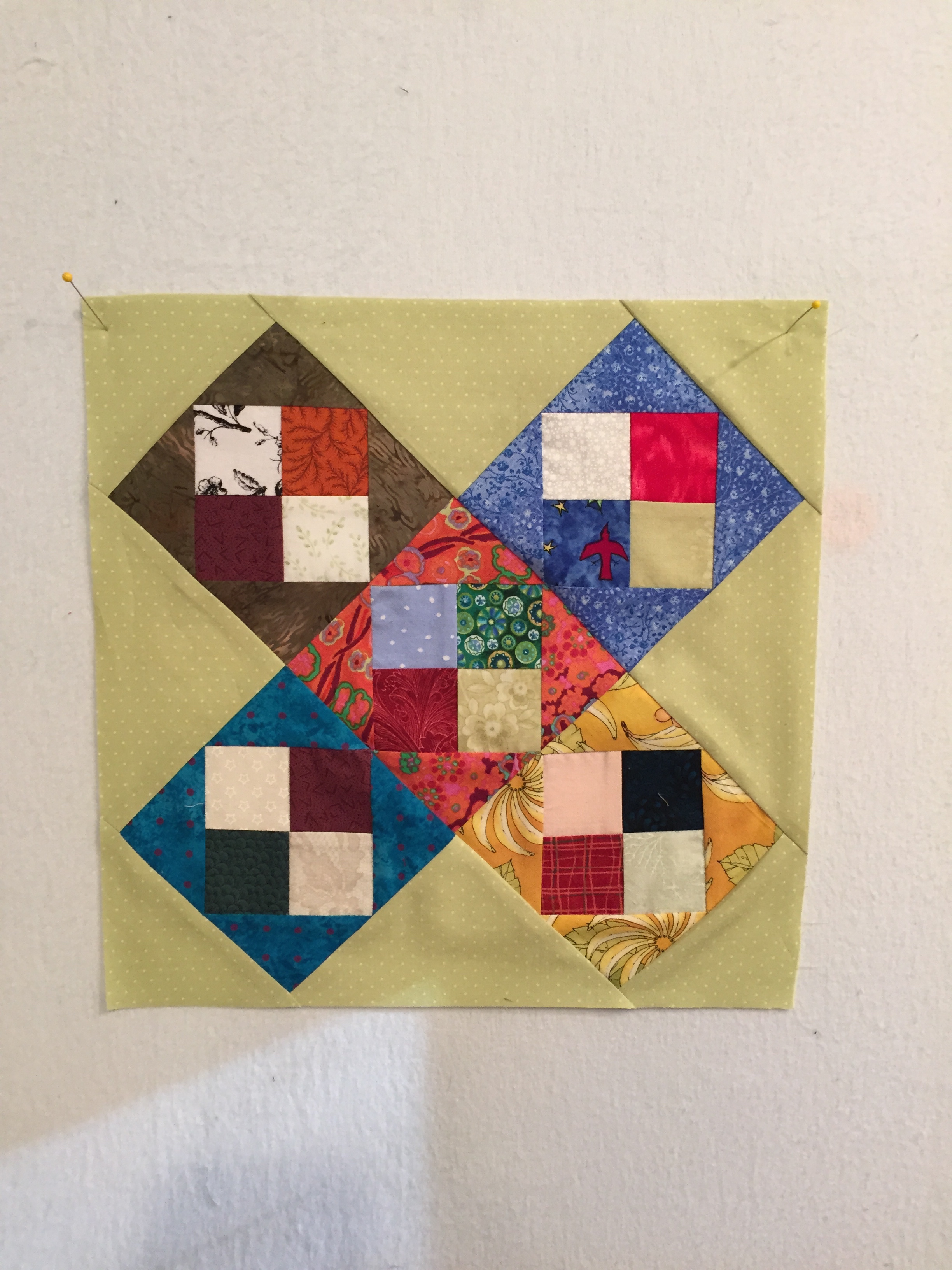
Bonnie Hunter is part of the American Patchwork and Quilting Magazine’s 2015 4-patch challenge.  And as you know, I’ve been making these “Bonnie” blocks right along.  About 10 days or so ago, Bonnie showed how she was going to set her blocks.  Bonnie used aqua, and I’ve chosen a limey green:

IMG_0233

I’m working on the Coastal Quilter’s UFO challenge–due in May–so I’m making these blocks as a kind of leader/ender project at the moment.

And waiting to see how Bonnie is going to set them…

Look what I found along the front walk way today…

IMG_0282

Snow drops!  Aptly named…


Quilting Information: MQX, Manchester, NH–Jenny Pedigo and Helen Robinson Quilts

Quilting Information:  April 13, 2015

MQX, Manchester, NH–Jenny Pedigo and Helen Robinson Quilts

I appreciate modern quilts, but am not drawn to making them.

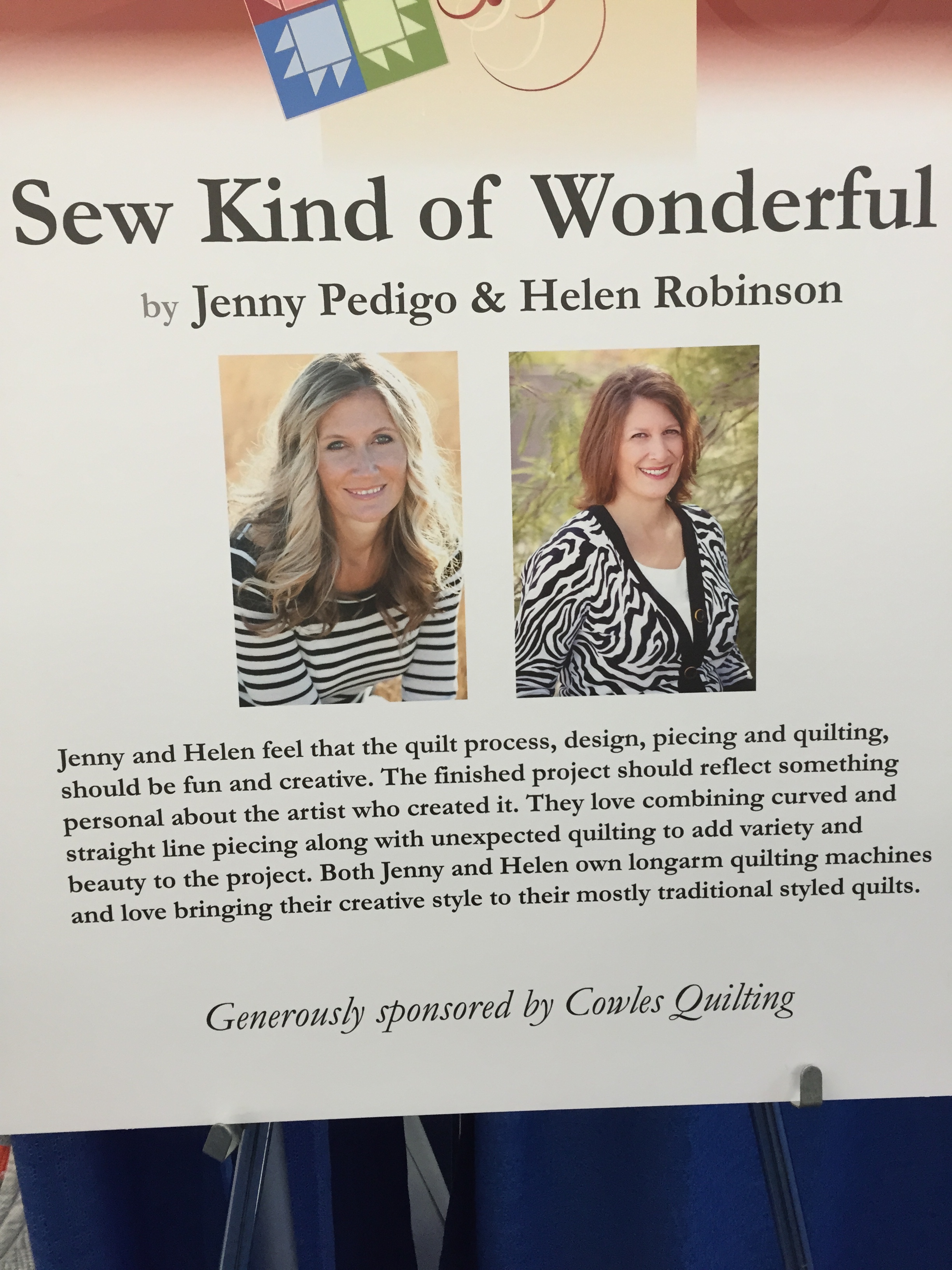
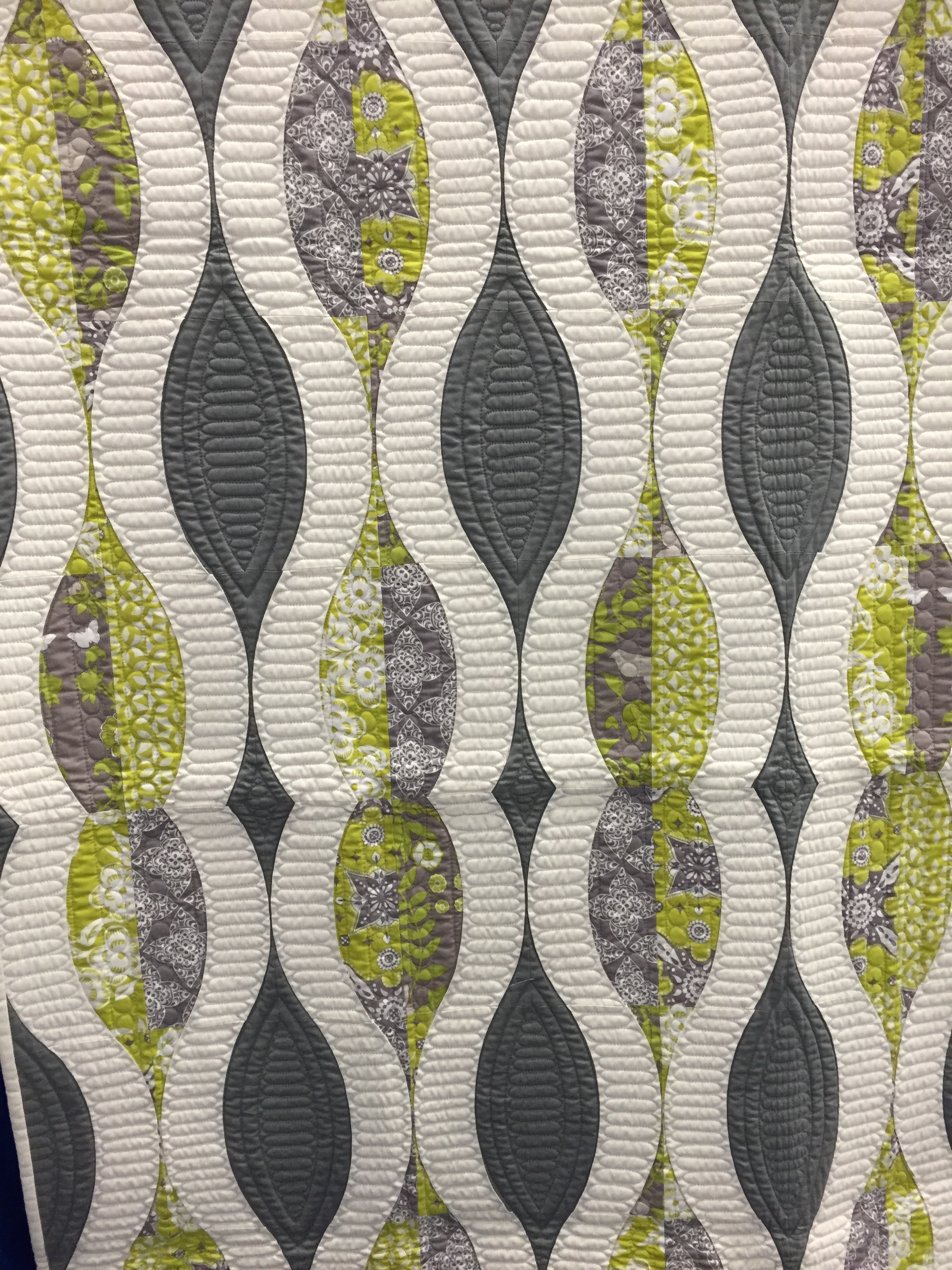
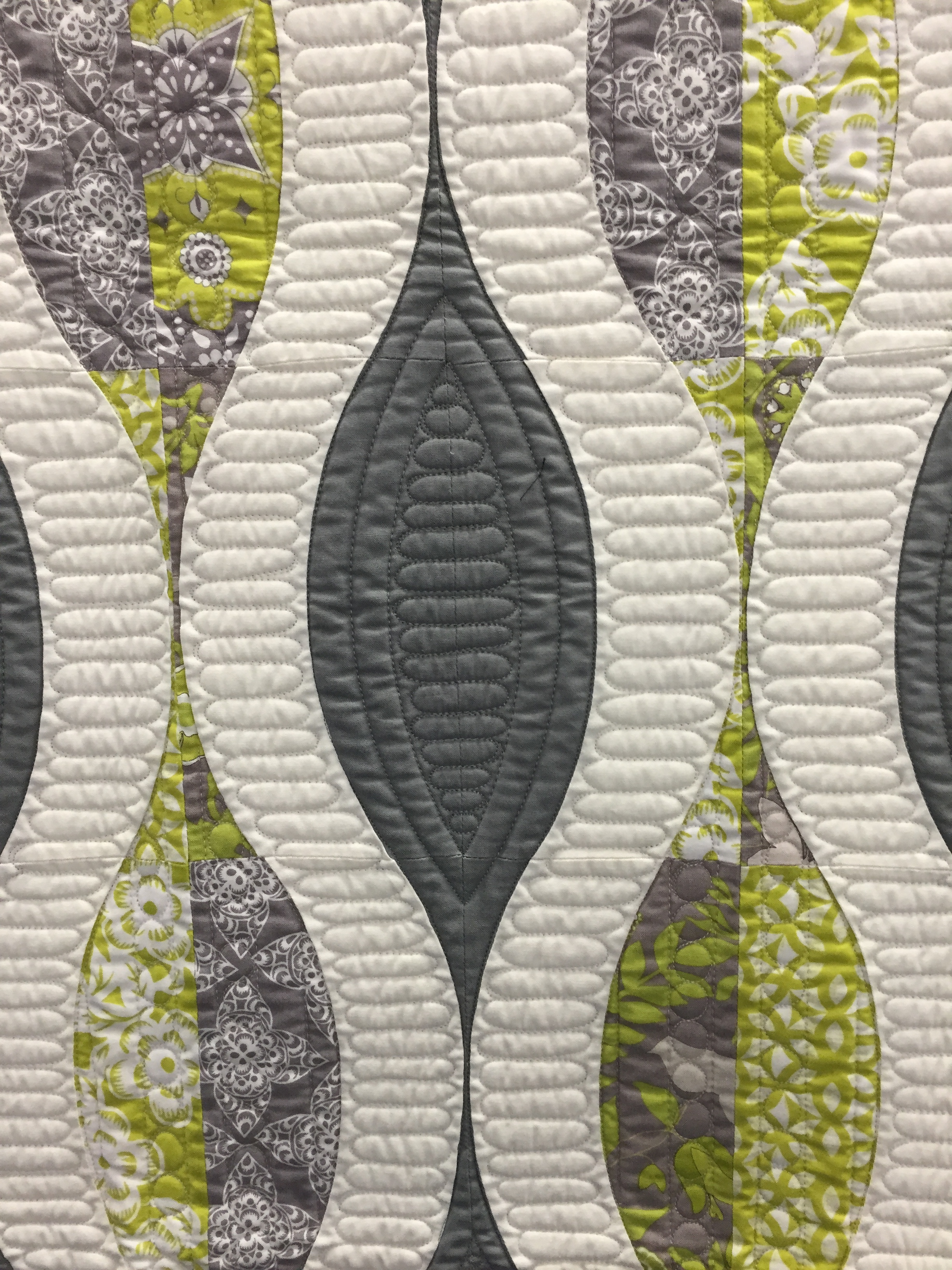
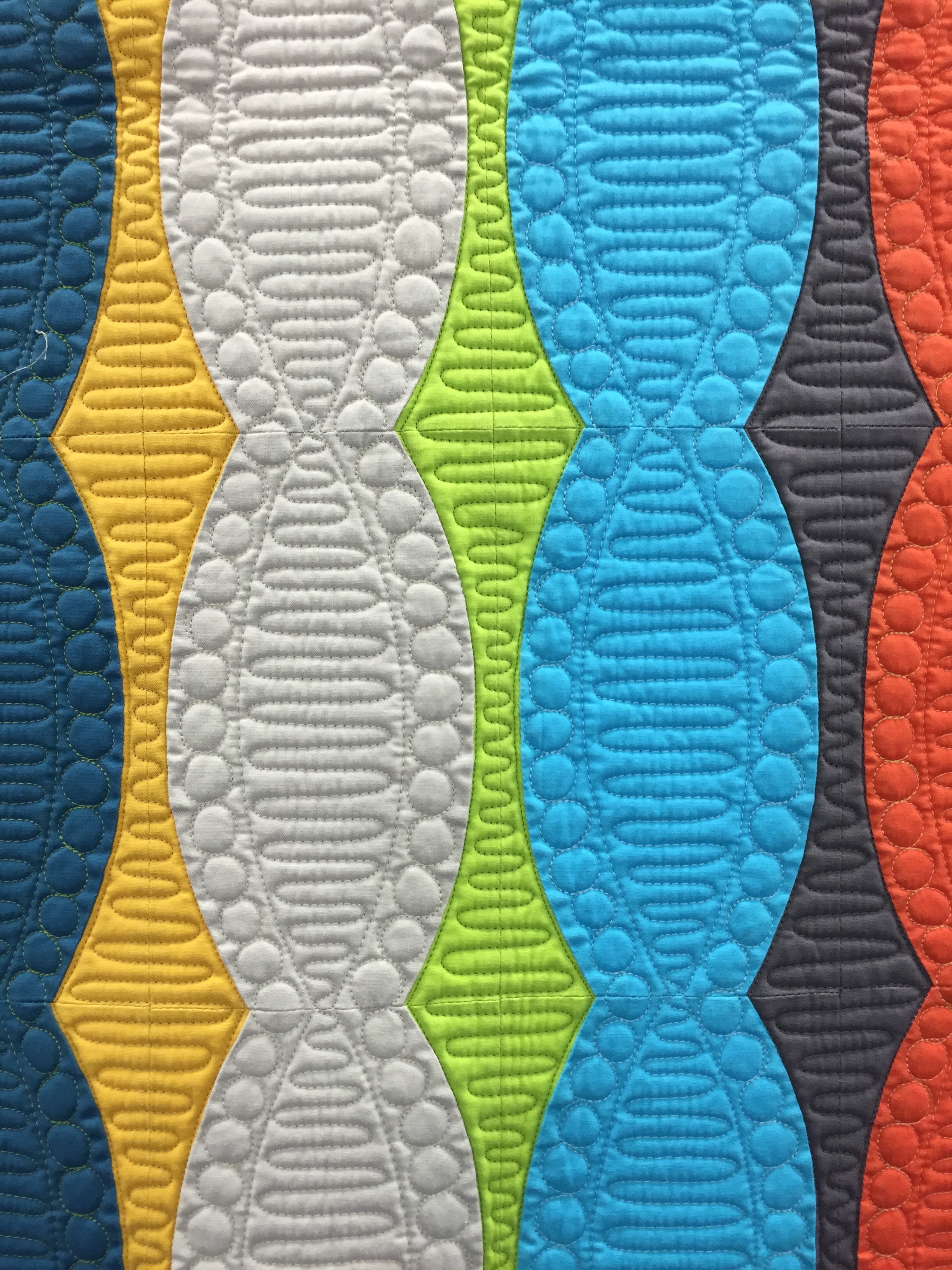
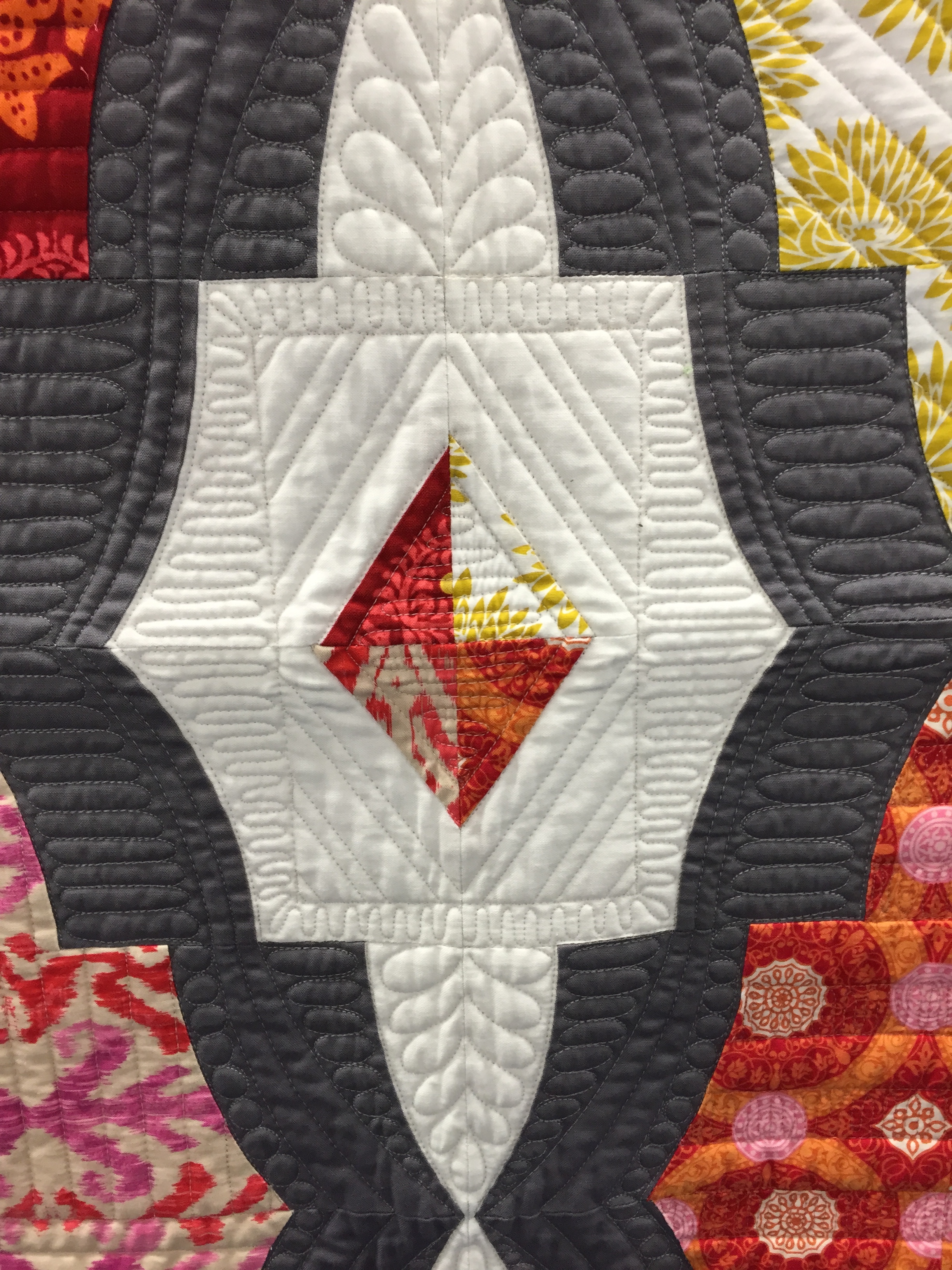
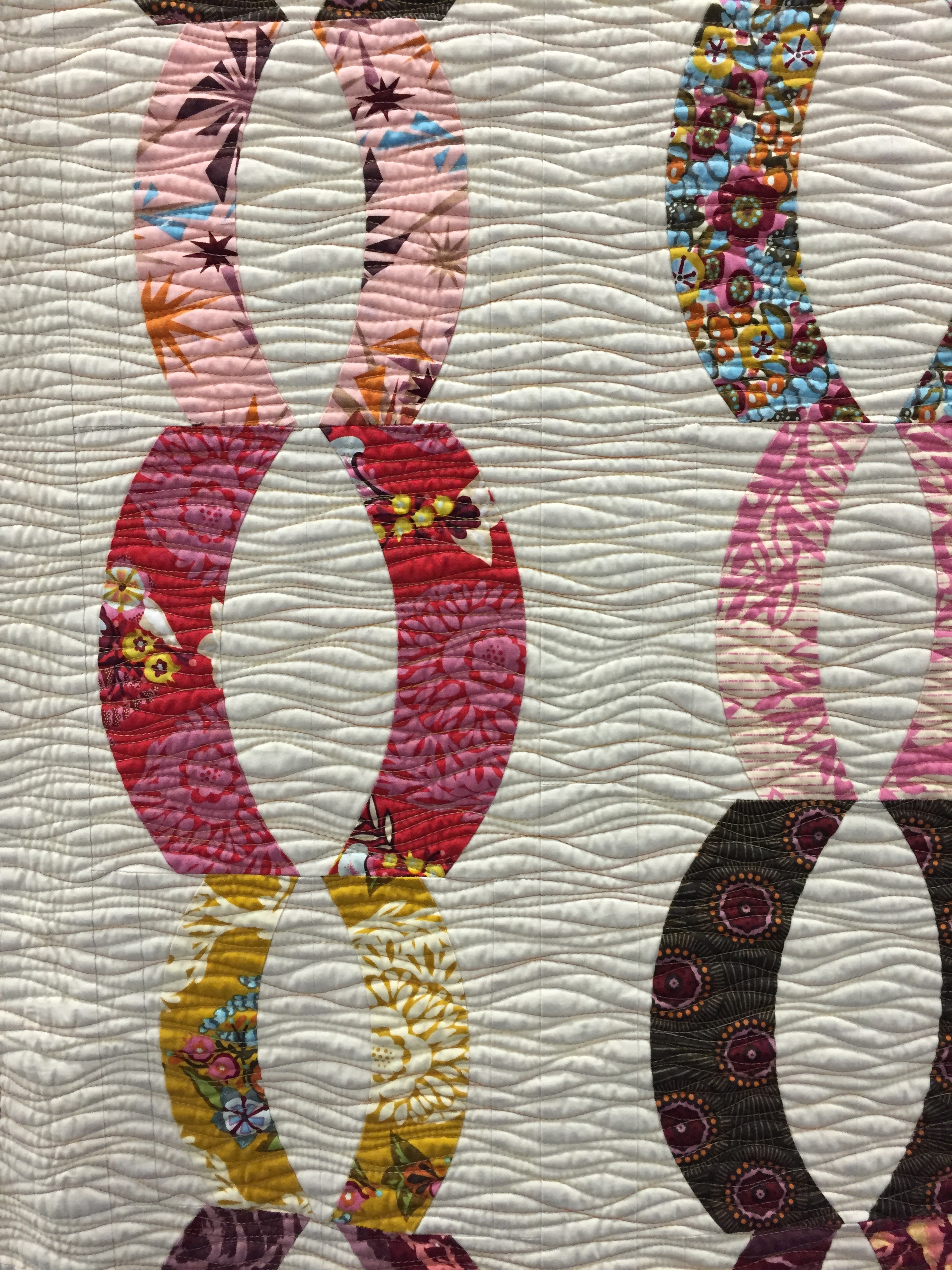
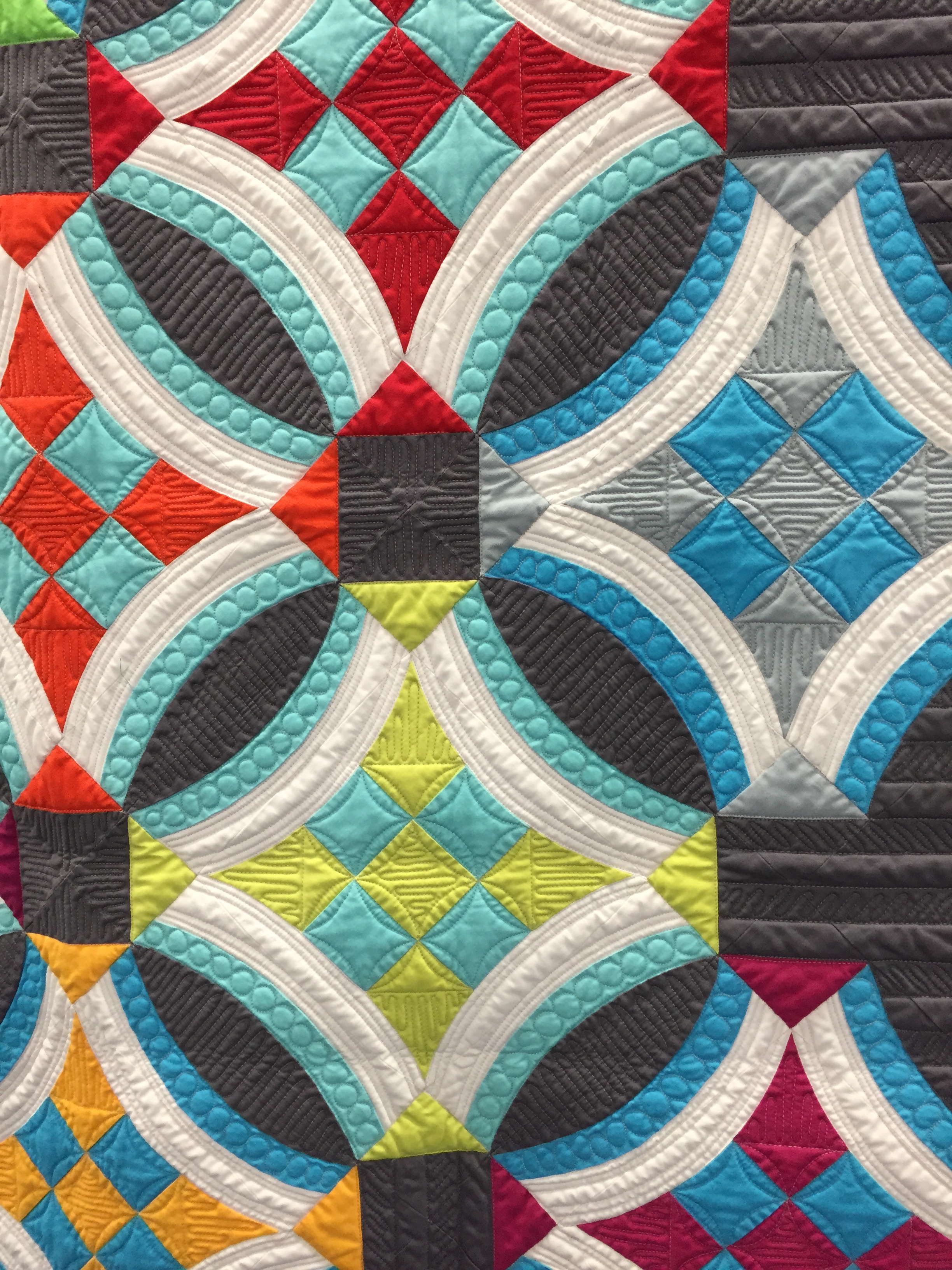
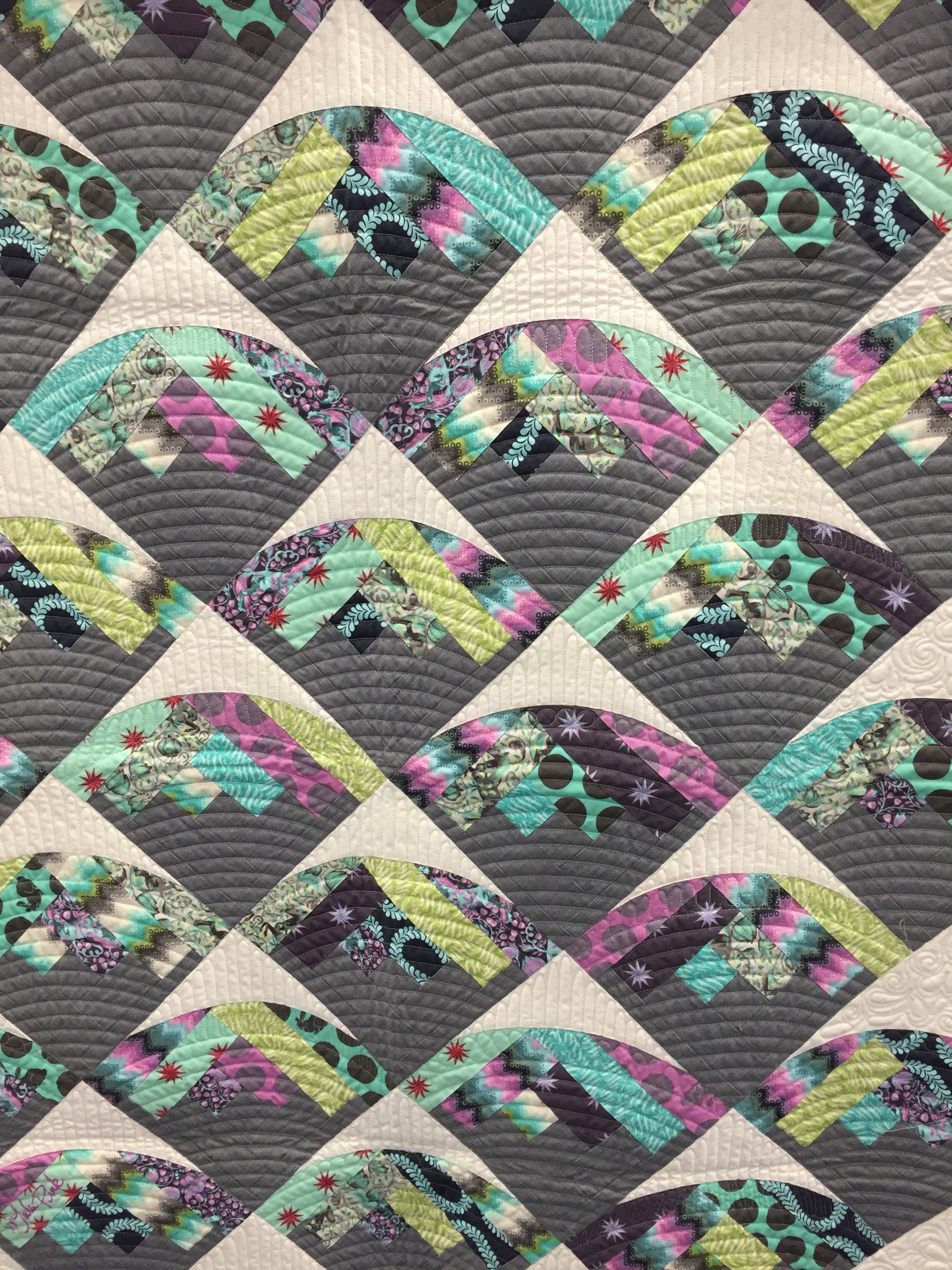
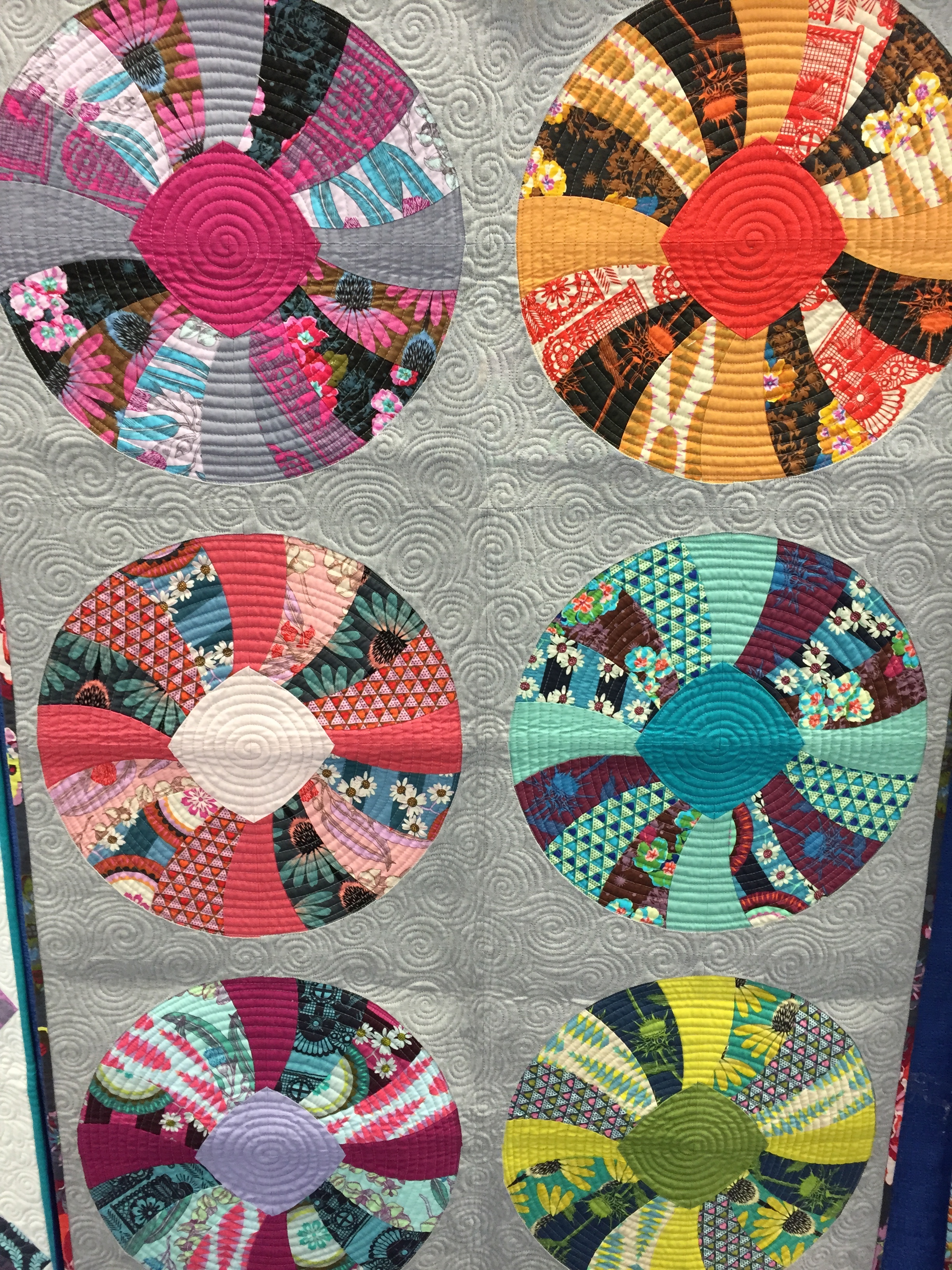
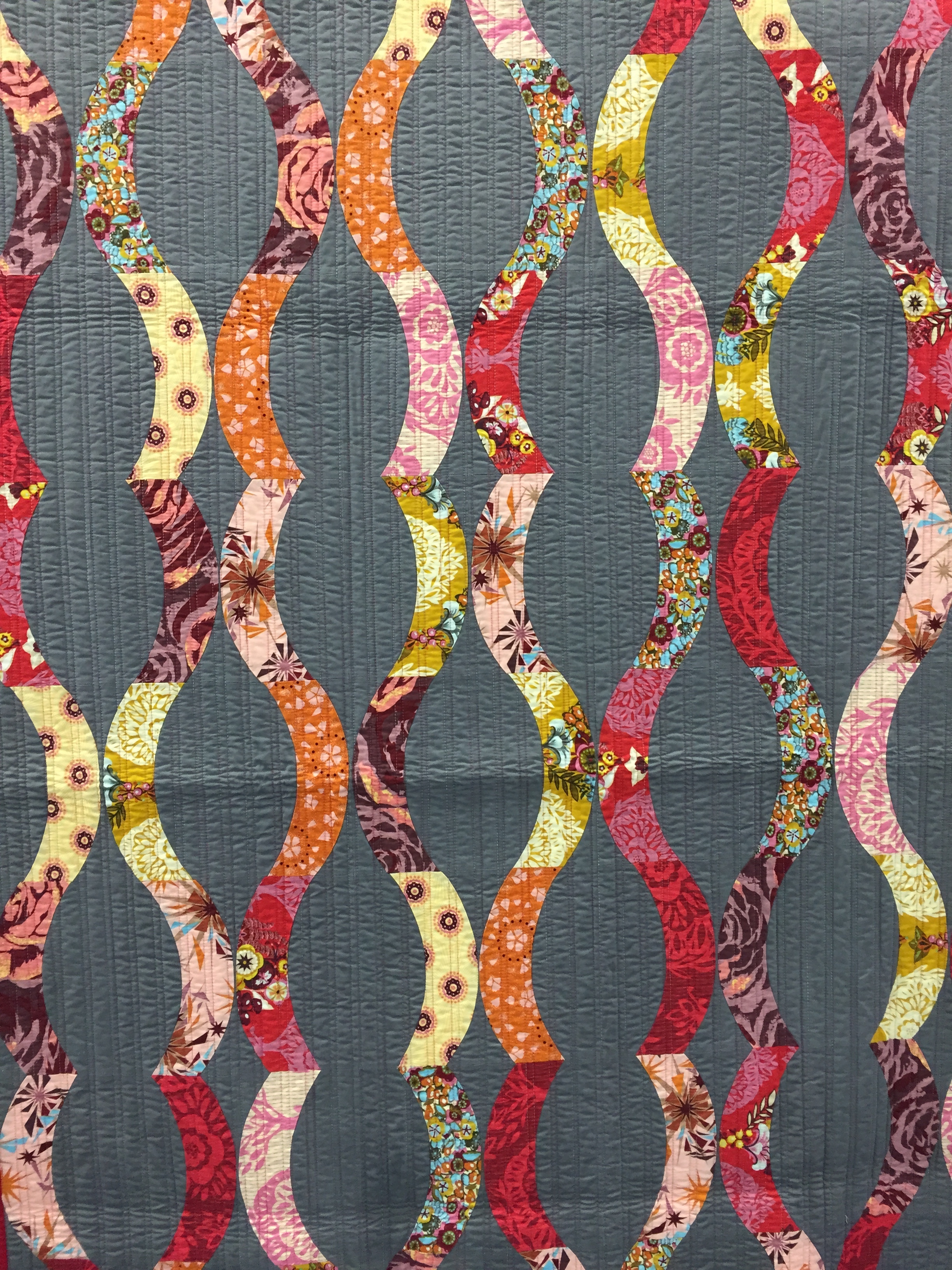
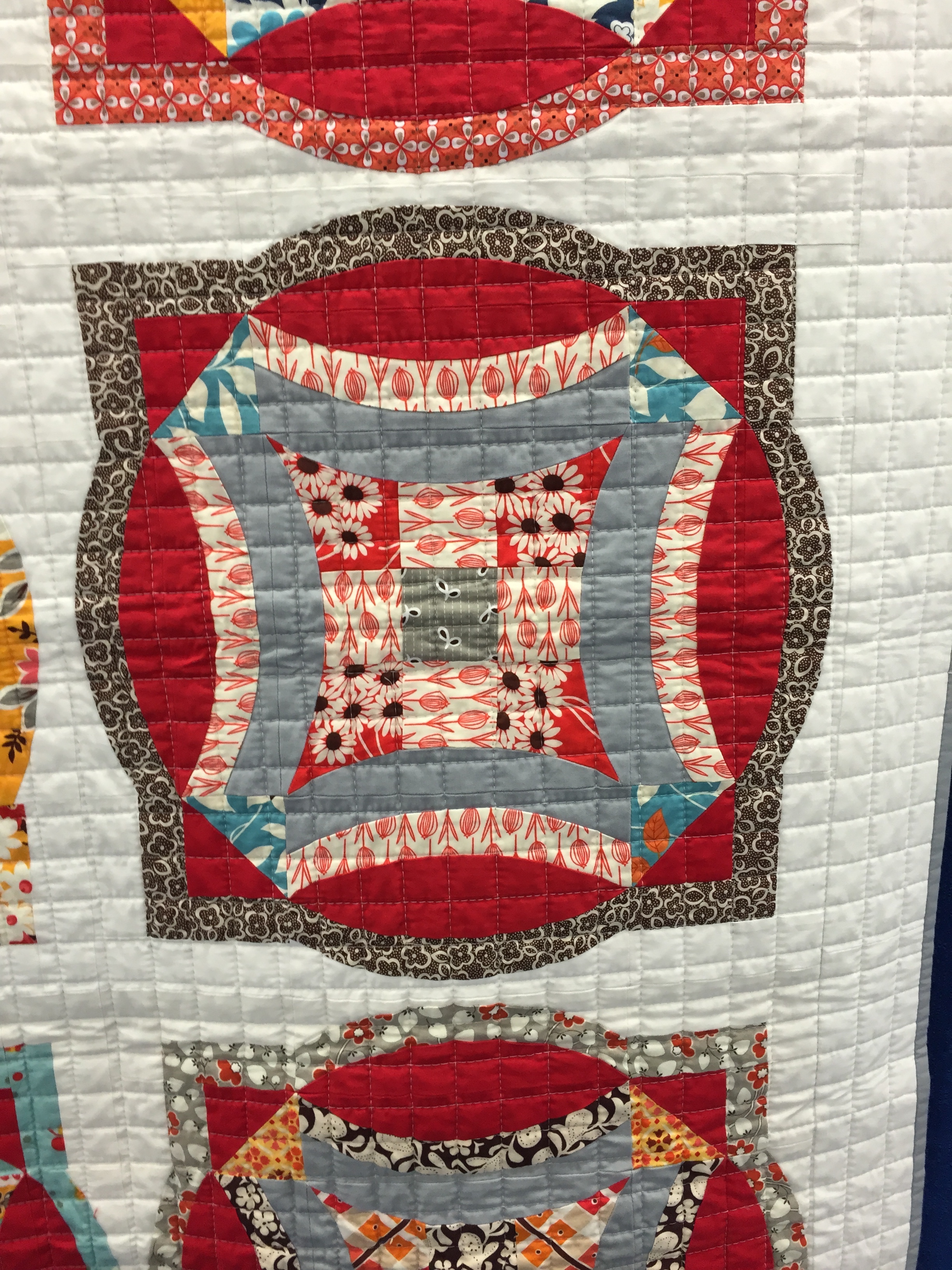
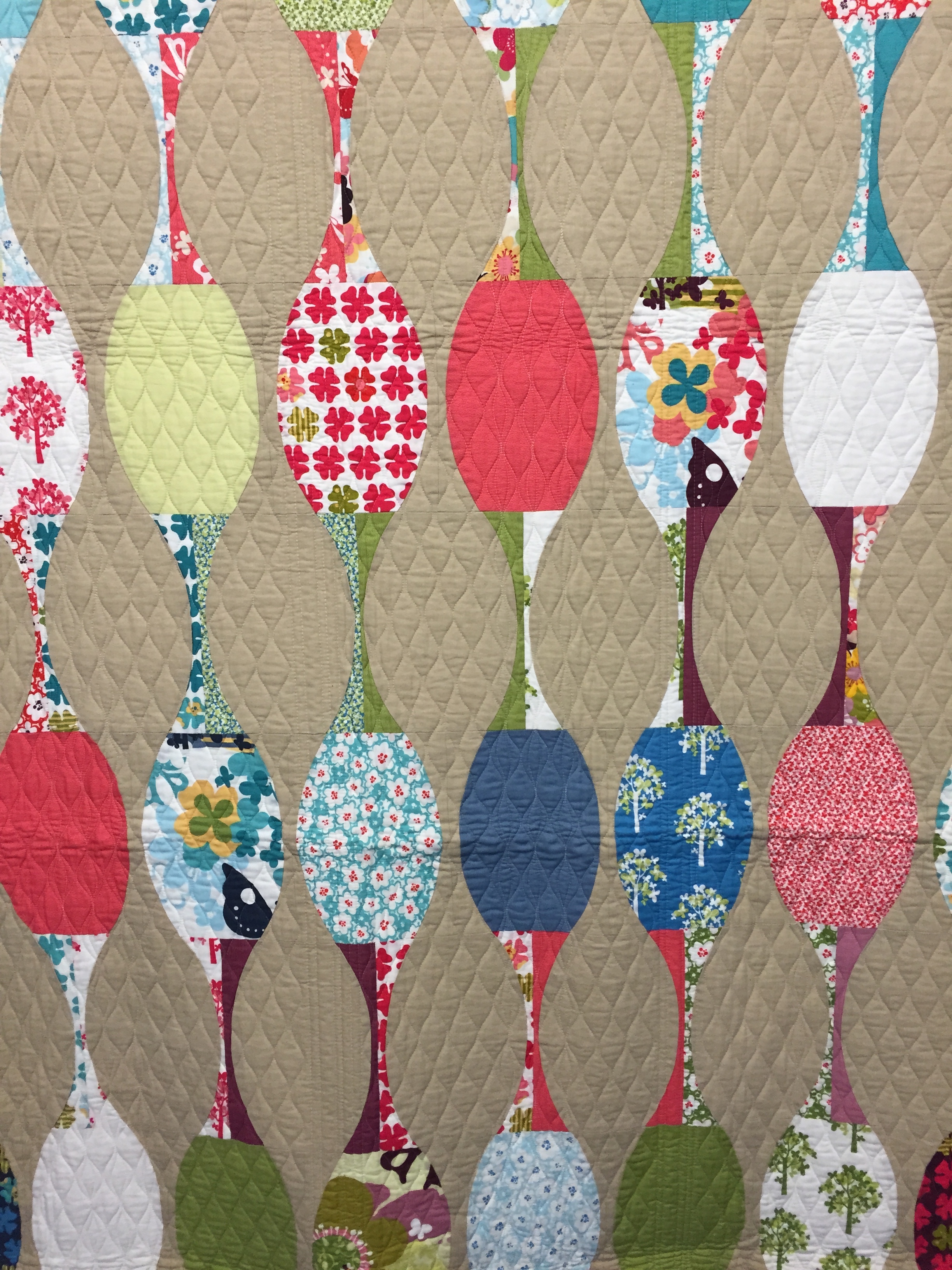
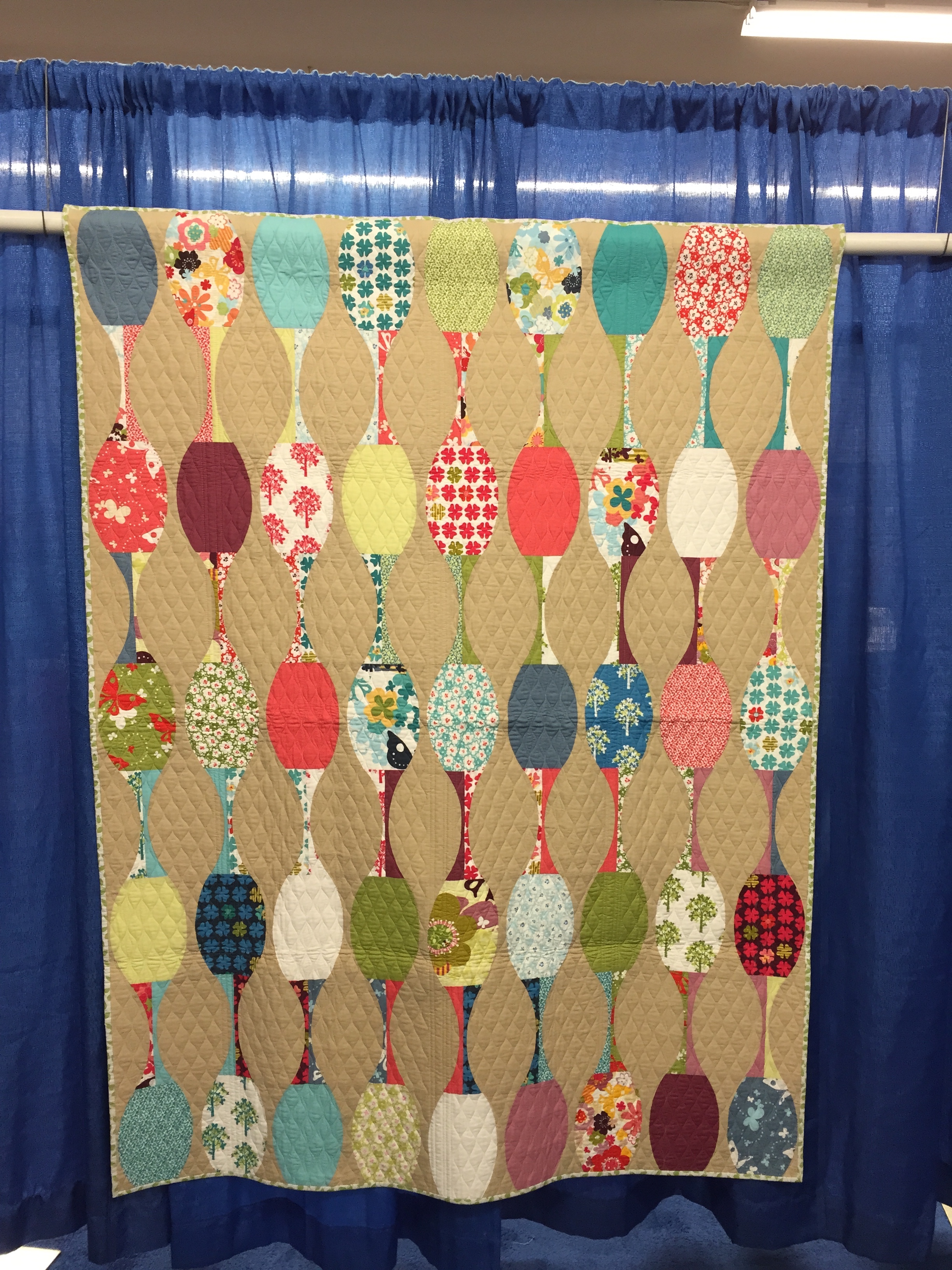
However, the Jenny Pedigo and Helen Robinson (sisters) display of quilts at this spring’s MQX show was really fun to see.  And I certainly enjoy the sense of “style” and the lovely quilting seen in modern quilts.

I attempted to take a picture of most of the quilts shown.  Or pieces of these quilts anyway.  Those of you who have ipads or iphones can enlarge the pictures to see the fine detail of the quilting.

And, there is at least one book from these two amazing women.

Note that modern quilts often play with the juxtaposition of straight lines and curves.

And note the use of grey here, which is very “big” right now.

IMG_0252


IMG_0278

IMG_0279

IMG_0277


IMG_0276

IMG_0275

IMG_0274

IMG_0273

IMG_0272

IMG_0271

IMG_0270

IMG_0269

IMG_0268

IMG_0267

IMG_0266

IMG_0265

IMG_0264


Here’s my favorite:


IMG_0263

IMG_0261


IMG_0260

IMG_0259

IMG_0258

IMG_0257

IMG_0256

IMG_0255

IMG_0254

IMG_0253

These quilts are GRAND!  So fun.

Quilting Information: MQX, Manchester, New Hampshire, April 2015

Quilting Information:  April 13, 2015

MQX 2015

I am just back from the Machine Quilters’ Expo, held in early April in Manchester, New Hampshire.

I took four classes and really learned so much.  The teachers were Judi Madsen, Judy Woodworth, and Angela Huffman.

I used to free-motion on my domestic machine a lot.  But when I got my long arm, I settled into making the kind of quilts I love the most:  big and scrappy.  Those quilts really look their best when quilted with an even, overall pattern.  Thus, I’ve been using pantographs most of the time.

However, I do not want to lose my free-motion skills.  And I do make some quilts that would look great with more custom quilting.

So, I have a goal of improving my “front of the machine” skills this year.

Angela Huffman does it all.  She spent her time teaching us how she works.  She uses free-motion and templates.  She taught us so many patterns that I will definitely be able to use.  Her web site is http://www.quiltedjoy.com.

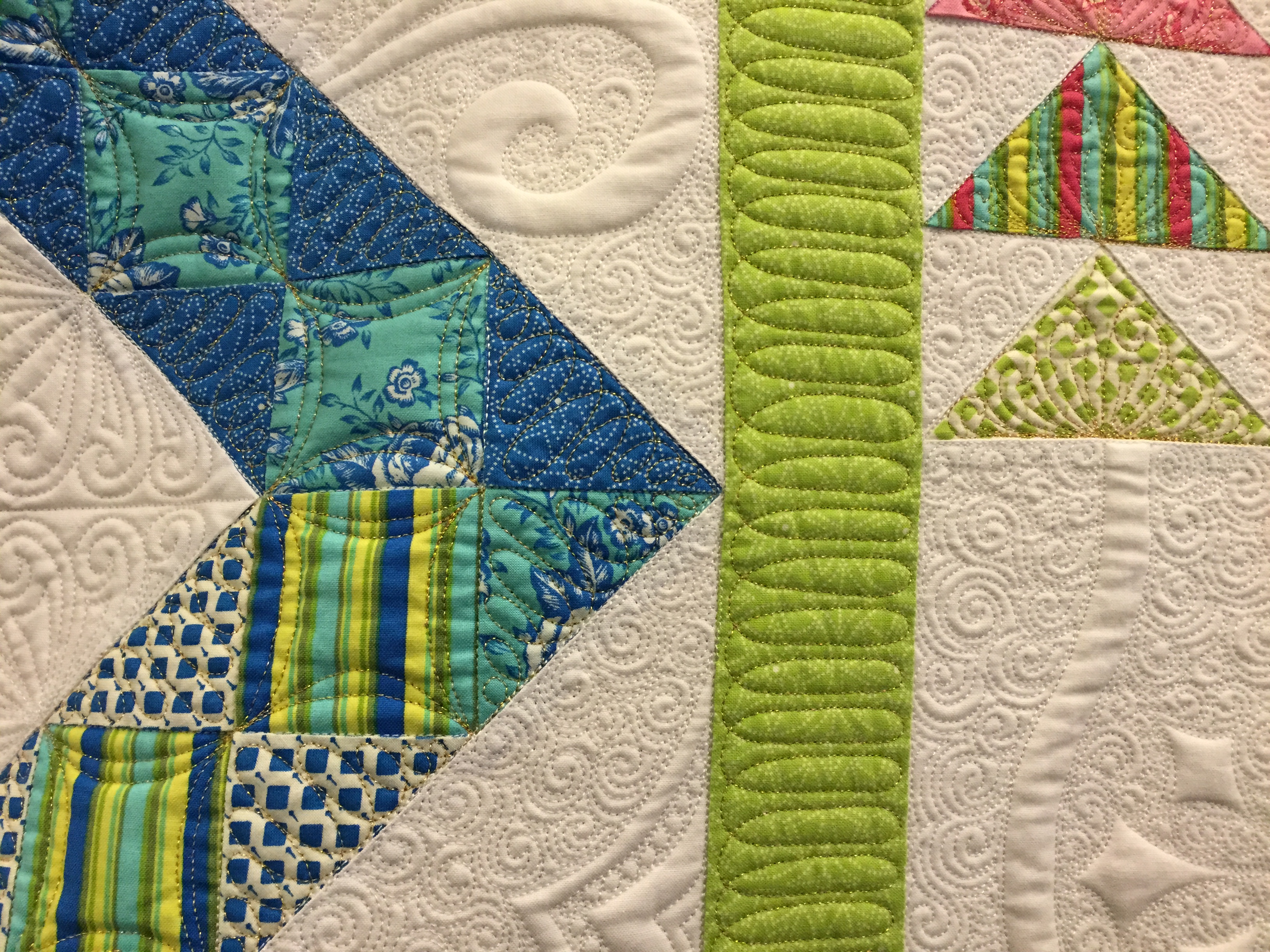
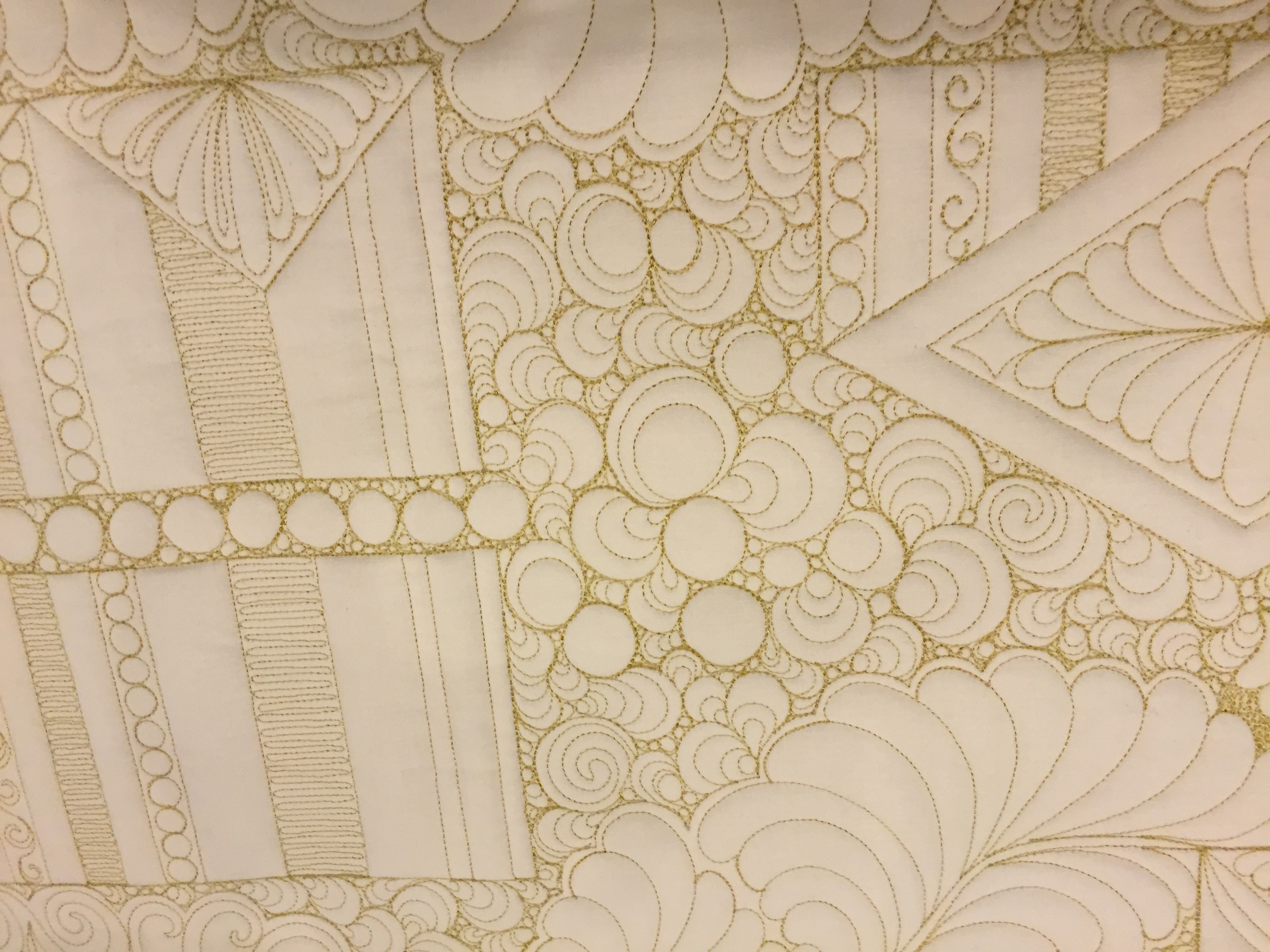
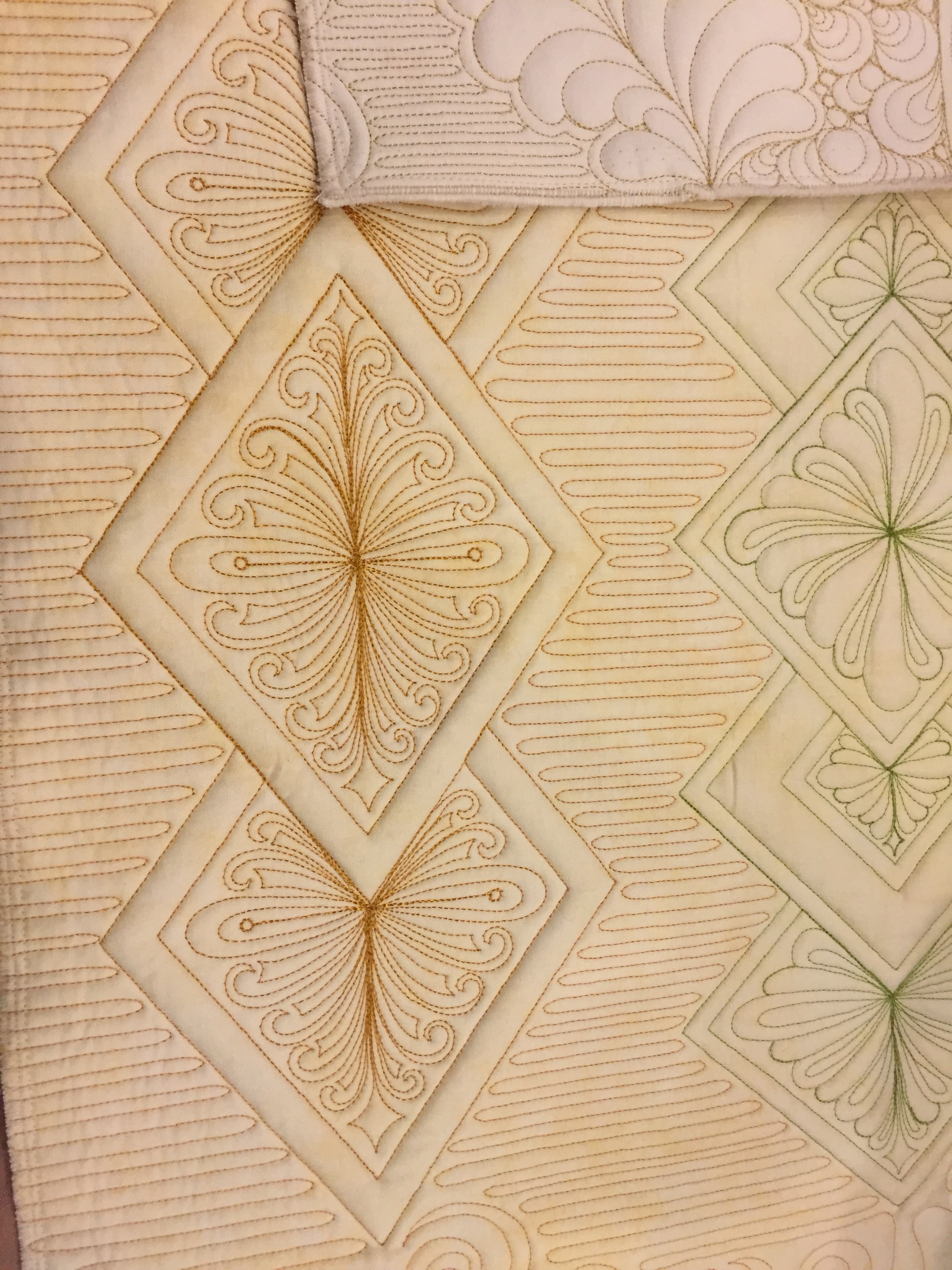
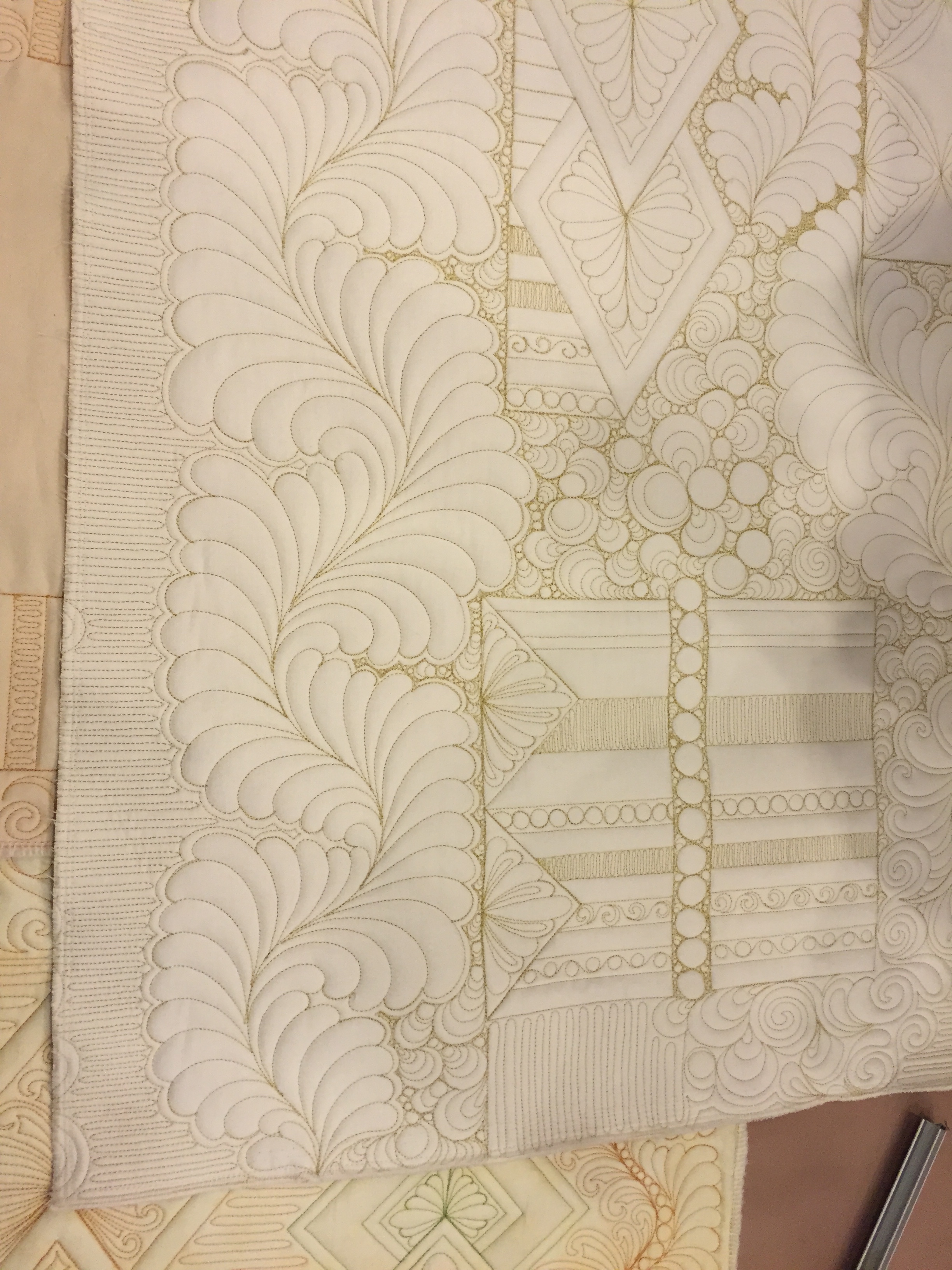
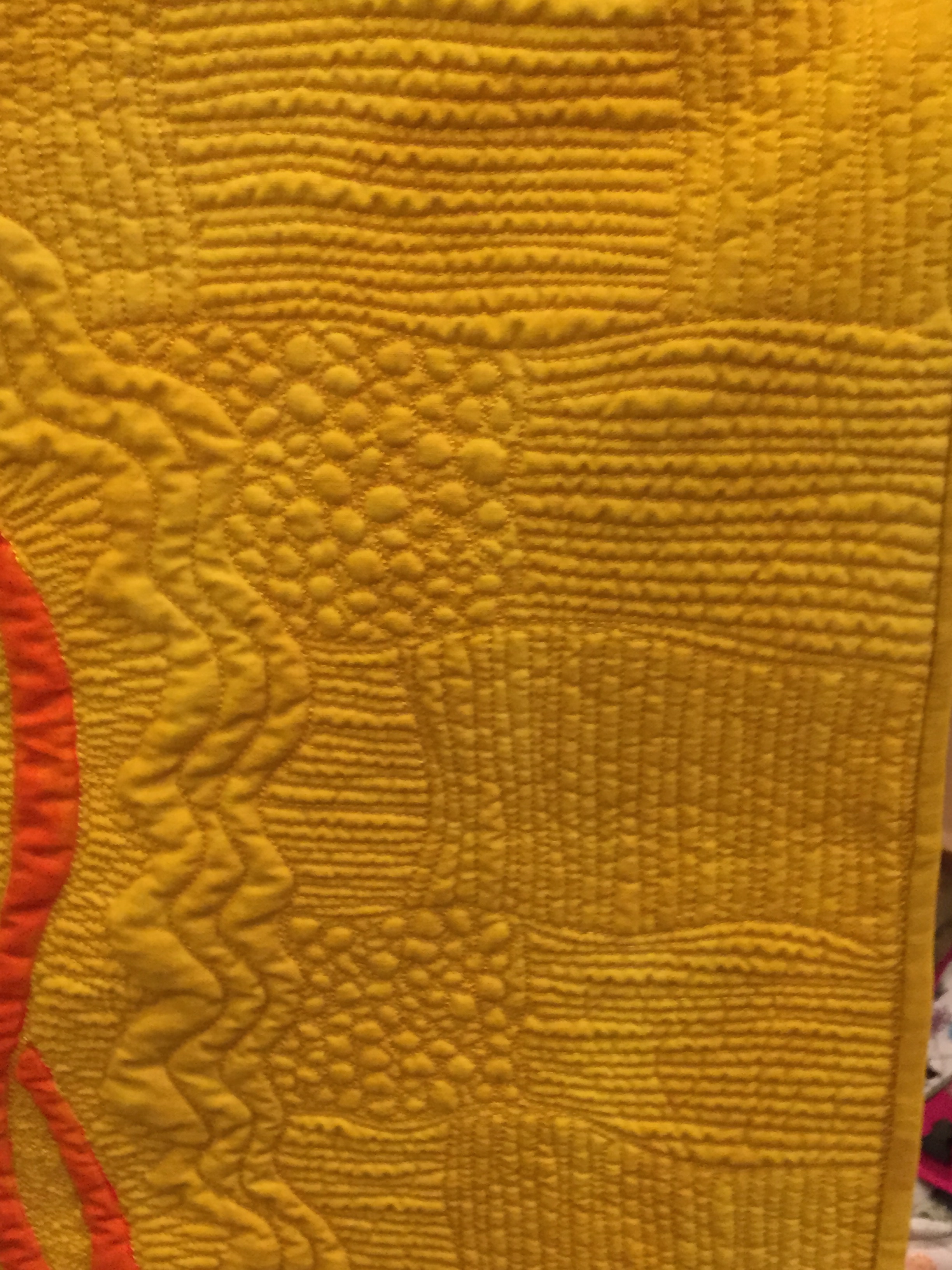
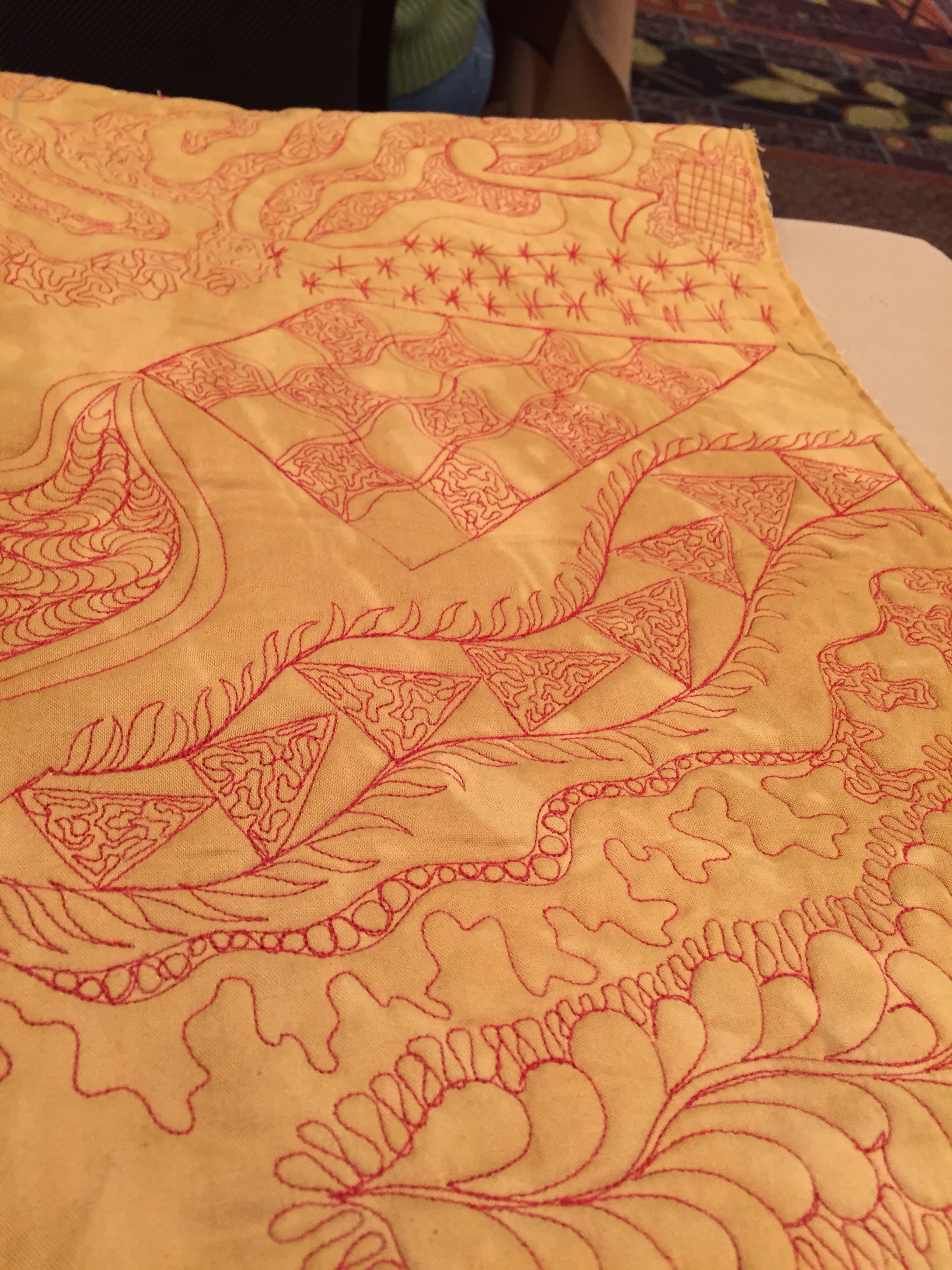
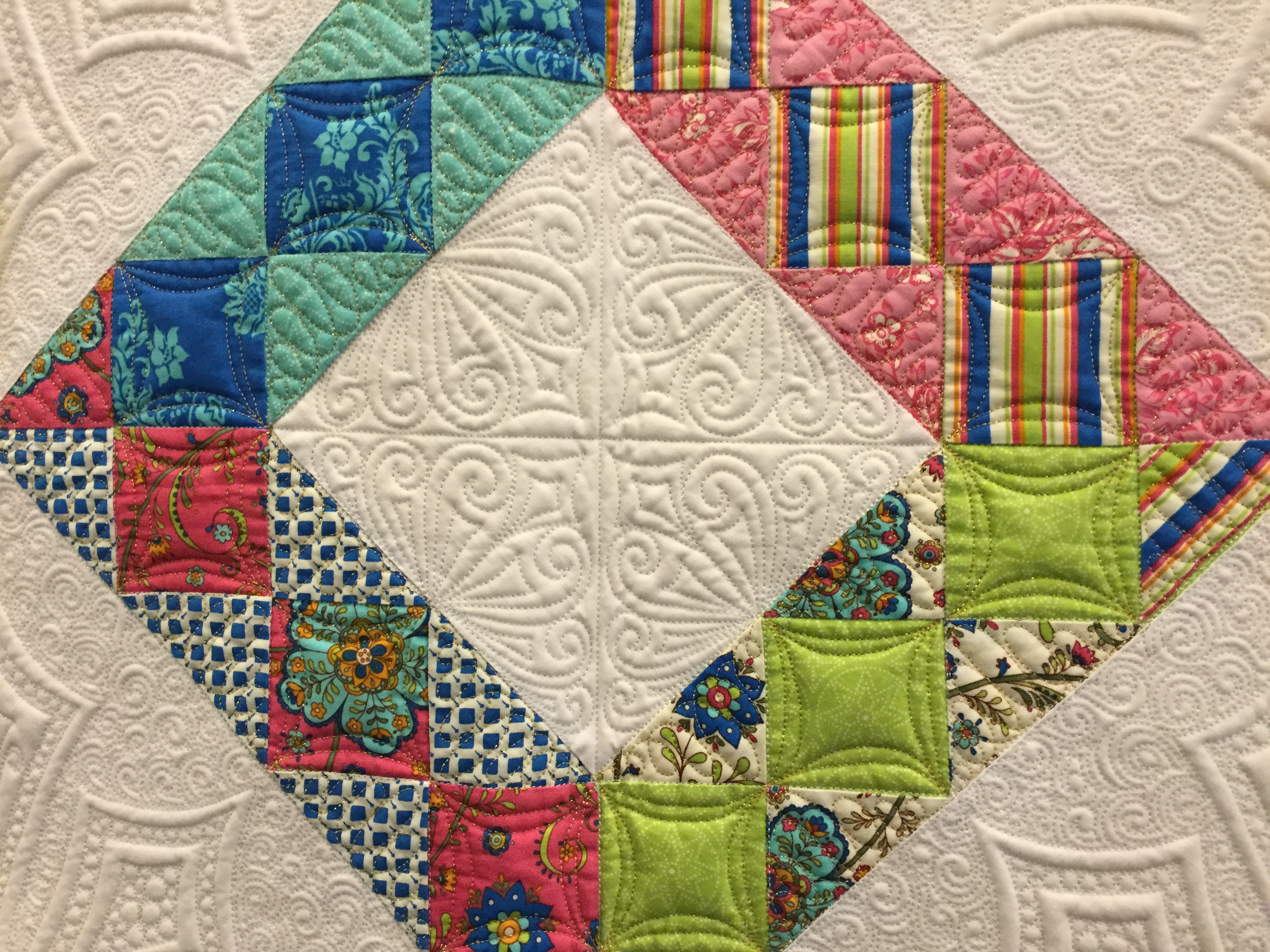
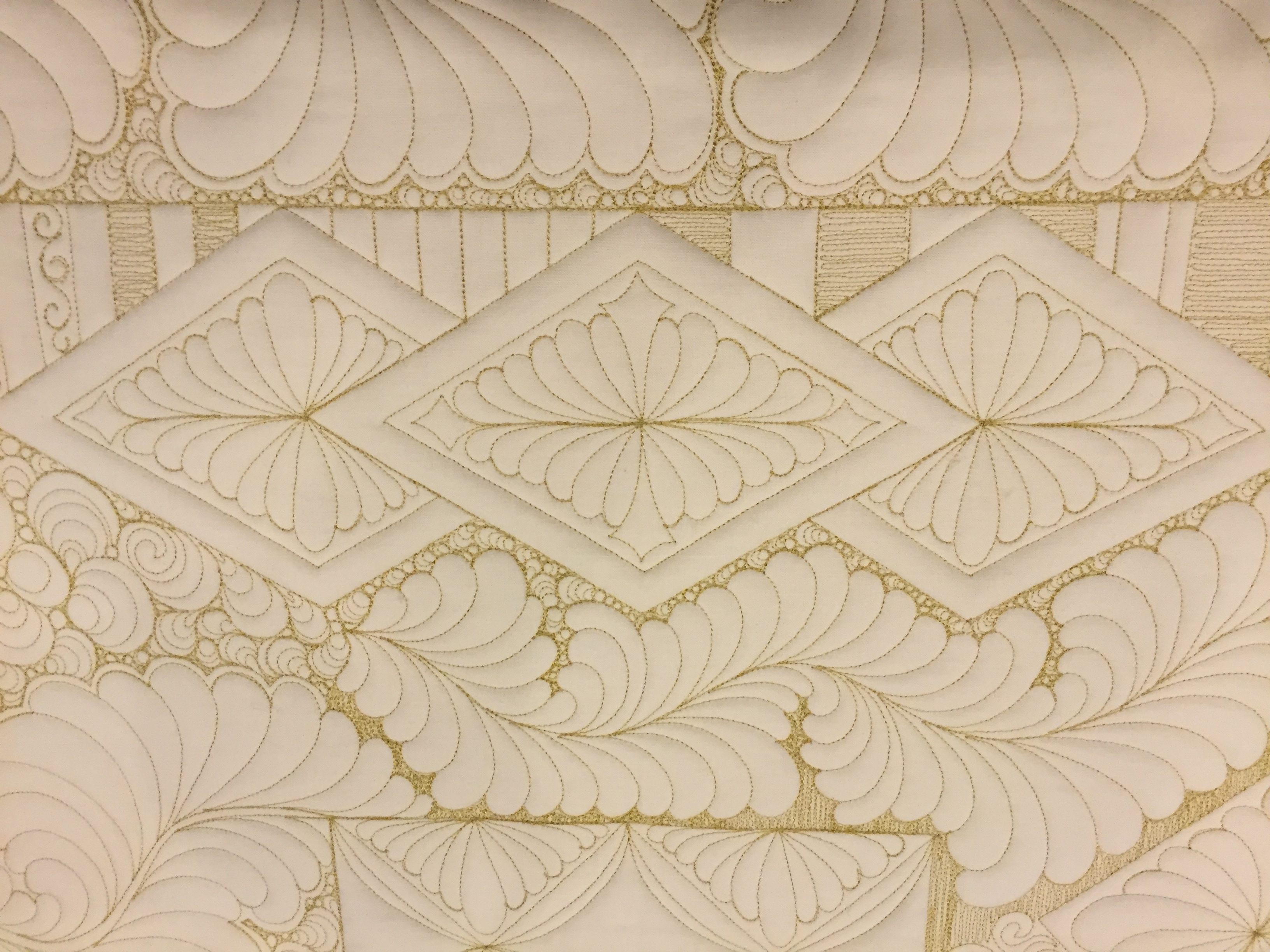
Modern quilter Judi Madsen’s work is so beautiful.  Here are some examples–which she broke down and taught us to do.  (Of course it takes practice.)  Quilting at this level often involves layering two wool battings to get the trapunto effects.  AND, lots of marking on the quilt, a straight ruler, and MATH.


IMG_0243


IMG_0241

IMG_0240

IMG_0237

IMG_0238

IMG_0236

IMG_0235

IMG_0234


Judy Woodworth is more of a traditional quilter, but I think she can do anything she wants to do.

IMG_0249

IMG_0248


Here she urges us to just have fun and experiment.

IMG_0250

IMG_0251

Books: Book Club Book List for 2015-2016

Books:  April 13, 2015

Book Club List for 2015-2016

We met, we discussed, we chose…

There are 6 of us and each of us brings 5 book suggestions to the group–and the group chooses 2 of each member’s 5 books.

It works well…

Here’s our new list, which runs to April of 2016.


The Little Coffee Shop of Kabul, Deborah Rodriguez

From the author of the memoir Kabul Beauty School comes a fiction debut as compelling as real life: the story of a remarkable coffee shop in the heart of Afghanistan, and the men and women who meet there — thrown together by circumstance, bonded by secrets, and united in an extraordinary friendship.

The People of the Book, Geraldine Brooks 

An ambitious, electrifying work that traces the harrowing journey of the famed Sarajevo Haggadah, a beautifully illuminated Hebrew manuscript created in fifteenth-century Spain.

Leaving Before the Rains Come, Alexandra Fuller 

Memoir about the unravelling of a twenty-year marriage that began in Africa.

All the Light We Cannot See, Anthony Doerr 

Tackles questions of survival, endurance, and moral obligations during war time.  Called a “vastly entertaining feat of storytelling” in a NY Times book review.

Still Life with Breadcrumbs, Anna Quinlan

Brilliantly written, powerfully observed, a deeply moving and often very funny story of unexpected love.

Sparta, Roxana Robinson  

Conrad is a Williams graduate who flies back home to the United States after four years in Iraq to face the weird vagaries of his homeland. At only 26, he sees American life with new eyes — or are they old eyes, those of a damaged warrior.

The Homesman, Glendon Swarthout 

A haunting novel.  A haunting movie.  Many of the women on the prairie frontier go mad and have to be taken back to civilization–a journey of danger in many ways.

French Hats in Iran, Haydar Radjavi 

Presents a series of mini-tales that features characters such as: the elderly father who works in the Tabriz bazaar and runs his household according to unbending religious precepts; the resourceful mother who finds ways to enjoy such forbidden frivolities as music; the female playmate who marries at the age of nine; and, more

Big Little Lies, Liane Moriarity

brilliant take on ex-husbands and second wives, mothers and daughters, schoolyard scandal, and the dangerous little lies we tell ourselves just to survive.

The Sandalwood Tree, Elle Newmark 

A sweeping story that expertly blends fiction and history as the author weaves together two stories which take place in two tumultuous times in Indian history. One story recounts the events of India’s First World War also known as the Sepoy Mutiny; the other takes place during the 1940’s as British rule was coming to an end in India.

Euphoria, Lilly King

The story of three young, gifted anthropologists in 1933 caught in a passionate love triangle that threatens theirs bonds, their careers, and ultimately their lives. Set between World War I and II and inspired by events in the life of revolutionary anthropologist Margaret Mead, Euphoria is an enthralling story passion, possession, exploration and sacrifice.

Wild From Lost to Found on the Pacific Crest Trail, Cheryl Strayed

Memoir.  Movie.  Powerfully captures the terrors and pleasures of one young woman forging ahead against all odds on a journey that maddened, strengthened, and ultimately healed her.