Books, Documentaries, Reviews: Sandor Ellis Katz at Cornell

Books, Documentaries, Reviews:  November 6, 2013

Sandor Ellis Katz

Cornell University

April 2, 2012

I finally slowed down to listen to Sandor Ellis Katz–WILD FERMENTATION–at Cornell Univerity.  The U-tube video is 90 minutes.  So, grab some handwork, settle in, and enjoy an interesting, thought provoking lecture that discusses, in part, how the standardization of food has drastically altered our ability to enjoy the full power inherent in heritage foods–even when so-called “heritage” foods are made and sold–something Katz thinks is false advertising.

Such changes have altered the “culture” in every sense of that word–the way we live, the cultures we use in foods (yogurt, kombucha, breads, beers, etc.)

So, do you ever try to make yogurt?  And have you noticed that you get really good yogurt for a few generations, and then you…don’t?

Well, the reason is that a culture is a community of many different organisms–thirty or more– that work together to keep the culture stable.  But this kind of community is very hard to standardize–so industry only uses part of the community–which means that what is being advertised is not really the genuine thing.  For instance, the dried powder we buy to start a yogurt culture does not contain the full community of organisms.  And, commercial kombucha only uses part of the SCOBY colony to make its product.  (A SCOBY is a symbiotic community of bacteria and yeasts.)  The same is true of yogurt, cheeses, breads, beer, and so forth.

Cultures for yogurt, kefir (pronounced ke-fear, I’ve learned), kombucha and so forth used to be passed down in families and communities–and they retained their full components in the process.  What we have now is NOT the full biodiversity of a heritage culture.  So the loss, the reduction, is enormous–and is a loss of the culture (the social grouping) as well.

The yogurt culture one can buy can only sustain itself for a few generations–because it isn’t complete.  Standardization killed it.  Food safety laws have limited it.

So, Katz’s main message is that we need to reclaim our food as mass production has been an abject failure in that this food lacks…cultures…and has changed our culture in unhealthy ways.  Shifting how we eat begins to reclaim our culture–so that we once again nourish our bodies and regain our health.

Take some time for yourself to understand what has gone wrong, what the limits of industrialization are, what you can do.

And, maybe try to locate a heritage culture for yogurt and/or kefir.

And, make some lacto-fermented foods for yourself.  They are so delicious!

Here is Katz’s video on how to make a sauerkraut–which bear no similarity to that limp stuff you get in a can:

Books Documentaries, Reviews: THE FOUR AGREEMENTS, Don Miguel Ruiz

Books, Documentaries, Reviews:  November 6, 2013

THE FOUR AGREEMENTS

Don Miguel Ruiz

One of the books I read when I first got to Maine–at the suggestion of Margaret Rauenhorst–was Don Miguel Ruiz’s THE FOUR AGREEMENTS.

When Melody Pendleton painted the kitchen, I was putting away “stuff” from my kitchen desk and found a little handout I had put there of Ruiz’s four agreements.

The book, of course, explains each one in depth, and I probably need to review it again.  But here they are:

Be Impeccable With Your Word:

Speak with integrity.  Say only what you mean.  Avoid using the word to speak against yourself or to gossip about others.  Use the power of your word in the direction of truth and love.

Don’t Take Anything Personally:

Nothing others do is because of you.  What others say and do is a projection of their own reality, their own dream.  When you are immune to the opinions and actions of others, you won’t be the victim of needless suffering.

Don’t Make Assumptions:

Find the courage to ask questions and to express what you really want.  Communicate with others as clearly as you can to avoid misunderstandings, sadness, and drama.  With just this one agreement, you can completely transform your life.

Always Do Your Best:

Your best is going to change from moment to moment.  It will be different when you are healthy as opposed to sick.  Under any circumstance, simply do your best, and you will avoid self-judgement, self-abuse, and regret.

This recipe is a pretty tall order.  It’s hard to break old family “tapes” where making assumptions and taking actions personally and NOT being impeccable with your word–no matter how hard–is how things have worked.  And how “things” get so messed up so quickly.

But even the small movements I have made in my own life in the direction of these “four agreements” has made my own life better in so many ways.

Turkey Tracks: Wild Turkeys in the Spring

Turkey Tracks:  November 4, 2013

Wild Turkeys in the Spring

So, many of you know by now that I love to put something on the blog from the opposite season of the year.  Since this is fall, that would mean something from spring.

Here’s a picture of two of the wild male turkeys that stay around the house all winter–roosting in the trees at night–they look like black garbage bags way, way up in the tops of the firs–and eating food the chickens discard into their bedding and which gets thrown out as I clean out the coop.

In the spring, they start courting the many hens that hang with them all winter.  And, as they fluff out their feathers and drag their wings on the ground, their heads turn cobalt blue.  See?

Turkey displaying

It’s not a great picture, but you can see their heads starting to turn blue.

Turkeys are very social.  Even wild ones.

It is routine for me to call “goodnight” to them as I lock up the coop at dusk and put my chickens to bed.  And these greetings start in late winter and go well into the spring.

After the spring courting–when the turkeys break into smaller bands of hens with one or two males–the hens nest and break away to raise their babies.  It is not unusual to see a hen with a dozen little ones following after her across a ditch or the road.

At this point I imagine that they are all fox food.  I can’t imagine how they survive the spring, hungry foxes, who are also raising babies.

Turkey Tracks: Fall Foliage in Mid-Coast Maine

Turkey Tracks:  November 4, 2013

Fall Foliage in Mid-Coast Maine


This has been one of the prettiest falls I ever remember in my ten years in Maine.

Perhaps it’s been the relatively dry Indian Summer?

The hillsides are literally orange–and when the sun hits them–Oh MY!  I find myself just wanting to drive around and capture the orange.

Two weeks ago, I took this video on a cloudy Sunday–so the hillsides don’t have sunlight firing them up.  Since then, the color has deepened and become even richer.

Here are two stills from that same day.  Remember, no sunshine…

And, you can see how what Sarah Orne Jewett called “the pointed firs” occupy the tops of our hills.  It’s colder up there, and with global warming, they are retreating up the hillsides.

Fall Foliage 7

Fall Foliage 2

Here are some views around the house, starting with a video taken from the upper porch, which looks out to a ridge and into our woods:

And looking into the path into our woods:

House Views 5

Books, Documentaries, Reviews: Rebecca Eaton and Downton Abbey

Books, Documentaries, Reviews:  November 4, 2013

Rebecca Eaton and Downton Abbey


Want to know all the “ends and outs” of Downton Abbey and Masterpiece Theatre?

NPRs Diane Rehm interviewed Rebecca Eaton last week.  So go find out all about Downton Abbey–including why we won’t see it in the US until January–and why Matthew had to go “under the car.”   And hear a lovely history of how Masterpiece Theatre became such a success.

Rebecca Eaton: “Making Masterpiece: 25 Years Behind The Scenes At Masterpiece Theatre And Mystery! On PBS” | The Diane Rehm Show from WAMU and NPR.

ENJOY! a lovely hour with Diane and Rebecca!

Turkey Tracks: Sewing Update

Turkey Tracks:  November 3, 2013


Sewing Update


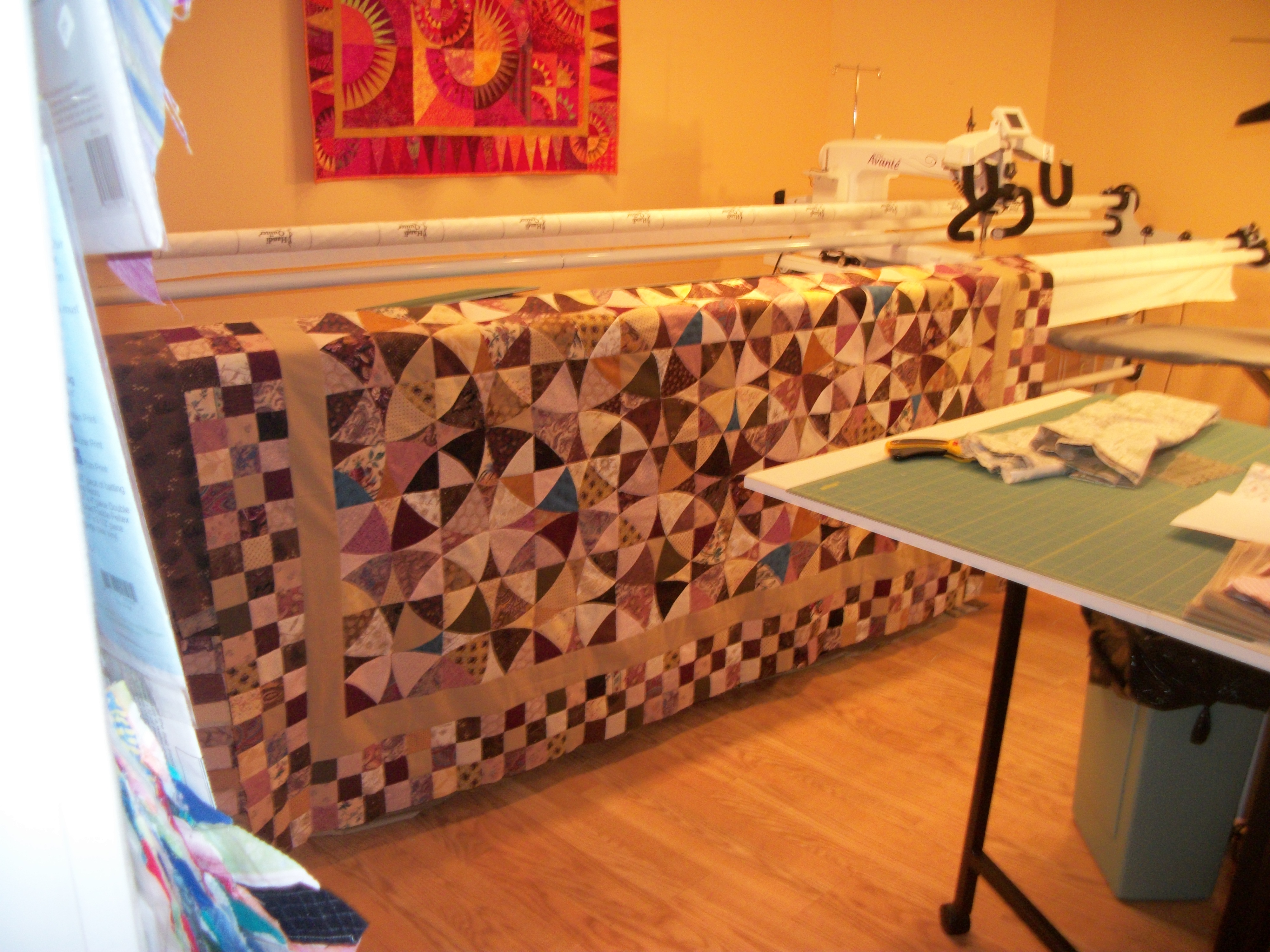
The Wheels of Mystery/Winding Ways quilt top is finished.  (This light/dark block is known by both names.)

I have Bonnie Hunter to thank for the border treatment, and I think it works really well.


wheels of mystery top

I am working on piecing the back now–which is taking 9 yards of fabric right out of my stash.  YEAH!!  This quilt is finishing up at just under 90 by 90 inches.

I have yet to find a binding I like…

Here’s a close-up of the blocks:

wheels of mystery close-up

I hand pieced more than half of these blocks–and really enjoyed the hand sewing.  Indeed, I’m off on a whole new hand-sewing project list–which I’ll talk about in another post.  But these blocks sew well on the machine too.

This kind of quilt is drawn from what can only be called “deep stash”–Bonnie Hunter’s term–as there are so very many wonderful fabrics in the quilt–fabrics that have been collected for over 10 years.

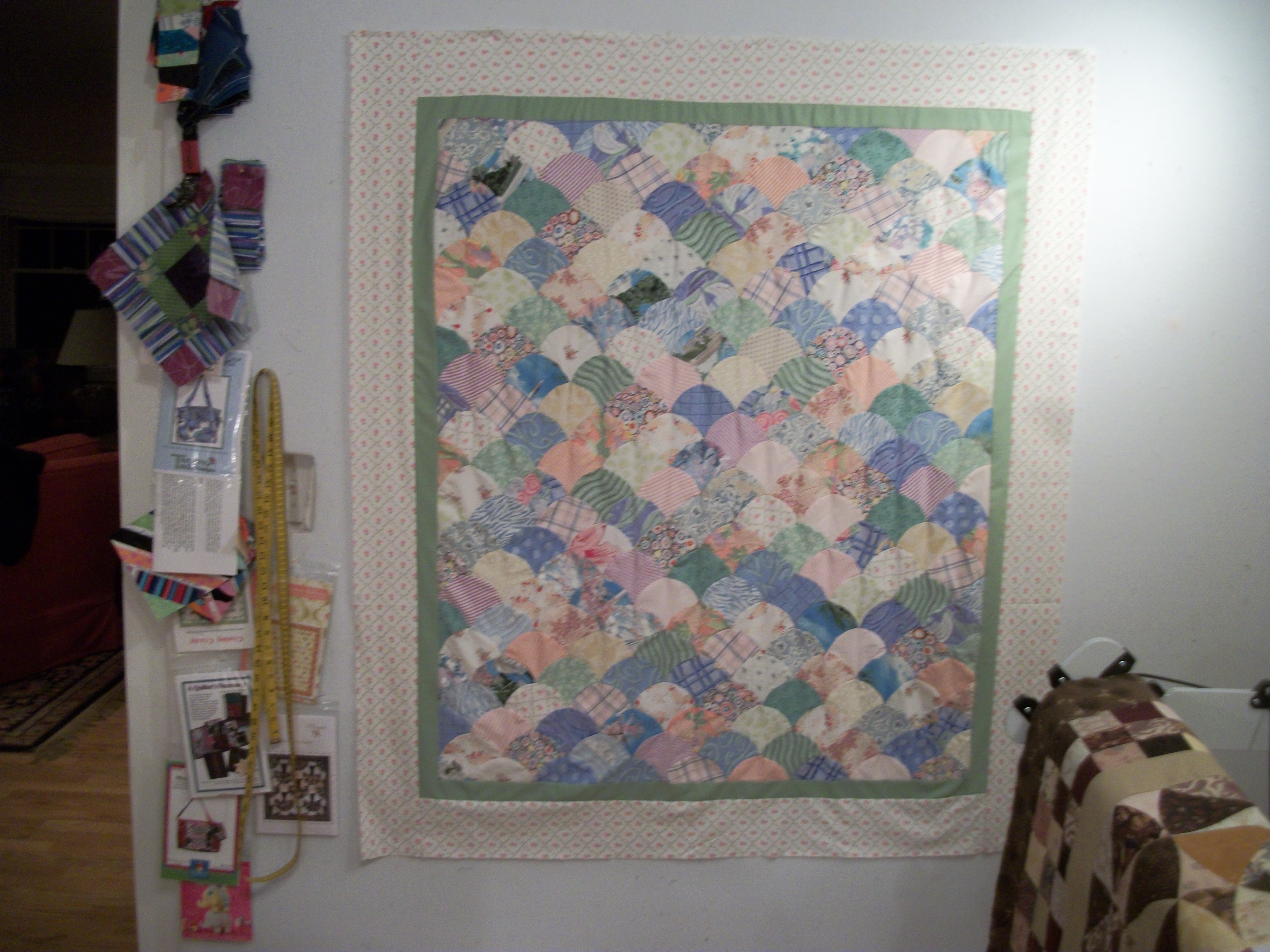
The other hand-quilting project is this little clam shell quilt–made from fabrics inherited from a local quilter here who died tragically of cancer, Susan Barry.

I have two clam shell templates–this one (4 inches) and, yikes!, a smaller one.  I could not find much online on how best to sew a clam shell block.  There is a lot of excess fabric in the curve that has to be eased into its complimentary arc.  It isn’t easy.  Many on-line suggestions involve appliqueing the blocks, but I didn’t want to do that.  Clipping the curve is absolutely necessary.  Deeply clipping.  And lots of pinning and lots of easing in by hand.  One could, I suppose, sewing a basting line to ease in the material, but I did not.

This week I got the clam shells trimmed up and the borders on.  These pictures do not do this little quilt justice.  It’s pale and sweet, and just isn’t showing up well at all.

Here it is on the design wall, where it is absolutely dying with the white border on the white wall:

Clam shell top

Here’s a close-up of the blocks:


Clam shell top close-up

Here’s a close-up of the border fabrics.  I wanted something darker to set off the clam shells’ paleness.  And the little rose fabric came in the fabric mixture.  I had thought it would be the backing.  But it isn’t.  I used, instead, a white rose with green accents fabric–which I did not take a picture of here.


Clam shell border on top

I am going to hand quilt it.  I layered it together late one night–too late–I should have stopped.  And used a too-thick batting I had on hand.  I am so spoiled with Lucy the Longarm.  I have not layered and pinned a quilt in a long time.  It’s so tedious.  Anyway, I took it all apart and put in a thinner batting–and it’s hand-quilting so nicely now.

Clam Shell Hand Quilting

Enjoying my quiet nights of hand quilting and watching tv shows…

Have seen all of HOMELAND, Season 2; all of FALLING SKIES; all of SUITS; all of ORANGE IS THE NEW BLACK; DAMAGES, season 5; all of Kenneth Branaugh’s WALLANDER; and am up-to-date with THE GOOD WIFE and REVENGE.  Last night I watched a very young Reese Witherspoon in THE MAN IN THE MOON, which is a real tearjerker.  Now moving on to new episodes of NIKITA, but it’s starting to play out now as a series.  Am waiting for GAME OF THRONES, season 3; NEWSROOM, season 2; CALL THE MIDWIVES, season 3?; and, of course, DOWNTON ABBEY.


Documentaries: Pay Attention: Antibiotics Can’t Keep Up With ‘Nightmare’ Superbugs

Documentaries:  November 3, 2013

PAY ATTENTION


Frontline TV Program:

Antibiotics Can’t Keep Up With “Nightmare” Superbugs

Terry Gross interviewed David Hoffman, the developer of the FRONTLINE television show that aired last week on the presence and threat of Superbugs that are now present in our world.

The National Institutes of Health (NIH) allowed, and helped, Hoffman address–and surface–this very real problem.

Hospitals are really threatened with these Superbugs, but they are present in other environments as well.

Below find a link to Gross’s very informative interview:

Antibiotics Can’t Keep Up With ‘Nightmare’ Superbugs : NPR.

And here’s a quote from the web page–which has a link to the Frontline program.

We’re used to relying on antibiotics to cure bacterial infections. But there are now strains of bacteria that are resistant to even the strongest antibiotics, and are causing deadly infections. According to the CDC, “more than 2 million people in the United States every year get infected with a resistant bacteria, and about 23,000 people die from it,” journalist David Hoffman tells Fresh Air‘s Terry Gross.

Many people are familiar with the type of resistant infections often acquired in hospitals, caused by MRSA, the acronym for methicillin-resistant Staphylococcus aureus. But most people don’t know about the entirely different group of resistant bacteria that Hoffman reports on in Hunting the Nightmare Bacteria, airing Tuesday on PBS’ Frontline. The show explores an outbreak of resistant bacteria at one of the most prestigious hospitals in the U.S., and explains why there is surprisingly little research being conducted into new antibiotics to combat these new superbugs.

“We really have a big information black hole about these really, really dangerous bacteria, and we need to know more, and it ought to be a national priority,” Hoffman says.

Me, I’m staying out of hospitals unless I get carried in there on a stretcher.

Books: NPR Interview With Stephen Kinzer, Author of THE BROTHERS

Books, Documentaries, Reviews:  November 3, 2013

NPR Interview With Stephen Kinzer

Author Of

THE BROTHERS


Well, here’s a book I’m buying.

THE BROTHERS is a really good example, I’m thinking, of what I learned in Cultural Studies–the power of those with cultural power to effect vast and sweeping changes in a nation.

The “brothers” are John Foster and Alllen Dulles.  AT the same time, one was head of the CIA, the other Secretary of State.  Together they changed the course of our nation from being a nation that would help out with something like World War I or II, to a nation that went out actively and sought out actively “monsters” to police.

The “brothers” could no begin to imagine the blowback from this shift in philosophy–with which we are dealing profoundly today.

I think it would take a long time to pass before a nation could look back on accumulated history and see the philosophical shift and to understand how it happened and why it happened.

Kinzer is a journalist, not a historian.  So there might be a critique mounted against his credentials.  But, I don’t think one can say that THE BROTHERS is a populist, read lightweight, book.

I’m going to read it…

At the very least, you’ll learn a lot from the interview by NPR’s Terry Gross:

Interview: Stephen Kinzer, Author Of The Brothers : NPR.


Here’s a quote from the web page:

In 1953, for the first and only time in history, two brothers were appointed to head the overt and covert sides of American foreign policy. President Dwight Eisenhower appointed John Foster Dulles secretary of state, and Allen Dulles director of the CIA.

Journalist Stephen Kinzer says the Dulles brothers shaped America’s standoff with the Soviet Union, led the U.S. into war in Vietnam, and helped topple governments they thought unfriendly to American interests in Guatemala, Iran, the Congo and Indonesia. In his new book, The Brothers, Kinzer says the Dulles’ actions “helped set off some of the world’s most profound long-term crises.”

John Dulles died in 1959. President Kennedy replaced Allen Dulles after the covert operation he recommended to overthrow Fidel Castro in Cuba ended disastrously in the 1961 Bay of Pigs invasion.

Kinzer tells Fresh Air‘s Terry Gross that the Dulles’ shared background and ideology played out in their policy decisions: “They had this view of the world that was implanted in them from a very young age,” Kinzer says. “That there’s good and evil, and it’s the obligation of the good people to go out into the world and destroy the evil ones.”

Turkey Tracks: Friendship Samplers Quilt Show, Belfast, Maine

Turkey Tracks:  November 1, 2013

Friendship Samplers Quilt Show

Belfast, Maine


Friendship Samplers is the Pine Tree Quilting Guild chapter located to Camden’s north, in Belfast, Maine.

(We are the Coastal Quilters here in Camden.)

The Friendship Samplers quilters are strong, competent, wonderful quilters.  There is just so much talent in that group.

They do a quilt show every other year, and this year was the year.

And this year, their show was as wonderful as ever.

I did not begin to take pictures of everything–or even of some of the most amazing quilts–and there were many.  I took pictures of work that stimulated my own creativity.  And do remember that the quilts I love best are scrappy quilts that are functional.

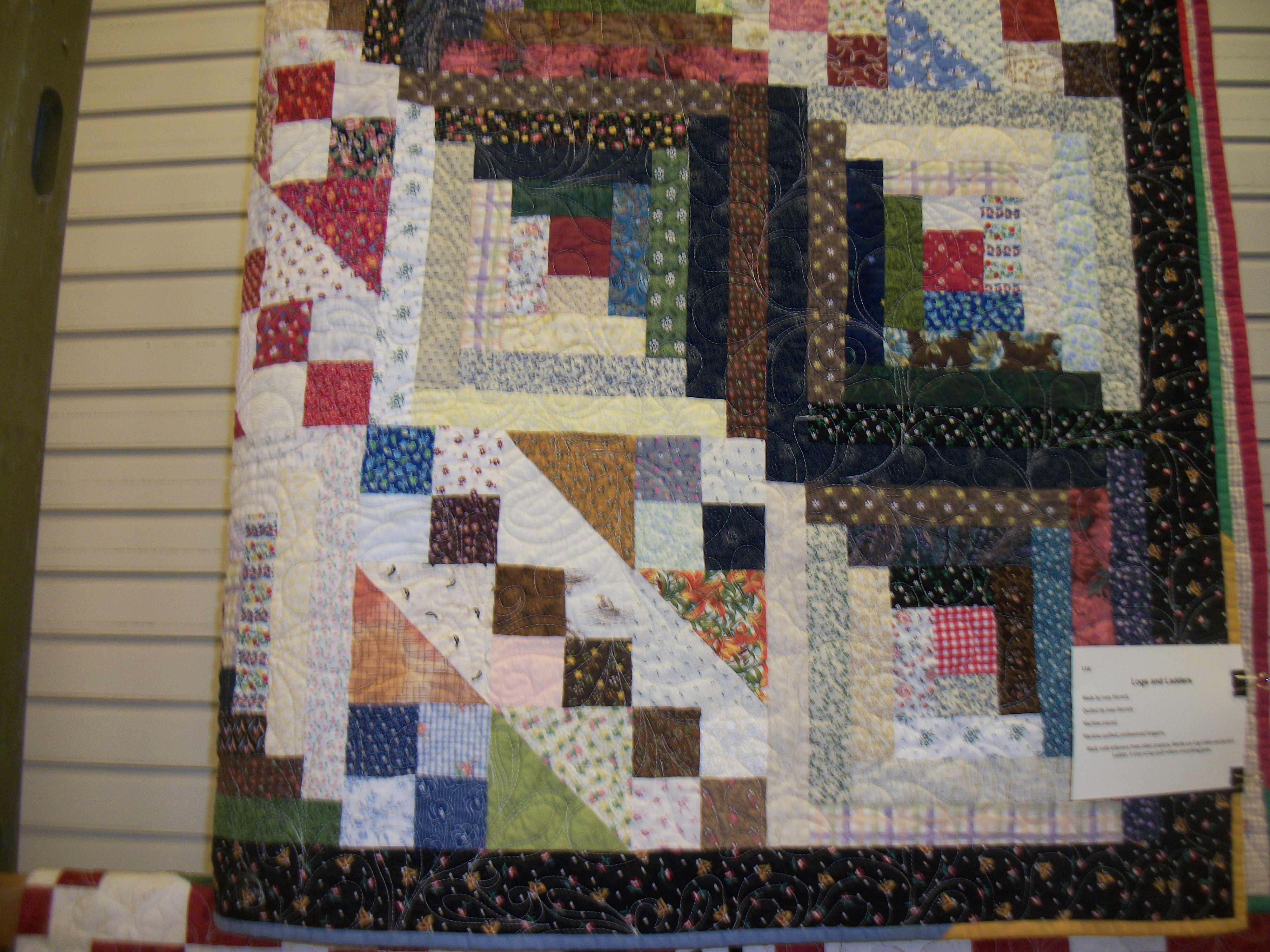
First, my most favorite quilt was my friend Joan Herrick’s “Logs and Ladders”–where she has combined a log cabin block with a Jacob’s Ladder block–and took advantage of their strong directional orientations.  There’s one of these in my future!

Frienship S's, J. Herrick Logs and Ladders

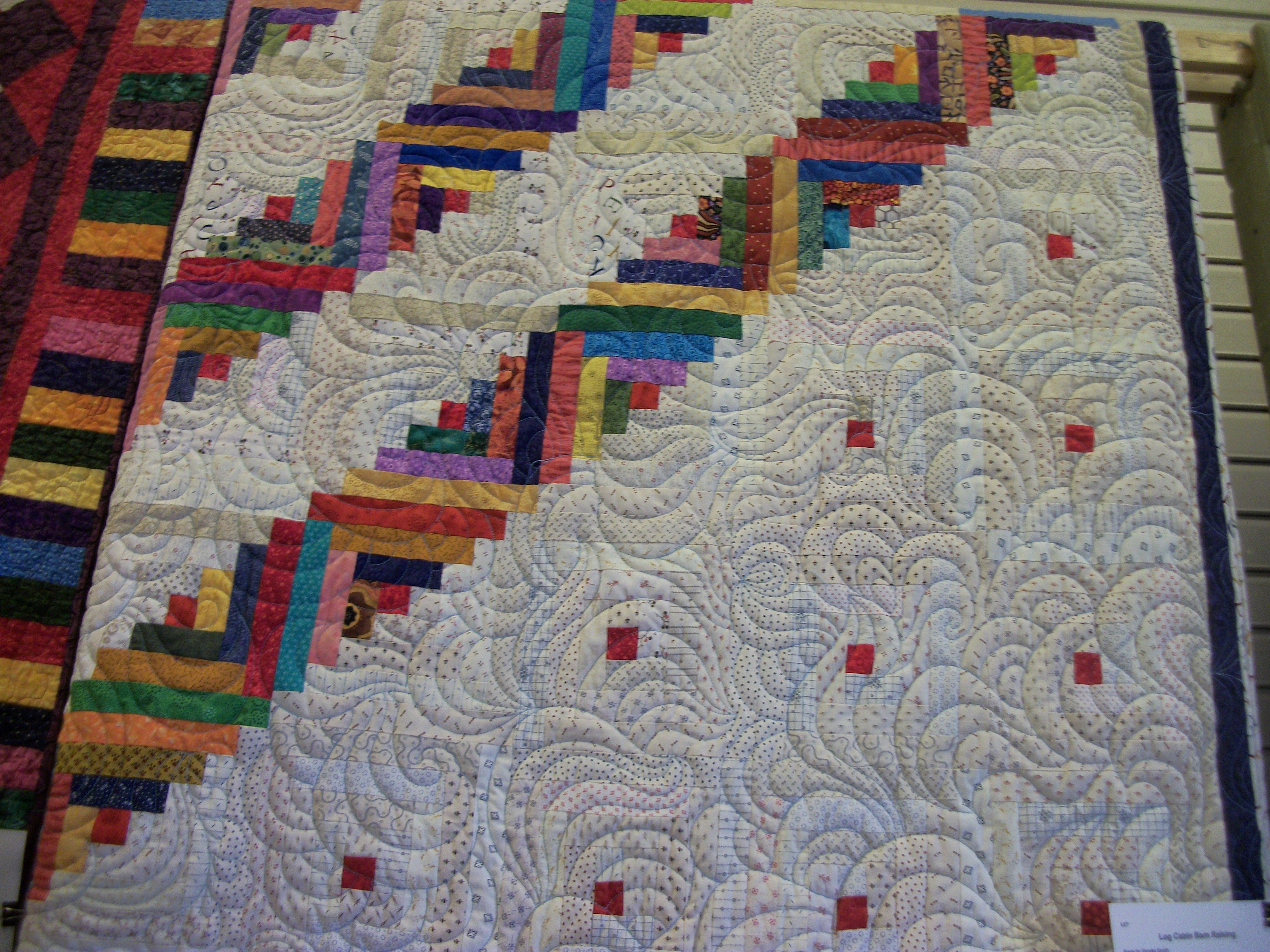
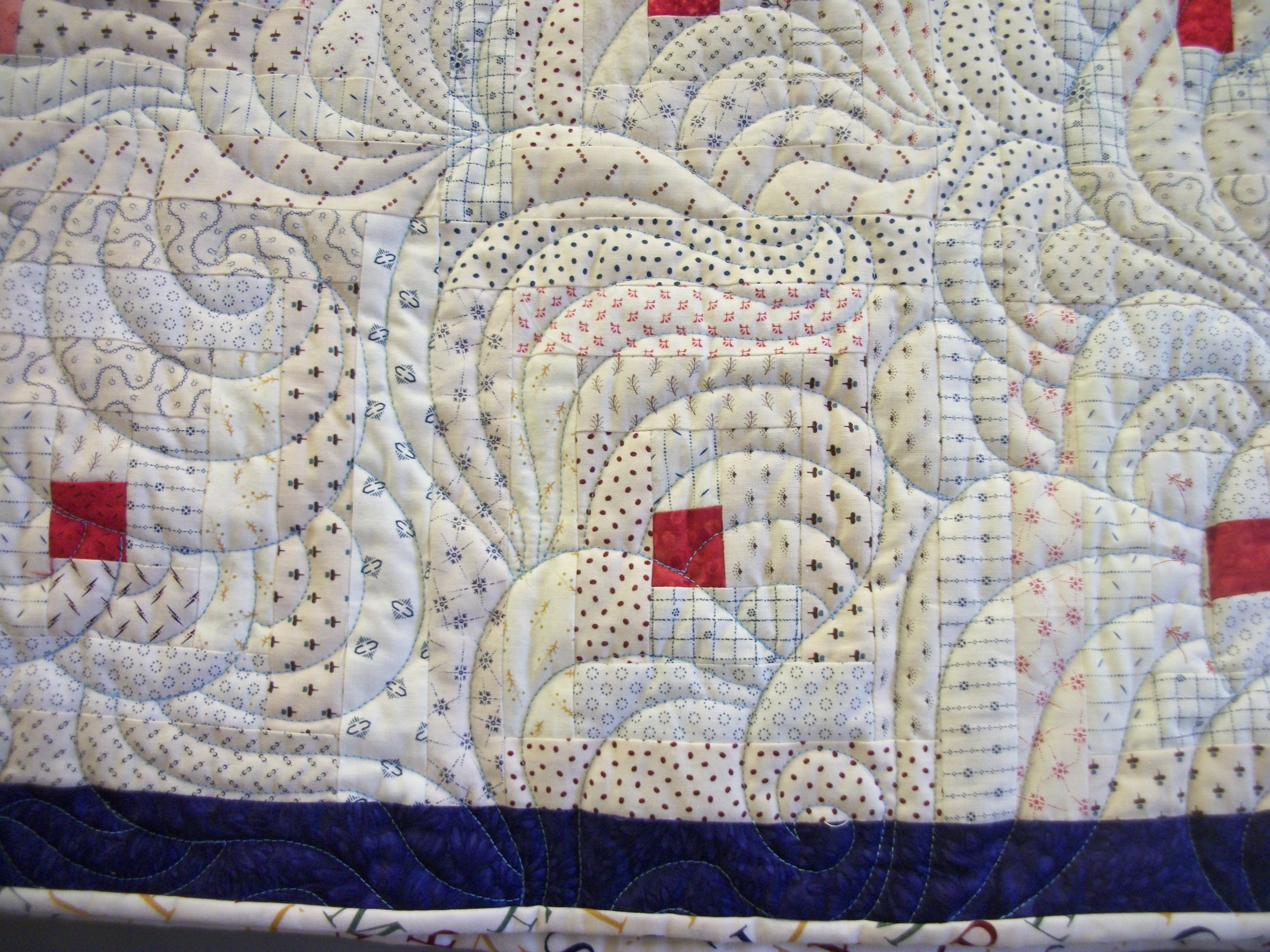
I was intrigued by the quilting in this quilt–and later realized it’s called “McTavishing,” after Karen McTavish, who invented it.  You can see how to do it on Leah Day’s web site, along with at least 400 other free-motion quilting designs she has put onto utube videos.

Friendship S's 3

Don’t you love this modern “take” on the log cabin block?

Friendship S's 2

I love the work of Alice Parsons.  And she had a hand in this quilt below:

It’s stitched with bright orange thread in squiggly lines up and down the quilt.  And look at the use of purple for the sashing.  That purple is making the yellow leap out of the quilt!

Friendship S's 6

Look at how the center square is varied–and the use of the adorable funky bird–and the use of rows of the squares…

Friendship S's 5

I want to make a quilt with birds at the center of some kind of block.  And I love what these quilters have done here.  It’s just so much fun!

Friendship S's 4


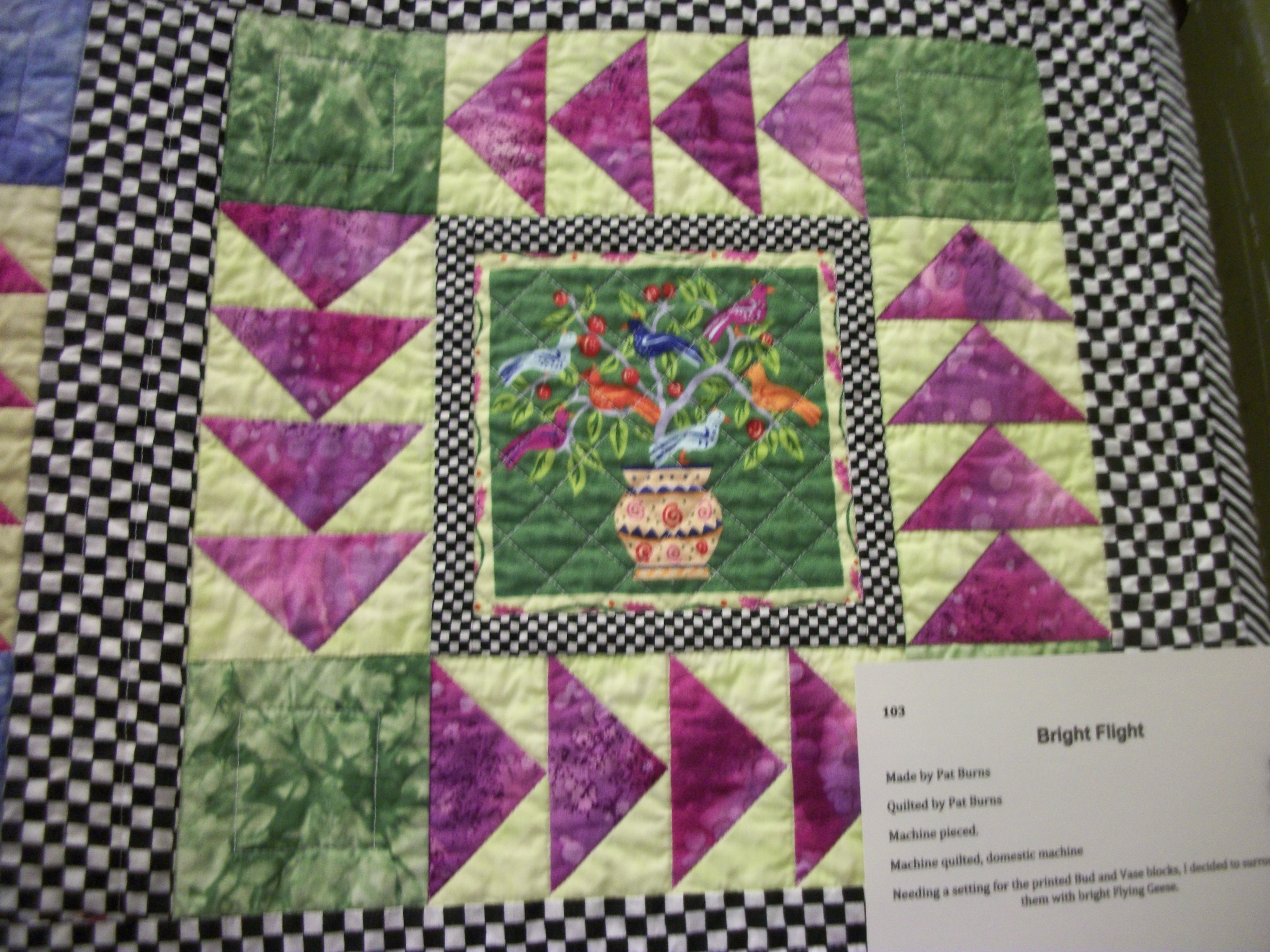
Here’s another creative idea for making use of a central square with something (birds!) fussy cut inside it.  Surround the square with flying geese and corner blocks:

Friendship S's 9


The flying geese and their backgrounds can vary in color choice.  What’s uniting the quilt here is the sashing/border fabric–in this case black and white and the use of the center square with a border around it.


Friendship S's 8


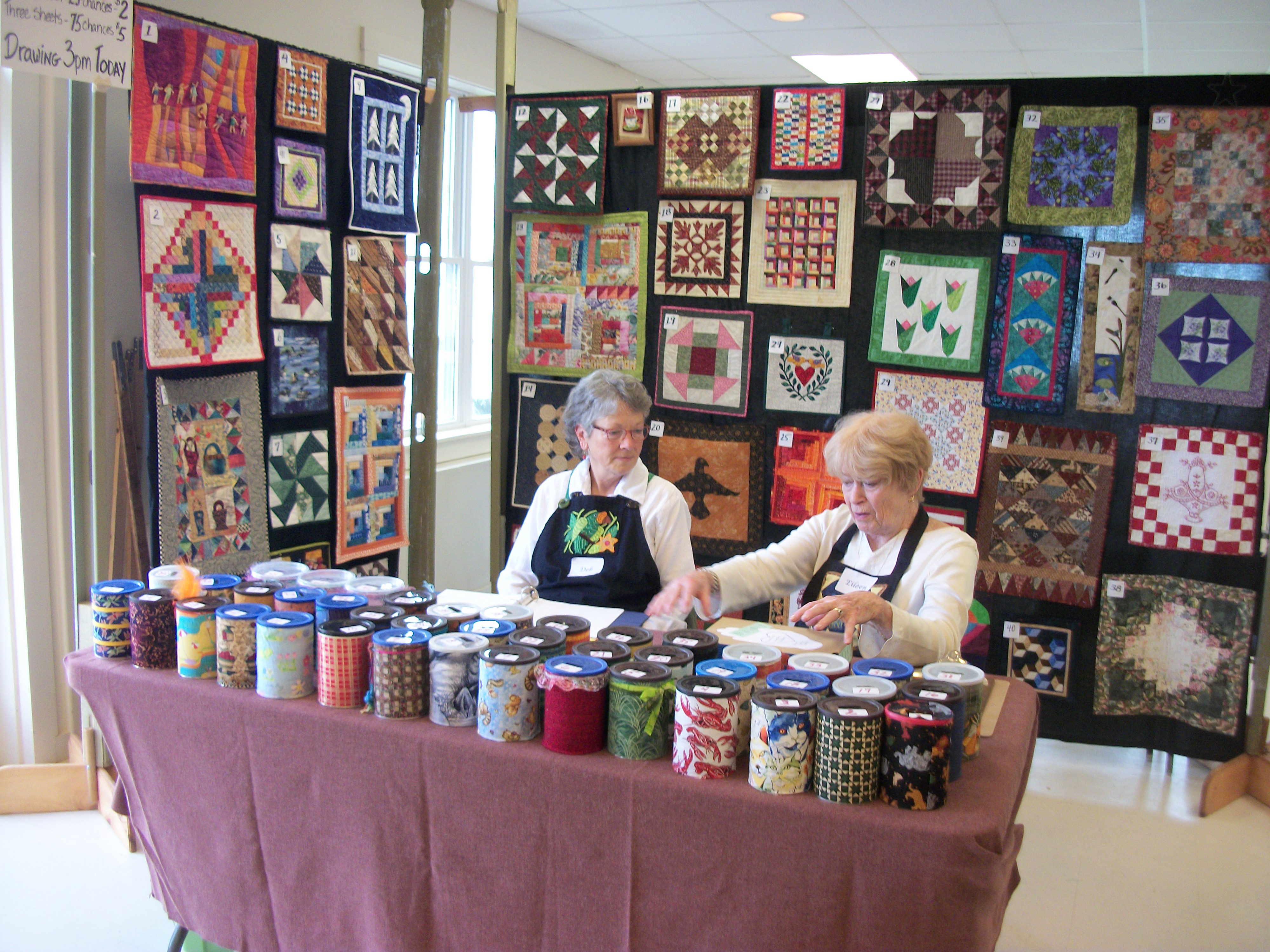
The Friendship Samplers always have a “quilt alley” where you buy chances (25 for $2!!!) and put your chances in the can/s of the quilt/s number you like.

All these quilts were to be “won” on Friday.  Another set went up on Saturday.

Friendship 18

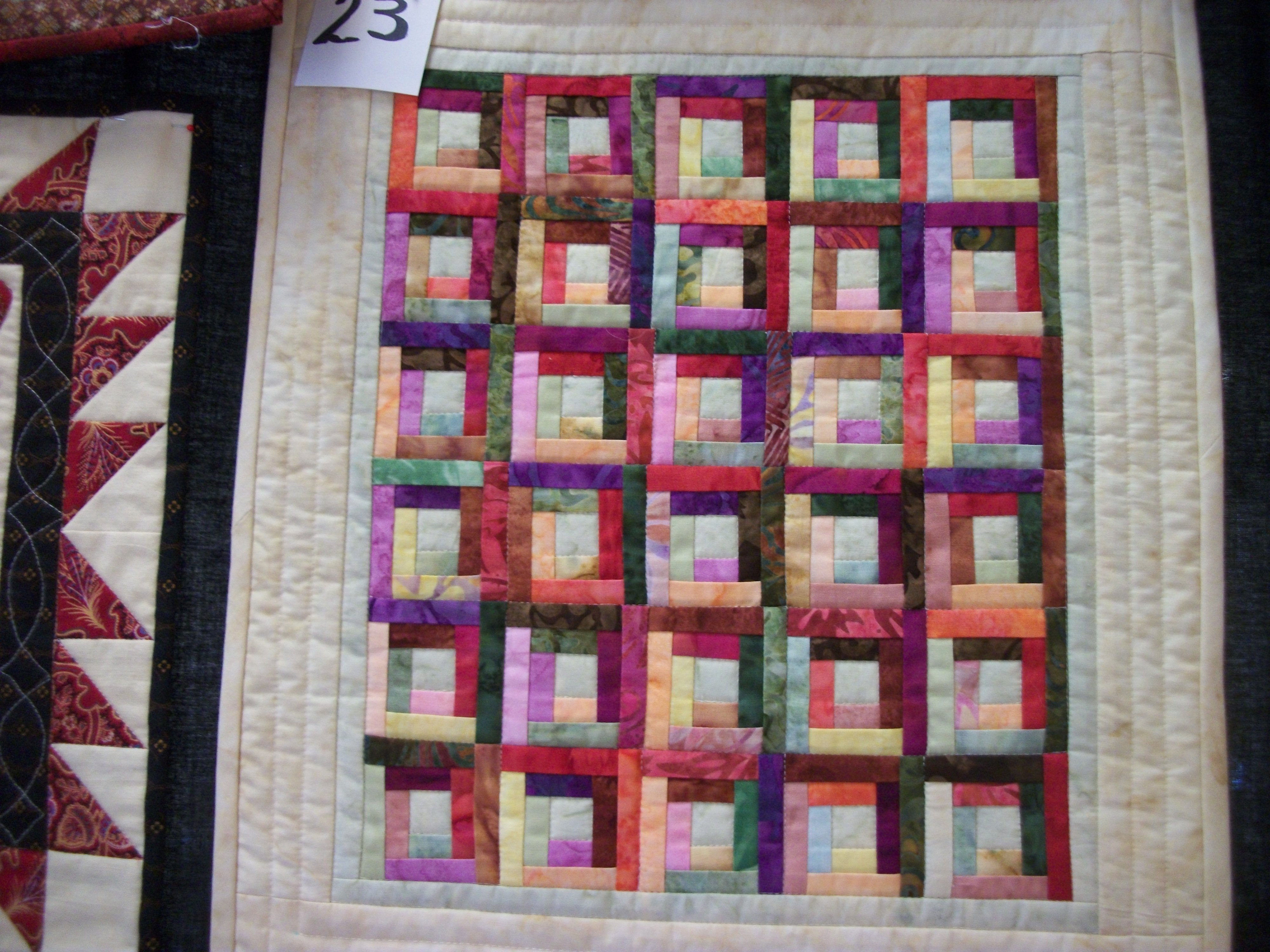
I found many little quilts I liked on this wall.  But this one was my favorite:

Frienship S's 19


Here’s a close-up of the blocks:

Friendship S's 22

The Friendship Samplers always have goodies to eat–and they COVER FOOD TABLES WITH QUILTS–which fascinated Giovann McCarthy–on her first outing to a Frienship Samplers Quilt Show:

Friendship S's 10

I really loved some of these “table cloth” quilts.  I cringed at using a quilt for a table cloth, but their use does remind one that quilts are made to be used and loved:

Here’s a close-up of a table cloth quilt.  I’ve never found a squared square form that I didn’t like:

Friendship S's 13

Here’s a close-up:

Friendship S's 11

I was most intrigued with this pattern as well:

Friendship S's 12


Here below you can see the two blocks that make the pattern together:  4 half-square triangles with the colors to the inside making a square AND a sixteen patch with four red blocks making the center.  I’d cut the block to combine two of the white squares into a rectangle though

Friendship S's 15

This quilt was HAND STITCHED!!!


Friendship S's 14

Imagine it made in any number of colors–as long as you keep the light and dark values:  blue, yellow, orange, brown, etc.

SO, our group really enjoyed the Friendship Samplers Quilt Show 2013 and look forward to attending in 2015!

Thanks Friendship Samplers!

After the show we had lunch at Chase’s Daily–which specializes in local foods mostly from (in season) their farm.  And we visited Nancy’s Quilt Shop on Route 3 just outside Belfast to pick up more of a fabric that two of our quilters wanted to buy more of than Nancy had at the show.


Turkey Tracks: My Green Kitchen

Turkey Tracks:  November 1, 2013

My Green Kitchen

This summer I had the kitchen counter formica, which was shredding, replaced with Corian.

What a treat!

I chose a warm peachy shade–thinking it would blend well with the paint color–Beeswax–Benjamin Moore–which I liked a lot.

When we bought this house, there was a lovely paint palette in place–some thought combination of Martha Stewart colors.

But, as we lived here, we realized we wanted warmer colors–the Martha Stewart colors were all smoky greens, almost going over into greys.  They were just too cool.

So, that’s how the kitchen became a shade of orange.

BUT, BUT, the new Corian fought with the wall paint.  Or, maybe, they just weren’t doing a thing for each other.

Here’s what the kitchen looked like…

Beeswax kitchen 2


Beeswax kitchen 5

Nothing special at all…

I went and got lighter shades of peach–and settled on several that would work–and asked everyone who came by to “vote” on their favorite.  Again, the kitchen would be warm and comforting.

But, something just wasn’t right.  And my mind turned to thinking about other colors.  Green kept popping up.

About that time, Kathleen and John Nixon came and one of them immediately said “Have you thought about green?”

Well that did it.

Off I went to get all the green paint chips.  And we spent the next week eliminating colors and propping others on walls and under cabinets.  There were several sensible greens that would have been lovely, but I kept returning over and over to this one–Stem Green.

It makes me happy every time I go into the kitchen.

Green Kitchen 1

The peach counter is singing now.  And the white cabinets are so…white!

Green Kitchen 2

Here’s looking back at the stove.  What you cannot see is how the green is making the yellow walls in the living room sing, too.  The orange was just killing the yellow in the living room.

Green kitchen 4

Look how the green brings the green outside right into the kitchen:

Green kitchen 9

Kathleen Nixon said in passing “you could get green glass knobs”–an idea that I immediately loved.

I ordered some–and the only green color is a forest green–which did nothing.  More importantly, the screw has to go through the front of the knob, through the door, and tightens with a bolt.  That bolt protrudes on the cabinet doors–making them not shut properly.  So I sent them back.

I looked for a lighter color glass knob–more of a fern/yellow green–and sent a message to Potterville.com.  The most amazing man called me up and walked me through which knobs might work, and here’s what came to me in the mail:

Green Kitchen Door Knobs

The screws were bigger than the current holes, and though I tried to enlarge them with the electric screw drivers in the garage, I quickly realized I was way out of my skill set.  A call to Stephen Pennoyer brought him to the house, and he sorted out the screws and knobs.

And here’s how the knobs look on some of the drawers and cabinets:

Green Kitchen Door Knobs 4

(Miss Reynolds Georgia is eating again, sort of, after having to be force fed for the past three months.  She won’t look at the camera.)

And:

Green Kitchen Door Knobs 2

Now I need to make a rug with more green in it.

But I am a happy woman!