Interesting Information: 53 Paper App

Interesting Information:  January 19, 2014

53 Paper App


When I inherited John’s IPAD, Tara Derr Webb told me I’d like the App 53 Paper.

She’s right; I love this drawing APP, but don’t take enough time to just play with it.

Toni Venz likes it too, and she just a super duper stylus to use with it that’s she’s still learning.

Here’s a quick sketch she just sent:

IMG_0141


Big smile to see this fun little sketch.  One can draw lines, or use watercolor effects, and on and on.  You can google 53 Paper to see how artists are using it.  And, of course, the pictures can be saved and sent…

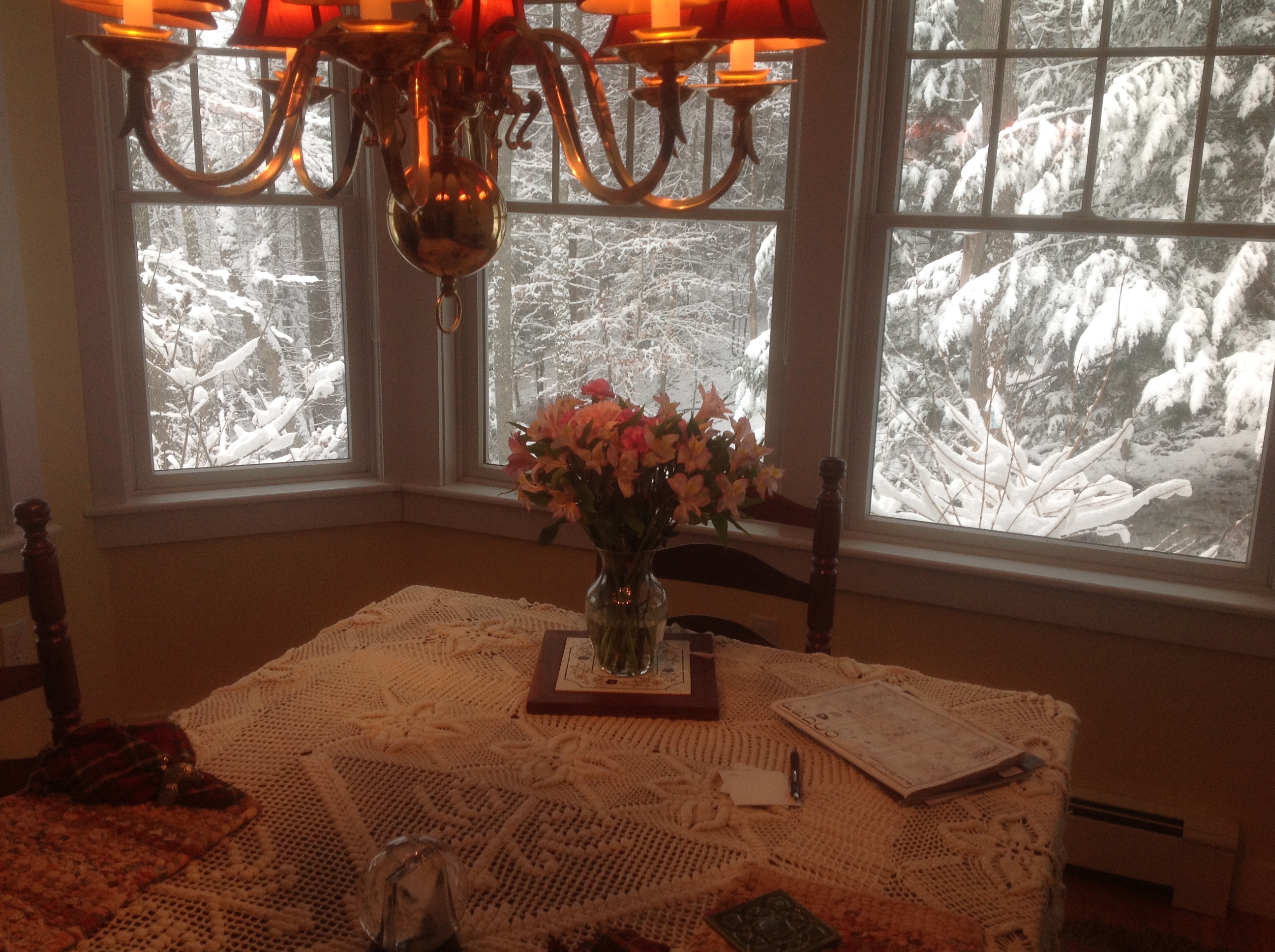
Here’s what I was looking at today when Toni’s message came through:

IMG_0142


Wet snow…

No No Penny is very bored with snow:

IMG_0143


I downloaded Checkbook Pro today and set about putting my 2014 checks into it.  I needed something that could sort expenses by categories.  I had decided that I loathed, LOATHED, Quicken.  With Checkbook I could put the credit card and bank on, but I really just want something so I can sort checks and categories of spending.  The credit card does that kind of reportage at the end of each year, and I run as many expenses as I can through it for the miles.  It didn’t take me a minute; it’s easy and fast and intuitive, and I’m now happy.

Interesting Information: Red Palm Oil

Interesting Information:  January 13, 2014

Red Palm Oil

I read a really interesting article on red palm oil a while back.  Sometimes it takes me a while to act on information, and it took me about an hour to refind the article!  I was shocked to realize I read it back in the spring–which shows you how backed up my blog information pile is.

“Red Palm Oil:  A Healthy Fat with a Daily Dose of Vitamins,” Bruce Fife, N.D., Well Being Journal, May/June 2013, 8-13.   (This journal has an url, but does not let you read articles for free.)

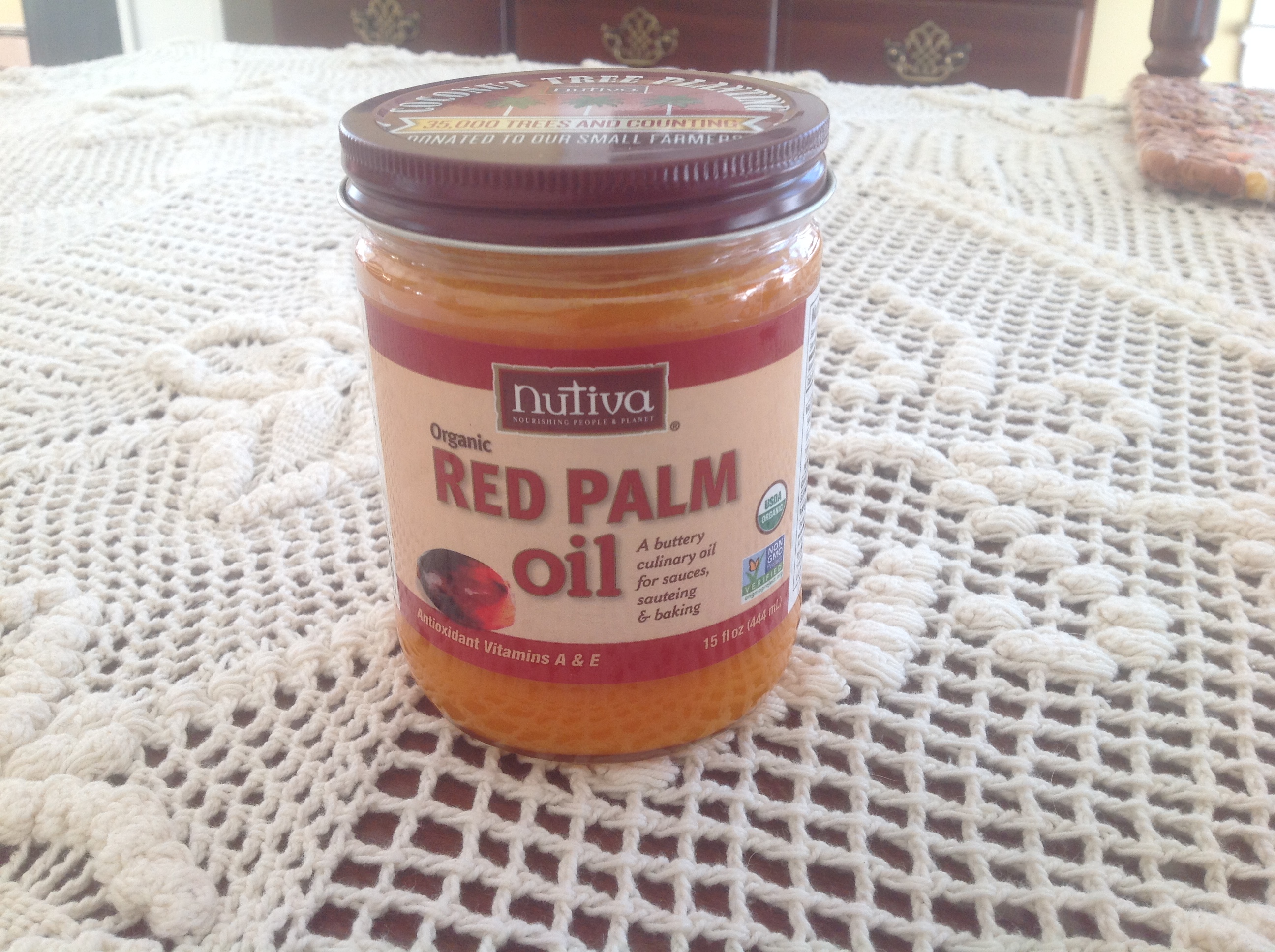
Anyway, a week or so ago, I bought a jar of the red palm oil.

IMG_0121

Turns out that the shopping booklet that the Weston A. Price Foundation sends me every year lists this Nutiva brand under its “best” category.

First I tried it instead of olive oil when roasting some cauliflower.   Hmmmmmm.  Pretty color on this white veggie.  Taste, and, Delicious!  Buttery and warm with an intriguing red/gold color.

Next I tried it instead of butter over the top of a roasting chicken.  Again, delicious!

So, what’s so good about this delicious, pretty fat besides the taste?

First, Fife writes that red palm oil has been a traditional part of the human diet in areas where oil palms have grown for “at least 5000 years.”  These oil palms started in tropical Africa, but now are an important crop in Southeast Asia, West Africa, and South America.

Besides being used in food preparation, red palm oil is used as medicine.  At the first sign of illness, one living where red palm oil is in the economy would down a cup of red palm oil.  And, red palm oil in these regions is “regarded as essential in the diet for pregnant and nursing women in order to assure good health for the mother and child.”

Red palm oil supplies essential fatty acids, yes, but it is also “packed with an assortment of vitamins, antioxidants, and other phytonutrients important for good health.”  The rich, deed red color comes from carotenes (like beta-carotene and lycopene)–which are also found in tomatoes and carrots.  But red palm oil has “15 times more provitamin A carotenes than carrots and 300 times more than tomatoes”–all of which makes it an excellent prevention for Vitamin A deficiency, which causes, Fife reminds, blindness, weakened bones, lowered immunity, and degraded learning abilities and mental functions.

Carotenes in fruits and vegetables, writes Fife, “can supply the needed vitamin A if an adequate amount of fat is also consumed.”  Voila!  Red palm oil is the whole package of nutrients and needed fat.  (And I would add that big strides have been made in the past two years towards recognizing how much humans need good fat sources to be healthy and towards restoring the role of good fats in recommended diets.  Good fats are NOT the highly processed vegetable oils which are devoid of nutrients and the fat-soluble vitamins.  Good fats are the animal fats, coconut and red palm oils, and properly processed olive oil.)

In addition to the carotenes, red palm oil “contains at least 20 other carotenes along with vitamin E, vitamin K, CoQ10, squalene, phytosterols, flavonoids, phenolic acids, and glycolipids.”  Red palm oil is so full of good nutrients and fats that it is being encapsulated and sold as a vitamin supplement.  Indeed, red palm oil is one of the richest natural sources of vitamin E.

Fife describes several studies–done with appropriate control groups–that show that red palm oil can stop heart disease and, for some, reverse it.

Fife writes that the antioxidants in red palm oil work to keep inflammation under control.  As such it helps lower blood pressure and may serve as a “potent anticancer food.”  It also protects “against neurological degeneration.”

Fife writes that red palm oil is excellent for cooking and baking–and my fledgling experiments begin to confirm its uses.  The label on the bottle I bought said it was good for medium heat, so I would not use it for high heat searing.  For that I use lard, tallow, or coconut oil.

So, I’m on board with adding this fat to my kitchen.

Besides, it’s just so darn pretty!

Turkey Tracks: “My Little Blue Book” from Red Flannel Pantry Blog

Turkey Tracks:  January 3, 2014

“My Little Blue Book”

Red Flannel Pantry Blog

I loved this blog post from Red Flannel Pantry:  my little blue book | red flannel pantry.

I’ve always journaled for most of my life.

Journaling has gotten me through some tough times and helped me work through to the “bottom” of things–to the bedrock where I can see what the issues really are and what I really think about them.

If you’ve never done the journaling in The Artist’s Way, Julia Cameron, I highly recommend trying it.  That journaling got me to Maine where I have been so happy.

But keeping a daily “quick” journal is kind of different.  I’m on my second ten-year journal–the first was a gift from Yoshi Hazen, a former neighbor in Falls Church, Virginia.

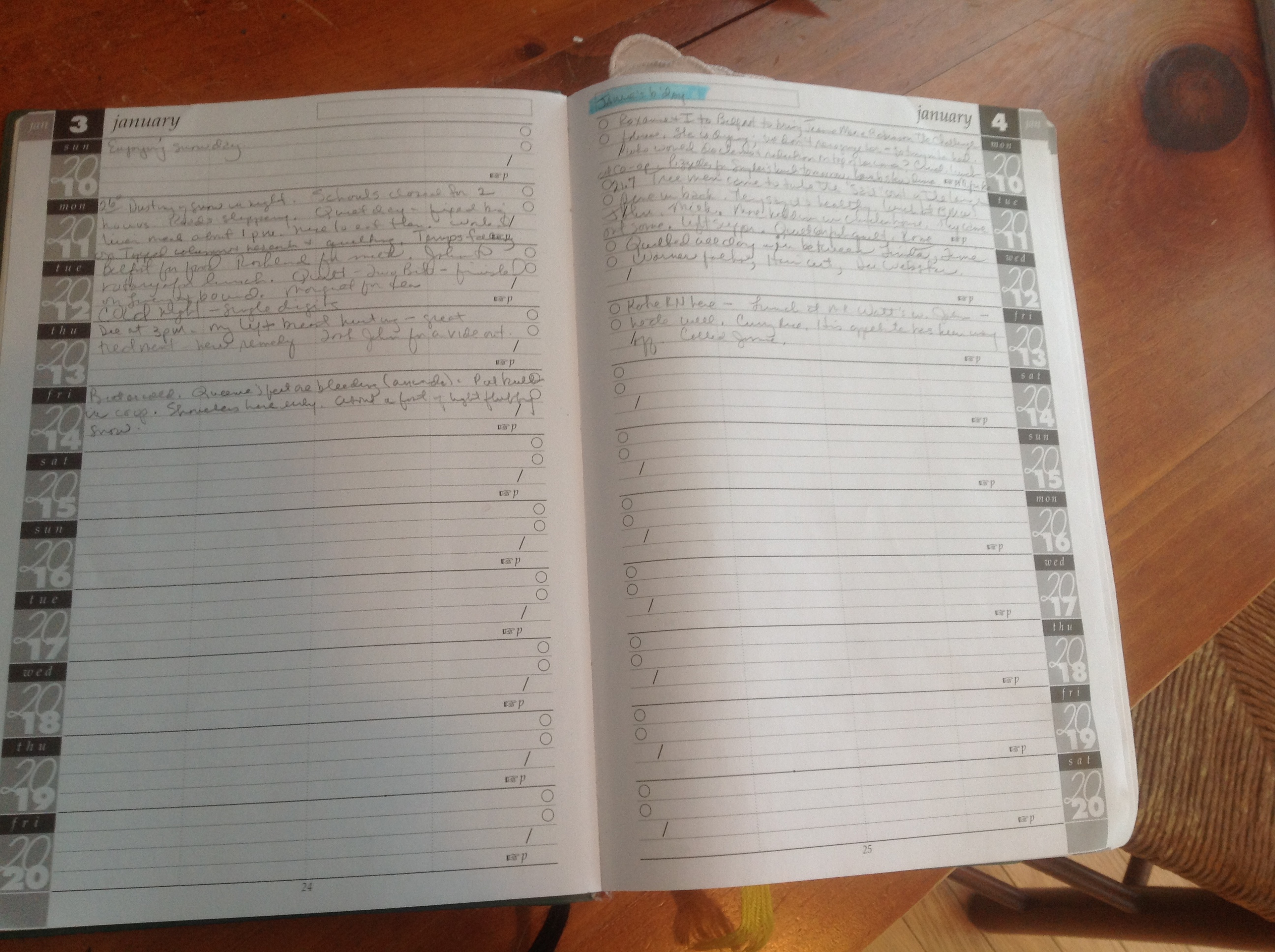
Here’s what a page in my ten-year journal looks like:

IMG_0089

Each day has space to jot down significant daily events.

I can’t tell you how many times I have gone back to the journal to ferret out what happened when.  From a repairman’s visit to a doctor’s appointment to a major life event–it’s all there.

I gave my oldest grandson a five-year journal on his tenth birthday this fall.  He is maybe the kind of person who will keep it.  If so, he will treasure it down the road of his life.  I wish I had my earlier journals or had had someone start me on this type of journal when I was young.

For 2014, I wish you good journaling of all kinds!


Interesting Information: Blog: 2013 in review

Interesting Information:  December 31, 2013

My Blog:  2013 In Review

Every year WordPress does a “review” of my blog.

It’s kind of interesting information.

You can take a look if you like…


The WordPress.com stats helper monkeys prepared a 2013 annual report for this blog.

Here’s an excerpt:

The concert hall at the Sydney Opera House holds 2,700 people. This blog was viewed about 28,000 times in 2013. If it were a concert at Sydney Opera House, it would take about 10 sold-out performances for that many people to see it.

Click here to see the complete report.

Interesting Information: Perspectives on Mammograms

Interesting Information:  December 22, 2013

Perspective on Mammograms

Beedy Parker sent me this article.  Beedy is one of the people I look to in this world for wisdom.

I hope you will take time to read this Orion Magazine piece by Jennifer Lunden, “Exposed.”  I especially hope you will if you are a woman and are still getting mammograms.  Lunden has down a really good job of tracing down the “pink” history of the breast cancer arena and of pointing to the most current research on this topic of mammograms and breast cancer.

Exposed | Orion Magazine.

I do not get mammograms any longer.  But, as always, YOU decide.

Interesting Information AND Turkey Tracks: Making Bone Broths AND What’s In Them

Interesting Information AND Turkey Tracks:  December 18, 2013

Making Bone Broths AND What’s In Them


I love it when something is being discussed or a piece of information is sought and “the universe” pops it up for you.  That phenomenon is called synchronicity.  And it happens in my life all the time.

My post yesterday on dysfunctional gallbladders talked about bone broths for healing–and about that time, the Mercola web site did a posting on bone broths–why they are good for you and how to make them.


Here’s that link:

Bone Broth: One of Your Most Healing Diet Staples.

Then my oldest friend (in length of time, not years) got very sick and landed up in the hospital–pneumonia–and I said “bone broths” to her.  She asked next how to make them.  So, here is synchronicity working for her.

Mercola discusses chicken bone broth.  If you use a whole chicken–take the chicken out after about 30 minutes and strip the meat from the bones and put the bones back into the pot to make the “bone broth.”  Use the meat in another recipe.  You don’t want to cook the meat to death.

If you want to use beef or lamb bones–and you do–and you can also mix them with poultry–brown them in a hot oven in a shallow pan first.  Put all the fat that gets rendered into the soup pot with the browned bones.  You can add some savouries–onions, carrots, celery, garlic, etc.–but you can also go plain and add the savouries to your stock when you make soup, etc.  Fry them up a bit in fat first.  You can pull fat off the top of your chilled stock and use that to sauté.

Remember, you want to cook the bones at least 12 hours.  You can leave the pot UNCOVERED on the stove over night and resume cooking the next morning.  As long as you heat it for at least 10 minutes, it’s fine.


Interesting Information: What Causes Gallbladder Dysfunction?

Interesting Information:  December 17, 2013

What Causes Gallbladder Dysfunction?

My father’s gallbladder blew up one day, nearly killing him.

Emergency surgery followed.

My dad had no choice, and he was lucky.

But removing the gallbladder is also a serious thing to do.  And this removal may have contributed to my father’s growing inability to absorb the nutrients from his food, particularly vitamin B12.

In my 40’s, I started having symptoms that I felt were signs that maybe my gallbladder was not so healthy either.  I was at that time “female, fat, and forty.”  (I’m still female, but not fat or forty.)

This episode may have been the start of my interest in healthy food for healthy bodies.  I tried to be a vegetarian, and while the gall bladder issues cleared up (probably because I ate a lot of cheese and olive oil), I set in motion a new set of more severe symptoms–hair loss, nail splitting, more weight gain, and a bunch of new cavities.  And, I think I caused the start of my leaky gut problems, which led, in turn, to the food allergies with which I live today.

So, what does cause the gallbladder to run amok?

Laurel Blair, N.T.P., takes on this issue in “A Nutritional Perspective on Gallbladder Health,” in Well Being Journal, July/August 2012.

The gallbladder is a “small storage organ that sits just below the liver.”  The liver produces bile, and the gallbladder stores the bile.  “Bile released from the gallbladder is an emulsifier that enables us to absorb dietary fats, as well as the fat-soluble vitamins A, D, E, and K, and essential fatty acids such as omega 3’s.  Without bile, these nutrients pass through our bodies without being absorbed.”

And, I know from other research, that if the delicate balance of our bodies gets “off,” it begins to rob stored nutrients to try to make the whole system work or to, at least, make a particular part of it work.  Is that what happened to my dad?

So, modern medicine removes diseased gallbladders.  And in my dad’s case, he was lucky that his gallbladder blow out didn’t cause other tissues/organs, etc., to become diseased.

But, taking out a diseased gallbladder never deals with the cause of the gallbladder disease.  So now a person has no gallbladder AND still has the original problem that caused the disease in the first place.

What is the cause of gallbladder disease?  Here’s Blair’s answer:

What causes gallbladder dysfunction in the first place?  There are a number of factors that can play a role, including food allergies and obesity, but the two that seem to be the most important are low-fat diets and excessive consumption of refined carbohydrates.

The gallbladder is designed to empty several times per day in response to dietary fat and acidity, but it can continue to concentrate and store bile temporarily when food is scarce.  When you eat a meal that contains little or no fat, the gallbladder will not get the message to empty itself.  The liver, however, will continue to make more bile whether the gallbladder empties or not.  The gallbladder has the ability to concentrate the bile and save it for the next meal.  But if the next meal (and the next, and the next) is low in fat as well, the bile begins to become thick, sludgy,and congealed, a condition called biliary stasis.  Over long periods of time the thickened bile can crystallize into actual gallstones.  This is particularly true if the bile is supersaturated with cholesterol.  Refined carbohydrates have been shown to increase the cholesterol saturation of the bile.  Refined carbohydrates also deplete magnesium rapidly from the body, and magnesium deficiency is another factor that has been linked to gallstone formation.

Blair lists some ways to prevent gallbladder disease:

1.  Avoid refined carbohydrates like white flour and sugar.  (An overload of these can cause the body to pull nutrients from body storage, one of which is, AHA, the B vitamin complex.)

2.  Eat plenty of healthy fats which include saturated fats from pasture-fed animals (butter, ghee, cream, tallow, lard, fatty meats, egg yolks, organ meats, etc.), tropical oils (palm and coconut), monounsaturated fats from extra virgin olive oil and avocados, and small amounts of polyunsaturated fat from nuts, seeds, and fish.  AVOID corn, soy, canola, sunflower, safflower, cottonseed, other seed oils, and hydrogenated oils.

3.  Make sure your diet contains plenty of minerals–eat homemade bone broth, dairy products, organ meats, seafoods, and organic vegetables (especially leafy greens)

4.  Include taurine-rich foods as taurine is a major constituent of bile.  Taurine is an amino acid found in animal proteins, including meats, seafood, eggs, dairy products, and brewer’s yeast.

5.  Eat beets.  Beet root and stem are “natural bile thinners.”  Beet greens are high in magnesium–but, I’d add, also high in oxalates, which can cause kidney stones.

6.  Avoid rapid weight loss and very low-calorie diets–as this behavior can increase the risk of gallstones.  Lose only about two pounds a week.

Hang on to your gallbladders!

Feed them with good fats!

Interesting Information: 7.83 Hz, and Sleep in the Quiet Dark

Interesting Information:  December 8, 2013

7.83 Hz, and

Sleep in the Quiet Dark

I used to fuss at my younger son and his wife all the time about the sleep monitors they have in their babies rooms.  The older child, especially, is a very light sleeper.  To give her comfort, they also keep a night light on.

But I’ve given up.  And they do have to live their lives in their own way.

Nevertheless, like many of my generation who grew up without much technology, I’m worried about the overload of radiation in our world today–from cell phones, baby monitors, microwaves, wireless transmitters of all sorts (computers, Smart Meters, radios, etc.), the machines at the airports.  It’s a growing list.

I myself cannot sleep with lights on around me.  The fire alert contraption on the ceiling near my bedroom door–meant to show me where the door is in the case of fire–seems at night like a strobe light.  I covered it with several coverings of masking tape.  But I can still see it once my eyes get accustomed to the dark, and one of these days, I’m getting on a ladder and putting MORE tape over it.  The light from the clock or from the plug strip in my room or from the phone–I block or cover them up.  Then I get, blissfully, dark.  Then I have only the monthly full moon and the countless bright winter stars to thwart my sleep.

Am I nuts?

You can watch Resonance:  Beings of Frequency for free at https://vimeo.com/54189727 (James Russell and John K. Webster Directors, Patient Zero Productions).

And below you’ll find the review of this DVD from Tim Boyd in the Spring 2013 issue of Wise Traditions, the journal of The Weston A. Price Foundation.

Seems that 7.83 Hz is the resonant frequency of the earth–and as such is the frequency at which the alpha waves of our brains resonate.  If that frequency gets interfered with, ill health follows.  Reviewer Tim Boyd notes that if you put a cordless phone in a bee hive, the bees leave.

Be sure to read the paragraph on dark and wireless devices and melatonin production.

Resonance: Beings of Frequency PDF Print E-mail
Written by Tim Boyd
Tuesday, 23 April 2013 20:05
book-thumbupResonance: Beings of Frequency Directed by James Russell and John K. Webster Patient Zero Productions Available for free viewing at http://topdocumentaryfilms.com/resonance-beings-frequency/When you have a sphere within a sphere and an electromagnetic field, that arrangement creates a frequency. For at least a few centuries most of us have known that Earth is a sphere and it is surrounded by a larger sphere we call the ionosphere. Using that information, Winfried Otto Schumann calculated the resonant frequency of the earth as 7.83 Hz. I know what you’re thinking. Why would anyone care? It turns out that alpha waves generated by the human brain resonate at about that same frequency. It also turns out that when researchers constructed an underground bunker completely shielded from those waves and put test subjects in that bunker, they discovered that was bad for human health.

Other experiments with DNA in water showed that DNA strands communicate with each other at about the same frequency. Life in general seems to be tuned to 7.83 Hz. In our current era we are now adding an unprecedented amount of other electronic frequencies and noise to the environment. Between radio transmissions, cell phones and other wireless transmissions, it is becoming almost impossible to detect the Schumann resonance around big cities.

There is reason to believe this is having adverse effects on human and animal life. When cordless phones are put in a beehive, the bees don’t return. When natural electromagnetic fields are disrupted by things like cell phones or cell towers, birds and bees are no longer able to navigate. There may be other factors involved but this appears to be a significant factor in the decline of many species of birds and insects. In human populations, cancer clusters have been noted around cell phone towers.

Melatonin is a powerful antioxidant that regulates the immune system. It is produced by the pineal gland when it is dark. That is why you need to sleep in complete darkness to get the benefits of any melatonin. There is now evidence that melatonin production is disrupted by other forms of radiation besides visible light, particularly from wireless devices.

There have been a number of studies showing problems with cell phone radiation. There have also been many studies claiming that there is no problem. When you look at who carried out (or paid for) the studies showing no problem, it is obvious that the sponsor of the study had a vested interest in finding nothing. This video also points out that there is no effective government oversight or regulation of all the new phone technology. It is almost amusing when people are shocked by this fact. Large corporations control the governments of the western world. How much genuine regulation do you expect? All of this is more bad news for cell phone lovers. This one gets a thumbs UP.

This article appeared in Wise Traditions in Food, Farming and the Healing Arts, the quarterly magazine of the Weston A. Price Foundation, Spring 2013.

Interesting Information: Vitamin B12 Deficiency

Interesting Information:  December 8, 2013

Vitamin B12 Deficiency


My father’s body stopped being able to use the B12 vitamin in his later years–which is a malabsorption issue.

He got B12 shots, but he slipped into dementia (not Alzheimers) anyway a few years later.

The Spring 2013 issue of The Weston A. Price Foundation’s journal Wise Traditions, Nutrition and Behavior, discusses at length the connections between human violence and other behavioral issues and the lack of nutrients–vitamins, minerals, enzymes, and so forth.

Sylvia Onusic, PhD. CNS, LDN, in “Violent Behavior:  A Solution in Plain Sight” (Wise Traditions, Spring 2013) discusses the lack of B12.

Here’s the link:  http://www.westonaprice.org/environmental-toxins/violent-behavior-a-solution-in-plain-sight

Here’s what Onusic said about the lack of B12:

Vitamin B12 deficiency has a well-known correlation with mental disorders, including irrational anger.  A higher incidence of low B12 is found in mental patients than in the general population.  Deficiencies cause mental symptoms ranging from poor concentration, depression and severe agitation to hallucinations [citation here].  Deficiencies are caused by pernicious anemia, an autoimmune condition; they are also found in vegetarians and vegans, those with low animal protein intake, and individuals with leaky gut.  Drugs including anesthetics can deplete B12 [citation here].

My dad, as I said above, had some sort of malabsorption going on.  He was thin as a rail though my mother, a great cook, fed him very well.  He took a boat load of drugs for allergies and asthma.  (We know now that most food allergies and asthma can be associated with foods and an impaired immune system–not to mention all the chemicals washing over our world these days.  My dad lived across the road from an agricultural field that held skull-and-crossbones signs at its four corners.)  He probably had leaky gut…

Anyway, this article is interesting…

And gives us a lot of information to contemplate.


Interesting Information: Stell Shevis’s Enameled Music Boxes

Interesting Information:  December 8, 2013

Stell Shevis’s

Enameled Music Boxes


When I graduated from high school, my grandmother gave me a china box that I treasure to this day–though it is worn and tired and old now.  

It lives on my dresser and holds some pearls John gave me long ago.

I wanted to give my grandchildren some small treasures that they would have always.  Each has their name spelled out in brightly colored wooden letters–led by a train and followed by a caboose.

And to each–up to the birth of the youngest last April–I gave an enameled music box made by Stell Shevis–who is far more than a local artist here in Maine.  Stell and her husband have national reputations, and we are only just lucky that they decided to live in Maine.  (Shevis died a few years ago.)

link:  Stell Shevis | About Stell and Shevis- Maine’s local artists.

I discovered Stell’s music boxes when we first moved to Maine ten years ago now.

But, Stell, who is in 2013, 97 years young (and she is young in mind and heart and sharp as a tack), stopped making the boxes some time ago.

When Ailey was born, I called Stell and asked if she had any left in her studio.  She did, and I chose one for Ailey.

Last week, I worked up my hope and called Stell again.  Perhaps she had a few left, I asked when she answered the phone.

I went right over, and there were four boxes left.

I bought two.  One for Cyanna.  One, just in case…

And Stell and I had a wonderful visit to boot.

Here are the boxes:

Stell Shevis  music boxes

The white is silver, and the yellow, gold.

One plays “White Christmas” and one plays “Wind Beneath Your Sails.”

Hmmmmm…..