Turkey Tracks: Thats Nuts! A Complete Guide to Soaking Nuts and Seeds

Turkey Tracks:  January 26, 2014

That’s Nuts!

A Complete Guide to Soaking Nuts and Seeds


This posting from Radiant Life came in on my email a few days ago, and I thought I’d pass it along.

Soaking nuts and seeds is very important as these foods contain chemical elements (phytates) that can seriously hinder your body’s ability to absorb much-needed nutrients.

This “recipe” uses the oven to dry out soaked seeds.  I use a dehydrator–less chance to burn delicate nuts and seeds.

http://blog.radiantlifecatalog.com/bid/69542/That-s-Nuts-A-Complete-Guide-to-Soaking-Nuts-and-Seeds

Turkey Tracks: Cream of Tomato Soup

Turkey Tracks:  December 31, 2013

Cream of Tomato Soup

I spent the day before yesterday thinking about cream of tomato soup.

So I defrosted a pint jar of tomato sauce I put up two years ago.  Since then I’ve been roasting tomatoes and freezing them as the flavors are more intense and I can do more with them.  The sauce, as I recall, is not made with onions…  The roasted tomatoes are.  Both are made with the newly harvested garlic crop, lots of basil, and gorgeous, home-grown tomatoes.  Both make fabulous cream soup.

A jar of tomato sauce is an awesome, awesome asset in the kitchen store.

Yesterday, I spent the morning thinking about my lunch of cream of tomato soup–made with the now-defrosted sauce–and a grilled cheese sandwich (on Sami’s gluten-free bread spread with mustard) made with Applegate provolone cheese.

IMG_0076

Yummo!

Cream of Tomato Soup is dead easy.  Pour the pint jar of tomato sauce or roasted tomatoes into a saucepan and add about 3/4 cup of raw, heavy cream.  Heat gently.  Eat!!!

There’s enough left for today’s lunch.

And I’ve been thinking about it all morning!

I wish you all nutrient-dense, nourishing, comfort food for 2014.

Interesting Information AND Turkey Tracks: Making Bone Broths AND What’s In Them

Interesting Information AND Turkey Tracks:  December 18, 2013

Making Bone Broths AND What’s In Them


I love it when something is being discussed or a piece of information is sought and “the universe” pops it up for you.  That phenomenon is called synchronicity.  And it happens in my life all the time.

My post yesterday on dysfunctional gallbladders talked about bone broths for healing–and about that time, the Mercola web site did a posting on bone broths–why they are good for you and how to make them.


Here’s that link:

Bone Broth: One of Your Most Healing Diet Staples.

Then my oldest friend (in length of time, not years) got very sick and landed up in the hospital–pneumonia–and I said “bone broths” to her.  She asked next how to make them.  So, here is synchronicity working for her.

Mercola discusses chicken bone broth.  If you use a whole chicken–take the chicken out after about 30 minutes and strip the meat from the bones and put the bones back into the pot to make the “bone broth.”  Use the meat in another recipe.  You don’t want to cook the meat to death.

If you want to use beef or lamb bones–and you do–and you can also mix them with poultry–brown them in a hot oven in a shallow pan first.  Put all the fat that gets rendered into the soup pot with the browned bones.  You can add some savouries–onions, carrots, celery, garlic, etc.–but you can also go plain and add the savouries to your stock when you make soup, etc.  Fry them up a bit in fat first.  You can pull fat off the top of your chilled stock and use that to sauté.

Remember, you want to cook the bones at least 12 hours.  You can leave the pot UNCOVERED on the stove over night and resume cooking the next morning.  As long as you heat it for at least 10 minutes, it’s fine.


Turkey Tracks: Elderberry Tincture

Turkey Tracks:  October 22, 2013

Elderberry Tincture

I almost missed the elderberry harvest again this year.

you really have to keep a sharp eye on the berries because they are near ripe one day and gone (birds) the next.

So, back in September some time, I got what remained on the two bushes I have.  One is almost a tree, and when we first came, I kept cutting it down as it’s growing in the rock wall below the house.  (Harvesting it is…dicey.)  The other is a bush I planted two years ago, and those berries are plumper and bigger than the wild berries.

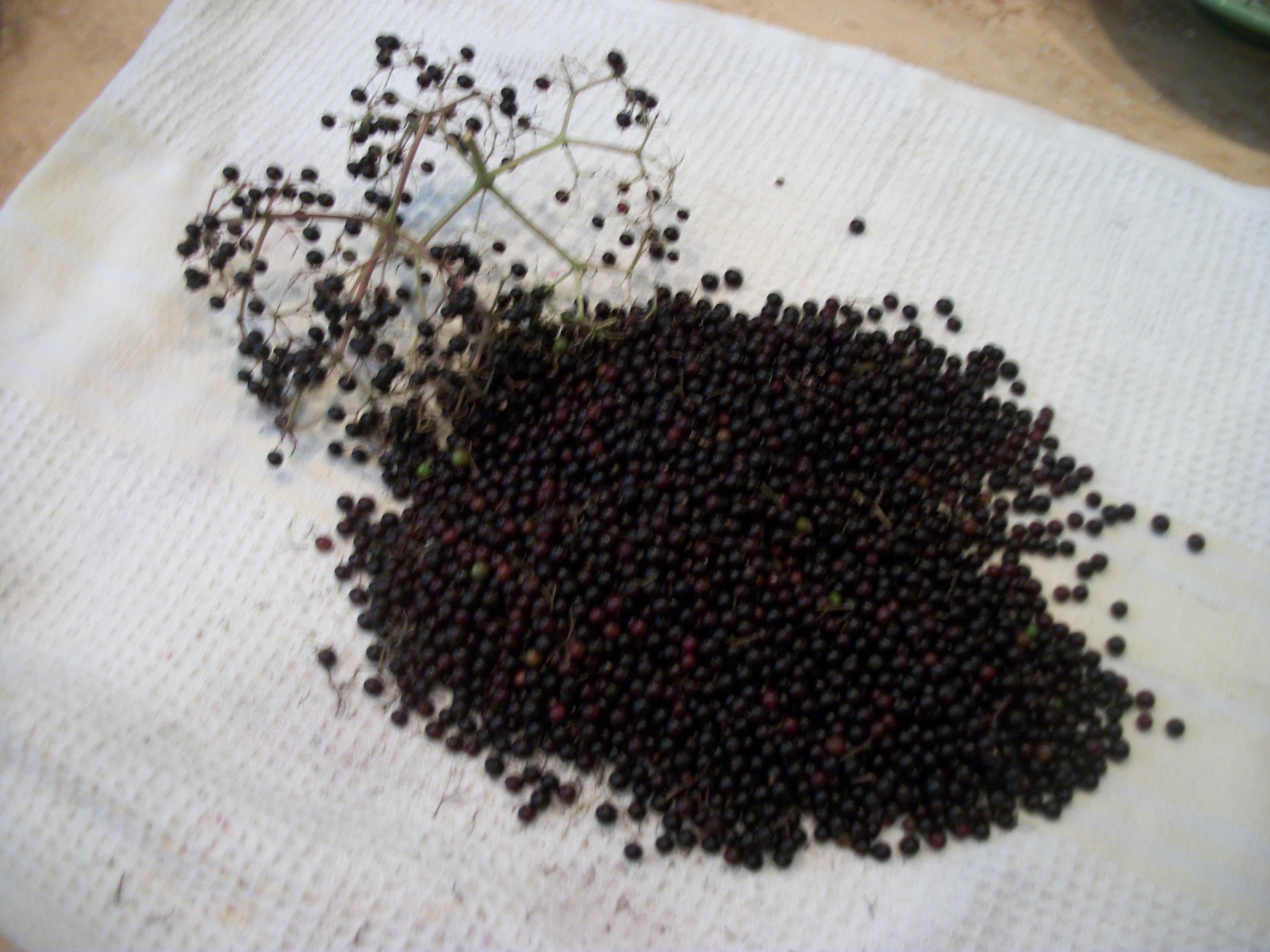
Anyway, you cut off the berry clusters and strip off the berries in the kitchen.  You can see elderberries are TINY little purple berries.  And you can see how the clusters grow on the plant from the last one I’m stripping in this picture.

Elderberries

I make a tincture.  And, tinctures are alcohol based.  I use vodka.  Next time you are in Whole Paycheck or a health food store, see what a little bottle of elderberry tincture costs, and you’ll have newfound respect for my efforts.

I fill a quart jar with berries and pour the vodka over the berries to fill the jar.  I freeze the berries I have left.  Then I let the mixture sit out on the counter until the berries go white–as all their purple goodness is leached out.  At that point, I strain off the old berries and put in new ones and pour the now-purple vodka back into the jar.  Last year I did this process three times.  And can I tell you that that tincture was incredibly powerful.

Elderberry Tincture 2013

This year, I will probably do only two leachings since I don’t have that many berries.  Maybe I’ll leave the second batch of berries inside the liquid–they would provide fiber at least.

This tincture is dynamite for anyone coming down with a cold or the flu or anything that seems like it will become an illness.

Another use for frozen elderberries is to just thaw a few in a spoon overnight and eat them in the morning.  Dr. Natasha Campbell-McBride–of the GAPS protocol–which I’ve written about many times on this blog–recommends eating a few berries over the fall and winter to support your immune system.

Elderberry bushes are easy to locate and to forage, in the late summer.  FInd them in the spring when they have big white flat cluster blooms, flat like a Queen Anne’s Lace flower.  Google them for an image?  They like damp places.  If you don’t have access to the countryside, plant a bush in your yard somewhere.

Turkey Tracks: How to Feed Your Gut

Turkey Tracks:  October 15, 2013

How to Feed Your Gut


More and more information is appearing daily about the importance of keeping your gut healthy.

You may recall from other postings on this blog that I compromised my gut health over the years–and have paid a pretty hefty price for doing so.  It turns out that I have a genetic sensitivity to gluten–tested by a reputable lab sanctioned by the government with a fecal test.  (Blood tests don’t often catch these kinds of food allergies.)  The hefty price is that when I harmed my gut by eating gluten and other foods that let the opportunistic gut flora and fauna we all carry get out of control–read sugars and too many carbs here–they perforated the walls of my gut and food particles began to escape into my bloodstream–which, in turn, created conditions where my body thinks it is being attacked and produces a classic histamine reaction.  My blood pressure drops, I lose all muscle control, and I pass out and have to be hauled off to the hospital where I recover in time.  It takes days to get my brain fully functioning again.

This falling domino sequence did not happen overnight.  It took years.  And I ignored all the warning signs:  reactions to red wine, allergic runny nose and sneezing after eating a food my body did not like, irritable bowel reactions that could strike without warning, the yo-yo effect of constipation followed by diarrhea, weight gain, and on and on.  I didn’t stop until I started passing out and my list of foods that would set off the reaction began to grow and grow until I was afraid to eat anything for fear of setting off an attack.

You can’t take a pill to “fix” this kind of thing.  The only way out is to heal your gut.  And to do that, you have to stop eating any kind of processed food and to start eating nutrient dense whole clean foods that nourish your body.

So, guess what is one of the very best things you can do?  Eat lots of lacto-fermented foods EVERY DAY at EVERY MEAL.  This food has more probiotics and enzymes than any probiotic product you can buy in a store.  Lacto-fermented foods are changed in ways that make them even better than they were when raw.  It’s how people used to store foods before canning and freezing came along.  And, note that canning kills foods and freezing is an energy drain.  I reserve freezing real estate for things like meat, local fruit, and roasted tomatoes, where it takes many tomatoes roasted down to fill a pint jar.

But, first, let me explain that “lacto” is from the wild ingredient that lives in the air, lactobacillus.  Cultured milk products also contain lactobacillus, so that’s where you might have first heard that term.  And I learned all that and how to make sauerkraut first from The Weston A. Price Foundation’s Sally Fallon Morell and Dr. Mary Enig’s book NOURISHING TRADITIONS (a must have in your library).  Then, I built on that knowledge after a few  years with Sandor Ellis Katz’s book WILD FERMENTATION.

Katz was the Maine Organic Farmers’ and Gardners’ Association keynote speaker at the Common Ground Fair this past September.  He has a new book out that is more comprehensive than WILD FERMENTATION.  The new book, I think it’s called THE ART OF FERMENTATION, includes fermenting meats–like corning beef, for instance–which is something I really want to try.

Thus, Katz was in our region, and that sparked other programs on lacto-fermentation.  One such was given by Ana M. Antaki at the Belfast Library–and Margaret Rauenhorst and I went.

Here’s Margaret outside the library–we got to the program a bit early.  Belfast had all sorts of clever benches done by various local artists and placed all over town.

lacto-ferm, Margaret, Belfast library

Margaret is important here because her recipes differ a little from mine–and it’s important to realize that there are different ways to lacto-ferment foods.  For instance, I first learned to lacto-ferment cabbage into something we call sauerkraut (which bears little resemblance to cooked cabbage that’s fermented) from NOURISHING TRADITIONS–the excellent book from Sally Fallon Morell and Dr. Mary Enig of The Weston A. Price Foundation.  That recipe uses some whey drained from yogurt along with a bit of salt, whereas Katz does not use whey.  And Margaret, who does not refrigerate her sauerkraut at all, says the whey makes it go softer quicker.

And Ana Antaki uses glass jars with a bailer and rubber seal (Fido jars) to lacto-ferment, whereas Katz uses mostly crocks.  Ana likes the bialers and seals as she says they let out gasses that form but do not let in outside air.  I use, in addition to jars with rubber seals and bailers (FIDO jars) and crocks, half-gallon Mason jars because that’s what I have on hand and because I have the refrigerator room to store them so they stay cool.  The crocks require a bit more attention to keeping liquid levels high enough.  The Mason jars maybe need to have the gases inside let out from time to time if the jars are in places that are not cool enough.   I do have questions about the glass Fido jars not letting in enough “wild” organisms not so much to help ferment the foods, but to let even more of the “wild” of nature do even more work.

Ana and her husband Roy put up ALL of their produce from their Weeping Duck Farm every year using methods like lacto-fermentation and dehydration.  They do not buy any fresh produce all winter.  And it’s important to realize that the food inside the jars/crocks stays as fresh and bright as the day you put it into the container.  Ana has kept lacto-fermented jars for as long as five years before eating the contents.

Lacto-fermentation takes only two ingredients:  salt (real sea salt please) and water (no added fluoride or chlorine).  How simple is that?

And there are two methods:  one for foods you want to cut or grate into small pieces and one for foods you can preserve in larger chunks.

Both methods could not be simpler to make and are delicious.

Sauerkraut and Sauerruben (a mixture of grated root veggies) put grated veggies into a bowl.  One then adds salt and whatever spices or herbs one wants.  (Ana adds less salt than Katz, but Katz says to use salt to your own taste.  Ana adds 3 tablespoons of sea salt to about 5 pounds of veggies.)  NOURISHING TRADITIONS adds 4 tablespoons of whey dripped out from yogurt and 1 tablespoon of salt.  (I don’t know if the whey from commercial, processed yogurt would work–it is a dead food.)

Here’s a bowl of grated cabbage with bits of carrot–you could also fine-cut the cabbage with a knife.

Lacto fermented cabbage started

I started using a pestle to bruise the cabbage enough until it started rendering its liquid–until I saw a 6-minute video Katz put on utube that showed him using his hands to squeeze the cabbage.  That seemed to work a bit better.

Once the cabbage renders enough liquid, one just packs it into a jar and lets it sit.  I turn mine upside down a few times a day and refrigerate it after a few days as that slows down the fermenting action.  I still use 4 tablespoons of whey and maybe only one tablespoon of salt, but I don’t stress about it.  I add things like some caraway seeds.  Garlic is good in anything.  You could add some herbs from the garden.  Use what sounds good to YOU.

You can start to eat any of these foods after a few days.  But the longer they ferment, the more they “develop” interesting flavors that are richer and deeper.  Refrigeration slows the reactions.

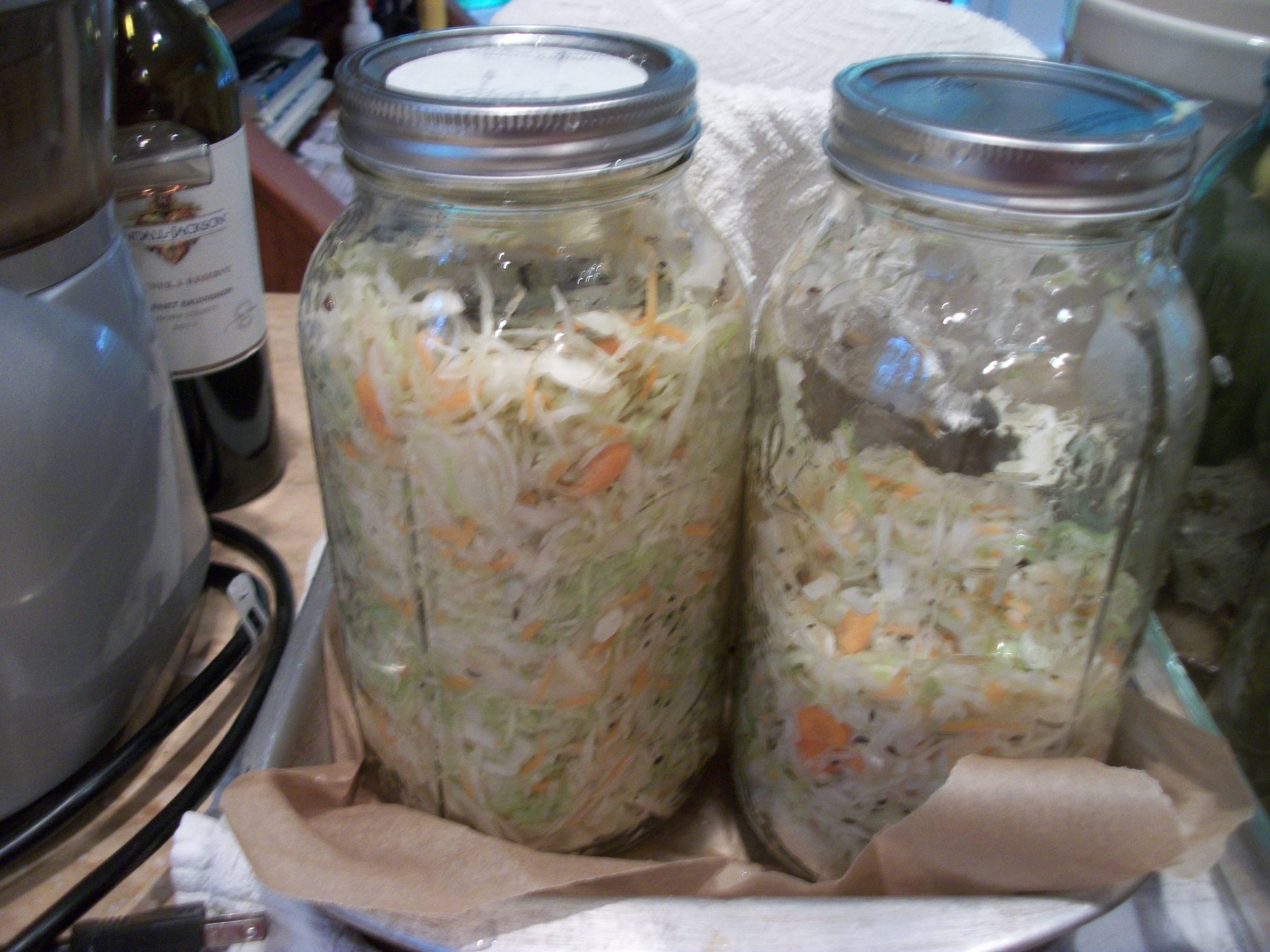
Here’s the sauerkraut packed into a jar:

Lacto fermented cabbage

After after a few days, I was able to put the contents of the half-filled jar into the full one…

If you use a crock, you need a plate you can push down over the top of the veggies  to make the liquid rise and cover them–and a weight to keep it pushed down–like a Mason jar filled with water–and a clean dish towel or cheesecloth over the top–tied around so fruit flies that are very present this time of year don’t get inside.  You want this food to be able to breathe.

The other method involves cutting up veggies, adding spices and or herbs (I put whole garlic cloves into everything as it is a great immune builder–and I eat them as I go along) and pouring some brine over the mixture until the jar is full.  Ana uses wooden popsicle sticks pushed down into the neck of her jars to keep the liquid covering the food–and that works really well.

The brine is simple–you can mix in 3 tablespoons of sea salt to one liter of water.  Katz uses about 6 tablespoons for about 8 cups and replenishes evaporated liquid with a mixture of 1 tablespoon salt to one cup of water.  You just put the salt into cold water, stir it around, and pour it over the veggies.

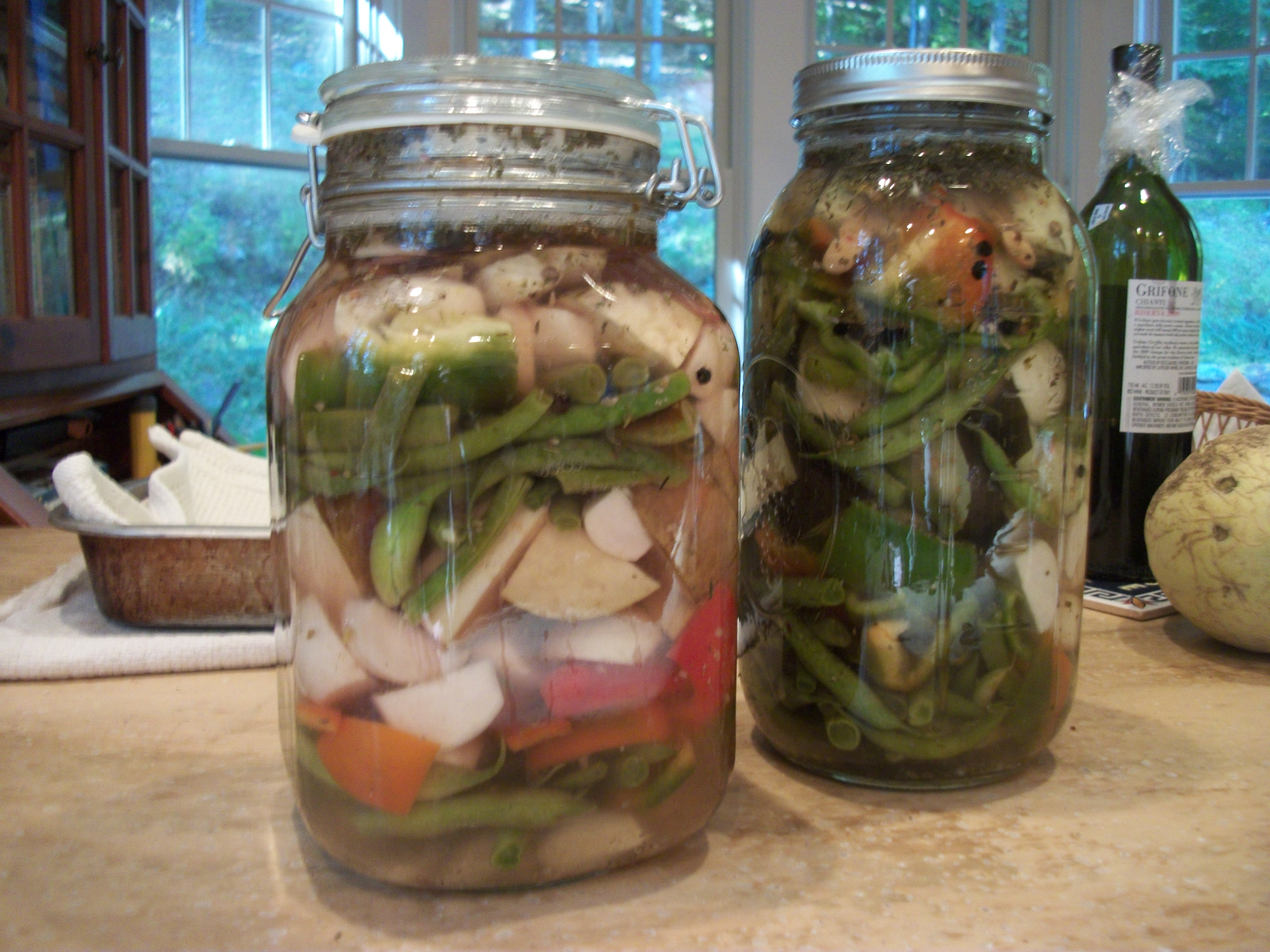
Here are my mixed veggies:

lacto-fermented mixed veggies 2

This batch has eggplant cut into chunks, carrots, beans, salad turnips, green peppers, red peppers, and so forth.  Green beans are delicious done this way.  And, of course, Katz has a recipe for New York garlicky pickles that is delicious!  I can’t get enough of them.

It’s wise to always put a fresh jar/crock into a pan or a container so that if there is overflow, it won’t ruin anything.  Especially with the crocks and especially if they are fullish.  With the jars, you will see bubbles rise to the neck of the jar and when you see a ring of bubbles–or bubbles rising if you pick up the jar and shake it–you know all is well.  Again, putting a jar into a cool place slows the reactions.

Remember that the veggies are in an acid environment–so will not go bad.  And remember if using a crock, it’s entirely normal for the top of the liquid to “bloom” with white bits and blue bits.  Just skim those off.  They don’t hurt anything any more than the white and blue bits in blue cheese.  It’s normal.  It’s WILD.

I just tasted a crock I did two weeks ago of grated turnips (about 4 pounds) and carrots (1 pound)–with added sage from the garden.  It is DELICIOUS!  It has no “turnipy” taste at all–is just clear and fresh and lovely.  I’m going to transfer it to a glass jar and think about doing it again and adding in some parsnips…  And, maybe, rutabega as I have some.  I might have grated in some Daikon radish and I did add garlic…   How healthy is that?

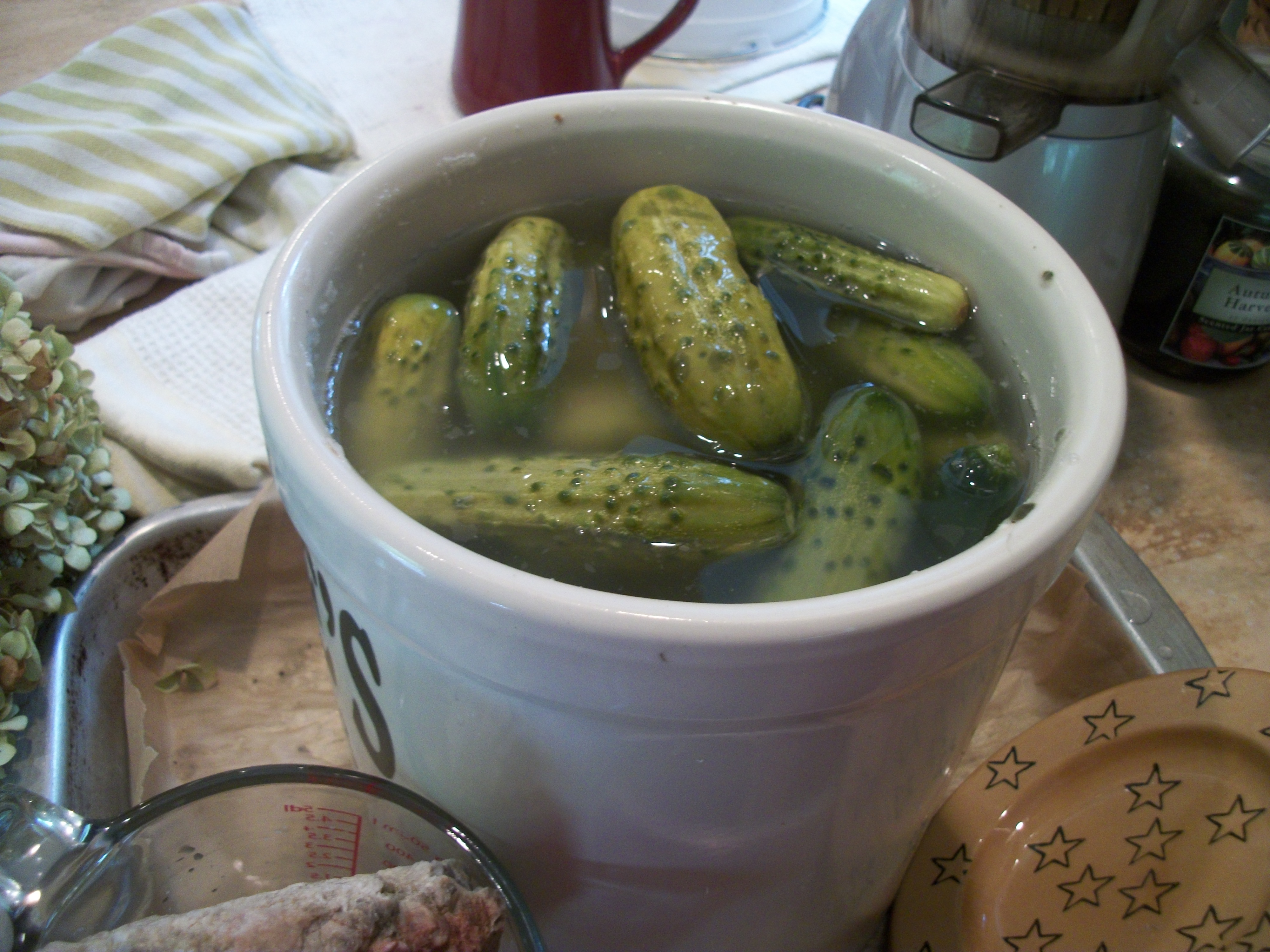
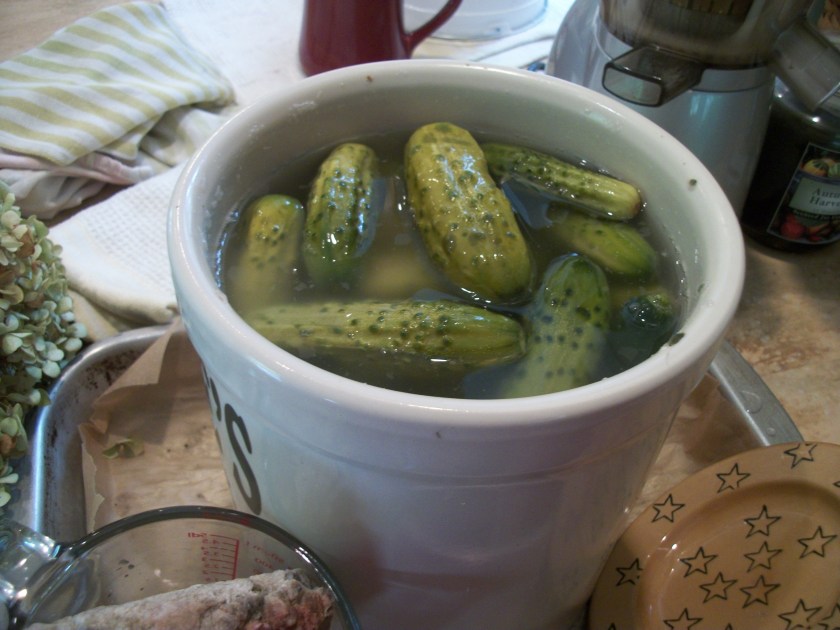
So, here’s a picture of the New York garlicky pickles this summer–lots of garlic, grape leaves to keep the pickles crisp, some peppercorns, and fresh dill:
Sour Pickes in crock

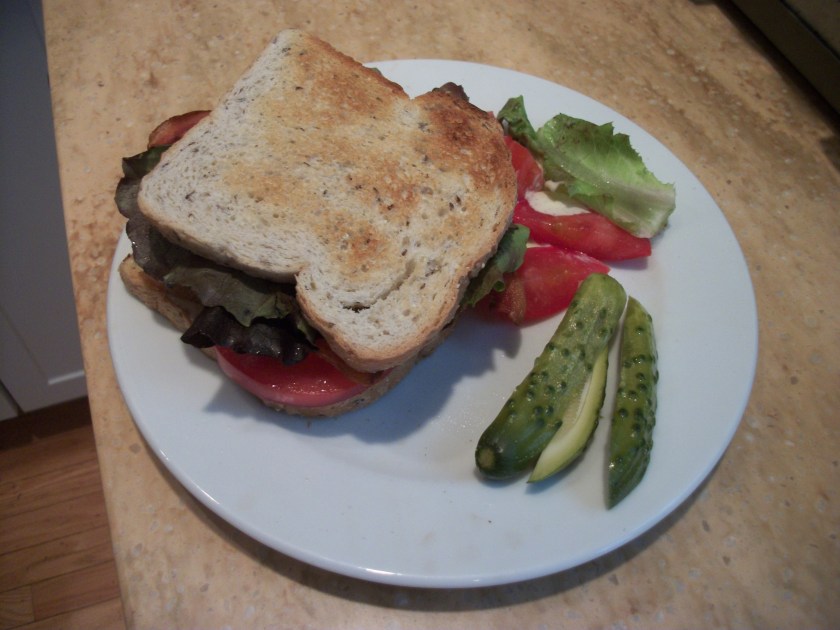
And a summer favorite–a bacon, lettuce, tomato (from your garden), slivered onion sandwich with homemade mayo and with a pickle on the side:
Sour Pickles

Turkey Tracks: Summer Salad

Turkey Tracks:  September 3, 2013

Summer Salad


August is not a great month for tender leaf lettuce.  It’s not a great month for any lettuce for that matter.  It’s too hot.  This year has been a bit different–with all the coolness and rain, some of the leaf lettuce has survived.

The wonderful Melody Pendleton came and bailed me out with painting tasks–which I hate and which she likes to do.  She does such beautiful work.  She brought me this gorgeous lettuce from her garden one day.  (I’ve replanted and my new crop is coming along.)

I made a gorgeous salad with her lettuce one day for lunch.  I’ve been so hungry for sautéed zucchini all summer.  So I sautéed some for this salad–and broke a fresh, soy-free egg into it at the end.  I didn’t add cheese as to the pan as I had some fresh goat cheese.  The last of the grated carrot/kohlrabi/corn/mustardy and garlicky dressing went on the side.  And, some of the Sun Gold cherry tomatoes from the garden.  And I had a very quick feast.  Thanks to Melody!  And the garden and the earth and the summer…


Summer salad

The garden is steadily producing.  Here’s a morning’s offering:

Garden haul

And look at the cherry tomatoes I’ve amassed.  I have enough to start a flat to dehydrate, though I’ll let them get a little riper on the counter first:

Summer Kitchen Counter, Aug. 2013

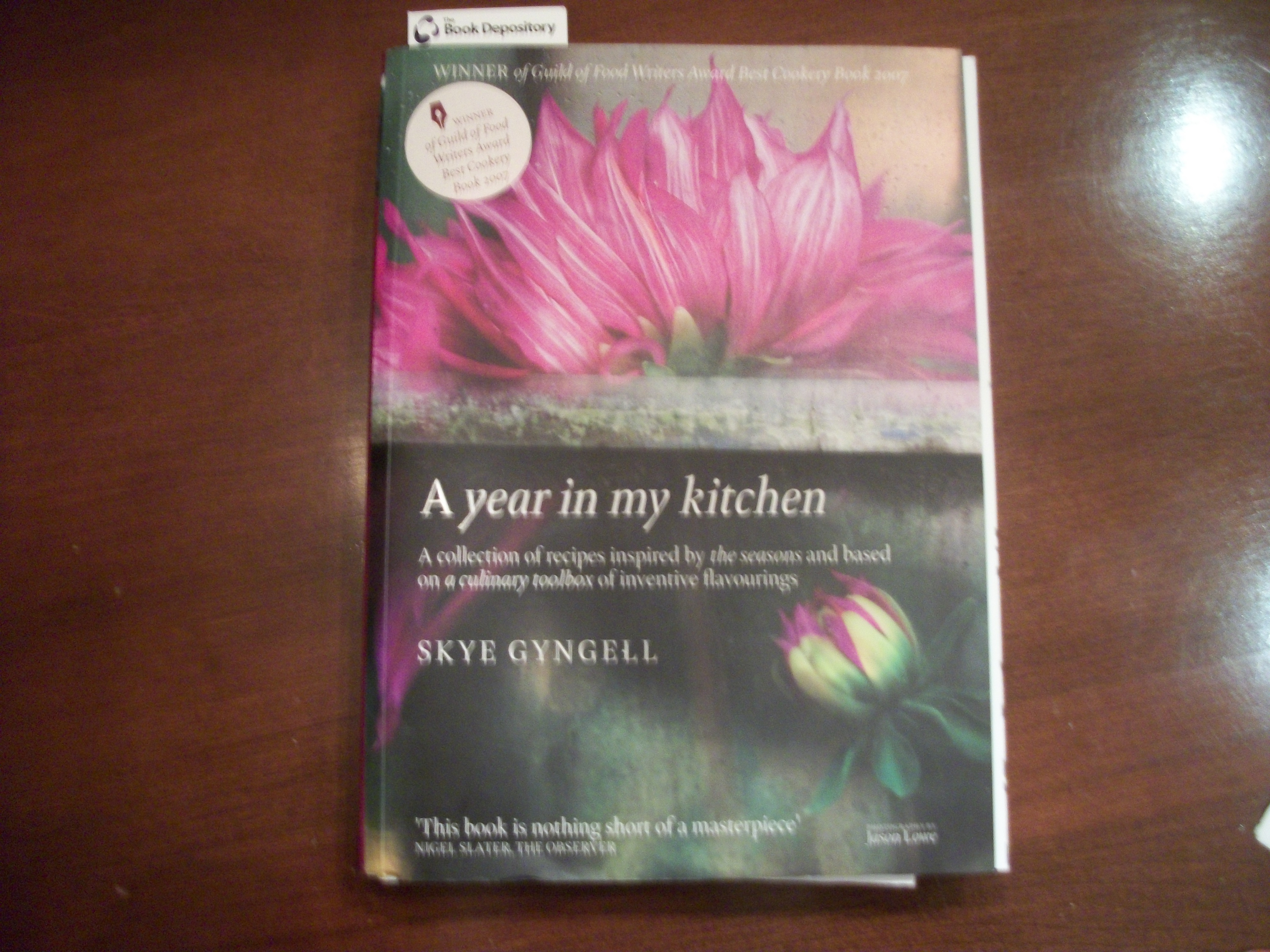
See those saladette tomatoes at the back of the cherries?  I got those from Hope’s Edge CSA.  And Melody brought me some, too.  They are TERRIFIC roasted in the agro/dolce style.  I learned that from Skye Gyngell’s book A Year in My Kitchen.  Skye takes the notion of having “assets” around the kitchen to whole new levels.  Thanks to Tara Derr Webb, of the Farmbar and Deux Peuces Farm in Charleston, SC, and Awendaw, SC, I have this book in my kitchen.

A Year in my Kitchen

Here’s a very bad picture of the saladettes roasted.  Agro-dolce means sweet/salty.  So, basically, you sprinkle a bit of sugar, a bit of salt, grind over some pepper, and SLOW, SLOW roast at your oven’s lowest heat–which can take 3 or so hours.  OK, if you get in a hurry, you can roast them quicker, and they are still delicious.  They’re good hot or cold.  Rose Thomas, La Dolce Vita Farm, roasts these guys in her wood-fired oven, and oh my gosh–the smoky taste from the wood fire is heavenly.  I’m planting more of these guys next year.


Roasted Saladette Tomatoes

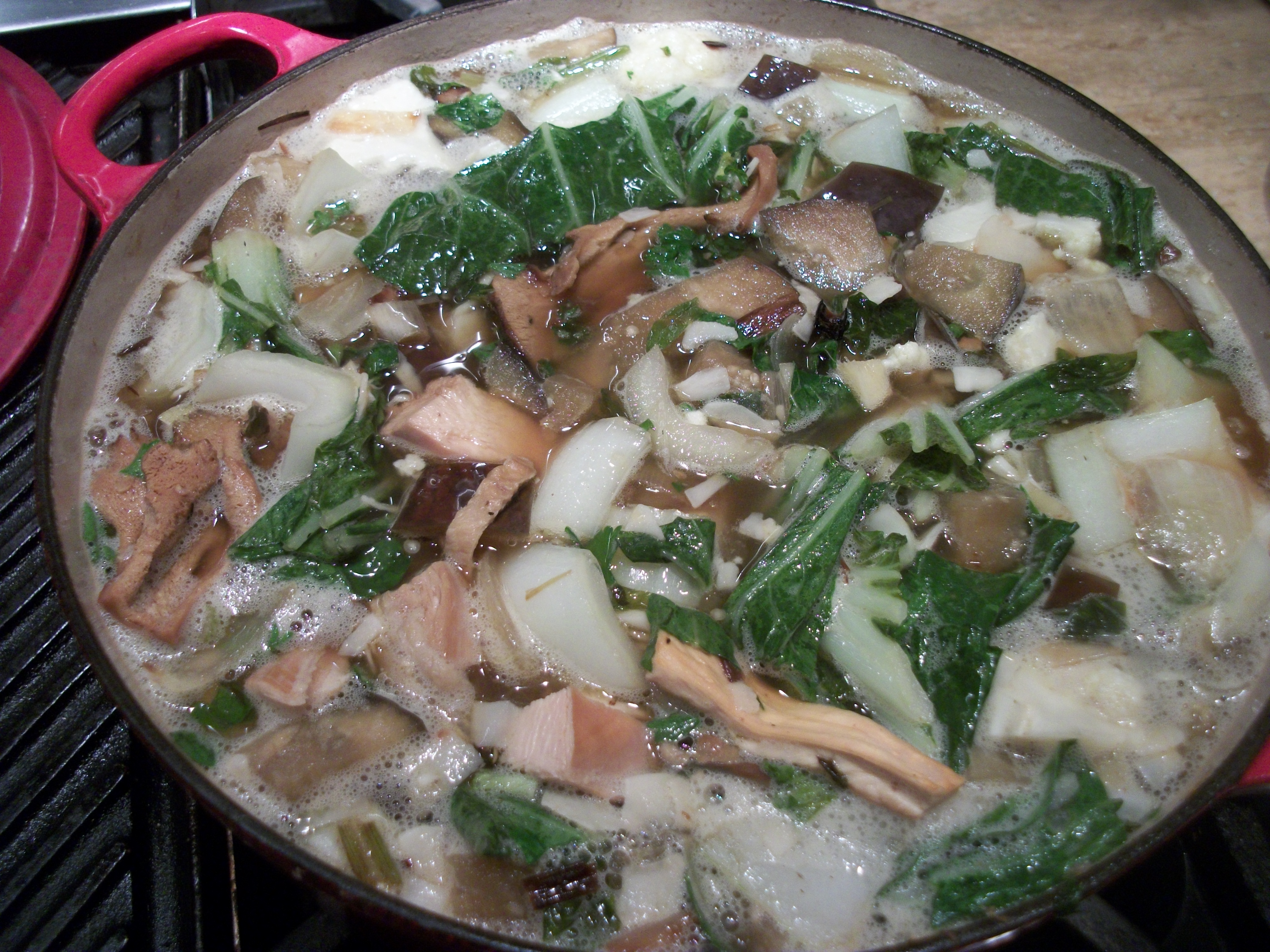
With all the vegetables needing to be used, I made a “deep summer soup” one day.  I had some frozen bone broth as a base, so I just sautéed veggies and lots of garlic–some ginger as I had a Bok Choy cabbage–and added some dehydrated mushrooms from a year or two ago.  I threw a handful or two of short-grain brown rice into it as well.  Once it’s cooked, or reheated, I spoon some of my sauerkraut into it and add a dollap of fermented piima cream.  It’s delicious and so good for you with the rich bone broth as a base.

Deep summer soup

I know summer is over, but I can still feel the summer love.

Turkey Tracks: August Dinner

Turkey Tracks:  August 25, 2013

August Dinner

On Friday I pick up my produce from my CSA (Community Shared Agriculture).  We CSA members are now at the point where we are getting A LOT of food.  As I put away the food, I isolated these ingredients for my supper.

I LOVE Romano green beans.  They are my favorites.  (Well, ok, I like the haricot verts, too.  And the Dragon’s Tongue.  And the Providers.)  After the CSA, I came home and made a fresh bacon, lettuce, and tomato sandwich–on gluten free bread–Sami’s–and saved the bacon grease.  Lard is really good for you, actually.  By keeping the grease on the stove from lunch to dinner, I was creating an asset to use later.

That purple veggie is a kolhrabi.  They also come in green.  They’re good grated or sliced thinly and sautéed.  They’re nice, too, diced and thrown into a lighter summer veggie soup.

Aug. 2013 dinner 11

First, I cut up the eggplant, put it into a colander over a bowl, and salted it.

Next, I made a fresh salad–made by grating the kohlrabi and some of these tender new carrots.  I added in some corn I took off the cob a few days ago–I always cook extra corn and reserve the kernels for salads this time of year.  Again, that’s creating an asset for later.  I shaved in some parsley.  And over it all, I poured a mustardy, garlicky vinaigrette.  I keep that kind of salad dressing all made out on the counter–where it just gets better and better.  It’s another asset.  The salad went into the frig to mellow out.  (It is good for several days.)

Aug. 2013 dinner, 2 Carrot, corn, kohlrabi, parsley mustardy garlic dressing

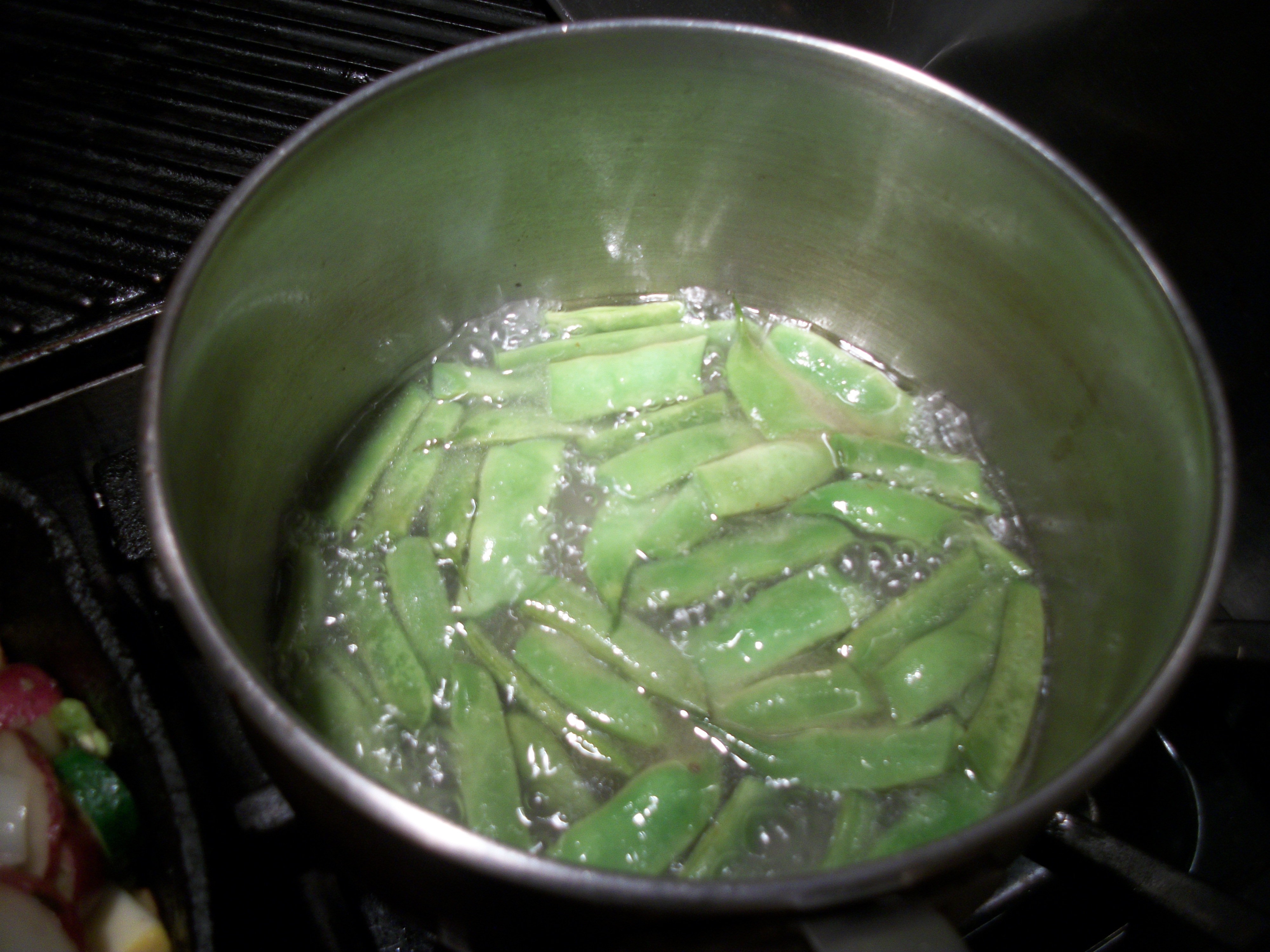
Next, I washed and snapped the Romano beans and put them into a saucepan with some of the bacon grease, water, and some salt.  I wanted them “Southern Style”–or cooked until soft.

aug. dinner 5

Then, I cut up all my lovely vegetables and put them into the cast-iron skillet where I fried the bacon.  i also added a lump of unrefined coconut oil, which is so, so good for you and very, very stable–unlike frying with olive oil.  (I reserve olive oil now mostly for eating on salads.)

Aug. dinner 3

What you see in this pan is the following:  the eggplant, the fresh onion, yellow squash, zucchini squash, some fava beans i soaked in salted water and peeled (assets, yes, bukt boy are they a lot of work), and some sliced new potatoes.  Add some good sea salt.

When the veggies had cooked down a bit, I added the tomato and some basil, some chive, and some mint from the garden.  Maybe some tarragon, too.  (An herb garden is a major asset.) I don’t know what it is about mint in this kind of dish, but it’s delicious.  See the color developing?

Aug. dinner 6

It’s your call as to when you think the dish is ready.  Here’s how far I took this batch–and the flavor was deep and rich and gorgeous.  I shaved in some parsley to finish it.

aug. dinner 7

Meanwhile, I had put chicken thighs into the oven–dressed with butter and lemon slices.

Aug. dinner 9

When the chicken was done–I poured myself a glass of orange/cucumber/lemon/rosemary infused water.  (You can see I need to make more sauerkraut–which is chock full of enzymes and probiotics.  I try to eat a little every day of one of these lacto-fermented veggie concoctions.)

Aug. dinner 8

And here’s my plate of beautiful, beautiful summer food:

aug. 2013 dinner 12

I should have added one of the lacto-fermented dill pickles i just took out of the crock and refrigerated.  The roasted lemon slices carmelize, become sweet, and are delicious.

Best of all, I will have at least two meals to reheat and enjoy–or some fun foods to have for lunch.

And, look, folks.  Not a recipe in sight.  This kind of cooking is my most favorite.  You cook, simply, what is in season because that’s all you need to do.  The fresh, wonderful food will do the rest for you.

Turkey Tracks: Dehydrator Days

Turkey Tracks:  August 22, 2013

Dehydrator Days


The hum of the food dehydrator is a constant sound in my kitchen these days.

The earth and the vegetable gardens are pouring forth the most amazing bounty.

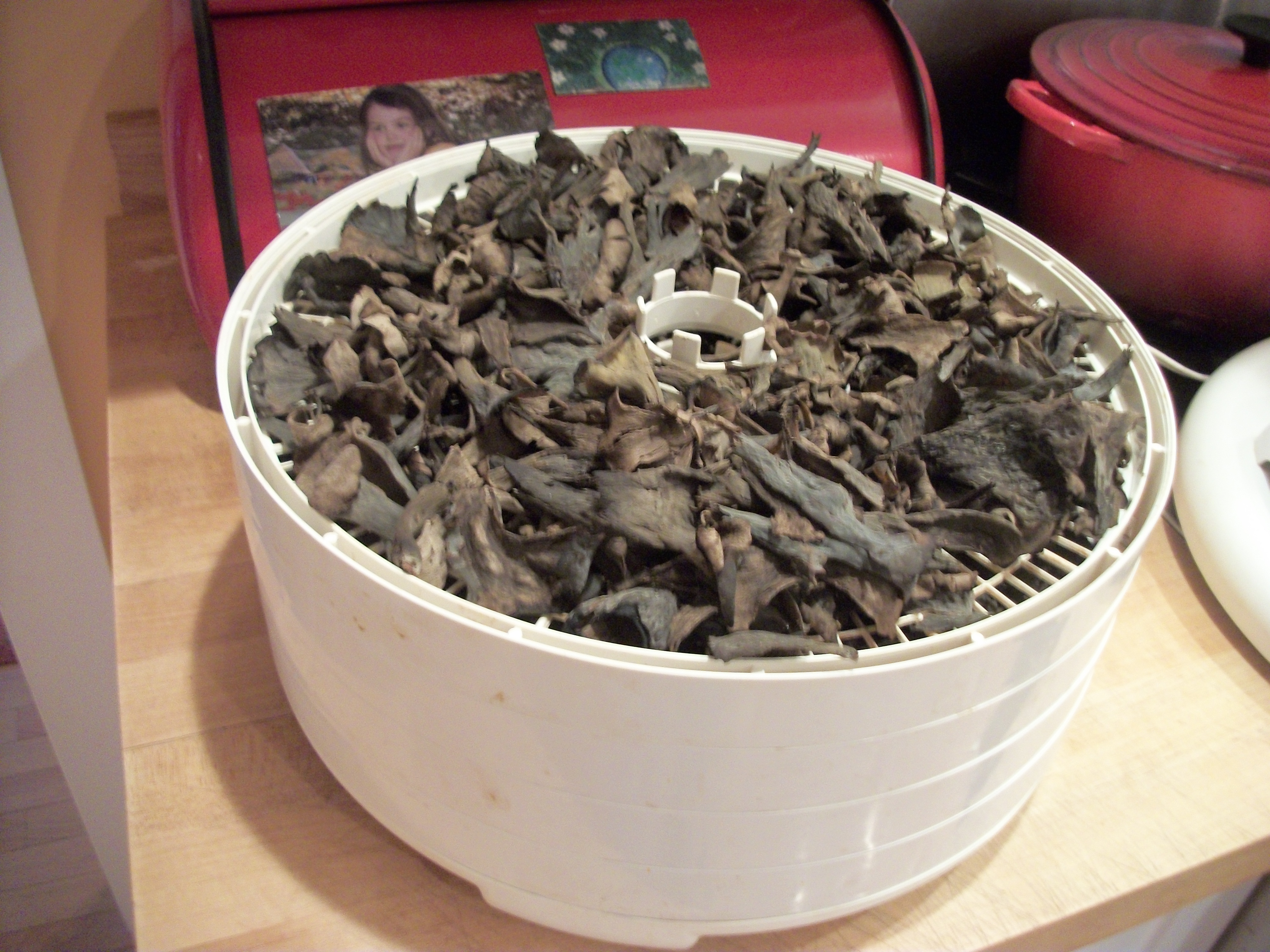
I dried the mushrooms shown in an earlier post.  They filled all the trays of the dehydrator.

Dehydrator 1

But I also am drying cherry tomatoes to use in salads all year around.  These little nuggets are as sweet as candy and are so appreciated in the white cold of winter.  They don’t taste like any bought dried tomato you’ve ever eaten.

Dehydrator 2

My garden is producing a healthy crop of Sun Golds.  Hope’s Edge, my CSA, will provide some cherry tomatoes to dry.  And Susan McBride’s Golden Brook Farm, just up the hill from me, has luscious cherry tomatoes.

I also have discovered that drying zucchini–and even excess cucumbers–is a great way to preserve them.  Grating and freezing zucchini does not work so well.  The flesh gets slimy and bitter after a bit of time.  But the dried disks reconstitute beautifully if thrown into a soup or stew about five minutes before it is done.  Cut the BIG zukes into smaller pieces…

Dehydrator 3

I am also blanching and freezing the beans that are coming in like crazy now.  It’s easy enough to snap them, rinse them, drop them into boiling water for a few minutes (don’t let them get too cooked), put them into a baggie, and freeze them.

Beans

I picked up fresh blueberries from Hope’s Edge last week.   So I made jam from the uneaten and frozen berries from last summer.

Bueberries

Blueberry jam is easier than blackberry jam since you don’t have to pick them or deseed them.  Otherwise, the process is much the same.  I do grate the rind of one lemon into the pot–and add the juice.  Lemon perks up the blueberry flavor.  Blueberry jam needs a bit more sugar than the blackberries as the blueberries don’t have as much pectin.  This jam is a bit looser as a result, but that’s ok.  It’s great over ice cream, in smoothies, over pancakes, and so forth–and the flavor is lovely.  It tends to get stiffer in the cold of the refrigerator.

***

One of the deep pleasures of my life is harvesting and preserving the food that the earth offers us.  It is the most satisfying feeling to know that I have these “assets” in my pantry to be enjoyed all winter and into the long Maine spring when we are so hungry for fresh greens.

But, let’s face it.  Feeding people really good food–and eating it myself–is one of the things that I most like to do.

Turkey Tracks: Blackberry Jam

Turkey Tracks:  August 21, 2013

Blackberry Jam

When I was growing up, we spent some of every summer with my maternal grandmother, Louisa Phillips Bryan, in Reynolds, Georgia.

I’m sure my grandfather, Sydney Hoke Bryan, was also involved–he was a quiet rock that held the family together.  And he was deeply involved in growing food and in preserving food.  He had a large vegetable and flower garden “out on the farm”–and in the summer he went out there early and returned with huge baskets filled with vegetables and flowers.  One of my vivid memories is the two of them putting up tomatoes in an outdoor kitchen they fashioned in the back yard under a shed.  And, I remember hams hanging in the smoke house too.

But it was my grandmother who made the blackberry jam in the summers.   And, later, my mother.  But mother’s blackberry making was always limited by having wild blackberries nearby to pick.  We were tasked with picking blackberries in the summers–though most of the berries we picked landed up in cobblers for “dinner”–which was in the middle of the day.  Local children used to bring the blackberries they had picked to the house for sale, and that’s when my grandmother made jelly.  I have memories of cheesecloth to drains off the seeds and of melting wax for the lids…  And of discussions about whether to seed the jam/jelly or not.

I have access to a blackberry patch here in Maine–and it has been the greatest joy to pick them and to make jam.  And I am so grateful for the wonderful family who allow me to pick their berries.  What a gift!

Some years are better blackberry years than others.  And, it takes a lot of blackberries to make a jam.  One year we had blackberries, but there had been no rain, and the berries just didn’t have enough moisture to make good jam.  And every three or four years it’s a good idea to mow the patch to retard the overgrowth of other plants trying, also, to grow there.  Eventually they will crowd out a blackberry patch.  So when I make a batch of jam, I never know how far I will have to stretch it so as not to completely run out.

This year is a GREAT blackberry year.  And last Sunday, I picked about two gallons alongside friends Giovanna McCarthy and Margaret Rauenhorst.  I came home and made the jam while the berries were fresh.  I was down to my last jar–and that was dated 2010.

Blackberries

The first thing you need to know is that when you are picking blackberries, be sure to pick about one not-so-ripe mostly red berry (not a hard red one) for about every 30 or so berries.  The red berries have pectin in them that will make the jam jell.

Also, you want to make any jam or jelly in SMALL BATCHES.  I made two separate batches with these berries.

The other thing you need to know is what the jelling point is for your geographic area–and that’s info you can determine from either an internet search or from a Ball Canning Book.  At my house here in Maine, it’s 216 degrees.  Down in town, it may be a bit different.  Obviously you’ll need a candy thermometer unless you have a knack for telling when the batch is ready.  I don’t.

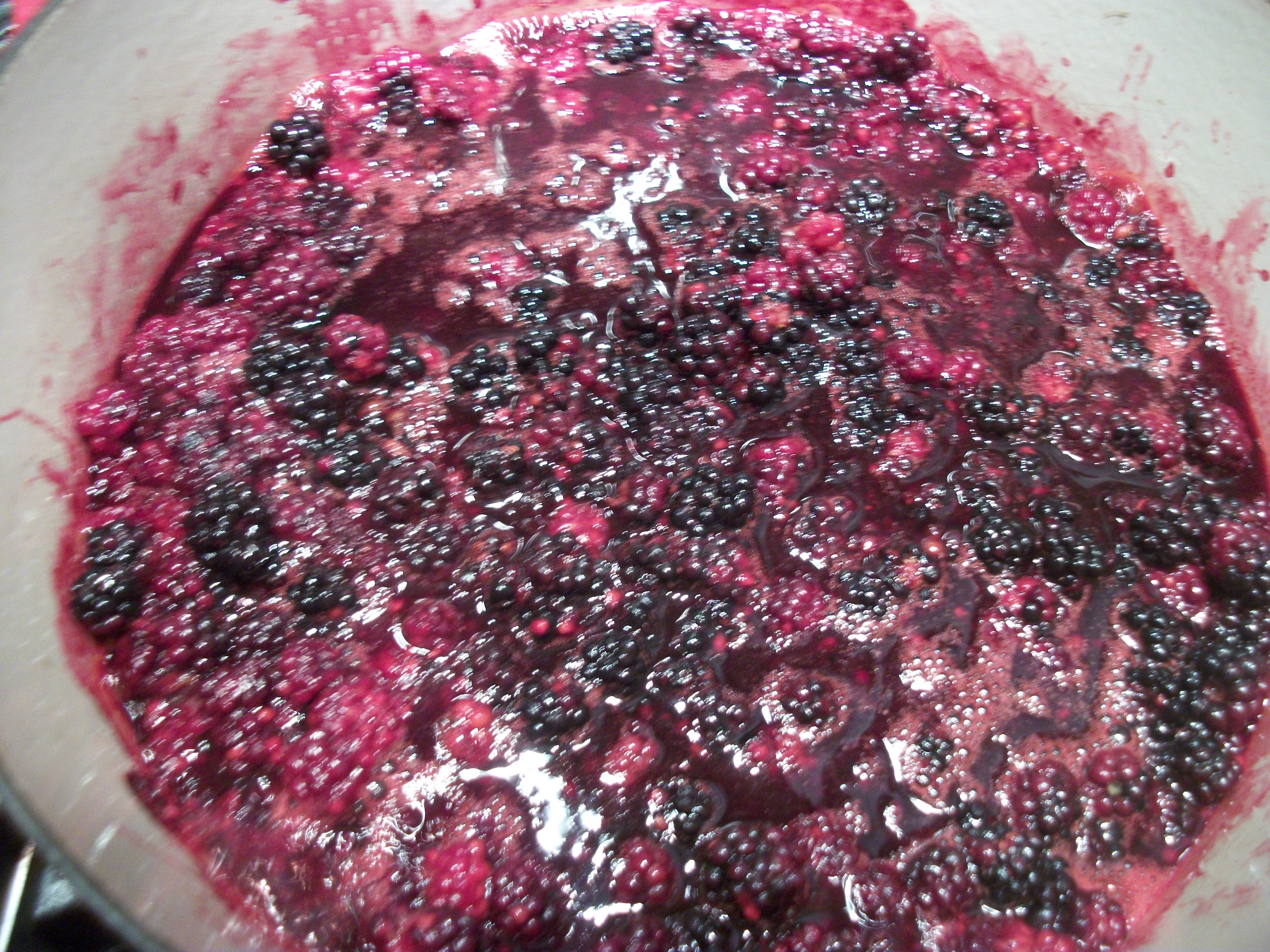
I put all of the berries into a pan, add about a 1/2 cup of water so they don’t burn on the bottom, and heat them to render the juice.

Here’s the pan of berries starting to heat up–note how he berries start to turn red.  I like to use my heavy Creuset pan–the cast iron holds heat so beautifully and evenly.  Use a heavy bottomed pan–not a thin one.   I smash them with a potato smasher to help the juice-rendering process along

Blackberries cooking

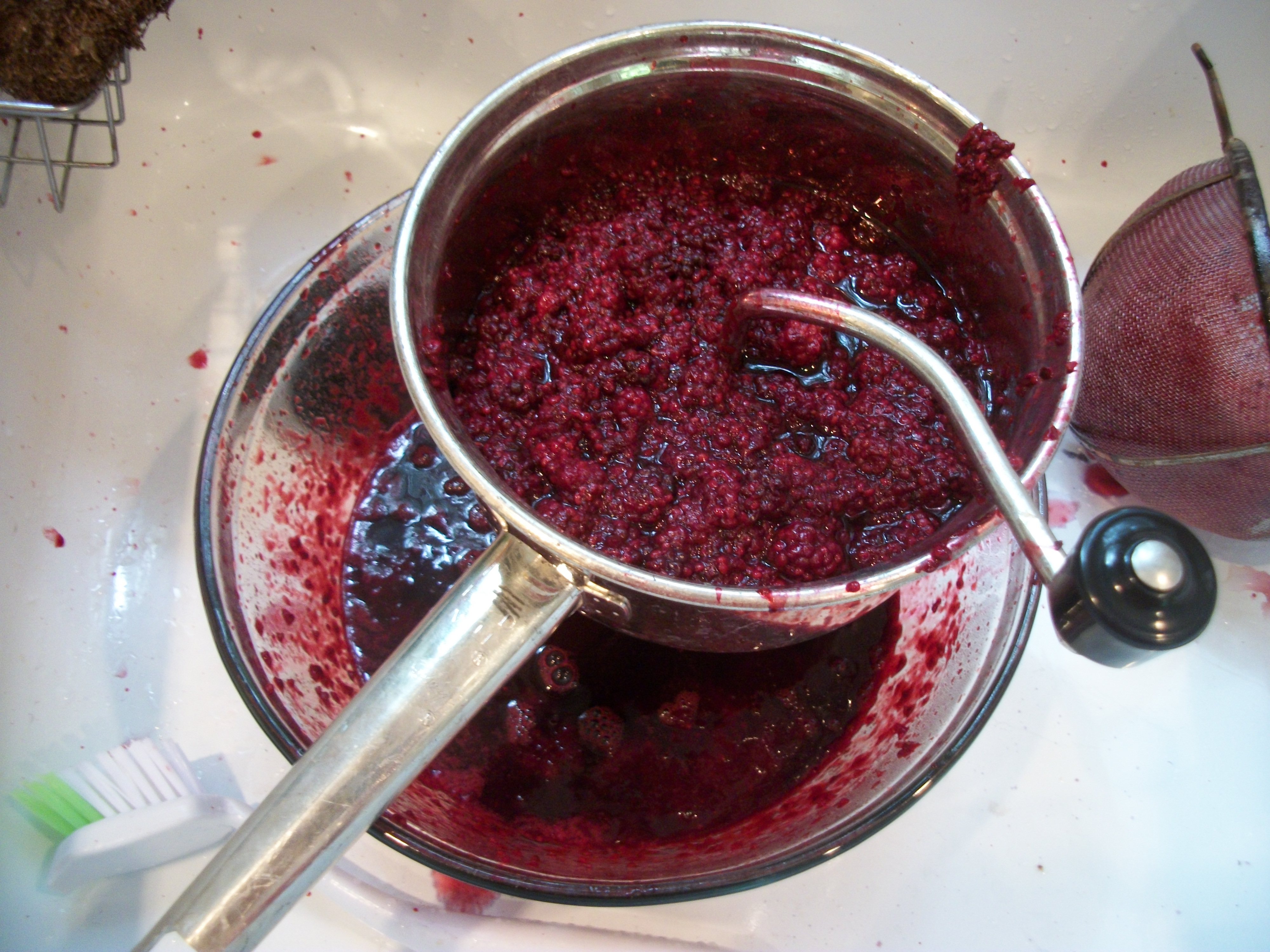
When the berries have cooked about five minutes, you need to decide if you want seeds or not.  I put the berries through a mill and remove the seeds–though I always have a few escapees.  Do this process in the sink as there is some inevitable spattering and you don’t want blackberry juice staining surfaces in your kitchen.

Deseeding blackberry jam

Put the juice back into the cleaned pan and add sugar. .  For about 9 cups of berries, I add 6 cups of sugar.  The recipes call for more, but this ratio works fine for me.  Here the rendered juice is really booking along.  It’s RED, isn’t it?  I don’t attempt to skim any of the foam at the top.

Blackberries cooking 2

Watch your heat–you want a steady boil at pretty high heat, but you don’t want the pan to overflow or the batch to burn.  DON’T LEAVE THE KITCHEN.  You will want to start testing for the jell point any time now.  You don’t want tough jam.

While the batch cooks, put your clean jars and caps in HOT water in a bowl in your sink–and arrange a space on your counter where you can fill your jars.  I have a large ladle that I use to dip up the jam.

I LOVE my large canning funnel.  It fits all jar sizes and makes filling the jars easy.

Canning funnel

Fill the jars, leaving about 1/2 inch clear.  I used to top the jam with melted paraffin wax, but I don’t do that anymore.  The jam keeps just fine without it.

Screw on the lids really tight and with a protective towel (they are HOT), turn each one upside down–which creates a nice vacuum seal on each jar.  Watch to make sure you don’t have a leaky one where the threads were just not tight enough.  Be careful picking up a leaky jar–the jelly is HOT.

Blackberry jam, Aug. 2013

Label the tops–using a year date, too.  I also make blueberry jam, so sometimes it’s hard to tell the difference between these two jams in the jars.

ENJOY!

Turkey Tracks: Refreshing Water!

Turkey Tracks:  June 30, 2013

Refreshing Water!

I follow Bonnie Hunter’s blog.  She’s an amazing quilter who specializes in scrappy quilts with an eye toward using up your quilting stash, finding cotton materials to reuse–as in cutting up cotton shirts–and using vintage sewing machines.  Periodically she holds “Quilt Cam” where she mounts a camera in her basement sewing room and as she sews, shows viewers what she is doing, and chats with them online.  She is sharing her own sewing time and urging those of us who can to join her in a sewing session.  When I can’t make a current Quilt Cam with her, I always replay her archived sessions and sew along in that way.

On a recent Quilt Cam, a friend of hers had just visited and made “the most refreshing water.”  Bonnie lives in North Carolina when she isn’t traveling and teaching, so it gets HOT and one gets THIRSTY.

The water is simple and absolutely delicious.  Take a gallon jar, slice a lime really thin, slice a cucumber really thin, throw in a handful of mint (especially if you have it in your yard as I do), fill the jar with water, and refrigerate it overnight.

Delicious!

This picture isn’t great, but you can see what mine looked like before I drank half of it.


Refreshing water

You can keep adding water until the lovely light taste is gone.  Then start over.

Cucumber juice is supposed to be really healthy.  But I don’t see why one couldn’t try other citrus and herb mixtures.  Orange with what?  Thyme?  Basil?  Rosemary?  Lemon with…   Grapefruit with…

Thank you Bonnie and Bonnie’s friend!